In this article I will review the Top HIPAA Compliance Software for Health Tech. I will cover the best tools that assist healthcare institutions with regulatory compliance and safeguarding sensitive patient data.
You’ll learn about their key features, automation capabilities, employee training tools, risk assessment functions, pricing, scalability and Business Associate Agreement (BAA) availability to select the best software for your healthcare technology needs.
Key Points & Top HIPAA Compliance Software for Health Tech
| Software | Explanation |
|---|---|
| MedTrainer | Combines healthcare compliance training, policy management, credentialing, and tracking tools for healthcare organizations. |
| Compliancy Group | Simplifies HIPAA compliance through guided workflows, risk assessments, documentation, and ongoing compliance monitoring tools. |
| Cyber Sierra | Supports healthcare security compliance with risk management, regulatory workflows, and automated compliance monitoring capabilities. |
| Drata | Automates compliance evidence collection, security controls monitoring, risk management, and audit readiness for healthcare technology companies. |
| Thoropass | Combines compliance automation, expert guidance, and audit services to simplify HIPAA compliance for healthcare businesses. |
| RiskWatch | Helps organizations assess security risks, manage compliance requirements, and document controls across healthcare environments. |
| YouCompli | Automates regulatory change management, compliance workflows, and tracking to help healthcare organizations maintain regulatory readiness. |
| HIPAA One | Streamlines HIPAA risk assessments, compliance documentation, remediation tracking, and ongoing privacy and security management. |
| Vanta | Automates security monitoring, compliance evidence collection, risk assessments, and audit preparation for health technology companies. |
| Paubox | Provides HIPAA-compliant email security, encrypted messaging, and secure communication tools for healthcare providers and organizations. |
10 Top HIPAA Compliance Software for Health Tech
1. MedTrainer
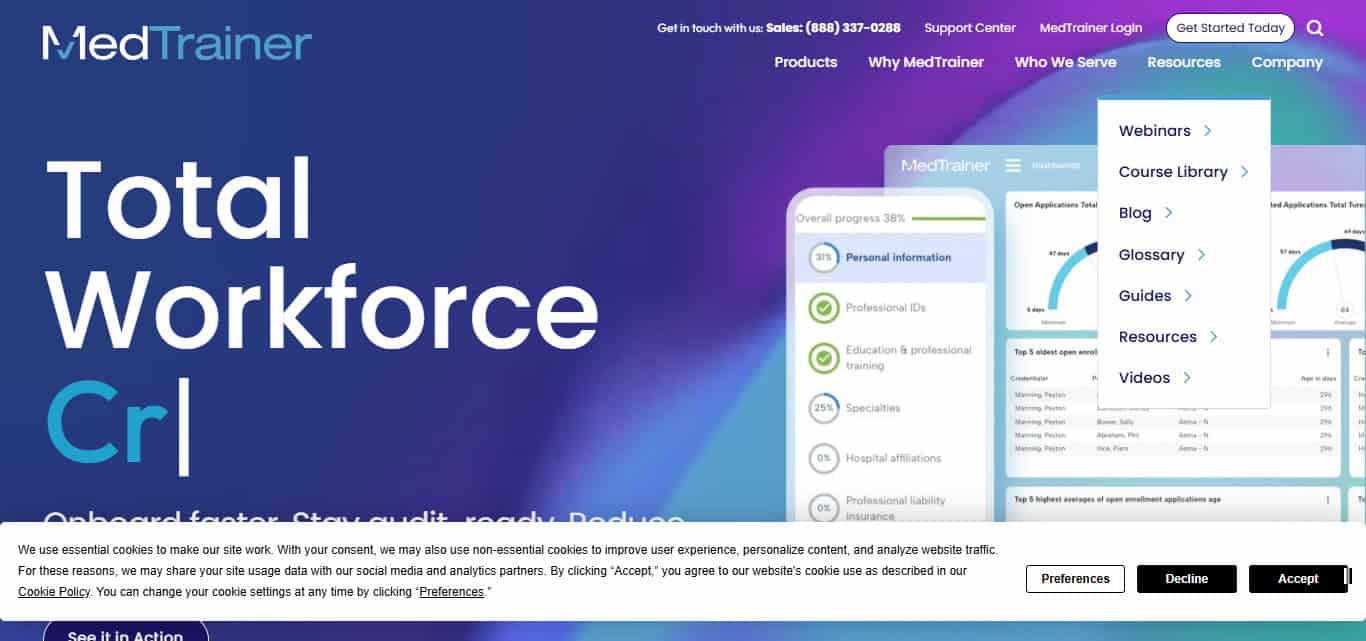
MedTrainer is a healthcare compliance platform that helps healthcare organizations manage regulatory requirements, employee education and workforce-related compliance activities. Its automation capabilities help streamline training assignments, completion tracking, documentation and administrative workflows, depending on the products selected.
Pricing depends on company size, modules selected, and implementation needs. Healthcare organizations should request a custom quote for pricing and scalability. A big part of the platform is training, where companies can assign courses and keep records of training.
Regarding BAA availability, organizations should determine whether a BAA is available for their particular services and review relevant data protection obligations before disclosing protected health information (PHI).
MedTrainer Feature
| Feature | Explanation |
|---|---|
| Healthcare Compliance Management | Helps healthcare organizations organize compliance activities, policies, and regulatory documentation. |
| Automated Training Tracking | Supports employee training assignments, completion tracking, and training record management. |
| Risk and Policy Management | Helps teams manage compliance documentation and monitor outstanding requirements. |
| Credentialing and Workforce Management | Supports healthcare workforce credentialing and related administrative processes. |
2. Compliancy Group
Compliancy Group helps healthcare organizations build and maintain HIPAA compliance programs through guided processes, risk assessments and compliance documentation. Automation features help teams track compliance tasks, monitor progress, and maintain organized records of outstanding requirements.

Pricing and scalability Pricing depends on your choice of services, your organization’s size and the level of support you need. Businesses should request a quote and consider a multi-location or growing team option. Compare the training needs of employees with the training resources and tracking capabilities included in the selected package.
Healthcare organizations should check with the vendor to determine the extent of the BAA’s availability and review the agreement for the vendor’s contractual responsibilities around protecting PHI, reporting incidents and working with applicable service providers.
Compliancy Group Feature
| Feature | Explanation |
|---|---|
| HIPAA Compliance Guidance | Provides a structured approach to managing HIPAA compliance program requirements. |
| Risk Assessment | Helps organizations identify potential compliance gaps and document risks. |
| Compliance Documentation | Supports organizing policies, procedures, and records needed for compliance activities. |
| Ongoing Compliance Monitoring | Helps teams track compliance tasks and maintain program oversight. |
3. Cyber Sierra
Cyber Sierra’s focus on cybersecurity risk and compliance management is applicable for health tech organizations looking to enhance oversight of security controls and regulatory obligations. Assess its automation capabilities for the existing product offering pertaining to compliance workflows, risk tracking, evidence collection and remediation management.
Pricing and scalability are based on integrations, deployment requirements, number of users, and services selected. Organizations should request a quote. Another important consideration is employee training:

Buyers should look for whether they get HIPAA-specific courses and tracking of completion, or whether they need to purchase a separate learning platform. BAA availability – Review whether the vendor will sign a BAA for the services being considered, especially if PHI will be accessed or processed. Review the security and privacy obligations that accompany it.
Cyber Sierra Feature
| Feature | Explanation |
|---|---|
| Security Risk Management | Helps organizations assess cybersecurity risks and identify areas requiring attention. |
| Compliance Workflow Automation | Supports organizing compliance tasks and coordinating responsibilities across teams. |
| Security Control Tracking | Helps monitor security controls and document relevant compliance activities. |
| Risk Remediation | Supports tracking identified issues and coordinating corrective actions. |
4. Drata
Drata is a compliance automation platform that enables organizations to manage security controls, collect evidence, and monitor compliance activities across systems it supports. Its automation capabilities include evidence collection, control monitoring, integrations and compliance task management to help reduce repetitive administrative work.
The price and scalability will be determined by the products, frameworks, integrations and organizational requirements chosen; health tech companies should ask for current pricing and clarify any additional charges.

Ensure that the employee training availability matches the chosen plan, especially if HIPAA-specific education and training records are required. Please confirm BAA availability, coverage of the relevant services, and whether PHI will be handled. Drata can help you with compliance processes, but cannot ensure HIPAA compliance on its own.
Drata Feature
| Feature | Explanation |
|---|---|
| Automated Evidence Collection | Collects compliance evidence from supported systems to reduce manual documentation work. |
| Continuous Control Monitoring | Monitors supported security controls and helps identify potential configuration issues. |
| Compliance Framework Management | Helps organizations manage requirements across supported security and compliance frameworks. |
| Audit Readiness | Organizes evidence and compliance records to support assessment and audit preparation. |
5. Thoropass
Thoropass provides compliance management technology and audit-related services to assist companies in organizing and preparing their evidence for supported compliance assessments. Depending on the service selected
its automation capabilities can help coordinate compliance tasks, manage documentation, and track outstanding requirements. Prices vary for compliance programs and audit services, depending on company size and level of expert support. Buyers should request a customized proposal.

Review employee training options to determine if HIPAA education and completion tracking is included or if separate tools are needed. For BAA availability, healthcare organizations should confirm the scope of the agreement and whether the services being used will involve PHI. They should also look at data access, retention policies and responsibilities for protecting sensitive information.
Thoropass Feature
| Feature | Explanation |
|---|---|
| Compliance Management | Helps organizations organize compliance activities and supporting documentation. |
| Audit Support | Combines compliance technology with audit-related services for supported assessments. |
| Evidence Collection | Helps teams gather and organize documentation required for compliance reviews. |
| Expert Guidance | Provides access to compliance and audit expertise, depending on the selected service. |
6. RiskWatch
RiskWatch offers risk assessment and management capabilities that help organizations identify vulnerabilities, assess risks and document corrective actions. The automation capabilities should be reviewed for risk questionnaires, assessment workflows, reporting, risk scoring and remediation tracking depending on the product chosen.
Pricing and scalability: Organizations should ask for up-to-date quotes, based on modules, user requirements, assessment scope and deployment needs. Buyers should also check if training courses are provided and how the system tracks completion, as employee training may need to be arranged separately.

BAA availability – Determine whether RiskWatch has a BAA for the services you will be using, especially if you will be processing or storing PHI. Before entering sensitive healthcare information into the platform, verify controls on access, data retention and contractual protections.
RiskWatch Feature
| Feature | Explanation |
|---|---|
| Risk Assessments | Helps organizations evaluate risks through structured assessment processes. |
| Risk Scoring | Supports prioritizing identified risks according to assessment criteria. |
| Compliance Reporting | Helps document assessment findings and communicate risk-related information. |
| Remediation Tracking | Supports tracking corrective actions and monitoring progress on identified issues. |
7. YouCompli
YouCompli is a regulatory change management and compliance workflows provider that helps organizations track obligations and manage follow-up actions. Within the selected offering, the ability for automation should be evaluated for regulatory monitoring, task assignments, notifications, documentation, and compliance progress tracking.

Confirm costs and implementation requirements directly with the vendor. This includes available integrations and support for multiple departments or facilities. Review employee training capabilities to ensure HIPAA courses and completion records are offered or need to be tracked through another system.
Organizations should confirm whether the vendor provides a BAA for the relevant services and whether PHI processing is included. Examine contractual protections and data handling practices prior to implementing.
YouCompli Feature
| Feature | Explanation |
|---|---|
| Regulatory Change Monitoring | Helps organizations monitor relevant regulatory updates and compliance obligations. |
| Compliance Workflow Automation | Supports assigning tasks and coordinating regulatory compliance activities. |
| Compliance Tracking | Helps teams monitor responsibilities, deadlines, and progress on compliance tasks. |
| Documentation Management | Supports maintaining records of compliance activities and follow-up actions. |
8. HIPAA One
HIPAA One is used for HIPAA compliance activities including risk analysis, documentation and managing compliance gaps. Consider its automation of assessment workflows, compliance reporting, corrective-action tracking and ongoing documentation management.
For current pricing based on size, assessment requirements, facilities and any additional support services for pricing and scalability, organizations should contact us. Review employee training offerings to ensure that HIPAA training, security awareness training, and training record management are part of the selected package.

If BAA availability exists, confirm the vendor has an agreement for the services being purchased and how PHI is handled. Organizations should also look at data access, retention and security responsibilities to verify the solution matches their compliance program.
HIPAA One Feature
| Feature | Explanation |
|---|---|
| HIPAA Risk Analysis | Supports identifying and documenting risks associated with HIPAA compliance requirements. |
| Compliance Documentation | Helps organize records and documentation related to compliance activities. |
| Corrective Action Tracking | Supports documenting compliance gaps and tracking remediation efforts. |
| Compliance Program Management | Helps organizations structure and manage ongoing HIPAA compliance tasks. |
9. Vanta
Vanta is a trust management and compliance automation platform that helps companies monitor security controls, collect evidence and manage compliance programs. Its automation capabilities include supported integrations, automated evidence collection, control monitoring and compliance task management. Health tech businesses should ask for a custom quote.

Pricing and scalability costs vary based on the products, frameworks, integrations, and organizational needs selected. Confirm employee training availability for the chosen plan, especially if HIPAA-specific training and proof of completion are necessary.
PHi will be processed and will confirm if the services are covered under a BAA for BAA availability. Vanta can assist in organizing compliance efforts but organizations are ultimately responsible for risk analysis, appropriate safeguards, workforce practices, and their overall HIPAA obligations.
Vanta Feature
| Feature | Explanation |
|---|---|
| Automated Evidence Collection | Collects evidence from supported integrations to streamline compliance documentation. |
| Continuous Security Monitoring | Monitors supported systems and security controls for potential issues. |
| Risk Management | Helps teams document risks and coordinate remediation activities. |
| Multi-Framework Compliance | Supports managing requirements across multiple available compliance frameworks. |
10. Paubox
Paubox offers secure email and healthcare communication solutions that allow organizations to protect sensitive information sent electronically. The automation features are meant to make secure email workflows easier and help encrypted communication work in environments that can support it. The exact controls you’ll see depend on the product.
Pricing and scalability Costs vary by solution, number of users and the organizational requirements. Healthcare businesses should request current quotes and verify support for their email environment.

Employee training still matters because secure email technology doesn’t replace education on PHI disclosure, recipient verification, phishing and incident reporting. Make sure Paubox has a BAA for the specific services you’re buying, and review the products covered, security responsibilities and contractual terms before you use the solution for healthcare communications.
Paubox Feature
| Feature | Explanation |
|---|---|
| HIPAA-Compliant Email | Provides email security solutions designed for healthcare communications involving sensitive information. |
| Email Encryption | Supports secure email delivery without requiring recipients to use separate encryption portals in supported workflows. |
| Email Security Protection | Offers security capabilities intended to help protect healthcare email communications. |
| Healthcare Communication Integration | Supports integration with compatible email environments to simplify secure communication workflows. |
How we chose the Best HIPAA Compliant Software
- HIPAA-Specific Capabilities and Documentation: We reviewed HIPAA features, compliance documentation, and support for regulatory requirements.
- Risk Assessment and Remediation Tools: We looked at risk identification, vulnerability tracking, corrective actions and remediation capabilities.
- Automation and Continual Monitoring: We explored automated workflows, evidence collection, security monitoring, and compliance tracking.
- Employee Training and Policy Management: We looked at training, tracking, documentation and management of employee policies.
- Healthcare and Cloud System Integrations: We looked at compatibility with healthcare apps, cloud platforms and existing business systems.
- BAA Availability and Vendor Security Practices: We reviewed BAA availability, vendor security documentation, data protection, and contractual protections.
- Pricing Transparency, Scalability and Usability: We looked at pricing transparency, scalability, implementation requirements, and general ease of use.
Conclusion
Ultimately, the best HIPAA compliance software for your health tech will be determined by your organization’s security needs, budget, and regulatory requirements. Some tools offering different features in compliance management, automation, and data protection are MedTrainer
Compliancy Group , Drata , Vanta , and Paubox. Compare features, employee training, scalability and availability of BAA before you decide. Remember, software supports compliance efforts but cannot replace proper policies, risk assessments and safeguards.
FAQ
What is HIPAA compliance software for health tech?
It helps healthcare organizations manage HIPAA requirements, security risks, documentation, and compliance workflows.
Which HIPAA compliance software is best for healthcare startups?
MedTrainer, Compliancy Group, and Vanta offer options worth evaluating for startups.
How much does HIPAA compliance software typically cost?
Pricing varies by vendor, features, organization size, integrations, and implementation requirements.
Does HIPAA compliance software guarantee complete HIPAA compliance?
No, organizations must maintain appropriate safeguards, policies, risk assessments, and employee training.