
In this article, I will discuss Top-Performing Dividend Stocks for generating Monthly Income for investors seeking reliable cash flow.
We will look at businesses with specific characteristics of monthly dividend payments, a strong business model, good income potential, and varying levels of risk to which the investor is exposed.
I will cover the benefits, drawbacks, and things investors must consider before adding the stocks to their portfolios.
What are Monthly Dividend Stocks?
A monthly dividend stock pays a dividend to its shareholders each month rather than each quarter or once a year. Monthly dividend stocks are therefore more attractive to investors seeking a consistent income stream, including retirees.
However, monthly dividends can still be reduced or eliminated. Before buying a monthly dividend stock, one must evaluate the dividend payment history, the health of the business, cash flow, debt levels, and business stability.
Key Points
| Company | Explanation |
|---|---|
| Realty Income (O) | Owns thousands of commercial properties and provides reliable monthly dividend income to investors. |
| Main Street Capital (MAIN) | Supports lower-middle-market businesses while delivering consistent monthly dividends and attractive shareholder returns. |
| Agree Realty (ADC) | Owns retail properties and provides investors with dependable monthly dividend payments and income. |
| LTC Properties (LTC) | Invests in senior housing and healthcare properties, generating attractive income through monthly dividends. |
| STAG Industrial (STAG) | Owns single-tenant industrial warehouses across America, providing stable rental income and dividends. |
| Ellington Financial (EFC) | Invests in mortgage-related assets, offering investors potentially high dividend income and returns. |
| Apple Hospitality REIT (APLE) | Owns upscale hotels and provides investors with regular monthly dividend income from operations. |
| Prospect Capital (PSEC) | Provides financing to businesses while offering investors a notably high dividend yield. |
| Sabine Royalty Trust (SBR) | Owns oil and gas mineral interests, generating income from long-term energy production royalties. |
| Gladstone Investment Corporation (GAIN) | Provides debt and equity financing to smaller businesses, supporting steady shareholder distributions. |
10 Top-Performing Dividend Stocks to Generate Reliable Monthly Income
1. Realty Income (O)
“The Monthly Dividend Company” is a real estate investment trust (REIT) called Realty Income. They own a large portfolio of commercial properties that has businesses as tenants under long-term leases. Recurring cash flow from the leases allows them to pay dividends monthly.
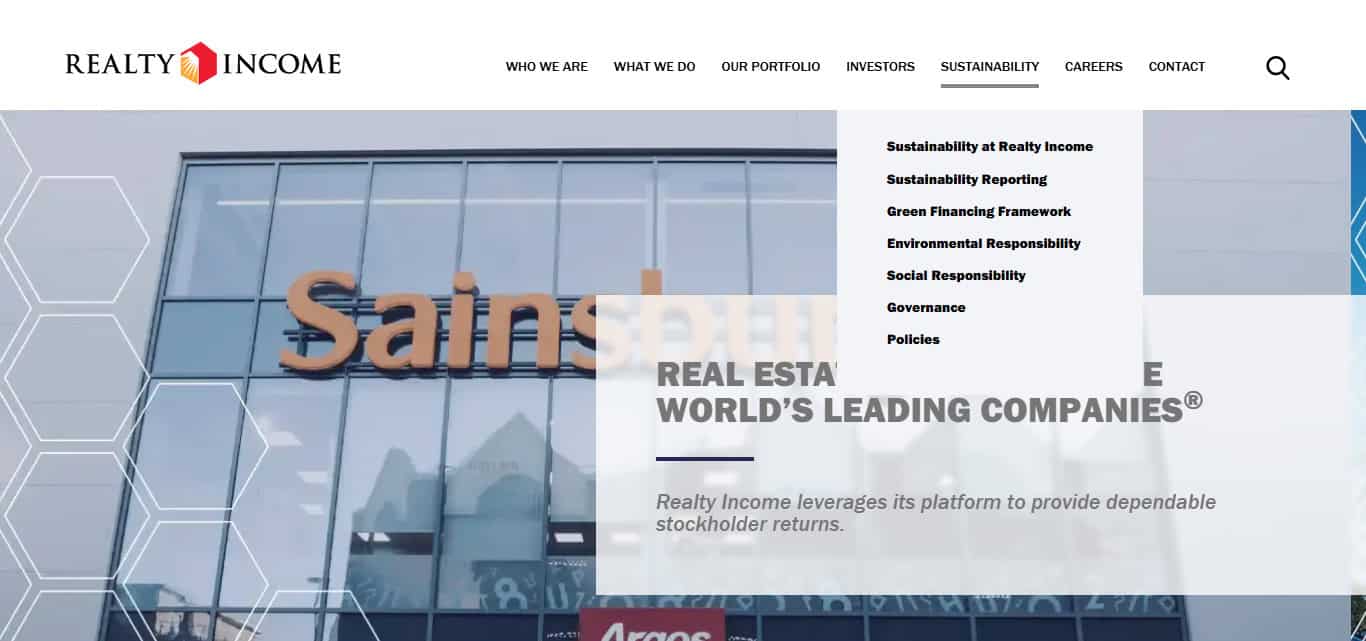
Investors who are focused on income appreciate Realty Income because of their monthly distributions. However, there are a number of factors investors should look at to see if the dividends can be sustained in the future.
These include interest rates, conditions of the real estate market, the strength of their tenants, and how much debt they have.
Realty Income (O) Features
- Popularity: Liked for consistency in dividend payments, made once per month, to shareholders.
- Performance: Holds a wide variety of commercial properties across many diverse industries.
- Revenue: Long-term leases ensure consistent and reliable income streams and cash flows.
- Outlook: Aimed towards investors of all experience levels seeking consistent income streams.
- Risks: Changes in tenant profiles, changes in interest rates, the value of the property, and the amount of debt.
2. Main Street Capital (MAIN)
Main Street Capital is a business development company (BDC) that focuses on credit and equity financing for businesses classified as a lower middle market in the United States. Their distributions are supported by their investment portfolio that earns income through interest, fees, and potential equity.

MAIN has drawn a lot of income focused investors because of their monthly dividend distributions and culture of shareholder distributions. Investing in MAIN has risks and to an extent depends on the health of their portfolio companies, the economy, and interest rates and credit.
Main Street Capital (MAIN) Features
- Finance: Main Street Capital provides debt and equity finance to U.S. businesses.
- Distributions: consistently makes monthly distributions to its shareholders.
- Income: Significant income is made from a loan and an equity investment held in a company.
- Investment: If the company’s investments perform positively, equity also provides returns.
- Risks: Changes in interest rates, economics, credit, and the performance of companies held in the portfolio.
3. Agree Realty (ADC)
Agree Realty Corporation is a retail-centered real estate investment trust, so it primarily owns and operates retail properties that are leased to some of the more prominent retailers.
ADC uses long-term, almost always triple-net lease arrangements, and leases that are structured in this manner result in the tenant assuming significantly more of the costs and expenses pertaining to the property.
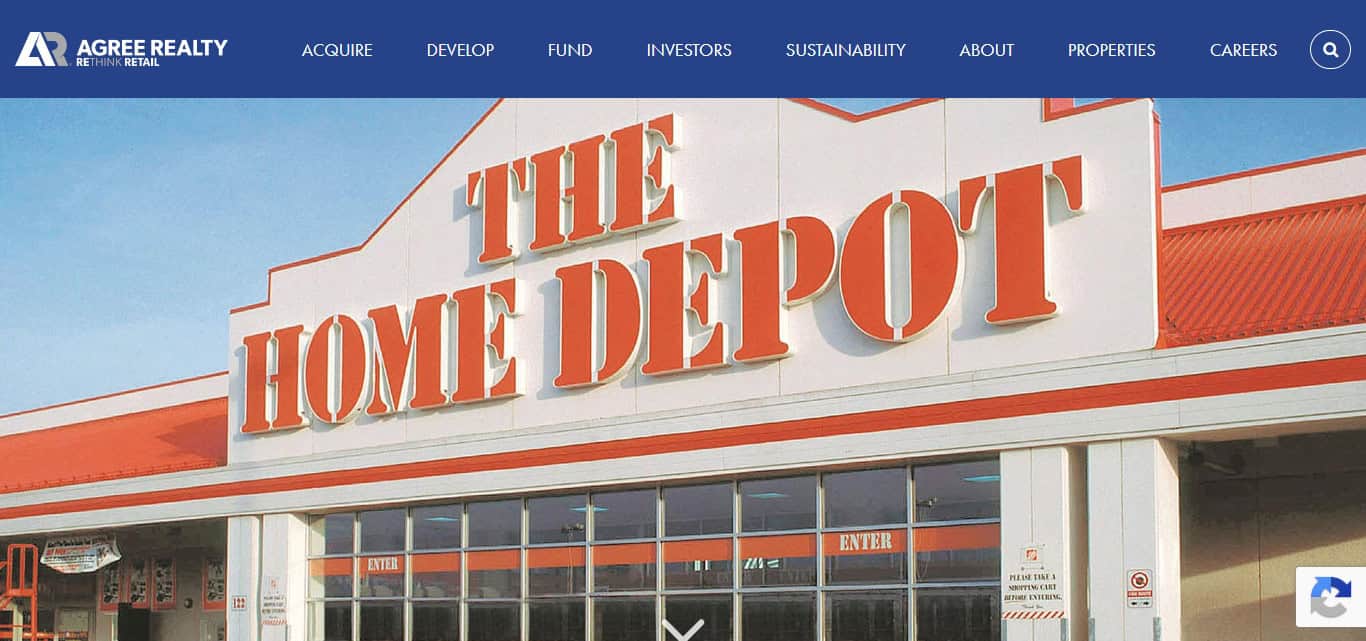
Consequently, rental cash flow becomes more predictable and supportive of a dividend distribution plan. While monthly dividends and reliable income streams remain an attraction for considerations in ADC,
this particular company is still vulnerable to an array of external factors such as changes in consumer behavior, interest rates and consumer buying patterns, tenant bankruptcies, and valuations.
Agree Realty (ADC) Features
- Realty: owns and manages a portfolio of retail leased to businesses.
- Income: makes monthly dividend distributions to its shareholders.
- Cash Flow: Triple Net Leases ensure predictable cash flows.
- Diversification: provides exposure to numerous tenants and multiple retail properties.
- Risks: Changes in tenant occupancy, interest rates, retail trends and the value of the property.
4. LTC Properties (LTC)
LTC Properties focuses on the healthcare real estate market, in particular properties that are directed towards senior citizens and provide services such as assisted living, and skilled nursing and therapy. Leasing and the related income streams support the ongoing operations of LTC and provide a dividend to the Company’s shareholders.

The business is defensive in nature with the provision of senior living services, particularly given the demographic shifts in the population.
There are, however, a set of interrelated factors that include the tenants’ financial and credit conditions, regulatory changes, government reimbursement policies, and demographic changes, and LTC Properties’ ability to maintain rental income and dividends may be impacted by these factors.
LTC Properties (LTC) Features
- REIT: Real Estate Investment Trust focused in senior housing and healthcare.
- Investment: Assisted living and skilled nursing facilities.
- Income: Primary source for revenue is healthcare investments and leases.
- Long Term: Healthcare investments are expected to sustain income for years to come.
- Risks: Changes in tenant population, interest rates, value of the property, and the healthcare industry.
- Key Risks: Healthcare regulations, tenant operators, occupancy, reimbursement, and financing costs remain important.
5. STAG Industrial (STAG)
STAG Industrial is a Real Estate Investment Trust (REIT) focusing on single-tenant industrial properties throughout the U.S. through warehouses, distribution, and logistics centers.
The demand from e-commerce, manufacturing, supply chains, and the modern distribution network provides portfolio demand. STAG has industrial tenant rental streams that fund shareholder distributions.
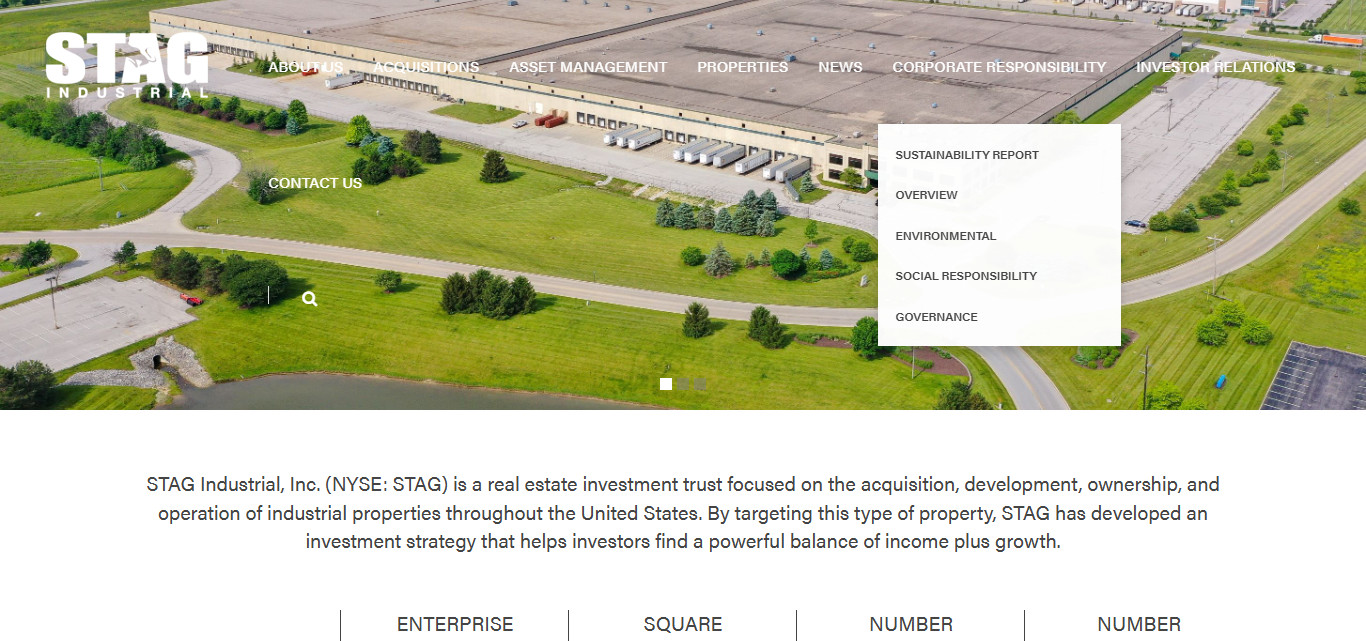
STAG enables exposure to commercial real estate for investors to generate dividends. Economic cycles are a risk due to tenant concentration as well as lease renewals, industrial property valuations, borrowing costs, and the demand for warehouses and distribution space.
STAG Industrial (STAG) Features
- Industrial Properties: Owns single-tenant warehouses and industrial properties throughout the U.S.
- Logistics Exposure: Positively correlates to demand for distribution, supply-chain and e-commerce facilities.
- Rental Revenue: Has leases for industrial property, giving steady income.
- Portfolio Diversification: Gives the investor exposure to the U.S. industrial-property market.
- Key Risks: Cyclical, vacancy risks, interest rate risks, and valuation risks.
6. Ellington Financial (EFC)
Ellington Financial invests in assets and financial instruments, emphasizing mortgage-related assets, to generate income through returns not typically associated with owning commercial properties.
Investing in mortgage assets, credit markets, and related strategies has the potential to produce a high dividend distribution, and EFC is appealing to investors focused on income.

Higher returns are typically associated with greater risk. The income and future dividend distributions are impacted by changes in interest rates, credit losses, volatility in the mortgage market, and the conditions of financing and market valuations.
Ellington Financial (EFC) Features
- Mortgage Investments: Primarily invests in mortgage-related assets and specialized financial instruments.
- Income Potential: Relatively high distributions are supported by investment income, compared to dividend stocks.
- Specialty Finance: gives exposure to mortgage and credit markets rather than traditional property ownership.
- Market Opportunities: Can benefit from favorable conditions in mortgage and credit markets.
- Key Risks: Interest expense, credit risk, market risk, valuation risk.
7. Apple Hospitality REIT (APLE)
Apple Hospitality REIT owns a collection of upscale, select service hotels. Their hotels have brand recognition across the lodging industry. Business travel and leisure travel are two large segments of demand for lodging.
In addition, tourism is constantly shifting based on the economy and global events. Since they have a clear and highly visible source of demand, they offer a recurring source of income for stock investors through monthly dividends.

While hotel REITs may be more cyclical than others in real estate, the role of travel demand, operating expenses, competition, and of course, the economy, is critical to understand.
Apple Hospitality REIT (APLE) Features
- Hotel Portfolio: Holds upper-tier lobbies, select-service, and branded hotels.
- Monthly Dividends: Provides consistent monthly income distributions.
- Travel Exposure: Very subjective to travel.
- Hospitality Growth: Can support hotel revenues and performance.
- Key Risks: Recessions, changes in travel, competition, cost of staying in a hotel, interest rates.
8. Prospect Capital (PSEC)
Prospect Capital is a business development company (BDC) and offers financing through primarily loans and other investments to businesses. They receive the majority of their income through the investments in their portfolio and thus support dividend distributions.
PSEC appeals to income investors due to a high dividend yield compared to many others in the traditional dividend space. A high yield should never be seen as validating safety or a good investment.
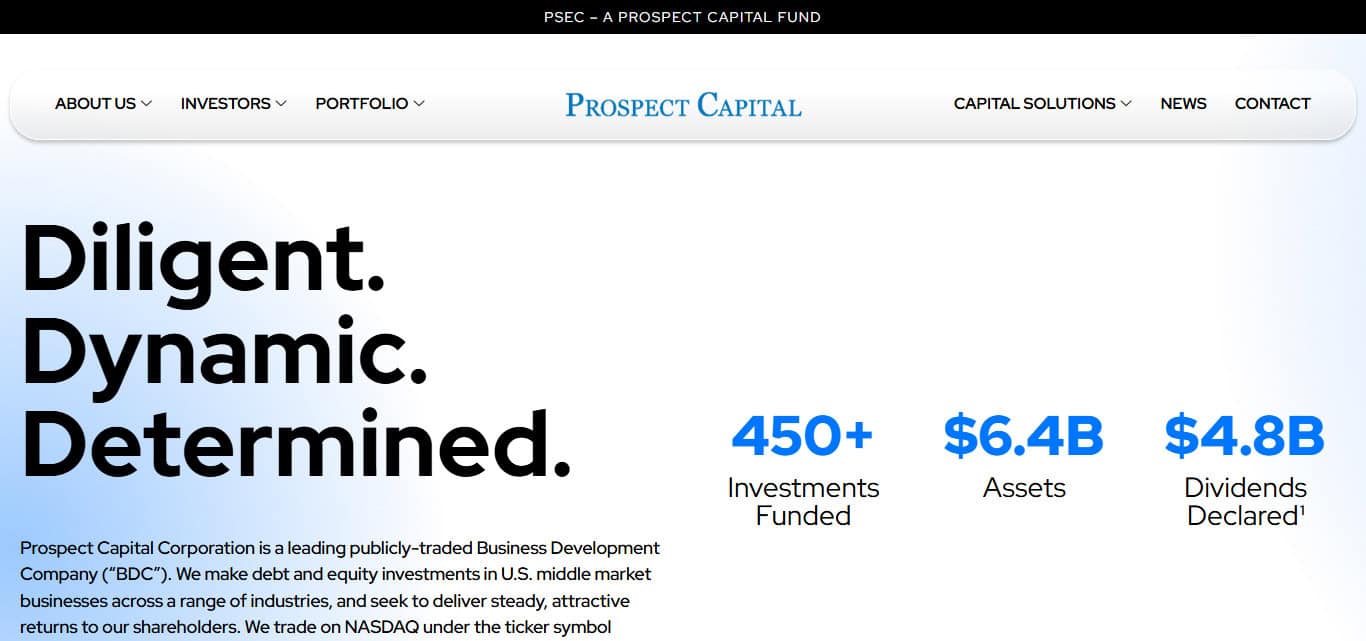
Quality of the portfolio, level of debt, credit risk, net investment income, dividend coverage and the economy are some of the key factors in determining if distributions may be safely relied upon.
Prospect Capital (PSEC) Features
- Business Financing: Provides loans to businesses.
- Dividend Income: High dividend yield.
- Interest Revenue: Significantly earning interest from its investment portfolio.
- Diversified Investments: Allows investment across companies, industries, and investment types.
- Key Risks: Loss of credit value, use of debt, dividend cover, economic conditions, and the performance of the portfolio.
9. Sabine Royalty Trust (SBR)
Sabine Royalty Trust holds interests in oil, natural gas, and mineral properties. Sabine Royalty Trust distributes income from its interests. Sabine Royalty Trust does not operate in the same manner as traditional companies.

Each payment is dependent on production levels and the market price of the energy commodity. SBR defines energy-related income to a great extent for select investors who do not want to operate their own oil and gas properties. SBR does not make guaranteed distributions.
Oil and natural gas prices, production levels, reserves and the nature of a trust define a trust’s finite assets. Therefore, volatility can be prolonged.
Sabine Royalty Trust (SBR) Features
- Energy Interests: Has royalty interests connected to oil and gas and mineral resources.
- Income Distributions: Distributes qualifying royalty income to trust unitholders.
- Commodity Exposure: The income of the investors is influenced by the prices of oil and natural gas.
- Passive Structure: Offers an energy exposure without the direct operation of oil and gas resources.
- Key Risks: Volatility in commodity prices, production and reserve volumes, and the finite life of the trust’s asset base.
10. Gladstone Investment Corporation (GAIN)
Gladstone Investment Corporation is a business development company that provides both debt and equity capital to established small and mid-sized businesses operating in the U.S. GAIN intends to earn a revenue stream via interest payments and the opportunity for equity investments.
The opportunities for consistent income make GAIN appealing. GAIN’s performance depends on the performance of the companies it owns and the economy as a whole.

Investors considering a purchase of GAIN will want to understand the credit worthiness, the diversification of the portfolio, the level of leverage, interest rates, dividend payout ratios and the potential for losses.
Gladstone Investment Corporation (GAIN) Features
- Business Investments: Offers debt and equity financing to mature smaller U.S. businesses.
- Regular Distributions: Has an appeal to income investors with constant shareholder distributions.
- Interest Earnings: The primary income is due to the interest on debt.
- Equity Upside: Equity investments provide the opportunity for additional returns due to the growth of portfolio companies.
- Key Risks: Credit risk, leverage, economic conditions, interest risk, and losses on investments.
How We Choose Top-Performing Dividend Stocks
- Consistency: We prefer companies with dependable dividend payments.
- Easy on the Cash: We check to see how much earnings and cash flow allow dividends.
- Regular Payments: We like stocks that reward shareholders with predictable monthly payments.
- Financial Longevity: We measure the financial strength of each company by looking at balance sheets, liquidity, and how much each company has borrowed.
- Income: We look for adequate dividend yield with respect for how sustainable it is.
- Current State: We assess company business models and the competitive edge they have.
- Flexibility: We look at how well a company is able to grow its profits and payouts.
Conclusion
Conclusion: Top monthly dividend stocks can provide excellent sources of consistent income and can diversify a portfolio. Companies like Realty Income, Main Street Capital, and Agree Realty, all have slightly different strategies for creating recurring distributions.
Attractive yields should always be assumed to be quite risky. Before making an investment you should analyze the dividend’s sustainability, strength of the financials, debt, the business quality, valuation, and risks.
Using a diversified approach along with a long term strategy should help mitigate the potential risk of income loss due to market volatility.
FAQ
Are monthly dividend stocks reliable?
Some have long histories of consistent payments, but dividends are never guaranteed and can be reduced or suspended.
Which companies are known for monthly dividends?
Examples include Realty Income, Main Street Capital, Agree Realty, LTC Properties, and Apple Hospitality REIT.
Are high-yield dividend stocks always better?
No. Extremely high yields can indicate greater risk, financial challenges, or an unsustainable dividend payout.
How do monthly dividend stocks generate income?
REITs generally generate rental income, while business development companies and financial firms often earn interest from investments.