This article provides the Best GEO Optimization Techniques for AI-Powered Search Engines that include semantic clustering, entity optimization, content relevance, structured data, user intent mapping, multilingual GEO strategies, AI ranking signals, and more.
These methods can help you enhance your visibility across generative search platforms and next-gen search engines.
If you are looking to get ahead of the competition in 2026, these Organic Growth Techniques for Digital Marketing will be invaluable for you.
Reasons To Focus on GEO Optimization In 2026
- Makes the SEO adjustments needed for an AI-driven SEA in 2026
- Make sure your content is featured on AI-driven search engines
- Direct responses to queries and automated summaries contain your content
- Matches user queries and context, ensuring optimization
- Completes entity semantic structuring to improve ranking
- Addresses voice and conversational search
- Supports the calculus of trust and authority in AI rankings
- Keeps content stable in unpredictable search markets
- Improves AI Curation with better click rates
- Adjusts search modalities (textual, visual, and video)
Key Points & Best GEO Optimization Techniques for AI-Powered Search Engines In 2026
| Technique | Explanation |
|---|---|
| AI semantic keyword clustering | Groups related keywords into semantic clusters improving AI search relevance accuracy significantly |
| Entity-based content optimization | Uses entities and knowledge graphs to enhance AI understanding of content contextual |
| Structured data schema markup | Implements schema markup helping AI systems interpret structured website information better efficiently |
| Conversational query optimization | Optimizes content for natural conversational queries used in AI search engines results |
| Multi-modal content optimization | Optimizes text images and video for multimodal AI search experiences ranking improvement |
| E-E-A-T authority building signals | Builds expertise experience authority and trust signals for AI ranking systems strongly |
| Prompt-friendly content formatting | Formats content for easy AI extraction and prompt based summarization efficiency gains |
| Contextual internal linking strategy | Uses contextual internal links to help AI understand site structure navigation flow |
| Real-time content freshness updates | Continuously updates content ensuring AI engines receive most recent information signals boost |
| AI search intent mapping | Maps user intent accurately aligning content with AI search queries better results |
10 Best GEO Optimization Techniques for AI-Powered Search Engines In 2026
1. AI Semantic Keyword Clustering
Modern GEO strategies rely on AI semantic keyword clustering to adapt to the changes in AI-based search engines expected to be fully operational in 2026.
The clustering of related keywords enhances contextual relevance and signals ranking, which, in turn, improves content discoverability within generative content systems.

Keywords organized according to content intent create value through visibility and authority. Engagement is increased in the process.
Advanced AI search optimization indicates the increasing importance of this clustering system in SEO.
Key Features:
- Groups related keywords into meaningful semantic clusters
- Improves AI-driven contextual understanding of content
- Strengthens topical authority across search engines
- Enhances visibility in generative AI search results
2. Entity-Based Content Optimization
Entity-based content optimization enhances GEO strategies when content is linked to distinct entities, brands, and knowledge graph connections utilized by AI search systems in 2026.
This method is centered on the improvement of semantic comprehension, credibility signals, and the correct representation of content.

The addition of structured entities allows AI models to interpret content with enhanced visibility and context. The improved contextual authority of the content leads to more meaningful search results.
Capturing a user’s search intent forms the underpinning of trust and ranking improvement across content optimized within generative AI content systems.
Key Features:
- Integrates knowledge graph and entity recognition systems
- Improves semantic relevance for AI search engines
- Builds credibility through verified entity associations
- Enhances visibility in AI-generated search responses
3. Structured Data Schema Markup
Structured data schema markup’s importance for GEO optimization in 2026 is based on the ability of AI search engines to interpret web content’s structure and meaning.
The application of markup in schema formats leads to the web providing machine-readable signals to search engines
This results in improved accuracy of indexing and visibility, as evidenced by the persistence of knowledge panels and generative content summaries.

The relevance of AI-augmented search engines, enhanced by rich results, is brought forth by schema.
The effective use of schema leads to improved long-term search performance in a context of heightened competition in the market. Structured search visibility is greatly enhanced.
Key Features:
- Enables machine-readable content structure for AI systems
- Boosts rich results like snippets and knowledge panels
- Improves indexing accuracy across search engines
- Enhances visibility in AI-generated search summaries
4. Conversational Query Optimization
Conversational query optimization requires alignment with language patterns and content frameworks of AI search engines and voice assistants from 2026.
This tactic directs efforts to match content with the user’s real-time question format. Engagement, ranking relevance, and AI optimization benefit from the use of conversational phrasing.

This improves potential answers and chatbot engagement. This strategy is essential to the success of GEO, giving content a natural and helpful impression along with contextual accuracy, ultimately improving relevance across the board.
Key Features:
- Matches natural language search patterns and queries
- Optimizes for voice and chatbot-based search systems
- Improves engagement through conversational relevance
- Enhances visibility in AI-generated answers
5. Multi-Modal Content
Using content in multiple formats and optimizing content streams reinforces the integration of images and videos into your written content and improves GEO strategies with the AI search engines from 2026.
This technique makes content understandable for multiple inputs and generative systems and enhances engagement, visibility, and ranking for a variety of search experiences.

From the optimization of media components on a site, overall ranking and engagement improve the substance.
This method is essential in improving AI search, where results will include creativity and visualization.
Key Features:
- Combines text, image, and video content formats
- Improves understanding across AI multimodal systems
- Enhances engagement through richer content experiences
- Expands reach across diverse search platforms
6. E-E-A-T Authority Building Signals
The focus of E-E-A-T authority building signals for GEO optimization in 2026 highlights the importance of expertise, experience, authority, and trust.
The AI search engines depend on content from sources that exhibit trust and good standing. To place websites and improve trust from users, well-ranked sites need a combination of author expertise, citations, and good transparency.

This strategy improves user trust, the threat of misinformation decreases, and trust visibility endures. It is a modern AI strategy for SEO and is a prerequisite for maintaining search engine performance.
Key Features:
- Builds expertise and trust signals for AI systems
- Strengthens content authority and credibility
- Reduces misinformation risks in search results
- Improves long-term ranking stability
7. Prompt-Friendly Content Formatting
Prompt-friendly content formatting enhances GEO performance by presenting content in a way AI models, predicted to be in operation in 2026, can most easily identify and summarize.
This includes clear labels, brevity, and consistent formatting. Such a presentation augments comprehension, increases the likelihood of reuse in generative answer responses, and expands ranking reach.
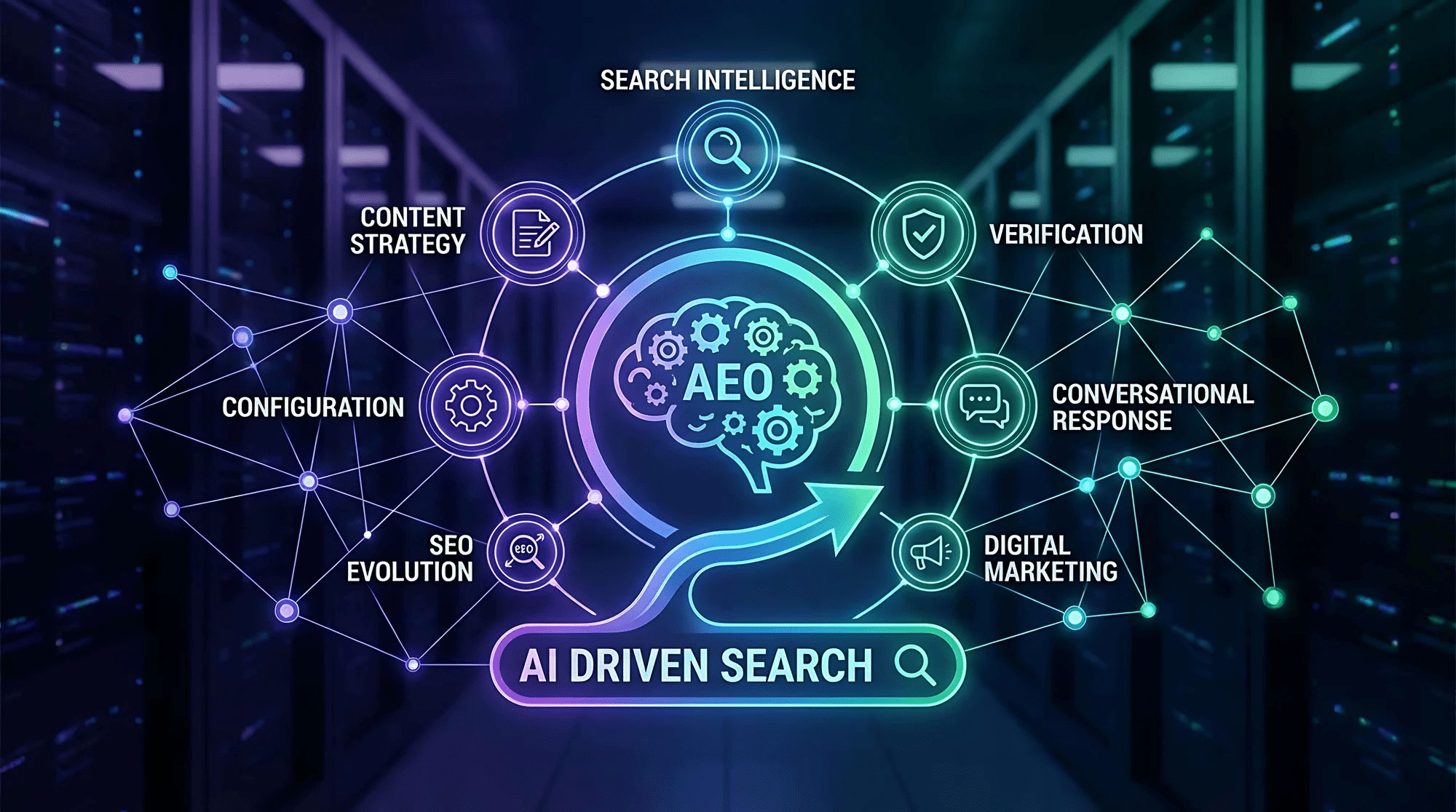
The interpretability and contextual relevance of websites are enhanced. It is likely that the array of modern search ecosystems is rapidly improving content’s AI readability, direct consumption, and all authors’ highest return-on-investment.
Key Features:
- Structures content for easy AI extraction
- Improves summarization in generative AI systems
- Enhances readability for machine processing
- Boosts visibility in prompt-based search results
8. Contextual Internal Linking Strategy
The contextual internal linking strategy expands GEO by constructing a meaningful order of related website pages that, in 2026 will be more easily processed by AI search engines.
Improved crawlability, semantic relationships, and signals of topical authority are outcomes of a well-integrated site that structures knowledge.

The method links related content, and within, guides AI through knowledge paths, increasing user engagement, decreasing bounce rates, and improving ranking.
This is the best practice for constructing a site that is optimally designed for AI search systems and discoverability.
Key Features:
- Connects related content through semantic links
- Improves AI understanding of site structure
- Strengthens topical authority and relevance
- Enhances user navigation and engagement
9. Real-Time Content Freshness Updates
Real-time content freshness updates are essential for GEO optimization in 2026. New content represents the most relevant and, by extension, accurate information an AI search engine may query, improving the frequency and stability of a site’s ranking.
New content improves a site’s performance in generative responses and queries with a time constraint.
This fortifies a site’s authority and trust with users while improving its prominence in AI-driven search markets. The trend is toward enhanced real-time and dynamic content, improving ranking consistency.
Key Features:
- Keeps content continuously updated and relevant
- Improves indexing frequency in AI search systems
- Enhances ranking stability and visibility
- Builds trust through updated information signals
10. AI Search Intent Mapping
By 2026, AI search intent mapping demonstrates that businesses can achieve ideal content-user intent alignment when direct engagement is facilitated through generative AI search engines.
AI search intent mapping ranges the content with informational, navigational, and transactional search queries, which helps improve targets and engagement, and optimizes ranking performance.

AI search intent mapping allows businesses to enhance alignment of results with content and capture audience intent with high accuracy.
The most profound engagement with user intent helps businesses improve visibility in exploratory systems. The direct engagement within the search AI ecosystems results in increased conversion rates.
Key Features:
- Aligns content with user search intent types
- Improves relevance in AI-generated responses
- Enhances targeting accuracy for SEO performance
- Increases conversion and engagement rates
Conclusion
In summary, optimizations in Geo focused on AI integration for 2026 will be crucial for enhancing visibility and building a deep semantic interpretation of digital content.
This will also help to meet users’ genuine needs when they perform queries. Together with entity optimization, schema markup, and intent mapping, companies can be assured of improved rankings.
Applying these methods offers a significant competitive benefit for businesses in the new generative search systems.
In general, Geo will provide businesses with improved growth, relevance, and assurance of performance in the AI search systems of the present and the future.
FAQ
What is GEO optimization in AI search engines?
GEO optimization is the process of improving content visibility in AI-powered search systems by aligning with generative engine requirements like context, entities, and intent.
How does AI semantic keyword clustering help SEO?
It groups related keywords into topic clusters, helping AI understand content depth, relevance, and overall subject authority.
Why is structured data schema markup necessary?
It helps AI systems read and interpret website content in a structured format, improving indexing and rich search results.
How does conversational optimization improve rankings?
It aligns content with natural human language, making it easier for AI assistants and voice search systems to deliver accurate results.
Why are E-E-A-T signals important for GEO?
They build trust, authority, and credibility, which AI search engines use to rank reliable and high-quality content higher.