This article discusses the best SaaS Tools in reputation management Software that help businesses track, control, and enhance their online reviews at various platforms.
Such tools build brand reliability, improve customer engagement, and create more online presence.
You will also discover how leading SaaS solutions facilitate the collection of reviews, automate replies, and allow businesses to be able to manage their positive digital image more efficiently.
Key Poits & Best SaaS Tools for Reputation Management (Online Reviews)
Birdeye is a reputation management SaaS that collects reviews, manages listings, and improves customer engagement online
Podium helps businesses gather reviews via SMS, manage conversations and enhance customer experience efficiently on a platform
Trustpilot Business enables brands to collect verified reviews, build trust, and improve their online reputation globally
Reputation.com offers enterprise reputation management monitoring, reviews social feedback and brand analytics tools, and a platform solution
ReviewTrackers aggregates customer reviews, tracks sentiment, and helps businesses improve online reputation performance, a platform software
Yotpo specializes in eCommerce reviews, UGC loyalty programs, and automated reputation marketing solutions platform tool
Grade.us helps agencies and businesses automate review generation, monitoring, and reputation marketing campaigns with a software platform
NiceJob automates customer reviews collection, improves online reputation, and boosts business credibility effectively with a tool platform
Sprout Social provides social listening, review monitoring, and reputation management across multiple platforms, a software suite
Broadly helps local businesses automate reviews, manage customer feedback, and increase online ratings on the platform system
10 Best SaaS Tools for Reputation Management (Online Reviews)
1. Birdeye
Birdeye is a b2b SaaS platform that helps businesses manage their online reputation and customer experience.
It enables businesses to collect, monitor, and respond to customer evaluations across platforms such as Google, Facebook, Yelp, and others.

And it also works through texts and emails to automatically ask for trust reviews with attractive links. Birdeye offers analytics dashboards that monitor trends in sentiment and customer satisfaction.
The platform also offers a dashboard for businesses to control their listings and messaging. The local businesses, franchises, and enterprises use this to build brand trust and awareness through reputation-driven growth methods.
| Pros | Cons |
|---|---|
| Collects reviews from multiple platforms in one dashboard | Can be expensive for small businesses |
| Strong automation for review requests via SMS and email | Learning curve for beginners |
| Powerful analytics and sentiment tracking tools | Advanced features may feel complex |
| Supports messaging, listings, and feedback management | Requires setup time for full optimization |
| Suitable for multi-location businesses and franchises | Limited flexibility in lower-tier plans |
2. Podium
Podium is an all-in-one communication and reputation management SaaS that emphasizes customer messaging.
Enabling businesses to request reviews through SMS after customer interactions — greatly increasing response rates.
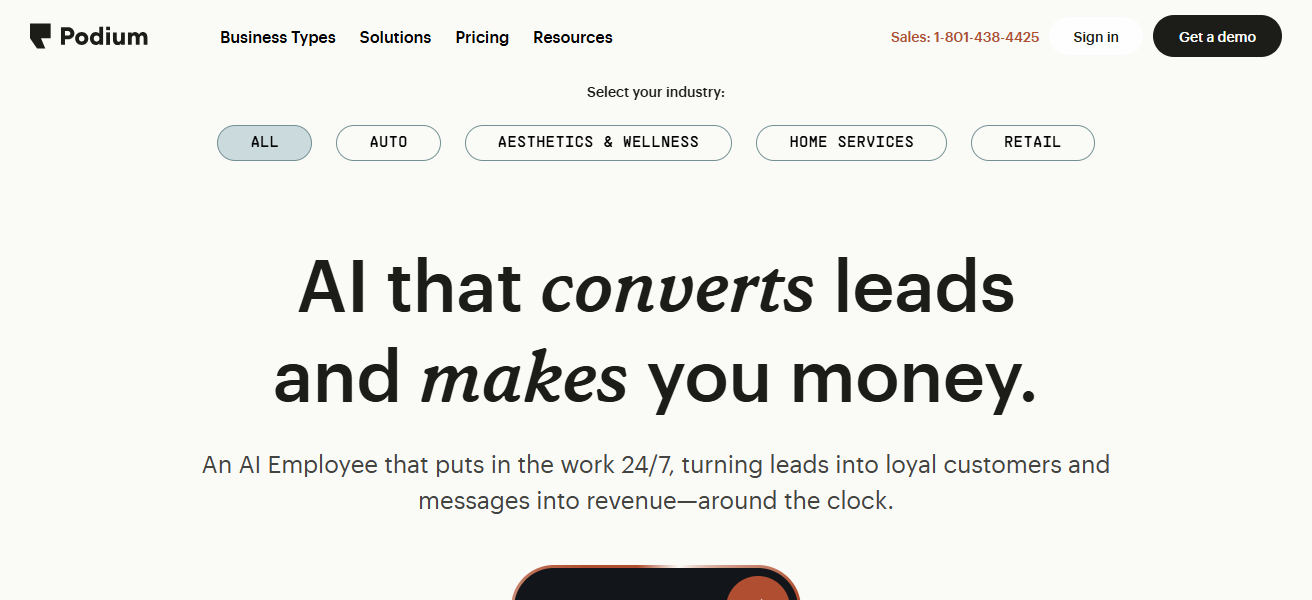
Podium Centralized Customer Conversations, Website Chat, Text & Social Media Messaging. It also helps businesses to gain feedback and modify customer experience on a real-time basis.
It is particularly used by local service companies such as automotive, healthcare, and retail. Podium allows online ratings to be automated for enhancing customer engagement and enables
businesses to convert more leads into customers with the help of positive reviews and fast communication channels, creating trustworthiness.
| Pros | Cons |
|---|---|
| Excellent SMS-based review collection system | Pricing is relatively high for startups |
| Centralized inbox for all customer messages | Limited customization in automation workflows |
| Improves response time and customer engagement | Can become costly with scaling usage |
| Easy-to-use interface for small businesses | Focus is heavily on messaging, not deep analytics |
| Strong lead conversion through conversations | Reporting features are less advanced |
3. Trustpilot
Day Translations Trustpilot is one of the best-known global business review platforms, which allows businesses to gather authentic customer reviews.
This lets businesses display genuine reviews on their site, which increases transparency and trust. Wherein customers are free to share experiences and businesses can react and take control of their reputation, for instance.

Trustpilot also has analytics tools that track how well the brand is performing on customer satisfaction.
For eCommerce, SaaS, and almost all other service-based companies. Trustpilot boosts your conversion rates and credibility of your brand by showing real user reviews.
Because of how it encourages honest feedback in an open review system, it may become a key tool for long-standing customer trust and your online reputation.
| Pros | Cons |
|---|---|
| Globally trusted review platform | Public review system can attract fake reviews |
| Increases brand transparency and trust | Limited control over negative feedback |
| Strong SEO benefits from user reviews | Paid plans needed for advanced features |
| Easy integration with websites | Not fully customizable for branding |
| Large customer base and recognition | Response management tools are basic |
4. Reputation.com
Reputation. com, an enterprise-level platform for better reputation management. It combines reviews, ratings, and social media references from different channels into one dashboard.
Artificial intelligence sentiment analysis tools to understand how customers feel and where to improve. It also has location-based reputation tracking for businesses like healthcare chains and retail franchises.

Reputation. Businesses can respond quickly to reviews with com and manage brand perception in a proactive manner.
By utilizing powerful analytics, organizations can make data-driven decisions that improve customer satisfaction, operational performance, and brand digital reputation on every online platform.
| Pros | Cons |
|---|---|
| Enterprise-level reputation management tools | Very expensive for small businesses |
| AI-driven sentiment analysis | Complex interface for beginners |
| Multi-location management support | Requires training for full utilization |
| Strong reporting and analytics dashboards | Long onboarding process |
| Integrates multiple review sources | Not suitable for low-budget users |
5. ReviewTrackers
ReviewTrackers — A customer feedback and review-monitoring platform through which you can track online reviews from more than 100 sites. It alerts you in real-time whenever a new review goes live with an option to respond swiftly.
The second is that the platform also performs sentiment analysis across your customer data for common issues and opportunities.

For example, ReviewTrackers can be used by restaurants, healthcare operators, and retail brands. It helps companies elevate customer experience by converting feedback into actions.
As well as that, businesses can see how they compare to their rivals. ReviewTrackers provides a better approach to reputation management with its central dashboard that makes sure you never lose touch with customer feedback, helping improve brand image everywhere your customers interact.
| Pros | Cons |
|---|---|
| Tracks reviews from 100+ platforms | Interface feels outdated to some users |
| Real-time alerts for new reviews | Limited marketing automation features |
| Strong customer sentiment analysis | Advanced analytics require higher plans |
| Easy competitor benchmarking | Customization options are limited |
| Centralized feedback management | Mobile experience is less advanced |
6. Yotpo
Yotpo is a top SaaS company for eCommerce marketing, reviews, and customer loyalty. It allows online stores to gather product reviews, ratings, and user-generated content that increase conversions.
Yotpo links directly to some of the biggest platforms like Shopify and Magento, enabling businesses to automate requests for reviews after purchase.

This program also includes loyalty and referral programs to reinforce repeat customers. To boost shopper confidence, AI is used to display only the most relevant reviews on the platform.
D2C Brands Utilization Yotpo is a popular solution among D2C brands that seek social proof and sales. The trust-building tools it offers enterprises to build better relationships with customers and create engagement over the long run.
| Pros | Cons |
|---|---|
| Excellent for eCommerce review collection | Pricing can be high for small stores |
| Strong integration with Shopify and Magento | Setup can be complex for beginners |
| Boosts conversions with user-generated content | Limited usefulness outside eCommerce |
| Loyalty and referral program support | Advanced features locked in higher tiers |
| AI-powered review display system | Requires technical setup for full use |
7. Grade.us
Grade. us provides agencies and businesses a white-label review generation & reputation management platform
The email / SMS review request automation allows you to solicit reviews from customers via automated emails and SMS, which means you can have a constant stream of customer feedback. Grade.
Use Track usTrackus enables users to track reviews across multiple channels and respond directly from the dashboard.

This is popularly used by agencies with multiple clients under one roof. It also offers reporting tools to measure the performance of the reviews and the effectiveness of campaigns.
Easier acquisition and management of reviews — Grade. Our digital marketing firm can give you visibility on the internet, build credibility, and create a communication bridge to enhanced reputation through continuous positive reception of feedback from consumers.
| Pros | Cons |
|---|---|
| Strong automation for review generation | Interface feels less modern |
| White-label solution for agencies | Limited advanced analytics |
| Supports multiple client management | Mobile features are weak |
| Easy email and SMS campaign setup | Not ideal for large enterprises |
| Good reporting dashboards | Lacks deep AI insights |
8. NiceJob
NiceJob is a reputation marketing platform that automates the collection and presentation of customer feedback.
It allows businesses to automatically ask customers for reviews following a service or sale. It also publishes positive reviews on social media and websites, creating more visibility.
NiceJob provides services targeting SMEs in home services, contractors, and local agencies. It is integrated with CRM systems and helps in smoothing the workflows.
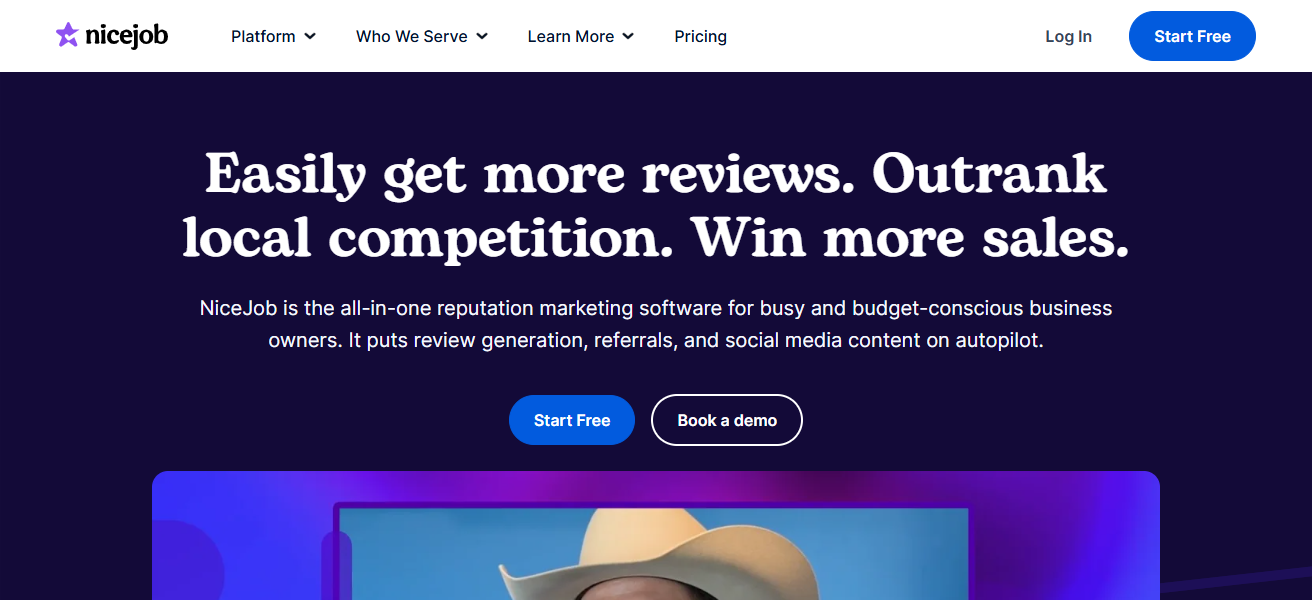
NiceJob enables your best customers to become brand ambassadors through positive recommendations, which ultimately leads to better online ratings and more incoming leads.
With published and even bulk posts, it saves time while constantly delivering a reputation through action and increasing trust in new customers as well.
| Pros | Cons |
|---|---|
| Fully automated review collection system | Limited customization options |
| Strong social sharing of positive reviews | Focus mainly on small businesses |
| Easy CRM integrations | Analytics are relatively basic |
| Helps increase lead generation | Not suitable for enterprise scale |
| Simple and user-friendly interface | Fewer advanced marketing tools |
9. Sprout Social
Sprout Social: A complete social media management tool that also offers reputation management with built-in tools for social listening and engagement.
It also facilitates monitoring of brand mentions, reviews, and feedback across social networks. It gives more detailed insights into what works with sentiment analysis and audience engagement trends.
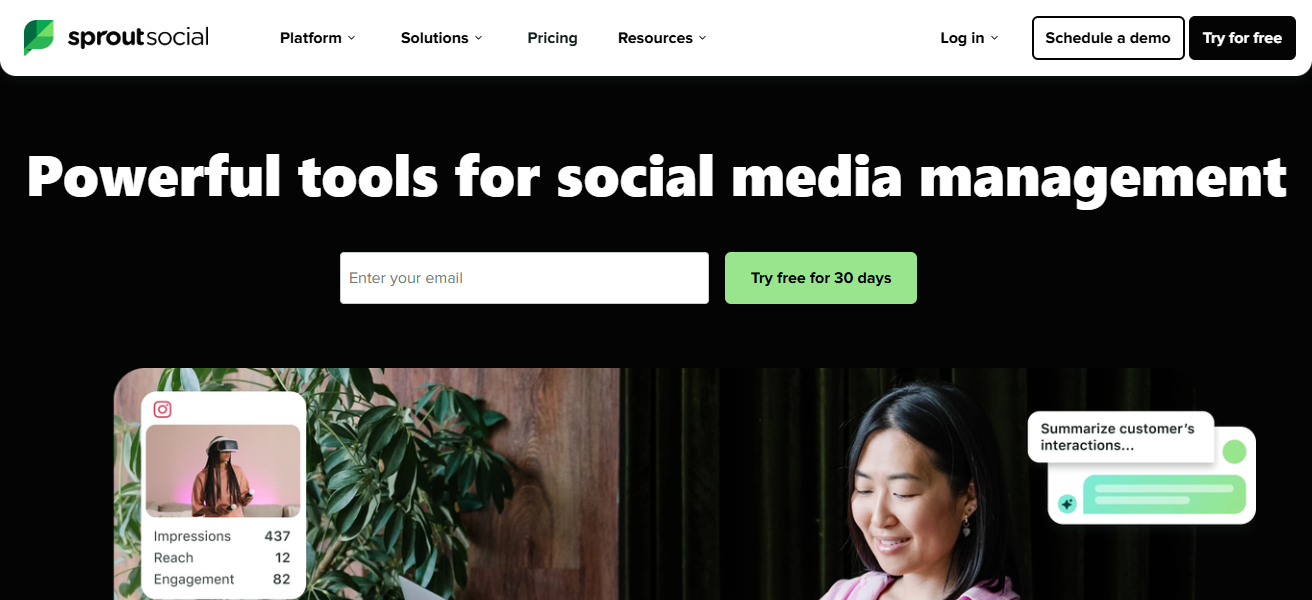
Businesses can reply to messages and comments from a single inbox. Many Marketing teams use Sprout Social for brand management and customer relationship improvement.
It allows businesses to monitor conversations in real time giving them the opportunity to safeguard their reputation, quickly troubleshoot issues, and help maintain a strong & positive brand image online.
| Pros | Cons |
|---|---|
| Powerful social listening and monitoring | Expensive for small businesses |
| Unified inbox for all communications | Reputation tools are secondary focus |
| Advanced analytics and reporting | Learning curve for beginners |
| Strong team collaboration features | Some features require higher plans |
| Excellent brand monitoring tools | Not dedicated solely to reviews |
10. Broadly
Broadly is a customer experience & reputation management Saas platform that caters specifically to local businesses.
Post-interaction, this app helps automate review requests via SMS and email. The platform brings customer communications into one place so you can easily manage messages, feedback, and reviews.
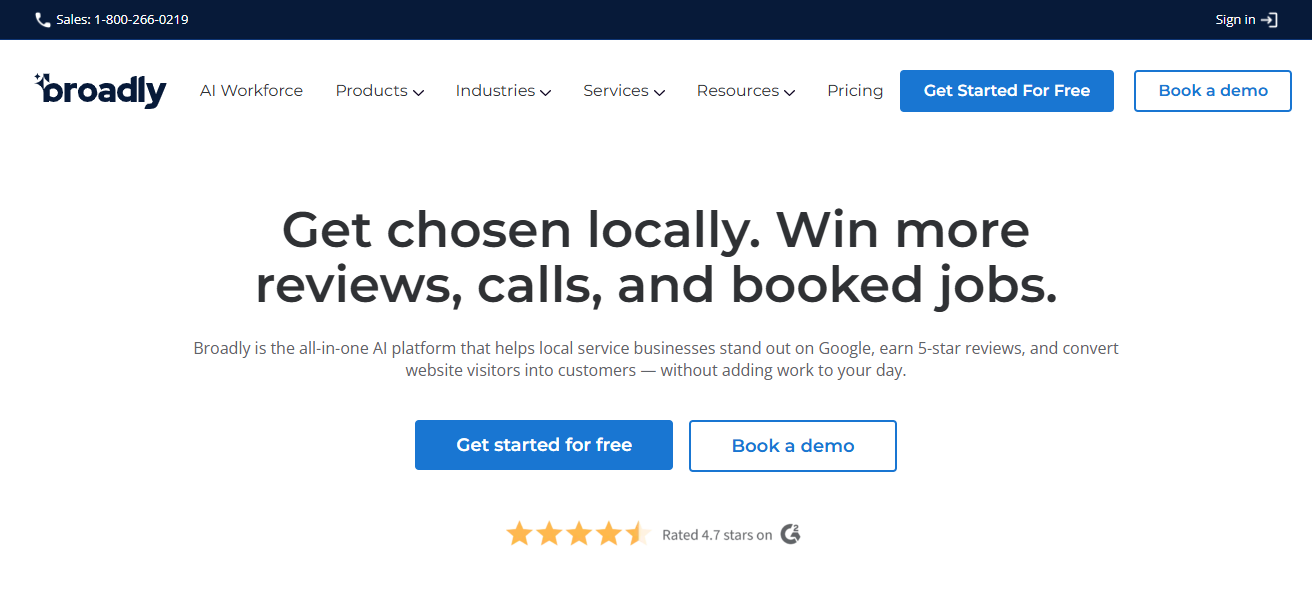
Broadly Works To Automate Lead Generation As Well By Turning Positive Experiences Into Online Reviews. The application connects with business websites and CRM tools to automate processes.
Broadly is used by a wide range of small businesses, including service providers (e.g. plumbers, dentists). It aids businesses in building trust, visibility, and growth by producing strong digital reputations through better online ratings and customer engagement.
| Pros | Cons |
|---|---|
| Simple review automation via SMS and email | Limited advanced analytics |
| Great for local service businesses | Not suitable for large enterprises |
| Improves customer communication easily | Customization options are limited |
| Helps generate more online reviews quickly | Fewer integrations compared to competitors |
| Easy-to-use dashboard | Basic reporting features |
Cocnsluion
Final Thoughts: Best SaaS Tools For Reputation Management build upfront trust, manage online reviews better & improve brand visibility.
Review automation, customer feedback monitoring, and insights-driven decision-making are some of them.
In the modern competitive digital market, if you make use of all the right tools, companies can improve customer satisfaction, increase online reputation, and achieve long-term development.
FAQ
What is Birdeye used for?
Birdeye is used to collect, monitor, and manage online reviews across multiple platforms from one dashboard.
Is Podium good for small businesses?
Yes, Podium is ideal for small businesses because it simplifies SMS-based review requests and customer messaging.
What does Reputation.com offer?
Reputation.com offers enterprise-level reputation tracking, AI analytics, and multi-location review management tools.
How does ReviewTrackers help businesses?
ReviewTrackers helps businesses monitor reviews from multiple sites and analyze customer sentiment for better decisions.