This article reviews the best robo-advisors for hands-off wealth building. These services help build wealth through automation and diversification, manage portfolios, and assist in financial planning.
We will review key features, fees, minimum investments, and what makes them good and bad robo-advisors so that investors can find the best automation service to help develop their long-term wealth-building strategy.
What is a robo-Advisor?
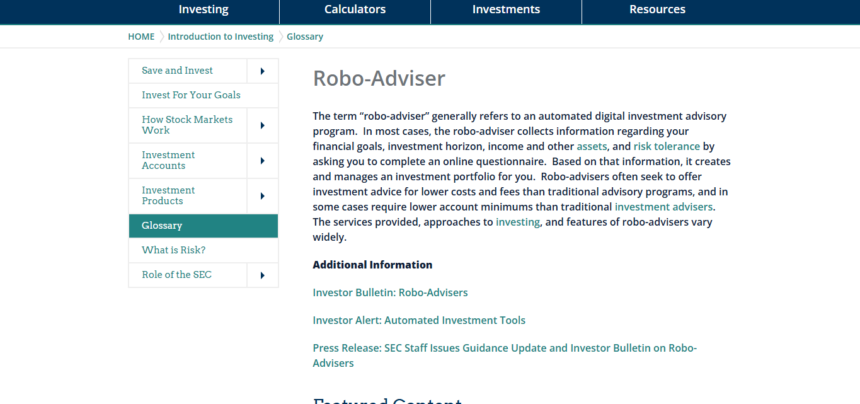
Robo-advisers are automated, goal-driven portfolio management tools. In addition to financial goals, an investor’s time horizon, risk tolerance and preferences are all essential input factors used to define and manage a goal driven investment plan.
Robo-advisors will conduct diversification, performance, automated rebalancing and tax-loss harvesting strategies. Investors with long-term, passive systematic wealth building goals will appreciate the services of a Robo-adviser. Daily management of investments is not required.
Key Points
| Platform | Explanation |
|---|---|
| Wealthfront | Best overall for goal planning, charging 0.25% annual management fees. |
| Betterment | Beginner-friendly platform offering customized portfolios and tax-loss harvesting strategies. |
| Fidelity Go | Low-cost investing with zero-fee funds and no lower-tier advisory fees. |
| Vanguard Digital Advisor | Excellent for retirement planning with transparent fees starting around 0.20% annually. |
| Charles Schwab Intelligent Portfolios | Hands-off investing solution, but requires maintaining a specific cash allocation. |
| SoFi Automated Investing | Provides automated management and access to licensed financial advisors without fees. |
| Acorns | Helps beginners save effortlessly through automated spare-change round-up investments. |
| M1 Finance | Offers customizable portfolio pies and flexible automated investing controls for users. |
| Empower | Ideal for wealthy investors combining automated tools with human financial advice. |
| Stash | Combines micro-savings features with automated smart investment portfolios for beginners. |
10 Best Robo-Advisors for Hands-Off, Automated Wealth Building
1. Wealthfront
Wealthfront began operations in 2008 and offers strong mobile applications, automated investing and goal planning, and diversified, goal and risk-adjusted investment portfolio offerings. Each portfolio is constructed according to the goals, risk management preference, and time horizon of the investor.
Wealthfront’s unique, tax efficient, portfolio rebalancing algorithms are automatic and adjust for anticipated tax liabilities. Wealthfront requires an initial investment of $500 and charges a 0.25% annual advisory fee.
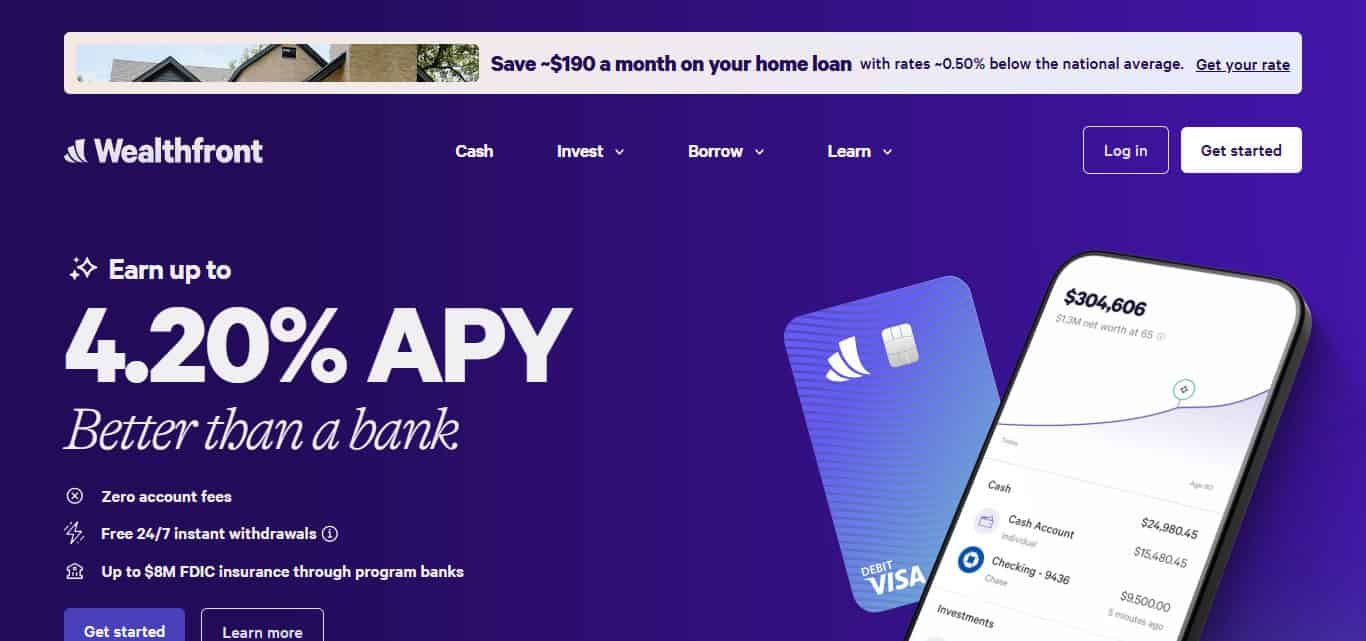
Wealthfront’s more advanced tax loss management features require a $100,000 investment. Wealthfront is excellent for investors who desire to automate their investment and planning needs while providing sophisticated control over their investment management.
Wealthfront Features
- Automated Investing: Creates diversified portfolios based on goals, risk tolerance, and timing
- Tax-Efficient Management: Rebalance portfolios while accounting for potential tax impact and efficiency
- Fees and Minimum: $500 to invest, 0.25% charge annually
- Advanced Tax Features: High balance accounts get access to tax loss management for an additional $100,000
| Pros | Cons |
|---|---|
| Automated portfolios provide diversified investing based on goals, risk, and timeline. | Advanced tax-loss management requires a relatively high $100,000 investment. |
| Automatic rebalancing helps maintain target allocations without regular investor intervention. | $500 minimum investment may discourage investors starting with very little capital. |
| Tax-efficient algorithms can help manage potential investment tax liabilities. | 0.25% annual advisory fee adds ongoing costs to portfolio management. |
| Strong planning tools support hands-off long-term wealth-building strategies effectively. | Limited direct investment selection may not suit active investors seeking control. |
2. Betterment
Betterment offers similar features to Wealthfront, specifically, goal-based planning, and diversified, automated, and risk-adjusted investment portfolio management. Users set goals, like retirement, wealth building, or saving for a large purchase.

Betterment also has a Digital investing service, which charges 0.25% annually. However, users with lower account balances and who do not meet the required, automated monthly deposit, are charged a $5 monthly fee. There is no minimum balance requirement for the investing account.
Advanced features include automated rebalancing and tax-managed investing. Thus, Betterment is a logical choice for investors looking for a customized, managed service for their portfolios without direct active investment selection control.
Betterment Features
- Goal Based Planning: Analyze retirement and wealth goals compared to major financial goals
- Automated Management: Diversify and monitor account investments with current portfolio allocation
- Fees and Minimum: $0 investment account minimum with a 0.25% charge annually
- Tax Management: Tax-loss harvesting and tax-managed invested portfolios
| Pros | Cons |
|---|---|
| Goal-based planning makes investing easier for retirement and major purchases. | Investors wanting individual stock selection receive limited direct investment control. |
| Automated rebalancing keeps portfolios aligned with selected investment strategies. | 0.25% annual fee creates ongoing management expenses for investors. |
| No minimum balance makes Betterment accessible to beginning investors. | Smaller balances may incur a $5 monthly fee without qualifying deposits. |
| Tax-managed investing can improve portfolio tax efficiency over time. | Advanced features may be unnecessary for investors seeking simple investing solutions. |
3. Fidelity Go
Fidelity Go was Fidelity’s first robo-advisor launched in 2016. It offers a low-cost option aimed at the user who seeks an easy automated way to manage their individual portfolio. Investors describe the build and management of a goal-directed portfolio using Fidelity Flex mutual funds.
There is no minimum needed to open an account, however Fidelity begins investing once the balance is at $10. There is no charge for accounts that hold $25,000 or less.

Accounts with a balance of $25,000 or more charge 0.35% annually. Fidelity Go also offers tax-loss harvesting and financial coaching for accounts above a certain threshold.
Fidelity Go Features
- Automated Investing: Launched in 2016 for automated management of Fidelity Flex mutual funds
- Goal Based Portfolios: Customize goal-based portfolios with chosen risk level
- Fees and Minimum: Start investing with no account minimum and $10, 0.35% charged annually with additional financial coaching on accounts $25,000 and above
| Pros | Cons |
|---|---|
| No minimum is required to open an account, improving accessibility. | Portfolio choices are primarily limited to Fidelity-managed Flex mutual funds. |
| Accounts up to $25,000 have no advisory management fee. | Balances above $25,000 incur a 0.35% annual management fee. |
| Automated portfolios provide straightforward, goal-oriented investment management for beginners. | Tax-management features may have eligibility requirements based on account circumstances. |
| Fidelity’s established investment ecosystem provides convenient financial services integration. | Less customization may appeal less to experienced investors seeking greater control. |
4. Vanguard Digital Advisor
Vanguard Digital Advisor, introduced in 2020, focuses on long-term goals related to retirement and wealth accumulation. Vanguard’s Digital Advisor helps build goal directed, diversified, and tax efficient portfolios.
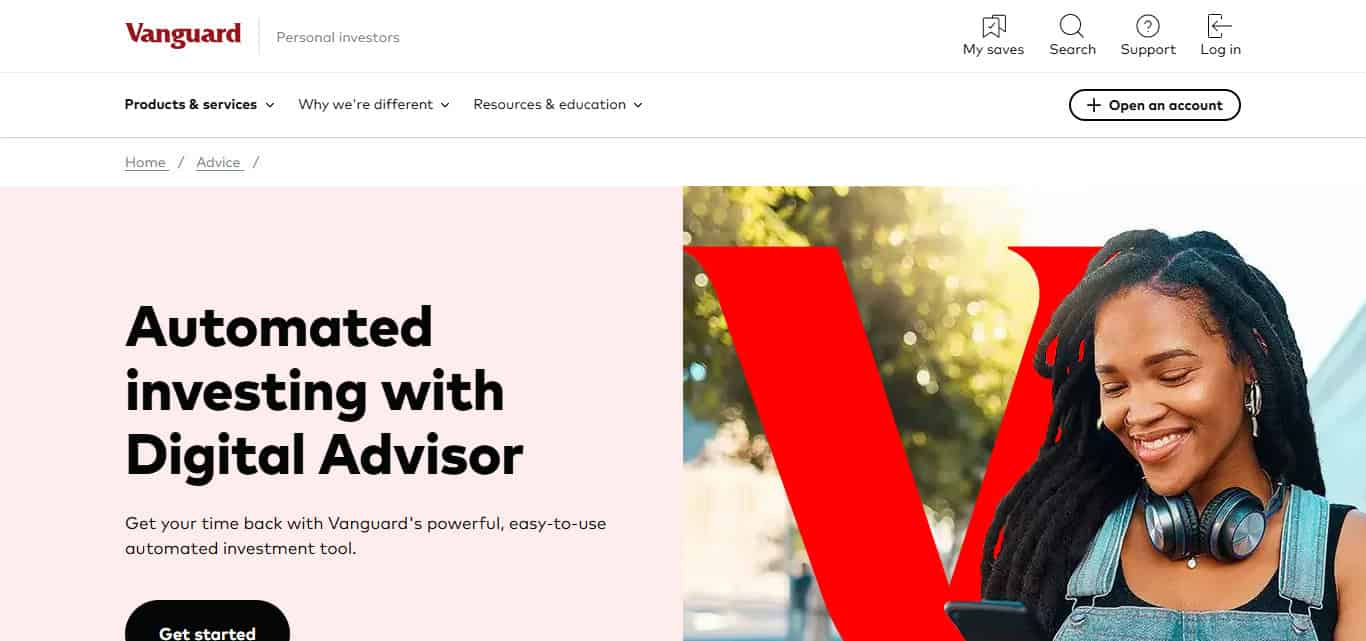
The digital advisor investment minimum was lowered to $100, making the digital advisor more accessible. Vanguard’s Digital Advisor offers a low-cost solution to digital advice with an estimated cost of about 0.20% annually, however, this price can vary.
Portfolios are monitored and rebalanced automatically resulting in goals for long term wealth being aligned with little to no effort on the user’s end.
Vanguard Digital Advisor Features
- Long Term Investing: Launched in 2020 to assist retirement savings plans
- Diversified Portfolios: Tax efficient and automatically diversified goals-based portfolios
- Fees and Minimum: $100 minimum investment with roughly 0.20% charge annually
- Automatic Rebalancing: Manage and adjust portfolio holdings with no ongoing involvement from investor
| Pros | Cons |
|---|---|
| Focuses strongly on long-term retirement and wealth accumulation goals. | Primarily designed for long-term investors rather than short-term strategies. |
| $100 minimum investment makes automated investing more accessible to beginners. | Estimated 0.20% annual cost can vary depending on circumstances. |
| Automatic monitoring and rebalancing reduce ongoing investor management responsibilities. | Investors seeking extensive human financial advice may find it limited. |
| Vanguard’s reputation supports a low-cost, diversified investment approach. | Portfolio customization may be less extensive than some competing platforms. |
5. Charles Schwab Intelligent Portfolios
In March of 2015, Charles Schwab also joined the robo-advisor market with the release of Intelligent Portfolios. Intelligent Portfolios is designed for users who want an entirely automated way to manage their portfolios.
Intelligent Portfolios builds, monitors, and rebalances a diversified ETF portfolio using the build information an user enters along with the user’s risk profile.
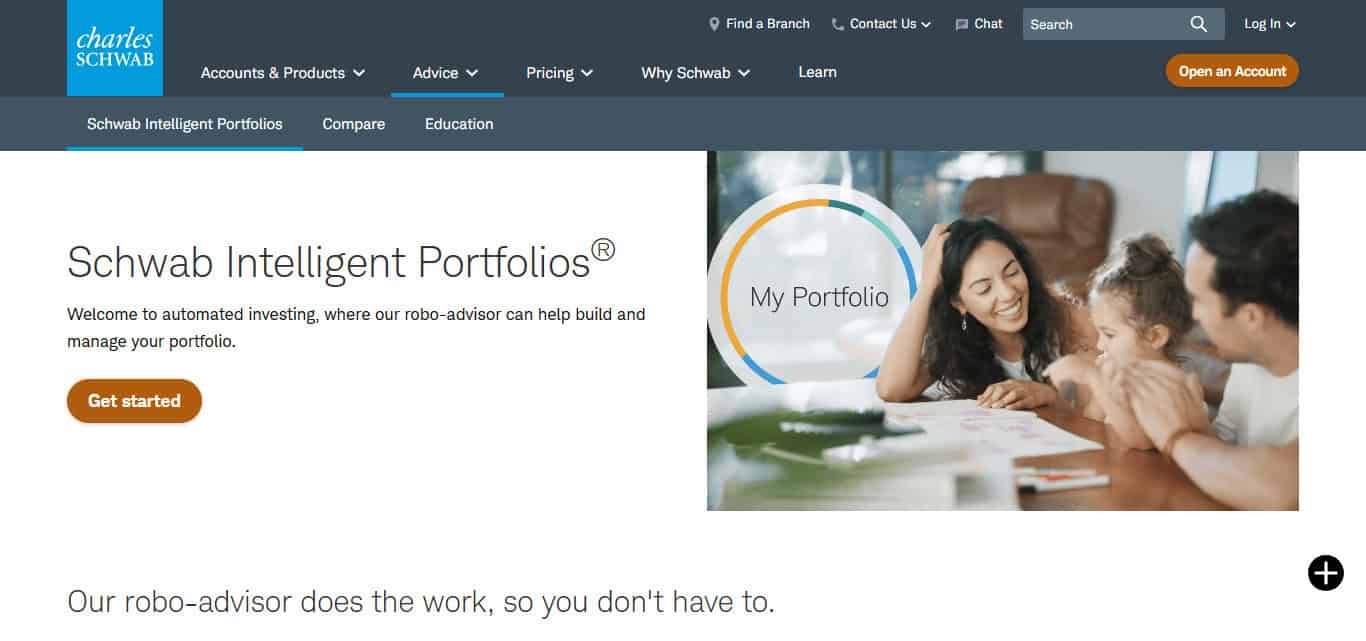
Currently the minimum document required is $5,000. With no advisory fees and no commission Schwab charges for their Intelligent Portfolios.
However, there are still certain ETF operating expenses. An aspect of Schwab that is particularly unique is their cash allocation requirement. A part of the portfolio is held in a deposit account that is insured by the FDIC based on the investor’s risk profile.
Charles Schwab Intelligent Portfolios Features
- Automated Management: Started offering fully automated management of investment portfolios on March 2015.
- ETF Diversification: Creates and manages portfolios built on diversified ETFs based on information provided by the client and their stated risk tolerance.
- Fees and Minimum: Set at a $5,000 minimum and with no advisory fees and no trading commissions.
- Cash Allocation: Treats required cash as an allocation, and eligible cash is protected by FDIC insurance.
| Pros | Cons |
|---|---|
| Charges no advisory fee, reducing ongoing portfolio-management expenses significantly. | $5,000 minimum investment creates a higher entry barrier for beginners. |
| Automated ETF portfolios provide broad diversification and automatic rebalancing. | Required cash allocation can reduce money invested in market assets. |
| Portfolio construction considers investor information and individual risk tolerance. | ETF operating expenses still create additional underlying investment costs. |
| FDIC-insured deposit allocation provides an additional cash-management benefit. | Cash allocation may limit potential returns during strong market performance periods. |
6. SoFi Automated Investing
SoFi Automated Investing caters to investors who wish to work with a simple, hands-off style investing system, but still wish to integrate SoFi’s financial service offerings. SoFi automatically builds portfolios, adjusts them, and manages them based on their goals and risk tolerance.
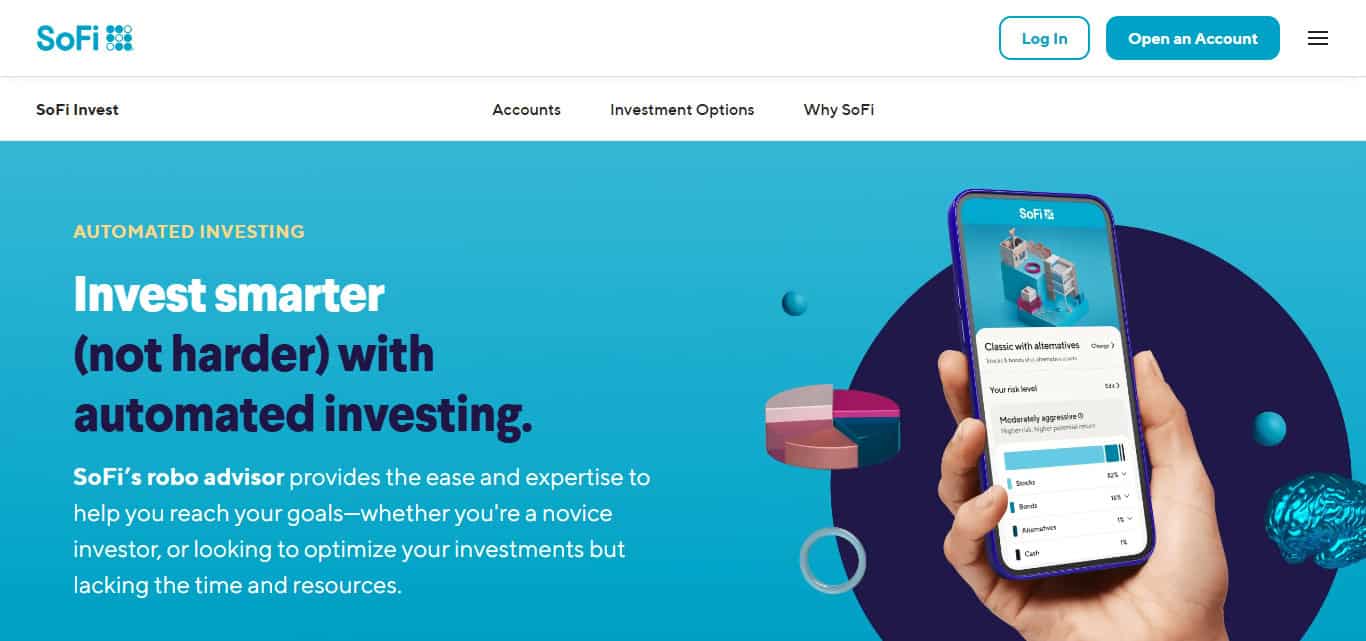
Launch date: SoFi’s robo-advisor platform launched on November 12, 2024. This newer platform augments some of their existing automated investing services. Fees: SoFi’s newer Robo Investing service offers a 0.25% annual advisor fee.
Minimum deposit: SoFi allows most investors to start with a very low initial investment. There are no traditional trading commissions, but underlying ETF costs and other expenses may apply.
SoFi Automated Investing Features
- Hands-Off Investing: Builds and manages portfolios based on the goals and risk tolerance of the investor.
- Automated Adjustments: Optimally allocates portfolios, meaning investors do not need to frequently adjust their portfolios.
- Launch and Fees: Started on November 12, 2024, featuring a 0.25% annual advisory fee.
- Low Starting Cost: Features a low initial investment, with no traditional trading commissions.
| Pros | Cons |
|---|---|
| Provides simple automated investing for investors seeking hands-off portfolio management. | 0.25% annual advisory fee creates ongoing investment management costs. |
| Portfolios are managed according to investor goals and risk tolerance. | Underlying ETF expenses can increase the total investment cost. |
| Integrates automated investing with SoFi’s broader financial services ecosystem. | Newer robo-advisor platform has less operating history than established competitors. |
| Low starting requirements make investing accessible to many beginners. | Investors wanting extensive portfolio customization may find fewer choices available. |
7. Acorns
Acorns can help investors who want to let investing become a habit as part of their everyday spending, even with small amounts, like with automatic investing. Launch date: Acorns launched one of the first micro-investing platforms in 2012 to help consumers with automated investing.
Fees: In 2026, Acorns’ fees were $4/mo for Bronze, $8/mo for Silver, and $12/mo for Gold. Minimum deposit: Investors can open an Acorns account with $5.
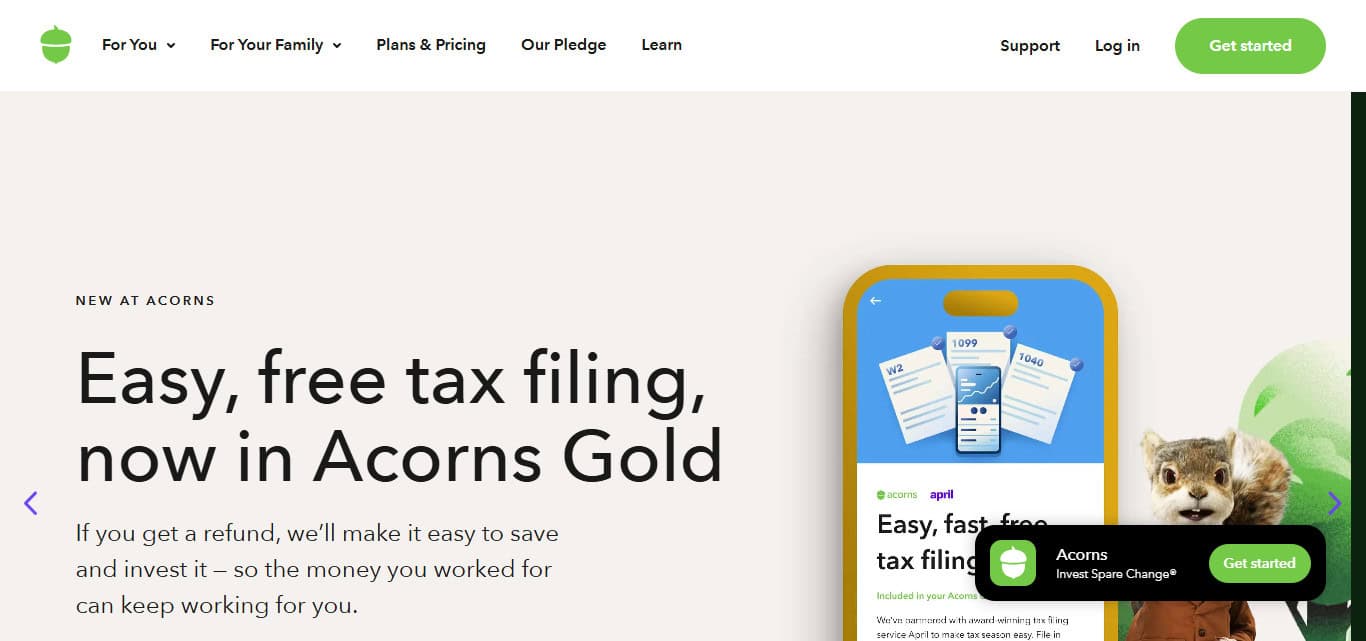
There are no trading commissions for investors, but the subscription will cover the platform’s costs. Because Acorns charges a flat monthly fee instead of a management fee, for low balances, the effective annual cost can be relatively high.
Acorns Features
- Micro-Investing: Opened for investing in 2012 to help beginner investors by offering them a way to invest their spare change automatically.
- Automatic Investing: Turns regular spending and contributions into long-term savings by making regular, consistent investments.
- Subscription Fees: Tiers will be $4, $8 or $12 monthly in 2026.
- Minimum Investment: Has a minimum investment of $5, but subscription fees affect smaller balances.
| Pros | Cons |
|---|---|
| Automatic investing helps beginners develop consistent long-term investment habits. | Monthly subscription fees can become expensive relative to smaller account balances. |
| $5 minimum investment makes starting extremely easy for new investors. | Plans cost $4, $8, or $12 monthly, depending on membership tier. |
| Micro-investing allows users to invest small amounts automatically. | Flat subscription pricing may create higher effective costs for beginners. |
| Simple platform design makes investing approachable for inexperienced users. | Investors seeking advanced portfolio customization may find features comparatively limited. |
8. M1 Finance
Compared to SoFi, M1 Finance, gives the investor more control while still utilizing automated investing. Its signature “Pies” allow users to invest in stocks and ETFs, while automated investing automatically puts new contributions towards the target allocation.
Launch date: M1 Finance was founded and launched in 2015. Fees: M1 charges a $3 monthly Platform Fee or IRA Fee for accounts that do not satisfy its waiver requirements. This fee is waived if the account investor maintains $10,000 in the M1 account or has an active M1 Personal Loan.
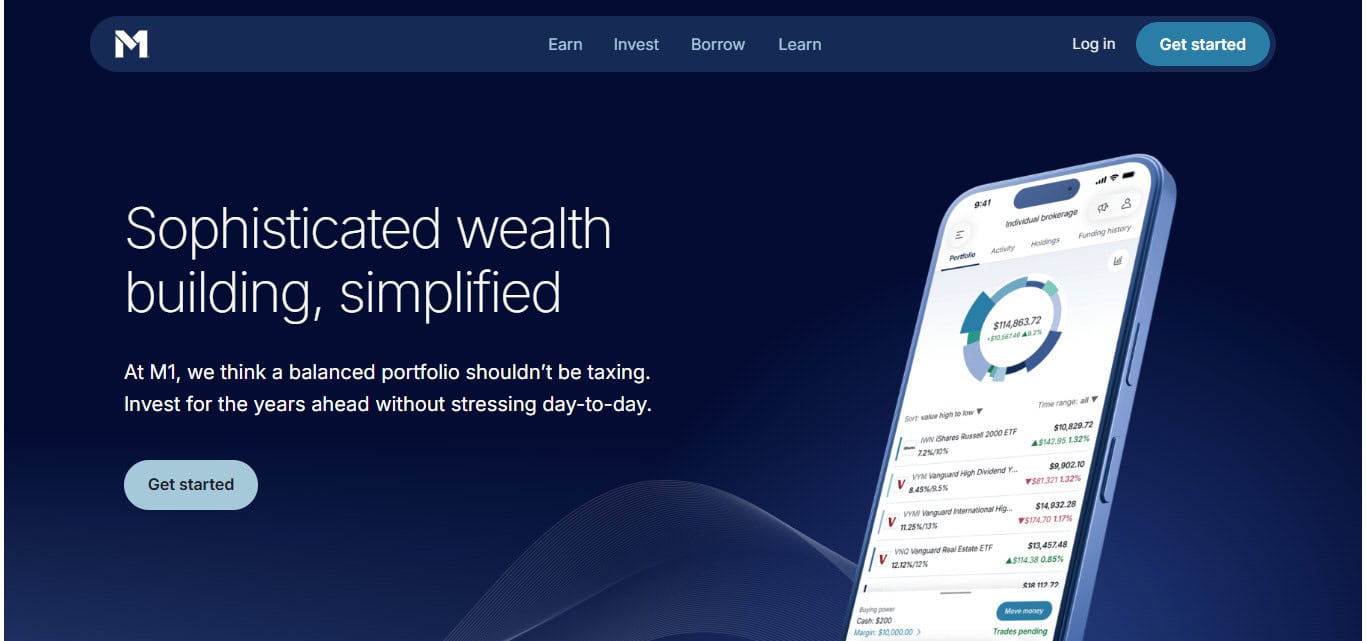
Minimum deposit: M1 Invest focuses on low costs, though specific account costs may vary. M1 offers a standard investing platform for which no annual percentage-based management fee is charged. Expenses for the underlying funds and certain account-related expenses may be charged.
M1 Finance Features
- Automated Investing: Uses automated investing, but allows investors to customize their portfolios with flexible and adjustable Investment Pies.
- Portfolio Allocation: If an Investment Pie falls below a desired allocation, new investments will be directed to that Pie.
- Platform Fees: Has a $3 monthly platform fee unless fee waivers are triggered.
- Investment Costs: No percentage-based management fee, but ETFs and account maintenance costs are incurred.
| Pros | Cons |
|---|---|
| Customizable Pies provide investors greater control over portfolio construction. | $3 monthly fee applies when investors do not qualify for waivers. |
| Automated contributions help maintain desired portfolio allocations efficiently. | Underlying ETF expenses still contribute to overall investment costs. |
| Standard investing has no percentage-based annual management fee. | Greater customization may require more investor involvement than traditional robo-advisors. |
| Combines self-directed investing with useful automated portfolio-management features. | Some account-specific services may involve additional charges or requirements. |
9. Empower
Empower combines features for automated portfolio management and financial planning along with access to financial professionals. Empower was founded in 2020 and acquired Personal Capital in 2020. Empower started its Personal Wealth division in 2023.
Fees: Empower’s Premier Managed Account’s first year is 0.50% of assets under management, and subsequent years are 0.50% of assets under management. For a more fully integrated Personal Strategy, the fee is 0.89% of assets under management and the minimum investment is $100,000.
Empower may be a higher cost than basic robo-advisors, but for investors that want planning, tax optimization, and professional oversight, Empower provides more value.
Empower Features
- Wealth Management: Provides automated investing and financial planning, and access to financial advisors.
- Personalized Strategies: Combines portfolio management with retirement planning and strategies for tax and wealth management.
- Management Fees: Premier Managed Accounts charges 0.50% annually, while Personal Strategy charges 0.89%.
- Minimum Investment: Personal Strategy is better suited to wealthier investors, due to the $100,000 minimum required investment.
| Pros | Cons |
|---|---|
| Combines automated investing with comprehensive financial planning and professional guidance. | Management fees are higher than many basic robo-advisor alternatives. |
| Tax optimization can help improve investment efficiency for eligible investors. | Personal Strategy requires a substantial $100,000 minimum investment. |
| Access to financial professionals provides additional support beyond automation. | 0.89% annual fee makes comprehensive Personal Strategy relatively expensive. |
| Useful for investors managing complex, long-term wealth-building objectives. | Extensive features may be unnecessary for investors seeking simple automated investing. |
10. Stash
Stash is designed for beginner investors who want automated stock investing but also want to choose individual stocks and ETFs.
It offers a platform for investing, retirement planning, financial learning, budgeting, and Smart Portfolios. Date of launch: Stash launched services in February of 2015.
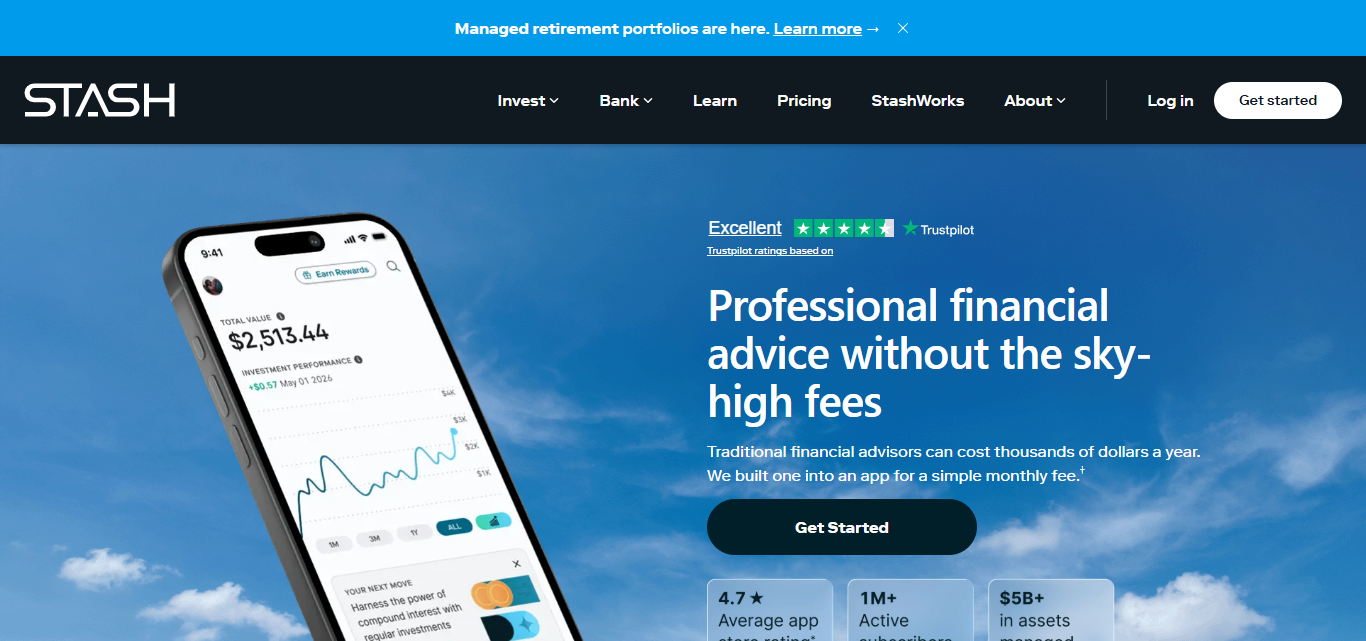
Cost A Stash Plan currently costs $12 per month or $108 per year. Stash also charges a 0.25% advisory fee on Smart Portfolios with a minimum of $1,000 and Managed Retirement Accounts.
Minimum investment: Stash allows extremely small investments. Currently, they explain that one can begin an investment with as little as $0.01 and Discretionary Managed Accounts require a minimum of $5. Investors must also account for the fees of each fund as well as additional costs that will likely occur.
Stash Features
- Beginner Investing: Automated investing with stock selection launched in February 2015.
- Financial Tools: Offers stocks, robo-advisory, retirement planning, budgeting, financial education, and Smart Portfolios (individually managed accounts).
- Subscription Costs: Plans are $12 per month or $108 per year with a minimum of $0.01, and managed accounts require a minimum of $5.
- Low Minimum: With a minimum investment of $0.01, and a minimum of $5 for managed accounts, Stash offers investment opportunities at a low minimum.
| Pros | Cons |
|---|---|
| Beginner-friendly platform combines automated investing with individual stock selection. | $12 monthly subscription can be expensive for smaller portfolios. |
| Educational resources help new investors understand basic investment concepts. | Smart Portfolios may also incur a 0.25% annual advisory fee. |
| Investments can begin with extremely small amounts, improving accessibility. | Fund expenses and additional account costs can increase total expenses. |
| Combines investing, retirement planning, budgeting, and financial-learning tools conveniently. | Multiple features may overwhelm users wanting only simple automated investing. |
How We Pick the Best Robo-Advisors to Build Your Wealth on Autopilot
- Fees and Costs: We analyze investment costs, subscription fees, charges on your account, and fees stemming from the investments themselves.
- Minimum Investment: We research minimum investments to determine price range to fit different kinds of investors.
- Automation: We look at how well the company invests for you, views your investments for you, shifts your investments, and eliminates your responsibility as your personal CEO.
- Portfolio Diversification: We analyze tools that diversify your investments, protect from risk, and use ETFs and mutual funds.
- Tax Efficiency: We look at loss-harvesting, tax optimizing, reducing tax burden on company investments, and portfolio management.
- Goal Planning: We review planning for retirement and other wealth-building endeavors and financial management.
- Ease of Use: We evaluate the design on their mobile application and desktop version, and the simplicity of account management.
Conclusion
In summary, the best robo-advisors for passive wealth building include features for easy investing, diversified portfolios, automatic rebalancing, and goal-based planning. Wealthfront, Betterment, Fidelity Go, Vanguard Digital Advisor, Schwab, SoFi, Acorns
M1 Finance, Empower, and Stash each have different features, costs, investment requirements, and automation. When picking a robo-advisor to help meet long-term, financial goals, investors must consider costs, automation, tax features, customization, and support.
FAQ
Are robo-advisors suitable for beginners?
Yes, robo-advisors can simplify investing for beginners through automated portfolios, diversification, and portfolio management.
Which robo-advisor is best for hands-off investing?
Wealthfront, Betterment, and Vanguard Digital Advisor are strong choices for automated, hands-off investment management.
How much money is needed to start?
Minimum investments vary widely, with some platforms allowing investors to start with very small amounts.
Do robo-advisors charge management fees?
Yes, most charge advisory fees, subscription fees, or other account costs for managing investments.