I am going to talk about the AI Agents Explained What Are They and Why Everybody Is Talking About Them.
We are seeing a major trend in the impact ofAI agentsfor both businesses and individuals for automation, decision making, efficiency, etc.
From data analysis to customer service, these intelligent systems are rising into the limelight due to their practicality, increased productivity and what it will mean for the future of every industry globally.
What Are AI Agents?
Artificial intelligence agents Intelligent computer programs that help to perform a task without direct human input and work autonomously.
They can parse data, be able to make rational decisions and conclusions about the data given to them (this is where a human need comes into play), and they interact with users or digital environments in a more coherent way. Equipped with machine learning and natural language processing,
AI agents change and evolve as they are exposed to new information. Most commonly found in automation, customer support, data analysis and more
AI assistants are now offering real world applications to businesses and individuals that streamlines processes, saves time/effort and enhances productivity.
Key Poinst & AI Agents
Data Analysis Agent collects, processes, and analyzes large datasets to extract insights, trends, and actionable intelligence.
Customer Service Agent handles queries, resolves issues, and provides instant support through chatbots and automation systems.
Devin AI software agent autonomously writes, debugs, and deploys code, assisting developers with complex programming tasks.
Research Agent gathers information, summarizes findings, and generates insights from multiple sources quickly and efficiently.
Marketing Agent automates campaigns, analyzes customer behavior, optimizes ads, and improves engagement using data-driven strategies.
Salesforce Agentforce Agent enhances CRM workflows, automates sales tasks, and improves customer relationship management through AI.
Cybersecurity Agent monitors threats, detects vulnerabilities, and responds to attacks, ensuring systems remain secure and protected.
Logistics Agent optimizes supply chains, manages inventory, and improves delivery routes for efficiency and cost reduction.
Healthcare Agent assists diagnosis, analyzes medical data, and supports doctors in providing accurate and timely treatments.
Operator OpenAI agent executes tasks across tools, automates workflows, and assists users with complex multi-step operations.
Browser Use Agent navigates websites, extracts information, fills forms, and automates web-based repetitive tasks efficiently.
Database Performance Architect optimizes queries, manages databases, and ensures high performance, scalability, and system reliability.
Scheduling Agent organizes calendars, sets reminders, and coordinates meetings to improve time management and productivity.
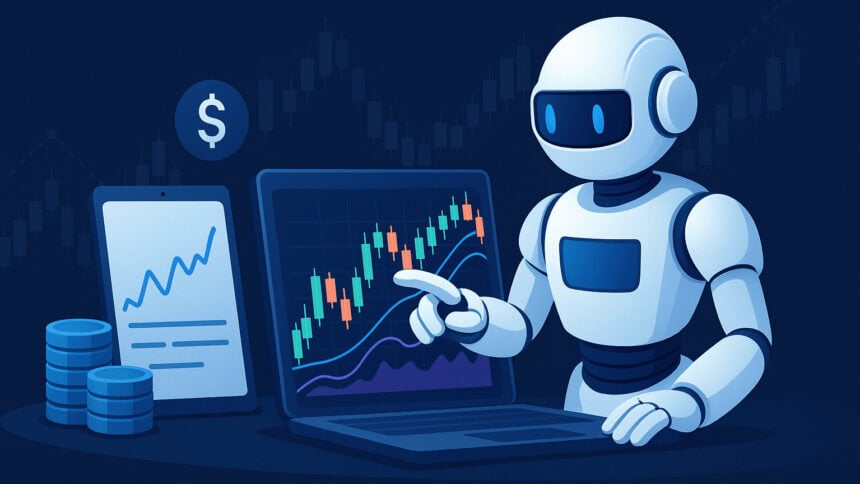
Finance Trading Bot analyzes market data, executes trades automatically, and optimizes investment strategies using algorithms.
Knowledge Assistant Agent retrieves information, answers queries, and helps users access accurate knowledge quickly and efficiently.
Supervisor Agent oversees multiple agents, coordinates tasks, and ensures smooth collaboration and goal achievement effectively.
Robotic Agent interacts with physical environments, performing tasks using sensors, actuators, and intelligent control systems.
17 AI Agents Explained What They Are and Why Everyone Is Talking About Them
1. Data Analysis Agent
A Data Analysis Agent primarily works on both structured as well as unstructured data, and generates actionable insights that can influence decision-making.
This enables businesses to quickly spot trends and patterns by automating data cleaning, transforming, and visualizing

Their capabilities often fall into the realm of big data, as these agents tend to integrate with databases, dashboards and machine learning models that deploy near real-time analytics.
They provide higher accuracy and speed in organizations dependent on data by minimizing human error and manual efforts.
They are the backbone of many industries ranging from finance to marketing and operations management where organizations use them for forecasting, tracking past performance, or charting future strategies.
| Pros | Cons |
|---|---|
| Improves decision-making accuracy | Requires quality data inputs |
| Saves time and manual effort | Setup can be complex |
| Scalable across industries | High initial implementation cost |
| Reduces human errors | Needs continuous monitoring |
| Enables predictive insights | Data privacy concerns |
2. Customer Service Agent
Artificial Inelligence Chatbots and Virtual Assistant is a customer service agent. It answers instantly, fixes common issues or escalates difficult cases to human representatives — if necessary.
These agents can operate on websites, apps and messaging platforms, ensuring round the clock support. They learn and adapt over time, improving response quality and personalization by analyzing customer interactions.

Chatbots save businesses support costs, bring down resolution time and improve customer experience; which is why they have become necessary tools for modern-day customer experience.
| Feature | Description |
|---|---|
| Chat Automation | Handles queries via chatbots |
| 24/7 Support | Provides round-the-clock assistance |
| Multi-platform | Works on websites, apps, messaging platforms |
| Personalization | Learns from interactions to improve responses |
| Escalation | Transfers complex issues to humans |
3. Devin AI (Software)
Devin AI is a sophisticated software development agent that aims to help developers with their entire coding lifecycle. It is capable of writing code, debugging errors, running tests and even deploying an application independently
It trains on data up to October 2023, and by understanding natural language instructions helps developers convert ideas into functional programs more quickly.

Devin makes you more productive by cutting down on repetitive coding activities and helping with intricate problem-solving.
The model also learns from past projects to increase performance. That is what makes it a hot cake startup and enterprise to speed up software development in an economical way.
| Pros | Cons |
|---|---|
| Boosts developer productivity | Still evolving technology |
| Reduces repetitive coding | May generate incorrect code |
| Supports full lifecycle | Needs human supervision |
| Saves development time | Security concerns in code |
| Enhances problem-solving | Limited context understanding |
4. Research Agent
Research Agent automatically collects and analyze information from numerous sources. It sweeps through articles, reports, databases and the web to assemble relevant data in a flash.
These agents summarize findings, extract key points and action items which can save significant research hours. They are often used in academia, journalism, and business intelligence.
Research Agents allow professionals to decrease information overload and enhance accuracy, which means that they can devote more time to critical thinking and timely decision making pieces of work instead of still carrying out manual data collection and analysis tasks.
| Pros | Cons |
|---|---|
| Saves research time | May include inaccurate sources |
| Reduces information overload | Limited deep analysis |
| Improves productivity | Requires validation |
| Handles large data volumes | Bias in data sources |
| Scalable usage | Context limitations |
5. Marketing Agent
AI-driven Marketing Agent utilizes AI to automate marketing processes and optimize them over multiple channels After analyzing data about customers—interesting patterns, behaviors—with a view to building campaigns around what people are engaging with.

These agents have the ability to manage email marketing, social media postings, and advertising plans — all while learning from data insights to improve performance.
They make conversions, reduce costs, and personalize customer experiences. Marketing Agents are a critical part of scaling marketing operations and driving measurable business growth through the combination of analytics and automation.
| Pros | Cons |
|---|---|
| Increases ROI | Data dependency |
| Saves marketing time | Requires proper configuration |
| Improves targeting | Privacy concerns |
| Scalable campaigns | Can feel automated |
| Enhances engagement | Needs continuous optimization |
6. Salesforce Agentforce Agent
Through automation of repetitive sales and service tasks, a Salesforce Agentforce Agent provides improvement to customer relationship management.
It is integrated with CRM systems to help in lead management, tracking customer interactions and predicting customer needs via AI-powered insights.
These agents help in creating seamless workflows which allows the sales teams to concentrate on closing deals instead of doing administrative work.

They also increase data confidence and offer actionable recommendations for accurate decision-making.
Agentforce Agents enhance productivity, drive customer engagement and improve overall business performance in competitive markets by capitalizing on AI capabilities within CRM processes.
| Pros | Cons |
|---|---|
| Improves sales productivity | Requires CRM setup |
| Enhances customer engagement | Costly implementation |
| Reduces manual tasks | Learning curve |
| Accurate data tracking | Customization complexity |
| Better decision-making | Dependency on system |
7. Cybersecurity Agent
An example of a cybersecurity agent is the Cybersecurity Agent Monitoring networks using detection and response technology that enables digital system protection from threats like malware attacks.
It leverages machine learning to detect anomalous patterns and weaknesses before they are exploited. Such agents can automatically respond to incidents, cutting down the reaction time and limiting the amount of damage.

They are important in protecting sensitive data and ensuring the integrity of a system. Cybersecurity Agents help organizations prepare for new and changing threats, maintain compliance, and develop better overall security durability in an ever more complicated digital ecosystem.
| Pros | Cons |
|---|---|
| Improves security posture | False positives possible |
| Faster threat response | Requires updates |
| Protects sensitive data | Complex implementation |
| Reduces manual effort | High cost |
| 24/7 monitoring | Needs expert oversight |
8. Logistics Agent
Logistics Agent: Inventory Management and drawing of customer demand prediction plans in supply chain operations, ie planning delivery routes which are best en chemin.
This enables real-time data analysis for fewer delays, cost reductions, and overall efficiency. Agents like this allow businesses to track shipments, manage warehouses and coordinate transit all in one.

They lend accuracy and speed to the core supply chain processes by automating various complex logistics operations.
Logistics agents are employed by companies to enhance customer satisfaction, reduce wastage and maintain their competitive advantage in the ever-dynamic digital-friendly sectors like e-commerce, manufacturing & global distribution networks.
| Pros | Cons |
|---|---|
| Reduces operational costs | Data dependency |
| Improves delivery speed | Integration challenges |
| Enhances efficiency | Initial setup cost |
| Real-time tracking | Requires maintenance |
| Scalable operations | Accuracy depends on data |
9. Healthcare Agent
The Healthcare Agent works alongside medical professionals, processing patient data, aiding diagnosis and advising on treatments. It analyzes huge amounts of clinical data, medical records and research information.

They will be capable of real time surveillance of patient health and warn doctors about possible risks. They enhance patient care and outcomes through greater diagnostic accuracy and less work.
In hospitals, telemedicine platforms and research institutions nationwide Healthcare Agents are being used to push forward modern medical practices.
| Pros | Cons |
|---|---|
| Improves patient outcomes | Privacy concerns |
| Reduces doctor workload | Requires regulation |
| Accurate analysis | Risk of misdiagnosis |
| Real-time monitoring | High implementation cost |
| Scalable healthcare support | Ethical concerns |
10. Operator (OpenAI)
Operator OpenAI Agent operates for complex n-step tasks using various tools and platforms. It can Read more It can automate workflows, talk to software systems and do actions based on the user instructions.
An agent that builds a reasoning, planning and execution rich specification of processes to coordinate their actions based on multi-process specifications was trained.

It reduces manual work and speeds up operations, helping users save time. Organizations and people use it to increase their productivity, be more efficient with repetitive tasks, deal with multiple digital actions better.
| Pros | Cons |
|---|---|
| Saves time | Requires proper setup |
| Automates workflows | Learning curve |
| Improves efficiency | Risk of errors |
| Handles complexity | Dependency on tools |
| Scalable usage | Needs monitoring |
11. Browser Use Agent
Browser Use Agent is responsible for automating your website interactions by entering, navigating pages, extracting data and fulfill forms.
By mimicking human browsing behavior, it can perform repetitive online tasks rapidly. These agents are useful for web scraping, data collection, and automated testing use cases.

This automation reduces the effort of manual browsing in order to save time and increase accuracy in data-driven workflows.
They are a cornerstone for social media monitoring and can potentially even assist businesses with competitive analysis and lead generation, as well forms of digital operations or research.
| Pros | Cons |
|---|---|
| Saves time | Website changes break workflows |
| Improves accuracy | Legal concerns |
| Handles repetitive tasks | Requires setup |
| Useful for scraping | Risk of blocking |
| Scalable operations | Maintenance needed |
12. Database Performance Architect
A Database Performance Architect Agent is a specialist who aims to make database systems faster, more efficient, and reliable.
It analyses query performance, detects bottlenecks and suggests optimisations to improve system responsiveness.

These agents make sure that databases can handle huge amounts of data while also being persistent. They also automate maintenance tasks such as indexing and backup management.
They help boost the performance of databases, enabling mission-critical services by providing applications, analytics and enterprise systems with reliable data access.
| Pros | Cons |
|---|---|
| Improves speed | Requires expertise |
| Ensures reliability | Complex setup |
| Reduces downtime | Costly tools |
| Enhances scalability | Needs monitoring |
| Optimizes performance | Learning curve |
13. Scheduling Agent
A Scheduling Agent assist user to utilize time & manage their calendars by scheduling reminders and setting up of meetings.
This can analyse availability, recommend best available time slots and even reschedule on its own They hook up with certain email and productivity tools to facilitate communicating and scheduling.
They streamlines scheduling conflicts and manual coordination, making processes smoother both on the professional as well as personal front.
Scheduling Agents help both businesses and individuals, by increasing efficiency, staying organized and having work completed on time.
| Pros | Cons |
|---|---|
| Saves time | Limited flexibility |
| Reduces conflicts | Depends on integration |
| Improves productivity | Privacy concerns |
| Easy scheduling | Errors in automation |
| User-friendly | Needs updates |
14. Finance Trading Bot
The Finance Trading Bot is an automatic system that utilizes algorithms and market data in real-time to conduct trades on behalf of you.
This is a trading method that takes an analytical approach to price movement, market trends and risk factors, to identify trade opportunities.
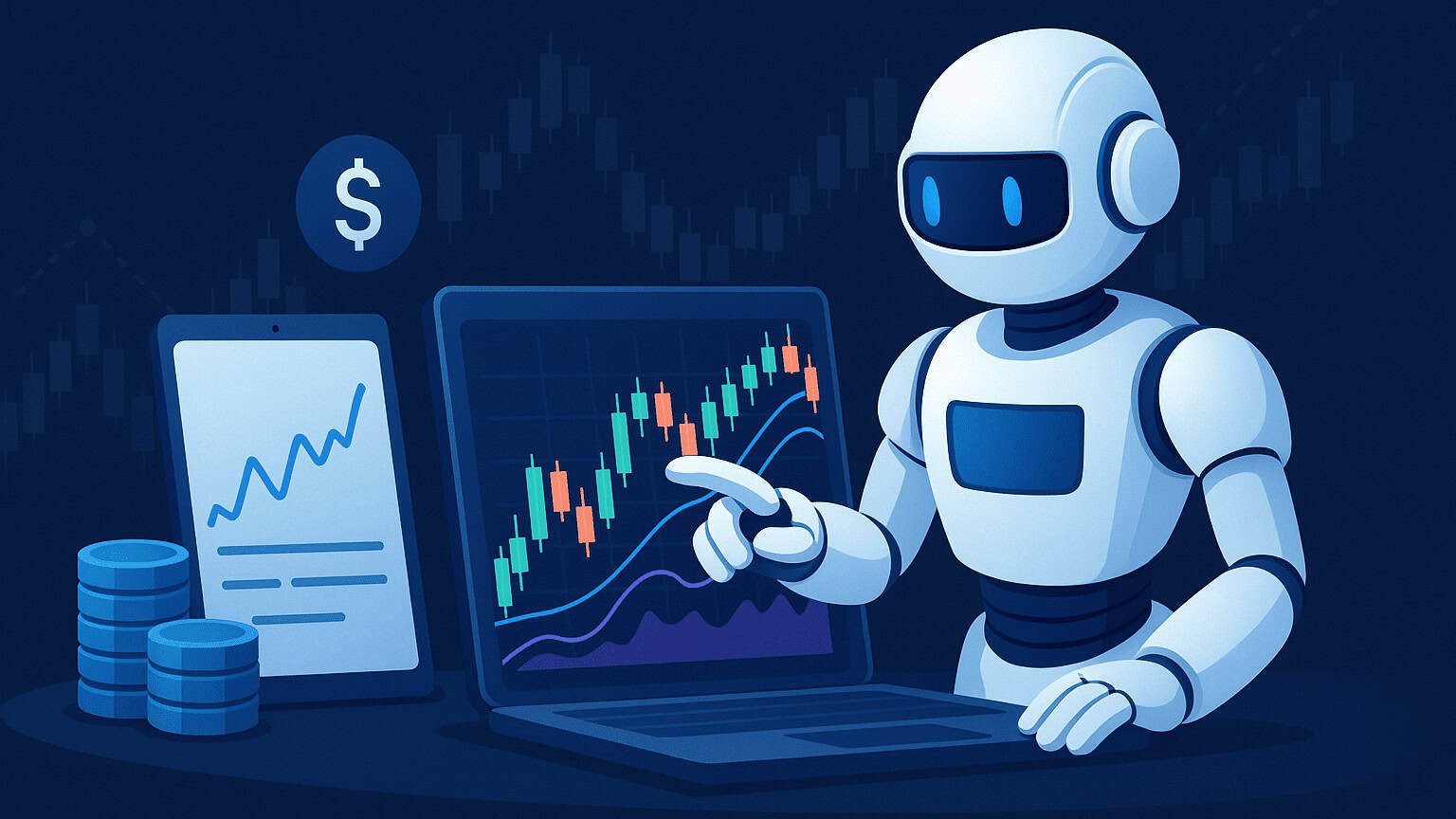
These bots run 24/7, react to opportunities at a pace beyond the ability of human traders. They assist investors with optimizing strategies, limits emotional decision-making and improves consistency.
Stocks, Forex and cryptocurrency markets have been seeing a surge of popularity in the use of Finance Trading Bots due to their efficiency and scalability options for both retail traders as well as institutional investors.
| Pros | Cons |
|---|---|
| Removes emotional trading | Risk of losses |
| Fast execution | Requires monitoring |
| Works 24/7 | Market volatility risk |
| Improves consistency | Technical complexity |
| Scalable trading | Dependency on algorithms |
15. Knowledge Assistant Agent
Abstract: Knowledge Assistant Agent is an intelligent information obtaining system to help users find correct answers in no time.
That field queries — searches relevant data sources — and provides brief responses. Such agents are widely leveraged in customer support, education and enterprise knowledge management systems.
They increase productivity and decision-making by minimizing search time and enabling easy access to information.
Over time and across different use cases, Knowledge Assistant Agents learn from interactions, making them more accurate and useful.
| Pros | Cons |
|---|---|
| Fast information access | May give incorrect answers |
| Improves productivity | Needs training |
| Scalable support | Context limitations |
| Easy to use | Data dependency |
| Continuous learning | Requires updates |
16. Supervisor Agent
A Supervisor Agent oversees and coordinates multiple AI agents to enable seamless task execution. It delegates duties, tracks progress and mediates disputes among agents.
It ensures that all the agents work together towards similar goals by overseeing operations. These agents play a vital role in complex systems that require mutual relations.

They also enhance the system reliability, scalability and performance by making them an integral component for multi-agent systems like automated workflows, robotics, large scale enterprise systems etc.
| Pros | Cons |
|---|---|
| Improves system efficiency | Complex setup |
| Ensures coordination | Needs monitoring |
| Enhances scalability | Resource intensive |
| Reduces conflicts | Implementation challenges |
| Better workflow control | Dependency on system |
17. Robotic Agent
A Robotic Agent is one that acts on the physical world through some sensors, actuators, and control systems.
This allows it to execute tasks like assembly, navigation and object manipulation in the real world. Such agents are everywhere — in manufacturing, in healthcare and in service industries.

When AI is augmented with robots, the two together promise greater efficiency ad accuracy & safety.
Robotic Agents are needed for the automation of industries that require relevant physical labour enabling advanced capabilities like autonomous vehicles, robotic surgery and state-of-the-art industrial systems.
| Pros | Cons |
|---|---|
| Improves efficiency | High cost |
| Enhances precision | Maintenance required |
| Reduces human labor | Safety risks |
| Works in harsh environments | Complex setup |
| Enables automation | Limited adaptability |
Why Everyone Is Talking About Them
Automation & Time Saving AI agents eliminate dull, tedious and repetitive tasks, massively reducing the need for manual work thus freeing priceless time.
Productivity Boost They carry out tasks faster and more accurately, resulting in increased productivity for people and businesses.
Cost Efficiency Organizations utilize AI agents to optimize operational costs with optimum performance and scalability.
Smarter Decision-Making AI agents consider live data and finally deliver insights that lead to better, faster business decisions.
24/7 Availability They run around the clock, ensuring that there is guaranteed operation and a constant flow of output.
Easy Integration AI Agents interfaces with tools, APIs, and platforms making them versatile and re-configurables across workflows.
Personalization By analyzing user behavior, preferences, and interaction patterns, They provide personalized experiences.
Multi-Agent Collaboration Many agents aid each other by collabrating for solving complex problems faster and smarter.
Conclsuion
In cocnsluion AI agents are moving through industries at astonishing rates automating tasks, enhancing business processes, or bringing intelligent decision making capabilities to the table.
Be it business operations or personal productivity, the contributions of AI just seem to grow. There technology evolves,
agents will be more powerful yet cheaper further promoting global innovations. This is why everyone is so excited about them as they lead the way in intelligent automation and digital transformation.
FAQ
How do AI agents work?
They use machine learning, data analysis, and algorithms to understand inputs, process information, and generate outputs.
Why are AI agents becoming popular?
They automate tasks, save time, reduce costs, and improve productivity across multiple industries.
What industries use AI agents the most?
Industries like healthcare, finance, marketing, logistics, and customer service widely use AI agents.
What is the difference between AI agents and chatbots?
Chatbots handle conversations, while AI agents can perform tasks, make decisions, and automate workflows.