
In this write-up, I’ll analyze and share my insights on the leading No-Code AI agent building tools and describe the ways in which they have redefined the ability of start-ups and developers to create intelligent applications in the absence of coding skills.
These modern tools, designed to allow the rapid prototyping and validation of AI flows, automation, and chatbots, also help enterprises to validate their business ideas
Sain traction with Minimal Viable Products (MVPs), and, within the constraints of the fast-paced digital economy, create and offer highly scalable, innovative AI solutions.
Key Points & Best No-Code AI Agent Builders for Rapid Prototyping
- Zapier AI enables no-code automation and rapid AI agent prototyping on a platform
- Make offers, visual workflow building for AI agent prototyping without coding, quickly
- Bubble provides a no-code app builder supporting AI agents and the fast creation of prototypes
- Relevance AI specializes in building no-code AI agents for business workflows rapidly
- Flowise is an open-source no-code tool for creating modular AI agent flows visually
- Langflow enables the visual building of LangChain-based no-code AI agent prototypes for rapid development
- Botpress offers a conversational AI builder for no-code chatbot agent prototyping solutions platform
- Voiceflow allows designers to create no-code AI voice agents quickly and with ease
- Stack AI provides a drag-and-drop platform for rapid AI agent creation and no-code workflows
- n8n enables flexible automation for building no-code AI agent systems efficiently now
10 Best No-Code AI Agent Builders for Rapid Prototyping
1. Zapier AI
Zapier AI is a popular no-code automation solution that incorporates AI agents directly in the workflow. For hundreds of thousands of apps, users can build automations without code.
With their recent AI updates, users can build automation with conversational systems, triggers, and smart routing.
It is extremely useful for marketing, CRM, and operations. For rapid prototyping, Zapier is a perfect tool for startups looking to efficiently build AI systems focused on productivity.
| Pros | Cons |
|---|---|
| Easy automation setup with thousands of integrations | Limited customization for complex workflows |
| Strong AI-assisted workflow suggestions | Can become expensive at scale |
| User-friendly interface for non-technical users | Less control compared to open-source alternatives |
2. Make
Make offers a visual interface that lets users formulate complex AI-based workflows without the need for coding.
In their recent improvements, Make offers smarter logic with AI to help users create the flow of operations. Users can formulate multi-step automation that integrates API, databases, and AI services.
This offers even the most customized and deepest automations. For startups looking to take their automation to the next level, this is a great way for teams to build deeply integrated systems focused on the operations, analytics, and services of the business.
| Pros | Cons |
|---|---|
| No-code platform for building full web apps | Steeper learning curve than other no-code tools |
| Highly customizable with plugins and APIs | Performance issues with very large apps |
| Strong community and marketplace | Limited mobile optimization |
3. Bubble
Bubble’s no-code app-building platform is a fast solution to develop apps for the web. The scope of application development is wide.
Integration of AI features allows for additional embedding of AI chat and automation agents within applications.
Startups use Bubble for MVP, SaaS tools, and marketplace applications. Visual editor coupled with a plugin editor is excellent for rapid prototyping. Founders can validate AI product offerings and marketplace(s) with the least amount of time and effort.
| Pros | Cons |
|---|---|
| No-code platform for building full web apps | Steeper learning curve than other no-code tools |
| Highly customizable with plugins and APIs | Performance issues with very large apps |
| Strong community and marketplace | Limited mobile optimization |
4. Relevance AI
Relevance AI’s intelligent AI agents offer data, insights, and workflow automation. For data-dependent decision-making, AI Relevance strengthens its offering with advanced vector-based memory and inter-agent collaboration.

Businesses leverage it to automate research and implement AI operations. For real-time data-driven applications, it provides a very strong offering in the category of AI system augmentability.
| Pros | Cons |
|---|---|
| Specialized in AI-driven data insights | Smaller ecosystem compared to general AI platforms |
| Strong focus on personalization and recommendations | May require technical expertise for setup |
| Good for customer experience optimization | Limited integrations outside analytics scope |
5. Flowise
Flowise is a builder for LLM-based AI applications, which is open-source and no-code. It allows integration with OpenAI and other vector databases.
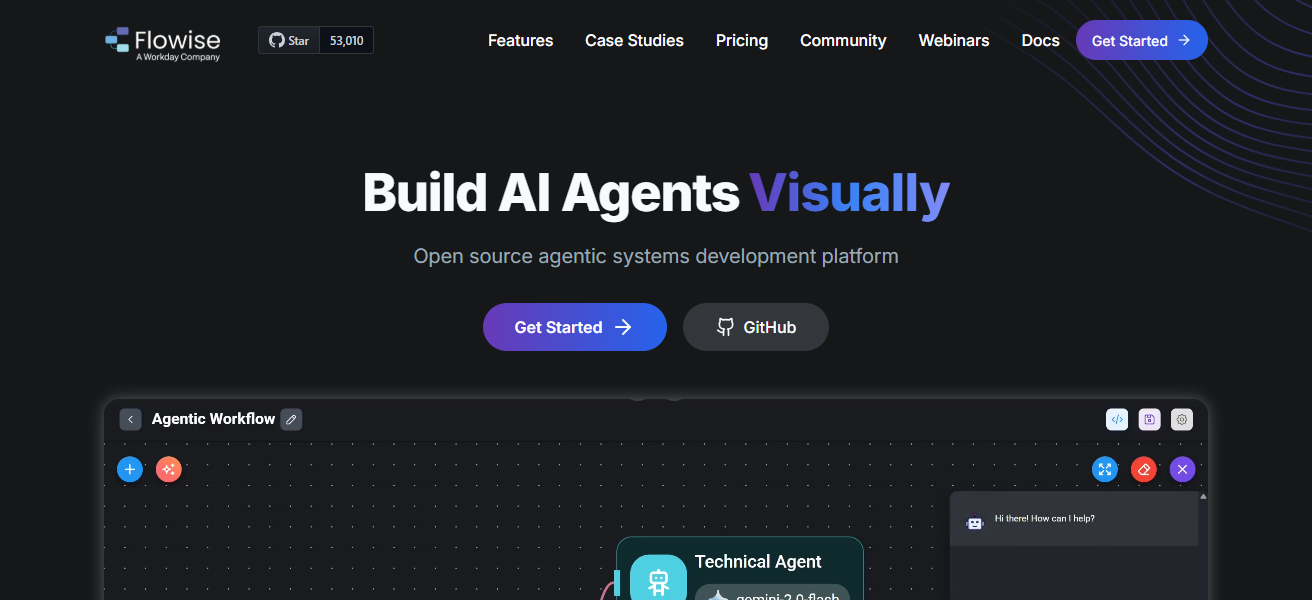
Flexibility and developer-friendly integrations have led to its increasing popularity. Startups leverage Flowise to build chatbots, document Q&A, and AI assistants.
Recent upgrades focus on modular nodes and ease of deployment for building AI applications. It is a great addition to the AI prototyping and experimentation tools.
| Pros | Cons |
|---|---|
| Open-source and flexible | Requires technical knowledge to deploy |
| Great for building LLM-powered workflows | Smaller community compared to commercial tools |
| Customizable nodes for advanced use cases | Less polished UI than paid platforms |
6. Langflow
Langflow is a visual tool for LangChain users that makes building AI workflows easy with a drag-and-drop interface. With Langflow, both developers and non-developers can design advanced LLM pipelines with ease.
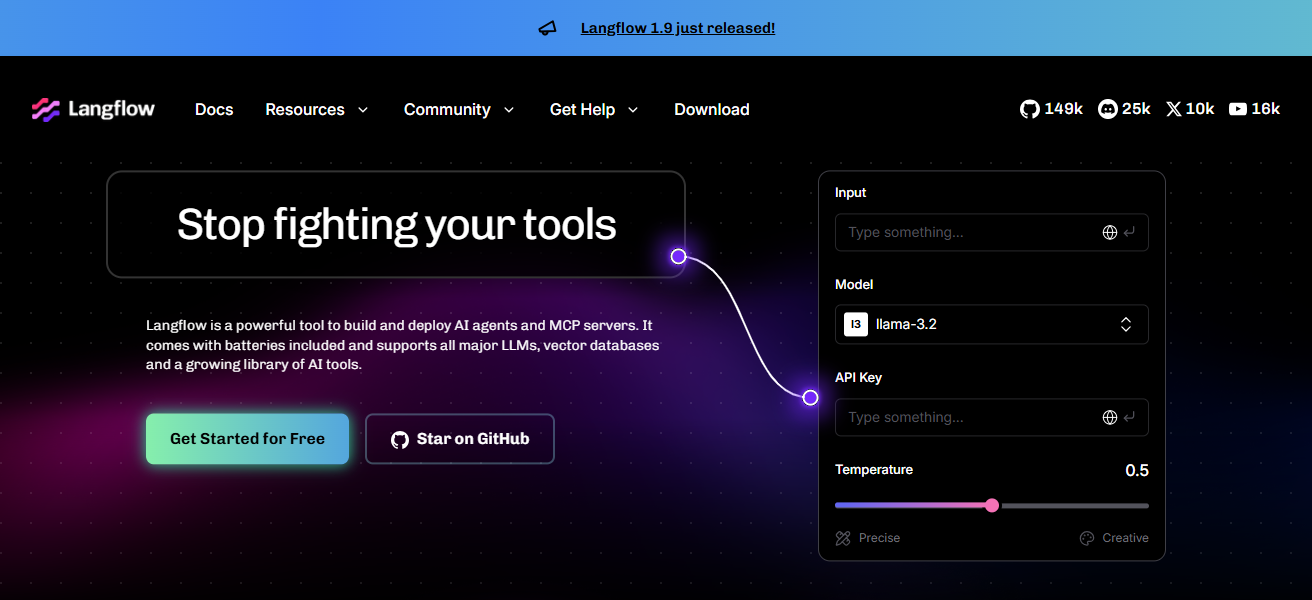
The latest features focus on improving agent chaining, memory, and API integrations. Langflow is used by many startups for building intelligent assistants, research tools, and automation pipelines. It is perfect for building complex AI agents with minimal effort and a large return on design.
| Pros | Cons |
|---|---|
| Visual interface for LLM orchestration | Still evolving, it may lack enterprise-grade stability |
| Easy experimentation with AI pipelines | Limited integrations compared to Zapier or n8n |
| Open-source and free | Documentation can be sparse |
7. Botpress
Botpress is a contemporary, no-code, conversational AI design platform that helps users create intelligent chatbots and virtual assistants.
Key features include natural language comprehension, multi-channel capabilities, and AI-driven conversational design.
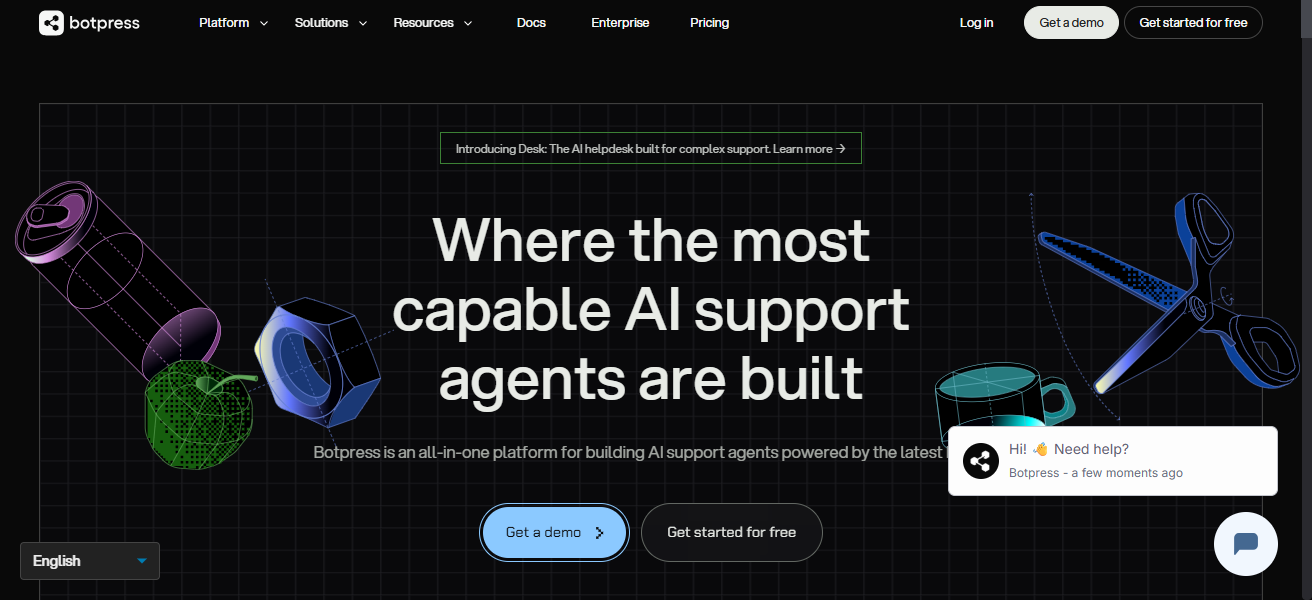
The newest updates continue to improve LLM integrations, as well as flow design. Many startups rely on Botpress to build automated customer support chatbots, lead generation bots, and internal helpdesk systems.
Botpress is a very powerful tool for all types of AI agent design and is rapidly scalable across websites, applications, and chat apps.
| Pros | Cons |
|---|---|
| Strong focus on conversational AI | Setup can be complex for beginners |
| Enterprise-ready with advanced NLP | Requires hosting and maintenance |
| Good multilingual support | Less flexible outside chatbot use cases |
8. Voiceflow
Voiceflow is a great platform to design and create Conversational AI for both Voice and chat-based interactions.
It is widely known for its use in Alexa Skills, customer service bots, and other interactive AI systems.
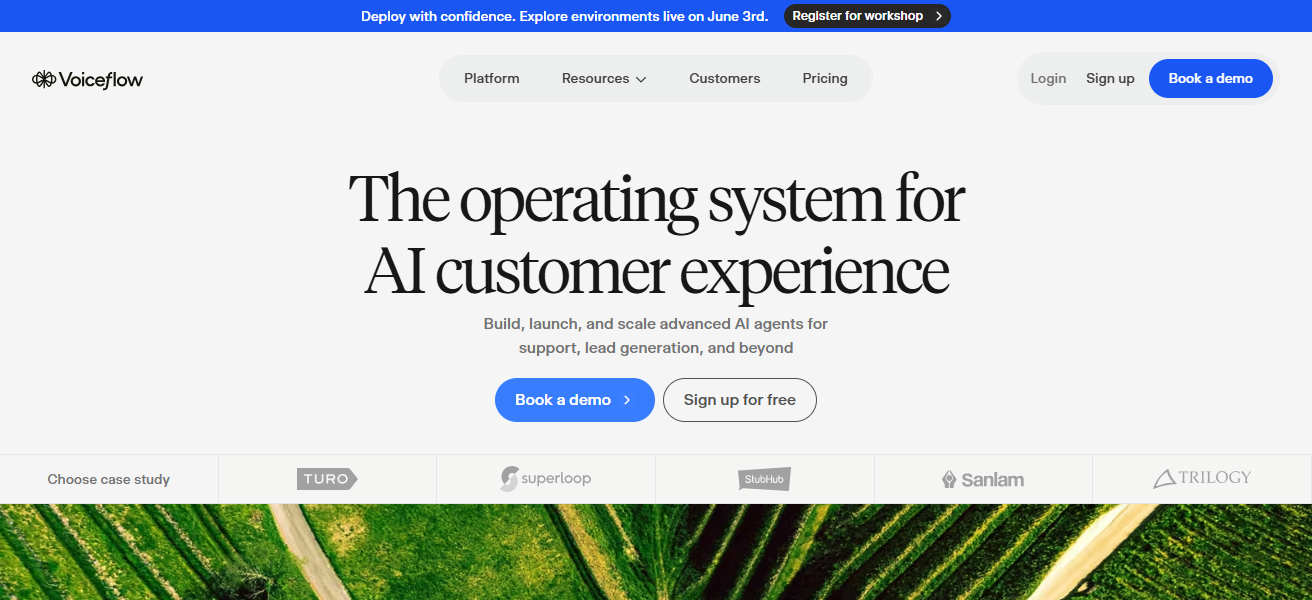
Newest updates continue to improve LLM integrations, as well as design capabilities. Non-technical teams are able to make great prototypes for AI agents using flow design capabilities.
Voiceflow is a great first step for companies striving to create a voice-based product or AI that requires multiple channels and a fast design.
| Pros | Cons |
|---|---|
| Excellent for voice and chatbot design | Subscription costs can add up |
| Drag-and-drop interface for non-coders | Limited customization for advanced AI workflows |
| Strong collaboration features | Focused mainly on conversational design, not general automation |
9. Stack AI
Stack AI is a developing platform that allows you to build custom, AI-driven workflows and automation pipelines with no required coding skills.
It specializes in enterprise challenges such as document processing, data extraction, and internal automation.
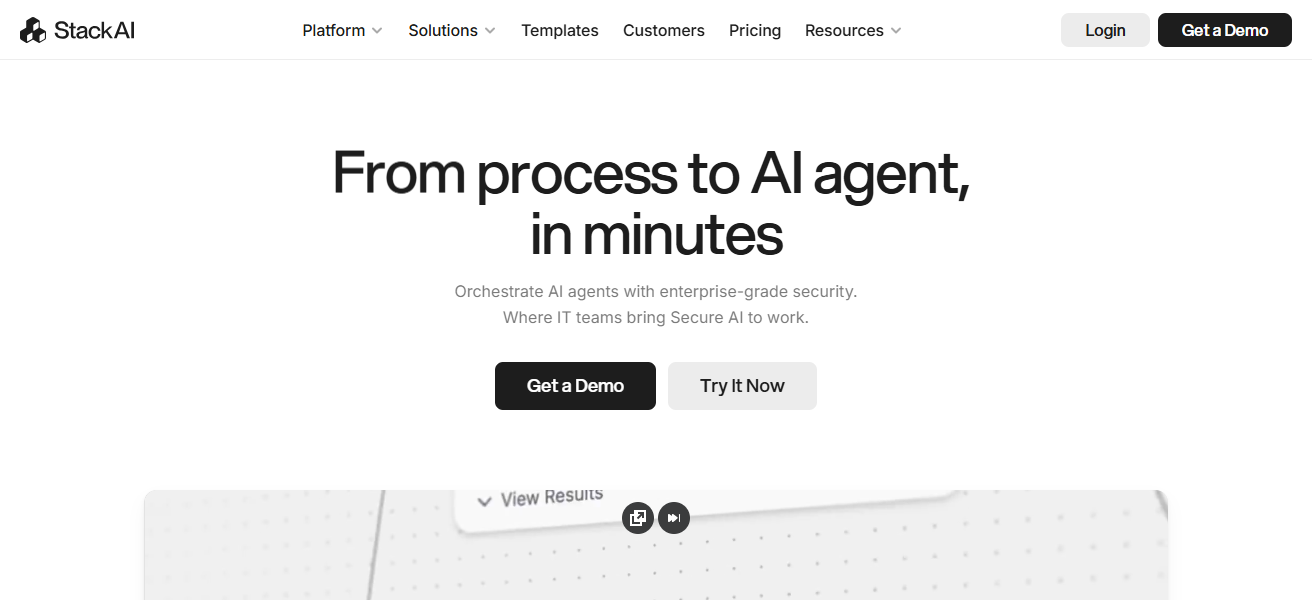
Recent feature enhancements include orchestration of large language models and provision of secure deployment environments.
It’s especially useful in compliance-focused sectors that use controlled and fast AI. Startups and Enterprises use this to create rapid prototypes of AI solutions for case work involving sensitive data.
| Pros | Cons |
|---|---|
| AI-native workflow builder | Smaller ecosystem compared to Zapier or n8n |
| Good for rapid prototyping | May lack enterprise-grade reliability |
| Flexible integrations with modern AI tools | Still growing community support |
10. n8n
n8n is an automation tool that allows you to create complex workflows with little required coding. It has recently added support for AI, allowing automation tool creation for several applications to be integrated and intelligent. Its flexible node-based system provides accessibility for developers and non-developers alike.
It has been recently updated, bringing better support for APIs and workflows centered around AI. It is very popular for backend automation, SaaS integration, and AI agent prototyping when control, scalability, and customization are imperative.
| Pros | Cons |
|---|---|
| Open-source and self-hostable | Requires technical setup and maintenance |
| Highly customizable with advanced workflows | UI less beginner-friendly than Zapier |
| Free to start with strong community | Scaling may require infrastructure investment |
Conclusion
In summary, tools that enable no-code AI agents help creators build applications without needing coding skills. These tools also assist in the rapid development of MVPs, enhanced automation, and scalable AI capabilities.
They do everything from chatbots to work automation, and they do it faster. These tools help reduce complexity and encourage agile workflows.
With no-code agent builders all being focused on AI product development, the tool that is best is dependent on customer needs.
FAQ
What are no-code AI and agent builders?
No-code AI agent builders are platforms that let users create AI-powered workflows, chatbots, and automation systems without programming skills.
Which is the easiest no-code AI tool for beginners?
Tools like Zapier AI and Voiceflow are considered easiest due to simple drag-and-drop interfaces.
Can I build full applications using no-code AI tools?
Yes, platforms like Bubble allow full web app development with AI integration.
Which tool is best for AI workflow automation?
Make and n8n are highly effective for advanced automation workflows.