
In this article, I will discuss the Best AI Search Optimization Checklists for Websites and Online Businesses that help improve rankings, visibility, and traffic in AI-powered search engines.
These optimization strategies include structured content, technical SEO, schema markup, voice search readiness, keyword research, and user experience improvements.
Businesses using AI SEO checklists can strengthen online authority, increase engagement, and stay competitive in rapidly evolving digital search environments worldwide.
What is AI search Optimization?
AI search optimization helps website content align with how AI search engines interpret it. Businesses can fine-tune website layout, keywords, schema markup, page speed, and the overall site experience for AI systems using this optimization.
Companies can gain more listeners, higher search ranking orders, and broader reach in voice and advanced search options.
Semantic and technical optimization, along with content updates, can also help websites stay competitive in a global and rapidly evolving online search environment.
Why is Structured Content Important for AI SEO?
- Helps AI understand website content accurately
- Improves chances of ranking in AI search results
- Enhances featured snippet visibility
- Organizes information using headings and sections
- Supports better user experience and readability
- Makes crawling and indexing easier for search engines
- Increases semantic relevance for conversational searches
- Improves voice search optimization performance
- Helps schema markup work more effectively
- Strengthens overall website authority and engagement
10 Best AI Search Optimization Checklists for Websites and Online Businesses
1. AI-Friendly Content Structure Checklist
Incorporate hierarchical headings, answer questions directly, and use schema markup. Optimize your website to include factual information that AI-driven tools can easily access.
AI search engine optimization helps you rank higher. AI can understand structured content better. Organize pages on your site, and use H1, H2, and H3 headings to break down your content.
Answer important questions concisely, add internal links, and use the FAQ schema to respond to common questions.

Content that is factual, current, and loads quickly across devices and is topically authoritative is preferred by search engines. Maintain your content to stay relevant to the AI search tools that are continually developing.
| Pros | Cons |
|---|---|
| Improves AI search engine understanding effectively | Requires regular content formatting updates |
| Boosts chances of featured snippet visibility | Time-consuming for large websites |
| Enhances user readability and navigation | Over-optimization may reduce natural writing style |
| Supports better mobile content organization | Needs continuous keyword monitoring |
| Increases topical authority across search platforms | Schema implementation can become technically complex |
2. Technical SEO and Crawlability Checklist
Improve indexing by optimizing site architecture and through careful use of XML sitemaps, the robots directives, and canonical URLs.
Technical optimization mainly determines the effectiveness of AI search systems. Maintain clear URL structures and optimize site architecture to manage crawl budgets, removing broken links.
AI crawlers need clear routes, XML sitemaps, and help in avoiding issues of duplicate content with canonical URLs.

Proper HTTPS Security, Core Web Vitals, and mobile optimization will improve your ranking significantly.
Staying on top of your technical tracking to help find indexing issues before they become a problem affecting your traffic in AI search systems is critical.
| Pros | Cons |
| Helps AI crawlers index pages efficiently | Requires technical SEO expertise |
| Improves overall website performance significantly | Fixing technical issues may become expensive |
| Reduces duplicate content problems effectively | Constant monitoring is necessary |
| Enhances Core Web Vitals rankings | Complex architecture changes risk temporary traffic loss |
| Strengthens website security with HTTPS optimization | Large websites require extensive maintenance efforts |
3. AI Content Quality Enhancement Checklist
Create and maintain content with authority that is original, experiential, and reflects the intent of the search and the expectation of the audience.
It’s no secret that high-quality content still plays a core role in online rankings against AI-based search engines.
Companies should incorporate unique observations, relevant examples, and good, trustworthy sources into every article they publish.

AI is rewarding less keyword stuffing and more expertise and trustworthy content that is in-depth and topical.
Case studies, expert opinion, and other strategies that promote engagement, trustworthiness, and content credibility should be added.
Consistency of tone and maximum readability also increase the chances of content being summarized in a conversational AI and recommended across many digital platforms.
| Pros | Cons |
| Builds authority and audience trust rapidly | High-quality content creation takes significant time |
| Improves engagement and user retention | Expert writers may increase operational costs |
| Supports higher AI-generated recommendation visibility | Requires continuous factual accuracy updates |
| Encourages long-term organic traffic growth | Competitive industries demand deeper research |
| Reduces dependency on outdated keyword stuffing | Maintaining originality consistently becomes challenging |
4. Voice Search Optimization Checklist
To be effective, formulate website content using short responses that answer questions, utilize conversational phrases, include local keywords, and format content to be optimal for voice searches.
Websites that optimize for voice searches capture additional traffic from AI Assistant searches, which are becoming more and more common on smartphones and smart devices.
Businesses need to use keywords in natural speech and target questions that are likely to be asked conversationally.
Short, to-the-point responses combined with local SEO are great ways to increase visibility for voice search.
There is a great need for content that utilizes fast-loading mobile pages, that can be competitive in voice search, and that includes schema and featured snippet markup.
| Pros | Cons |
| Captures growing smart assistant traffic worldwide | Voice search trends change rapidly |
| Improves conversational keyword targeting effectiveness | Limited keyword data availability sometimes |
| Enhances local search visibility substantially | Requires concise answer formatting continuously |
| Increases chances of featured voice responses | Difficult measuring exact voice-search conversions |
| Supports better mobile user experiences | Competitive niches dominate voice snippets easily |
5. Schema Markup Implementation Checklist
Implement structured data consistently across all products, reviews, FAQs, articles, and businesses.
Schema markup has changed how websites are displayed by AI and how the content is interpreted.
For all search-related structured data schemas, incorporating product, ratings, event, FAQs, and blog schema is a must.

When combined, these elements significantly improve click-through rates and build trust with users. AI search engines utilize structured data for conversational AI and summarize content with great accuracy.
Schema markups must be useful, structured, and consistent, and regular tests should be conducted via the schema validator to identify and fix errors to ensure proper markup implementation.
| Pros | Cons |
| Enhances rich snippet appearance in results | Incorrect implementation causes indexing errors |
| Helps AI understand website information accurately | Requires technical knowledge for setup |
| Improves click-through rates significantly online | Constant testing and validation needed |
| Supports product and review visibility | Complex schemas confuse beginners easily |
| Strengthens structured content discoverability | Some schema types offer limited ranking impact |
6. AI-Powered Keyword Research Checklist
Evaluate user intent, semantic keywords, long-tail keywords, keyword trends, and competition. The focus of modern AI search is user intent, as opposed to modern search systems, which used to prioritize exact search terms.

Identifying keywords and trending questions requires a focus on the audience and how they may phrase questions.
Utilizing keywords in this manner also provides a competitive edge, especially when combined with transactional and informational keywords.
| Pros | Cons |
| Identifies emerging search opportunities quickly | Premium AI tools may cost heavily |
| Improves intent-based targeting strategies | Search trends change frequently |
| Reveals competitor content gaps effectively | Over-analysis can delay content publishing |
| Supports semantic keyword optimization naturally | Requires constant data interpretation skills |
| Increases qualified organic traffic potential | Tool inaccuracies occasionally mislead marketers |
7. User Experience Optimization Checklist
Consistently improve navigation, loading times, mobile usability, accessibility, engagement metrics, and the quality of visual content.
AI search systems are now putting an emphasis on E.A.T (user Experience Signals), where it is looking to see how users are engaging with your site.
Businesses are advised to improve their site’s navigability, responsiveness, and accessibility for all devices.

The right multimedia elements in the right places with the right typography and layout can even lengthen your average session time and lower your bounce rate.
This is even more important for accessibility. Adding alt text and providing a site that is navigable via the keyboard can grow your audience and provide an inclusive web browsing experience for a broader audience.
| Pros | Cons |
| Improves visitor engagement and retention rates | UX redesign projects require substantial budgets |
| Reduces bounce rates effectively | Testing user behavior consumes time |
| Supports accessibility for wider audiences | Advanced optimization may need developers |
| Enhances mobile browsing experiences significantly | Frequent updates disrupt website consistency |
| Encourages stronger AI ranking signals | Balancing design and speed becomes challenging |
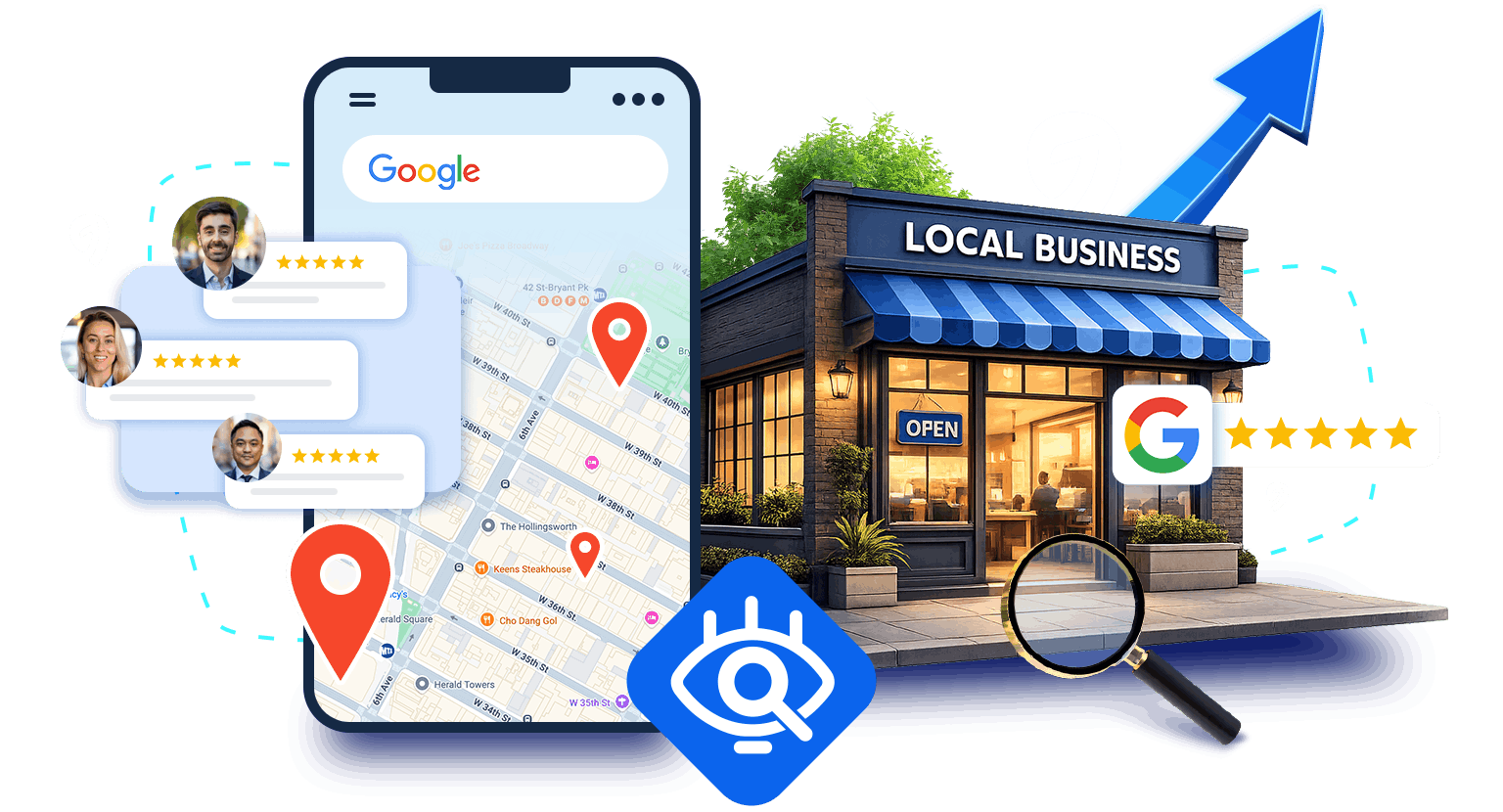
8. Local AI Search Optimization Checklist
Draw on your business profiles, local citations, reviews, maps, and geo-targeted landing pages as a guide.
Local businesses will see the most gains from AI-driven local searches. Consistent NAP information across directories helps, as well as an optimized profile on the major players.
An engaging user review, as well as an inclusion of local citations and geo-targeted landing pages, will increase your level of engagement in AI-driven results.

Embedding a map and local schemas for businesses also helps your engagement in searches. Updating your profile and reviews is also a means of giving your profile Trust
This will help assist and position your business in the best tier of location-based initiatives using AI, as well as digital assistants.
| Pros | Cons |
| Boosts local customer discovery significantly | Managing multiple listings takes effort |
| Improves Google Maps and AI visibility | Negative reviews impact trust rapidly |
| Strengthens location-based ranking performance | Local competition may remain extremely high |
| Encourages customer trust through reviews | Requires continuous profile updates regularly |
| Increases foot traffic for local businesses | Geo-targeted campaigns need careful monitoring |
9. AI-Driven Analytics and Performance Tracking Checklist
Continuously monitor your rankings and engagement. Track incoming traffic, conversions, and AI-generated search visibility.
Performance tracking helps businesses evolve their AI search optimization methods over time. Websites must analyze their data on organic traffic, user engagement, and AI referrals routinely.

Tracking conversions reveals which content inspires profitable actions and increases revenue. AI-driven analytics tools process the latest search and behavioral data.
Testing various headlines, content formats, and SEO tactics keeps the website timely and gives it a leg up over the competition, all while balancing the emerging search and discovery competition that AI will create for other digital platforms.
| Pros | Cons |
| Provides valuable traffic behavior insights | Advanced analytics tools become expensive |
| Helps optimize conversion-focused strategies | Data interpretation requires professional skills |
| Detects emerging search trends early | Tracking setup errors affect reporting accuracy |
| Supports continuous SEO performance improvements | Large datasets become overwhelming sometimes |
| Measures AI-generated traffic effectively | Privacy regulations complicate analytics collection |
10. Content Updating and Authority Building Checklist
Continuously refresh outdated content, update statistics and examples, publish research and expert insights, and maintain relevancy. Build backlinks.
Your online footprint demonstrates topical relevancy and the value of AI search optimization. For example, rankings within competitive spaces are improved by businesses that regularly refresh outdated articles with the most current statistics

while also replacing dated examples with the latest recommendations. Research and insights show resonance with AI.
Topically relevant, consistent content helps build a business’s domain authority, subsequently improving its position in AI search results.
| Pros | Cons |
| Keeps website information accurate and relevant | Frequent updates demand ongoing resources |
| Improves long-term search visibility steadily | Link-building campaigns require patience |
| Strengthens industry authority and trustworthiness | Quality backlinks are difficult obtaining naturally |
| Encourages recurring audience engagement | Competitive markets require constant publishing |
| Enhances AI-generated recommendation potential | Content refresh strategies may increase workload |
Conclusion
In summary, to be visible in rapidly evolving digital markets, websites and online businesses will need to adapt to incorporate AI search optimization.
Organized content, technical SEO, and automated preferences can help a company gain an advantage in AI search engines.
UX design, continuous website refreshes, employment of analytics, and local optimization can support ongoing growth in AI search results.
Following these checklists for AI search optimization can keep a company and website relevant, visible, and competitive in a global market of naturally evolving AI search offerings.
FAQ
How does schema markup help websites?
Schema markup improves rich snippets, visibility, and AI content interpretation online.
What are AI-powered keywords?
These are intent-focused and semantic keywords optimized for conversational AI searches.
Why is voice search optimization necessary?
Voice search optimization increases visibility on smart assistants and mobile devices.
What role does technical SEO play in AI search?
Technical SEO improves crawlability, indexing, speed, and website performance for AI systems.
Which metrics are important in AI analytics tracking?
Traffic, engagement, conversions, rankings, and AI referral visibility are highly important.