In this article, I will talk about the Top Fraud Detection APIs for Online Merchants, the leading solutions that help businesses detect suspicious transactions, prevent payment fraud, and protect customer accounts.
I’ll compare their detection technologies, key features, risk signals, real-time decisioning capabilities, and integration options to help online merchants find an API that fits their security requirements and ecommerce workflows.
What are fraud detection APIs?
Fraud detection APIs look at transactions and customer behavior to identify potential fraudulent activity before it causes financial losses. They look at signals like device info, IP addresses, payment information, account activity, transaction patterns and user behavior to find potentially suspicious activity.
These APIs can automatically approve legitimate transactions, block transactions suspected of fraud, or send transactions for further review depending on the level of risk. Payment systems integrations for eCommerce help merchants boost security, minimize chargeback, secure customer accounts and raise the overall trust for transactions.
Why Should Online merchants use fraud detection APIs?
Avoid Fraudulent Transactions — Identify suspicious purchases before they lead to financial losses.
Decrease Chargebacks — Spot risky transactions and lower operating costs of chargeback disputes due to fraud.
Protect Customer Accounts — Identify account takeovers and suspicious login activity.
Enhance Transaction Security — Review multiple risk signals before authorizing customer transactions.
Enable Immediate Action — Analyze transactions in real-time and react to new fraud risks.
Reduce False Positives – Better distinguish between legitimate customers and suspicious users.
Automate Fraud Detection — Automatically screen transactions without constant manual investigation.
Support Business Growth — Manage growing transaction volumes with consistent fraud protection.
Key Points & Top Fraud Detection APIs for Online Merchants
| Fraud Detection API | Explanation |
|---|---|
| Sift | Uses machine learning to detect fraud, abuse, and suspicious merchant transactions. |
| Fingerprint | Identifies returning visitors using device intelligence to detect fraudulent online activity. |
| Kount | Combines AI and identity intelligence to assess transaction risk and prevent fraud. |
| Riskified | Uses AI-powered decisioning to approve legitimate orders while reducing ecommerce fraud. |
| Signifyd | Provides automated fraud protection, transaction guarantees, and chargeback coverage for merchants. |
| SEON | Analyzes digital footprints, device data, and behavioral signals to identify fraud. |
| Forter | Evaluates customer identities and behavior in real time to prevent fraudulent transactions. |
| NoFraud | Combines automated technology and expert review to detect suspicious ecommerce orders. |
| ClearSale | Uses behavioral analysis and machine learning to identify fraudulent ecommerce transactions. |
| Cybersource | Provides payment security tools, fraud detection, and risk management for merchants. |
| Arkose Labs | Uses adaptive challenges and behavioral intelligence to stop automated fraudulent attacks. |
| DataDome | Detects malicious bots, account attacks, scraping, and automated ecommerce fraud attempts. |
| Accertify | Delivers fraud management solutions for detecting payment fraud and minimizing chargebacks. |
| TransUnion TruValidate | Combines identity, device, and behavioral insights to assess digital transaction risks. |
| Sardine | Uses device intelligence, behavioral analytics, and AI to prevent fraud and financial crime. |
15 Top Fraud Detection APIs for Online Merchants
1. Sift
Sift offers APIs to evaluate users, accounts, and transactions throughout the customer journey. Detection technology – It uses machine learning and behavioral intelligence to recognize suspicious activity and continuously assess risk. Key signals: Its analysis can include device, behavioral, identity, network and transaction related signals to separate legitimate customers from risky activity.

Types of fraud: Sift is designed to combat payment fraud, account takeover, account abuse, and any form of digital abuse. Real-time risk/decisioning: Risk assessments can enable automated decisions (e.g. allow/block/review activity based on detected risk). Integration: Merchants can embed fraud decisions into ecommerce workflows using APIs and developer tools to integrate Sift.
Sift Feature
| Feature | Explanation |
|---|---|
| AI-Powered Detection | Uses machine learning to identify suspicious customer and transaction behavior. |
| Behavioral Intelligence | Analyzes user behavior patterns to identify unusual or fraudulent activity. |
| Account Protection | Helps detect account takeover, account abuse, and suspicious account activity. |
| Automated Decisions | Supports real-time decisions for approving, blocking, or reviewing risky activity. |
2. Fingerprint
Fingerprint has APIs that specialize in recognizing and analyzing returning browsers and devices. Detection technology: It uses browser and device intelligence to build persistent visitor identification and identify suspicious patterns. Signals that matter : Device details, browser capabilities, network information and visitor actions can help in risk assessment.

Types of fraud: Helps merchants investigate account takeover, payment abuse, fake account creation, bot activity and other repeat offender behavior. Real-time Risk/Decisioning: Device identification can be used to trigger risk-based actions during login, registration, checkout or other events. Integration: Developers are able to integrate Fingerprint into existing applications using APIs, SDKs and web-based implementation options.
Fingerprint Feature
| Feature | Explanation |
|---|---|
| Device Identification | Creates persistent device identification to recognize returning visitors across sessions. |
| Visitor Intelligence | Provides context about browsers, devices, and visitor behavior patterns. |
| Fraud Detection | Helps identify repeat fraudsters, suspicious users, bots, and account abuse. |
| API Integration | Provides developer APIs and SDKs for incorporating identification into applications. |
3. Kount
Kount offers APIs and fraud-prevention tools to evaluate digital transactions and consumer actions. Detection technology: The platform employs artificial intelligence, identity intelligence and risk analysis to evaluate the behavior of transactions. Key signals Data about the device, identity, transaction, behavior and network can help establish the risk profile of a transaction.
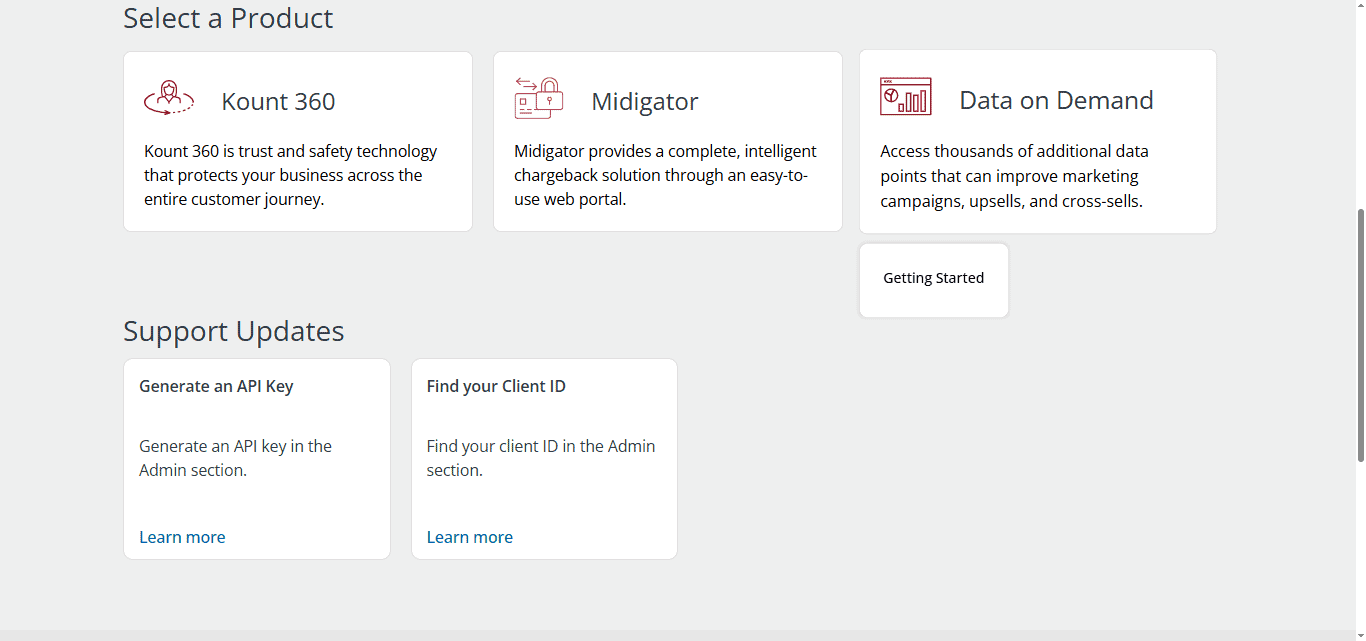
Fraud types: Kount helps detect payment fraud, account takeover, synthetic identities and other ecommerce-related threats. Real-time risk/decisioning: Risk assessment can help merchants approve legitimate activity, reject suspicious transactions, or route questionable cases for further review. Integration. Kount can integrate with merchant payment and ecommerce environments via APIs and supported integration options.
Kount Feature
| Feature | Explanation |
|---|---|
| AI Risk Analysis | Uses artificial intelligence to evaluate transaction and customer risk. |
| Identity Intelligence | Connects identity and transaction signals to identify suspicious activity. |
| Transaction Monitoring | Analyzes transactions to detect payment and ecommerce fraud. |
| Risk-Based Decisions | Helps merchants approve legitimate transactions and flag potentially fraudulent orders. |
4. Riskified
Riskified offers ecommerce APIs and decisioning capabilities for assessing customer transactions. Detection technology: It uses machine learning and large scale behavioral data to assess the probability of transactions being legitimate or fraudulent.
What we look at: Customer activity, transaction data, device data, identity signals and historical signals all factor into risk calculation. Fraud types: The platform addresses payment fraud, account abuse, policy abuse, and other ecommerce risks.

Real-Time Risk/Decisioning Riskified can automatically make transaction decisions at checkout, enabling merchants to approve good customers and identify risky activity. Integration: Riskified integrates with merchants’ ecommerce operations using APIs and integrations that are built for transaction-level decisioning.
Riskified Feature
| Feature | Explanation |
|---|---|
| Machine Learning | Uses machine learning to evaluate ecommerce transactions and customer behavior. |
| Transaction Decisioning | Provides automated decisions designed to separate legitimate purchases from fraud. |
| Account Protection | Helps identify suspicious account activity and potential account takeover. |
| Ecommerce Integration | Connects fraud decisioning with checkout and merchant transaction workflows. |
5. Signifyd
Signifyd provides APIs for ecommerce fraud decisions and transaction protection automation. Detection technology: Utilizes machine learning, commerce data and identity intelligence to determine the legitimacy of a transaction. Assessment: The assessment employs transaction data, customer identity, behavioral data, device data and broader commerce signals.

Types of fraud Signifyd protects against payment fraud, account takeovers, fraudulent orders, certain types of abuse and chargeback risk. Real-time risk/decisioning: Good transactions can be given automatic approval and orders can be declined or routed for additional review.
Integration: Signifyd offers APIs and supported e-commerce integrations for merchants to integrate into their checkout and order-management workflows.
Signifyd Feature
| Feature | Explanation |
|---|---|
| Automated Fraud Screening | Evaluates ecommerce transactions to identify potentially fraudulent orders. |
| Machine Learning | Uses data-driven models to assess transaction and customer risk. |
| Chargeback Protection | Provides transaction protection designed to reduce merchant chargeback exposure. |
| Commerce Integration | Integrates fraud decisions into ecommerce and order-management processes. |
6. SEON
SEON offers APIs for analyzing users and transactions before merchants make their fraud decisions. Detection Technology: Uses digital-footprint analysis, device intelligence, behavioral signals and machine learning based risk scoring.
Key signals: Email, phone, IP address, device, social, behavioral, and digital-network information can all help profile a user. Fraud types: SEON can help identify fake accounts, payment fraud, account takeover, identity abuse and other suspicious activity.

Real-time risk/decisioning: Merchants can build risk assessments at registration, login, checkout and other critical customer touchpoints. Integration: SEON offers API-based integration and developer-friendly tools to integrate fraud checks into existing workflows.
SEON Feature
| Feature | Explanation |
|---|---|
| Digital Footprint Analysis | Analyzes digital signals associated with users to identify suspicious profiles. |
| Device Intelligence | Examines device information to detect unusual or risky user activity. |
| Risk Scoring | Generates risk insights using multiple identity and behavioral signals. |
| API-Based Detection | Allows developers to integrate fraud checks into registration and transaction workflows. |
7. Forter
Forter provides real-time identity and transaction decisioning APIs for digital commerce businesses. Detection technology: The platform utilizes behavioral intelligence, identity analysis and machine-learning techniques to identify legitimate users from fraudsters.
Key signals: Its assessment of customer trust is based on identity, device, transaction, behavioral and network signals. Fraud Types Forter protects against payment fraud, identity fraud, account takeovers, and other types of ecommerce abuse.

Real-time risk/decisioning The platform is built to support automated decisions in real-time customer interactions supporting approve, decline or review workflows. Integration: Forter integrates into checkout, account, and transaction processes and connects to merchant systems via APIs.
Forter Feature
| Feature | Explanation |
|---|---|
| Identity Intelligence | Evaluates customer identity signals to distinguish trusted users from fraudsters. |
| Behavioral Analysis | Uses behavioral patterns to understand customer activity and transaction intent. |
| Real-Time Decisions | Provides rapid transaction decisions during ecommerce customer interactions. |
| Account Protection | Helps merchants detect account takeover and other identity-based fraud. |
8. NoFraud
NoFraud API NoFraud offers ecommerce fraud-screening services to review orders prior to fulfillment. Detection technology: It uses automated fraud detection, data analysis and, where appropriate, human review. Key Signals: Risk evaluation can be informed by order details, customer information, payment data, device indicators, and behavioral patterns.
Fraud types: NoFraud focuses on fraudulent orders and payment fraud as well as identity risk and transactions that are going to result in chargebacks.

Real-time risk/decisioning: Orders can be quickly screened so merchants can approve good purchases and catch fraud before fulfillment. Integration: NoFraud integrates into ecommerce operations through API-based workflows and supported platform integrations.
NoFraud Feature
| Feature | Explanation |
|---|---|
| Order Screening | Reviews ecommerce orders for indicators associated with fraudulent purchases. |
| Automated Analysis | Uses technology to quickly evaluate transaction and customer information. |
| Manual Review | Combines automated detection with expert review for selected suspicious orders. |
| Chargeback Prevention | Helps merchants reduce fraudulent transactions that could result in chargebacks. |
9. ClearSale
ClearSale provides APIs and fraud prevention services for the evaluation of ecommerce transactions and customer activity. Detection technology: It uses machine learning, behavioral analysis, transaction intelligence and review by fraud specialists.
The key signals to consider in risk assessment are: Customer signals, Device signals, Payment signals, Behavioral signals, Geographic signals and Transaction signals. Types of fraud: ClearSale specializes in e-commerce payment fraud, identity fraud, account abuse and suspicious transactions.

Real-time risk/decisioning – Its technology enables fast transaction analysis, helping merchants distinguish between real orders and possible fraudulent purchases. Integration Merchants can insert fraud screening into checkout and order workflows by integrating ClearSale through APIs and ecommerce integrations.
ClearSale Feature
| Feature | Explanation |
|---|---|
| Machine Learning | Uses machine learning and transaction intelligence to identify potential fraud. |
| Behavioral Analysis | Examines customer behavior and transaction patterns for unusual activity. |
| Human Review | Combines automated screening with specialist analysis for selected transactions. |
| Ecommerce Protection | Helps merchants reduce fraudulent orders and payment-related transaction risks. |
10. Cybersource
APIs: Cybersource APIs give merchants payment and fraud-management tools to manage digital transactions. Detection technology: Fraud capabilities combine transaction monitoring, machine learning, risk scoring and payment intelligence.
Key Signals: Transaction information, payment information, device data, customer information, and behavioral signals can contribute to risk assessment. Fraud types: Cybersource addresses payment fraud, transaction fraud, account-related threats and chargeback risks.

Real-time risk/decisioning: Merchants can assess transactions while payments are being processed and apply rules or automated risk decisions prior to completing purchases. Integration: Cybersource provides APIs and payment integrations that enable fraud controls to be directly embedded into merchant payment environments.
Cybersource Feature
| Feature | Explanation |
|---|---|
| Fraud Management | Provides tools for identifying and managing payment and transaction fraud. |
| Risk Scoring | Evaluates transaction information to determine potential payment risk. |
| Payment Security | Combines fraud controls with payment processing and transaction management capabilities. |
| API Integration | Offers APIs that connect fraud controls with merchant payment environments. |
11. Arkose Labs
Arkose Labs offers APIs focused on detecting and countering automated attacks on digital businesses. Detection technology: it leverages behavioral intelligence, risk analysis and adaptive challenges to distinguish humans from bad automation.
Key signals: User behavior, device fingerprinting, network patterns, interaction signals and automation signals help identify suspicious activity. Types of fraud. It combats bots, credential stuffing, account takeovers, fake account creation, scraping, and automated abuse.

Real-time risk/decisioning. Assess risk at login, registration, checkout and other high-value interactions to determine if additional verification is required. Integration: Arkose Labs can be integrated by developers with APIs, SDKs and application level security implementations.
Arkose Labs Feature
| Feature | Explanation |
|---|---|
| Bot Detection | Identifies malicious automated traffic targeting websites and digital applications. |
| Behavioral Intelligence | Analyzes interaction patterns to distinguish humans from automated attackers. |
| Adaptive Challenges | Applies risk-based challenges when suspicious automated behavior is detected. |
| Account Protection | Helps prevent credential stuffing, fake accounts, and automated account attacks. |
12. DataDome
DataDome offers APIs and security controls to identify automated traffic and malicious digital behavior. Detection technology: The platform blends machine learning, behavioral analysis, device intelligence and bot-detection techniques.
Key signals such as IP reputation, device characteristics, behavioral patterns, request information and traffic anomalies are used to detect automated threats. Fraud types addressed by DataDome: malicious bots, account takeover, credential stuffing, scraping, payment automation, and other automated attacks.

Real time risk/decisioning: Traffic analysis can happen in real time to allow legitimate visitors and stop or challenge suspicious requests. Integration: DataDome can be deployed through APIs, SDKs and security integrations on websites, applications and digital infrastructure.
DataDome Feature
| Feature | Explanation |
|---|---|
| Bot Detection | Detects malicious bots and automated traffic targeting online businesses. |
| Behavioral Analysis | Examines request and interaction patterns to identify suspicious automation. |
| Account Security | Helps protect login systems against credential stuffing and account attacks. |
| Real-Time Protection | Analyzes incoming traffic and blocks or challenges suspicious requests quickly. |
13. Accertify
Accertify offers APIs and tools for fraud management to assess payments, orders and customer activity.Detection Technology: It uses machine learning, transaction analysis, rules and risk management capabilities in its approach. Key signals: Transaction, payment, device, customer, behavioral and historical data can be used to assess risk.

Fraud types: Accertify helps detect payment fraud, account abuse, identity risks and chargeback-related transactions. Real-time risk/decisioning: Merchants can evaluate transactions prior to authorization or fulfillment and utilize automated or rules-based decisions. Integration Accertify can be integrated with payment and ecommerce environments through APIs and supported technical integrations.
Accertify Feature
| Feature | Explanation |
|---|---|
| Fraud Management | Provides tools for monitoring and managing payment and transaction fraud. |
| Transaction Analysis | Evaluates transaction information to identify suspicious purchasing behavior. |
| Risk Detection | Combines multiple data signals to assess transaction-level fraud risk. |
| Chargeback Management | Helps merchants identify fraud patterns and manage chargeback-related risks. |
14. TransUnion TruValidate
TransUnion TruValidate offers identity, device and fraud-risk capabilities for digital transactions and customer interactions. Detection technology: It analyzes users by combining identity intelligence, device recognition, behavioral insights and risk analytics.
Key signals: Identity information, device characteristics, behavioral patterns, transaction context and network-related signals can support fraud analysis. Types of fraud TruValidate helps prevent identity fraud, account takeovers, synthetic identity threats, payment fraud and digital identity threats.

Real-time risk/decisioning: Risk insights can be produced during onboarding, authentication, login and transaction processes to enable appropriate decisions. Integration: Developers have access to an API and identity or fraud-management integrations to integrate TruValidate capabilities.
TransUnion TruValidate Feature
| Feature | Explanation |
|---|---|
| Identity Verification | Uses identity intelligence to help verify customers during digital interactions. |
| Device Intelligence | Analyzes device information to identify suspicious or unusual activity. |
| Behavioral Insights | Uses behavioral signals to strengthen digital identity and fraud decisions. |
| Fraud Risk Assessment | Combines identity and transaction signals to support risk-based decisions. |
15. Sardine
Sardine offers APIs for digital financial fraud prevention, identity verification, and risk monitoring. Detection technology employs device intelligence, behavioral analytics, machine learning and transaction monitoring to identify suspicious activity.
Key signals: Device information, user behavior, identity attributes, transaction patterns and network signals are all sources of input for risk scoring. Fraud Types Sardine protects against payment fraud, account takeover, fake accounts, identity fraud and financial crime risks.

Real-time risk/decisioning: Its risk infrastructure can assess users and transactions during onboarding, authentication and payment events for automated decisions. Integration Merchants and fintechs can plug Sardine into onboarding and transaction flows using APIs and developer tools.
Sardine Feature
| Feature | Explanation |
|---|---|
| Device Intelligence | Uses device signals to identify suspicious users and transaction activity. |
| Behavioral Analytics | Analyzes user behavior to detect unusual patterns and potential fraud. |
| Identity Protection | Helps businesses identify suspicious identities during onboarding and transactions. |
| Real-Time Risk | Evaluates activity quickly to support automated fraud and risk decisions. |
How We Picked the Best Fraud Detection APIs for Online Merchants
- Detection Accuracy – We measure how accurate each API is at identifying fraudulent transactions and suspicious activity.
- Fraud Detection Technology – What AI, machine learning, behavioral analytics, and device intelligence capabilities.
- Real-Time Decisioning – We analyze the speed at which APIs analyze transactions and provide actionable risk decisions.
- Key Risk Signals — We compare device, identity, behavioral, payment, network and transaction signals.
- Fraud Coverage – We include coverage for payment fraud, account takeover, bots, and identity abuse.
- API Integration – We look at the APIs, SDKs, documentation, webhooks and the ecommerce integrations available.
- False-Positive Handling — We evaluate how well platforms can identify valid customers without over-penalizing transactions.
- Scalability — We look at the ability of APIs to handle increasing transaction volumes and merchant expansion.
- Automation Capabilities — We analyze automated approvals, declines, blocking, reviews, and risk-based transaction workflows.
- Merchant Use Cases — We compare suitability for e-commerce stores, marketplaces, subscriptions, digital businesses.
Conclusion
To summarize, the right fraud detection API can help online merchants prevent fraudulent transactions, reduce chargebacks and protect customer accounts. The best solutions offer real-time risk analysis, behavioral intelligence, device signals and automated decisioning, with flexible integrations.
But merchants should compare fraud coverage, detection accuracy, scalability, integration options, and their own business needs to find an API that offers reliable protection without overly inconveniencing legitimate customers.
FAQ
How do fraud detection APIs detect fraud?
They analyze behavioral, device, identity, transaction, and network signals for risks.
Can fraud detection APIs work in real time?
Yes, many APIs evaluate transactions instantly and support automated risk decisions.
What fraud types can these APIs detect?
They can detect payment fraud, account takeover, bots, identity fraud, and abuse.
Are fraud detection APIs difficult to integrate?
Most provide APIs, SDKs, plugins, and documentation for easier merchant integration.