
This article details the Top Decentralized Wireless (DeWi) Hardware Networks and their IoT Connectivity. It focuses on their impact on the modernization of communication infrastructure.
These networks feature community-based hardware, blockchain-inspired systems, and decentralized technologies to provide cost-effective, flexible, and dependable connectivity for IoT devices.
The growing influence of smart cities, logistics, and automation makes DeWi networks integral to the worldwide wireless communications of the future.
Key Poinst & Best Decentralized Wireless (DeWi) Hardware Networks Powering IoT Connectivity
| Decentralized Wireless Hardware Network | Explanation |
|---|---|
| Helium | Decentralized hotspots provide affordable wireless coverage for global IoT. |
| Nodle | Smartphone-powered network connects IoT devices through decentralized wireless infrastructure. |
| XNET | Community-owned wireless network delivers decentralized connectivity for mobile devices. |
| Pollen Mobile | Tokenized wireless infrastructure rewards users for expanding network coverage. |
| Hivemapper | Decentralized mapping network gathers location data using connected hardware. |
| WeatherXM | Community weather stations provide decentralized environmental data connectivity solutions. |
| Meshtastic | Open-source mesh networking enables decentralized communication without internet dependency. |
| Althea | Decentralized broadband infrastructure shares internet access through community networks. |
| DIMO | Connected vehicle hardware securely shares automotive data through networks. |
| GEODNET | Decentralized GNSS network delivers precise positioning for IoT applications. |
10 Best Decentralized Wireless (DeWi) Hardware Networks Powering IoT Connectivity
1. Helium
Helium is one of the most popular decentralized, wireless networks for Internet of Things (IoT) connectivity.
Helium’s community-built hotspots create distributed, wireless, community networks for low-power consumption, wide-area, IoT devices.
Most developments in Helium’s ecosystem focus on increasing coverage through blockchain-based, automated incentives.
Helium’s users track shipping containers, monitor the weather, and track other resources. Helium shows how decentralized networks for community ownership reduce the cost of communications infrastructure while increasing coverage for global IoT networks.
Helium Features
- Community-driven hotspots offer global wireless coverage.
- Integrates low-power IoT sensors and trackers.
- Participation and growth of the network are incentivized by blockchain rewards.
- Provides a favorable alternative to existing wireless infrastructure
2. Nodle
Nodle’s IoT network combines a decentralized wireless network and a deliberate community. Nodle relies on the community’s smartphones
To create a network, and because most smartphones are equipped with Bluetooth, Nodle can utilize Bluetooth to connect community sensors and smart devices.
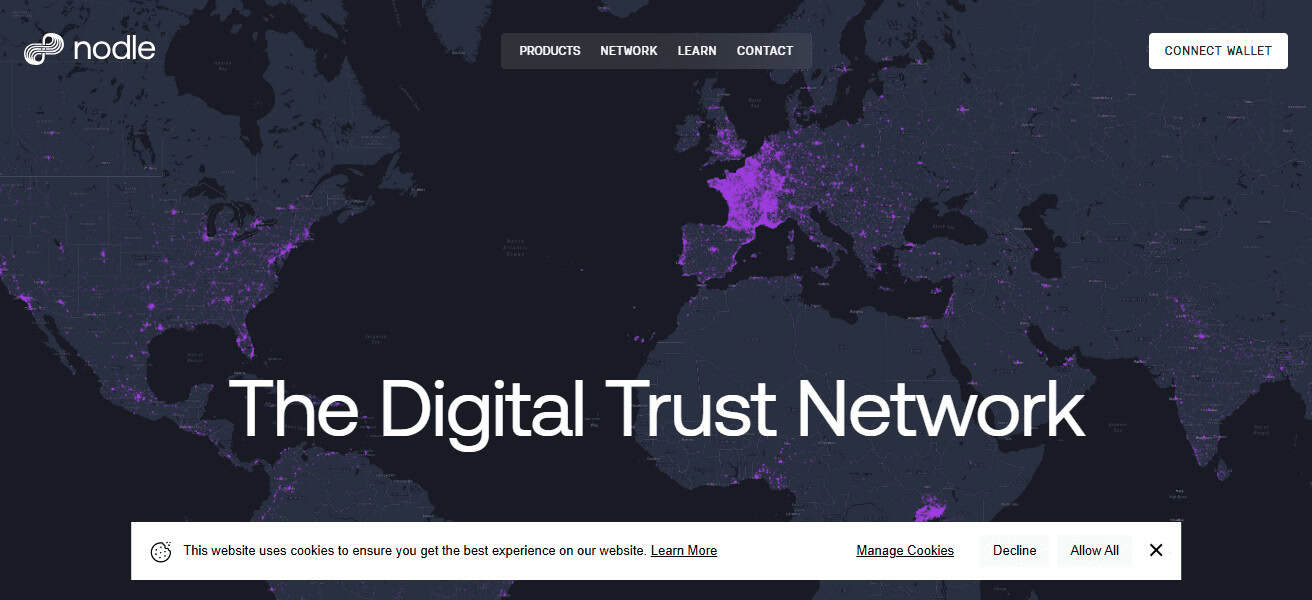
Nodle’s network provides visibility of the supply chain and smart city resources. Nodle’s network is both community and geographically extensive due to the low costs of wireless network deployment.
Nodle’s focus on Bluetooth and broad community participation is an innovative method of increasing network coverage.
Nodle Features
- Uses smartphones for network decentralization.
- Bluetooth connectivity for IoT devices and sensors.
- Supports asset tracking and smart city projects.
- Shrinks deployment and operational costs for hardware and infrastructure.
3. XNET
Like Nodle, XNET is a network that prioritizes community involvement and decentralized wireless networks to create a community-operated network.
XNET’s decentralized network encourages users to submit hardware that provides network coverage to receive community rewards.

XNET’s focus on community-operated, wireless networks and decentralized networks attracts users. Many of XNET’s users are innovative due to its combined use of decentralized infrastructure
wireless networks, blockchain, and community resources to provide solutions to the connectivity challenges IoT and other connected applications create.
XNET Features
- Community-managed wireless network infrastructure.
- Users are incentivized for coverage.
- Facilitates autonomy from telecom providers.
- Mobile and IoT connectivity is readily expanded.
4. Pollen Mobile
Pollen Mobile is building a new system for creating and using wireless networks by combining community ownership and deployment of networks.
The traffic of community members who install hardware and provide coverage and performance of the networks is rewarded.
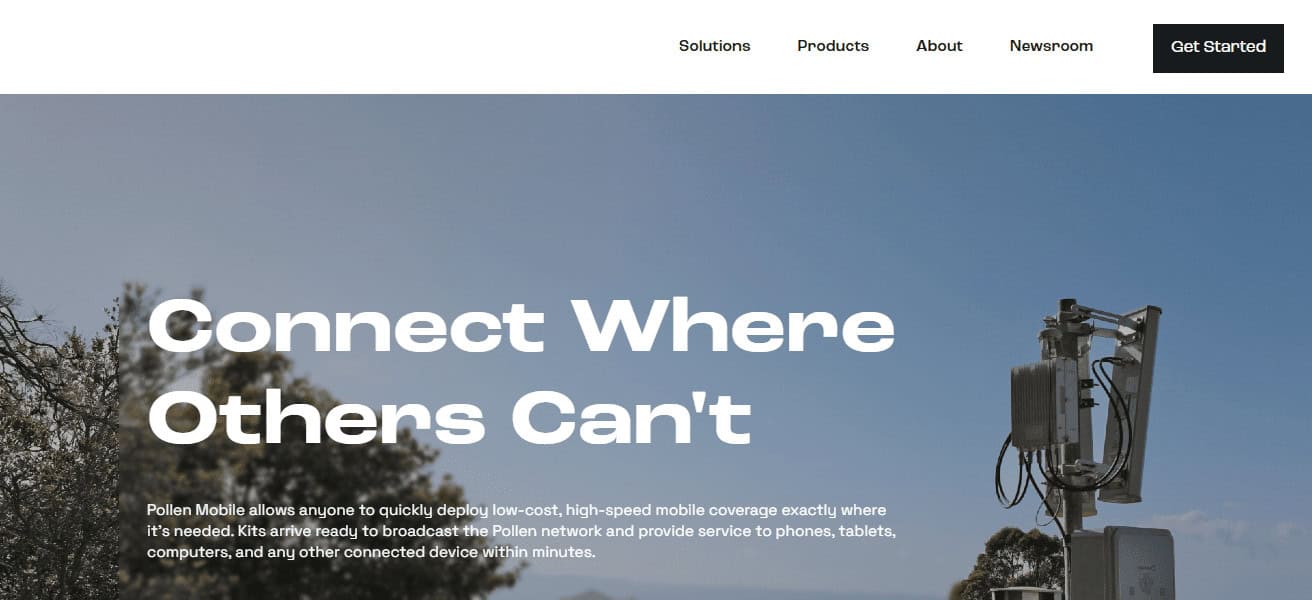
This system can serve a community’s need for mobile and IoT communication. Recently, some of the new advancements in decentralized telecom systems have made it easier for them to compete with traditional systems.
Pollen Mobile is a good example of how the use of token rewards enables the development and deployment of telecom systems and wireless connections for IoT solutions.
Pollen Mobile Features
- Incentives based on token systems for contributing to the network.
- Supports decentralized, modular and IoT communication.
- Community-managed growth of wireless coverage.
- Infrastructure is efficient and costs less than existing carriers.
5. Hivemapper
Hivemapper is a decentralized network for mapping and gathering location data from the real world. Contributors drive specially designed dash cams to provide mapping updates.
This is a competing solution for mapping to the traditional map providers. The latest advancements in AI and map processing have improved update frequency and the accuracy of the data.

For many IoT applications, location data is highly important, especially for logistics and autonomous systems or for tracking assets. Hivemapper rewards users for mapping and gathering location data.
Hivemapper Features
- Dashcams that contribute to real-time driving data.
- Maps are continually improved by an AI that fine-tunes accuracy.
- Location data is optimized for logistics.
- Geographic data is incentivized for contributors.
6. WeatherXM
Community-owned weather stations are the foundation of a decentralized weather data network being built by WeatherXm.
Participants install weather stations that produce localized and community-curated datasets and contribute to the community.
Recently, due to the increased demand for climate and environmental data, the value of decentralized weather infrastructure has increased.
Several IoT applications, especially in the areas of renewable energy, logistics, insurance, and even agriculture, benefit from dependable weather forecasts.
WeatherXm shows that community participation in network building provides better data and infrastructure.
WeatherXM Features
- Community-owned weather stations.
- Provides data on climate and the environment.
- Supports both renewable energy and the improvement of real-time climate data.
- Uses decentralized network participation as an incentive.
7. Meshtastic
With Meshtastic, users can send messages over their very own network without relying on a centralized network.
Users can send messages through peer-to-peer connections without the internet by using a cheaper brand of the LoRa communication system.
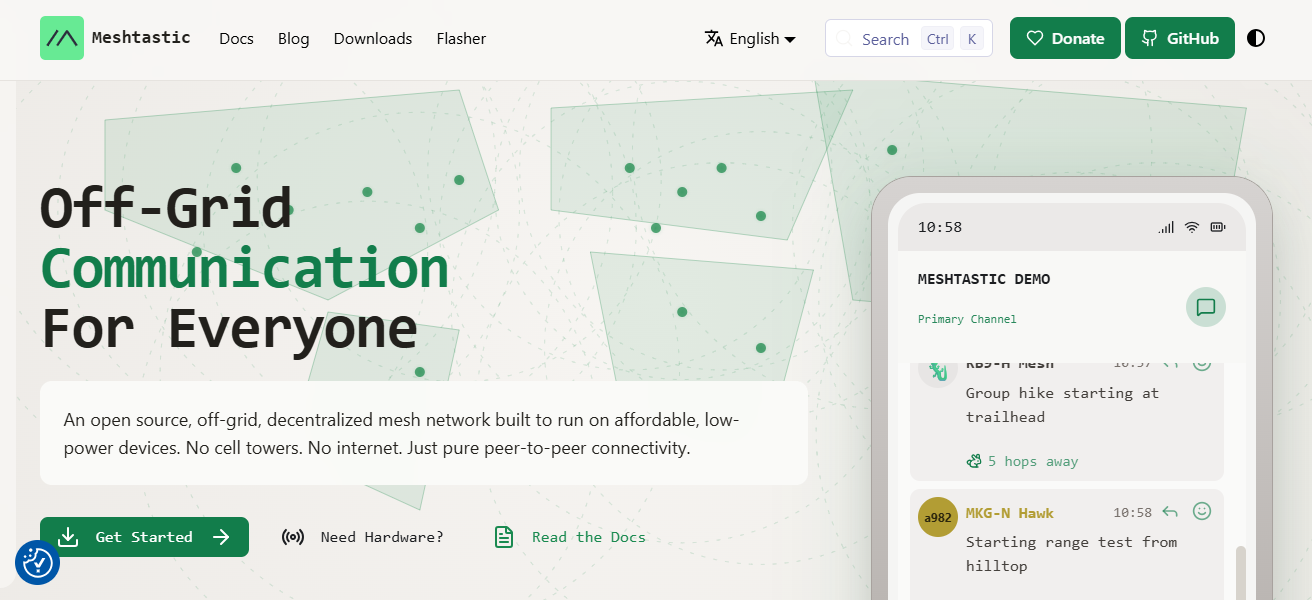
Since its early beginnings, Meshtastic has become more popular (and improved) in the hiking and outdoor communities and those looking to improve their emergency preparedness.
Meshtastic is a great option for low-power communications, as its infrastructure is completely decentralized, making it extremely resilient, easy to use, and independent.
Meshtastic Features
- Uses LoRa and is open source.
- Functions independently of existing internet infrastructure.
- Long-range peer communications.
- Designed for remote areas and ideal for emergency communications.
8. Althea
Althea makes broadband more accessible by allowing the community to come together and build their own internet service.
After joining the network, users can pledge a certain amount of bandwidth. In return, users are paid through a smart contract on the blockchain.

Since traditional, centralized internet service providers have a monopoly on almost all broadband, this is a great way to provide service in remote areas!
Althea’s focus on a decentralized, community-based model for broadband internet service also aligns with growing interest and incorporation of the Internet of Things.
Althea Features
- Community-built broadband network.
- Allows bandwidth sharing with automated blockchain payments.
- Provides internet access to more regions.
- Fosters sustainable networks with local ownership.
9. DIMO
DIMO offers a completely new way to think of car ownership and operation by allowing users to share automotive data easily and safely.
DIMO accomplishes its goal by using connected hardware. Users can think of their cars as an IoT data point. DIMO allows users to decide when and how they share their data.
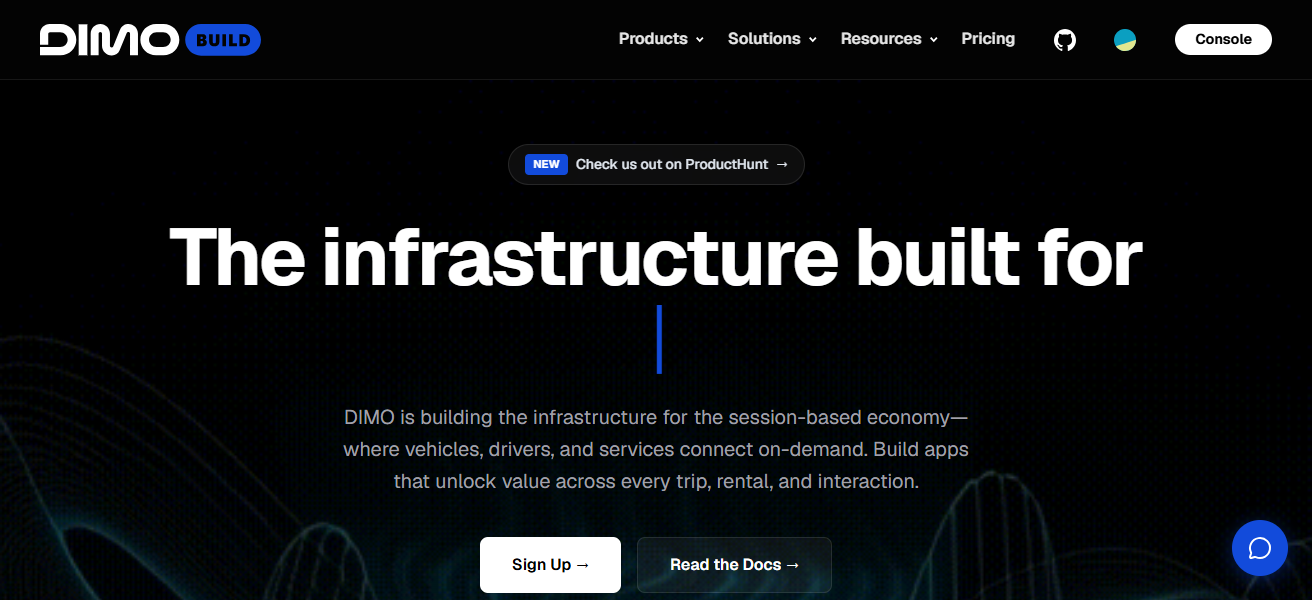
As more and more services are offered by the integration of technology in vehicles, the need for data-sharing frameworks that are safe and reliable will continue to grow.
DIMO uses a decentralized framework, and in doing so, demonstrates to consumers how the automotive industry can be highly user-generated and valuable.
DIMO Features
- Connects vehicles through secure, decentralized hardware.
- Provides ownership of automotive data to drivers.
- Supports mobility, insurance, and analytics.
- Provides privacy with permissioned data sharing.
10. GEODNET
GEODNET is a decentralized Global Navigation Satellite System (GNSS) network that provides extremely accurate positioning data to IoT use cases.
Community reference stations are operated by the users of the network and provide corrections that increase the accuracy of location data beyond the normal capabilities of GPS.
GEODNET has recently gained popularity with the development of autonomous vehicles, drones, robotics, and precision agriculture.
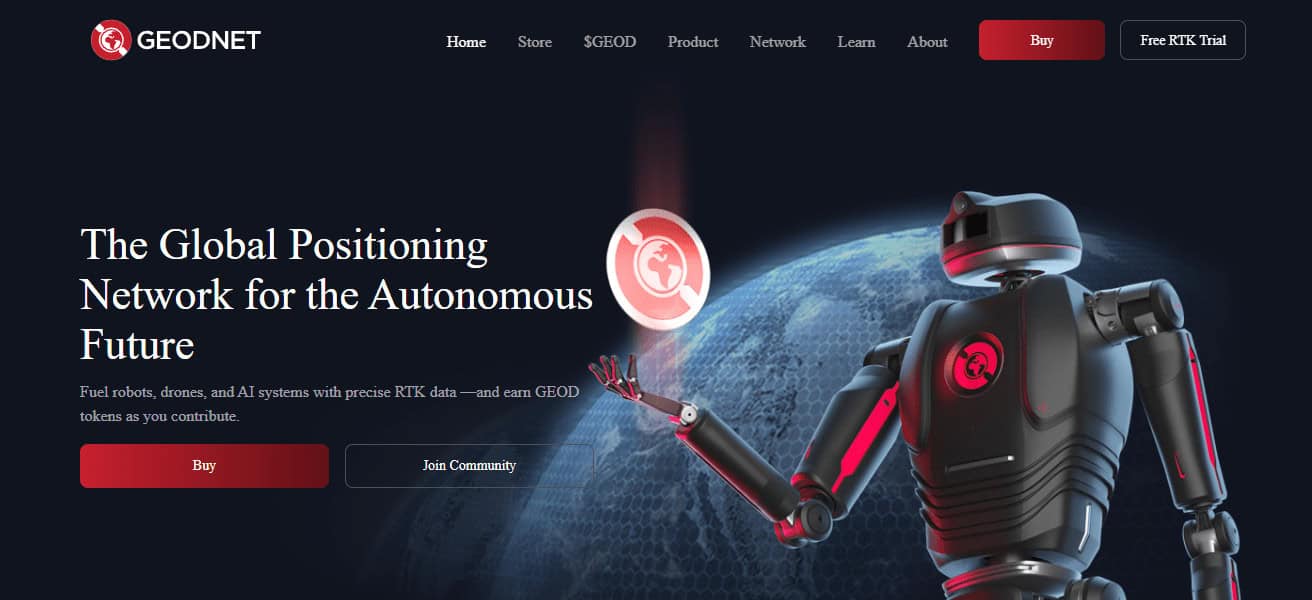
Using a decentralized approach allows GEODNET to quickly and inexpensively expand its network.
GEODNET is the exact positioning infrastructure needed for the advanced IoT operations and is critical to the industries that require accurate and timely real-time geospatial intelligence.
GEODNET Features
- Provides GNSS positioning corrections.
- The network is community-operated through reference stations.
- Supports drones, robotics, and autonomous vehicles.
- Is a low-cost alternative to other positioning systems.
Why Are DeWi Networks Crucial for the IoT Ecosystem?
Smart Application Enablement – Applications in smart cities, logistics, smart agriculture, and smart industry are all supported.
Cost Efficiency – Significantly reduces the costs of deploying telecom and infrastructure.
Increased Reach – Community-owned equipment broadens coverage with less effort.
Global Flexibility – Can support millions of IoT devices across the globe without issue.
Network Independence – Removes the dependence on a sole network provider.
User Growth – Coverage is expanded as a result of earning tokens.
Greater Resilience – A network with a greater distribution of resources has fewer single points of failure.
Continuous Communication – Devices may be monitored and communicated with on demand.
Network Inclusion – Reaches devices in remote and poorly serviced regions.
True and Secure – Because of its use of blockchain technology.
Conclsuion
In conclusion, the integration of blockchain technology with decentralized, community-built, and wireless technologies has the potential to completely change IoT connectivity.
Coval, GEODNET, DIMO, Helium, and other similar platforms offer quick, cheap, and reliable connections compared to standard networks.
As the Internet of Things continues to proliferate throughout business, decentralized wireless networks will be integral to providing additional coverage, greater efficiency, and the new Internet of Things devices that will span the globe.
FAQ
Which is the most popular DeWi network?
Helium is currently one of the most recognized DeWi networks globally.
How do users earn rewards in DeWi networks?
Users earn tokens by deploying hardware and providing network coverage.
What devices can connect to DeWi networks?
Sensors, trackers, smart meters, vehicles, and industrial IoT devices.
Are DeWi networks cheaper than traditional wireless networks?
Yes, they often reduce infrastructure and operational costs significantly.
Can DeWi networks work without telecom providers?
Many DeWi platforms reduce dependence on traditional telecom infrastructure.