In this article, I am going to talk about the Best Blockchain Event Streaming Platforms which help developers to monitor transactions, track smart contract events and process real-time blockchain data efficiently.
These platforms offer powerful APIs, data indexing, streaming infrastructure and integration tools for Web3 apps. We will go over their key features, benefits and use cases to help you choose the right solution for your blockchain development needs.
Key Points & Best Blockchain Event Streaming Platforms
| Platform | Explanation |
|---|---|
| QuickNode | Provides reliable blockchain data streams for monitoring transactions and building real-time applications. |
| Goldsky | Delivers real-time blockchain indexing and streaming solutions for decentralized application developers. |
| Bitquery | Offers blockchain APIs and streaming data for tracking transactions, tokens, and smart contracts. |
| Alchemy | Provides blockchain APIs and webhooks for real-time event monitoring and application development. |
| StreamingFast | Enables high-performance blockchain data streaming for efficient on-chain event processing and analysis. |
| Blockdaemon | Offers enterprise-grade blockchain infrastructure, node management, and reliable data access solutions. |
| Syndica | Provides scalable Solana infrastructure and data streaming tools for blockchain application developers. |
| Helius | Delivers Solana APIs and webhooks for monitoring transactions and processing blockchain events. |
| Allium | Supplies structured blockchain data infrastructure for analytics, reporting, and real-time data access. |
| Apache Kafka | Enables distributed event streaming and real-time data processing through scalable integration pipelines. |
10 Best Blockchain Event Streaming Platforms In 2026
1. QuickNode
QuickNode is a blockchain infrastructure provider that provides tools to access, monitor and process on-chain data. The Streams service provides developers with the ability to ingest blockchain blocks, transactions, receipts, traces and other supported data in real time.
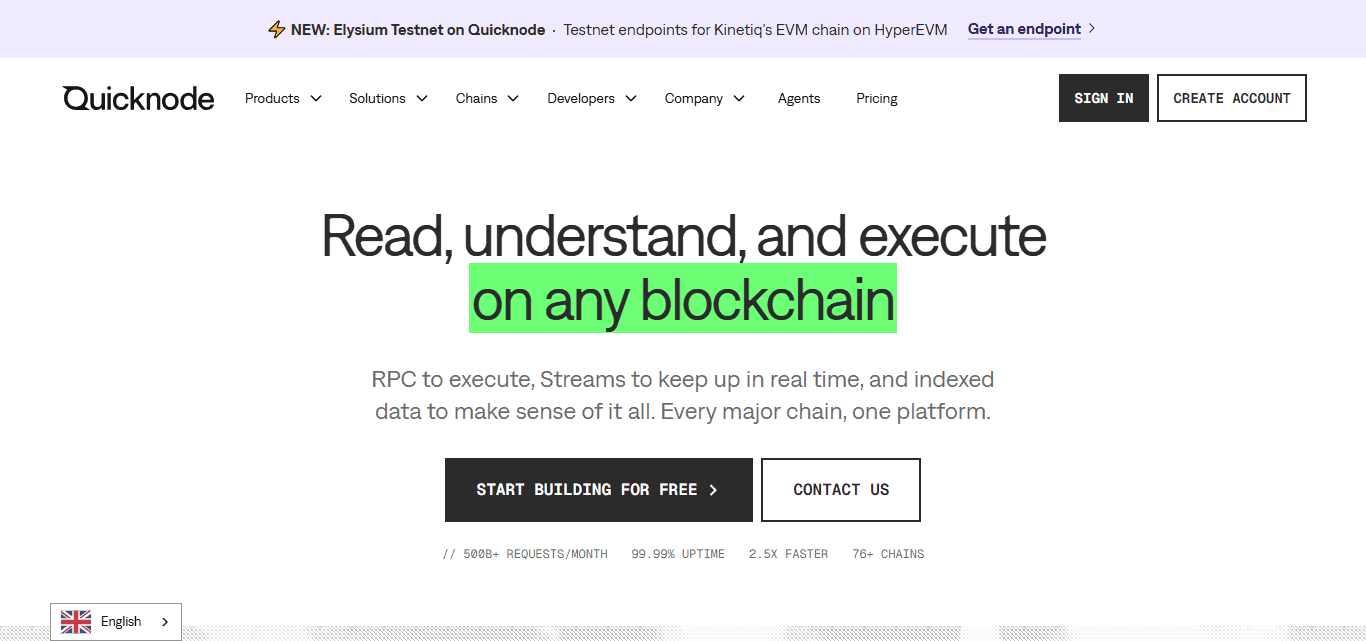
Users can apply custom filters and transform data before delivering to webhooks, databases, cloud storage or Kafka. Historical backfilling and blockchain reorganization handling provide reliable data pipelines. QuickNode is awesome for blockchain explorers, DeFi apps, analytics dashboards, wallet notifications, automated monitoring systems.
QuickNode Features
| Feature | Explanation |
|---|---|
| Real-Time Streaming | Delivers blockchain data for monitoring transactions and network activity. |
| Custom Filtering | Filters relevant blockchain events based on application requirements. |
| Data Integration | Supports delivery to webhooks and other supported data destinations. |
| Historical Backfilling | Helps retrieve historical blockchain data for comprehensive processing. |
2. Goldsky
Goldsky builds blockchain indexing and real-time data infrastructure to enable Web3 teams to access structured on-chain information. It offers streaming pipelines to stream blockchain data to destinations including Postgres, ClickHouse, and Kafka, and Mirror subgraphs to expose indexed data via GraphQL.

These capabilities allow developers to turn on-chain activity into information useful for applications, analytics, and workflows. Goldsky is most useful for teams that want fresh datasets but don’t want to build and maintain an indexing system from the ground up.
Goldsky Features
| Feature | Explanation |
|---|---|
| Real-Time Indexing | Processes blockchain events into structured, accessible datasets. |
| Data Pipelines | Streams blockchain information to supported databases and messaging systems. |
| GraphQL Support | Provides indexed blockchain data through GraphQL interfaces. |
| Scalable Infrastructure | Supports growing data requirements for Web3 applications. |
3. Bitquery
Bitquery offers APIs, analytics and streaming for blockchain data across multiple blockchain networks. We support streaming via GraphQL subscriptions over WebSockets, Kafka-based feeds, and gRPC streams for supported use cases. These services allow developers to monitor token transfer, decentralized exchange trades, liquidity events, wallet activity and transaction information.

Depending on the interface and dataset, Bitquery also provides filtering, enriched market data, and historical information. That makes the platform useful for trading applications, DeFi monitoring, portfolio trackers and cross-chain analytics products that require timely blockchain insights.
Bitquery Features
| Feature | Explanation |
|---|---|
| Blockchain APIs | Provides access to transaction, token, and smart contract data. |
| Streaming Interfaces | Supports real-time data access through supported streaming protocols. |
| Multi-Chain Coverage | Offers blockchain data across multiple supported networks. |
| Analytics Capabilities | Helps analyze decentralized exchanges, wallet activity, and token movements. |
4. Alchemy
Alchemy provides the blockchain infrastructure, developer APIs, WebSocket subscriptions and webhook services for applications that require real-time on-chain data. Its webhooks can track wallet activity, token transfers, NFT transactions, smart contract events and other supported blockchain changes.

Developers are able to be notified of events directly to the endpoints they have configured instead of polling the blockchain nodes all the time. Alchemy also provides tools to access blockchain data and build applications on supported networks. These features make it a good fit for wallets, NFT marketplaces, blockchain games, portfolio trackers, and transaction monitoring systems.
Alchemy Features
| Feature | Explanation |
|---|---|
| Webhook Notifications | Sends event notifications for supported blockchain activities. |
| WebSocket Subscriptions | Enables applications to receive supported blockchain updates. |
| Developer APIs | Simplifies blockchain data access and application development. |
| Event Monitoring | Supports tracking wallets, transactions, tokens, and smart contracts. |
5. StreamingFast
StreamingFast specializes in high-performance blockchain data streaming and indexing using Firehose and Substreams. The tools enable developers to process blockchain data, transform events and build custom datasets for applications and analytics. Substreams leverages parallel processing to accelerate indexing and allows for programmable transformations written in Rust.

Developers are able to send the processed output to destinations like PostgreSQL, ClickHouse, Kafka, and other supported systems. StreamingFast is especially useful for projects that deal with large historical data sets or that require continuous, large-scale processing of data across supported blockchain networks.
StreamingFast Features
| Feature | Explanation |
|---|---|
| Firehose Technology | Streams blockchain data for indexing and processing workflows. |
| Substreams Framework | Enables programmable blockchain data transformations and extraction. |
| Parallel Processing | Accelerates data processing through parallel execution capabilities. |
| Custom Pipelines | Connects processed blockchain data to supported downstream systems. |
6. Blockdaemon
Blockdaemon offers blockchain infrastructure and event streaming services to enterprises, financial institutions and application developers. Its event streaming functionality allows you to subscribe to selected on-chain activity via webhooks, WebSockets and Kafka, depending on the configuration supported. The users can watch events for wallet addresses, transaction status, balance changes and new blocks on all supported networks.

Blockdaemon also provides normalized event formats so organizations can process blockchain information consistently across multiple protocols. Reliable delivery for monitoring, compliance workflows, and production applications is enabled by retry mechanisms and data retention features.
Blockdaemon Features
| Feature | Explanation |
|---|---|
| Enterprise Infrastructure | Provides managed blockchain infrastructure for business applications. |
| Event Streaming | Supports delivering selected blockchain events through available interfaces. |
| Multi-Network Support | Offers infrastructure services across supported blockchain networks. |
| Data Reliability | Provides infrastructure capabilities for dependable blockchain data access. |
7.Syndica
Syndica is focused on infrastructure and developer services for the Solana ecosystem. Its infrastructure offerings have included Solana RPC access, data services and tools designed to support demanding blockchain applications. For Solana developers, selecting the correct streaming or data-access solution is crucial for monitoring transactions, tracking account changes, and reacting to network activity.

Syndica is relevant for teams building trading apps, DeFi protocols, analytics dashboards and other Solana-based products. Developers should check the current product availability, supported streaming interfaces, performance characteristics, and integration requirements before choosing Syndica for a particular event-streaming workflow.
Syndica Features
| Feature | Explanation |
|---|---|
| Solana Infrastructure | Provides infrastructure services tailored to the Solana ecosystem. |
| RPC Access | Enables applications to communicate with supported Solana network endpoints. |
| Developer Services | Supports building and operating Solana-based blockchain applications. |
| Data Access | Helps developers access blockchain information for application workflows. |
8. Helius
Helius offers Solana-specific developer infrastructure, APIs, transaction data, and webhook functionality for applications that require timely updates from the blockchain. Its webhook services can push transaction information to a configured server when activity involving specified addresses occurs.
Depending on the service and configuration, developers are able to build monitoring and automation workflows using parsed transaction data or raw blockchain data.

Helius does the heavy lifting for you so you don’t have to decode every transaction, simplifying Solana data processing. Some of the most common use cases include wallet notifications, token tracking, NFT monitoring, DeFi analytics and automated trading systems.
Helius Features
| Feature | Explanation |
|---|---|
| Solana Webhooks | Sends notifications about supported on-chain activity and transactions. |
| Enhanced Transactions | Provides parsed transaction information for easier application integration. |
| Developer APIs | Simplifies access to Solana blockchain data and functionality. |
| Address Monitoring | Helps track relevant wallet activity and blockchain events. |
9. Allium
Allium is a blockchain data infrastructure that allows engineering teams to stream raw or enriched on-chain events to their existing systems. Its streaming products offer full-chain data feeds and filtered pipelines, enabling teams to select relevant transactions, token transfers, decentralized exchange trades and other supported data sets.
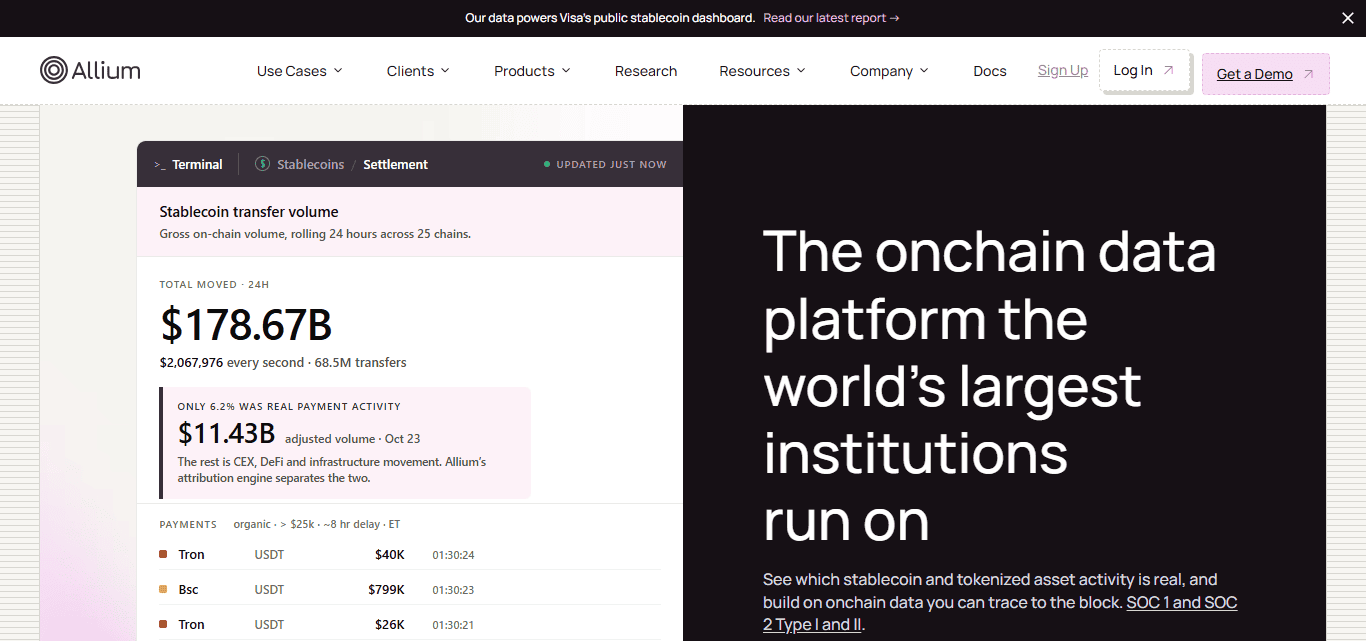
Allium can publish the data to Kafka, Google Cloud Pub/Sub, Amazon SNS, or to supported databases. Its Beam offering provides filtering and transformation capabilities, while historical replay and reorganization handling help teams maintain reliable data workflows. These features make Allium useful for analytics, financial applications, monitoring and large scale data operations.
Allium Features
| Feature | Explanation |
|---|---|
| Blockchain Data Streams | Provides access to supported on-chain data streams. |
| Event Filtering | Helps select relevant blockchain events for specific workflows. |
| Data Transformations | Supports processing blockchain information before downstream delivery. |
| Historical Replay | Helps recover and reprocess supported historical blockchain data. |
10. Apache Kafka
Apache Kafka is a distributed event streaming platform that allows applications to publish, store, process, and consume continuous data streams. Kafka doesn’t natively emit blockchain events, unlike blockchain-specific providers, so developers have to connect Kafka to blockchain nodes, APIs, indexers or streaming services.
Once integrated, Kafka can feed transaction events, smart contract logs, token transfers and monitoring data to multiple downstream apps.
Its architecture allows for scalable processing, durable storage of events, and replaying retained messages, making it useful for complex data pipelines. Organizations can harness Kafka to connect blockchain activity to analytics systems, fraud detection tools, financial services and operational monitoring platforms.
Apache Kafka Features
| Feature | Explanation |
|---|---|
| Distributed Streaming | Processes continuous event streams across distributed systems. |
| Message Retention | Stores events for configurable periods to support replay. |
| Scalable Architecture | Supports increasing event volumes through partitioning and distributed processing. |
| System Integration | Connects blockchain data pipelines with databases and analytics tools. |
Conclusion
To summarize, the Best Blockchain Event Streaming Platforms help developers track transactions, process on-chain events, and build better Web3 applications. QuickNode, Goldsky, Bitquery, Alchemy and Helius are all platforms that provide valuable streaming and data access solutions.
Evaluate supported networks, scalability, integration options, reliability, and pricing before choosing. The right platform will improve the performance of your blockchain apps and make the processing of your data smoother.
FAQ
What are blockchain event streaming platforms?
They deliver real-time blockchain events for monitoring transactions and application activities.
Why is blockchain event streaming important?
It enables faster transaction monitoring, automation, analytics, and responsive decentralized applications.
Which blockchain event streaming platform is best?
QuickNode, Goldsky, Bitquery, and Alchemy offer useful blockchain streaming solutions.
Can blockchain event streaming track smart contracts?
Yes, supported platforms monitor smart contract events, transactions, and related activities.