In this article, I will discuss the best crypto collateral management platforms that help individuals, businesses and financial institutions to manage electronic assets securely as collateral.
We’ll cover their main features, supported cryptocurrencies, custody and security options, pricing, integration support, best use cases, pros and cons to help you choose the right platform.
Key Points & Best Crypto Collateral Management Platforms
| Platform | Explanation |
|---|---|
| BitGo | Provides secure digital asset custody, collateral management, and institutional lending infrastructure solutions. |
| Fireblocks | Enables secure digital asset transfers, treasury operations, and institutional collateral management workflows. |
| Copper | Offers institutional custody, settlement, and collateral management through its secure infrastructure platform. |
| Coinbase | Supports institutional crypto custody, trading, financing, and digital asset collateral management services. |
| Aave | Provides decentralized lending and borrowing, allowing users to manage crypto collateral efficiently. |
| Ledger Enterprise | Delivers institutional-grade custody, transaction security, and digital asset collateral management capabilities. |
| Zodia Custody | Offers regulated digital asset custody and institutional infrastructure for secure collateral operations. |
| Nexo | Provides crypto-backed lending, flexible borrowing, and digital asset collateral management services. |
| Ledn | Enables Bitcoin-backed loans, helping users access liquidity without selling their holdings. |
| Compound | Offers decentralized lending markets where users supply crypto collateral and borrow assets. |
10 Best Crypto Collateral Management Platforms In 2026
1. BitGo
BitGo offers institutional crypto custody and collateral management solutions for financial institutions, trading firms and digital asset lenders. Its services include collateral monitoring, margin management, liquidation management and tri-party collateral arrangements.
Cryptocurrencies supported BitGo supports major digital currencies including Bitcoin, Ethereum, stablecoins and many other blockchain tokens, subject to eligibility. Custody and Security: It provides qualified custody, multisignature wallets, MPC technology, and offline cold storage to keep institutional assets safe.
Pricing and Fees Pricing is based on custody needs, services provided, volumes of transactions and institutional contracts. Integration Support BitGo connects custody with trading, financing, settlement and institutional digital asset infrastructure.
BitGo Best Use Cases
- institutional investors requiring secure custody of electronic assets
- Crypto lenders that facilitate margin and collateral.
- Trading firms that need to settle assets securely.
- Financial institutions with large cryptocurrency portfolios.
BitGo Pros & Cons
| Pros | Cons |
|---|---|
| Regulated qualified custodian, trusted by institutions | Fees are higher than retail platforms |
| Multi-signature wallets and strong security architecture | Mainly built for institutions, so onboarding is slower |
| Insurance coverage on custodied assets | Limited native DeFi or lending flexibility |
| Supports a wide range of tokens and integrates with exchanges and lenders | Some features need minimum balances or contracts |
2. Fireblocks
Fireblocks offers digital asset infrastructure that enables institutions to manage their crypto collateral, treasury and secure blockchain transactions. Its platform offers collateral mobility, wallet management, transaction approvals, and connections with trading venues.
Supported Crypto Currencies: Supports Bitcoin, Ethereum, stablecoins, and digital currencies from various blockchain networks. Custody and Security Fireblocks secures assets with MPC-based wallet technology, policy controls, transaction approvals and secure key management.
Fees and Pricing: Pricing is usually based on institutional requirements, transaction activity, wallet usage and services selected. Integration Support: APIs and network connecting exchanges, custodians, liquidity providers, financial institutions and DeFi applications.
Fireblocks Best Use Cases
- Financial institutions involved in transactions of electronic assets.
- Trading houses that want to move collateral in a secure way.
- Companies with multi-chain cryptocurrency portfolios.
- Institutions consolidating custody and treasury functions.
Fireblocks Pros & Cons
| Pros | Cons |
|---|---|
| MPC technology removes single points of failure | Premium pricing, which suits larger firms |
| Connects to many exchanges, custodians, and DeFi protocols | Not a lender, so you still need a separate collateral provider |
| Policy engine with granular approvals and governance controls | Takes technical integration and setup effort |
| Supports many blockchains and tokens | Not designed for individual retail users |
3. Copper
Copper offers institutional digital asset custody and collateral management with its ClearLoop network. The platform allows trading firms to transfer collateral among connected exchanges in a controlled custody arrangement. Its services enhance settlement efficiency and reduce the need to spread assets across multiple trading venues.

Supported Cryptocurrencies: Copper supports major digital currencies including Bitcoin, Ethereum and other eligible cryptocurrencies on supported networks. Custody and Security: Its custody infrastructure utilizes MPC technology, transaction governance and multiple authorization controls.
Fees and Pricing Pricing is based on custody arrangements, institutional requirements and ClearLoop services selected. Integration Support ClearLoop connects exchanges, custodians, prime brokers and trading platforms through APIs and settlement infrastructure.
Copper Best Use Cases
- Institutional traders managing exchange collaterals.
- Hedge funds needing to settle off-exchange.
- Trading firms looking for efficient collateral transfers.
- Linking custody and trading in financial institutions.
Copper Pros & Cons
| Pros | Cons |
|---|---|
| ClearLoop lets you trade on exchanges without moving assets from custody | Smaller scale and brand recognition than BitGo or Coinbase |
| MPC-based custody with strong security | Mostly institutional, so less useful for individuals |
| Works with a broad set of exchange and prime-broker partners | Costs are not always transparent and are often custom |
| Offers custody, settlement, and borrowing services under one platform | Supported jurisdictions and products can vary |
4. Coinbase
Coinbase Prime offers institutional crypto custody, financing, trading and collateral-related services. Its Prime Custody solution gives eligible institutions access to trading and financing while holding assets in a qualified custody structure.
Supported crypto currencies: Coinbase Prime offers custody services for more than 470 supported assets on blockchain networks and more than 275 tradable digital assets as well. Security & Custody: Coinbase provides regulated custody with Coinbase Custody Trust Company, featuring cold storage, security controls, and independent audits.
Fees & Pricing Institutional pricing will be determined by custody, trading and financing requirements and negotiated agreements. Integration Support: Coinbase offers APIs, trading connectivity, settlement and institutional financing integrations.
Coinbase Best Use Cases
- Institutional investors that need regulated custody of crypto.
- Corporates looking for integrated trading and finance services.
- Asset managers of different digital currencies.
- Organizations requesting secure infrastructure for digital asset management.
Coinbase (Custody / Prime / Borrow) Pros & Cons
| Pros | Cons |
|---|---|
| Publicly listed, regulated, and highly trusted | Centralized, so you rely on Coinbase as a counterparty |
| Easy user experience and quick access to crypto-backed loans | Fewer supported collateral assets than DeFi platforms |
| Institutional-grade custody with insurance for custodied assets | Fees and spreads can be higher |
| Strong liquidity and integration with the wider Coinbase ecosystem | Products and availability vary by country |
5. Aave
Aave is a decentralized lending and borrowing protocol that enables users to deposit crypto assets and take out loans using eligible collateral. Smart agreements automatically handle collateral requirements, borrowing positions, interest rates and liquidation processes.
Cryptocurrencies supported: supported eligible cryptocurrencies and stablecoins such as Ethereum, Wrapped Bitcoin, USDC and other market-listed tokens. Availability depends on the blockchain and the lending market. Custody and Security Aave is non-custodial, and operates via smart contract technology.
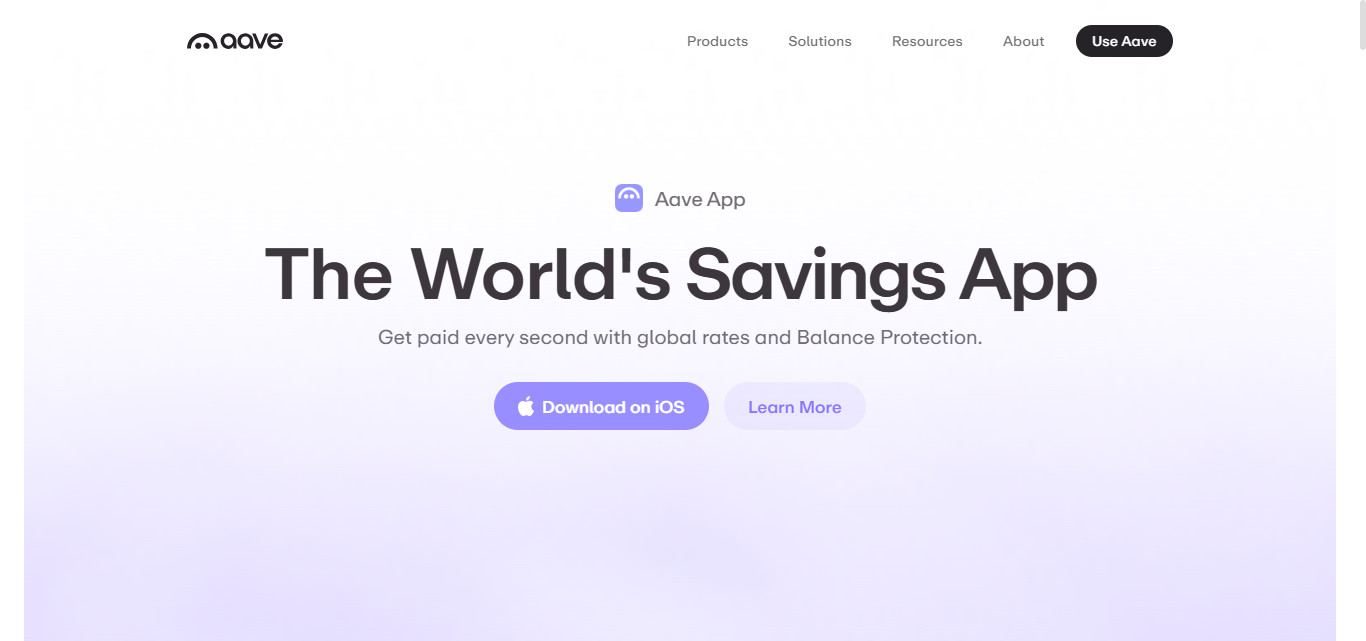
The protocol is audited by independent firms, has a bug bounty program, and is governed in a decentralized way. Fees and Pricing. Interest rates for borrowed assets are set by asset utilization and market conditions and the protocol collects fees. Integration Support: Developers are able to integrate Aave with intelligent contracts, APIs and developer SDKs.
Aave Best Use Cases
- DeFi users who borrow against their crypto holdings.
- Investors looking for decentralized lending opportunities.
- Crypto holders receive liquidity without selling their assets.
- Developers of decentralized finance applications.
Aave Pros & Cons
| Pros | Cons |
|---|---|
| Non-custodial: you keep control of your wallet | Smart contract and oracle risks |
| Transparent on-chain rates, collateral, and liquidations | Liquidation can happen quickly in volatile markets |
| Wide variety of collateral assets and multiple blockchains | Gas fees and a steeper learning curve for beginners |
| Permissionless access with no lengthy onboarding | Variable interest rates and limited compliance features for regulated firms |
6. Ledger Enterprise
Ledger Enterprise offers institutional digital asset custody, collateral management and transaction security solutions for financial organizations. Its infrastructure enables institutions to lend out and leverage electronic assets as collateral for derivatives, all while retaining custody control.
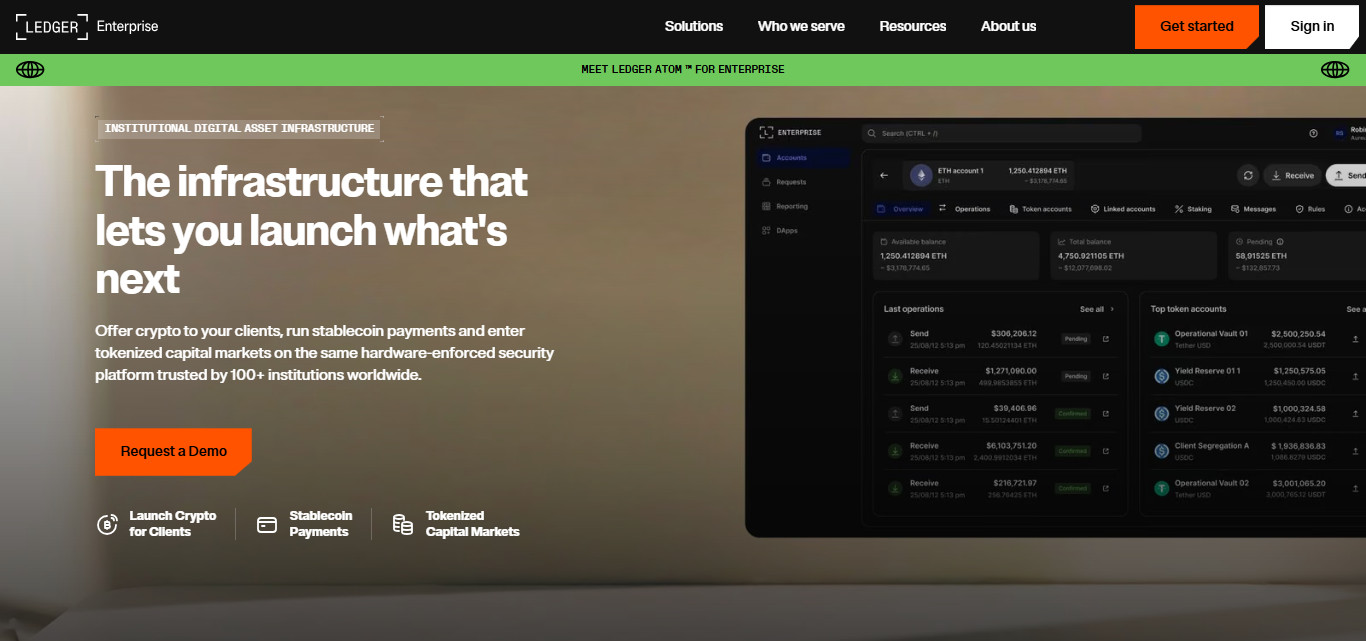
Supported Cryptocurrencies Bitcoin, Ethereum, USDC, USDT, PYUSD, EURC, and thousands of other tokens on supported networks are supported. Digital files are protected by Custody and Security Ledger’s hardware-backed security, secure key management, transaction approval policies and HSM technology.
Fees and Pricing Pricing is based on institutional needs, custody arrangements, and enterprise services selected. Integration Support Ledger provides APIs and infrastructure integrations for custody automation, trading, stablecoin payments and collateral workflows.
Ledger Enterprise Best Use Cases
- Financial institutions that require institutional level custody of assets.
- Companies conducting digital asset treasury operations.
- Organizations that need a secured hardware infrastructure.
- Corporations that handle collateral on different blockchain networks.
Ledger Enterprise Pros & Cons
| Pros | Cons |
|---|---|
| Hardware security modules keep private keys offline | Not a lending platform, so collateral use needs third parties |
| You hold your own keys with no custodian risk | Multi-person approval workflows can slow operations |
| Multi-user governance and approval rules | Setup and training take effort |
| Supports many assets and is trusted in the industry | Less flexible for fast, high-frequency collateral movement |
7. Zodia Custody
Zodia Custody offers institutional digital asset custody and settlement infrastructure to financial institutions, asset managers and corporate investors. It helps organizations safeguard their cryptocurrencies and access opportunities related to trading and collateral in digital currencies.
Supported cryptocurrencies: Supported assets include Bitcoin, Ethereum, Solana, XRP, Litecoin, Chainlink, USDT and other eligible tokens subject to jurisdiction. Custody and Security. Zodia offers institutional cold storage, governance controls, regulatory compliance, and SOC 1 and ISO 27001 security standards.
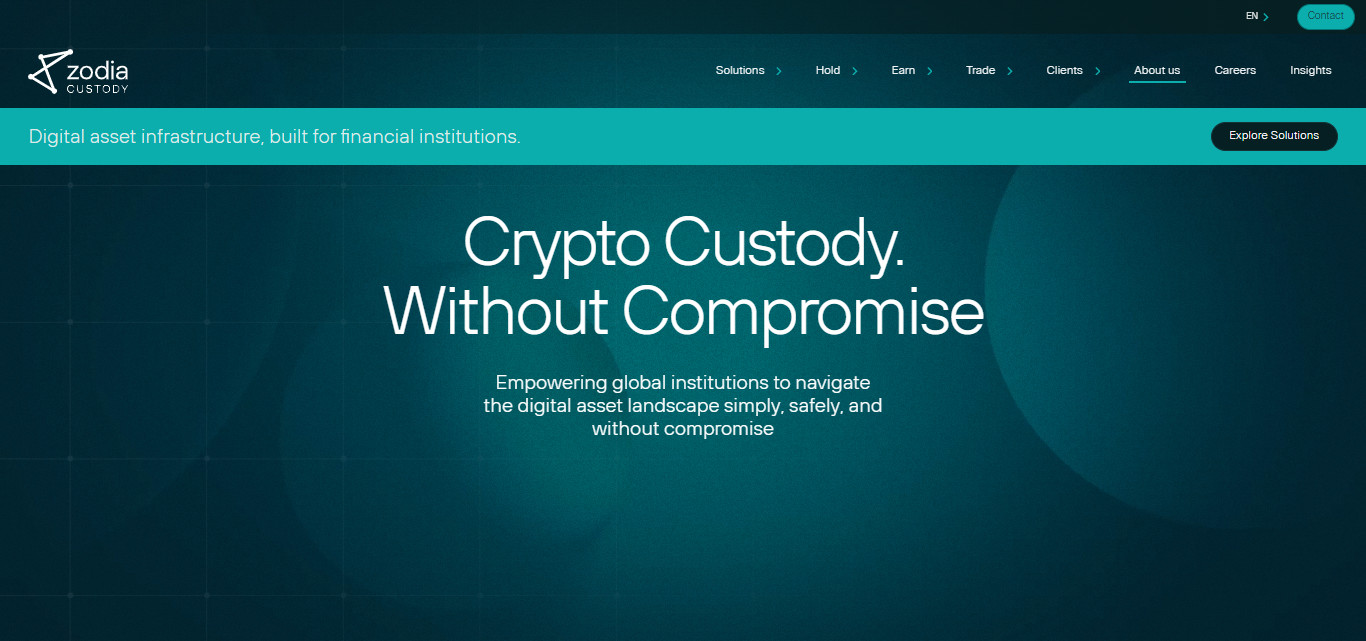
Fees & Pricing Pricing is generally based on the custody requirements of the institution along with the selected services. Integration Support: The Interchange network links trading venues, custodians and institutional counterparties for off-exchange settlement.
Zodia Custody Best Use Cases
- Banks that need regulated custody of electronic assets.
- Protection of crypto assets from institutional investors.
Portfolio managers of digital asset portfolios. - Trading companies needing safe off-exchange settlement.
Zodia Custody Pros & Cons
| Pros | Cons |
|---|---|
| Backed by a major global bank, which builds trust | Institutional only, with no retail access |
| Regulated in multiple jurisdictions | Onboarding and compliance checks can be lengthy |
| Segregated custody with strong security and insurance options | Narrower token support than some competitors |
| Good fit for banks, funds, and corporates that need compliance | Limited native DeFi or yield features |
8. Nexo
Nexo provides crypto-backed credit lines, allowing users to borrow against their crypto holdings without having to sell their cryptocurrencies. Its platform enables collateral management through asset monitoring, loan-to-value calculations and repayment options.
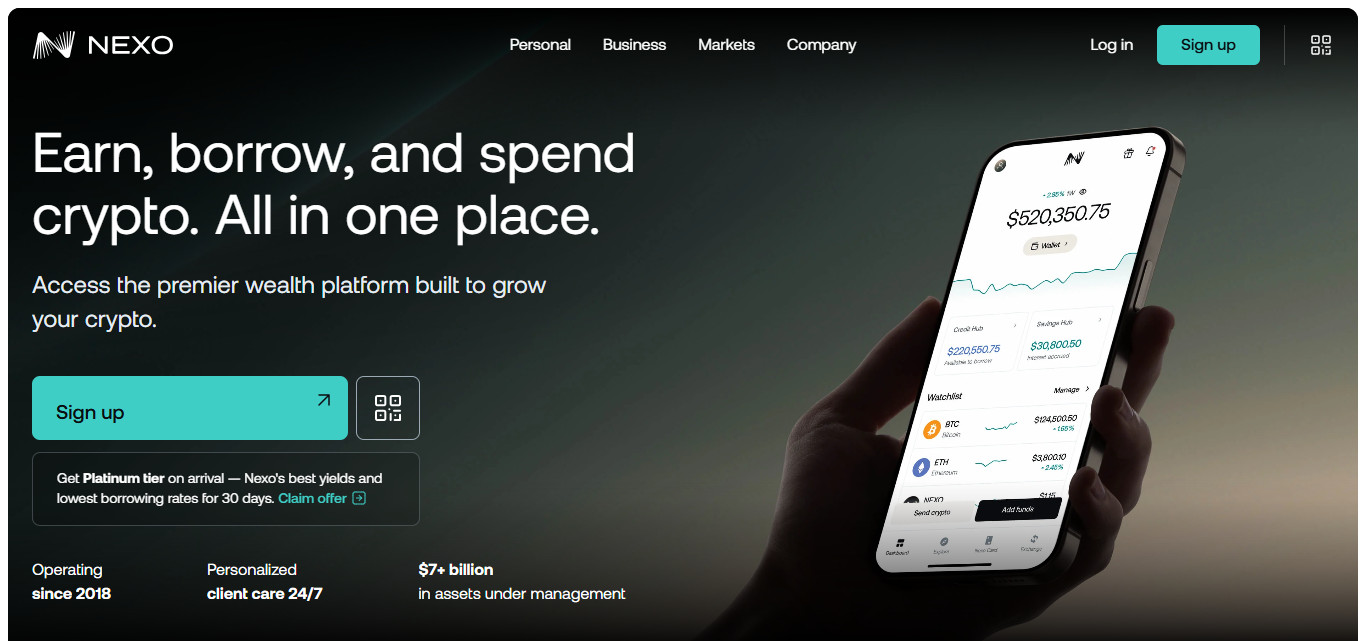
Supported Crypto: Eligible collateral includes Bitcoin, Ethereum, XRP, Solana, Litecoin, and a host of other stablecoins and cryptocurrencies. Custody & Security: Nexo works with institutional custody providers, including Ledger Vault and Fireblocks, and insurance.
Fees and Pricing: Borrowing costs are determined by loan-to-value ratios, loyalty tiers, interest rates and account eligibility. Integration Support: Nexo supports integration with crypto wallets, trading services, credit lines, and supported digital asset management infrastructure.
Nexo Best Use Cases
- Investors who want a crypto-backed credit facility.
- Liquidity for crypto holders without selling their assets.
- Users that have collateral-backed borrow positions.
- Customers seeking integrated crypto lending and financial services.
Nexo Pros & Cons
| Pros | Cons |
|---|---|
| Quick, simple crypto-backed loans without credit checks | Centralized, so you carry counterparty risk |
| Supports many major crypto assets as collateral | Not available in all regions (the US is restricted) |
| Flexible repayment, with interest rates tied to loyalty tiers | Liquidation risk if collateral value drops |
| Fiat and stablecoin loan options | Rates and terms can change, and some features depend on holding the NEXO token |
9. Ledn
Ledn is a Bitcoin-backed lending platform that allows individuals and businesses to access liquidity without having to sell their Bitcoin holdings. Its platform provides loans secured against collateral with pre-defined loan-to-value ratios, repayment options and collateral monitoring features.
Cryptocurrencies Supported Loans are primarily collateralized by Bitcoin, with eligible transactions supported by the stablecoins USDC, USDT and USA₮. Custody and Security: Ledn holds collateral in custody with itself or trusted institutional partners, with legal segregation arrangements and regular proof-of-reserves reporting.

Fees and Pricing The interest rates on the loans will vary depending on the amount borrowed, respective APRs, and loan period. Integration Support: Ledn supports transfers of digital currencies, stablecoin repayments, and institutional lending partnerships.
Ledn Best Use Cases
- Bitcoin holders looking for collateral-backed loans.
- Companies using their Bitcoin holdings to get access to liquidity.
- Investors are not selling Bitcoin for short term funding.
- Borrowers looking for Bitcoin-backed structured lending solutions.
Ledn Pros & Cons
| Pros | Cons |
|---|---|
| Transparent, with published proof-of-reserves reports | Limited collateral options, mainly Bitcoin and Ethereum |
| Simple Bitcoin-backed loans with clear terms | Centralized platform with counterparty risk |
| Fixed-rate loan options in many cases | Not available in every country |
| Focus on Bitcoin holders who want liquidity without selling | Fewer advanced features than institutional platforms |
10. Compound
Compound is a decentralized lending and borrowing protocol. Users can deposit cryptocurrencies as collateral and borrow other supported digital currencies. Smart agreements automatically manage lending pools, interest calculations, collateral requirements and liquidation processes.
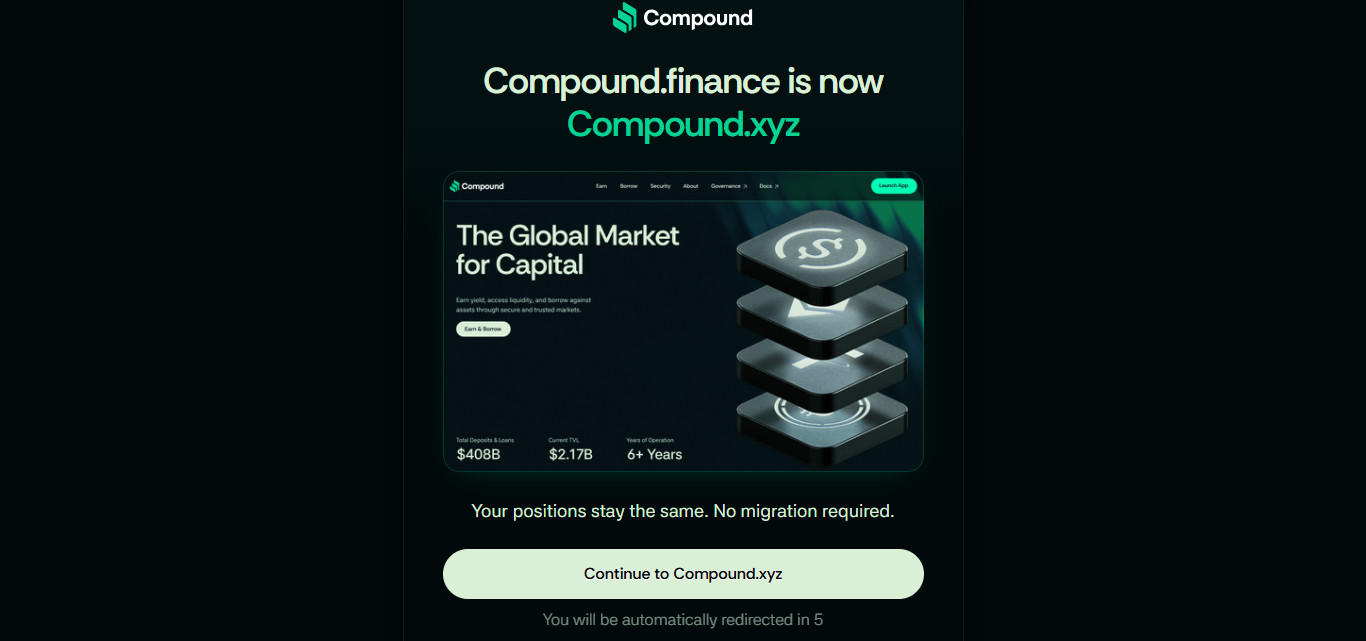
Supported cryptocurrencies include Ethereum, USDC, Wrapped Bitcoin, and other eligible tokens, depending on the market. Custody and Security: Compound relies on non-custodial smart contract technology, blockchain-based transaction verification, and community governance to manage protocol operations.
Fees & Pricing Borrowing costs are based on market utilization, asset demand, and specific protocol parameters. Integration Support Compound’s protocol infrastructure enables integrations with wallets, custody providers, DeFi applications and institutional platforms.
Compound Best Use Cases
- DeFi investors providing assets to lending markets.
- cryptocurrency holders getting loans against digital collateral.
- DeFi builders working on decentralized lending products.- Investors looking to invest in blockchain-based lending and borrowing opportunities.
Compound Pros & Cons
| Pros | Cons |
|---|---|
| Non-custodial and fully on-chain | Smart contract risk, as with any DeFi protocol |
| Long track record and a well-audited codebase | Fewer assets and features than Aave |
| Algorithmic, transparent interest rates | Variable rates and gas fees can add up |
| Governed by token holders and widely composable with other DeFi apps | Automatic liquidations and little customer support |
How We Chose the Best Crypto Collateral Management Platforms
- Security and Custody: Assess asset protection, cold storage, MPC technology, and security standards.
- Management of Collateral Features: Evaluate the management of collateral monitoring, allocation, valuation and liquidation.
- Fees & Pricing: Custody fees, transaction fees, borrowing rates and platform fees.
- Integration Support: Check the integrations with exchanges, wallets, DeFi protocols and trading platforms.
- Risk Management: Assess margin requirements, liquidation controls, and collateral monitoring tools.
- Regulatory Compliance: Validate licensing, regulatory coverage and compliance standards.
- Platform Reputation: Look for industry experience, institutional adoption, transparency and customer input.
- User Experience: Evaluate the platform, dashboard and collateral management usability.
Conclusion
Conclusion Choosing the right crypto collateral management platform depends on your security requirements, the cryptocurrencies you want to support, your budget, and the integration capabilities you need. BitGo, Fireblocks, Copper, or Coinbase are available for institutional users.
Aave and Compound offer decentralized borrowing. Nexo and Ledn are lending solutions that are backed by crypto. Always compare the platform features, custody standards, fees and risks to choose the right solution.
FAQ
Which are the best crypto collateral management platforms?
Popular options include BitGo, Fireblocks, Copper, Coinbase, Aave, and Compound.
How do crypto collateral management platforms work?
They secure digital assets and monitor collateral for borrowing or settlement.
Which cryptocurrencies can be used as collateral?
Common options include Bitcoin, Ethereum, stablecoins, and other supported digital assets.
Are crypto collateral management platforms secure?
Most use MPC, cold storage, encryption, and institutional security controls.