
DeFi is a disruptive sector that is changing the way people trade derivatives, focusing on self-custodial, transparent, and globally accessible systems.
In this article, I will list the Best On-Chain Derivative Platforms and their market dominance, along with their features and benefits, ease of use, trading, and liquidity. For traders, these platforms have the latest technology in crypto derivatives.
Key Poinst & Best On-Chain Derivatives Platforms Dominating the Market Right Now
1. Hyperliquid
Hyperliquid is an up-and-coming on-chain derivatives exchange. Thanks to its custom Layer-1 and innovative deep liquidity solutions, it is an industry leader.
Many decentralised exchanges rely on outside market makers, but Hyperliquid has developed a completely on-chain order book that allows high-frequency trading with a lot less delay.

With its transparent trading, gasless trading, and an ever-expanding catalogue of perpetual futures markets, both retail and institutional traders gravitate to Hyperliquid. It is rapidly growing its market share vs centralised exchanges.
Pros & Cons
| Pros | Cons |
|---|---|
| Fully on-chain order book with high-speed execution | Relatively new compared to established exchanges |
| Zero gas fee trading experience | Ecosystem still expanding |
| Deep liquidity across major perpetual markets | Limited spot trading options |
| Transparent trading environment | Faces growing competition from newer protocols |
| Strong adoption among professional traders | Primarily focused on derivatives |
2. dYdX
dYdX is another giant in the on-chain derivatives space. dYdX offers perpetuals on many cryptos, and dYdX has been a leader in innovation, recently moving beyond Layer-2 solutions completely to develop its own blockchain.
Traders on dYdX benefit from advanced order types and some of the best tools for trading in and out of the DeFi space.
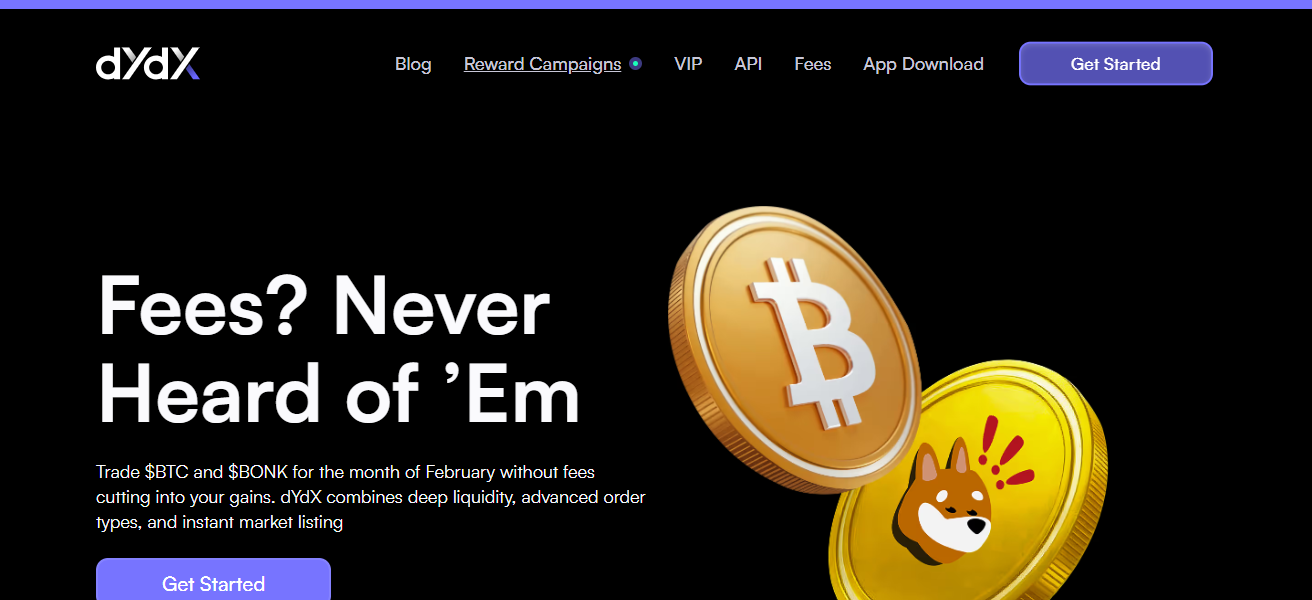
dYdX is known for its very active governance and community, and because of this, sustained liquidity is the norm. dYdX is a great platform for traders of derivatives that are looking for a clear and transparent space.
Pros & Cons
| Pros | Cons |
| Institutional-grade trading features | Can be complex for beginners |
| Wide range of perpetual futures markets | Governance decisions may take time |
| Dedicated blockchain improves scalability | Lower asset variety than some competitors |
| Advanced order types and risk management tools | Liquidity varies across smaller trading pairs |
| Strong community governance model | Learning curve for new DeFi users |
3. GMX
GMX has an innovative liquidity model where users can trade perpetual contracts against a multi-asset liquidity pool.
This model minimises the dependence on more traditional order books, while also providing the benefits of deep liquidity and low slippage.

GMX has an established user base because of its simple interface, a transparent price model, and the use of various blockchain ecosystems.
GMX also created a sustainable ecosystem through a revenue-sharing model and rewarding liquidity providers, therefore attracting more traders who are seeking decentralised leverage.
Pros & Cons
| Pros | Cons |
| Innovative liquidity pool trading model | Limited advanced trading features |
| Low slippage on major assets | Smaller asset selection than centralized exchanges |
| Revenue sharing for liquidity providers | Dependent on liquidity pool health |
| Easy-to-use interface | Not ideal for high-frequency trading |
| Multi-chain availability | Lower leverage options on certain assets |
4. Vertex Protocol
Vertex Protocol integrates spot and money market trading, along with perpetual futures, all on one platform.
Vertex aims to improve the capital efficiency of decentralised finance by providing a unified cross-margin system and facilitating easier trading.
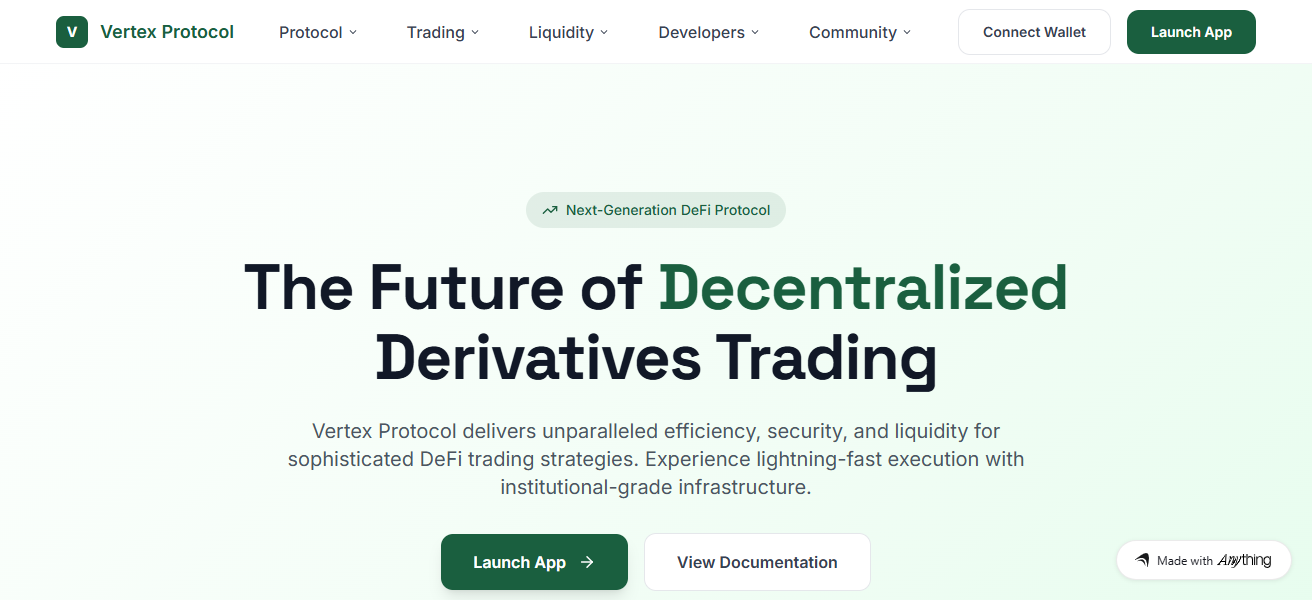
Vertex’ hybrid model balances fast trading and self-custody while also maintaining on-chain transparency and centralised exchange performance.
Vertex also appeals to active traders due to the flexibility and security offered in its derivative system.
Pros & Cons
| Pros | Cons |
| Unified spot and derivatives trading | Newer platform with shorter track record |
| Cross-margin system improves capital efficiency | Liquidity still growing compared to market leaders |
| Fast execution speeds | Advanced interface may overwhelm beginners |
| Self-custodial architecture | Limited ecosystem integrations in some regions |
| Multiple products under one platform | Fewer educational resources available |
5. Drift Protocol
Of the derivatives trading platforms on Solana, Drift Protocol is one of the most prominent. By utilising the strengths of Solana
Drift Protocol has sophisticated offerings on perpetual futures and automated trading with advanced risk management.
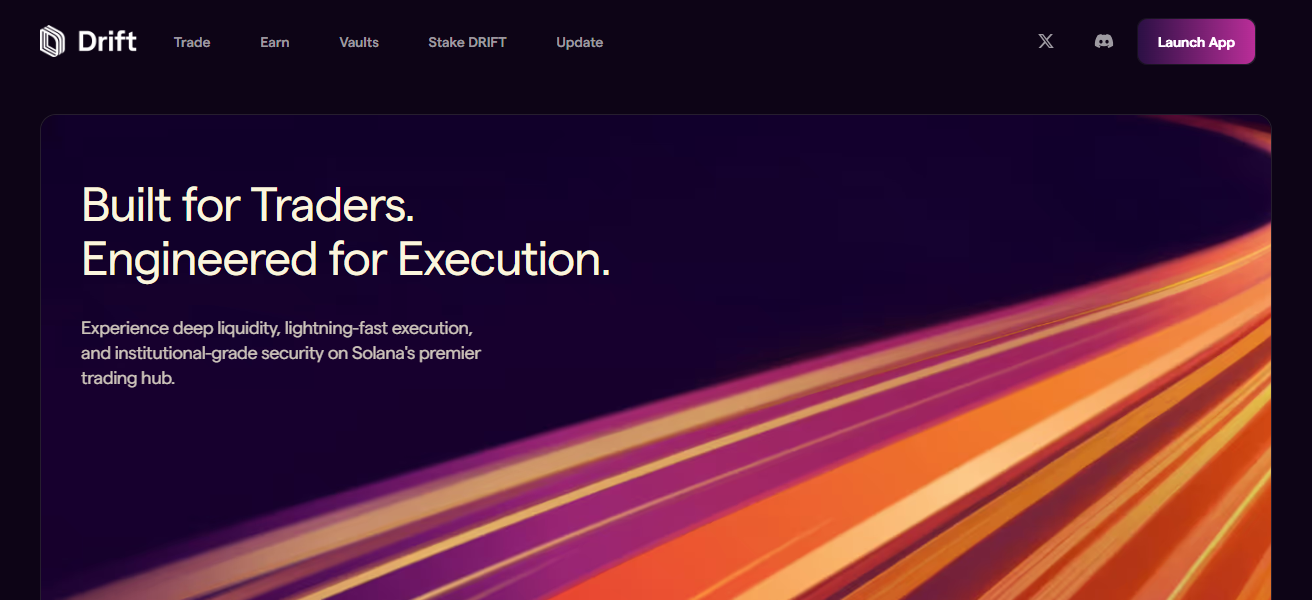
Features of the protocol are constantly being created and updated to increase the efficacy of trading, such as advanced liquidity provisioning and margin offerings.
With the increasing interest in DeFi on Solana from institutions, Drift Protocol aims to be the foundational building block for on-chain derivatives.
Pros & Cons
| Pros | Cons |
| Built on high-speed Solana infrastructure | Heavy reliance on Solana network stability |
| Low transaction costs | Smaller user base than top competitors |
| Advanced margin management tools | Limited cross-chain functionality |
| Innovative liquidity mechanisms | Asset selection still expanding |
| Strong growth within Solana DeFi ecosystem | Less liquidity than Hyperliquid or dYdX |
6. Jupiter Perps
Jupiter, initially noted for controlling decentralised token aggregation at Solana, has broken into perpetual futures with Jupiter Perps.
Using their unique liquidity models with deeper ecosystem integrations, the platform provides good pricing and excellent UX.

Traders have the benefit of easily going long with leverage within the greater Jupiter ecosystem. The platform’s volume is increasing, clearly demonstrating the demand for integrated DeFi trading solutions with both spot and derivatives on a single interface.
Pros & Cons
| Pros | Cons |
| Integrated with Jupiter’s popular ecosystem | Newer derivatives product |
| Seamless user experience | Derivatives features less mature than competitors |
| Competitive pricing and liquidity routing | Limited historical performance data |
| Easy access for Solana users | Fewer advanced order types |
| Strong ecosystem support | Depends heavily on Solana ecosystem growth |
7. Aevo
Aevo is a platform dedicated to the trading of decentralized options and perpetual futures. It offers specialised and relatively advanced products to experienced traders.
Built on dedicated, derivatives-optimised infrastructure, Aevo combines off-chain order matching and on-chain settlement and achieves favourable results.
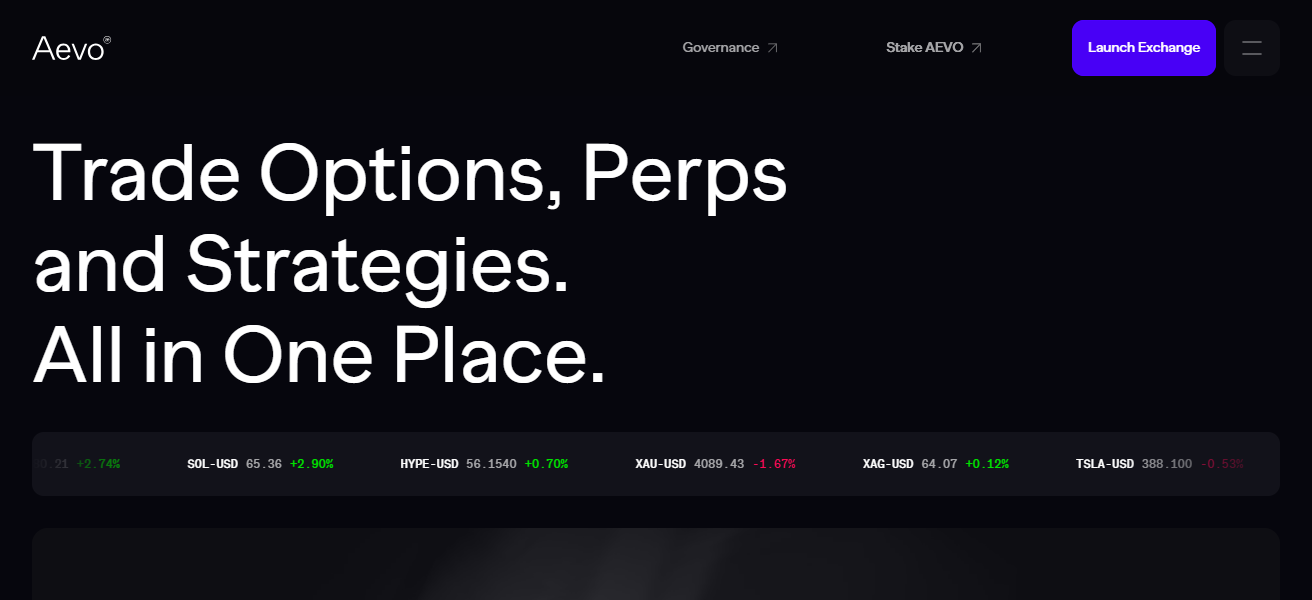
The platform has attracted interest among professional traders seeking advanced risk management strategies beyond the realm of basic perpetual contracts.
Aevo’s position in this field strengthens with the continuous expansion of its product range and liquidity concerning the derivatives market.
Pros & Cons
| Pros | Cons |
| Strong options trading infrastructure | More suitable for experienced traders |
| High-performance matching engine | Smaller user base than leading exchanges |
| Supports both options and perpetuals | Options trading can be complex for beginners |
| Professional-grade trading tools | Limited educational content |
| Growing institutional interest | Liquidity varies across niche markets |
8. Synthetix
Synthetix is one of the premier protocols in DeFi, enabling synthetic asset creation and derivatives market participation without holding the underlying asset.
Its base layer supports many of the top trading apps and provides access to commodities, crypto, and other synthetics.
The latest upgrades have focused on capital efficiency and integrations within their ecosystem. As the interest in on-chain financial services expands, Synthetix continues to be a fundamental protocol for on-chain derivatives.
Pros & Cons
| Pros | Cons |
| Enables synthetic exposure to multiple asset classes | System architecture can be difficult to understand |
| Powers several major DeFi applications | Requires understanding of synthetic assets |
| Strong ecosystem integrations | Complexity may discourage new users |
| Constant protocol innovation | Exposure depends on oracle performance |
| Broad market access beyond cryptocurrencies | Capital efficiency challenges in some markets |
9. Gains Network
The Gains Network is unique because of its gTrade platform. gTrade provides traders with leveraged exposure of multiple asset classes, including cryptocurrency, commodities, forex, and equity, via a decentralised interface.
Efficiency of capital is achieved via Gains Network’s synthetic liquidity model, and high leverage is also accommodated. Many traders find the execution on gTrade is clear, and like that there are many trading options.
Gains Network has filled a niche in the DeFi space that many traders are interested in. It brings aspects of the traditional financial markets into DeFi, and offers users more than just crypto derivatives.
Pros & Cons
| Pros | Cons |
| Access to crypto, forex, commodities, and stocks | Lower liquidity than top-tier exchanges |
| High leverage opportunities | Higher risk for inexperienced traders |
| Efficient synthetic liquidity model | Asset pricing depends on oracle infrastructure |
| User-friendly trading interface | Smaller ecosystem than competitors |
| Diversified market exposure | Less institutional adoption currently |
10. Ostium
Ostium is an up-and-coming platform for derivatives of real-world assets, and is one of the fastest-growing in that area.
This protocol is very versatile and allows users to trade commodities, macroeconomic indices, and even more via a fully decentralised platform.

The trading options that Ostium provides are the result of the clever combination of finance and trading.
Within crypto, real-world, and now tokenised assets are becoming mainstream offerings, and Ostium is a platform that investors looking for greater exposure should keep their eyes on.
Pros & Cons
| Pros | Cons |
| Focuses on real-world asset derivatives | Early-stage platform |
| Exposure to commodities and macro markets | Limited historical performance data |
| Innovative RWA integration strategy | Smaller liquidity pools |
| Expanding market opportunities | Fewer supported assets currently |
| Strong growth potential as tokenization expands | Higher adoption risk compared to established platforms |
Conclusion
The on-chain derivatives market is advancing speedily, with the likes of Hyperliquid, dYdX, GMX, and Vertex providing new benchmarks within the derivatives space for trading.
In addition to that, the open ecosystems of new derivatives platforms like Ostium and Aevo are broadening crypto decentralised trading beyond only crypto assets.
These projects will enable derivatives trading with new levels of accessibility and the financial independence of users on a global scale.