
This article will cover the best Electronic Health Record (EHR) Systems that incorporate telehealth APIs to assist healthcare providers in optimizing the management of patient care, medical records, and virtual consultations.
These EHR systems are cutting-edge solutions that integrate telehealth, workflow, and data management within secure boundaries. Consequently, they are highly suitable for use in contemporary hospitals, clinics, and healthcare service providers.
Key Points & Best Electronic Health Record (EHR) Systems with Built-In Telehealth APIs
- Epic Systems – Customizable workflows streamline documentation across large healthcare networks.
- Cerner – Advanced analytics provide actionable insights improving clinical decision-making.
- athenahealth – Automated billing features reduce administrative burdens for practices.
- eClinicalWorks – AI-powered tools enhance charting accuracy and operational efficiency.
- NextGen Healthcare – Specialty-focused templates support diverse medical disciplines effectively.
- AdvancedMD – Revenue cycle management optimizes financial performance and collections.
- DrChrono – Mobile-first design enables efficient access from anywhere instantly.
- Practice Fusion – Affordable platform suits independent providers seeking simplicity.
- Greenway Health – Population health tools strengthen preventive care initiatives.
- Meditech – Enterprise-grade scalability supports growing hospitals and health systems.
10 Best Electronic Health Record (EHR) Systems with Built-In Telehealth APIs
1. Epic Systems
Epic Systems is one of the top-rated EHR systems for larger hospitals and healthcare systems. Their embedded Telehealth APIs enable healthcare providers to link virtual visits to patient care records.
This lessens the burden of administrative work for providers and enhances the care that is provided.
Epic’s telehealth APIs are customizable, have advanced reporting and analysis, and provide the ability to exchange health data securely and efficiently between organizations.
Epic’s telehealth system offers remote consultations, helps patient engagement, and offers multiple scenarios of scheduling telehealth visits, making it a great solution for the multiple complexities of healthcare.
Epic Systems Pros & Cons
| Pros | Cons |
|---|---|
| Comprehensive telehealth integration | Expensive implementation costs |
| Highly customizable workflows | Lengthy deployment process |
| Excellent interoperability features | Requires extensive staff training |
| Strong analytics and reporting | Best suited for large organizations |
2. Cerner
Cerner offers a telehealth system that focuses on even greater clinical productivity and positive patient outcomes.
With the use of Cerner’s telehealth APIs, virtual patient care is offered, and documentation of patient care is done within the system.
Telehealth APIs provided by Cerner focuses on remote care and offers a multitude of solutions for care and clinical decision support.
Cerner is amenable to the complete range of healthcare systems from hospitals to highly specialized clinics to systems that have multiple locations.
Cerner Pros & Cons
| Pros | Cons |
| Advanced population health tools | Complex user interface |
| Strong data analytics capabilities | Higher maintenance expenses |
| Scalable for healthcare networks | Customization can be challenging |
| Reliable telehealth functionality | Training requirements are significant |
3. athenahealth
athenahealth is a cloud-based EHR that integrates the management of medical records with telehealth systems.
Virtual appointments and patient interaction documentation can be performed within a single system. The system includes functionalities for management of the revenue cycle, telehealth systems, automated billing, and patient communication.

The infrastructure of the system is cloud-based which facilitates record and system access from virtually anywhere and is a boon to IT departments.
This system is especially favorable to healthcare practices that require the fine balancing of a highly demanded telehealth practice and a user-friendly system.
athenahealth Pros & Cons
| Pros | Cons |
| Cloud-based accessibility | Subscription fees may increase |
| Automated billing features | Limited customization options |
| User-friendly interface | Internet dependency required |
| Efficient telehealth scheduling | Some advanced features cost extra |
4. eClinicalWorks
eClinicalWorks is a complete EHR system for practices wanting to manage digital healthcare completely. Their system provides secure video calls for telehealth, e-prescribing and patient engagement.
Their system improves charting and automates administrative tasks with their artificial intelligence system.
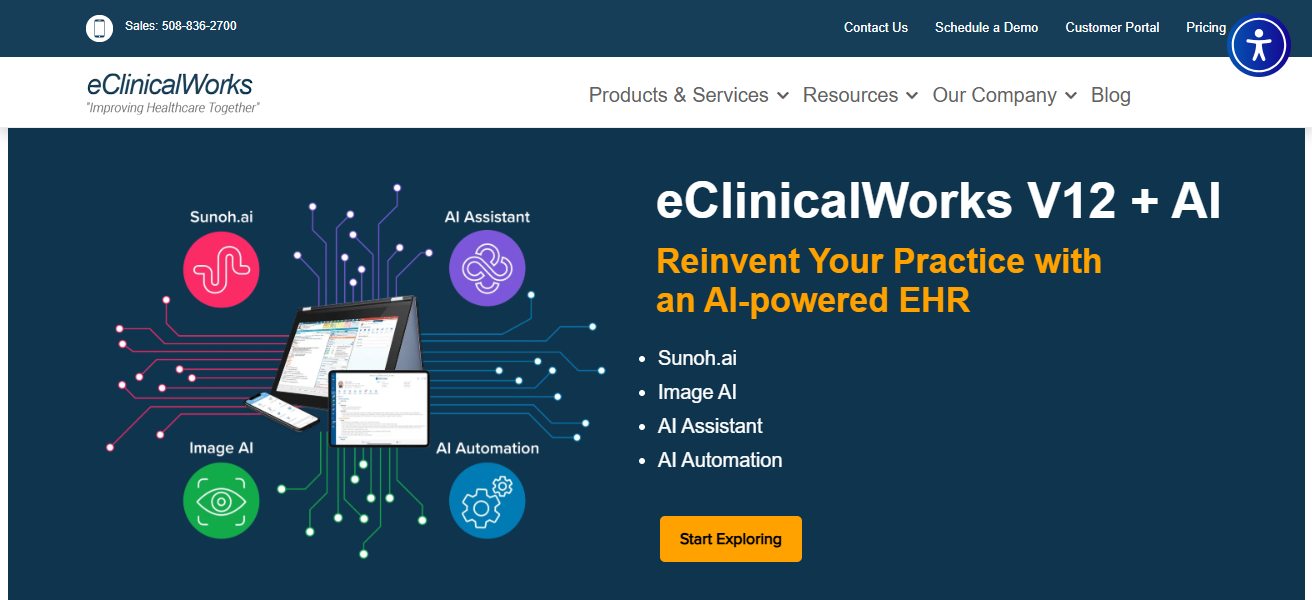
eClinicalWorks provides a centralized system for appointment management, telehealth and documentation.
eClinicalWorks is an excellent option for practices wanting the efficiency of telehealth combined with enterprise-grade customer service.
eClinicalWorks Pros & Cons
| Pros | Cons |
| AI-powered documentation tools | Occasional system performance issues |
| Integrated telehealth platform | Learning curve for beginners |
| Strong patient engagement features | Customer support concerns reported |
| Comprehensive clinical workflows | Custom reports can be complex |
5. NextGen Healthcare
NextGen Healthcare provides an EHR system suitable for specialty practices and healthcare systems.
Their system integrates telehealth and allows the practitioner to capture all clinical documentation and patient records.
Their system is flexible and provides specialty workflows, specialty templates and a patient portal.
NextGen Healthcare allows secure digital communication and engagement of patients and helps practices improve the care and engagement of their patients.
NextGen Healthcare is a great system for practices that need variety in their workflows and specialty telemedicine.
NextGen Healthcare Pros & Cons
| Pros | Cons |
| Specialty-specific templates available | The setup process can be lengthy |
| Flexible workflow customization | Higher pricing for small practices |
| Robust patient portal features | The interface may feel outdated |
| Effective telehealth capabilities | Requires ongoing training |
6. AdvancedMD
AdvancedMD is a combined EHR, practice management and telehealth system. They provide virtual visits with their telehealth system along with the management of appointments and secure communications.
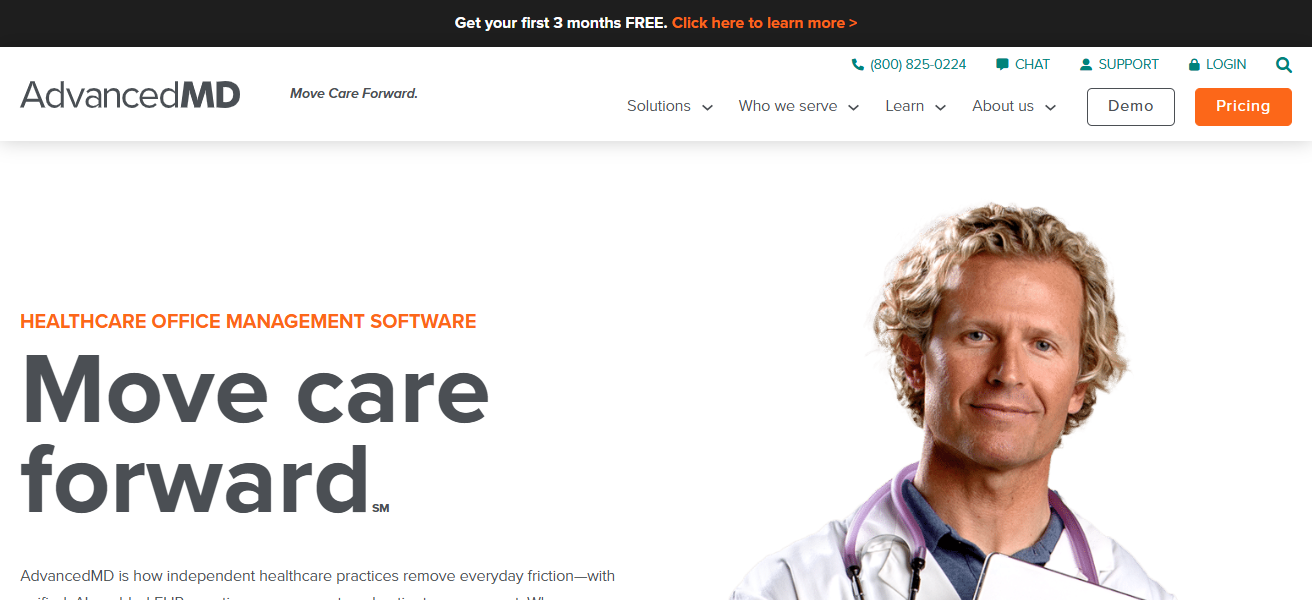
AdvancedMD provides the tools needed to complete your patient care from a telehealth perspective and provides the tools to complete your revenue cycle.
AdvancedMD is a fully integrated telehealth system that is easy to use and allows seamless clinical care. AdvancedMD is a great fit for healthcare systems that want to integrate telehealth with traditional healthcare.
AdvancedMD Pros & Cons
| Pros | Cons |
| Integrated practice management tools | Premium features increase costs |
| Strong revenue cycle management | Initial setup may be complex |
| Cloud-based deployment | Limited offline functionality |
| Easy virtual appointment management | Customization options vary |
7. DrChrono
DrChrono’s state-of-the-art EHRs embrace mobile technology and telehealth. With DrChrono, healthcare professionals may engage in telehealth visits and document their encounters, as well as access patient files via mobile phones, tablets, and computers.
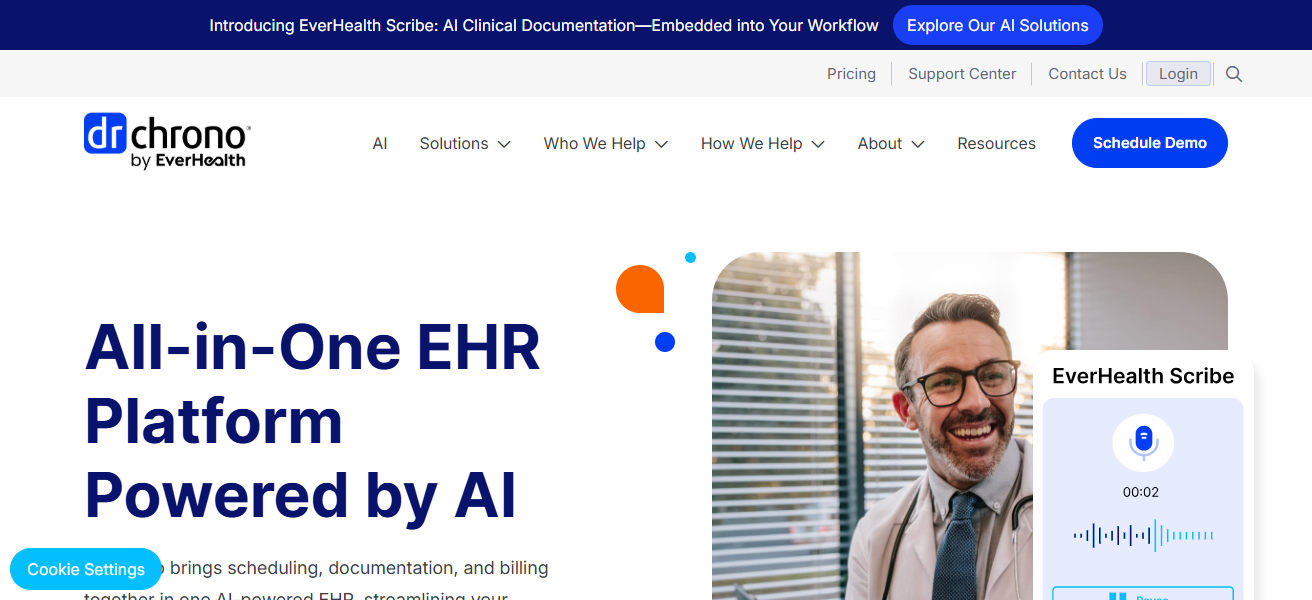
DrChrono offers healthcare practices customizable medical forms, telehealth, e-prescribing, and patient scheduling integrated into one system.
DrChrono’s integrated telehealth, record, and operational systems offers healthcare practices the capability to incorporate efficiency and access to more patients and healthcare services to telehealth and mobile healthcare operations.
DrChrono Pros & Cons
| Pros | Cons |
| Mobile-friendly platform design | Limited enterprise-level capabilities |
| Simple telehealth integration | Advanced reporting is basic |
| Customizable medical forms | Some integrations require upgrades |
| Easy implementation process | Less suitable for large hospitals |
8. Practice Fusion
Practice Fusion is a cost-effective cloud EHR with telehealth built-in, designed specifically for small and medium-sized practices.
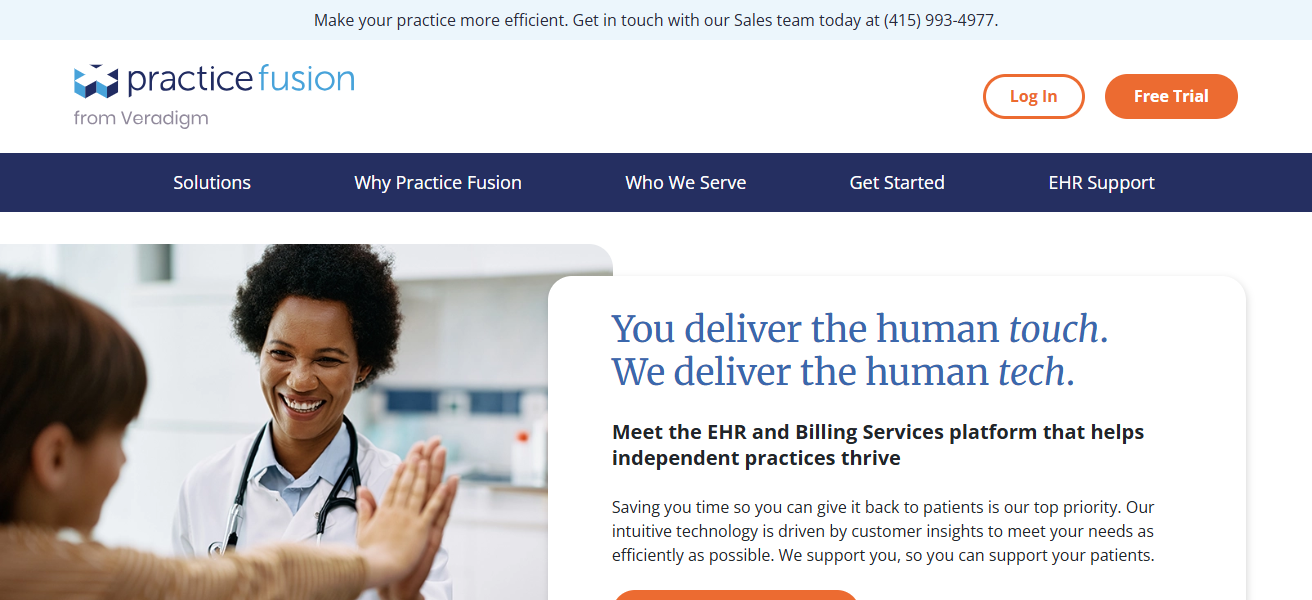
Practice Fusion allows providers to document telehealth visits and manage patient appointments and records on a single, easy to use, and affordable platform that supports the basic functions of telehealth. Practice Fusion includes e-prescribing, patient charting and messaging.
If your practice is looking for a low-cost, telehealth integrated EHR that is good at managing workflows, Practice Fusion is a good choice.
Practice Fusion Pros & Cons
| Pros | Cons |
| Affordable pricing structure | Fewer advanced enterprise features |
| Easy-to-use interface | Limited customization flexibility |
| Cloud-based accessibility | Smaller feature ecosystem |
| Suitable for independent practices | Telehealth tools less extensive |
9. Greenway Health
Greenway Health’s EHR system supports healthcare practices and their telehealth operations in achieving their goals for patient outcomes and healthcare efficiency.
Greenway Health’s telehealth APIs and EHR system support healthcare practices in their operations and in fulfilling healthcare’s goals for population health and preventive care.
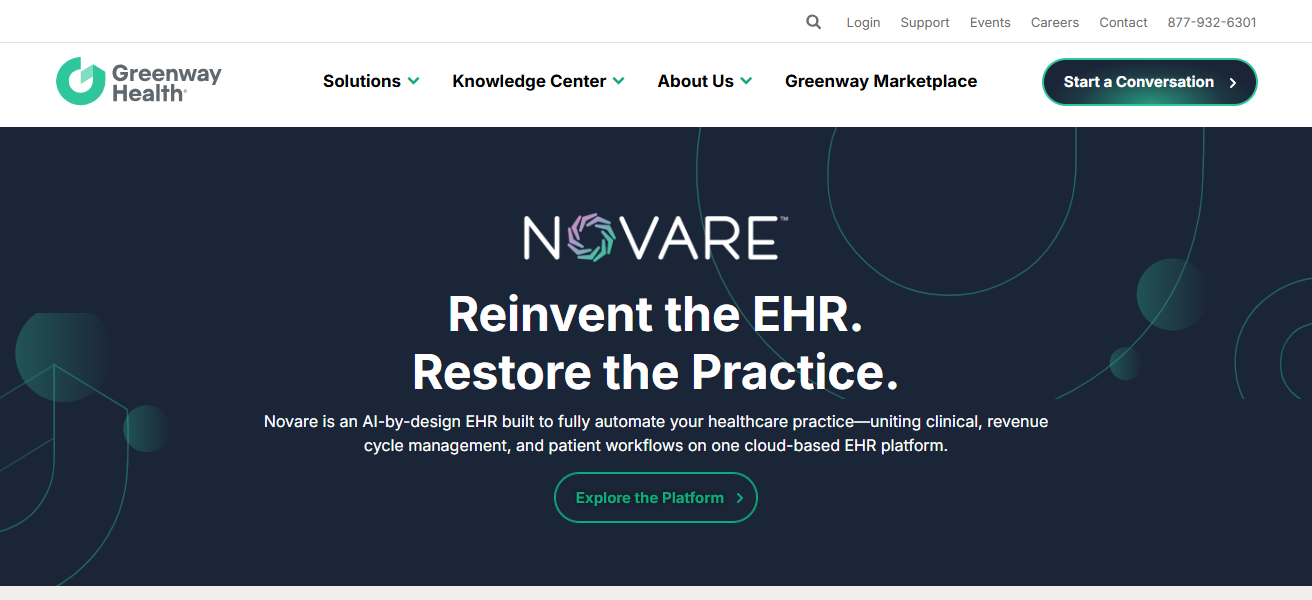
Greenway Health EHR integrated systems for healthcare practice communication, patient progress, and care delivery, addresses balance needs for operational and healthcare services’ compliance and quality.
Greenway Health Pros & Cons
| Pros | Cons |
| Strong population health management | Implementation can be time-consuming |
| Comprehensive patient engagement tools | User interface needs modernization |
| Effective telehealth support | Higher training requirements |
| Good analytics capabilities | Support response times vary |
10. Meditech
Meditech is a valuable resource for hospitals and large-scaled healthcare systems worldwide. Trusted as an enterprise-grade EHR platform, Meditech offers telehealth with virtual consultations and remote patient monitoring with integrated care management.
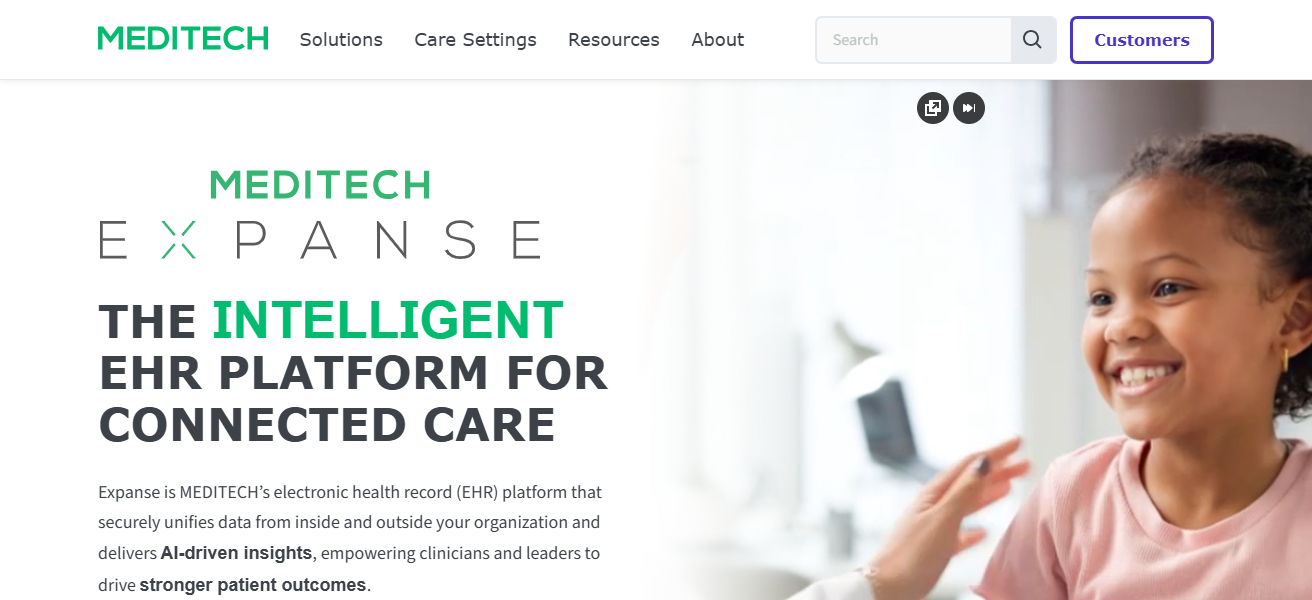
Meditech is also known for its interoperability by allowing the exchange of patient information securely and easily across multiple networks.
In addition to reporting and clinical workflows, Meditech is robust in its telehealth and EHR integration and is especially beneficial for larger-scaled healthcare facilities.
Meditech Pros & Cons
| Pros | Cons |
| Enterprise-grade scalability | Complex implementation process |
| Strong interoperability standards | Higher upfront investment |
| Reliable hospital-focused features | Requires dedicated IT resources |
| Integrated remote care capabilities | Less ideal for small clinics |
How We Analyzed Electronic Health Record (EHR) Systems with Telehealth APIs
- Telehealth Features – We looked at the quality of the video and virtual care features.
- User-Friendliness – We looked at the systems’ interfaces from the perspective of the care providers and other staff.
- Data Interoperability – We looked at systems’ ability to transfer data with other healthcare systems securely.
- Patient Engagement Features – We looked at the systems’ patient portals and their messaging and appointment features.
- Clinical Workflow Features – We looked at the systems’ impact on documentation and care delivery.
- Flexibility – We looked at how systems differed based on healthcare specialty and the size of the practice.
- Flexibility – We looked at systems’ ability to adapt to small clinics and large healthcare networks.
- Security and Compliance – We looked at systems’ compliance with HIPAA and the protection of healthcare data.
- Data Insights – We looked at systems’ ability to provide dashboards and data in a timely and actionable manner.
- Cost vs. Return on Investment – We looked at the systems’ total costs and their features in relation to the ROI.
Conclusion
To sum up, the optimal EHR systems with telehealth APIs empower care organizations to provide effective virtual care without compromising on the accuracy of patient record systems.
Advanced systems like Epic, Cerner, athenahealth, and Meditech carry extensive benefits for customer workflows and patient-related processes and overall care.
The best EHR preference is based on the size, financial resources, and the clinical care and service offerings of the organization for sustainable care over time.
FAQ
Why are telehealth APIs important in healthcare?
They enable seamless integration between patient records and virtual consultation services.
Which EHR platform is best for large hospitals?
Epic Systems and Meditech are commonly preferred by large healthcare organizations.
Are cloud-based EHR systems suitable for telehealth?
Yes, cloud-based EHR solutions provide flexibility, accessibility, and easier telehealth deployment.
Can small practices benefit from telehealth-enabled EHR software?
Absolutely. Platforms like Practice Fusion and DrChrono offer affordable telehealth functionality for smaller clinics.