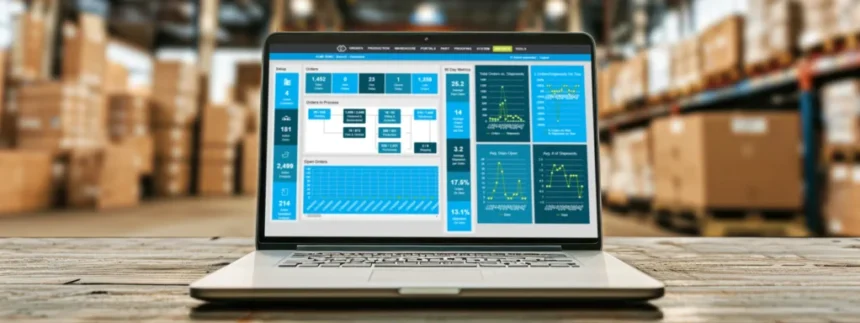
I will describe the Best High-Volume Warehouse Inventory Optimization Softwares for 3PL Centers in this article. These software solutions are built for logistics providers operating large scale inventory.
These solutions enhance the automation and accuracy of a warehouse while lowering the costs of operation. You will learn how the top solutions in the market improve the processing and routing of inventory in the supply chain and provide support for fast growing 3rd party logistics in their competitive marketplace.
Key Points & Best High-Volume Warehouse Inventory Optimization Softwares for 3PL Centers
| Software | Explanation |
|---|---|
| Manhattan Associates WMS | Optimizes high-volume warehouse workflows with advanced AI-driven inventory control automation |
| Blue Yonder | Enables predictive inventory planning and real-time 3PL warehouse visibility tracking |
| Oracle Warehouse Management Cloud | Cloud-based system streamlines inventory accuracy and large-scale distribution operations efficiently |
| SAP Extended Warehouse Management (SAP EWM) | Integrates supply chain data for optimized warehouse execution processes management |
| Fishbowl Inventory | Automates inventory tracking for mid-size 3PL warehouse operations efficiently managed |
| NetSuite WMS | Scalable cloud inventory control for fast-growing warehouse networks efficiently optimized |
| Infor WMS | Provides real-time inventory insights for high-volume logistics centers, efficient tracking |
| Körber WMS | Enhances warehouse automation and improves inventory throughput efficiency performance optimization |
| Softeon WMS | Flexible warehouse platform supporting complex multi-client 3PL operations seamlessly scalable |
| Logiwa WMS | AI-driven fulfillment system for e-commerce focused 3PL warehouses rapid scaling |
10 Best High-Volume Warehouse Inventory Optimization Softwares for 3PL Centers
1. Manhattan Associates WMS
The Manhattan Associates WMS advanced the first warehouse execution solution for high-volume 3PL systems. AI-driven optimization assists Manhattan Warehouse Management in solving complex challenges related to inventory flow, labor and productivity, and order fulfillment in multi-warehouse environments.
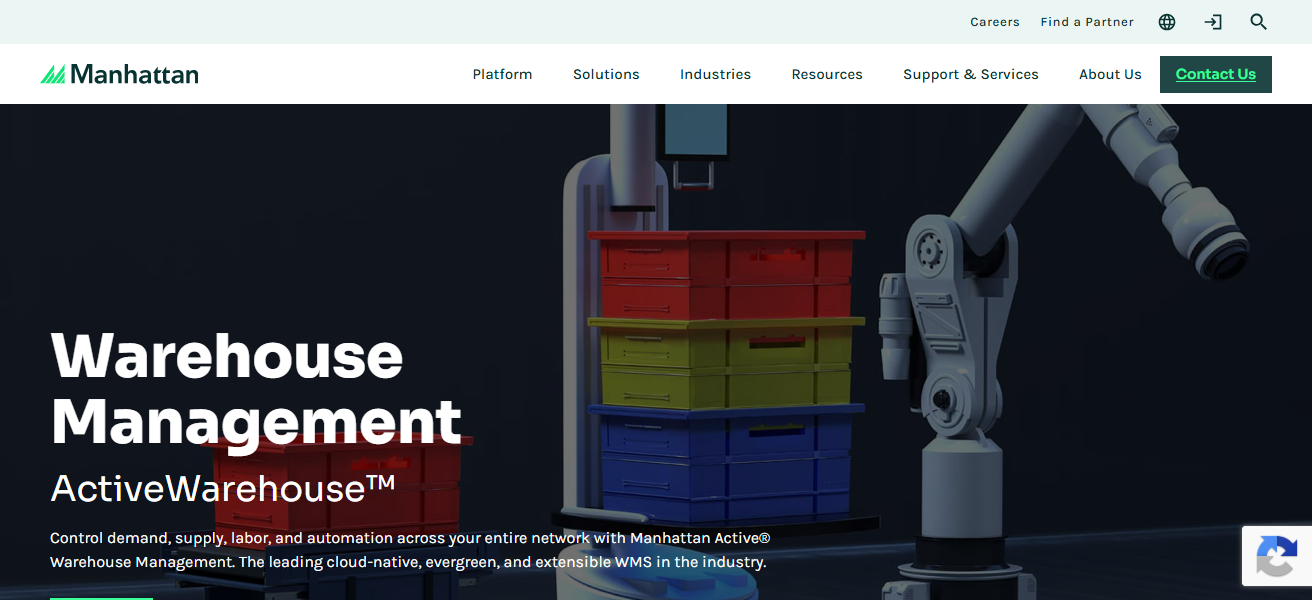
Their system is an exceptionally scalable solution for large dispatch networks. The most recent updates are focused on cloud-native improvements and advanced machine learning features for demand forecasting.
Most global logistics providers are using the solution to manage surge season challenges with an improved throughput and inventory visibility across the full range of warehouse operations.
Manhattan Associates WMS Pros & Cons
| Pros | Cons |
|---|---|
| Highly scalable for large 3PL networks | High implementation cost |
| AI-driven inventory optimization | Complex setup and training required |
| Real-time warehouse visibility | Requires strong IT infrastructure |
| Excellent labor and space optimization | Not ideal for small businesses |
2. Blue Yonder
As a pioneer in supply chain optimization, Blue Yonder is a market leader in the use of predictive analytics and AI for inventory within 3PL centers. Fulfilling the needs of many customers, the solution adjusts to demand and automatically balances stock.

The features of the solution are enhanced with machine learning for the forecasting of demand and to effect a carry cost for inventory. The modern cloud of Blue Yonder allows real-time updates at various warehouse locations.
With improved visibility and planning of supply and an advanced dashboard in real-time, Blue Yonder is a preferred solution for many large logistics ecosystems.
Blue Yonder Pros & Cons
| Pros | Cons |
|---|---|
| Advanced predictive demand forecasting | Expensive enterprise licensing |
| Strong AI and machine learning tools | Steep learning curve |
| Real-time supply chain visibility | Integration can be complex |
| Reduces inventory wastage effectively | Needs skilled operators |
3. Oracle Warehouse Management Cloud
Oracle Warehouse Management Cloud is an end-to-end enterprise solution tailored for global 3PL operations. It incorporates full visibility of inventory in conjunction with Oracle ERP as well as advanced automation.
With support for multi-channel fulfillment, it suits large, high-traffic warehouses that deal with a diverse set of order flows.
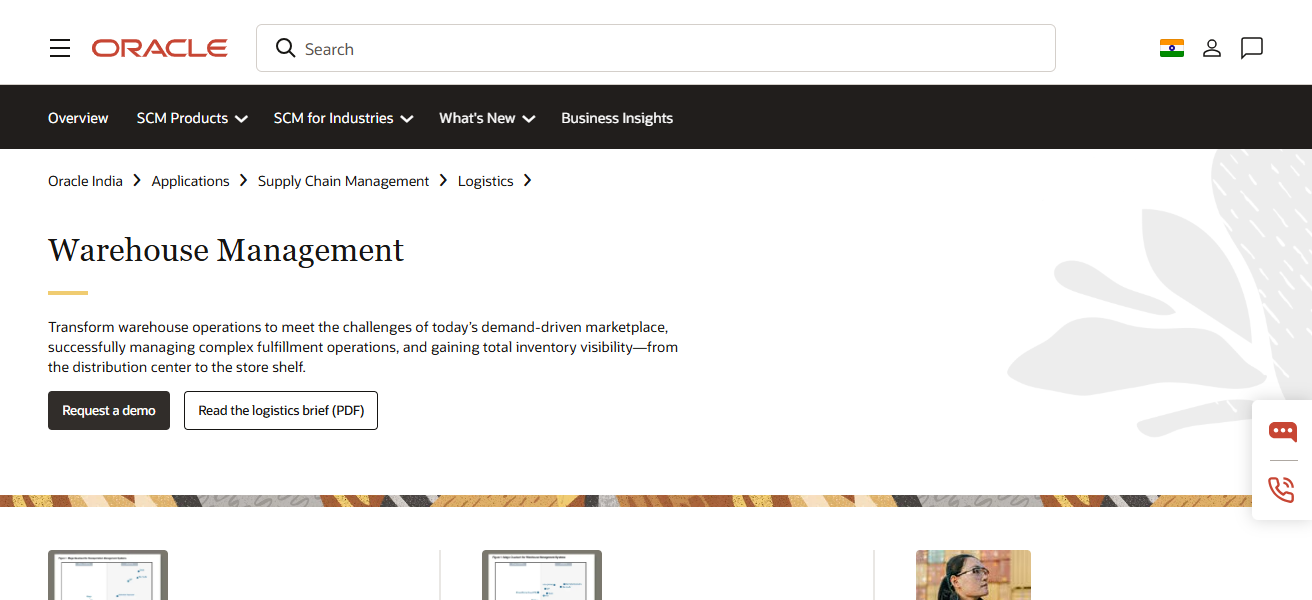
The most recent updates to the Oracle Cloud have increased the scalability of the system, enhanced the support for mobile users, and introduced artificial intelligence to manage in-app task fulfillment.
Oracle WMS improves the staff productivity of fulfillment operations by decreasing system wait times and optimizing the order picking pathways. It is preferred by companies that need control of their inventory in multiple locations and multiple distribution centers.
Oracle Warehouse Management Cloud Pros & Cons
| Pros | Cons |
|---|---|
| Strong ERP integration with Oracle ecosystem | Best value only within Oracle suite |
| Scalable cloud-based architecture | Customization can be costly |
| Real-time inventory tracking | Requires technical expertise |
| Supports multi-channel fulfillment | Complex deployment process |
4. SAP Extended Warehouse Management (SAP EWM)
SAP EWM is a fully integrated, advanced warehouse management system designed for large and complex supply chain ecosystems. It tightly integrates with SAP ERP and provides visibility over inventory and logistics in an automated fashion.
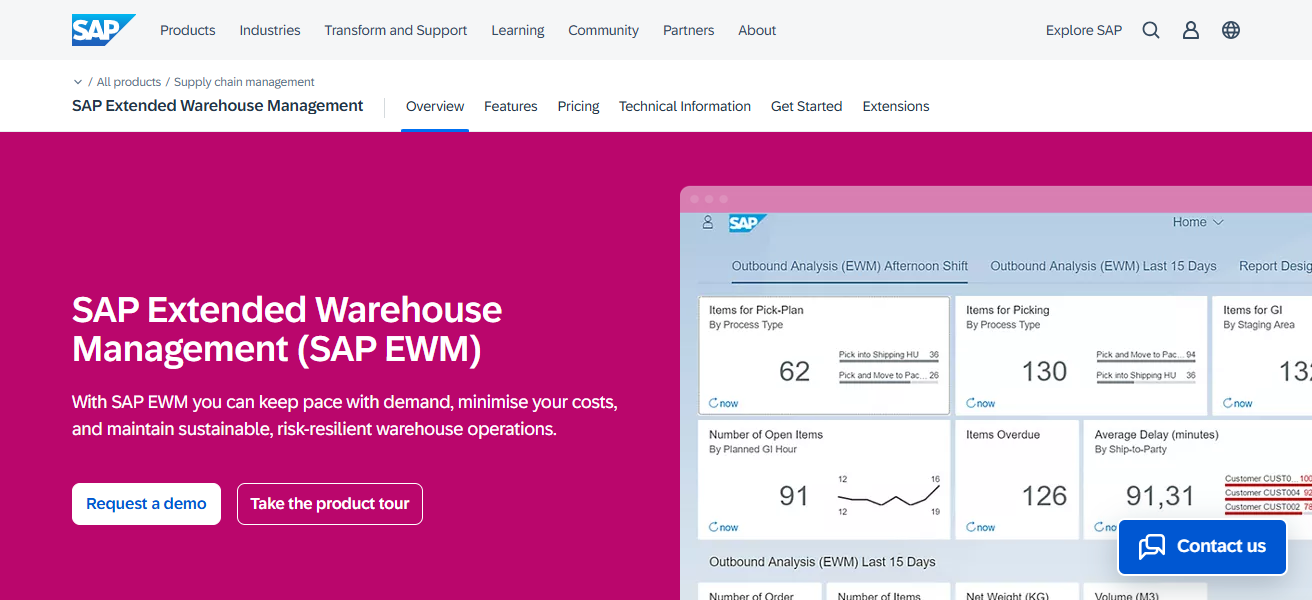
SAP EWM supports a wide range of warehouse operations, including cross-docking, wave picking, and automated storage and retrieval systems. Recent updates to EWM incorporate improved user interfaces based on SAP Fiori, as well as an enhanced level of support for AI to optimize warehouse operations.
EWM is the preferred solution in 3PL environments that have demanding needs for accuracy, compliance, and an extensive level of automation that is required to operate at a high level of volume.
SAP Extended Warehouse Management (SAP EWM) Pros & Cons
| Pros | Cons |
|---|---|
| Deep SAP ERP integration | Very high implementation cost |
| Supports complex warehouse processes | Requires trained SAP professionals |
| Strong automation capabilities | Long deployment timelines |
| Highly reliable for large enterprises | Not suitable for SMEs |
5. Fishbowl Inventory
Fishbowl Inventory specializes in catering to small to mid-sized 3PL warehouses. Having strong manufacturing and inventory capabilities, Fishbowl Inventory provides ease by helping users manage levels of stock and purchase orders, and streamline the order fulfillment.
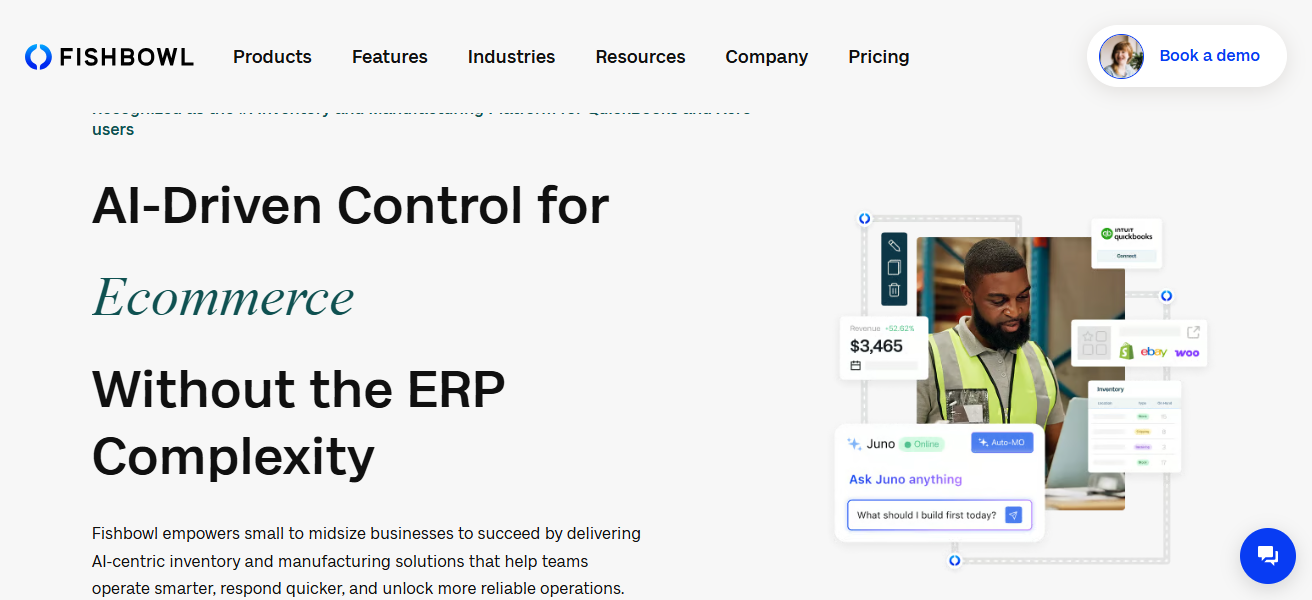
The platform integrates with QuickBooks, which makes it a preferred solution for many growing logistics companies. Fishbowl keeps updating its platform with enhancements to its cloud capabilities and administrations with barcoding along with its inventory accuracy and reduces manual orders for the business.
This solution is ideal for businesses that want to stop using basic systems for inventory tracking and want a more advanced system for warehouse management.
Fishbowl Inventory Pros & Cons
| Pros | Cons |
|---|---|
| Easy to use for mid-sized warehouses | Limited scalability for large 3PLs |
| Integrates with QuickBooks | Fewer advanced AI features |
| Affordable compared to enterprise systems | Basic automation capabilities |
| Good inventory tracking accuracy | Limited global logistics features |
6. NetSuite WMS
For a 3PL operation that is looking for a fast solution that manages all functions of a warehouse, NetSuite WMS is a great option. Built in the cloud, NetSuite WMS offers real-time inventory management, automated order routing, and warehouse execution tools that all operate within a mobile framework.
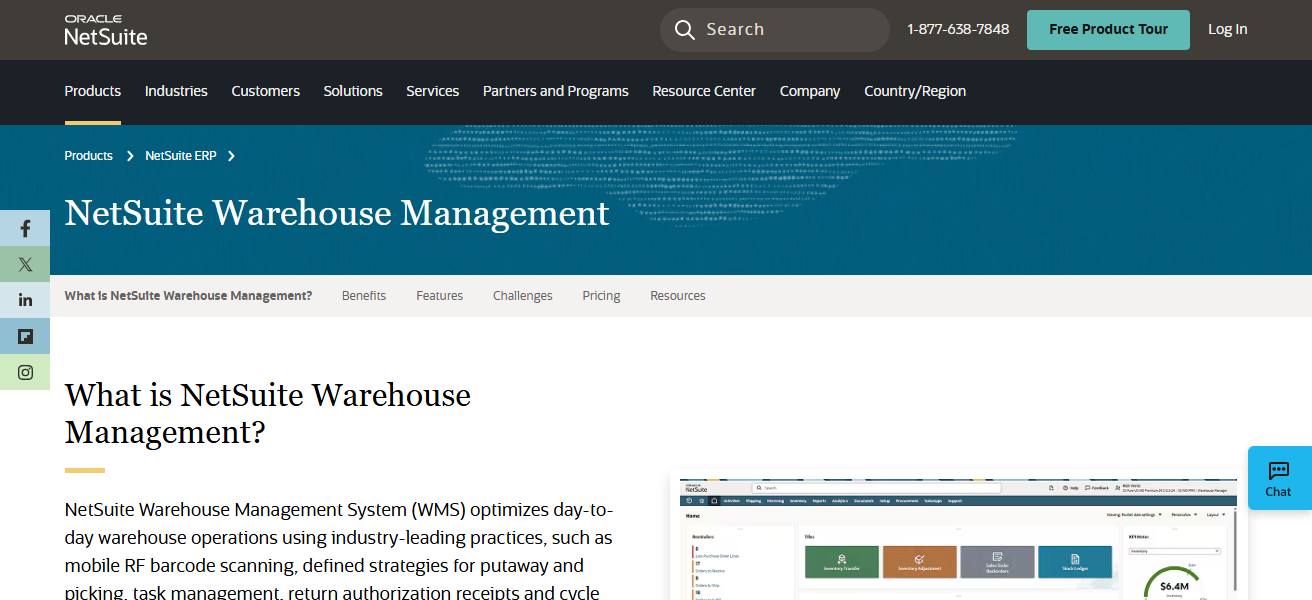
This system helps streamline the order fulfillment process, promotes accurate and fast picking with management of inventory across multiple locations. NetSuite WMS is a great fit for the order fulfillment demand driven logistics operations, warehousing, and transportation business.
NetSuite WMS Pros & Cons
| Pros | Cons |
|---|---|
| Fully cloud-based and scalable | Expensive subscription model |
| Strong ERP + WMS integration | Requires Oracle ecosystem dependency |
| Real-time inventory updates | Setup can be complex |
| Good for e-commerce fulfillment | Limited deep customization |
7. Infor WMS
Infor WMS is a logistics optimization system that specializes in sophisticated warehouse systems. It provides real-time labor management analytics to increase the efficiency in operations.
Infor WMS is best utilized by 3PL providers balancing several client inventories with demand for high cross-docking warehouse visibility.
Some features include the ability for cloud deployment, insight generation through AI, and advanced automation controls. Infor WMS provides optimized methods for picking and better warehouse space management to lower operational costs.
Infor WMS Pros & Cons
| Pros | Cons |
|---|---|
| Strong real-time inventory visibility | UI can feel outdated |
| Good for multi-site warehouses | Requires skilled configuration |
| Advanced analytics and reporting | High deployment cost |
| Supports automation workflows | Integration complexity |
8. Körber WMS
Körber WMS is a warehouse automation system that is designed to improve the efficiency of high-throughput logistics systems. Its flexible architecture supports the integration of robotics, voice-picking, and real-time inventory systems.
Due to its highly customizable and scalable nature, Körber is frequently utilized by 3PL logistics systems. Some of the newest improvements to Körber include AI-based optimizations and advanced warehouse systems execution intelligence. It is very adaptable for traditional warehouses or those with a high degree of automation.
Körber WMS Pros & Cons
| Pros | Cons |
|---|---|
| Excellent warehouse automation support | Expensive for small operations |
| Supports robotics and voice picking | Complex implementation |
| Highly flexible architecture | Needs technical expertise |
| Strong performance optimization | Training required |
9. Softeon WMS
Softeon WMS is a configurable warehouse management system tailored to complex, multi-client 3PL scenarios. Sophisticated features such as end-to-end visibility across the supply chain, advanced labor management, and fulfillment flexibility are available.
The solution invests in the future by supporting automated systems, robotics, and artificial intelligence for advanced decision support. Enhancements to their microservices architecture focused on improved scalability to meet demand across larger distribution networks.
Softeon commits to the accuracy for optimum outcomes in picking, packing, and shipping. Especially with their innovative solutions, Softeon is a preferred partner to a logistics provider with varying client needs and order demands across multiple fulfillment centers.
Softeon WMS Pros & Cons
| Pros | Cons |
|---|---|
| Highly customizable for 3PL needs | Complex configuration process |
| Strong multi-client support | Higher initial setup cost |
| Good scalability and automation | Requires a skilled IT team |
| Advanced fulfillment optimization | Limited out-of-box simplicity |
10. Logiwa WMS
Logiwa WMS is a cloud-native warehouse management system that addresses the needs of rapidly growing e-commerce and 3PL fulfillment centers. Fulfillment automation, AI-based order routing, and real-time inventory updates are system cornerstones.
High-volume DTC business models and their associated rapid scalability are a system design focus. Recent developments incorporated improved integrations with major e-commerce platforms, and system predictive capabilities advanced analytics.
Logiwa’s error and fulfillment lag reductions made it a preferred system for fulfillment partners meeting today’s logistical needs.
Logiwa WMS Pros & Cons
| Pros | Cons |
|---|---|
| Excellent for e-commerce 3PLs | Less suited for heavy manufacturing |
| Fast cloud-based deployment | Limited offline capabilities |
| AI-driven order automation | Smaller enterprise ecosystem |
| Strong API integrations | May lack deep legacy support |
How We Select High-Volume Warehouse Inventory Optimization Software for 3PL Centers
Scalability and Performance We consider whether a solution can effectively process large volumes of inventory across multiple warehousing locations.
Real-Time Inventory Tracking We look for inventory management systems that provide accurate real-time inventory status and availability by location.
AI and Automation Features We look for solutions that employ AI for the automation of forecasting and picking, as well as warehouse task automation.
ERP and System Integration We consider software that integrates seamlessly with various ERPs as well as e-commerce and logistics systems.
Cost and ROI Efficiency We consider the price and how the investment complements cost savings and smooth operations in the long run.
User-Friendly Interface We select systems that provide a user-friendly interface and that are easy for warehouse staff to operate.
Conclsuion
In summary, selecting the best warehouse optimization software makes 3PL services faster, more accurate, and more productive.
Such sophisticated software offers control over big bulk storage, minimizes mistakes, and augments real-time visibility throughout the warehousing facilities.
Thanks to the benefits of AI-driven automation, cloud technology, and scalable features, companies can improve Logistics and lower operational costs while increasing customer satisfaction in a fast-evolving Global Supply Chain environment.
FAQ
What is warehouse inventory optimization software?
It is a system that improves storage, tracking, and movement of warehouse inventory efficiently.
Which software is best for large-scale warehouses?
Manhattan, SAP EWM, and Blue Yonder are top enterprise-level solutions.
Do these tools support real-time tracking?
Yes, most modern WMS platforms offer real-time inventory visibility and updates.
Are AI features included in these systems?
Yes, AI helps with forecasting demand, automation, and warehouse optimization tasks.
Can small businesses use these tools?
Some platforms are scalable, but many are better for large enterprises.