In this article, I will highlight the Leading Edge Infrastructure Network Performance Monitoring Tools. As businesses evolve through integrated cloud, edge, and hybrid operations, network visibility becomes crucial.
Continuous monitoring is required to identify latency, bandwidth, downtime, and performance issues. The tools listed below help to reliably monitor, analyze, and provide visibility to observe distributed networks.
Key Points & Best Network Performance Monitoring Tools for Distributed Edge Infrastructure
| Network Performance Monitoring Tool | Explanation |
|---|---|
| SolarWinds Network Performance Monitor | Monitors network health, bandwidth, latency, and distributed infrastructure performance. |
| Datadog Network Performance Monitoring | Provides real-time visibility across cloud, edge, and hybrid networks. |
| PRTG Network Monitor | Tracks devices, traffic, bandwidth, and network performance centrally. |
| ManageEngine OpManager | Delivers fault detection, performance monitoring, and network analytics insights. |
| LogicMonitor | Automates monitoring for distributed environments with predictive performance alerts. |
| ThousandEyes | Maps network paths and identifies internet and edge bottlenecks. |
| Nagios XI | Monitors infrastructure components, ensuring reliability across distributed edge deployments. |
| Zabbix | Provides scalable monitoring with real-time metrics and alerting capabilities. |
| Dynatrace | Uses AI-driven observability for network performance and issue detection. |
| Paessler PRTG Enterprise Monitor | Offers enterprise-scale monitoring for geographically distributed network infrastructures. |
10 Best Network Performance Monitoring Tools for Distributed Edge Infrastructure
1. SolarWinds Network Performance Monitor
SolarWinds Network Performance Monitor is used frequently by companies with large distributed edge infrastructures.
It provides insight into how applications and services perform by monitoring the latency and bandwidth of the network, as well as the usage and performance of network devices across the different sites.
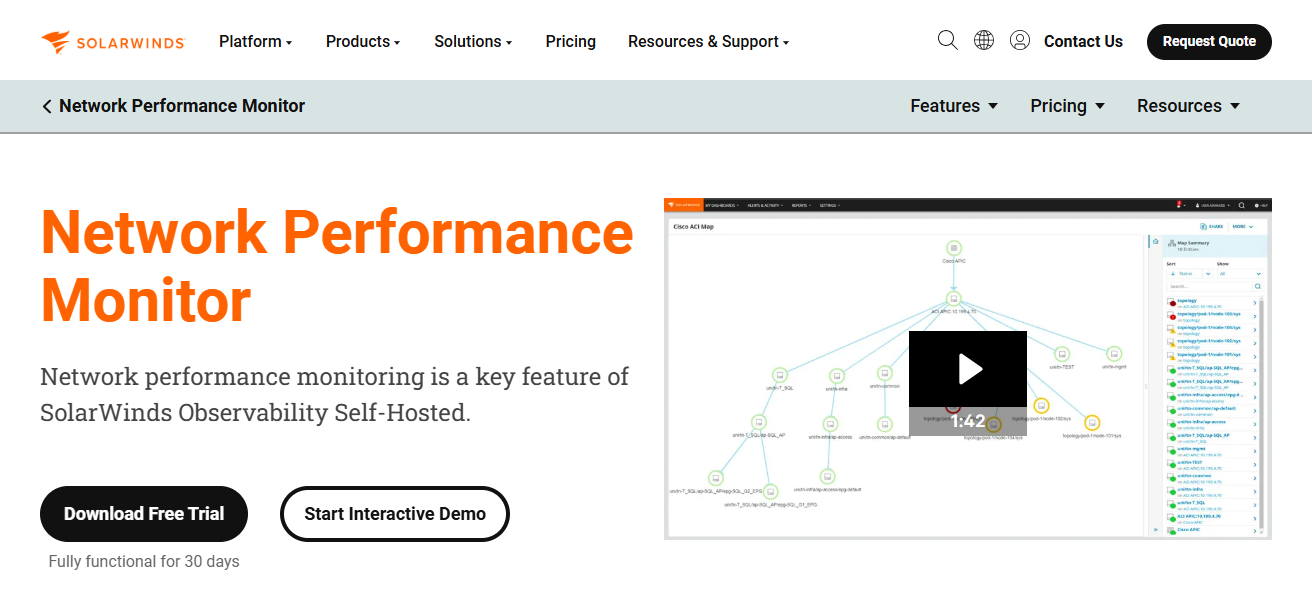
The platform simplifies the management of complex situations by the use of automated discovery and intelligent network mapping. With customizable dashboards and advanced alert settings, issues can be recognized by IT teams before they disrupt operations.
For businesses that have branch offices and/or data and edge computing sites, SolarWinds offers performance insights and assists with troubleshooting.
SolarWinds Network Performance Monitor – Key Features
- Automated discovery and mapping of network topologies.
- Monitoring of bandwidth, latency, and packet loss in real-time.
- Performance alerts and notifications based on thresholds.
- Centralized network visibility through configurable dashboards.
- Support for multiple network vendors in complex distributed systems.
2. Datadog Network Performance Monitoring
For new-age cloud-focused and distributed infrastructures, Datadog Network Performance Monitoring is the go-to solution. It offers the ability to monitor the network traffic that spans between the edge, the cloud, the containers, and the on-premise infrastructures in real-time.
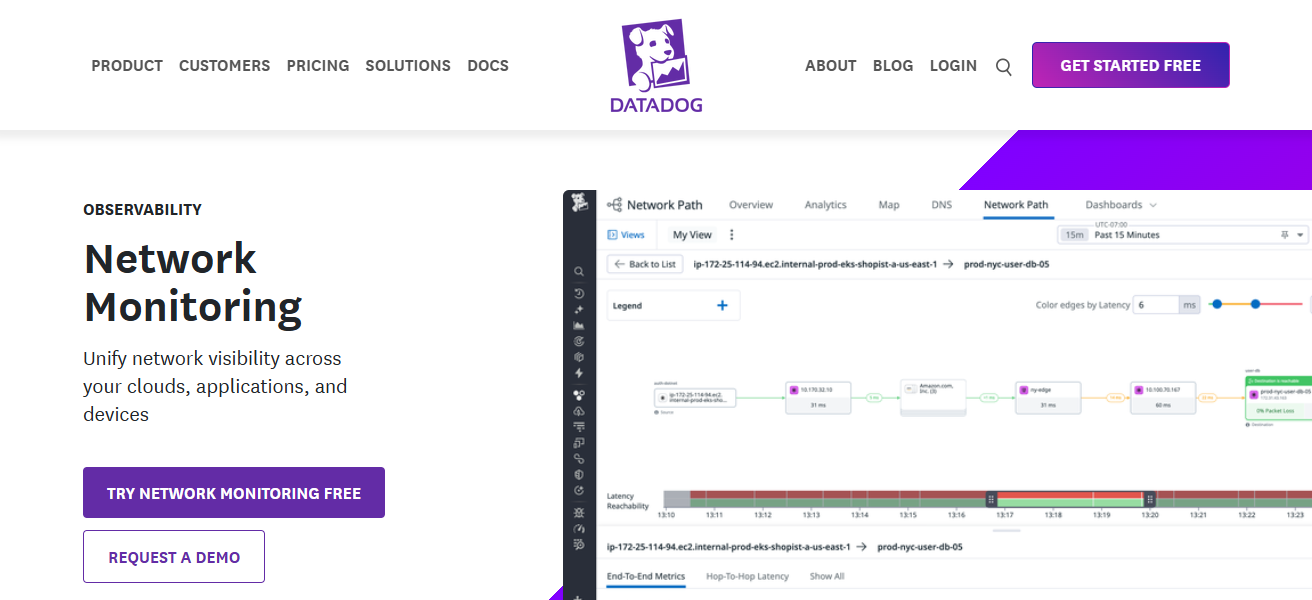
By combining network and infrastructure analytics, latency and packet loss, as well as connectivity issues are found quickly by Datadog. Its observability features are steeped in the use of AI and provide insight on the bottlenecks of services that are not performing.
Companies that are implementing edge computing solutions are seeing the benefits of Datadog’s observability when managing widespread services.
Datadog Network Performance Monitoring – Key Features
- Cloud, hybrid, and edge network unified monitoring.
- Real-time visibility of traffic flow and dependencies.
- AI-driven detection of anomalies and root-cause analysis.
- Monitoring of containers, Kubernetes, and microservices.
- Integration with cloud-native tech.
3. PRTG Network Monitor
PRTG Network Monitor provides a flexible, affordable monitoring solution for branch offices. It uses many different types of sensors to gain visibility into network operations. It records bandwidth usage, device status, traffic patterns, and the status of applications.
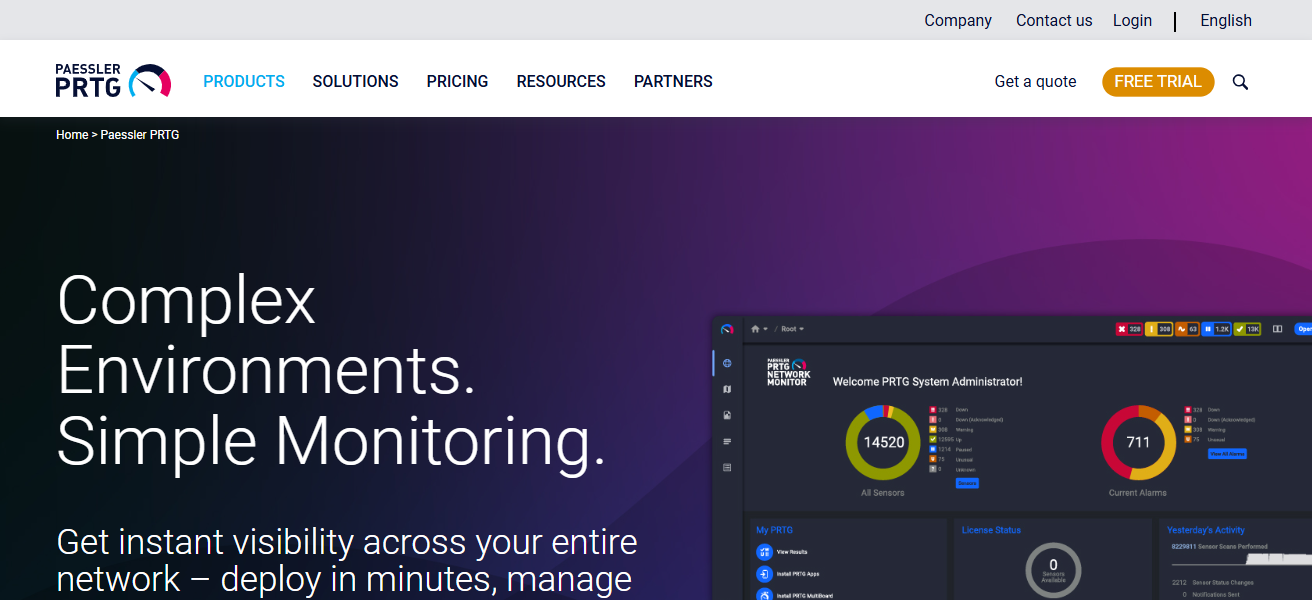
PRTG Network Monitor has an easy-to-use web interface and deploys and manages quickly. Because of this interface, network administrators can easily work with complex network operations.
PRTG Network Monitor flexibly sends alerts to administrators in real time. Because of this, it can be used to monitor remote and edge branch locations.
PRTG Network Monitor – Key Features
- Sensor-based, extensive monitoring of network assets.
- Tracking of bandwidth and traffic utilization in real-time.
- Configurable dashboards with interactive performance charts.
- Preconfigured alerts delivered via email, SMS, and notifications.
- Fast and simple deployment with centralized management.
4. ManageEngine OpManager
ManageEngine OpManager provides sophisticated monitoring for networks of distributed offices. It tracks routers, switches, firewalls, and even servers and wireless devices from a central dashboard.
It has many tools that simplify advanced fault management and root cause analysis, and even assist administrators in resolving performance issues.
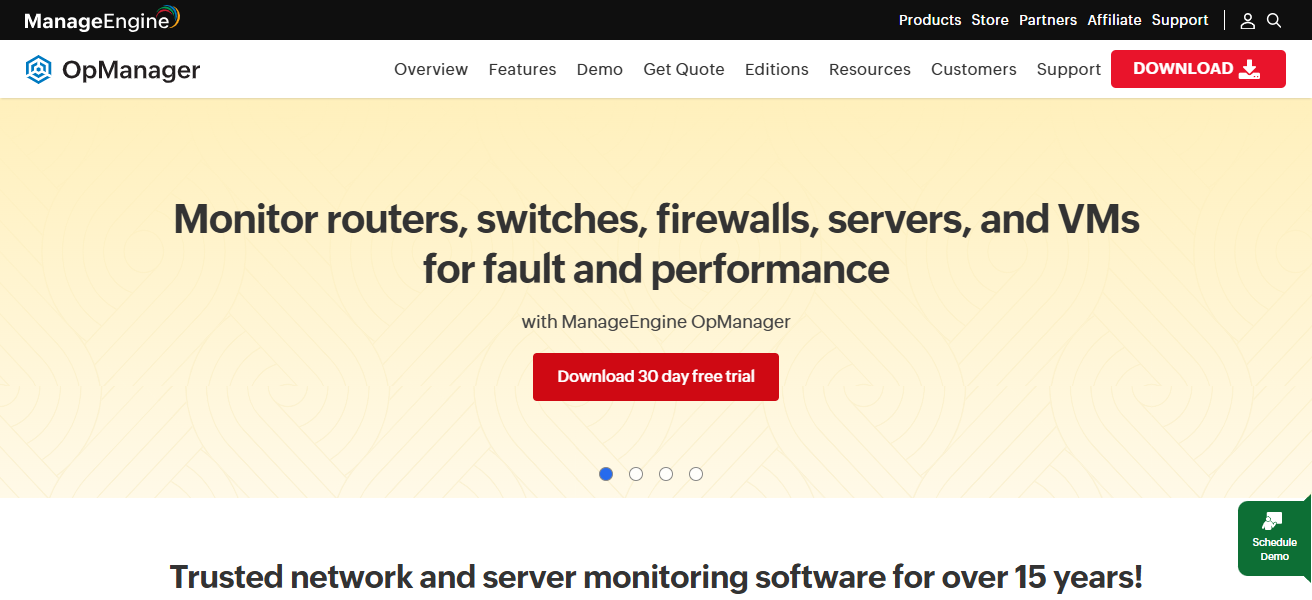
OpManager provides analysis of traffic trends and resource utilization. Because of its flexible, automated nature, it is an excellent choice for networks that are continuing to expand and utilize edge computing.
ManageEngine OpManager – Key Features
- Monitoring of all routers, switches, and servers.
- Advanced network troubleshooting and fault management.
- Analysis of network traffic and planning of network capacity.
- Automation of administrative tasks.
- Centralized dashboard with instant view of all network operations.
5. LogicMonitor
LogicMonitor is a cloud-based network monitoring solution that incorporates modern computing networks. LogicMonitor automatically discovers network devices and analyzes the performance of edge devices, data centers, and cloud computing virtual machines.

LogicMonitor’s automated monitoring simplifies and improves the reliability of network monitoring solutions for enterprise environments.
LogicMonitor – Key Features
- Monitoring without an agent and automatic discovery of devices.
- Machine learning-based predictive analytics.
- Visibility of infrastructure in the hybrid cloud and at the network’s edge.
- Custom dashboards and performance reporting.
- Wide range of integrations.
6. ThousandEyes
ThousandEyes delivers network visibility across the internet, clouds, and enterprise infrastructure. Its unique path visualization captures all network hops and reveals the cause of performance degradation.
This extremely helpful capability works especially well with distributed edge deployments utilizing several service providers and internet service providers.
ThousandEyes helps identify latency, anomalous routing, and disrupted service in order to facilitate the quick resolution of issues. Enterprises have better control of application delivery and user experience across networks.
ThousandEyes – Key Features
- Visualization of the internet and network paths with end-to-end coverage.
- Monitoring of cloud and ISP networks in real-time.
- Performance analysis of networks at every hop.
7. Nagios XI
With regard to distributed environments, Nagios XI is one of the most flexible network monitoring solutions. Extensive monitoring for servers, network devices, applications, and resources in the clouds is all provided.
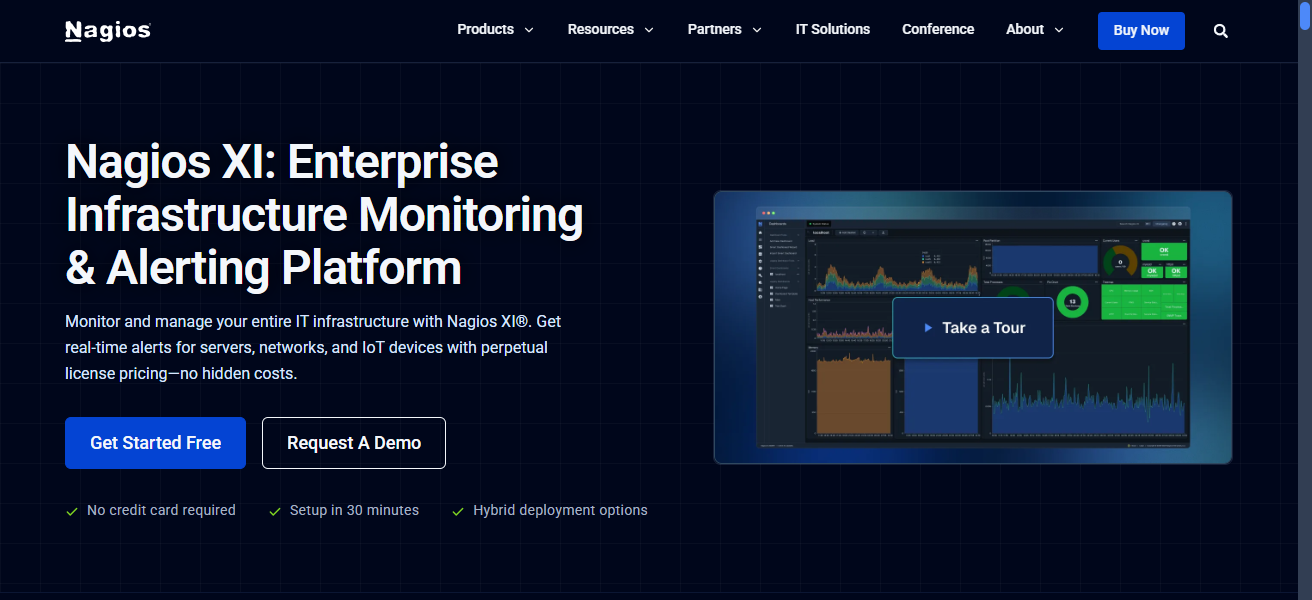
Organizations can gain in-depth views of the performance of their infrastructure with customizable dashboards and reporting. Strong alerting helps ensure outages and performance issues are responded to on time.
Nagios XI has a large collection of plugins and extensions, and therefore, can be used for diverse edge computing deployments and enterprise network monitoring.
Nagios XI – Key Features
- All-inclusive monitoring for servers and network devices
- Strong ability to alert and respond to incidents
- Custom monitoring with flexible plugin architecture
- Complete analysis of performance trends and reports
- Adaptable design for the large-scale needs of an enterprise
8. Zabbix
Zabbix is an open-source monitoring solution for large infrastructures that offers high performance for monitoring distributed resources. It provides highly scalable monitoring and views for networks, servers, virtual machines, and edge devices.

High availability is designed using advanced data collection and automated alerts. For performance analysis, Zabbix provides customizable views and reports. The combination of its flexibility and the absence of licensing fees offers highly appealing monitoring services to enterprises.
Zabbix – Key Features
- Open-source, enterprise-level, cost-effective design
- Set alerts for automated, real-time monitoring
- Innovative data collection from many sources
- Tailored dashboards and data visualization tools
9. Dynatrace
Combining observability and advanced network monitoring, Dynatrace leverages AI capabilities to provide deep insights into complex environments. With its tools for intelligent automation, network performance is analyzed, and anomalies, associations, and root causes are discovered.
End-to-end observability covers every layer of an environment. Clients notice positive impacts on the productivity and efficiency of their teams.
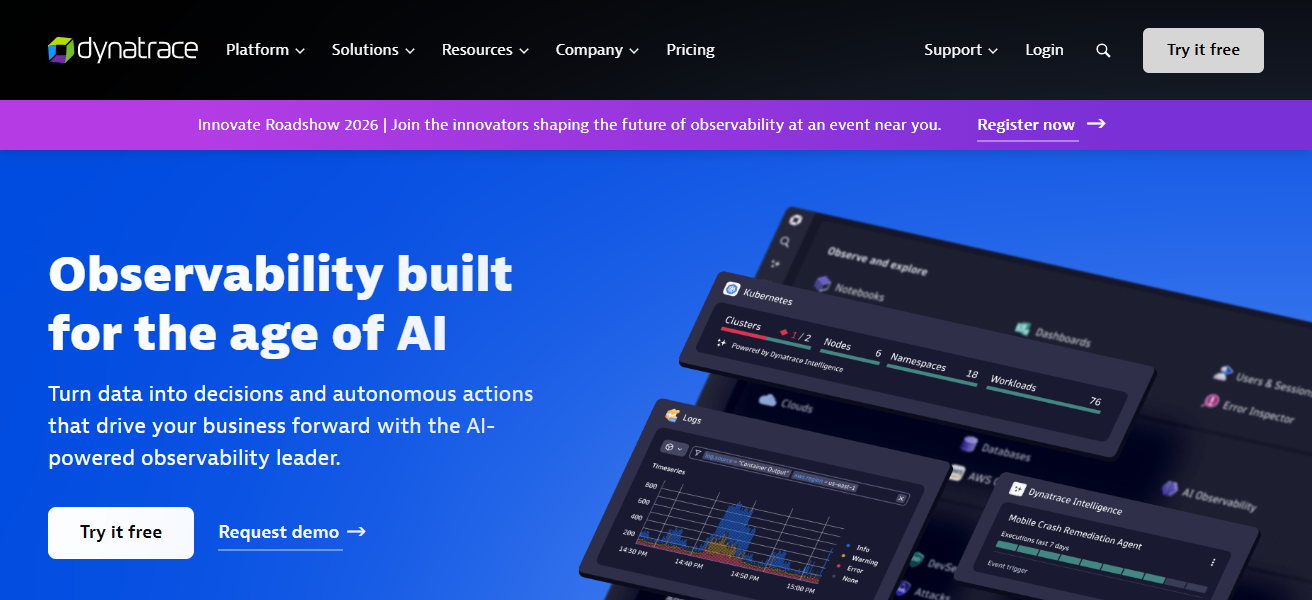
With deep insights into customer behavior, organizations are able to prioritize and react to the most important issues in order to improve the customer experience that their digital services provide.
Dynatrace – Key Features
- AI-based performance and observability
- Networking services, automatic mapping of dependencies
- Comprehensive inspection from the infrastructure to apps
- Predicative issue diagnosis and identification of cause
- All-inclusive monitoring for cloud, edge, and hybrid environments
10. Paessler PRTG Enterprise Monitor
Paessler PRTG Enterprise Monitor is an enterprise monitoring solution designed for greater visibility into performance across large, dispersed networks.
Focused on monitoring services, evaluating service performance metrics, and assessing the availability of devices, the solution supports the centralized monitoring of distributed networks and multiple sites.
Each network monitoring team can access tailored dashboards. Performance issues are quickly addressed by administrators as a result of intelligent automation and advanced analytics. With its extensive scalability, the solution is perfect for enterprises managing edge devices across branch offices and global data centers.
Paessler PRTG Enterprise Monitor – Key Features
- Monitoring at the enterprise level for global networks
- Integrated overview for monitoring many locations
- Sophisticated patterns and forecasting for monitoring and evaluating system performance
- Customized dashboards for operational teams
- Instant issue resolution with automated notification
Criteria We Used for the Best Network Performance Monitoring Tools for Distributed Edge Infrastructure
- Edge Infrastructure – Focused on tools that monitor geographically distributed edge locations.
- Latency, Bandwidth, Packet Loss, and Traffic Measurement – Focused on tools that measure traffic and latency.
- Growth and Scalability – Focused on tools that grow with your enterprise and edge.
- AI and Automation – Focused on tools that offer predictive analytics, automated anomaly detection, and automated diagnostics and repair.
- Cloud and Hybrid Networks – Focused on tools that support cloud-native, hybrid, and on-prem networks.
- Deployment – Focused on tools that are easy to set up and offer automated device/agent discovery.
- Alerts – Focused on tools that provide automated alerts and notifications and offer automated incident response.
- Analytics and Reporting – Focused on tools that offer extensive reporting and analytics on system performance.
- Integration and Interoperability – Focused on tools that easily integrate with other systems and offer APIs.
- Cost and Value – Focused on tools that provide the best value for the cost and offer the most features.
Conclusion
The best network performance monitoring tools for distributed edge infrastructure have the automation, visibility, and analytics to create reliable operations for complex environments.
Tools like SolarWinds, Datadog, Dynatrace, and ThousandEyes allow users to identify issues, enhance the performance of networks, and elevate the user experience.
Determining which tool is best depends on the scaling needs, the model of deployment, how much is available to spend, and the goals of observability.
FAQ
Why is network monitoring important for edge infrastructure?
It helps maintain performance, reduce downtime, and quickly identify issues across distributed locations.
Which tool is best for large enterprise networks?
SolarWinds Network Performance Monitor and Paessler PRTG Enterprise Monitor are strong enterprise-grade options.
Which monitoring solution offers the best cloud visibility?
Datadog Network Performance Monitoring provides excellent visibility across cloud and hybrid environments.
Are there open-source network monitoring tools available?
Yes, Zabbix and Nagios XI are popular solutions offering extensive monitoring capabilities.