In this article, I will identify the top health care compliance auditing software with HIPAA regulations for health care organizations to ensure the security and privacy of health care data and the ability to comply with regulations.
These tools help organizations stay prepared for HIPAA by automating the auditing process, assessing compliance-related risks, and simplifying the reporting process.
I will also describe how the software facilitates compliance and fortifies the health care data protection subsystem.
Why is HIPAA Compliance software important In healthcare?
- Stops digital theft of private patient data
- Guarantees that healthcare entities comply with HIPAA laws
- Lessens chance of steep fines and lawsuits
- Makes compliance checks and audit prep instant
- Improves security for all data across all healthcare facilities and systems
- Reviews weaknesses and openings in security in an instant
- Makes reporting and documentation easier
- Increases patient trust and confidence
- More efficient and eliminates manual compliance
- Aids in constant checks for always being compliant with HIPAA
Key Points & Best Healthcare Compliance Auditing Softwares for HIPAA Regulation
| Software | Explanation |
|---|---|
| Vanta | Automates HIPAA compliance tracking, audits, monitoring, and reporting efficiently. |
| Drata | Provides continuous compliance monitoring, evidence collection, and audit readiness. |
| Secureframe | Simplifies HIPAA audits through automation, policy management, and monitoring. |
| Compliancy Group | Helps healthcare organizations achieve, maintain, and document HIPAA compliance. |
| Sprinto | Automates compliance workflows, risk assessments, controls, and audit preparation. |
| LogicGate | Streamlines compliance audits, risk management, and regulatory reporting processes. |
| Hyperproof | Centralizes compliance evidence, controls, audits, and risk management activities. |
| AuditBoard | Offers comprehensive audit management, compliance tracking, and risk assessments. |
| ZenGRC | Simplifies governance, risk, compliance audits, and regulatory documentation tasks. |
| OneTrust | Manages privacy, HIPAA compliance, risk assessments, and audit workflows. |
10 Best Healthcare Compliance Auditing Softwares for HIPAA Regulation
1. Vanta
Vanta is a compliance automation solution popular in healthcare to improve HIPAA readiness. It streamlines the auditing process by monitoring systems, users, and security controls in real time. Vanta also uses automated evidence collection and pre-built HIPAA certification frameworks to ease certification.
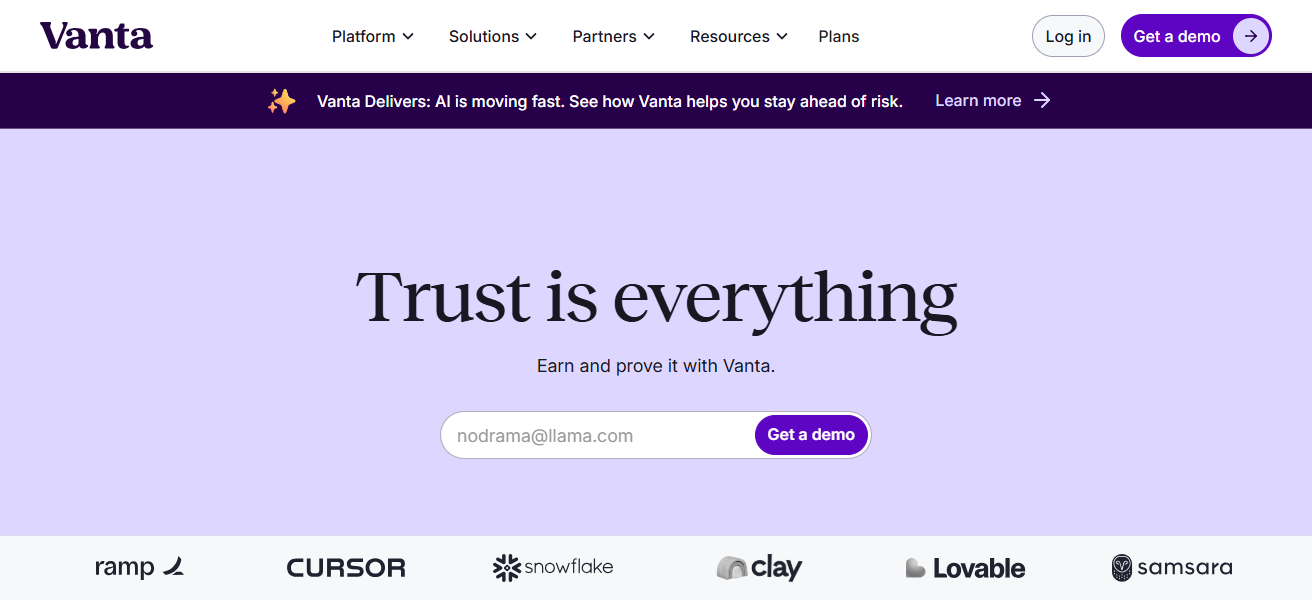
The latest features benefit healthcare organizations by strengthening cloud provider integrations and risk analysis dashboards, allowing organizations to identify compliance concerns and be audit-ready at any point during the year.
Vanta Pros & Cons
| Pros | Cons |
|---|---|
| Automates HIPAA compliance monitoring efficiently | Can be expensive for small clinics |
| Real-time system and security tracking | Requires cloud infrastructure integration |
| Fast audit-ready reporting system | Limited deep customization options |
| Strong integrations with cloud tools | Learning curve for beginners |
2. Drata
Drata is a continuous compliance solution that helps organizations meet HIPAA security requirements by monitoring in real time. It automatically collects audit evidence, and controls are mapped to requirements.
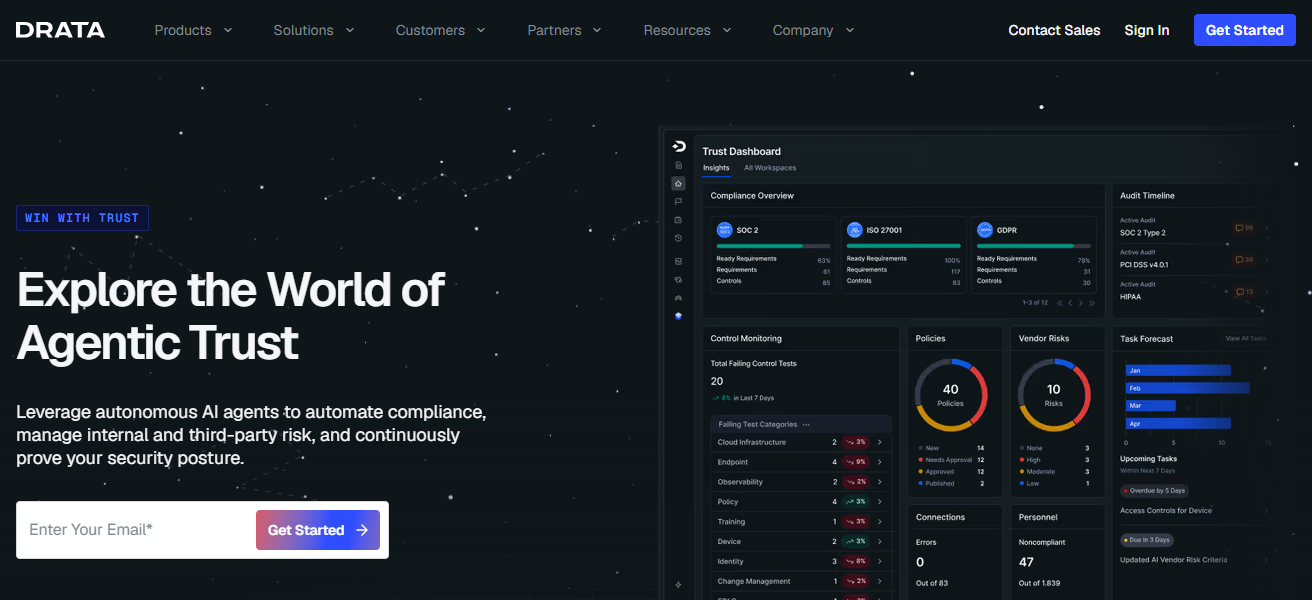
Healthcare providers using this solution gain the benefit of instant notification of policy violations thanks to smart alerts.
The latest version of Drata includes AI compliance insight, and further enhanced integrations provide easier pathways for audit readiness without the burdens of manual documentation and looser reporting cycles typical of large, complicated healthcare environments.
Drata Pros & Cons
| Pros | Cons |
|---|---|
| Continuous HIPAA compliance monitoring | Pricing not suitable for startups |
| AI-driven compliance insights | Dependent on third-party integrations |
| Automated audit evidence collection | Setup process may take time |
| Real-time policy violation alerts | Limited offline capabilities |
3. Secureframe
Secureframe enhances automation for the policies and processes of HIPAA compliance and greatly lessens the burden of prep work for audits. Clear compliance and alignment security dashboards allow full visibility and accessibility for healthcare providers.

Innovations for Secureframe include compliance template upgrades and optimized streamlined workflows, allowing even the smallest healthcare provider to implement security and compliance resources at a fraction of the expense and time typically required.
Secureframe Pros & Cons
| Pros | Cons |
|---|---|
| Easy HIPAA compliance automation | Limited advanced customization |
| Fast onboarding process | Some features are locked in premium plans |
| Centralized compliance dashboard | Requires stable internet connection |
| Suitable for small healthcare teams | May lack enterprise-depth analytics |
4. Compliancy Group
Compliancy Group simplifies the HIPAA compliance process for healthcare organizations with their step-by-step workflows and document assistance. Compliancy Group builds systems to help organizations prove compliance during audits and easily maintain compliance.

Their software builds systems to track and report compliance. They have recently upgraded their systems to help audit and manage policies and gaps, making it easier for healthcare compliance and privacy protection systems to manage and reduce risks of regulatory and policy violations and readiness gaps.
Compliancy Group Pros & Cons
| Pros | Cons |
|---|---|
| Step-by-step HIPAA compliance guidance | Interface feels less modern |
| Strong documentation support system | Slower automation compared to competitors |
| Simplifies the audit readiness process | Limited AI-based features |
| Good for healthcare beginners | Reporting customization is basic |
5. Sprinto
Sprinto is a system that helps healthcare organizations get real-time and automated management of the HIPAA requirements. Sprinto helps support assessments and management of internal controls while also helping to prepare for audits.
It significantly helps simplify compliance by mapping to the required standards. Their latest features help create rules for more automated compliance and also enhance the speed of collecting evidence for audits.

These features support healthcare employees to have continuous compliance and allow employees to keep the required workflows when managing healthcare compliance and privacy protection systems.
Sprinto Pros & Cons
| Pros | Cons |
|---|---|
| Automated workflow for HIPAA compliance | Limited brand recognition globally |
| Strong risk assessment tools | Integration ecosystem still growing |
| Fast audit preparation support | Complex initial configuration |
| Real-time compliance tracking | UI can feel technical for beginners |
6. LogicGate
LogicGate is a highly flexible system for risk and compliance that helps simplify the management of HIPAA and healthcare compliance system audits. LogicGate helps create workflows to manage and track compliance and reporting gaps.

LogicGate helps manage the automation of compliance errors and creates visibility. Their system helps compliance teams get better and more proactive engagement to help address gaps in compliance and regulatory requirements of healthcare systems.
LogicGate Pros & Cons
| Pros | Cons |
|---|---|
| Highly customizable workflows | Requires technical expertise |
| Strong risk management capabilities | Setup time can be long |
| Good reporting and analytics tools | Expensive for small organizations |
| Excellent automation features | Steep learning curve |
7. Hyperproof
Hyperproof is an all-inclusive compliance operations tool that Healthcare organizations use to simplify efforts associated with maintaining continual compliance with HIPAA.
It allows compliance teams to do control assessments with the aid of automated notifications and provides compliance teams with the ability to map risks and organize compliance needs.

Hyperproof especially helps compliance teams manage large-scale, complex regulatory requirements that span multiple healthcare systems and departments.
Hyperproof Pros & Cons
| Pros | Cons |
|---|---|
| Centralized compliance management system | Premium pricing structure |
| Strong collaboration tools | Requires onboarding training |
| AI-assisted risk mapping | Can feel overwhelming initially |
| Automated reminders and tracking | Limited offline functionality |
8. AuditBoard
AuditBoard is a compliance solution that is especially popular with Healthcare organizations due to the ease with which HIPAA audits can be managed using the centralized documentation, tracking, and reporting features.
AuditBoard improves the workflows and structures of teams and provides greater accountability and transparency. With the recent automation of reporting, compliance teams are able to faster assess the risk of a highly complex and operationally large healthcare system.
AuditBoard Pros & Cons
| Pros | Cons |
|---|---|
| Excellent audit and reporting tools | High cost for small healthcare providers |
| Strong data visualization dashboards | Complex setup process |
| Improves transparency in compliance | Requires trained compliance staff |
| Supports large healthcare systems | Limited flexibility for small teams |
9. ZenGRC
ZenGRC is a compliance management platform that streamlines control tracking structures for the management of HIPAA compliance. ZenGRC helps Healthcare organizations manage the documentation, audits, and risk assessments.
With the goal of lessening the complexity of compliance, ZenGRC employs automated workflows and structured reporting.
Some of the recent improvements that have been made to ZenGRC are faster compliance mapping and a better user interface. Compliance teams appreciate the new design and faster mapping.
ZenGRC Pros & Cons
| Pros | Cons |
|---|---|
| Centralized governance and risk tracking | Interface less intuitive than competitors |
| Automated compliance workflows | Slower innovation updates |
| Strong HIPAA documentation support | Requires training for full use |
| Good for structured enterprises | Limited modern AI features |
10. OneTrust
OneTrust is a popular privacy and compliance platform helpful for healthcare organizations needing to satisfy the HIPAA requirements. The platform consolidates management of data privacy, risk assessments, and audit processes.

OneTrust is also recognized for its flexible compliance automation. OneTrust gives data governance, tools for the automation of privacy impact assessments, and protection of healthcare providers’ data. OneTrust allows for the compliance of different systems.
OneTrust Pros & Cons
| Pros | Cons |
|---|---|
| Powerful privacy and HIPAA compliance tools | Can be overwhelming for small teams |
| Strong data governance features | High implementation complexity |
| Scalable for large healthcare systems | Expensive licensing model |
| Advanced risk assessment modules | Requires continuous management effort |
Conclusion
To summarize, the Best Healthcare Compliance Auditing Softwares and HIPAA Regulation ensure increased data security, compliance with regulations, and the simplification of audits.
Vanta, Drata, Secureframe, and OneTrust streamline the time-consuming processes of constant oversight, reporting, and risk management through automation.
These tools allow healthcare providers to eliminate human errors and safeguard patients’ sensitive data. Additionally, they enhance productivity and foster trust throughout the healthcare industry.
FAQ
Which is the best HIPAA compliance auditing software?
Top tools include Vanta, Drata, Secureframe, and OneTrust. The best choice depends on organization size, budget, and compliance complexity.
How does Vanta help with HIPAA compliance?
Vanta automates compliance monitoring, collects audit evidence, and provides real-time security tracking. It ensures organizations stay audit-ready through continuous system monitoring and cloud integrations.
Is Drata suitable for healthcare organizations?
Yes, Drata is ideal for healthcare teams needing continuous compliance. It offers automated evidence collection, real-time alerts, and AI-driven insights for HIPAA regulation management.
Can small clinics use HIPAA compliance tools?
Yes, tools like Secureframe and Compliancy Group are suitable for small clinics. They simplify onboarding, automate workflows, and reduce technical complexity.