This article reviews the top platforms for High-Yield Invoice Factoring and Corporate Debt Investments. Each platform improves corporate cash flow and provides investors with good returns.
I will cover benefits and risks associated with using the platform and how to select the best platform. The article provides an overview of the top platforms. This information will provide you with an opportunity to select the best financing and investment solutions.
What is Invoice Factoring?
Invoice factoring is selling outstanding invoices for quick cash to a third party. This way, businesses don’t have to wait for their customers to pay back, and they have the working capital they need for smooth business operations.
The factoring company goes on to collect the payment from the customer. This benefits cash flow and mitigates the pressure that financial issues have on business operations. This is all done without having to rely on traditional loans.
Key Poinst & Best High-Yield Invoice Factoring and Corporate Debt Investing Platforms
| Platform | Explanation |
|---|---|
| FundThrough | Provides quick invoice financing with transparent fees and fast funding approvals globally. |
| BlueVine | Offers flexible invoice factoring and business credit for cash flow management. |
| altLINE | Delivers customized factoring solutions with competitive rates for growing businesses nationwide. |
| Riviera Finance | Specializes in invoice factoring services supporting staffing and transportation industries efficiently. |
| Triumph Business Capital | Provides factoring and payments solutions tailored for transportation and logistics companies. |
| eCapital | Offers invoice financing and working capital solutions for diverse business sectors. |
| SMB Compass | Delivers customized financing products including invoice factoring for small enterprises nationwide. |
| Percent | Enables accredited investors access to corporate debt investments with attractive yields. |
| Yieldstreet | Provides alternative investments including corporate debt opportunities generating passive income streams. |
| Cadence | Offers short-term corporate debt investments with predictable returns and portfolio diversification. |
10 Best High-Yield Invoice Factoring and Corporate Debt Investing Platforms
1. FundThrough
FundThrough is one of the most popular invoice financing solution providers among small and mid-sized businesses that require working capital quickly. FundThrough integrates with accounting software, which allows businesses to submit invoices directly for a quicker funding decision.
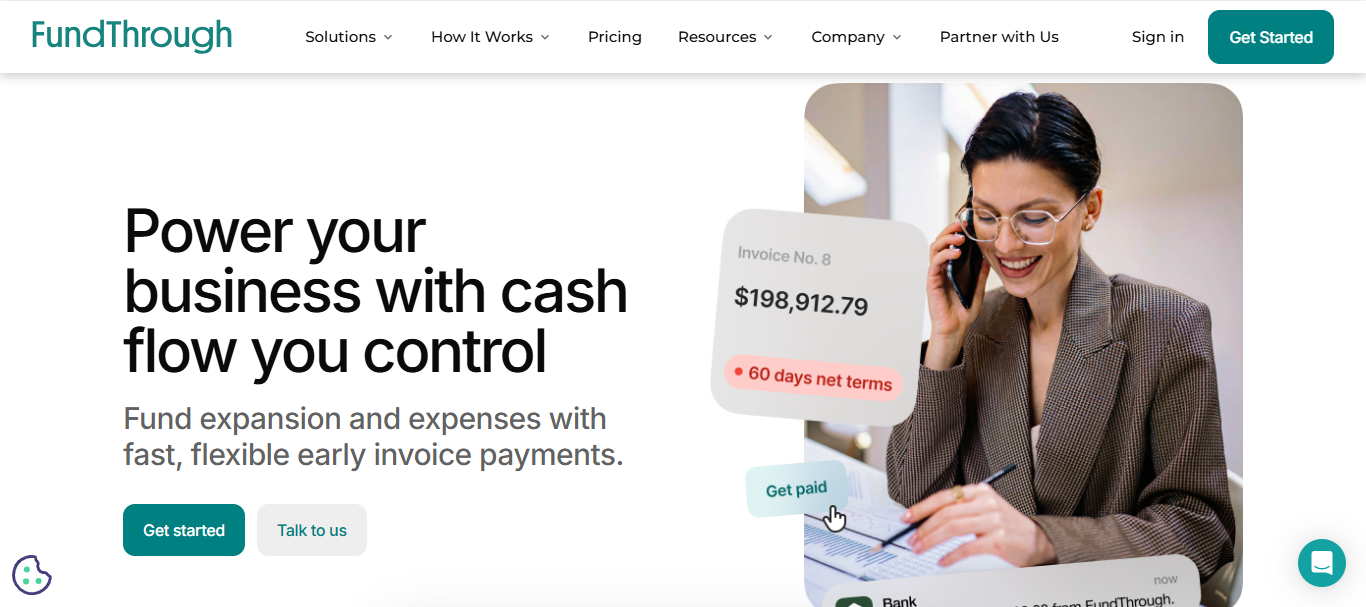
The transparent pricing and ease of the digital application are pros pointed out by users. FundThrough is useful for businesses with long customer payment cycles as it turns unpaid invoices into cash to keep the business running and pays employees and expands business operations without the need for debt financing.
FundThrough Pros & Cons
| Pros | Cons |
|---|---|
| Fast funding approvals for outstanding invoices | Not ideal for businesses with very low invoice volume |
| Integrates with accounting software platforms | Fees can be higher than traditional bank financing |
| Transparent pricing and digital application process | Available primarily in selected markets |
| Improves cash flow without taking loans | Requires creditworthy customers for approval |
| Suitable for growing small businesses | Factoring costs may reduce profit margins |
2. BlueVine
BlueVine is a popular invoice factoring solution combined with business financing services. Businesses benefit from the speed of the funding and the easy-to-use online dashboard that offers cash flow management.
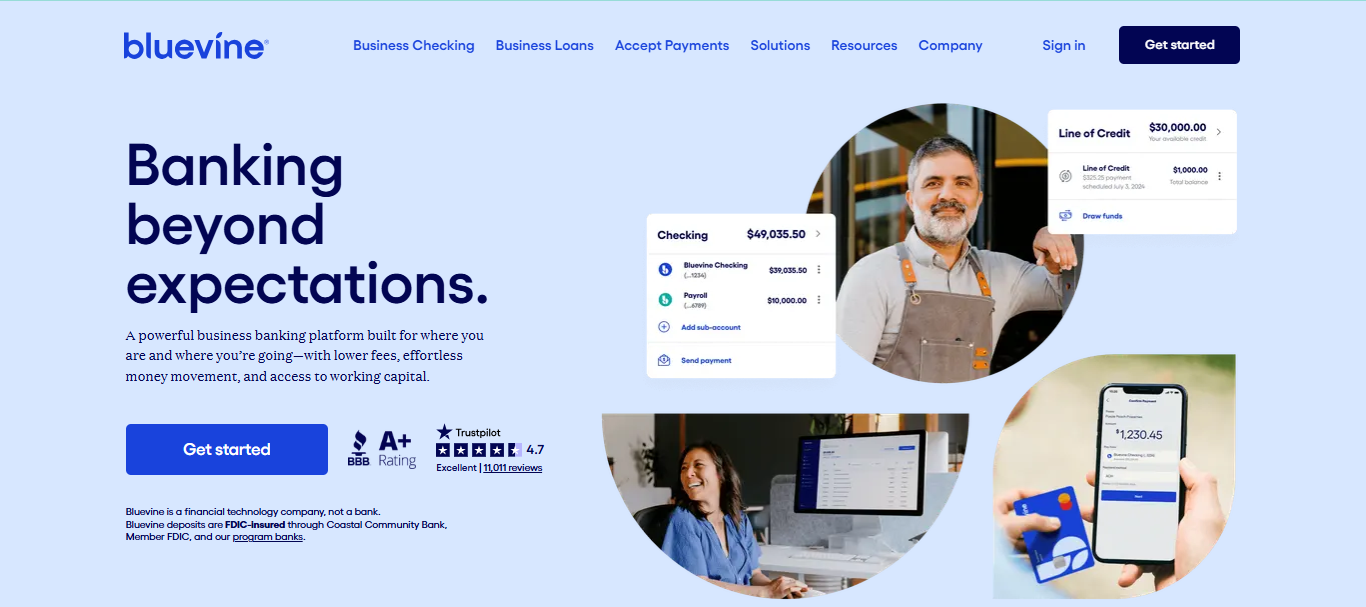
BlueVine turns unpaid customer invoices into cash for businesses and relieves the strain from late customer payments. BlueVine offers business financing services beyond factoring, so businesses have financing solutions as they grow.
BlueVine Pros & Cons
| Pros | Cons |
| Quick online application and approval process | Funding limits may not suit large enterprises |
| Multiple financing products available | Invoice eligibility requirements can be strict |
| User-friendly dashboard for cash management | Fees may increase for higher-risk borrowers |
| Helps cover short-term operating expenses | Limited availability in certain industries |
| Flexible financing options for businesses | Not every applicant receives maximum funding |
3. altLINE
altLINE is a direct lender that provides industry-specific invoice factoring solutions. altLINE tailors funding programs to businesses that require non-standard financing. Competitive pricing and account management are appealing to businesses that desire a long-term financing partnership.
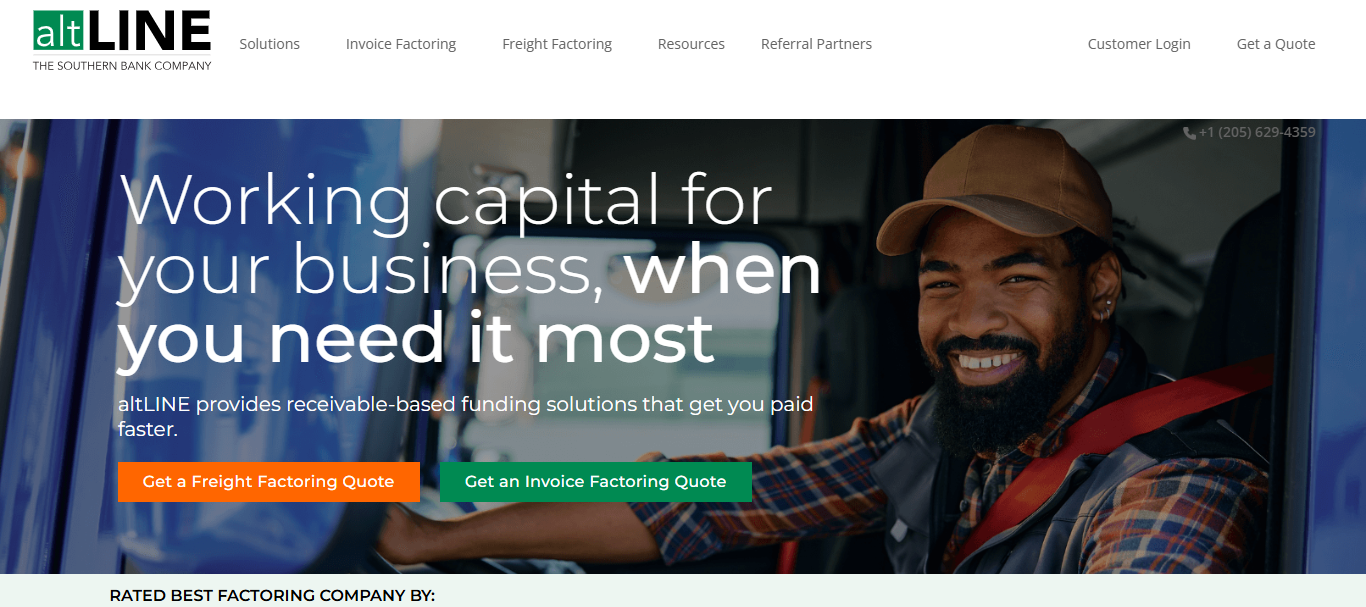
Businesses that have seasonal sales benefit from altLINE’s flexible funding while improving cash flow. This allows altLINE clients to concentrate on sales and operations.
altLINE Pros & Cons
| Pros | Cons |
| Customized invoice factoring programs | Requires invoices from established customers |
| Dedicated account managers for personalized support | Approval process can take longer than fintech lenders |
| Competitive rates for qualified businesses | Primarily serves business-to-business companies |
| Flexible solutions for seasonal businesses | Some contracts include minimum volume requirements |
| Strong reputation in commercial financing | Less suitable for startups without receivable |
4. Riviera Finance
Riviera Finance is one of the oldest factoring companies. They have specific knowledge in factoring for the staffing, transportation, and service industries. Rivera Finance also has personalized support.

This leads many companies to choose them when facing high growth and high receivables. Rivera Finance allows companies to cover payroll, purchase stock, and sign contracts to grow business before the customers have paid, due to Rivera Finance paying invoice factoring.
Riviera Finance Pros & Cons
| Pros | Cons |
| Extensive experience in invoice factoring industry | Funding costs can exceed traditional lending rates |
| Specializes in staffing and transportation sectors | Not designed for consumer-focused businesses |
| Personalized customer service and support | Contract terms may vary by industry |
| Helps companies manage rapid growth | Requires regular invoice submission |
| No need for additional collateral in many cases | May involve long-term factoring agreements |
5. Triumph Business Capital
Triumph Business Capital focuses on factoring for business in transportation and logistics. Triumph Business Capital has specialized factoring and financing for trucking companies due to their focus on the trucking industry.

Transportation companies gain the capital quickly to run their business and have services that help the specific issues of transportation, freight, and logistics.
Triumph Business Capital Pros & Cons
| Pros | Cons |
| Designed specifically for trucking companies | Limited appeal outside transportation industries |
| Offers fuel cards and payment solutions | Services may be unnecessary for non-carriers |
| Fast funding for freight invoices | Industry specialization narrows customer base |
| Provides operational and back-office support | Factoring fees can impact profit margins |
| Strong logistics industry expertise | Certain programs require ongoing commitments |
6. eCapital
eCapital is a one stop shop for factoring, lending and financing. eCapital also focuses on staffing and transportation, but their services can cover many industries. Because of their flexibility, eCapital can meet many companies’ financial needs.

Having the industry expertise eCapital can funding quickly to companies to help cover the costs of day to day operations and help companies take advantage of growth opportunities.
eCapital Pros & Cons
| Pros | Cons |
| Offers multiple financing products | Qualification standards differ by industry |
| Serves numerous business sectors | Funding costs may vary significantly |
| Flexible working capital solutions | Some businesses may need long-term contracts |
| Industry-specific financing expertise | Not every financing product is available nationwide |
| Supports expansion and cash flow management | Documentation requirements can be extensive |
7. SMB Compass
SMB Compass provides the financing tools that small and medium-sized businesses need. SMB Compass utilizes personalized invoice factoring, bridge loans, and equipment financing alongside revenue-based funding.

Flexibility is crucial for financing, and SMB Compass allows businesses to design funding strategies from multiple financing tools. Companies that find it difficult to secure traditional bank loans consider SMB Compass because of its flexible underwriting and creative funding strategies.
SMB Compass Pros & Cons
| Pros | Cons |
| Highly customized financing solutions | Funding terms vary depending on risk profile |
| Provides several lending products beyond factoring | Smaller businesses may face higher costs |
| Flexible underwriting standards | Some financing options require extensive paperwork |
| Suitable for complex financing situations | Limited self-service digital features |
| Personalized customer guidance and support | Not all industries qualify equally |
8. Percent
Percent has quickly become one of the most successful private platforms for retail accredited investors wanting to invest in private corporate debt. Percent opened the door for investment in alternative credit from a formerly exclusive club of institutional investors.
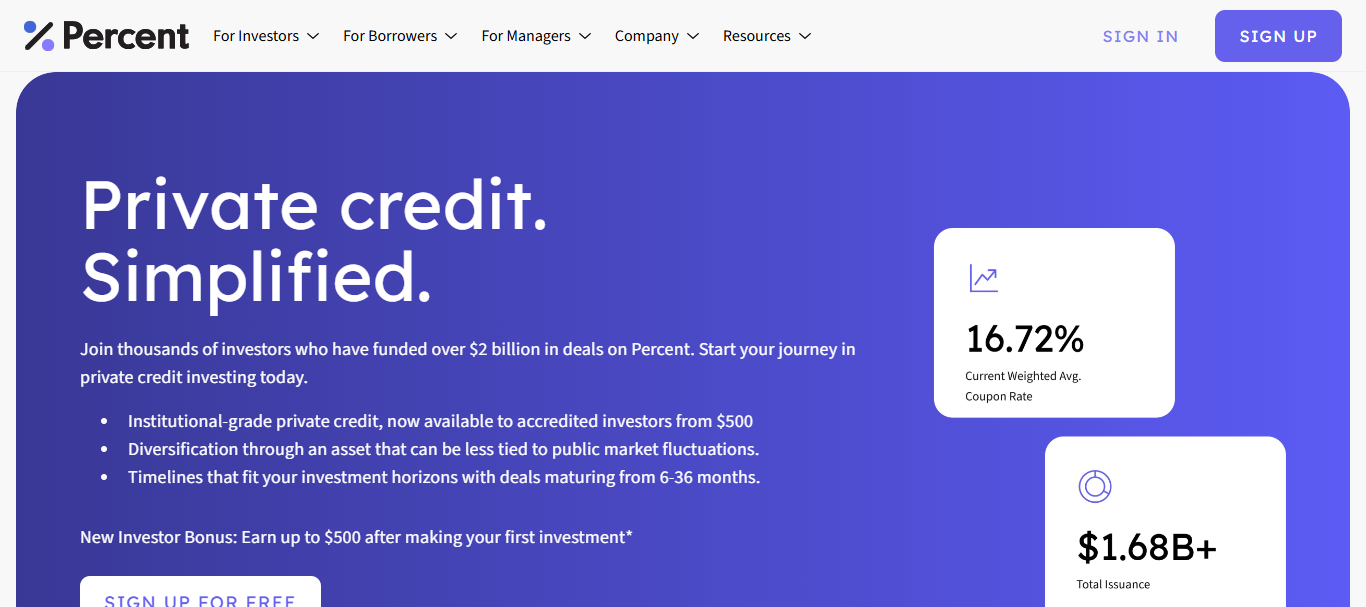
Percent makes investing easier for people wishing to earn an alternative credit focused income beyond stocks and bonds. Percent’s flexible framework of transparent structure debt products draws investors looking to private credit.
Percent Pros & Cons
| Pros | Cons |
| Access to private corporate debt investments | Available mainly to accredited investors |
| Potentially attractive yields compared with bonds | Investments carry credit and default risks |
| Portfolio diversification opportunities | Limited liquidity before maturity dates |
| Transparent online investment platform | Returns are not guaranteed |
| Institutional-grade private credit access | Minimum investments may be relatively high |
9. Yieldstreet
Yieldstreet has built a platform for the private credit and corporate debt investor to access passive income. Yieldstreet focuses on alternative investments for the investor lacking exposure to the public market.

Investors using Yieldstreet may choose from a range of alternative investments aligned with their investment goals and risk tolerances. Yieldstreet is a go-to funding platform for investors wanting to place multiple bets for a greater return.
Yieldstreet Pros & Cons
| Pros | Cons |
| Broad selection of alternative investments | Some investments require significant capital |
| Exposure to private credit opportunities | Liquidity can be limited for certain assets |
| Helps diversify traditional portfolios | Performance depends on underlying investments |
| Access to income-generating asset classes | Fees can be higher than index investing |
| User-friendly digital investment experience | Many offerings are restricted to accredited investors |
10. Cadence
Cadence’s focus is primarily on short-term investments in corporate debt, capital preservation, and reliability on returns. Cadence provides its users with the opportunity to invest in private credit with shorter investment timeframes compared to traditional methods.
With the ease of doing business on the app and transparency, users investing in income generating assets with known timeframes appreciate the service.

Cadence also seems to be gaining popularity due to its user-based private debt investment service with the aim of allowing users to diversify their portfolios while having the freedom to exercise their own timeframes and liquidity preferences.
Cadence Pros & Cons
| Pros | Cons |
| Focuses on short-duration corporate debt investments | Available primarily to accredited investors |
| Offers predictable income opportunities | Private credit investments involve default risk |
| Transparent and easy-to-use platform | Investment choices are more limited than public markets |
| Helps diversify investment portfolios | Liquidity options may be restricted |
| Defined investment timelines improve planning | Returns can fluctuate with credit conditions |
Key Benefits of Corporate Debt Investing Platforms
- High-yield income opportunities – High, potentially consistent returns may be available in the offerings compared to traditional bonds and savings accounts.
- Portfolio diversification – Risk in a portfolio can be reduced by adding non-correlated alternative debt investments.
- Access to private credit markets – The products allow investors to take part in global, institutional quality lending offerings.
- Passive income generation – Continuous income in the form of interest payments is available, and investor management is not required.
Future Trends In Invoice Factoring and Corporate Debt
- Fintech Lending Platforms Are Booming – Invoice financing is a developing product for many digital lenders, and is being offered to businesses around the world.
- AI and Credit Risk Evaluation – Artificial intelligence is used to enhance the assessment of the risks of lending to a borrower and the likelihood of borrower repayment.
- More Alternative Investment Markets – Private credit and high-yield debt markets are becoming available to more investors around the world.
- Greater Ability to Invest Worldwide – Cross-border investing is facilitated by easier onboarding and funding to investing platforms.
Conclusion
In conclusion, high-yield invoice factoring and corporate debt investing platforms have both opened new avenues for businesses and investors. They strengthen cash flow, and unlock capital, and both offer excellent passive income.
Invoice factoring builds operational stability for factoring businesses, while corporate debt investing provides diversification with the potential for greater returns. Balancing the costs of risk with the fees and your investment objectives will guide you to the right platform for financial security and growth.
FAQ
Who can invest in corporate debt platforms?
Many platforms are available only to accredited or high-net-worth investors.
What returns can investors expect?
Returns vary by platform and risk level, typically ranging from moderate to high yields.
Is invoice factoring considered a loan?
No, businesses sell their receivables instead of borrowing money from lenders.
Are corporate debt investments risky?
Yes, borrowers can default, and investments may have limited liquidity options.