
This article describes Leading Revenue Based Financing Platforms for Scaling E-Commerce. Revenue-based financing platforms allow online businesses to access capital to grow their business while avoiding diluting equity.
Because platforms for Revenue-Based Financing create flexible payment structures that rely on company Revenue, financing options become more accessible
for online businesses trying to finance the expansion of their inventory, financial improvements to their advertising, and their overall business cash position, while also supporting the organic growth of the business.
Key Points & Best Revenue-Based Financing Platforms for E-commerce Scaling
| Platform | Explanation |
|---|---|
| Shopify Capital | Provides quick funding to Shopify merchants with flexible repayments. |
| Clearco | Revenue-based financing without equity dilution for growing online businesses. |
| Wayflyer | Offers growth capital tailored specifically for e-commerce brand expansion. |
| Uncapped | Provides funding based on revenue without taking business equity. |
| Pipe | Converts recurring revenue streams into immediate growth capital funding. |
| Capchase | Enables businesses to access future revenues for scaling operations. |
| PayPal Working Capital | Flexible financing for PayPal merchants with automated repayment structure. |
| Founderpath | Helps SaaS and e-commerce companies scale without equity dilution. |
| 8fig | Provides supply chain funding and planning for e-commerce growth. |
| Ritmo | Delivers fast revenue-based financing solutions for digital commerce brands. |
10 Best Revenue-Based Financing Platforms for E-commerce Scaling
1. Shopify Capital
Shopify Capital is aimed at merchants working within the Shopify ecosystem and is one of the easier revenue-based financing options to access.
Funding is extended based on the sales performance of the merchant’s store, which eliminates many of the lengthy and drawn-out processes of traditional financing, such as the requirement for collateral.

Shopify Capital builds flexibility into the repayment structure by varying the repayment amounts based on the merchant’s daily sales.
Shopify Capital has decided to expand its reach, and as such, many e-commerce brands have begun investing in Shopify Capital to finance the purchase of inventory and fund marketing and operational improvements while retaining full ownership of their business.
Shopify Capital Pros & Cons
| Pros | Cons |
|---|---|
| Fast approval process for eligible Shopify merchants. | Only available to Shopify ecosystem users. |
| No equity dilution for business owners. | Limited availability in some countries. |
| Flexible repayments linked to store revenue. | Funding amounts may be restricted. |
| No collateral requirements in most cases. | Less suitable for non-Shopify businesses. |
| Seamless integration with Shopify dashboard. | Daily repayments can impact cash flow. |
| Simple application with minimal paperwork. | Eligibility requirements can be strict. |
| Supports inventory and marketing investments. | Limited customization of financing terms. |
2. Clearco
Clearco has quickly become one of the leading revenue-based financing companies, and this can largely be attributed to its focus on and understanding of digital-first businesses.
Clearco has decided to take a more innovative approach to financing and has decided to focus on performance metrics like the efficiency of advertising spend, revenue, and sales, as opposed to equity.
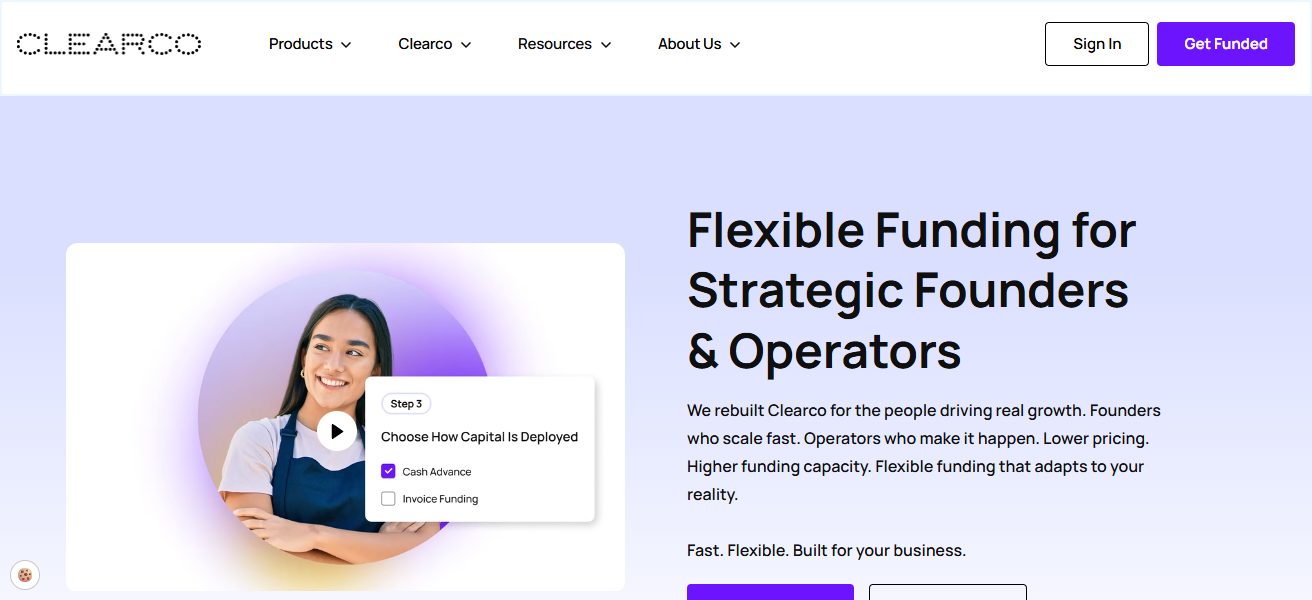
This innovative approach has afforded a plethora of e-commerce brands unprecedented access to substantial amounts of funding, all while retaining complete control of their businesses.
Clearco has a particularly strong appeal to direct-to-consumer brands as they cover the upfront cost of the advertising campaigns. Clearco also provides insights and tools on marketing to businesses to help them achieve sustainable growth.
Clearco Pros & Cons
| Pros | Cons |
| Non-dilutive funding preserves ownership. | Primarily serves established businesses. |
| Fast funding decisions based on performance. | Fees may exceed traditional lending costs. |
| Strong e-commerce specialization. | Limited support for certain industries. |
| No personal guarantees required. | Revenue fluctuations affect eligibility. |
| Useful marketing analytics and insights. | Less suitable for startups with low sales. |
| Supports advertising and inventory scaling. | Geographic availability varies. |
| Data-driven underwriting process. | Funding limits depend on business metrics. |
3. Wayflyer
Wayflyer develops financial solutions for rapidly growing e-commerce companies and determines funding eligibility using sales and marketing data in real time. Access to Wayflyer’s working capital services enables merchants to buy more inventory, trade new products, and sell in new regions.
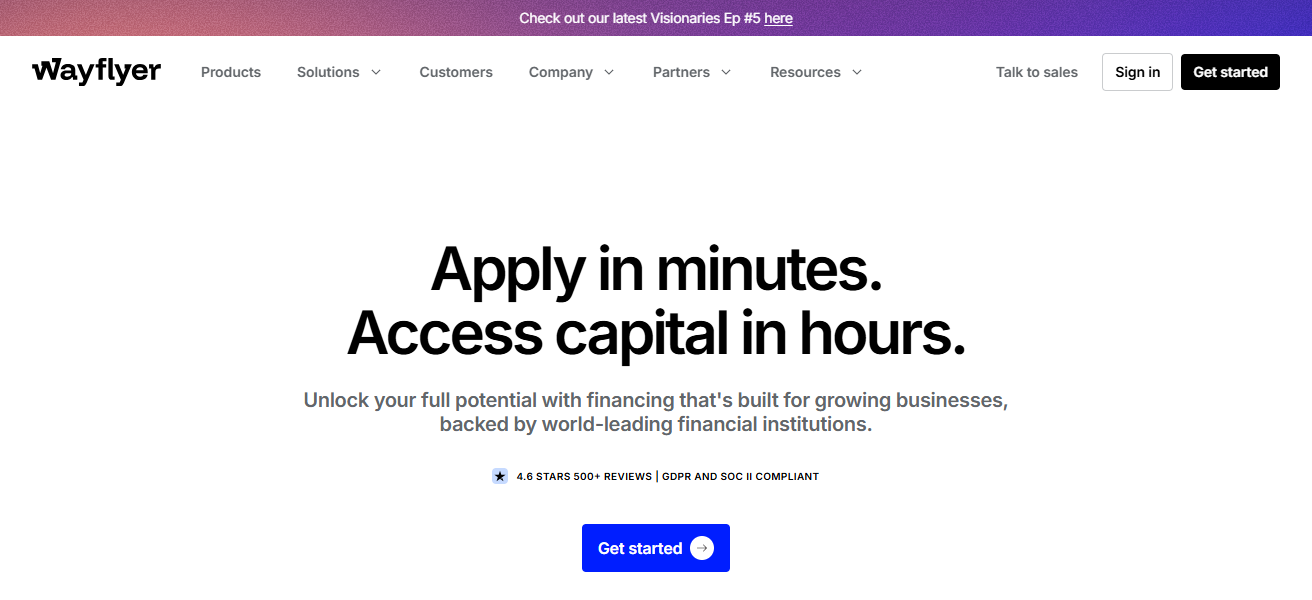
Wayflyer differentiates itself from traditional lenders and focuses on the expected future growth of online brands.
Wayflyer has continued to develop data-based technology to underwrite users quickly and in a more customized manner. Wayflyer is a preferred alternative for growing e-commerce companies because of easier technology-based funding.
Wayflyer Pros & Cons
| Pros | Cons |
| Designed specifically for e-commerce brands. | Better suited for established stores. |
| Quick access to growth capital. | Costs can be higher than bank loans. |
| Uses real-time business data. | Requires platform integrations. |
| Flexible qualification requirements. | Limited support in some markets. |
| Helps fund inventory expansion. | Funding offers vary significantly. |
| Supports international business growth. | Not ideal for early-stage companies. |
| Less emphasis on credit scores. | Strong revenue history often required. |
4. Uncapped
Revenue-based financing offered by Uncapped provides a new funding mechanism for online companies to receive business growth financing without diluting equity. Uncapped collateralized business loans relying solely on data from the participant business and minimal personal contact.
Uncapped provides e-commerce companies with the funding necessary to purchase inventory, book international flights, and acquire customers.
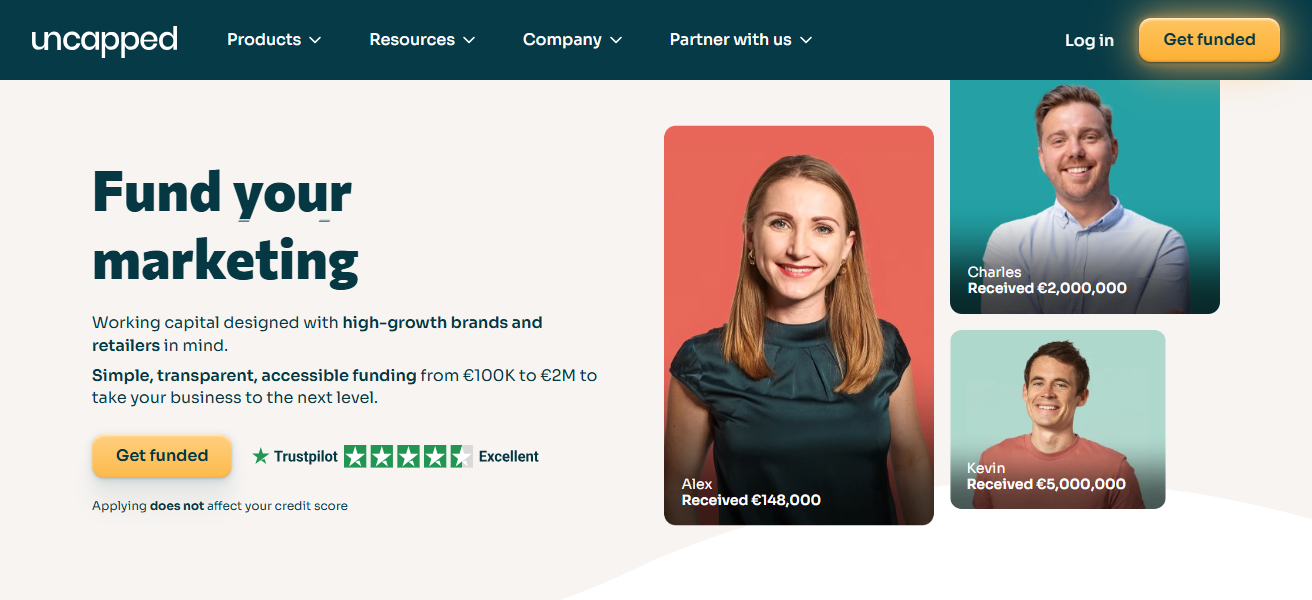
Uncapped’s financing model is transparent, clearly displaying fees to engaged customers. Uncapped’s offerings have gained more recognition, especially among digital brands, as a better option compared to VC funding.
Uncapped Pros & Cons
| Pros | Cons |
| No equity ownership surrendered. | Not available worldwide. |
| Transparent pricing structure. | Funding depends on revenue consistency. |
| No personal guarantees required. | Not suitable for pre-revenue businesses. |
| Fast approval and funding process. | Financing costs may be substantial. |
| Flexible use of funds. | Lower funding limits than venture capital. |
| Supports multiple digital sectors. | Industry restrictions may apply. |
| Revenue-based repayment model. | Requires access to business data. |
5. Pipe
Pipe has helped many firms tackle the working capital problem for predictable future cash inflows. Pipe has e-commerce firms in mind. Pipe gives firms the ability to turn their future cash inflows into current cash. The flexible financing helps improve cash flows throughout the firm.
Pipe’s solution is better than traditional options since Pipe avoids the negative consequences of traditional options like debt and equity financing.

Pipe’s financing solution is a flexible option that provides firms with working capital to grow. The financing solution is based on the firm’s future cash inflows, meaning firms looking to finance should have predictable future cash inflows. The financing solution is flexible and helps firms grow.
Pipe Pros & Cons
| Pros | Cons |
| Converts future revenue into cash. | Best for recurring revenue businesses. |
| Avoids traditional debt structures. | Less useful for standard retail stores. |
| No equity dilution involved. | Requires predictable revenue streams. |
| Enhances business liquidity. | Marketplace demand affects funding access. |
| Institutional investor marketplace. | Funding amounts can fluctuate. |
| Supports business expansion initiatives. | The platform may be complex for beginners. |
| Flexible funding opportunities. | Subscription-based businesses benefit most. |
6. Capchase
Capchase avoids the traditional debt financing route and instead bases financing on future cash flows. Many firms have cash flow problems and are unable to finance growth. Many firms also have predictable future cash inflows.
If firms can finance their operations and growth needs based on predictable future cash inflows, the performance of those firms’ activities will help improve cash inflows to the firm. Capchase enables firms to finance their growth through cash flow.

The financing solution is flexible and easy to use. Since debt financing is slow and lacks flexibility, many firms prefer financing that is based on future cash flows.
Many e-commerce firms have predictable future cash inflows and would like to grow. For these firms, Capchase financing presents a highly flexible financing solution.
Capchase Pros & Cons
| Pros | Cons |
| Unlocks future revenue quickly. | Works best with recurring revenue models. |
| No loss of company ownership. | Funding fees may reduce profits. |
| Fast and streamlined application. | Requires detailed financial information. |
| Flexible financing solutions. | Revenue consistency is essential. |
| Strong financial analytics tools. | Availability differs across regions. |
| Supports operational scaling. | Less effective for seasonal businesses. |
| Revenue-focused qualification process. | Funding limits vary by performance |
7. PayPal Working Capital
PayPal Working Capital is an excellent option for merchants using PayPal for payment processing. Funding is predicated on the performance history of the user’s account and sales, removing many of the obstacles imposed by traditional financing methods.
The loan is repaid by the user as sales are made, allowing companies to retain financial flexibility in the face of unpredictable revenue.

Working Capital is ideal for small and medium-sized e-commerce companies that wish to access cash quickly in order to finance inventory, sales campaigns, and improvements to business operations, since there is no complicated application process.
PayPal Working Capital Pros & Cons
| Pros | Cons |
| Quick access to business funding. | Restricted mainly to PayPal merchants. |
| Automated repayment mechanism. | Funding amounts can be limited. |
| No collateral requirements. | Dependence on PayPal ecosystem. |
| Flexible repayment based on sales. | Available only in selected countries. |
| Minimal paperwork and approval delays. | Fees may be higher than alternatives. |
| Useful for inventory purchases. | Repayments reduce incoming sales revenue. |
| Simple integration with PayPal accounts. | Not ideal for large capital needs. |
8. Founderpath
Founderpath finances SaaS and e-commerce companies that are looking for a non-dilutive, sustainable option to fund business operations. The platform allows founders to fund operations without losing a stake in the company and without going down the unappealing route of venture capital.
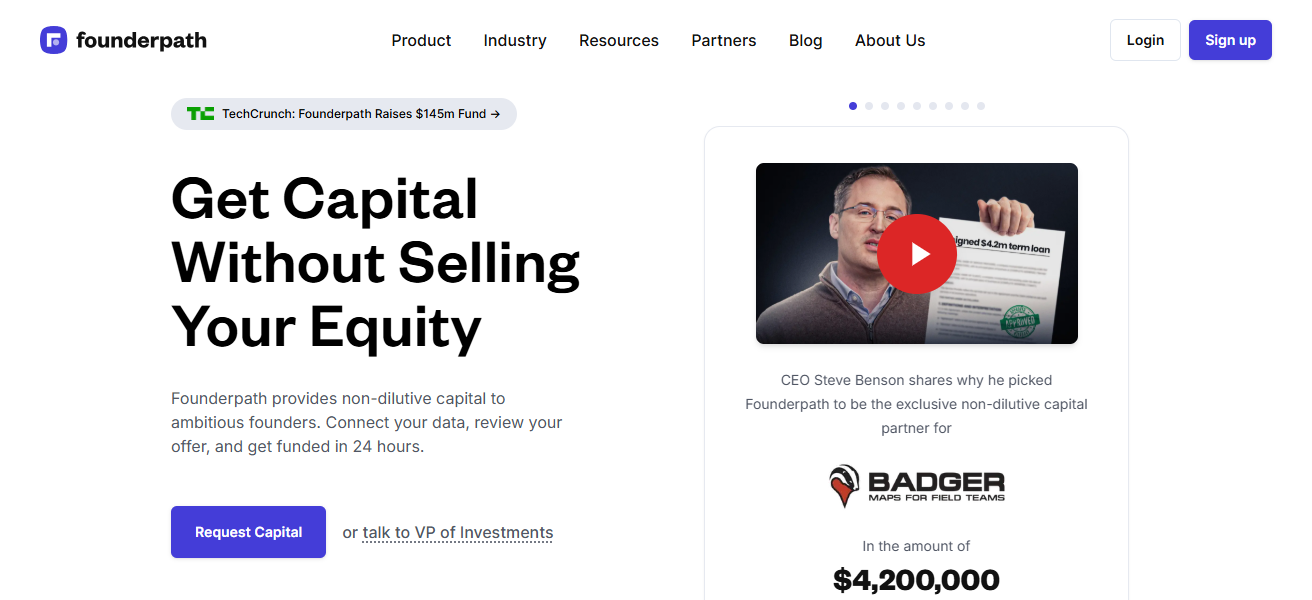
Founderpath is a flexible option for the modern digital business, as its financing is focused on the business’s operations and funding. In addition to valuable financing, Founderpath offers financial tools and planning that allow a business to fund operations
While improving the unit economics of the business. In a climate where control of the business is prioritized over growth, Founderpath is an appealing alternative to gain the funding to scale the business.
Founderpath Pros & Cons
| Pros | Cons |
| Non-dilutive financing preserves ownership. | Mainly targets recurring revenue companies. |
| Designed for SaaS and e-commerce. | Limited options for early-stage startups. |
| Includes financial planning tools. | Requires strong business metrics. |
| Supports sustainable scaling strategies. | Not available in every market. |
| Reduces reliance on venture capital. | Detailed financial disclosure needed. |
| Revenue-focused qualification model. | Funding amounts may be limited. |
| Helps improve profitability planning. | Less flexible than equity financing. |
9. 8fig
8fig takes an original approach to financing by integrating revenue-based financing with supply chain e-commerce tools. The software aids sellers in predicting their funding needs, estimating future inventory, and managing their supply chain.
This allows sellers to grow their business and avoid funding gaps and stock shortages. The funding model provides 8fig customers with operational gap financing and flexible sales growth financing. For e-commerce sellers with complex supply chains, 8fig provides critical funding and support.
8fig Pros & Cons
| Pros | Cons |
| Combines funding with supply-chain planning. | Primarily designed for e-commerce sellers. |
| Inventory forecasting improves efficiency. | Learning curve for advanced tools. |
| Customized growth plans available. | Funding tied to sales performance. |
| Helps prevent stock shortages. | Not suitable for service businesses. |
| Supports long-term expansion goals. | Regional availability may be limited. |
| Provides operational guidance. | Financing costs can impact margins. |
| Technology-driven planning capabilities. | Smaller sellers may find complexity challenging. |
10. Ritmo
Ritmo is a financing tool providing revenue-based financing to e-commerce sellers for fast funding with flexible growth options. Ritmo uses business-trade data to underwrite financing gaps without providing equity and optional funding to sellers.

Merchants can use capital to grow their business through marketing, buying inventory, expanding business operations overseas, or buying a more advanced tech stack. Ritmo stands out from its competitors with its more straightforward and faster funding processes. Ritmo is an outstanding option to choose from for fast funding for profitable growth.
Ritmo Pros & Cons
| Pros | Cons |
| Fast approvals using business data. | Available in limited regions. |
| No equity dilution for founders. | Requires a strong sales performance. |
| Flexible growth-focused financing. | Costs may exceed traditional loans. |
| Supports marketing and inventory growth. | Not ideal for new businesses. |
| Streamlined application experience. | Funding limits depend on revenue. |
| Suitable for digital commerce brands. | Platform integrations are often required. |
| Data-driven funding assessments. | Repayments can affect cash flow. |
Conclusion
To conclude, the most ideal revenue-based financing platforms for e-commerce scaling strike the balance of offering flexible non-dilutive funding to allow businesses to grow without losing ownership.
If you are looking to fund different aspects of your business, like, inventory, marketing funding, expansion funding, or cash-flow management, platforms like Shopify Capital, Clearco, Wayflyer, and 8fig will provide optimal solutions.
The right provider for you will depend on your revenue model, growth goals, funding needs, and operational requirements.
FAQ
How does revenue-based financing differ from traditional loans?
Unlike traditional loans, revenue-based financing usually requires no collateral, offers flexible repayments, and focuses more on business revenue than credit scores.
Which platform is best for Shopify store owners?
Shopify Capital is often considered the best option for Shopify merchants because it integrates directly with the Shopify platform and offers repayment based on store sales.
Can I get funding without giving up equity?
Yes. Platforms such as Clearco, Wayflyer, Uncapped, and Founderpath provide non-dilutive funding, allowing founders to retain full ownership of their businesses.
How quickly can e-commerce businesses receive funding?
Many revenue-based financing providers can approve applications and disburse funds within a few days, depending on business performance and documentation.
What are the typical requirements for approval?
Most platforms evaluate factors such as monthly revenue, sales history, business performance, marketing metrics, and cash flow stability rather than personal credit scores.