This article will show you the Best Crypto APIs for Token Price Tracking Across Multiple Chains. Developers, traders, and businesses can use this information to choose their best option.
- What Are Crypto APIs for Token Price Tracking?
- How To Choose the Best Crypto API
- Key Points & Best Crypto APIs for Token Price Tracking Across Multiple Chains
- 10 Best Crypto APIs for Token Price Tracking Across Multiple Chains
- 1. CoinGecko API
- 2. CoinMarketCap API
- 3. Mobula API
- 4. Alchemy Token API
- 5. Birdeye API
- 6. Covalent API
- 7. Bitquery API
- 9. CoinStats API
- 10. CoinPaprika API
- Conclusion
- FAQ
The main APIs will be outlined, along with their functionalities, pricing structures, and benefits, as well as which blockchains they cover.
This will facilitate the application of current cryptocurrency pricing data into Web3, DeFi, portfolio tracking, and trading tools.
What Are Crypto APIs for Token Price Tracking?
Crypto APIs for token price tracking are interfaces for programmers to get real-time and past crypto prices from various blockchain networks and exchanges. They are single point interfaces for token prices, market caps, trading volumes, liquidity, price history, blockchain metadata, and more.
The APIs are used in crypto wallets, portfolio trackers, trading bots, DeFi, exchanges, and other financial apps. They help source accurate and current data from several blockchain systems.
How To Choose the Best Crypto API
- Supported Blockchains – Look for the API supporting all the major blockchains that your app needs.
- Data Freshness – Check if it can provide price updates in real-time and how fast are the updates.
- API Limits – Make sure that the request limits accommodate your app’s expected usage.
- Pricing Plans – Many APIs have free and paid plans. Compare each plan, and how scalable they are.
- Documentation Quality – APIs with documentation, examples, and SDKs win.
- Security – Authentication, HTTPS, and API Key Management. Check for secure implementations.
- Scalability – API needs to cope with your growing user base and increasing amounts of requests.
- Developer Support – Opt for APIs with responsive support and development.
Key Points & Best Crypto APIs for Token Price Tracking Across Multiple Chains
| API | Explanation |
|---|---|
| CoinGecko API | Tracks millions of tokens across networks with generous free API request limits available. |
| CoinMarketCap API | Delivers extensive cryptocurrency market data with millions of tokens and simple testing support. |
| Mobula API | Provides fast token prices, wallet balances, and comprehensive on-chain analytics for developers efficiently. |
| Alchemy Token API | Returns accurate token metadata and prices across Ethereum-compatible blockchain networks with reliability. |
| Birdeye API | Streams real-time decentralized exchange prices directly from liquidity pools for emerging tokens. |
| Covalent API | Supports hundreds of blockchains with unified access to transfers, balances, and decentralized trades. |
| Bitquery API | Enables advanced GraphQL blockchain queries for token prices, transactions, and money flow analysis. |
| DexScreener API | Offers real-time WebSocket and HTTP data for decentralized exchange trading pairs efficiently. |
| CoinStats API | Aggregates multi-chain portfolio data, wallet balances, and cryptocurrency tracking through one API. |
| CoinPaprika API | Provides detailed token information, market data, founder profiles, and project insights comprehensively. |
10 Best Crypto APIs for Token Price Tracking Across Multiple Chains
1. CoinGecko API
CoinGecko API is one of the best price tracker APIs for multi-chain cryptocurrencies. It has a robust set of features for millions of digital assets. It can track tokens from Ethereum, Solana, BNB Chain, Base, Arbitrum, and newly established networks.
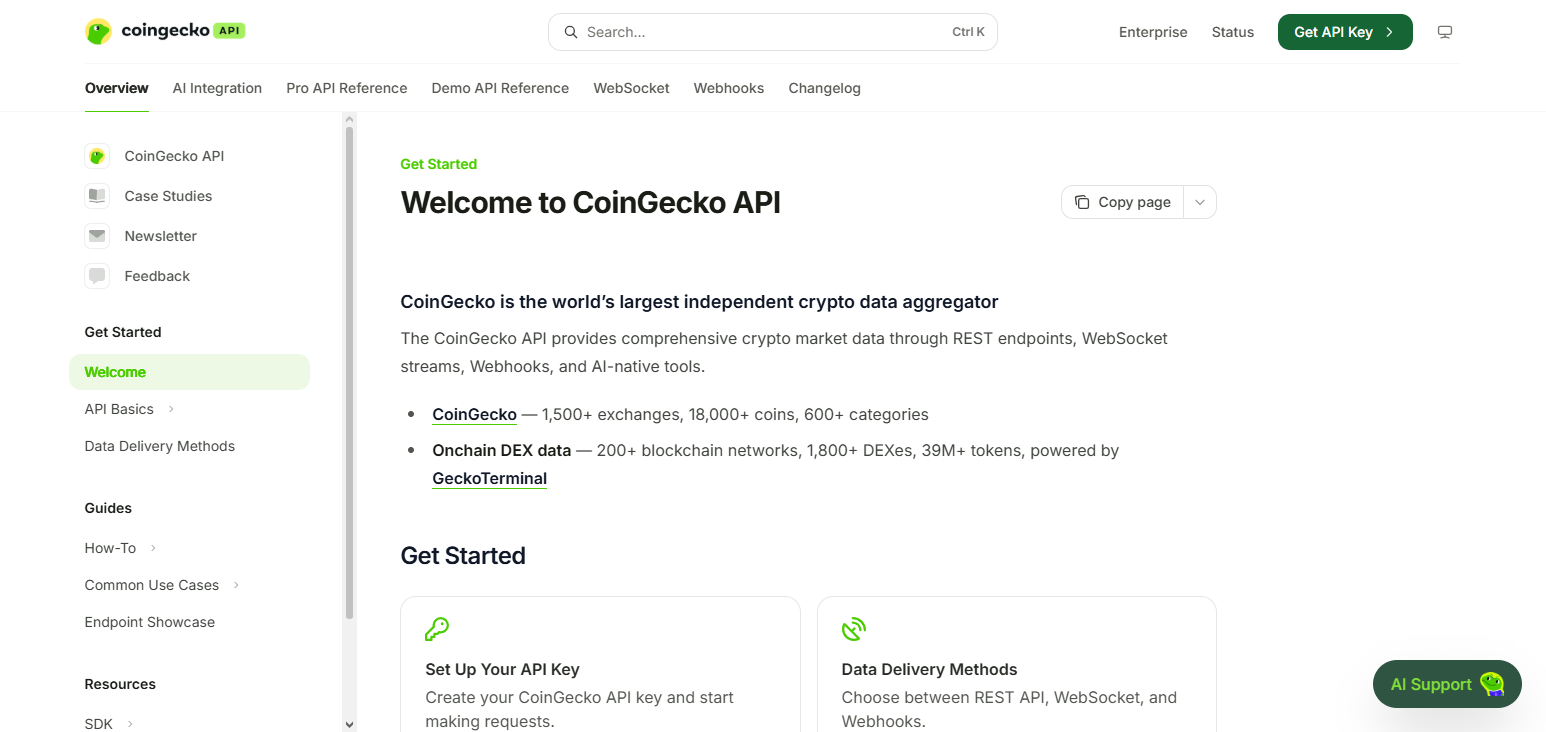
The API also offers historical data, market cap, trade volume, OHLC data, trending coins, and exchange data. It has the most generous free plan, as it is designed for startups that need low cost infrastructure for data tracking. It is useful for portable trackers, trading dashboards, and data research.
CoinGecko API – Key Features
- Accommodates millions of cryptocurrencies across varied blockchain networks.
- Acts as a market resource for real-time pricing, historical charts, OHLC, and market cap information.
- Incorporates exchange data, tracks trending coins, trading volume, and liquidity.
- Offers a developer-friendly REST API with a robust free tier.
| Pros | Cons |
|---|---|
| Large multi-chain cryptocurrency database with broad market coverage. | Advanced endpoints require paid subscription plans. |
| Generous free tier for startups and personal projects. | API rate limits may affect high-volume applications. |
| Reliable historical, market, and exchange data. | Some newly launched tokens appear with slight delays. |
| Excellent documentation and easy REST API integration. | Premium features increase overall development costs. |
2. CoinMarketCap API
The CoinMarketCap API has one of the largest real-time cryptocurrency databases. The API has millions of listings and provides real-time prices, historical data, market ranks, exchanges, and liquidity, as well as all the blockchain data.
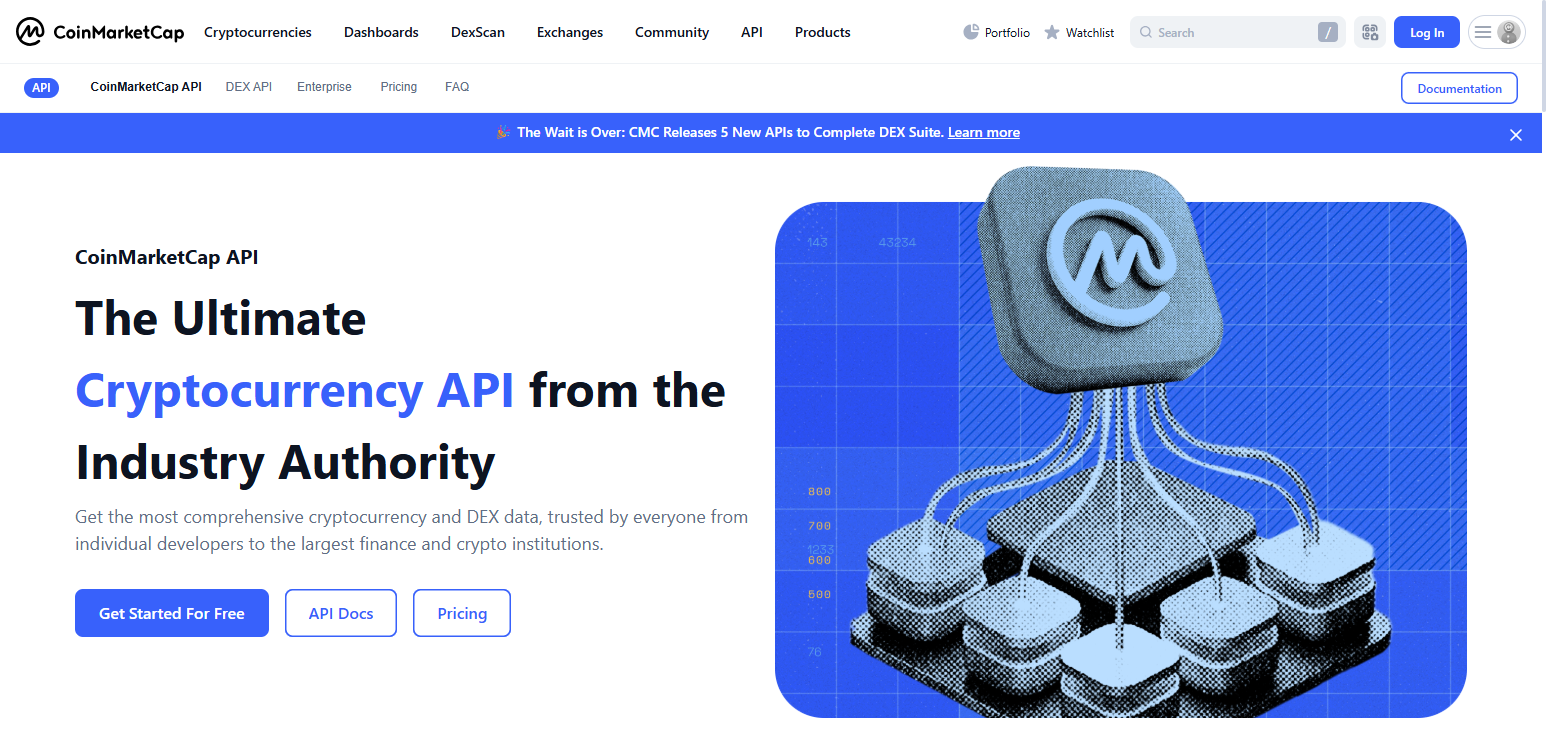
The excellent data quality has allowed the API to become the go-to API for crypto exchanges, fintech, news, and analytics. Developers can easily integrate the API and have access to price data, coins, and the entire market, with easy to use authentication and highly scalable documentation and pricing.
CoinMarketCap API – Key Features
- Provides real-time cryptocurrency pricing along with historical market data for millions of assets.
- Accurately ranks exchanges and computes market cap, volume, and liquidity.
- Provides extensive cryptocurrency metadata along with categorized data and blockchain ecosystems.
- Provides scalable, well-documented endpoints for business and enterprise solutions.
| Pros | Cons |
|---|---|
| Extensive cryptocurrency listings with trusted market rankings. | Free plan includes limited API requests. |
| Accurate market capitalization and trading volume data. | Premium plans can become expensive for scaling businesses. |
| Strong developer documentation and enterprise support. | Some endpoints require higher-tier subscriptions. |
| Widely adopted by exchanges and financial platforms. | Decentralized token listings may lag behind DEX markets. |
3. Mobula API
The Mobula API was made for developers who need speedy data for blockchain and token prices. Beyond live prices, it also offers wallet balances and token portfolios, as well as DeFi and NFT analytics, market caps, and on-chain data for various blockchains.
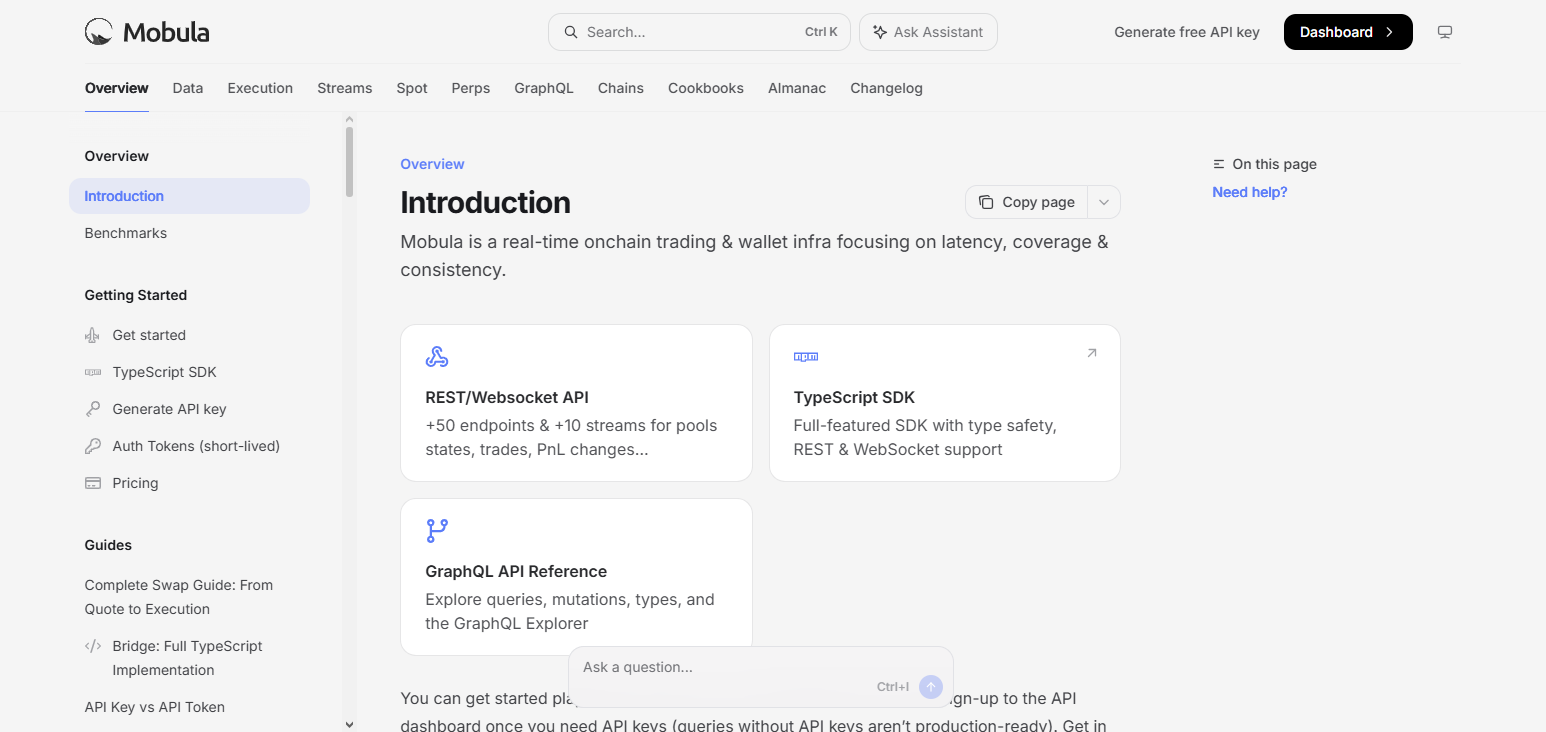
Speed is the main focus, thus, it can be easily integrated and used in trading bots and crypto wallets, as well as in management apps and finance dashboards. The API is designed with an easy to use and low maintenance infrastructure for Web3 and DeFi.
Mobula API – Key Features
- Provides low-latency pricing for tokens with fast synchronization of blockchain data.
- Offers cross-chain wallet balances and portfolio tracking along with DeFi analytics.
- Rapidly provides on-chain financial analysis along with NFT pricing and token metrics.
- Provides a developer-friendly REST API with fast integration and reliable Web3 infrastructure.
| Pros | Cons |
|---|---|
| Extremely fast API responses for live token prices. | Smaller ecosystem compared to older crypto APIs. |
| Combines wallet balances and DeFi analytics together. | Some advanced analytics require premium access. |
| Supports NFT valuation and portfolio management. | Limited community resources compared to larger competitors. |
| Developer-friendly integration with modern Web3 tools. | Documentation is still expanding for newer features. |
4. Alchemy Token API
Targeting EVM Blockchain ecosystems, Alchemy Token API provides useful features and services for apps on Ethereum, Polygon, Base, Optimism, Arbitrum, and other such networks. It not only provides token pricing but also provides token metadata, logos, and balances, as well as ownership, symbols, and decimals.
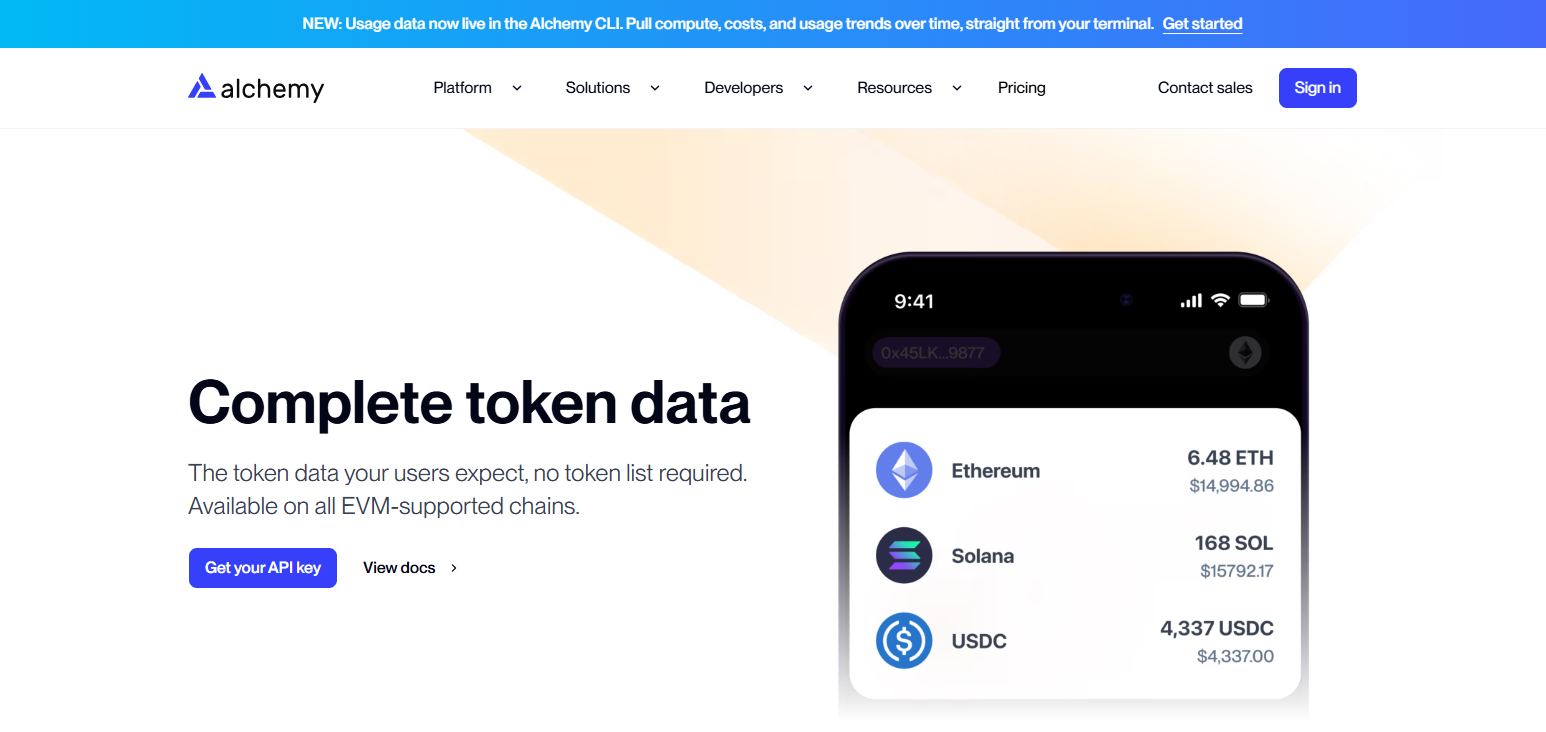
Alchemy Token API provides scalable infrastructure with extremely fast response times and enterprise-level reliability. It is trusted for Web3 wallets, blockchain explorers, NFT marketplaces, dApps, and crypto payment solutions where blockchain data is vital.
Alchemy Token API – Key Features
- Offers support for Ethereum, Polygon, Arbitrum, Optimism, Base, and other EVM networks.
- Rapidly provides token balances and metadata along with pricing, decimals, and ownership.
- Provides a reliable infrastructure with enterprise-grade Web3 readiness.
- Provides seamless integration with Web3 wallets, NFT platforms, and dApps.
| Pros | Cons |
|---|---|
| Excellent support for EVM-compatible blockchain networks. | Limited support for non-EVM blockchain ecosystems. |
| Enterprise-grade infrastructure with high reliability. | Premium pricing may not suit small developers. |
| Returns detailed token metadata and balances. | Advanced features require Alchemy platform familiarity. |
| Ideal for Web3 wallets and decentralized applications. | Less focused on centralized exchange market data. |
5. Birdeye API
Focusing on decentralized exchange markets, Birdeye API extracts live token pricing directly from liquidity pools, making traditional centralized exchanges redundant. This enables developers to track rapidly changing newly launched tokens, meme coins, and price and volume liquidity within the DEX ecosystem.
It is particularly useful for DEX analytics, automated trading, and speculation, as Birdeye API covers the most important chains such as Solana and continues to expand its multi-chain focus.
Birdeye API – Key Features
- Continuously streams real-time DEX prices sourced directly from blockchain liquidity pools.
- Rapidly tracks newly launched tokens along with meme coins and their liquidity and volume.
- Expands multi-chain blockchain coverage across most major decentralized ecosystems.
- Very useful for trading bots, market analysis, and early token detection.
| Pros | Cons |
|---|---|
| Real-time DEX pricing directly from liquidity pools. | Focuses mainly on decentralized trading markets. |
| Excellent for tracking newly launched crypto tokens. | Historical data depth varies across blockchains. |
| Fast updates suitable for automated trading bots. | Some chains receive better coverage than others. |
| Strong support for Solana and expanding ecosystems. | Premium plans unlock additional advanced endpoints. |
6. Covalent API
Covalent API provides a single gateway for developers to access all the blockchain data they need from hundreds of supported networks. Developers can query wallet balances, token transfers, NFTs, DeFi, trades, and other blockchain interactions, all without building or maintaining custom integrations.
This improves the scalability and significantly reduces the time for development. The standardized API structure is helpful for crypto accounting, portfolio tracking, and analytical services and data compliance and enterprise solutions that require cross blockchain ecosystems.
Covalent API — Key Features
- Provides access to hundreds of blockchain networks with a single standardized API.
- Fetches wallet balances and histories, token transfers and NFTs, and much more with ease.
- Offers support for DeFi positions and analytics, DEX activity, and blockchain analytics.
- Simplifies development with consistent multi-chain data structures and endpoints.
| Pros | Cons |
|---|---|
| Unified API across hundreds of blockchain networks. | Complex datasets may require learning time. |
| Standardized responses simplify multi-chain development. | Large queries can increase response times. |
| Retrieves wallets, NFTs, DeFi positions, and transfers. | Enterprise features require paid subscriptions. |
| Reduces infrastructure and blockchain integration effort. | Some niche chains update less frequently. |
7. Bitquery API
By leveraging GraphQL, the Bitquery API allows for unrivaled analytics, in-depth queries, and other useful tools for blockchain data. With this API, developers can analyze decentralized exchanges, smart contract events, and analyze transaction flows.
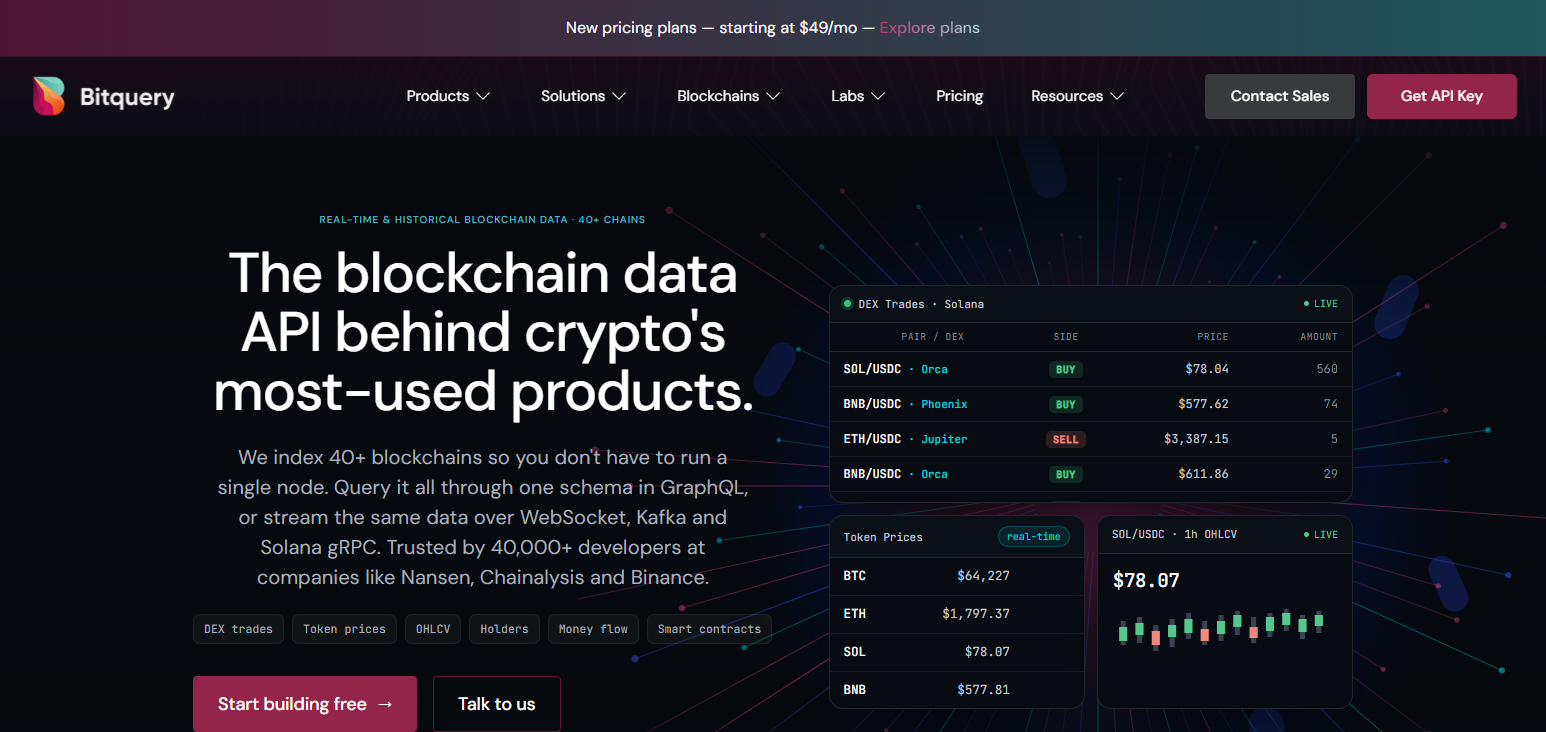
This API provides flexible filters to aid in the construction and analysis of blockchain queries. This API is essential for blockchain analytics, compliance, and other research tools that integrate on-chain analysis that is beyond the scope of basic market analysis.
Bitquery API — Key Features
- Blockchain data querying made easy with advanced and flexible queries using GraphQL.
- Analyzes prices, wallet activity, DEXs, smart contracts, and flow analysis.
- Dozens of blockchain networks supported with advanced and flexible filtering and aggregation.
- Ideal for advanced solutions and institutional grade crypto research and compliance.
| Pros | Cons |
|---|---|
| Powerful GraphQL queries for blockchain analytics. | Requires GraphQL knowledge for maximum efficiency. |
| Excellent on-chain transaction and money flow analysis. | More complex than traditional REST APIs. |
| Supports detailed blockchain event monitoring. | Pricing may increase with heavy query usage. |
| Suitable for institutional analytics and compliance. | Beginners may face a steeper learning curve. |
8. DexScreener API
The DexScreener API provides the quickest access to decentralized exchange data of any API on the market. Developers can determine the status of newly added trading pairs, token data, liquidity, and volume on multiple DEX platforms.
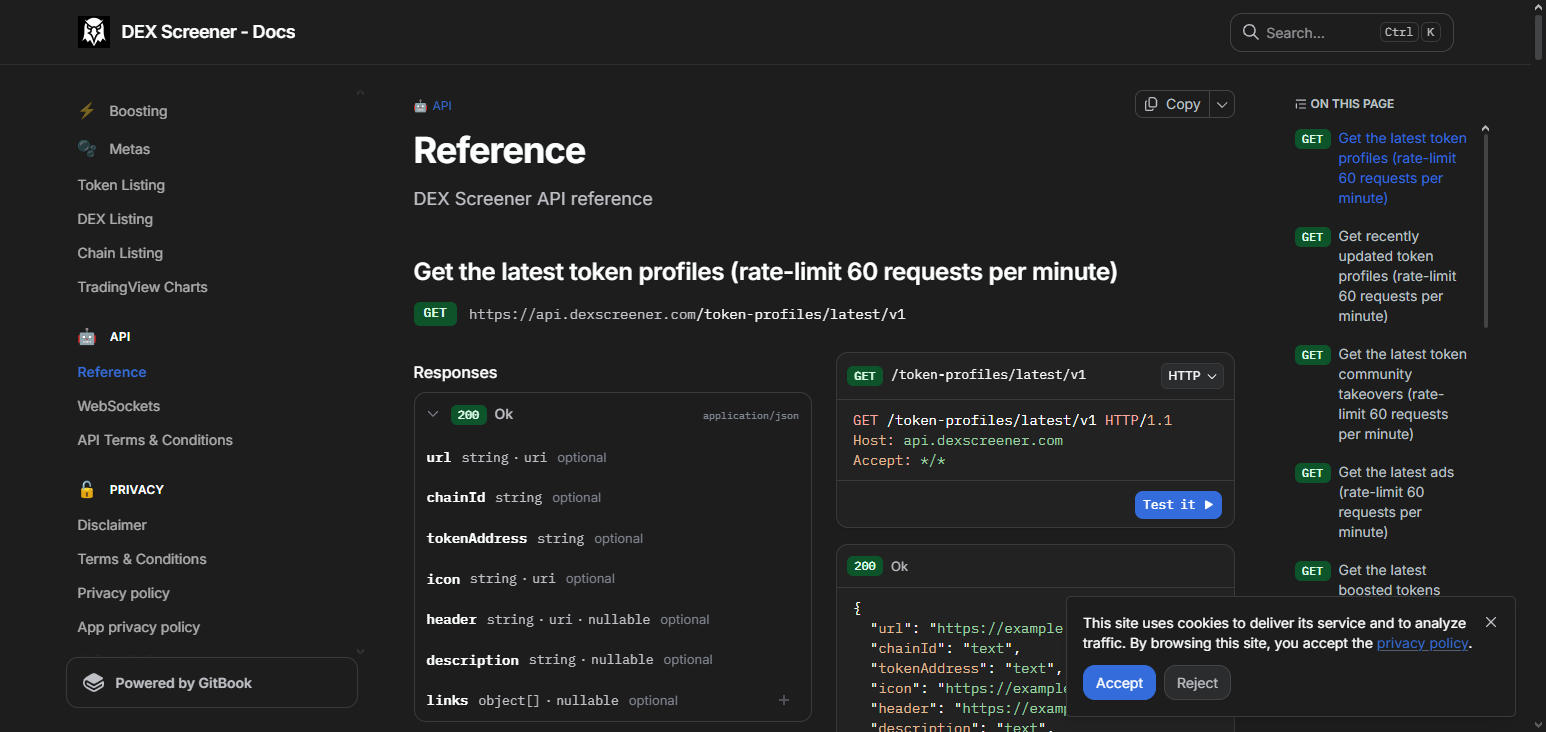
The speed of this data is useful for constructing sniper bots, trading dashboards, and DeFi analytical tools. The API provides the data necessary to spot trading opportunities that other bots may miss, and verify decentralized market prices.
DexScreener API — Key Features
- Real-time DEX market data available via traditional HTTP and Websocket connections.
- Keeps track of a trading pair’s liquidity and volume along with token price fluctuations.
- Notifies the user of newly listed DEX tokens across multiple blockchains.
- Great for DeFi & Trading Dashboards, Analytics, and Automated Trading solutions.
| Pros | Cons |
|---|---|
| Real-time DEX data through WebSocket streaming. | Primarily focuses on decentralized exchange markets. |
| Detects newly listed trading pairs quickly. | Limited project metadata compared to market aggregators. |
| Fast API responses for trading applications. | Historical analytics are less comprehensive. |
| Popular among DeFi traders and token trackers. | Centralized exchange coverage remains limited. |
9. CoinStats API
The CoinStats API provides a single solution for managing crypto portfolios. This API enables developers to create dashboards and tracking tools for crypto investments and portfolios without the need for multiple integrations.
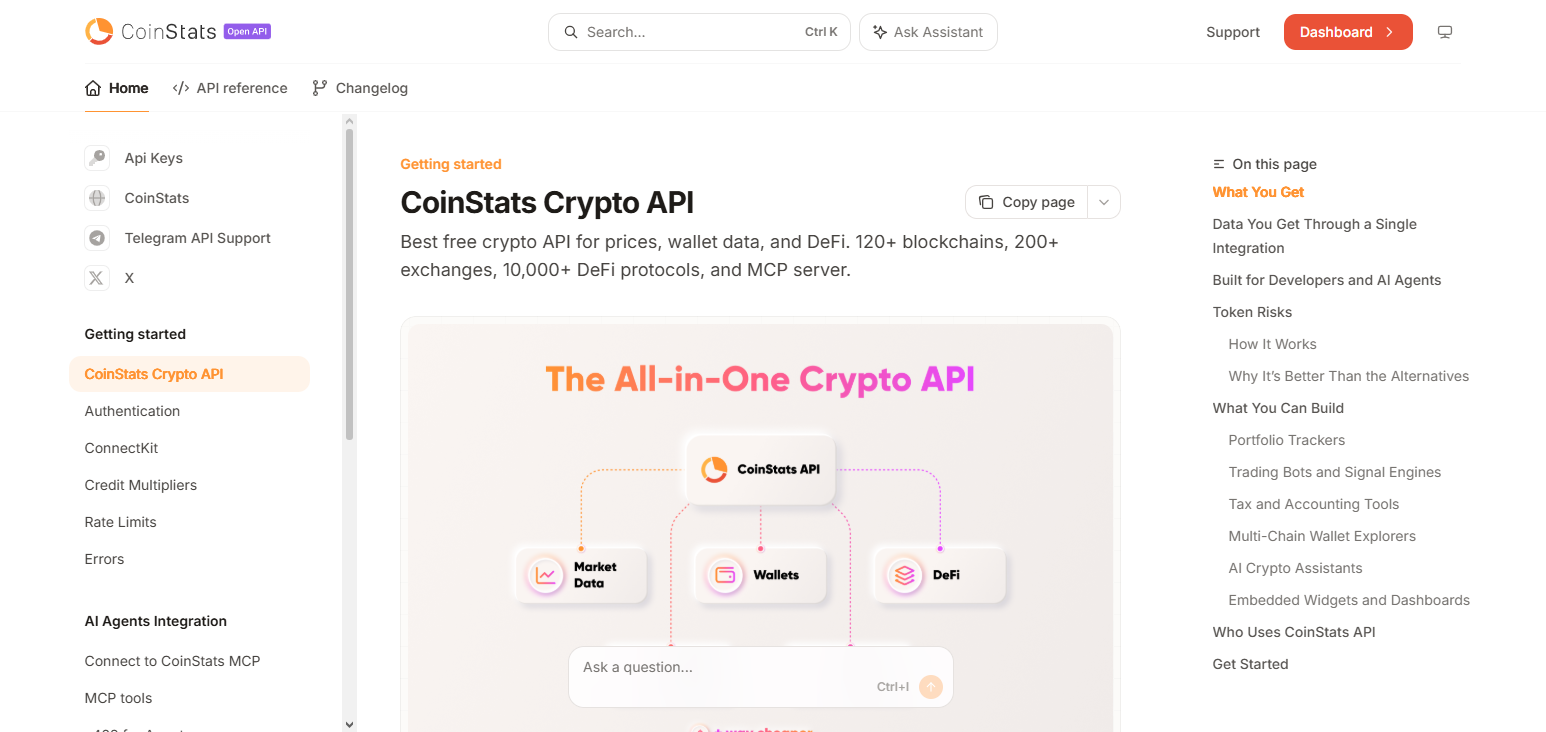
Additionally, the API offers users a consistent market view for both centralized and decentralized assets. The API’s built in flexibility and integration support ensures this API is a hit with financial technology oriented businesses and tools for crypto management.
CoinStats API — Key Features
- Consolidates multi-chain wallet and crypto portfolio balances.
- Unifies market data, trades, and the history and performance of crypto assets.
- DEX and CEX portfolio tracking of crypto is supported.
- Super seamless for wealth management and FinTech integrations.
| Pros | Cons |
|---|---|
| Combines portfolio tracking with live market data. | Portfolio-focused features dominate the platform. |
| Supports multiple wallets and blockchain networks. | API request limits depend on subscription tier. |
| Easy integration for fintech and crypto apps. | Fewer advanced blockchain analytics capabilities. |
| Simplifies multi-chain asset management efficiently. | Enterprise customization options are relatively limited. |
10. CoinPaprika API
CoinPaprika API provides a rich layer of information when compared to price tracking APIs. It provides information on various other aspects of a cryptocurrency project along with essential market data like price, supply, and exchange listings.
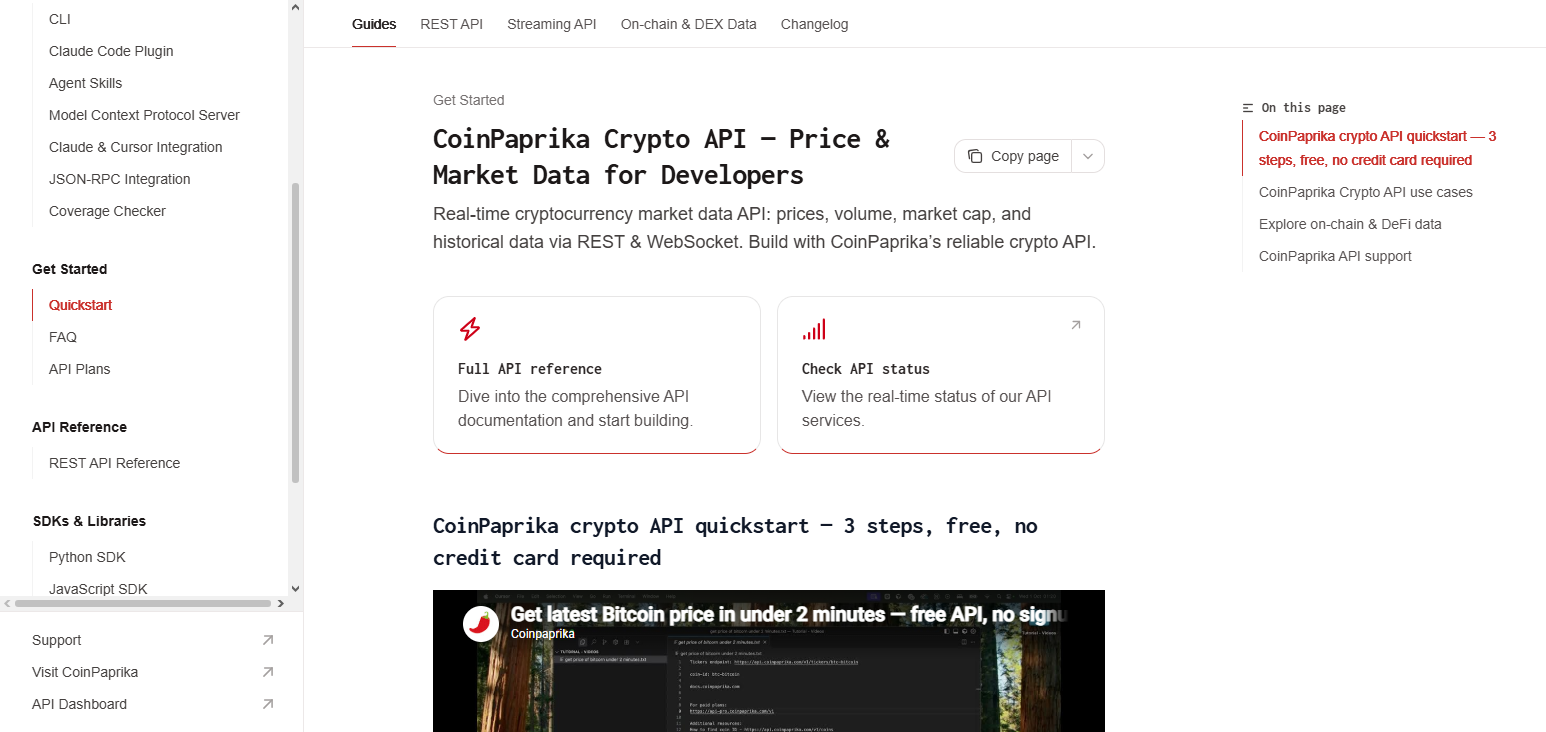
Developers can utilize a single endpoint to access a token’s historical price charts, supply statistics, descriptions, founder information, and community links.
This resource is extremely beneficial for research and analysis tools as it provides information for hundreds of thousands of cryptocurrencies including many DEX tokens.
CoinPaprika API — Key Features
- Accurate token market data with a comprehensive profile for each listed cryptocurrency.
- Historical pricing, listings by exchange, and stats on circulating supply are included.
- Includes info on founders, descriptions of projects, and resources by and for the community.
- Lists hundreds of thousands of cryptocurrencies, and many DEX tokens as well.
| Pros | Cons |
|---|---|
| Rich cryptocurrency profiles beyond simple price data. | Smaller real-time DEX coverage than competitors. |
| Includes founder details and project information. | Some newer tokens appear after verification. |
| Strong historical market and exchange datasets. | Premium access required for higher usage limits. |
| Useful for research and investment analysis platforms. | Fewer WebSocket streaming features than trading APIs. |
Conclusion
In Conclusion Selecting a crypto API boils down to specific needs related to the application, the blockchains you plan to use, your budget and scalability. The APIs mentioned provide trustworthy token price tracking, real-time market data, and multi-chain support.
Developers, traders, and businesses will appreciate the APIs. If you intend to build a portfolio tracker, a trading bot, a DeFi app, a web application, or a Web3 app, the right choice of an API backed by real data and good documentation will yield better results, improved reliability and growth in the use of the service over time.
FAQ
Which crypto API supports the most blockchains?
Covalent API is known for supporting hundreds of blockchain networks through a unified interface.
Which API is best for free crypto price data?
CoinGecko API offers one of the best free plans with generous monthly API request limits.
Which API is best for decentralized exchange (DEX) prices?
Birdeye API and DexScreener API are excellent choices for real-time DEX token price tracking.
Which API is best for Ethereum-based applications?
Alchemy Token API is a top choice for Ethereum and other EVM-compatible blockchain networks.