In this article, I will outline the top crypto APIs for cross-chain data and token transfers. I will also describe how the best APIs enable developers to create applications on the blockchain that are built securely and more efficiently.
This article will familiarize you with the best API providers, their features, advantages, and most favorable conditions and help you select the best API that allows you to perform multi-chain data and token transfers.
Key Points & Best Crypto APIs for Cross-Chain Data and Token Transfers
| Crypto API | Explanation |
|---|---|
| Moralis API | Delivers unified cross-chain blockchain data, token balances, NFTs, and wallet activity seamlessly. |
| Alchemy API | Provides reliable multi-chain infrastructure, transaction monitoring, token transfers, and developer-friendly APIs efficiently. |
| QuickNode API | Offers high-performance blockchain nodes with fast cross-chain data access and scalable infrastructure solutions. |
| Chainbase API | Aggregates multi-chain blockchain datasets, simplifying token transfers, indexing, and analytics for developers worldwide. |
| Covalent API | Retrieves detailed on-chain data across multiple blockchains through one unified API interface efficiently. |
| Blockdaemon API | Enables enterprise-grade blockchain connectivity, cross-chain operations, secure staking, and token transfer management services. |
| Tatum API | Simplifies blockchain development with unified APIs supporting cross-chain token transfers and wallet integrations. |
| Bitquery API | Delivers real-time blockchain analytics, cross-chain transaction tracking, and comprehensive token data insights accurately. |
| Chainstack API | Provides scalable blockchain infrastructure supporting cross-chain applications, nodes, and reliable token transfer capabilities. |
| Ankr API | Powers decentralized applications with multi-chain RPC services, blockchain data, and token transfers efficiently. |
10 Best Crypto APIs for Cross-Chain Data and Token Transfers
1. Moralis API
The Moralis API is a great choice for developers designing cross-chain Web3 solutions. With only a single API, it can access data across many different blockchains such as Ethereum, BNB Chain, Polygon, Base, Arbitrum, Avalanche, and many others.
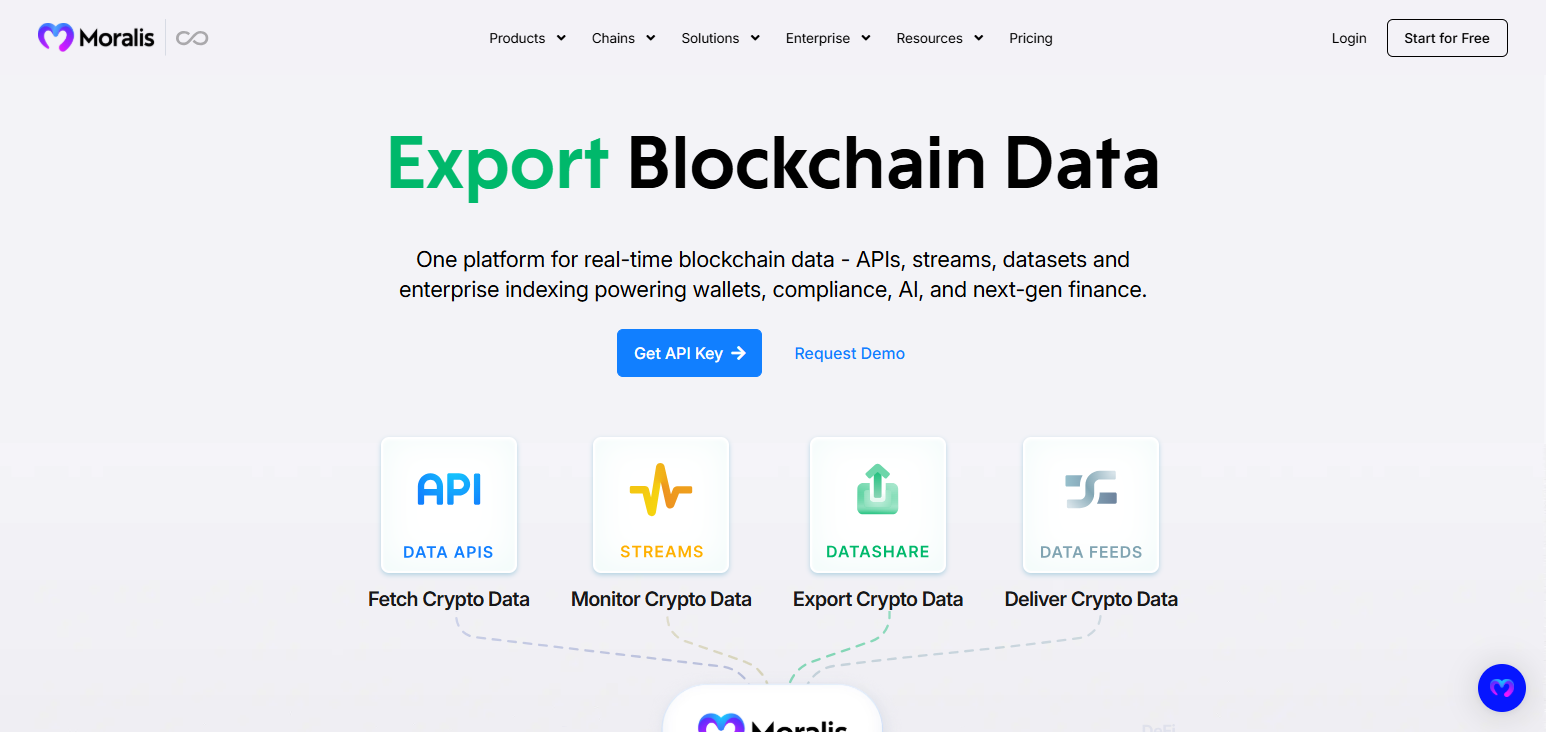
Because they do not have to set up and maintain multiple blockchains, developers can access wallet balances, token and NFT transaction histories and ownership, and even DeFi portfolios.
For cross-chain applications and token transfer solutions, Moralis is a great choice for development because they provide extensive documentation that, combined with their real-time APIs and webhooks, makes development faster.
| Pros | Cons |
|---|---|
| Supports multiple blockchain networks through one unified API. | Advanced features require higher-priced subscription plans. |
| Easy-to-use SDKs and detailed documentation. | Free plan includes limited API requests. |
| Provides wallet, NFT, and DeFi portfolio APIs. | Some endpoints may have rate limits during heavy traffic. |
| Real-time webhooks simplify blockchain event monitoring. | Enterprise features are unavailable on basic plans. |
| Reduces infrastructure management for developers. | Custom indexing options are more limited than self-hosted solutions. |
2. Alchemy API
The Alchemy API makes it easy to build sophisticated high-performance decentralized applications that span multiple blockchains thanks to rapid RPC access and advanced blockchain APIs for token transfer and NFTs, along with APIs for transaction monitoring.
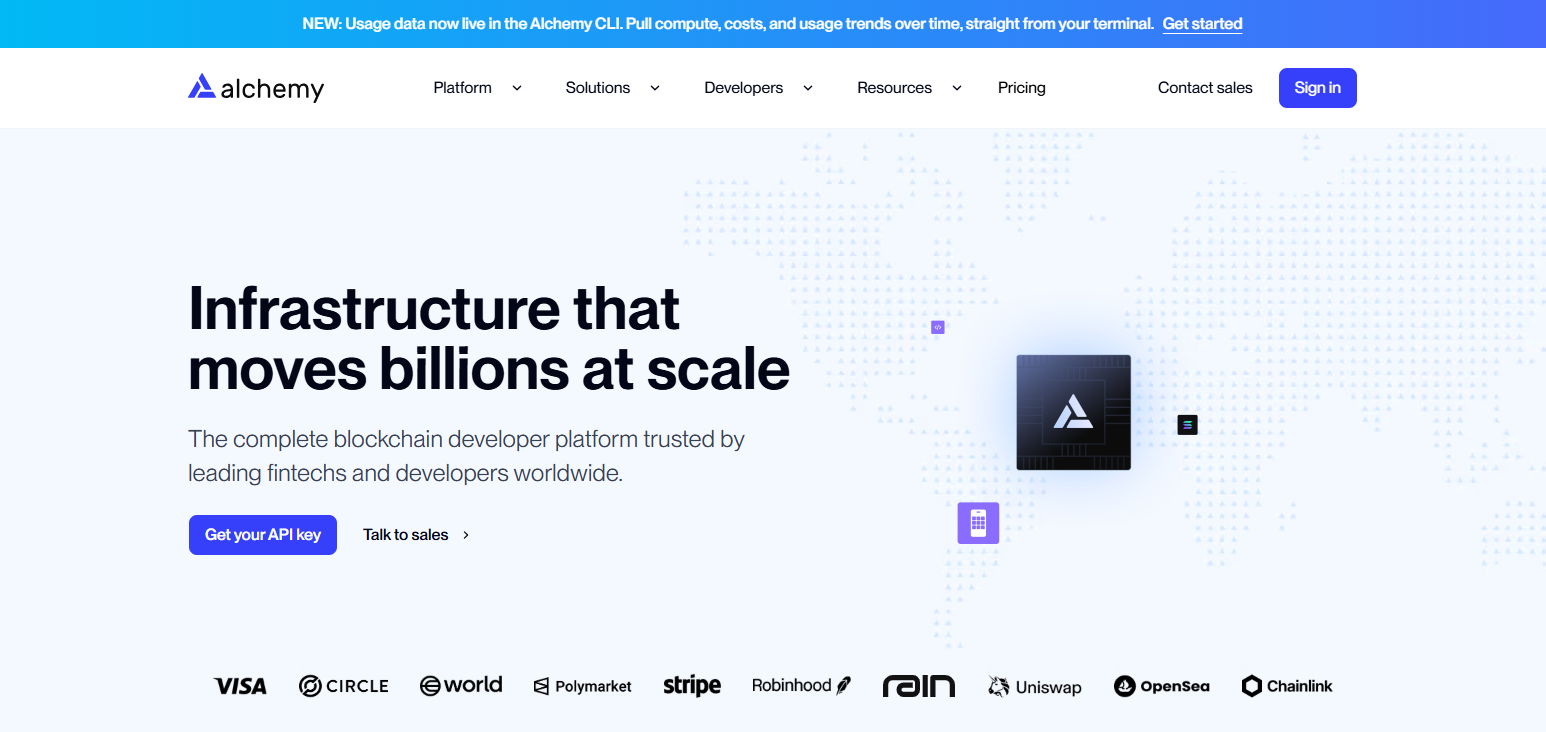
With tools such as webhooks, a developer-friendly dashboard, and improved analytics and debugging, Alchemy streamlines many aspects of developing with blockchain infrastructure.
For projects that require constant and reliable access to multiple blockchains, such as DeFi, NFT marketplaces, or cross-chain tools, Alchemy is a go-to solution.
| Pros | Cons |
|---|---|
| Highly reliable enterprise-grade blockchain infrastructure. | Premium plans can become expensive for large applications. |
| Excellent debugging and developer monitoring tools. | Some advanced analytics require paid subscriptions. |
| Supports NFT, token, and transaction APIs. | Not every blockchain receives identical feature support. |
| Fast RPC performance with high uptime. | Free-tier request limits may restrict growing projects. |
| Powerful webhook system for automation. | Enterprise onboarding may be unnecessary for small teams. |
3. QuickNode API
The flexible and modular infrastructure that the QuickNode API builds fast blockchain nodes, is a great fit for modern Web3 applications. Covering dozens of blockchain networks, the infrastructure makes it easy for developers to access and transfer data and tokens.
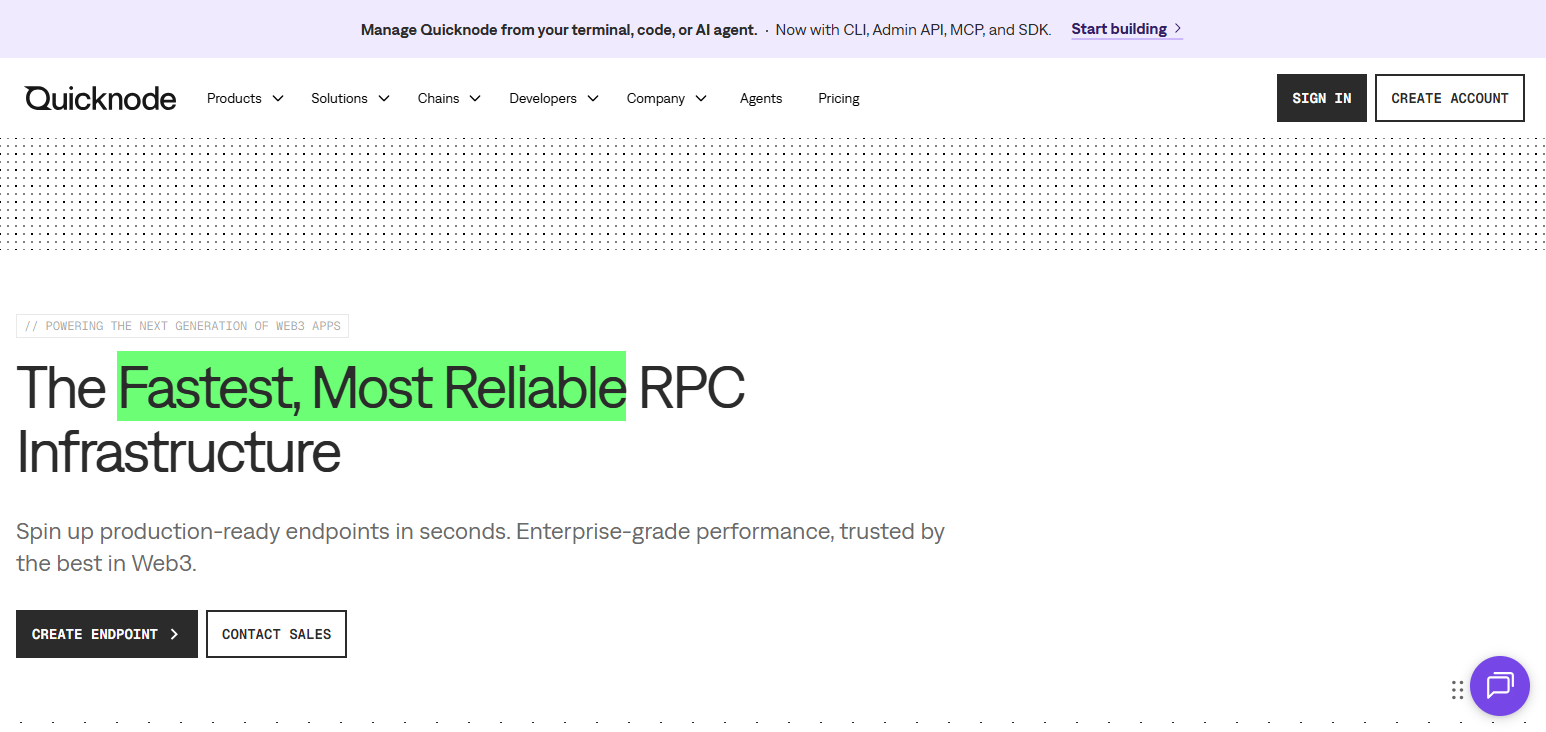
QuickNode provides great tools to maintain the integrity of applications such as powerful add-ons, real-time webhooks, and analytics and monitoring tools.
Its global infrastructure allows rapid access to multiple networks and makes it easy for enterprise applications, wallets, games, and even decentralized exchanges to efficiently fulfill blockchain requests.
| Pros | Cons |
|---|---|
| Extremely fast RPC response times. | High-performance plans cost more than entry-level competitors. |
| Supports dozens of blockchain networks. | Add-on features increase overall pricing. |
| Global infrastructure reduces latency. | Beginners may find advanced configurations challenging. |
| Real-time webhooks improve application responsiveness. | Archive node access requires premium plans. |
| Easy node deployment without infrastructure management. | Heavy workloads can exceed free usage quotas. |
4. Chainbase API
Chainbase API provides structured on-chain data from many blockchain ecosystems and uses unified APIs to help developers access on-chain data such as wallet activity, transfers, tokens, NFTs, smart contracts, and events.
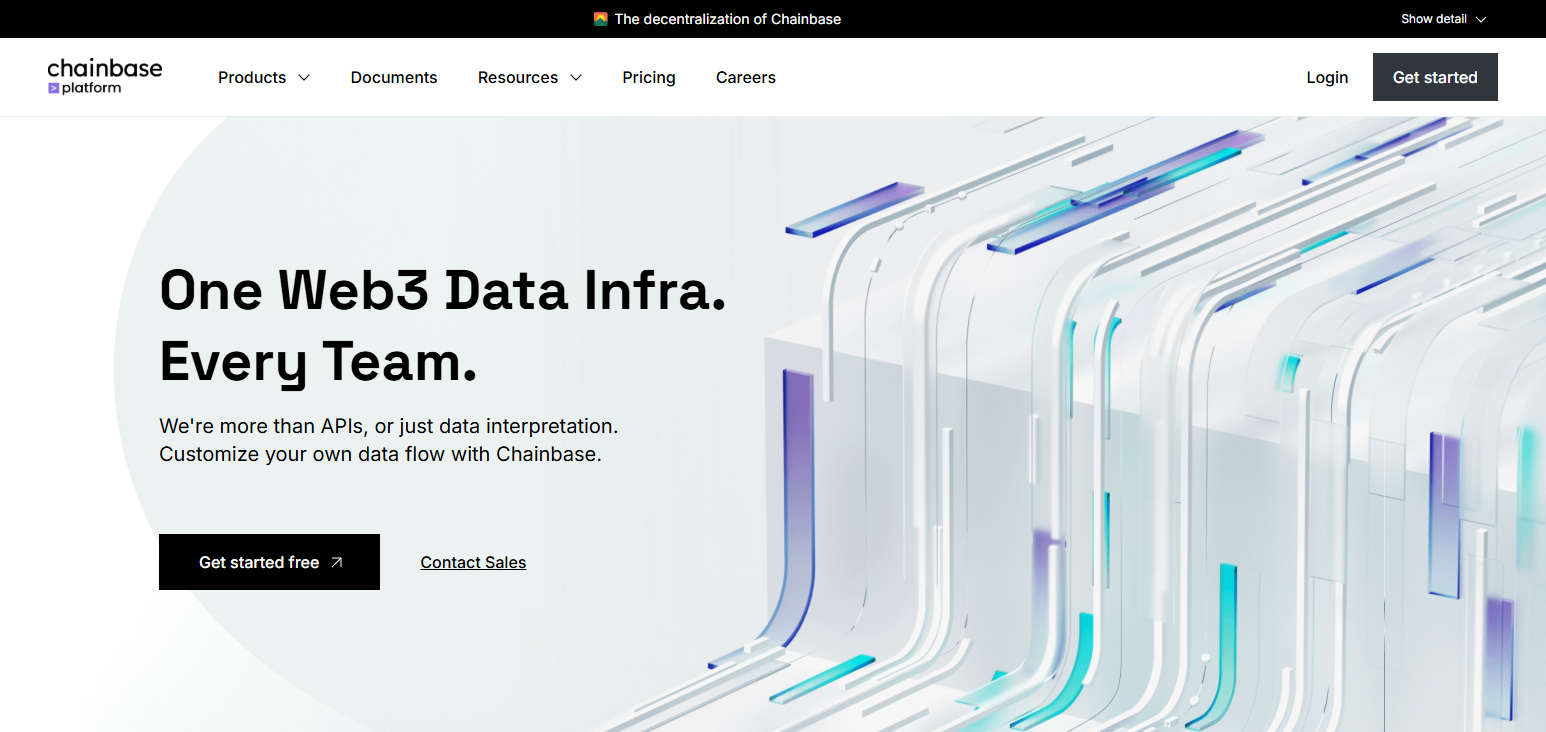
For convenience and speed, Chainbase’s indexing services eliminate the need to build and maintain blockchain databases. Chainbase is perfect for analytics platforms and AI blockchain apps, as well as DeFi dashboards and cross-chain apps that need accurate and fast data from various blockchains.
| Pros | Cons |
|---|---|
| Unified blockchain data across multiple networks. | Smaller ecosystem compared to older competitors. |
| Built-in indexing improves query performance. | Certain APIs are still expanding network support. |
| Excellent for analytics and AI applications. | Advanced enterprise capabilities require paid plans. |
| Standardized API structure simplifies integration. | Limited offline documentation for niche use cases. |
| Reduces database maintenance effort. | Fewer community tutorials than larger platforms. |
5. Covalent API
Covalent API simplifies access to comprehensive blockchain data with a unified endpoint that spans multiple blockchains. Developers can obtain transaction histories, wallet balances, tokens, NFTs, and even Decentralized Finance (DeFi) portfolios with formatted and unified responses.
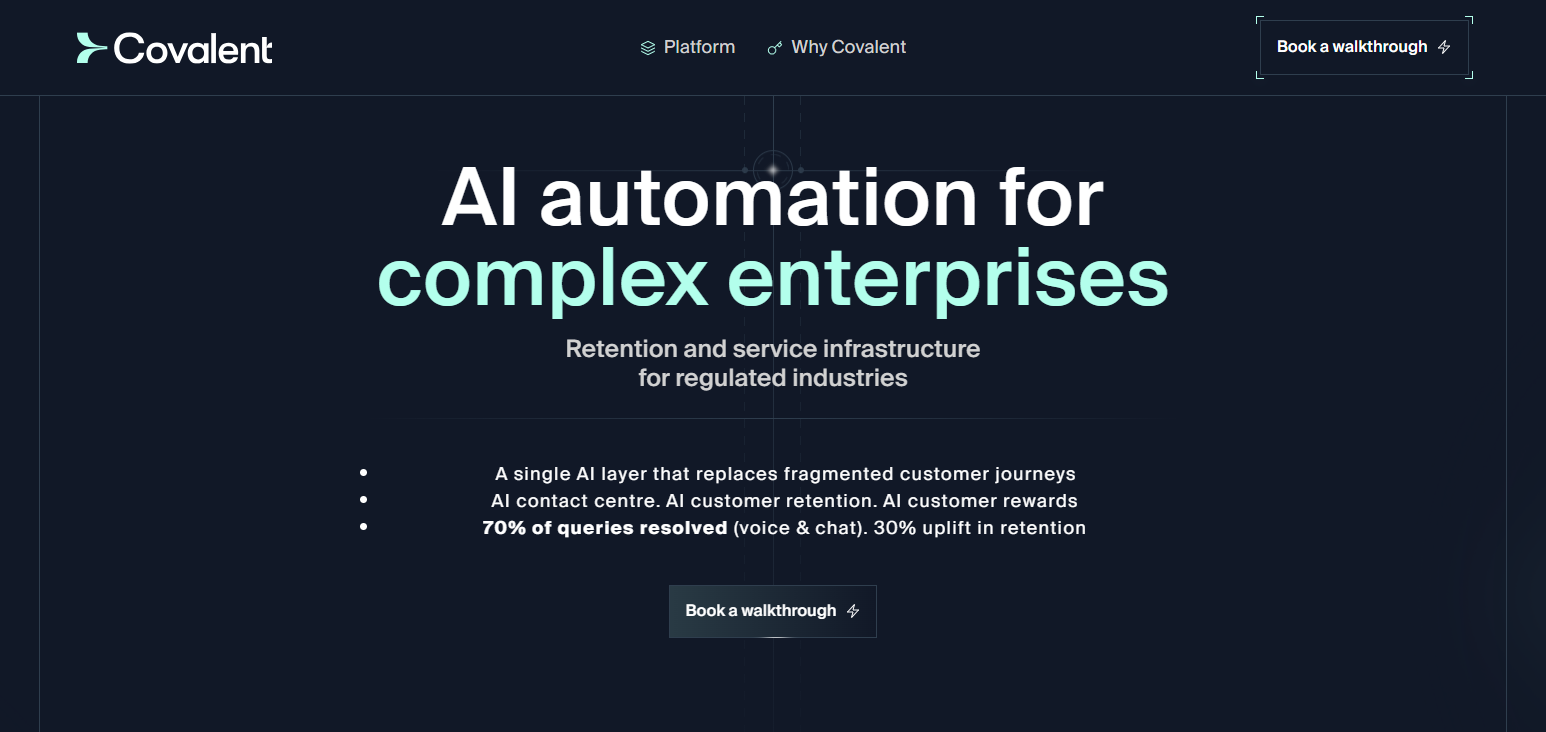
With its standard API, the development of multi-chain apps is less complicated, and less engineering work is required.
Covalent is a popular API for portfolio tracker apps, crypto tax apps, blockchain apps and analytics services and finance apps with reliable, formatted, on-demand and historic blockchain data from multiple ecosystems.
| Pros | Cons |
|---|---|
| Consistent data format across supported blockchains. | Some datasets may experience indexing delays. |
| Comprehensive historical blockchain information. | Premium usage increases operational costs. |
| Excellent for portfolio and tax applications. | Limited customization for specialized blockchain queries. |
| Easy integration using unified endpoints. | Certain newer chains receive updates later. |
| Strong multi-chain wallet and token support. | Complex enterprise needs may require additional infrastructure. |
6. Blockdaemon API
Blockdaemon API offers enterprise-grade, reliable blockchain infrastructure. It is flexible enough to cover a large number of blockchain protocols and allows developers to easily add node, staking, digital asset, and cross-chain token services.
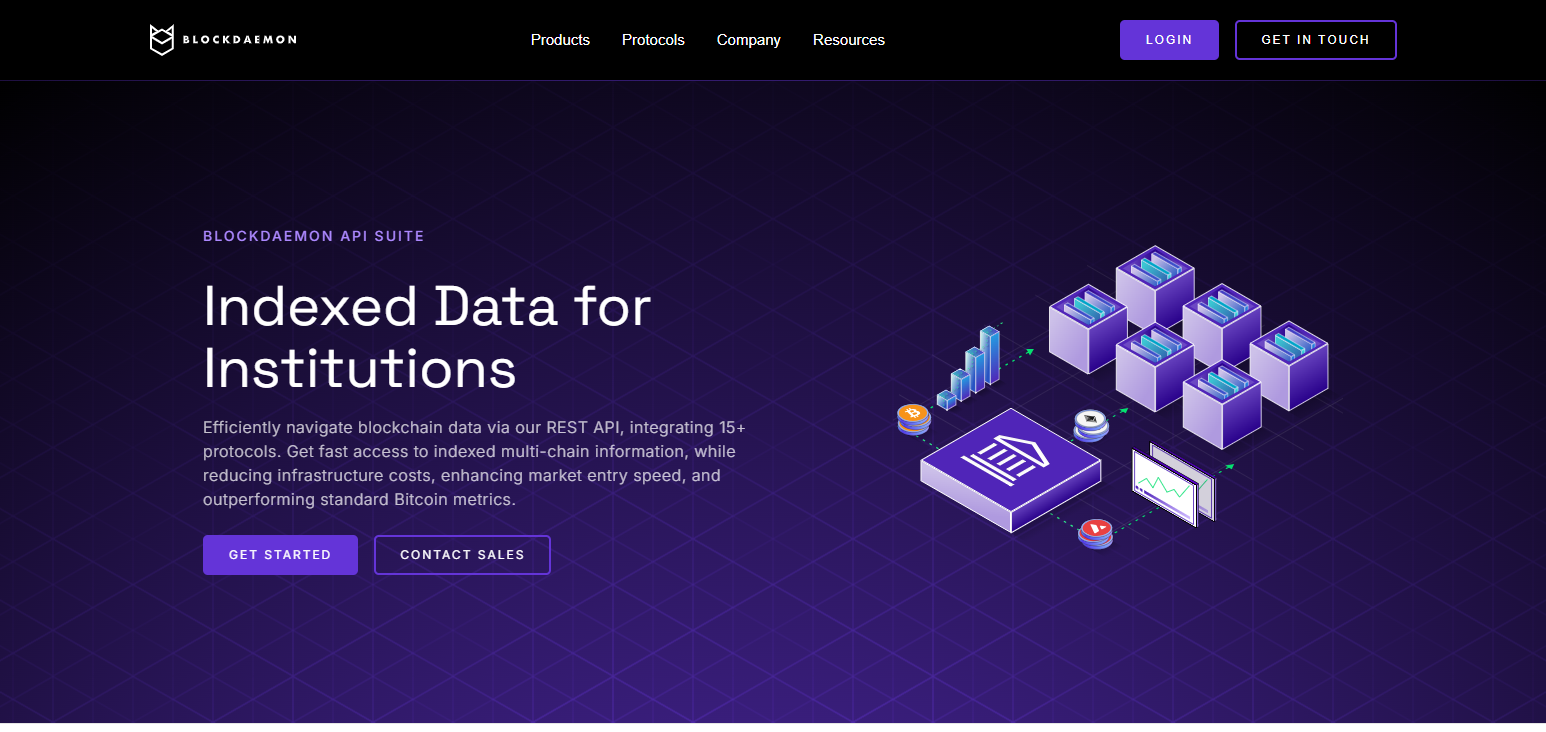
Its infrastructure allows enterprises to securely deploy blockchain services and maintain performance across multiple networks. High availability and compliance-focused architecture and support make it ideal for large blockchain enterprises and financial services.
| Pros | Cons |
|---|---|
| Enterprise-grade security and infrastructure. | Pricing targets medium and large organizations. |
| Supports staking and institutional blockchain services. | Less suitable for hobby developers. |
| High availability with reliable uptime. | Some enterprise tools require custom contracts. |
| Strong compliance-focused architecture. | Learning enterprise features may take additional time. |
| Professional technical support available. | Free developer resources are relatively limited. |
7 Tatum API
The Tatum API offers a consolidated API to interact with multiple blockchains, streamlining the development of blockchain-related services. Some of the services that one can build on top of Tatum are digital wallets, payment gateways, and digital asset management.
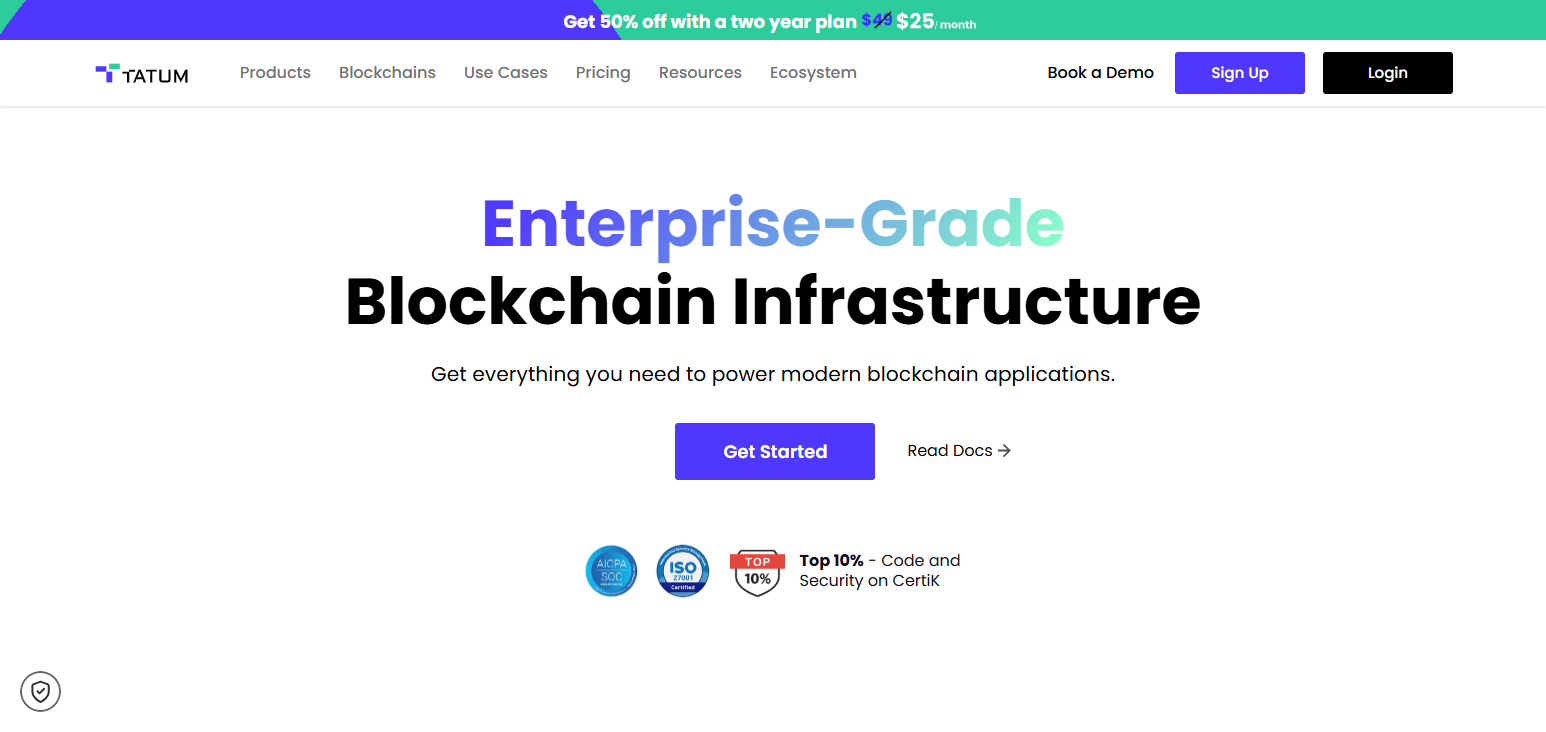
The extensive development tools that Tatum offers simplify the development of blockchain services and are likely to be one of the reasons for the popularity of Tatum. Some of the use cases of the Tatum API include payment gateways, NFT marketplaces, and financial technology applications.
| Pros | Cons |
|---|---|
| Simple API for multiple blockchain networks. | Certain advanced blockchain functions require custom implementation. |
| Quick wallet and payment integration. | API usage costs increase with higher transaction volume. |
| Supports NFTs, tokens, and smart contracts. | Some premium features require paid plans. |
| Well-documented SDKs for major languages. | Limited customization compared to self-managed nodes. |
| Ideal for startups and fintech applications. | Rate limits apply to lower subscription tiers. |
8 Bitquery API
The Bitquery API provides a unique set of tools for advanced blockchain data analytics. These tools utilize GraphQL and allow the analysis of token transfers, wallet and DEX activity, and even blockchain event and NFT queries.
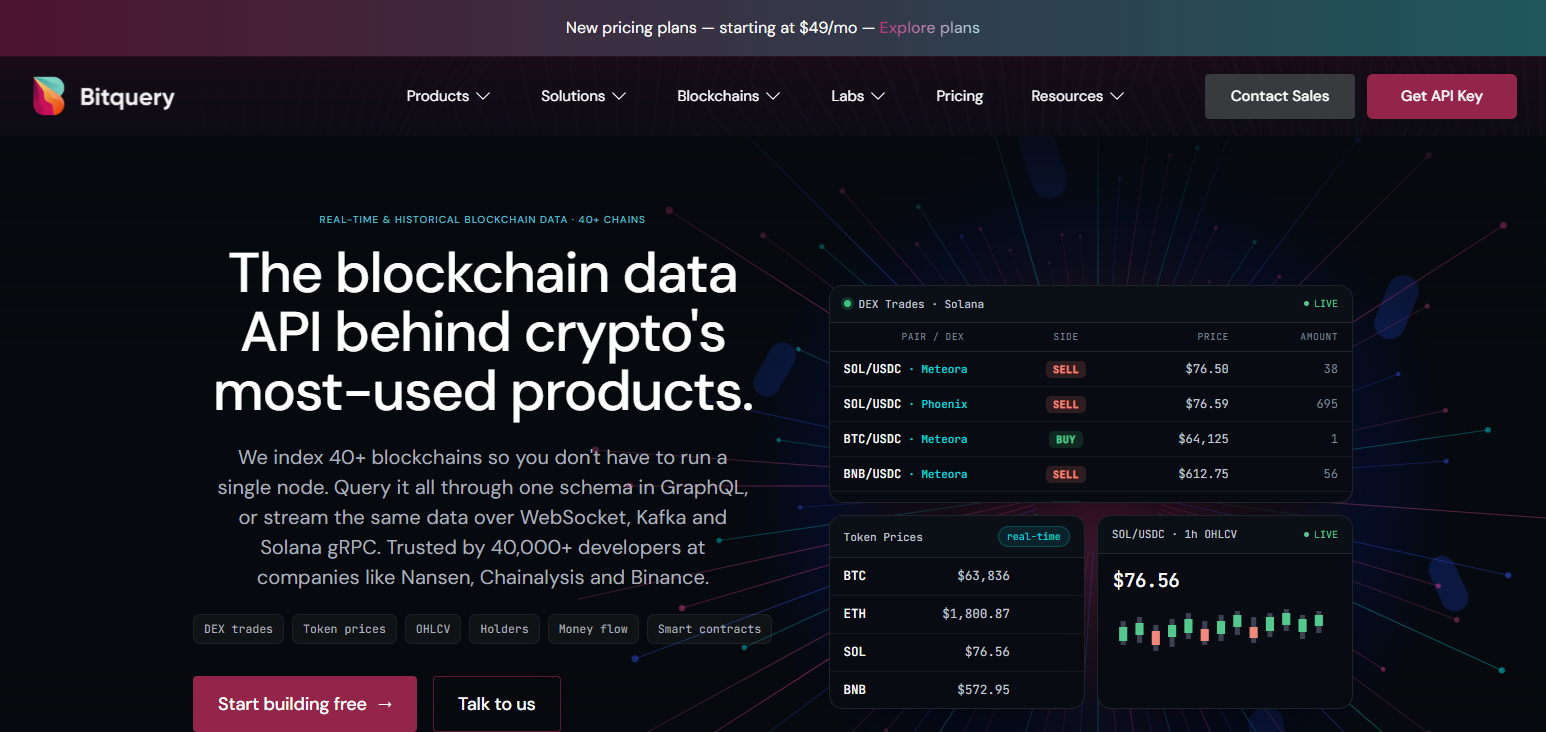
This set of tools is the most flexible and powerful analytics set available. Bitquery shines with trading dashboards, analytics and compliance monitoring in DeFi, and even monitoring the activity of multiple blockchains.
| Pros | Cons |
|---|---|
| Powerful GraphQL blockchain data queries. | GraphQL learning curve for new developers. |
| Excellent real-time blockchain analytics. | Advanced queries may consume higher API quotas. |
| Rich filtering for transaction analysis. | Premium analytics require higher-tier subscriptions. |
| Live blockchain event streaming available. | Complex queries need optimization for performance. |
| Great for compliance and trading platforms. | Not focused on blockchain node infrastructure. |
9 Chainstack API
The Chainstack API provides a completely managed service for deploying and connecting to blockchain nodes, removing operational hassles for developers. Chainstack provides reliable RPC endpoints and archive nodes across several blockchain ecosystems.
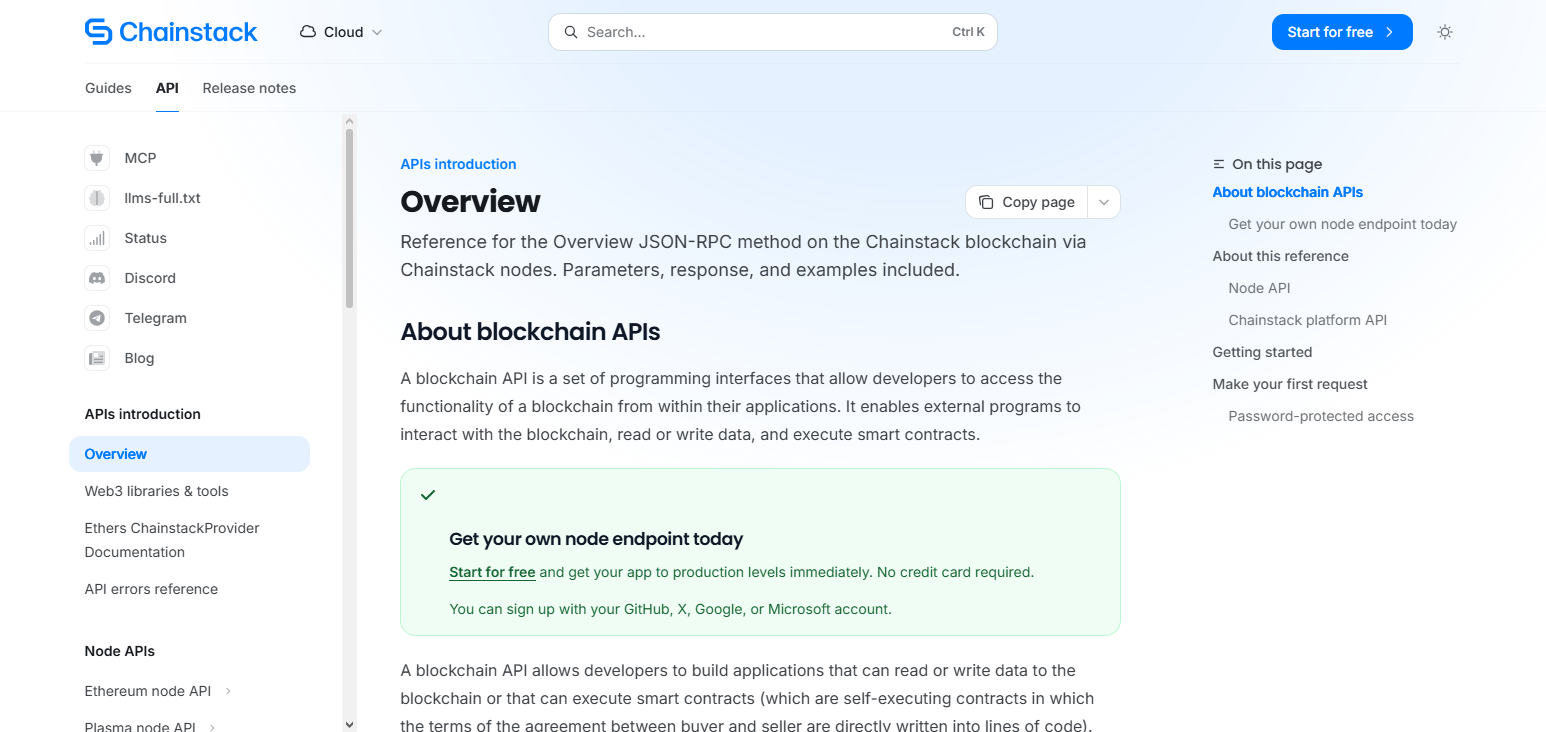
The infrastructure of Chainstack is particularly useful for building decentralized applications that require flexible and reliable scaling.
Many businesses that build on blockchain technology use Chainstack for providing secure and scalable infrastructure when cross-chain data and token transfers are required.
| Pros | Cons |
|---|---|
| Managed blockchain infrastructure with high uptime. | Premium infrastructure plans can be costly. |
| Supports archive nodes and RPC services. | Advanced deployment options require technical knowledge. |
| Easy deployment across multiple blockchains. | Free plan has limited resources. |
| Reliable global infrastructure for enterprises. | Additional services may require separate subscriptions. |
| Reduces blockchain maintenance overhead. | Fewer built-in analytics compared to specialized providers. |
10. Ankr API
Ankr API provides infrastructure for decentralized blockchain for fast, reliable access to blockchain networks through distributed RPC services. Developers get access to blockchain data, smart contract interaction, token transfers, and development of cross-chain decentralized applications, among others.
Ankr’s globally distributed infrastructure provides reduction in latency for Web3 services while improving availability. Ankr supports many blockchain ecosystems, and so has become a solid solution for developers looking to build scalable blockchain games, DeFi protocols, enterprise Web3 solutions, and wallets.
| Pros | Cons |
|---|---|
| Distributed RPC infrastructure improves reliability. | Premium request volumes require paid plans. |
| Supports many popular blockchain ecosystems. | Some advanced APIs are enterprise-focused. |
| Fast blockchain data retrieval. | Feature availability varies between supported networks. |
| Suitable for DeFi, gaming, and Web3 applications. | Documentation for niche features can be limited. |
| Easy integration with decentralized applications. | Heavy enterprise workloads may require dedicated infrastructure. |
Conclusion
In conclusion, Selecting the Best Crypto APIs for Cross-Chain Data and Token Transfers can elevate the speed, efficiency, and trustworthiness of Web3 applications.
If you need swift blockchain data, rapid token transfers, or cross-chain wallet integrations, a suitable API assists in development and lessens the intricacies.
Analyze the characteristics, costs, and the chains in use before deciding on an API that satisfies the present and anticipated needs of your initiative.
FAQ
Which API is best for beginners?
Tatum API and Moralis API are excellent choices for beginners because they offer simple documentation, SDKs, and easy integration.
Which API provides the fastest blockchain RPC services?
QuickNode API, Alchemy API, and Ankr API are known for their high-speed RPC endpoints and low-latency blockchain infrastructure.
Can these APIs retrieve NFT and wallet data?
Yes. Most leading APIs, including Moralis, Alchemy, and Covalent, provide NFT ownership, wallet balances, token holdings, and transaction history.
Are cross-chain APIs suitable for enterprise applications?
Yes. Platforms like Blockdaemon, Chainstack, and Alchemy offer enterprise-grade security, scalability, reliability, and professional support.