
This article reviews the Best Crypto APIs for AI Crypto Apps. It goes over features, pros and cons, pricing, supported blockchains, and optimal use cases for each API.
You will discover how these APIs provide market data and on-chain data in real time and how they provide the tools to develop AI Crypto Apps, Automated Trading Bots, Portfolio Trackers, and Trading Bots with Web3 Apps.
What Is a Crypto API?
A Crypto API (Cryptocurrency Application Programming Interface) is an interface that provides software developers with a programmatic way to access data and services pertaining to cryptocurrencies.
Crypto APIs serve developers by providing endpoints to access real-time pricing and historical data from the markets, wallet and transaction data, data on tokens and order books, and trading. Development of a range of applications like AI-based trading bots, trading portfolio trackers,
Web3 apps, blockchain analytics, and financial dashboards. These APIs help developers avoid the tedious and time-consuming work of pulling data from multiple exchanges and integrating the APIs themselves.
How To Choose the Best Crypto API
- Consider Use Case – Use a specific case of AI to help you select a crypto API to suit those needs.
- Identify Needed Blockchains – Look for the API that has the networks your project requires.
- Look for Detail Accuracy – Make sure the APIs give reliable and accurate crypto data.
- Look for Low Latency – Prefer low latency APIs for fast trading and AI responses.
- Assess Security – Protecting API keys and cryptography are great and secure authentication API’s are great.
Key Points & Best Crypto APIs for AI-Powered Crypto Applications
| API | Explanation |
|---|---|
| Blockchain.com API | Aggregates exchanges and blockchains, enabling AI portfolio tracking with unified cryptocurrency market data. |
| CoinGecko API | Delivers extensive cryptocurrency prices, historical market data, and generous free API access limits. |
| CoinMarketCap API | Provides global crypto market metrics, exchange analytics, and scalable investment data solutions worldwide. |
| CoinAPI | Supplies normalized tick-level trades, order books, and professional-grade cryptocurrency market data feeds. |
| Alchemy API | Powers Ethereum applications with reliable RPC infrastructure, smart wallets, and blockchain data services. |
| Glassnode | Delivers institutional on-chain analytics, entity-adjusted metrics, and advanced cryptocurrency market intelligence insights. |
| Birdeye | Tracks DEX liquidity, wallet balances, token security, and real-time blockchain activity efficiently. |
| Covalent | Unifies blockchain data, token transfers, smart contracts, and cross-chain event indexing seamlessly worldwide. |
| Binance API | Enables low-latency trading, deep liquidity access, and real-time cryptocurrency market streaming services. |
| ChangeNOW API | Supports cross-chain swaps, thousands of asset pairs, and aggregated cryptocurrency liquidity sources globally. |
10 Best Crypto APIs for AI-Powered Crypto Applications
1. Blockchain.com API
The Blockchain.com API provides developers building AI-integrated crypto apps that need reliable blockchain data and wallet functionality an excellent option. It offers REST APIs with access to crypto transactions, addresses, market data, and more payment services.
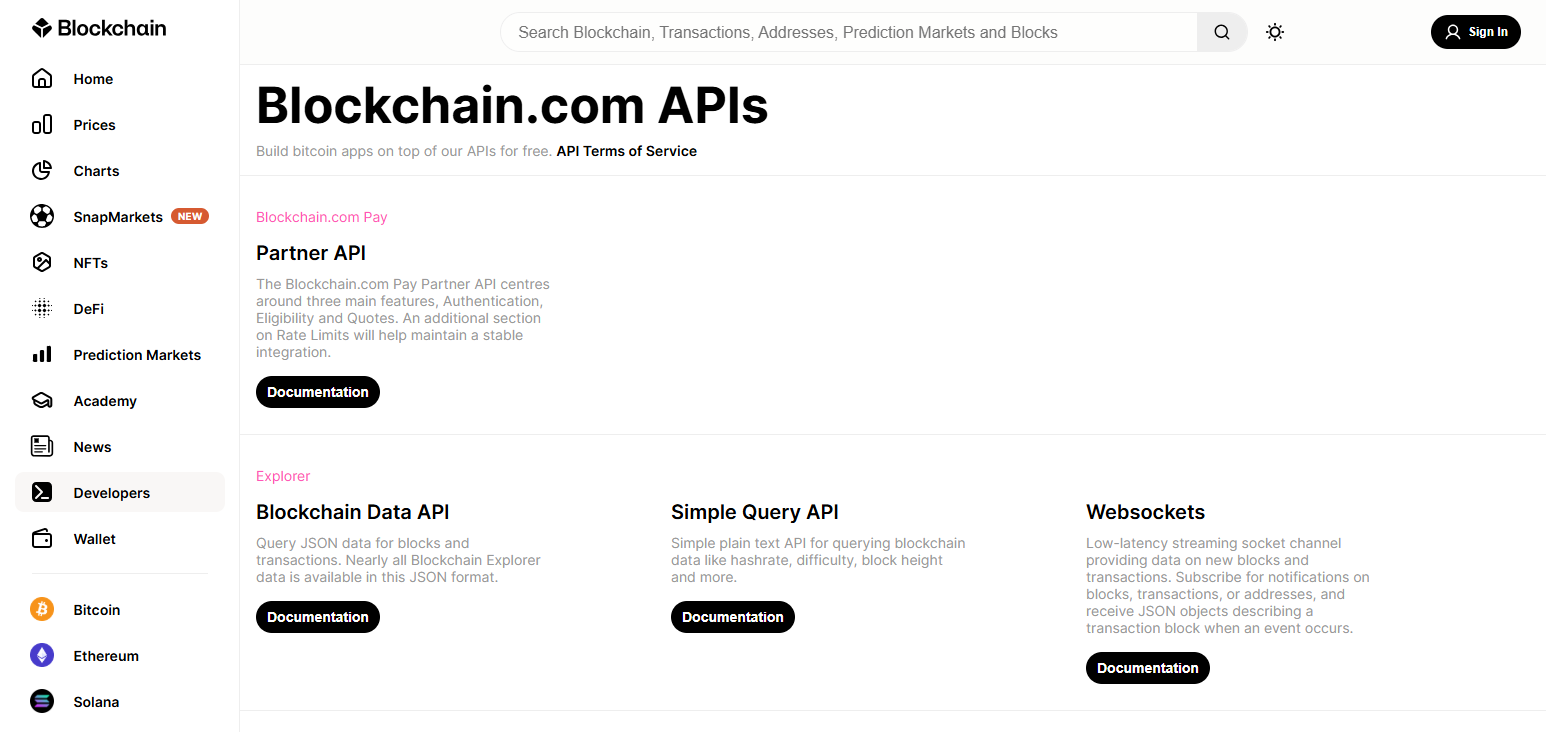
AI apps can utilize this data for fraud detection and tracking, analyzing transactions, and even creating automated financial tips and insight for your users. With scalable and secure infrastructure and extensive blockchain data, the Blockchain.com API is an incredible option.
| Pros | Cons |
|---|---|
| Aggregates data from 200+ exchanges and 120+ blockchains. | Premium plans required for higher API usage limits. |
| Excellent for AI portfolio tracking and crypto dashboards. | Advanced analytics features are limited compared to specialized providers. |
| Unified API reduces multiple exchange integrations. | Historical datasets may require paid subscriptions. |
| Real-time wallet and asset tracking capabilities. | Some niche blockchain networks receive updates later. |
| Easy integration with modern Web3 applications. | Enterprise features can be costly for small developers. |
2. CoinGecko API
The CoinGecko API is user-friendly and has a great free tier, making it one of the best crypto data APIs. It has data on over 17,000 cryptocurrencies and numerous exchanges, and provides data on live prices, historical charts, trading volumes, market caps, and token metadata.
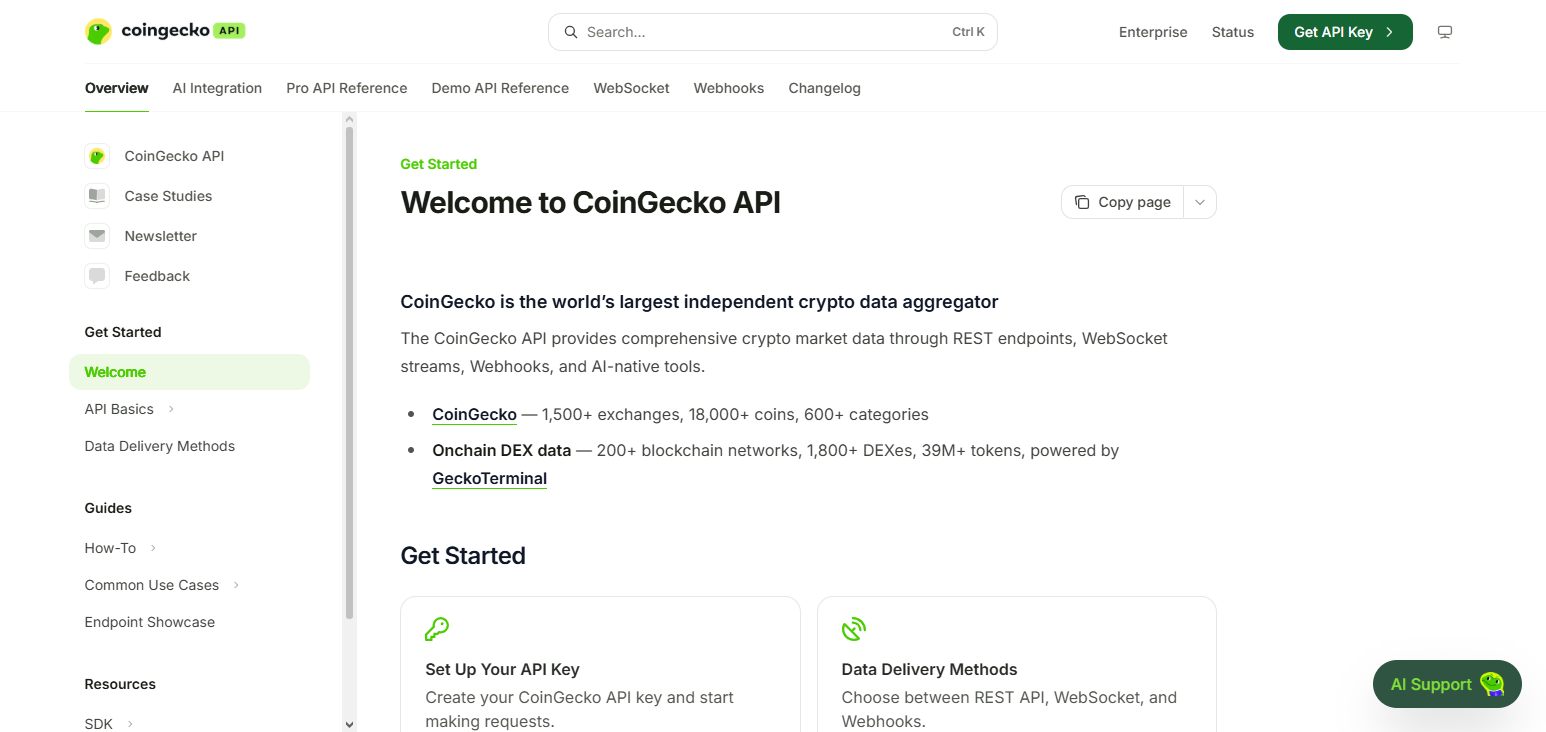
This data can be leveraged in many AI crypto apps for investing insights, market sentiment analysis, and even trend predictions, among many other uses.
The CoinGecko API is an excellent choice for informative and adaptive dashboards, due to its impressive coverage and rapid updates. It is a fantastic option for enterprises, educators, and researchers.
| Pros | Cons |
|---|---|
| Generous free tier for startups and developers. | Free plan has strict rate limits. |
| Supports over 17,000 cryptocurrencies worldwide. | No direct trading or order execution features. |
| Provides historical prices and market statistics. | Premium API needed for higher performance. |
| Frequently updated cryptocurrency database. | Some exchange-specific data may have slight delays. |
| Comprehensive token metadata and market information. | Advanced institutional analytics are limited. |
3. CoinMarketCap API
For a trusted source of global cryptocurrency market data, CoinMarketCap API enables businesses, fintech, and institutional investors to access real-time data ingestion. CoinMarketCap API provides pricing, trading pair data, exchange rankings, liquidity data, historical data, market cap data, and global crypto stats.
Many AI applications use CoinMarketCap API data for automated market analysis, portfolio rebalancing, risk assessment, and trading strategies.
The global coverage of these datasets allows developers to design crypto investment platforms, research tools, and financial analytic tools to scale and serve retail and professional investors.
| Pros | Cons |
|---|---|
| Trusted global cryptocurrency market data source. | Premium plans can be expensive. |
| Extensive exchange rankings and liquidity metrics. | Rate limits on lower-tier subscriptions. |
| Excellent documentation for developers. | Focuses more on market data than blockchain analytics. |
| Reliable historical cryptocurrency information. | Limited on-chain analytics capabilities. |
| Suitable for enterprise AI investment platforms. | Advanced features require higher-priced plans. |
4. CoinAPI
CoinAPI caters to developers needing fast, high-quality, and accurate crypto market data for institutional clients. CoinAPI captures and normalizes tick-level data, trade data, order books, and the rest of the continuum for 400+ global exchanges.
AI trading bots, as well as quantitative and algorithmic trading, appreciate the framed data architecture and low latency of data delivery.
CoinAPI maintains a high-performance industrial standard for the intermittent financial services it provides, enabling machine learning to track and analyze high granularity trading patterns and even spot potentially lucrative opportunities with more precision than ever.
| Pros | Cons |
|---|---|
| Institutional-grade market data accuracy. | Higher pricing than many competitors. |
| Normalized data from over 400 exchanges. | Not ideal for beginners with limited budgets. |
| Tick-level trades and complete order books. | Focuses primarily on trading data. |
| Very low-latency market data delivery. | Limited DeFi analytics compared to specialized APIs. |
| Excellent for quantitative trading systems. | Complex datasets require experienced developers. |
5. Alchemy API
Alchemy API is a top provider for blockchain infrastructure, particularly for Ethereum and EVM-compatible networks. Offers great RPC endpoint access, blockchain indexing, NFT services, smart wallet integration, transaction monitoring, and developer analytics.
AI-powered crypto applications utilize Alchemy for easy retrieval of on-chain data to streamline infrastructure. Their design is easily adaptable for use with DAOs and decentralized applications,
As well as intelligent blockchain assistants, automated smart contract monitoring, and Web3 products. With its advanced developer tools and enterprise-grade reliability, Alchemy is the go-to solution for blockchain systems.
| Pros | Cons |
|---|---|
| Industry-leading Ethereum infrastructure provider. | Primarily focused on Ethereum ecosystems. |
| Reliable RPC endpoints with excellent uptime. | Premium features require paid subscriptions. |
| Supports NFTs, smart wallets, and indexing. | Limited support for some non-EVM blockchains. |
| Developer-friendly SDKs and documentation. | Heavy API usage increases monthly costs. |
| Highly scalable for enterprise Web3 projects. | Infrastructure complexity may overwhelm beginners. |
6. Glassnode
Glassnode makes on-chain analytics easy for AI systems to grasp blockchain behavior beyond price action. Their platform offers a data-rich yet easy to read view of wallet activity, exchange inflows, profits and losses, network activity, long-term holders, and many more entity-adjusted metrics.
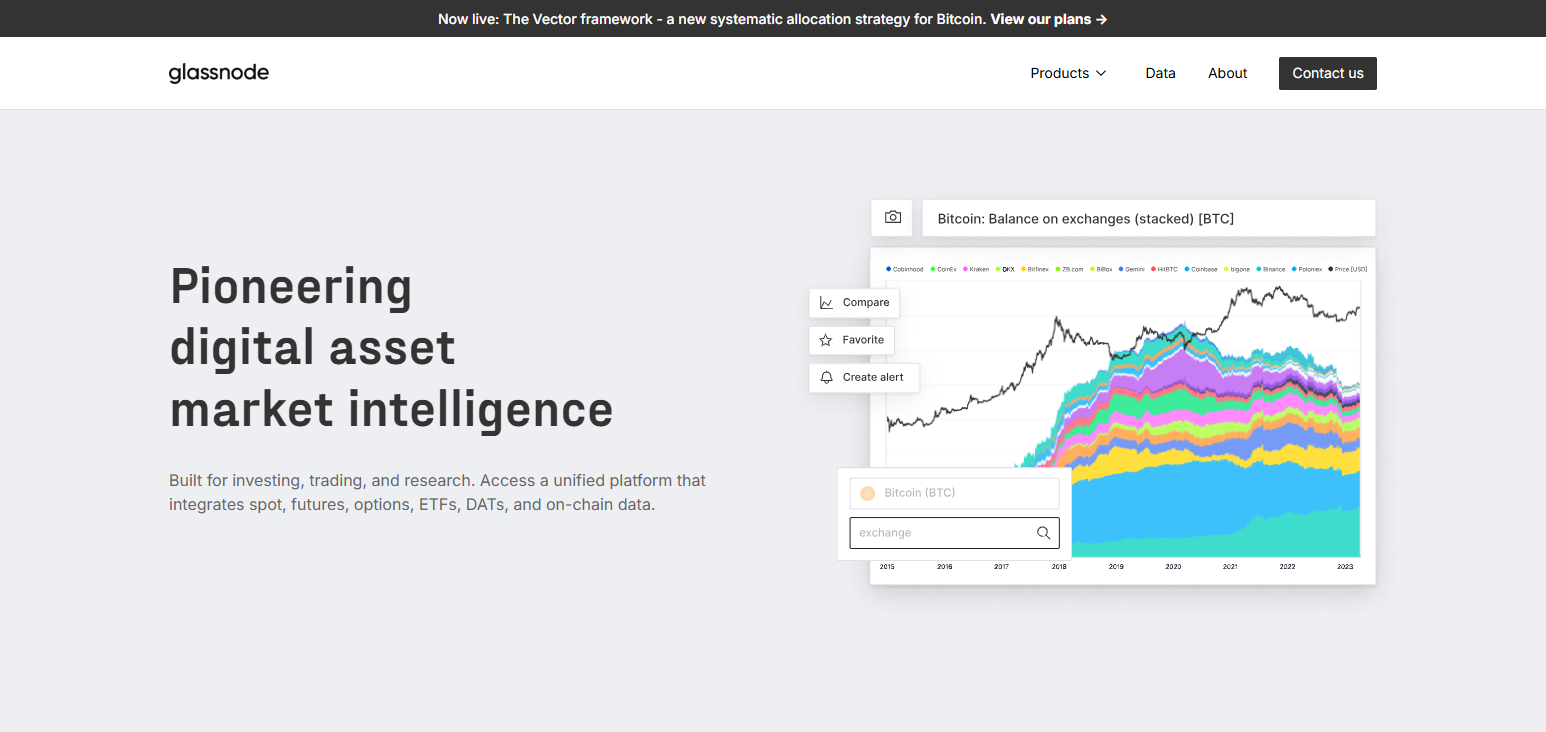
AI models can analyze these metrics to identify new patterns in behavior to evaluate market sentiments and even predict price action.
Glassnode’s multitude of data allows hedge funds, research firms, financial institutions, and top tier crypto investors to make confident investments.
| Pros | Cons |
|---|---|
| Institutional-quality on-chain analytics. | Expensive for individual developers. |
| Advanced blockchain behavior metrics. | Limited free access to premium datasets. |
| Excellent for AI market prediction models. | Focuses on analytics instead of transaction services. |
| Trusted by professional investors and researchers. | Learning curve for interpreting advanced metrics. |
| Entity-adjusted blockchain insights available. | Not designed for trading execution. |
7. Birdeye
Designed to cater to the needs of decentralized finance and real-time multi-ecosystem blockchain intelligence, Birdeye’s API collects and distributes a variety of information relevant to DEX and liquidity pools, the security of tokens, wallet balances, histories of transactions, and newly created tokens.

An array of AI crypto platforms utilizes Birdeye to discover popular tokens, track liquidity fluctuations, and token activity. Its data delivery velocity and DeFi breadth make Birdeye a top choice for AI trading bots, blockchain DEXs, and Web3 research platforms.
| Pros | Cons |
|---|---|
| Excellent real-time DEX market coverage. | Stronger support for DeFi than centralized exchanges. |
| Tracks liquidity pools and wallet balances. | Historical datasets are less extensive. |
| Token security monitoring capabilities. | Premium access needed for advanced features. |
| Fast updates for newly launched tokens. | Limited institutional research tools. |
| Ideal for AI-powered DeFi applications. | Smaller ecosystem than older competitors. |
8. Covalent
Covalent’s API is a blockchain data document that saves developers time by simplifying requests. Covalent combines the masses of data a developer may need into singular, consistent API calls. These mass data requests may include wallet balances, token transfers, NFTs, smart contracts, and more.
The API removes the need for developers to create custom integrations for each blockchain. Covalent enables the cross-chain analysis necessary for highly sophisticated systems such as advanced analytics, automated compliance, intelligent portfolio systems, and DeFi.
| Pros | Cons |
|---|---|
| Unified API across numerous blockchains. | Some blockchain updates may experience delays. |
| Simplifies cross-chain application development. | Enterprise plans can become expensive. |
| Supports NFTs, wallets, and smart contracts. | Advanced indexing features require premium access. |
| Consistent API response format. | Real-time streaming is less comprehensive. |
| Reduces blockchain integration complexity. | Limited trading-specific market data. |
9. Binance API
The Binance API gives traders the ability to buy and sell cryptocurrencies. It enables real time access to market prices. Traders can use the API to submit orders and perform account management.
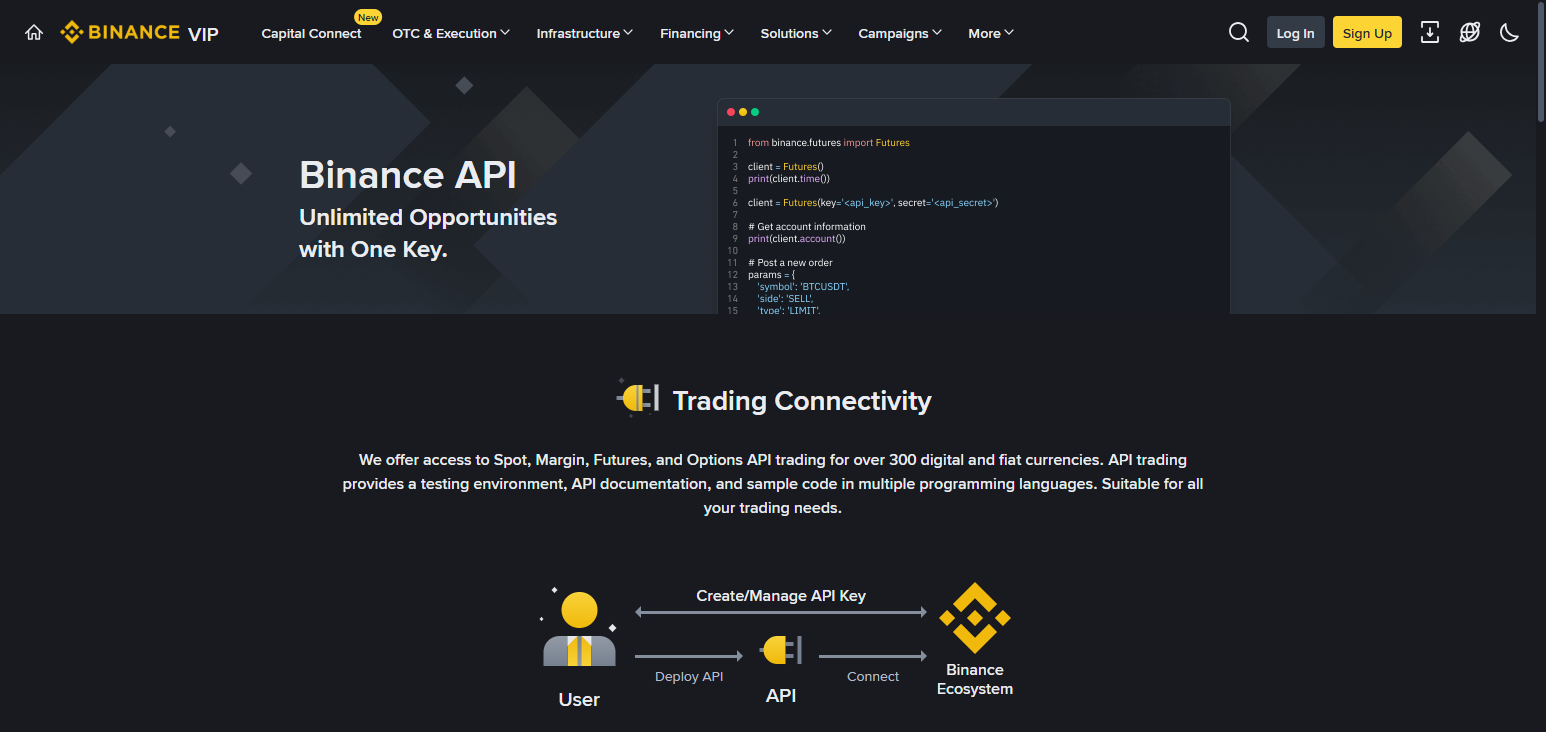
The Binance API reduces latency, making it preferred among advanced traders to implement automated trading strategies. The Binance API is a robust trading solution for institutional clients because of its deep liquidity, high volume trading, and active asset offerings.
| Pros | Cons |
|---|---|
| Deep liquidity for cryptocurrency trading. | Availability varies by regional regulations. |
| High-speed WebSocket market streams. | Exchange-specific API only. |
| Supports automated algorithmic trading. | Requires exchange account authentication. |
| Comprehensive trading and account endpoints. | API limits apply during heavy usage. |
| Large selection of tradable digital assets. | Centralized exchange dependency. |
10. ChangeNOW API
With the ChangeNOW API, developers can add instant cryptocurrency exchange to AI applications without building a centralized exchange. It is an excellent solution for Web3 applications, with asset swaps, numerous crypto pairs, and cross-chain swaps combined with other services.
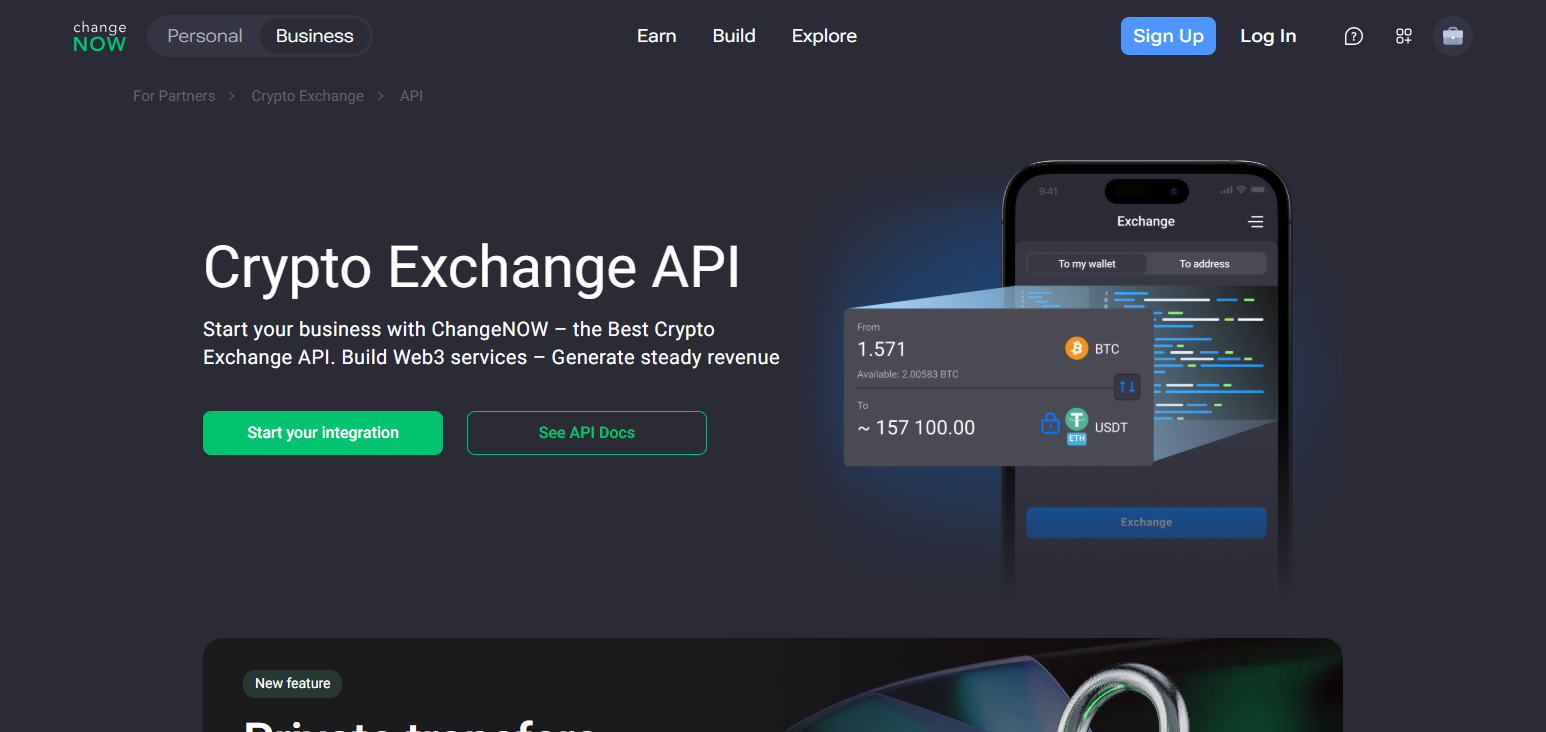
The API supports liquid swaps with multiple rates and a non custodial approach. Financial assistants powered by AI can automate the crypto swaps, manage cross-chain assets, and even suggest the best routes to perform a swap.
| Pros | Cons |
|---|---|
| Supports thousands of cryptocurrency pairs. | Exchange rates fluctuate during volatile markets. |
| Easy integration for instant crypto swaps. | Limited advanced trading functionality. |
| Non-custodial exchange infrastructure. | Some assets have minimum swap requirements. |
| Cross-chain asset conversion supported. | Transaction processing depends on network congestion. |
| Aggregates liquidity from multiple providers. | Less suitable for professional algorithmic trading. |
Cocnlsuion
In conclusion, the top crypto APIs supporting AI-powered crypto apps offer real-time data, blockchain connectivity, and the scalability necessary for the development of intelligent trading bots, portfolio trackers, and Web3 apps.
APIs that offer market data, on-chain data, and cross-chain analytics each have their unique place based on the objectives and budget of the project.
With a good vendor, developers are allowed to design faster, smarter, and more secure AI cryptocurrency apps that are ready for the blockchain innovations of the future.
FAQ
What is a Crypto API?
A Crypto API is a service that provides developers with access to cryptocurrency market data, blockchain information, and trading features.
Which is the best Crypto API for AI-powered applications?
The best API depends on your needs. CoinStats, CoinGecko, Alchemy, and CoinAPI are popular choices for AI-powered crypto applications.
Are free Crypto APIs available?
Yes. APIs like CoinGecko offer free plans with useful features, though they include rate limits.
Can AI trading bots use Crypto APIs?
Yes. AI trading bots use Crypto APIs to access live prices, market trends, order books, and execute automated trades.