I will discuss the AI Contract Lifecycle Management Tools Accelerating Legal Ops. Here, I will examine the ways in which AI is used to improve contract creation, review, negotiation, compliance, and management.
These sophisticated tools equip legal teams to automate mundane, repetitive tasks, all while reducing risks, and facilitating collaboration.
Legal teams are able to gain contract insights that are valuable. Organizations today are using AI driven CLM to support the use of a more efficient and effective approach to modern legal operations.
What are AI Contract Lifecycle Management Tools?
AI CLM tools leverage AI to enhance contract lifecycle automation and management. Businesses can draft, analyze, negotiate, authorize, archive, and assess their agreements with the aid of these tools.
AI CLM tools conduct clause extraction, identify risks, analyze contracts, and assess compliance. AI CLM tools reduce manual work, streamline and simplify workflows, and enable the legal teams to assess contracts with minimized risks and increased precision.
Key Points & AI Contract Lifecycle Management Tools Accelerating Legal Ops
| Platform | Key Point |
|---|---|
| Sirion | AI-native platform manages enterprise risks, obligations, and complex high-value agreements continuously. |
| Ironclad | Visual contract platform uses AI extraction, workflows, Slack, and Salesforce integrations. |
| LinkSquares | LinkAI provides agreement analytics, extraction, and post-signature insights for legal teams. |
| SpotDraft | Legal-focused platform enables collaborative drafting, redlining, and contract finalization efficiently. |
| Evisort | AI extracts data, discovers contracts, classifies documents, and identifies legal risks. |
| Agiloft | No-code platform creates customized workflows with compliance and obligation tracking. |
| DocuSign CLM | Combines e-signatures with contract creation, routing, approvals, and lifecycle management. |
| Spellbook | Microsoft Word AI assistant detects clauses, drafts contracts, and suggests redlines. |
| Juro | Browser-based platform combines collaboration, risk analysis, and AI-powered contract reviews. |
| Icertis | Enterprise platform manages global contracts using AI risk modeling and obligations. |
10 AI Contract Lifecycle Management Tools Accelerating Legal Ops
1. Sirion
Sirion is an AI-centric contract lifecycle management tool for large enterprises with complicated supplier and commercial agreements. With AI built in, Sirion tracks obligations, risks, and commitments during the life of a contract.
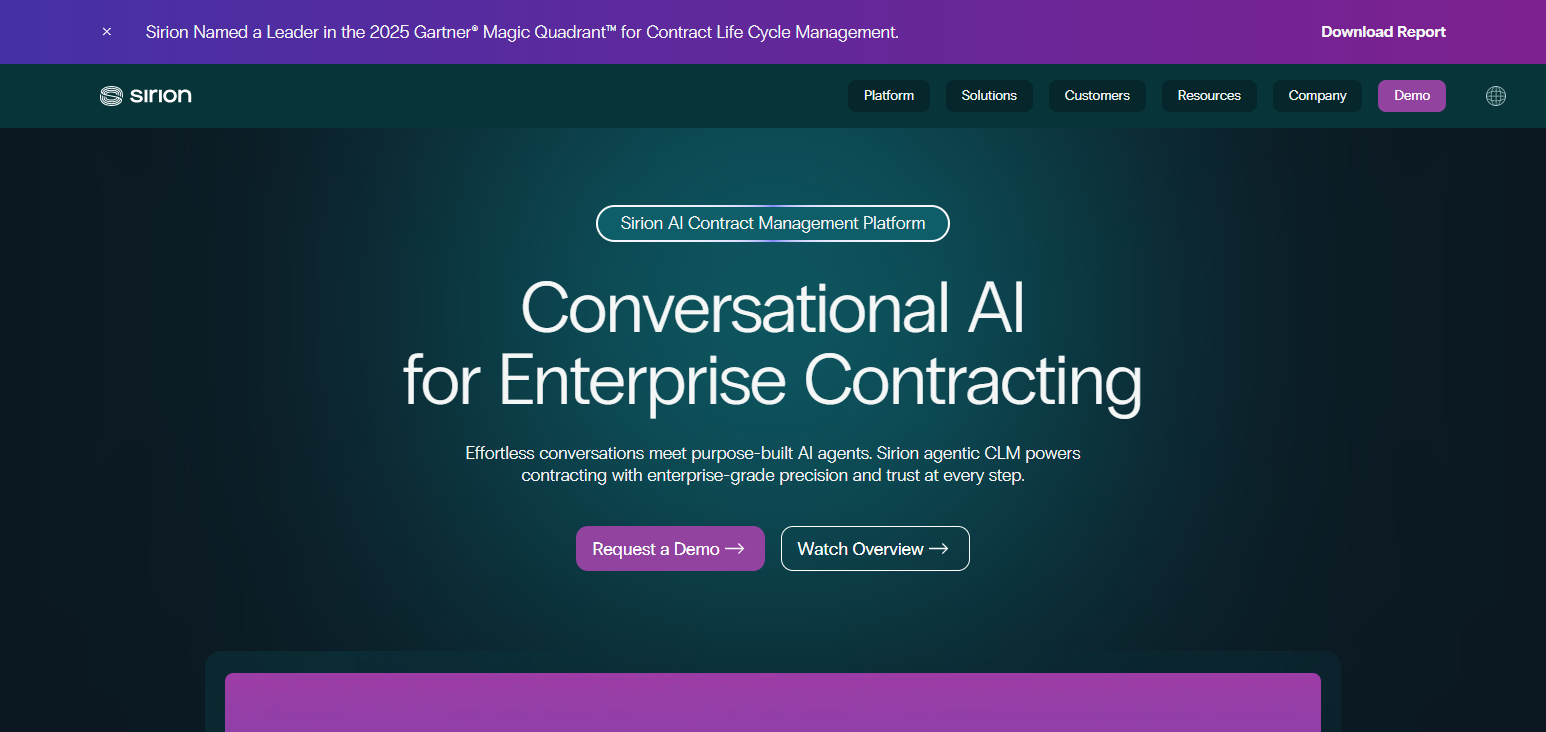
Sirion helps legal and procurement teams identify gaps in compliance, automate contract intelligence, and enhance governance oversight. With the ability to analyze data in real-time, Sirion helps enterprises manage contracts and make decisions proactively, not reactively.
Sirion Features
- AI-Driven Obligation Management: Automatically manages the tracking of contract obligations, due dates, risks, and supplier obligations.
- Contract Intelligence Analytics: Transforms contracts into insights using sophisticated, AI-based analytics.
- Supplier Risk Management: Assists organizations in identifying supplier performance and compliance risks proactively.
- Dynamic Contract Visibility: Centralized dashboards to monitor the health of contracts and the desired business impacts.
- Enterprise Agreement Capability: Effectively manages high value, complex, global contracts.
| Pros | Cons |
|---|---|
| Advanced AI monitors obligations and contract risks continuously. | May require longer implementation for complex enterprises. |
| Strong supplier and procurement contract management capabilities. | Pricing can be high for smaller organizations. |
| Provides real-time analytics for better decision-making. | Advanced features may need user training. |
| Improves compliance tracking and vendor governance. | Less suitable for simple contract requirements. |
| Handles large-scale enterprise agreements effectively. | Customization may increase setup complexity. |
2. Ironclad
Ironclad is a contract lifecycle management tool with a built-in AI system to enhance cooperation and interactivity among legal, sales, procurement, and business teams. With a design driven by a visual approach, Ironclad streamlines the creation, negotiation, approval, and automation processes of workflows.
Ironclad’s built in systems of AI capture and clause extraction help streamline and elevate the quality of reviews and analysis of contracts.

Thanks to the integrations within Ironclad to various platforms used throughout business operations, Ironclad helps companies eliminate obstacles in the contracting process and improve both the speed and accessibility of contract management.
Ironclad Features
- Contract Workflow Visuals: Simplifies the design and management of contract workflows.
- Clause Capture via AI: Identifies contract terms and clauses, and related legal information.
- Business Integration: Integrations with Salesforce, Slack, and other business systems.
- Workflow Automation: Flexible routing and automated workflows to eliminate bottlenecks.
- Negotiation Contract Workspace: Allows the negotiation of contracts by business and legal teams.
| Pros | Cons |
|---|---|
| User-friendly interface simplifies contract workflows. | Premium pricing may challenge small businesses. |
| Excellent collaboration between legal and business teams. | Some advanced features require additional configuration. |
| Strong AI-powered clause extraction and automation. | Learning curve exists for new administrators. |
| Integrates with Salesforce, Slack, and enterprise tools. | Limited flexibility compared with highly customizable platforms. |
| Reduces contract approval and negotiation time. | Complex workflows may need expert support. |
3. LinkSquares
LinkSquares’s contract management solutions use AI to review contracts post-signature and are aimed at supporting in-house legal teams. Using its proprietary technology, the platform offers automated contract data, key term isolation, and analytics.
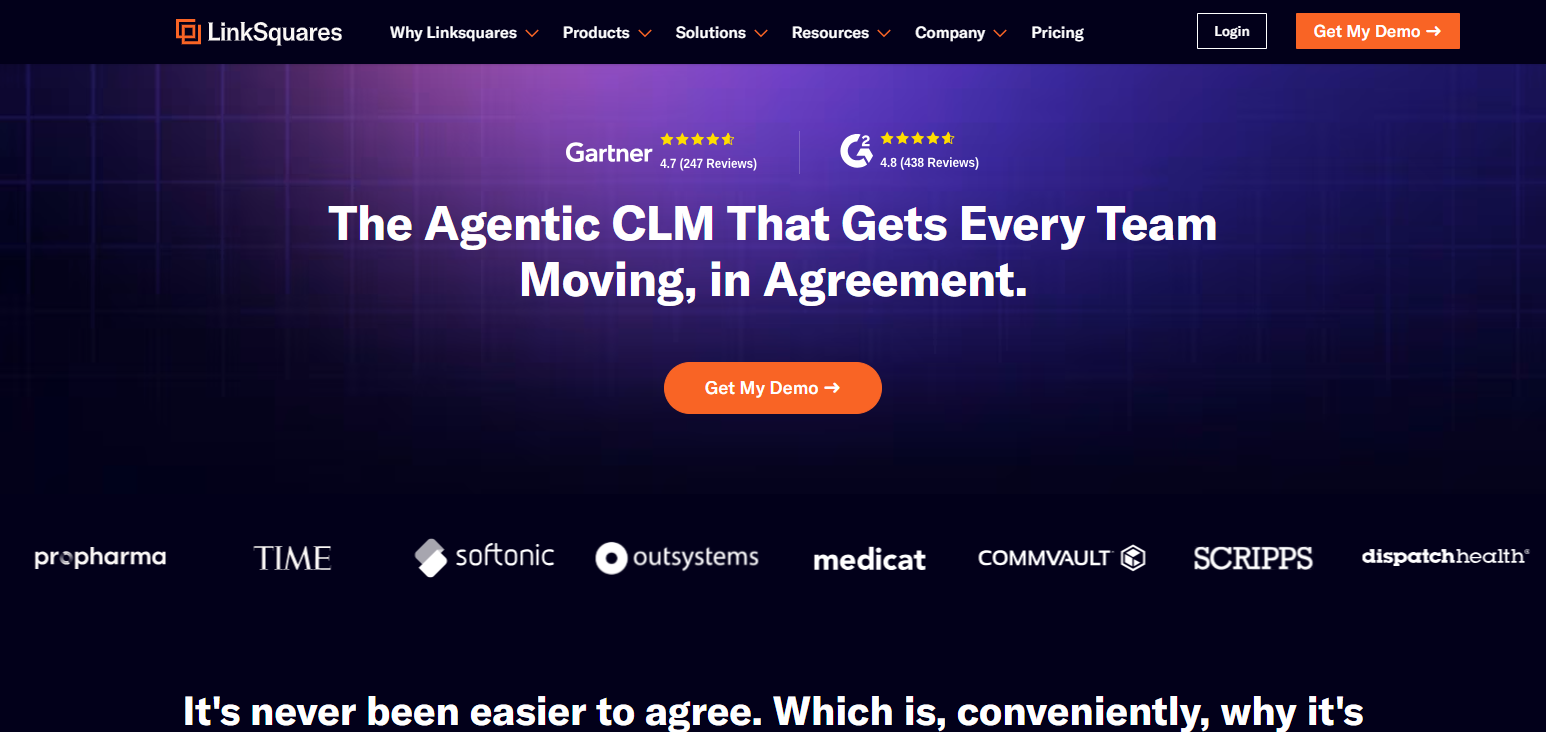
Legal teams can evaluate contracts, understand obligations, and improve choices with the help of its strong document intelligence. Highly user centric, LinkSquares prioritizes the framing of contracts as data points for the organization and drastically reduces the time needed for reviews.
LinkSquares Features
- LinkAI Contract Review: Contract review and data analysis conducted through proprietary AI.
- Intelligence After Signing: Analyzes signed contracts and provides legal insights.
- Search Contract Provisions: Efficiently locate key provisions within large contract databases.
- Contract Data Automation: Dates, obligations, clauses, and renewal provisions automatically extracted.
- Optimize Legal Operations: Reduces the manual review of contracts by in-house legal teams.
| Pros | Cons |
|---|---|
| Powerful AI analytics improve contract visibility. | Primarily focused on legal teams rather than procurement. |
| Efficient contract search and data extraction features. | Advanced analytics may require premium plans. |
| Helps manage post-signature agreement insights. | Less suitable for highly customized workflows. |
| Easy adoption for in-house legal departments. | Integration options may be limited compared with competitors. |
| Reduces manual contract review efforts significantly. | Large enterprises may need additional customization. |
4. SpotDraft
SpotDraft is a contract lifecycle management system designed to integrate AI into corporate legal operations. Its straightforward interface helps legal and business teams draft, negotiate, edit, and approve contracts simultaneously.

SpotDraft uses automated workflows, contract modeling, and AI-based review. For developing companies, SpotDraft’s efficiency supports the speed of business while promoting inter-departmental collaboration and reducing the need for long, complex legal operations.
SpotDraft Features
- AI Contract Drafting: Automated, rapid contract drafting.
- Collaborative Editing Tools: Team drafting and negotiating tools.
- Automated Contract Workflows: Automates systems for contract approval, review, and management.
- Legal Template Management: Stores templates to ensure standardized contracts.
- Compliance Tracking: Helps organizations sustain manageable, accurate contract compliance.
| Pros | Cons |
|---|---|
| Simple interface improves contract collaboration. | May lack advanced enterprise-level analytics features. |
| AI assistance speeds up drafting and reviews. | Best suited for growing companies. |
| Supports automated templates and workflows. | Complex global contracts may require more tools. |
| Helps legal and business teams collaborate efficiently. | Customization options may be limited. |
| Reduces dependency on manual contract processes. | Advanced reporting features may need improvement. |
5. Evisort
Evisort is focused on the AI-based contract discovery, extraction, and analysis of large corporate contracts. Its trained models of artificial intelligence can rapidly find important clauses, obligations, dates, and risks of exposure within the contract.
Evisort enables companies to discover the potential value within legacy contracts without the manual work of discovery. With improved visibility and the ability to search contracts, Evisort minimizes risk and maximizes the existing contracts of the clients.
Evisort Features
- AI Contract Discovery: Locates contracts and pertinent information stored in various locations.
- Automated Data Extraction: Instantly pulls contracts, clauses, obligations, dates, and other information.
- Legacy Contract Analysis: Analyzes legacy contracts using sophisticated AI classification.
- Risk Identification Tools: Automatically identifies legal and compliance risks.
- Centralized Contract Repository: Searchable storage for all company contracts.
| Pros | Cons |
|---|---|
| Excellent AI contract discovery capabilities. | Initial contract data processing can take time. |
| Quickly extracts important agreement information. | Pricing may be expensive for small teams. |
| Strong legacy contract analysis functionality. | Requires proper data organization before migration. |
| Identifies compliance and legal risks automatically. | Some users may need AI training. |
| Improves visibility across large contract libraries. | Workflow customization is comparatively limited. |
6. Agiloft
Agiloft is a highly customizable contract lifecycle software that focuses on the no- or low-code culture. Its AI-based services are on the leading edge of not just Agiloft’s industry, but all industry automation as Agiloft seamlessly blends contract automation, compliance, obligations, and the optimization of the processes.

Legal operations teams can customize contract workflows while maintaining governance and control over the contractual agreements. For large enterprises, Agiloft’s contract solutions drastically improve operations.
Agiloft Features
- No-Code Workflow Builder: Custom contract workflows can be built by staff without coding knowledge.
- Flexible Contract Automation: Automates approval, renewal, compliance, and notification workflows.
- Obligation Tracking: Keeps track of obligations, deadlines, and responsibilities stated in contracts.
- AI Compliance Management: Assists with compliance and the enforcement of regulations.
- Enterprise Customization: Unique workflows can be tailored to any industry.
| Pros | Cons |
|---|---|
| Highly customizable no-code workflow platform. | Interface may feel complex for beginners. |
| Supports advanced contract automation processes. | Implementation can require technical assistance. |
| Strong compliance and obligation tracking features. | Setup time is longer than simpler tools. |
| Suitable for enterprise-level requirements. | User experience may need modernization. |
| Flexible configuration across multiple industries. | Smaller teams may find it overwhelming. |
7. DocuSign CLM
Combining features for contract lifecycle management with their widely adopted electronic signature tool DocuSign CLM brings powerful features to managing contracts.
Fully supportive of all contract workflows including generation, negotiation, approval, storage, and compliance, DocuSign CLM helps reduce company admin by increasing visibility to contracts company wide.
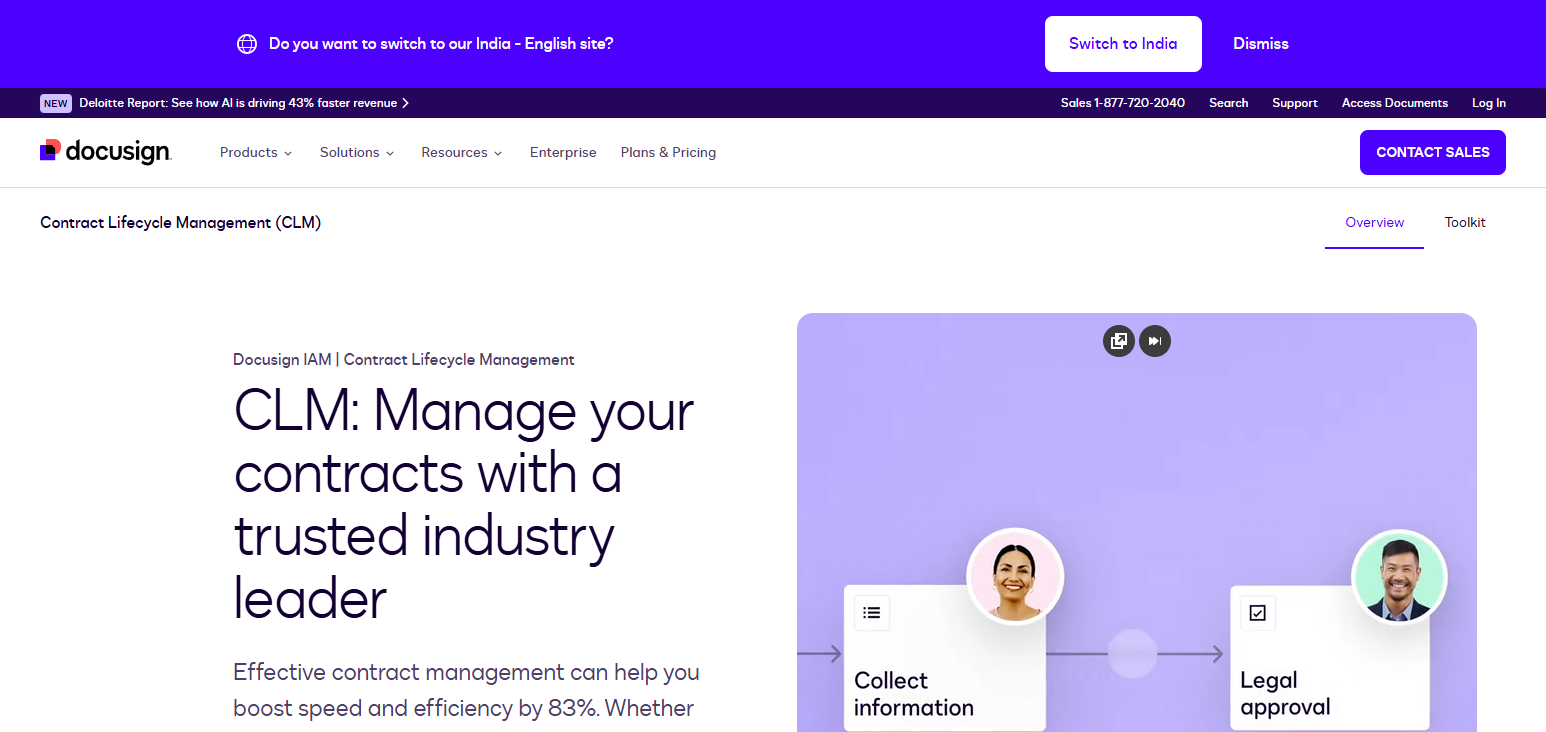
By integrating digital signature capabilities with contract management systems, DocuSign CLM provides companies the ability to improve their agreement processes while securing and optimizing their operations.
DocuSign CLM Features
- End-to-End Contract Management: Manages all aspects of contracts from creation to tracking.
- Electronic Signature Integration: Automates the entire lifecycle of contracts including digital signatures.
- Automated Approval Routing: Automatically sends contracts to the appropriate stakeholders for approval.
- Contract Repository Management: A secure storage solution for all contracts.
- Compliance and Audit Support: Tracking and reporting features enhance compliance.
| Pros | Cons |
|---|---|
| Combines e-signatures with complete contract management. | Enterprise pricing can be expensive. |
| Trusted platform with strong security features. | Advanced CLM features require configuration. |
| Streamlines approvals and contract routing. | Custom workflows may require expert support. |
| Strong compliance and audit capabilities. | Interface may feel complex for new users. |
| Integrates well with business applications. | Less flexible than some specialized CLM platforms. |
8. Spellbook
Spellbook is a contract assistant that leverages AI and works with Microsoft Word to assist users with rapid drafting and negotiation.
Taking advantage of generative AI, Spellbook helps review contracts, improve language, fill gaps by identifying missing clauses, and aids the legal practitioner and contract preparers in the process.
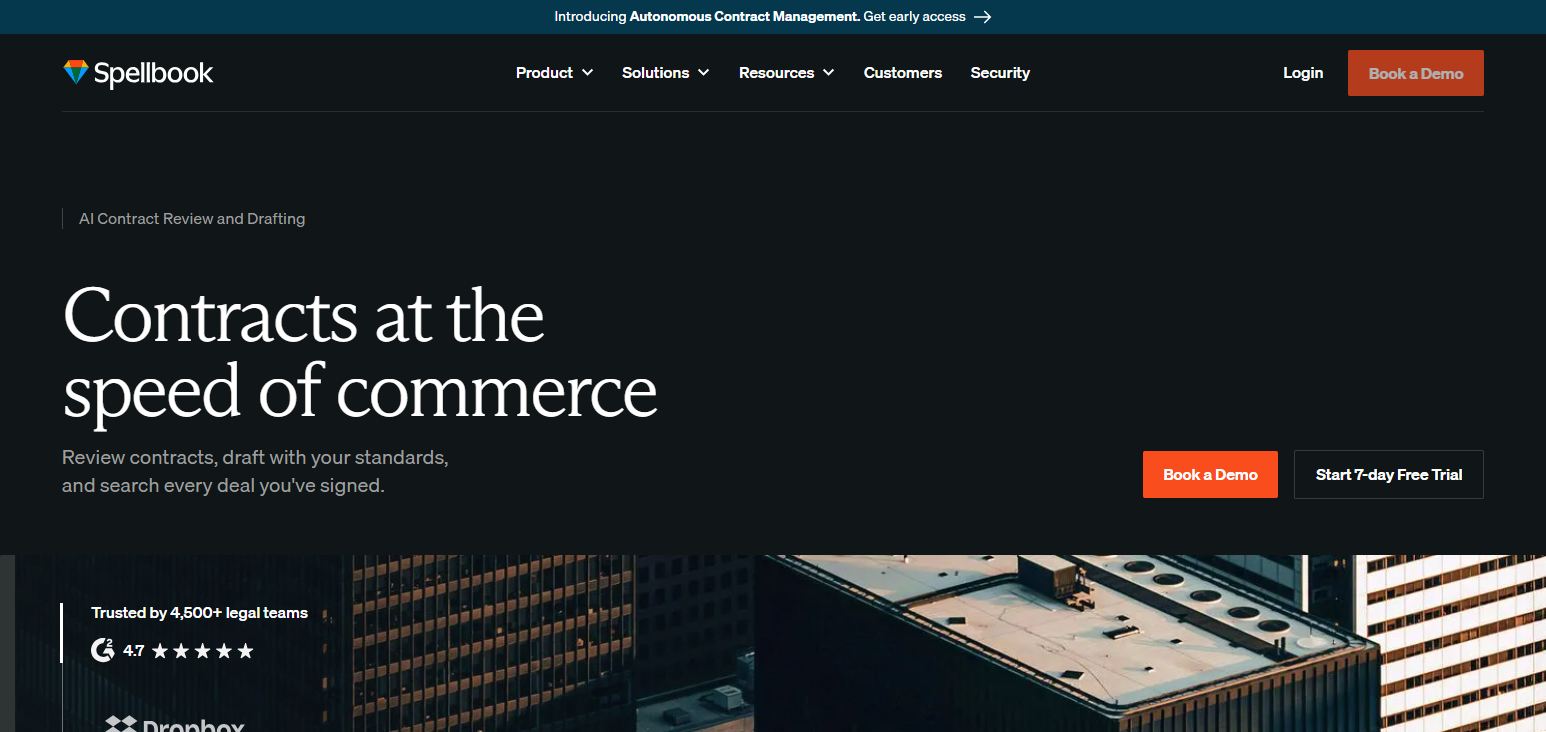
By embedding itself into commonly used software, Spellbook helps reduce disruption to legal workflows and enhance the productivity and precision for legal practitioners when drafting and negotiating contracts.
Spellbook Features
- AI Contract Drafting Assistant: A generative AI tool to assist lawyers in drafting contracts.
- Microsoft Word Integration: Automates contract drafting directly in Word.
- Missing Clause Detector: Finds missing clauses and edits contracts accordingly.
- Clause Suggestion Facility: Guarantees suggestions while redlining contracts.
- Drafting Facilitation: Helps you draft contracts faster with a higher degree of accuracy.
| Pros | Cons |
|---|---|
| Powerful AI drafting assistance inside Microsoft Word. | Mainly focused on drafting rather than full CLM. |
| Saves lawyers time during contract reviews. | Requires Microsoft Word environment compatibility. |
| Detects missing clauses and suggests improvements. | Not ideal for managing large contract repositories. |
| Easy adoption for legal professionals. | Limited workflow automation compared with CLM platforms. |
| Improves contract negotiation efficiency. | AI suggestions still require legal review. |
9. Juro
A contract lifecycle management system powered by AI, Juro provides automation of contract workflows and facilitates online collaboration all in a single, integrated, and intelligent workspace.
With features for contract editing, approval management, risk assessment, and AI review, Juro helps legal and business practitioners collaborate effectively without the need to switch tools.

Additionally, intelligent contract playbooks assist in standardizing contracts, thereby improving compliance and reducing review time. Overall, Juro fosters a positive experience for all users, facilitating workflows for drafting contracts all the way through execution.
Juro Features
- Web-Based Contract Management: Allows users to manage contracts via the web, no additional downloads.
- AI Risk Spotting: Automatically flags risks and legal issues on a contract.
- Modular Contract Design: Facilitates fast and simple drafting of contracts.
- Integrated Approval Process: Streamlines cross-departmental reviews.
- Negotiation Playbook Manager: Promotes consistent negotiation.
| Pros | Cons |
|---|---|
| Browser-based platform enables easy collaboration. | May lack some advanced enterprise capabilities. |
| Combines editing, workflows, and AI reviews. | Better suited for modern digital teams. |
| Reduces contract turnaround time effectively. | Complex legal requirements may need customization. |
| Provides useful contract playbook management. | Reporting features may be less extensive. |
| Simple interface improves user adoption. | Not ideal for highly regulated industries. |
10. Icertis
Icertis is a platform that tackles the challenges of major global contract portfolios on an enterprise scale.
With its powerful AI tools, Icertis offers a competitive edge to its customers, identifying risks, obligations, compliance issues, and opportunities that their competitors might be missing.

Excelling in the multinational arena, Icertis helps practitioners of global contract law and streamlined governance and collaboration improve their visibility and optimize their relationships.
With the analytics of Icertis, businesses can make more informed decisions based on the data and intelligence that Icertis provides and can better leverage the complexities of their contracts.
Icertis Features
- Enterprise Level Contract Analysis: Leverages AI to analyze large complex international contracts.
- Risk and Impact Assessment: Evaluates exposure to potential risk and the effect of a breach.
- Obligation Tracker: AI for the tracking of obligations and compliance.
- Global Contract Management: Centralized management of all international contracts.
- Contracts as a Commodity: Treats contracts as a business core function and provides analytics.
| Pros | Cons |
|---|---|
| Enterprise-grade AI contract intelligence platform. | High cost compared with smaller CLM tools. |
| Handles complex global contract portfolios. | Implementation requires significant planning. |
| Advanced risk modeling improves compliance. | May require dedicated administrative resources. |
| Strong analytics transform contracts into business insights. | Overpowered for small organizations. |
| Supports large-scale enterprise governance needs. | Configuration complexity can increase deployment time. |
Conclsuion
Conclusion AI Contract Lifecycle Management Tools are rapidly changing the contours of legal operation systems. Automation of substantial contract frameworks has become a distinct feature of these tools.
AI-powered tools/platforms like Sirion, Ironclad, LinkSquares, and Icertis help legal teams obtain improved, faster, and strategic agreement/risk assessments.
Ironclad, LinkSquares, and Icertis are some notable users of AI which empower legal teams to perform/execute contract frameworks/management functions rapidly.
FAQ
What are the main benefits of AI-powered contract management?
Key benefits include faster processing, better accuracy, automated workflows, improved compliance, and valuable contract insights.
Which teams use AI Contract Lifecycle Management software?
Legal, procurement, sales, finance, compliance, and business operations teams commonly use AI CLM solutions.
Can AI tools analyze existing contracts?
Yes, AI platforms extract clauses, obligations, renewal dates, risks, and important terms from existing agreements.
Are AI Contract Lifecycle Management Tools secure?
Most enterprise AI CLM platforms provide encryption, access controls, compliance monitoring, and secure data management features.