This article examines AI recruitment platforms that combat hiring bias. These platforms utilize cutting-edge technology to assist organizations in reducing bias, evaluating candidates effectively, and enhancing processes to be more inclusive.
Furthermore, Enterprise organizations now have the ability to make recruitment decisions through AI to bolster fairness, speed, and a data-driven approach.
Key Points & AI Recruitment Platforms Eliminating Bias In Enterprise Hiring
| AI Recruitment Platform | Explanation |
|---|---|
| HireVue | Uses structured interviews and AI insights to reduce unconscious hiring biases. |
| Eightfold AI | Matches candidates using skills data while promoting diverse talent discovery. |
| Textio | Optimizes job descriptions to remove biased language and improve inclusivity. |
| SeekOut | Helps recruiters find diverse candidates through advanced talent intelligence. |
| Pymetrics | Uses neuroscience-based assessments to support fair, unbiased candidate evaluations. |
| Beamery | Provides talent management tools focused on inclusive hiring decisions. |
| Paradox | Automates recruiting conversations while ensuring consistent candidate experiences. |
| Greenhouse | Offers structured hiring workflows that minimize bias during recruitment. |
| LinkedIn Talent Solutions | Uses AI recommendations to expand diverse candidate sourcing opportunities. |
| Workday Recruiting | Applies data-driven analytics to support equitable enterprise hiring practices. |
10 AI Recruitment Platforms Eliminating Bias In Enterprise Hiring
1. HireVue
HireVue aims to make the hiring process fairer and more equitable by offering an AI-based recruitment platform. Coupled with structured video interviews, automated assessments, and data-centric evaluation, HireVue is the perfect tool for enterprises to mitigate unconscious bias in the hiring process.
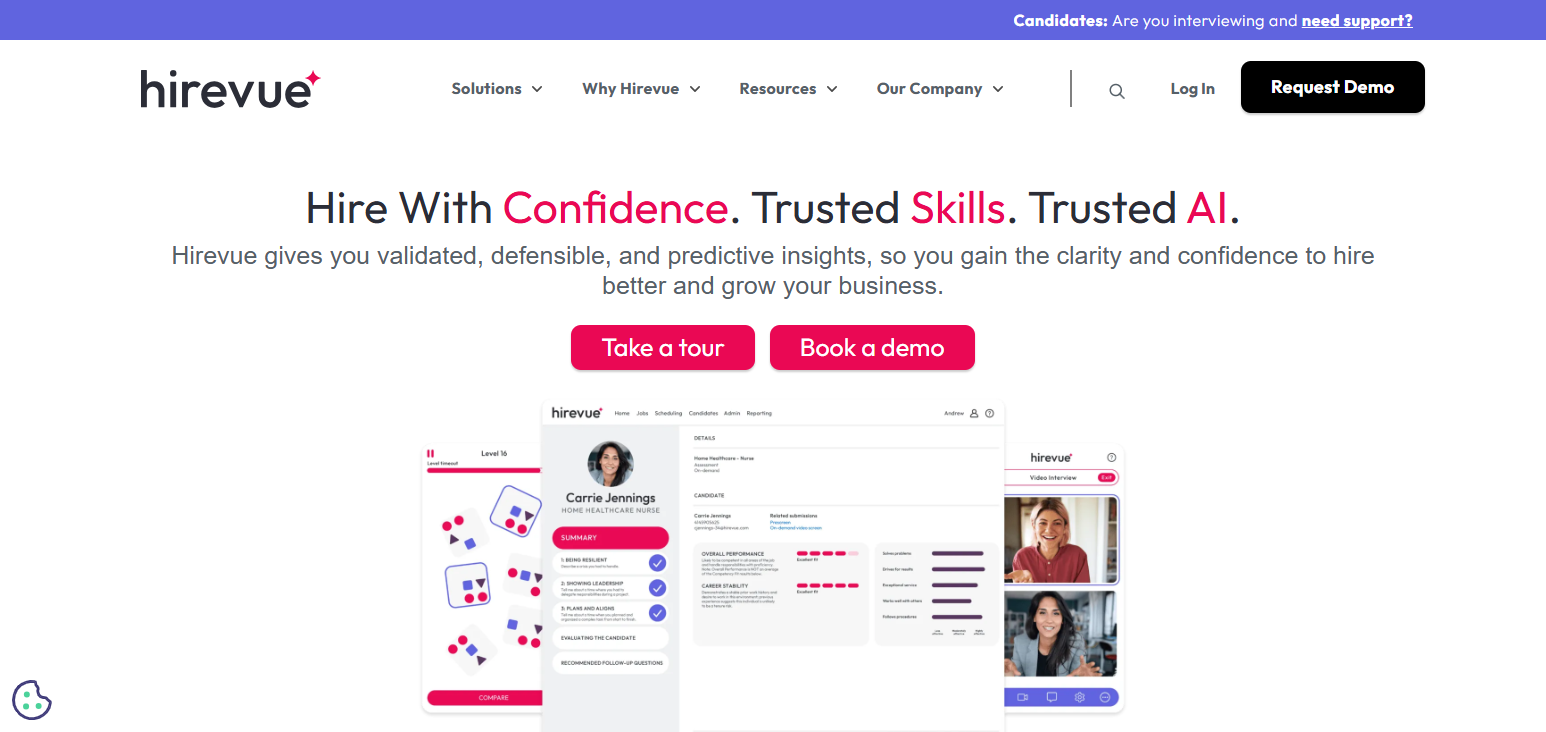
The Recruiters can now wholly focus on the skills and responses of the candidates, along with the competencies required for the job.
With the power of analytics and the standardization of interviews, HireVue boosts the organizational diversity of the clientele of its products and helps enterprises make more fair employment decisions.
HireVue Features
- AI Video Interviews: Evaluates candidates by conducting structured video interviews.
- Automated Assessments: Assessment of candidates is done by analyzing data to measure skills and abilities.
- Bias Reduction Tools: Standardized methods to minimize unconscious bias in hiring.
- Interview Analytics: Provides insights into rationality of recruiting decisions.
- Global Hiring Support: Assists enterprises to conduct large scale hiring.
| Pros | Cons |
|---|---|
| Reduces unconscious bias through structured interviews. | AI evaluation may not fit every hiring scenario. |
| Provides automated candidate assessment insights. | Requires proper setup and training for recruiters. |
| Improves interview consistency across teams. | Some candidates may dislike AI-based interviews. |
| Supports large-scale global recruitment. | Implementation costs can be high for small companies. |
| Helps analyze hiring performance data. | Limited human interaction during early screening. |
2. Eightfold AI
Eightfold AI relies on talent intelligence and the power of machine learning to help enterprises make sense of the myriad applicants that are out there, based not on the traditional hiring patterns, but on the skills, experiences, and potential of applicants.
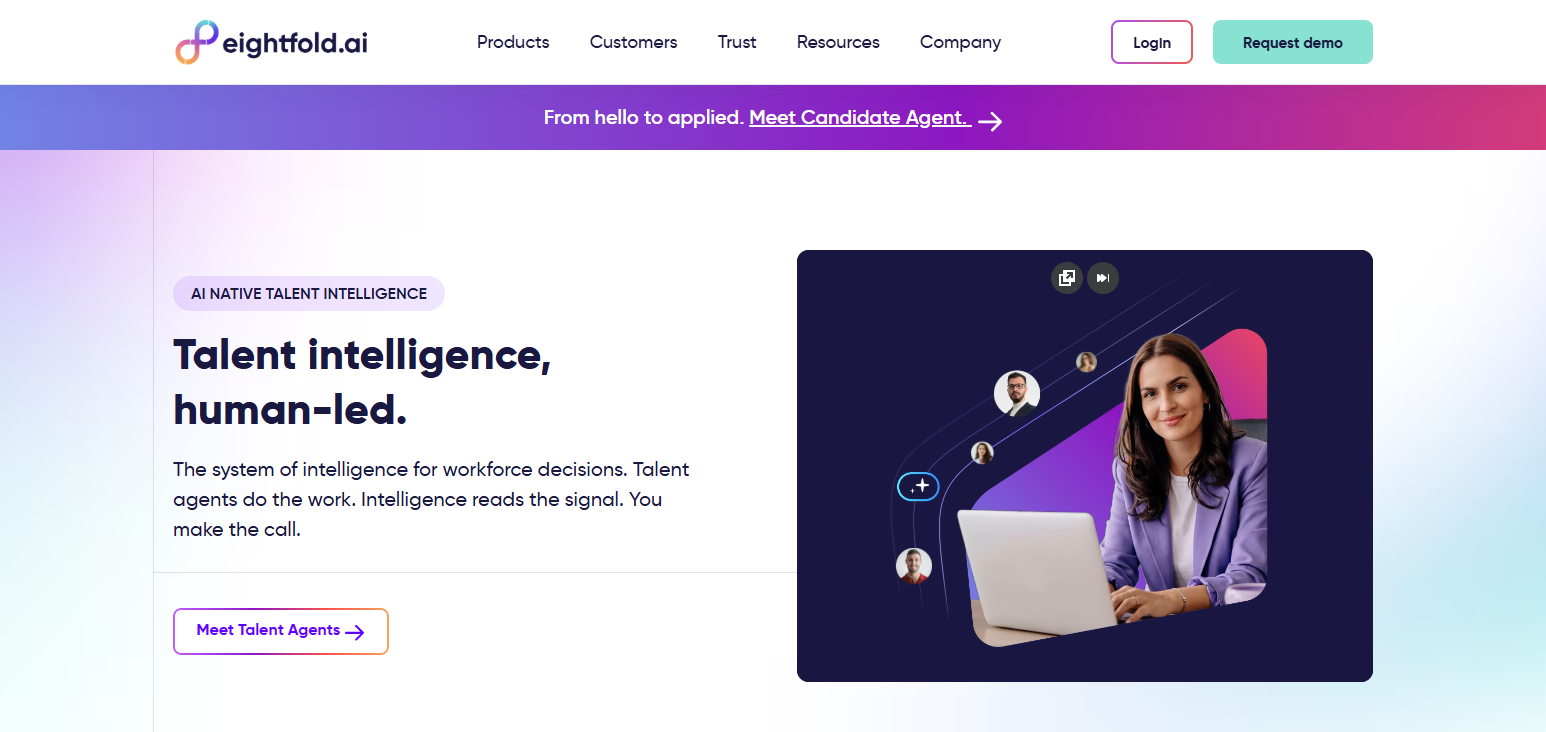
Its AI Matching Technology opens up vast, often underrepresented talent pools, and helps enterprises make sense of workplace diversity.
The platform asks organizations to rethink their recruitment paradigms by providing equitable employment opportunities and improving the precision of hiring not just in the immediate localities, but across the globe.
Eightfold AI Features
- AI Talent Matching: Matches candidates to positions by skill-based recommendations.
- Diversity Talent Discovery: Identifies talent in larger and more diverse communities.
- Skills Intelligence: Assesses skills that may not be captured in a formal resume.
- Workforce Planning: Uses analytics to predict hiring needs and inform hiring strategies.
- Internal Mobility: Identifies opportunities for employees’ career growth.
| Pros | Cons |
|---|---|
| Uses AI skills matching for fair hiring. | Requires large amounts of quality data. |
| Expands access to diverse talent pools. | Advanced features may increase complexity. |
| Supports internal employee mobility programs. | Can require significant integration efforts. |
| Provides predictive workforce insights. | Pricing may be expensive for smaller businesses. |
| Improves enterprise talent planning. | AI recommendations still need human review. |
3. Textio
Textio uses an AI-based model to help clients remove the bias from recruitment communication, in particular job descriptions. Textio scans the various hiring documents to suggest inclusiveness, thereby removing discouraging tones that may be perceived by potential job candidates of varied backgrounds.

By doing so, enterprises can enhance the fairness of their recruitment engagement. The real-time language analytics of Textio help recruitment teams to refine their job descriptions and recruitment communication to be open and reduce bias, thereby supporting the goals of diversity and inclusion.
Textio Features
- Inclusive Job Writing: Provides a job description that is devoid of bias in language.
- AI Language Analysis: Assesses language in a way that identifies language that discourages diverse applicants.
- Real-Time Suggestions: Provides suggestions to refine recruiting content.
- Diversity Optimization: Expands the talent pool by appealing to diverse applicants.
- Recruitment Branding: Creates job advertisements that are engaging and inviting.
| Pros | Cons |
|---|---|
| Removes biased language from job postings. | Mainly focuses on written recruitment content. |
| Improves diversity-focused employer branding. | May require adjustments for specialized roles. |
| Provides real-time writing recommendations. | Does not manage complete hiring workflows. |
| Helps attract wider applicant groups. | AI suggestions may need manual approval. |
| Supports inclusive communication strategies. | Limited candidate assessment capabilities. |
4. SeekOut
SeekOut combines AI and talent intelligence tools to support recruiters in identifying diverse candidate pools from large professional databases. By focusing on skill sets, qualifications, and career potential, rather than demographic information, SeekOut promotes unbiased candidate sourcing.

SeekOut’s AI search tools aid enterprises in narrowing professional talent from underrepresented groups and alleviate the need for outreach to conventional hiring practices. SeekOut’s refined search, analytics, and talent insights allow enterprises to enhance their diversity hiring initiatives and streamline their hiring processes.
SeekOut Features
- Advanced Candidate Search: Employs AI for swift identification of skilled candidates.
- Diversity Recruiting: Easily identifies and recruits candidates from diverse backgrounds.
- Talent Intelligence: Analyzes and provides extensive information on candidates.
- AI Matching: Matches candidates and job openings based on necessary skills.
- Recruitment Analytics: Evaluates candidate sourcing and hiring effectiveness.
| Pros | Cons |
|---|---|
| Finds diverse candidates using AI search. | Large databases require careful candidate filtering. |
| Provides detailed talent intelligence insights. | Subscription costs may be high for startups. |
| Improves sourcing efficiency for recruiters. | Requires recruiter training for best results. |
| Supports skills-based candidate discovery. | Data accuracy can vary by candidate profiles. |
| Reduces dependency on traditional networks. | Advanced features may feel complex initially. |
5. Pymetrics
Pymetrics combines assessments based on the science of neuroscience with AI to measure candidates’ skills, cognitive attributes, and behaviors in the workplace.
The platform departs from traditional reliance on resumes or educational attainments and instead measures job-relevant traits. The Pymetrics tool enables organizations to address human bias in candidate screening and identify individuals who possess the requisite skills.
The focus on potential, performance, and objective measures allows Pymetrics to create more equitable and inclusive hiring systems.
Pymetrics Features
- Neuroscience Assessments: Candidates’ character traits are assessed with behavior-based science methods.
- AI Skill Analysis: Candidates’ skills are evaluated beyond education and resume.
- Bias-Free Screening: Encourages an objective candidate evaluating process.
- Workplace Compatibility: Determines workforce suitable candidates for specific roles.
- Data-Driven Hiring: Enhances hiring decisions through evaluative data.
| Pros | Cons |
|---|---|
| Uses assessments to reduce resume-based bias. | Behavioral tests may not suit all roles. |
| Focuses on candidate potential and abilities. | Requires validation for specific industries. |
| Provides objective candidate comparison. | Assessment completion may reduce applicant numbers. |
| Supports data-driven recruitment decisions. | AI models require continuous monitoring. |
| Helps identify hidden talent opportunities. | Less focused on sourcing candidates directly. |
6. Beamery
Beamery aims to foster inclusive and transparent hiring practices by leveraging AI in the recruitment lifecycle. The platform draws on its analytic capabilities, candidate relationship management, and automation to streamline proactive talent engagement and discovery.
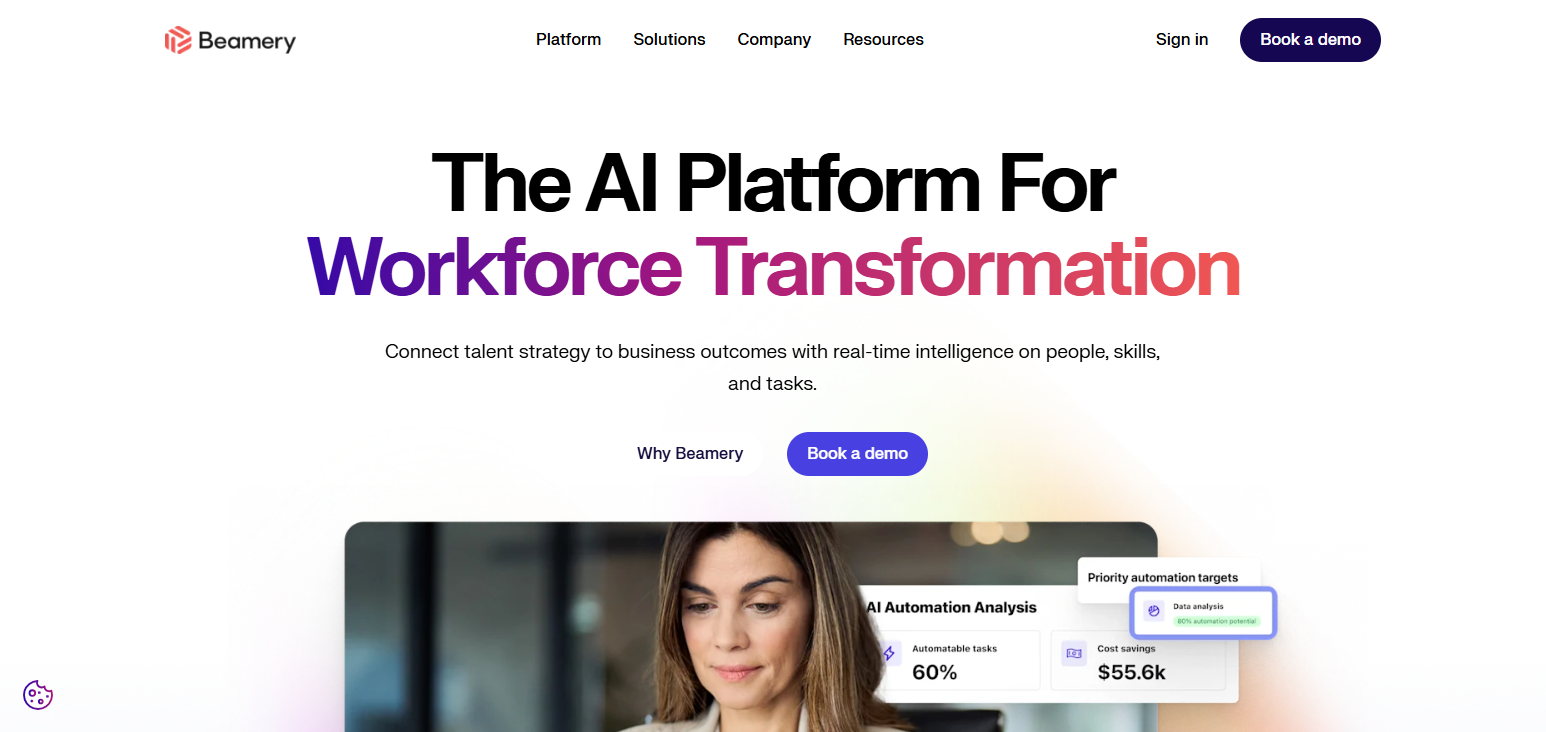
Beamery enables recruiters to identify talent who possess the requisite skills while avoiding bias in selection. Beamery’s holistic talent management solutions enhance candidate experience, and promote diversity and inclusion, through improved global recruitment efforts.
Beamery Features
- AI Talent Management: Maximizes and administrates potential workforce across the globe.
- Candidate Relationship Management: Cultivates enhanced applicant rapport.
- Skills-Based Recruitment: Centered on applicant skills and professional ambitions.
- Talent Analytics: Offers data to facilitate better hiring.
- Automation Tools: Effectiveness of recruitment procedures and interaction is improved through automation.
| Pros | Cons |
|---|---|
| Builds inclusive talent pipelines with AI. | Platform setup can be time-consuming. |
| Improves candidate relationship management. | Requires integration with existing HR systems. |
| Provides powerful recruitment automation tools. | May be costly for smaller organizations. |
| Supports global workforce management. | Requires trained users for optimization. |
| Helps track candidate engagement effectively. | Advanced analytics need quality recruitment data. |
7. Paradox
The company Paradox creates a way to use AI assistants to simplify and automate chatbots for recruitment, providing a reliable and constant system for all candidates.
Their AI bot manages applications, schedules, screens candidates, and facilitates communication with the candidates while removing early-stage hiring biases.
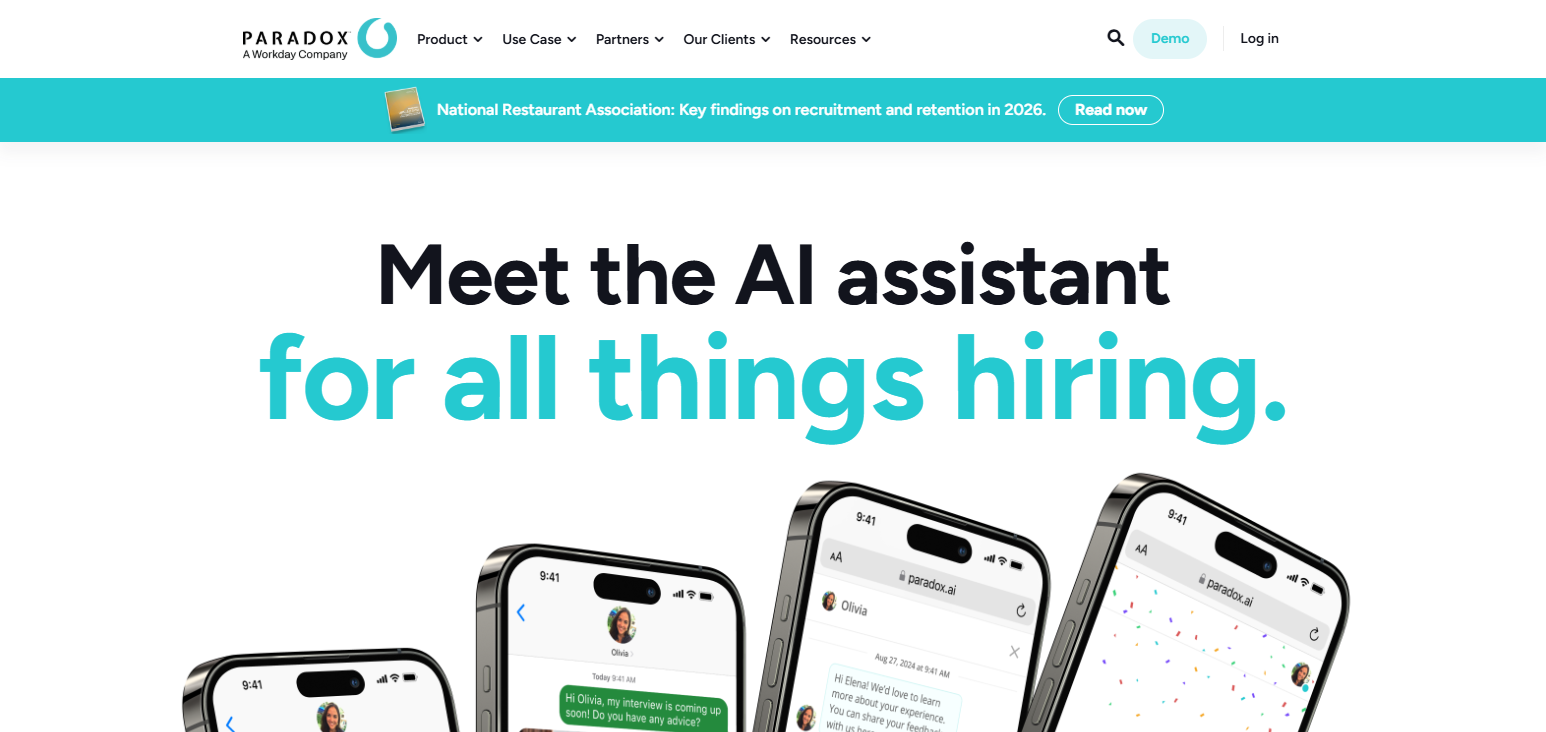
If a candidate needs to have a conversation to understand the hiring process, they can do that, and they will receive a response sooner than if it were done through traditional methods.
Paradox actively makes recruitment operations easier and engages candidates, while ensuring the candidates’ recruitment experience is fair and consistent.
Paradox Features
- Conversational AI Assistant: Features AI chatbots for automating dialogue with applicants.
- Automated Scheduling: Simplifies the process of schedule coordinating for interviews.
- Candidate Screening: Initial applicant vetting is conducted.
- Consistent Communication: Ensures fair treatment to all candidates.
- Recruitment Automation: Tasks associated with hiring are made less cumbersome.
| Pros | Cons |
|---|---|
| Automates candidate communication with AI chatbots. | Less effective for highly complex interviews. |
| Provides faster application screening processes. | Some candidates prefer human recruiters. |
| Simplifies interview scheduling tasks. | Requires chatbot customization for accuracy. |
| Improves candidate accessibility and engagement. | Limited deep candidate evaluation features. |
| Reduces repetitive recruiter workload. | AI responses may require monitoring. |
8. Greenhouse Software
Greenhouse’s structured hiring pathways diminish talent-posting biases and improve the consistency of decisions. Their platform provides a way for companies to develop a consistent interview framework and set criteria for evaluation and post-interview feedback.
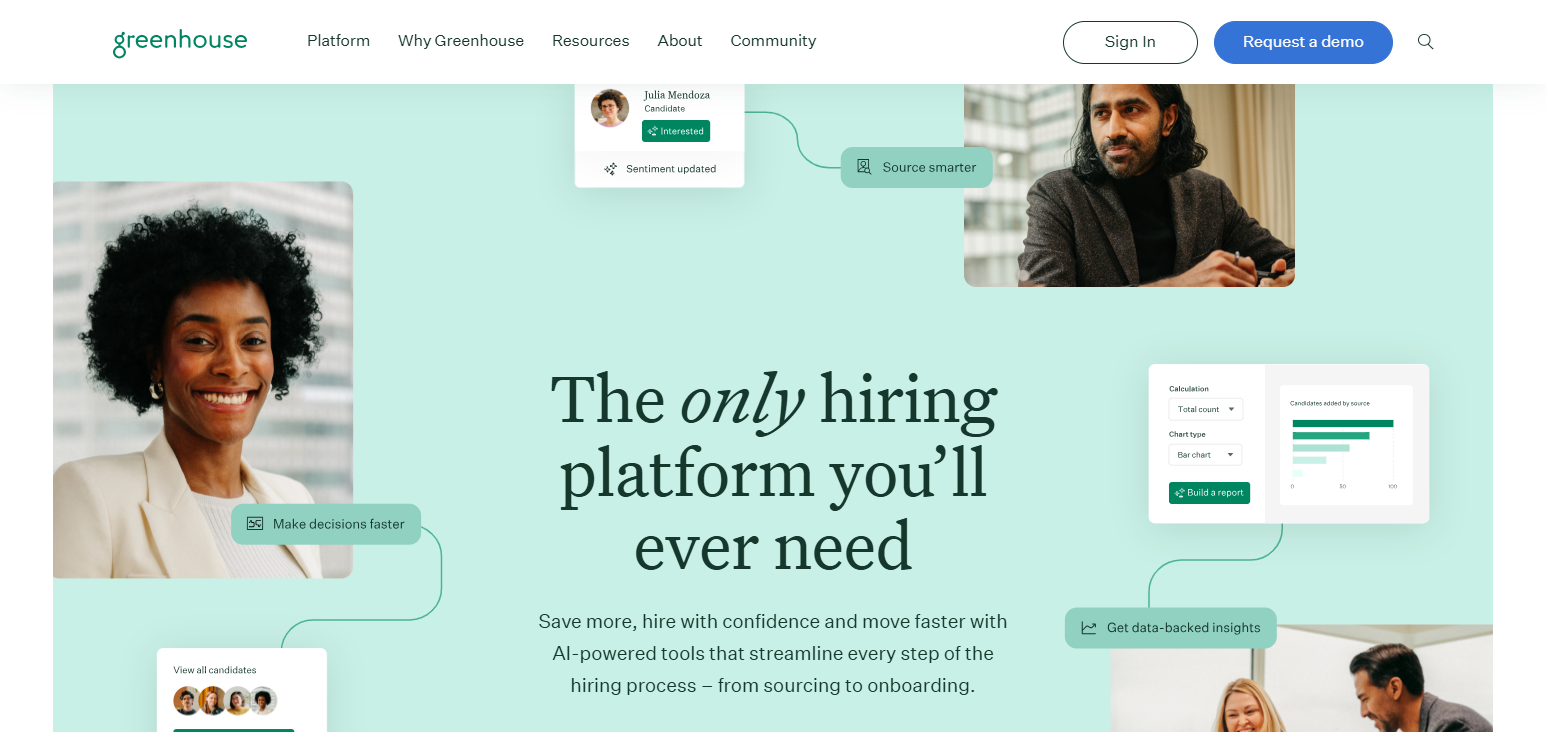
Greenhouse replaces informal and arbitrary methods of recruitment with a more structured methodology, facilitating objective decision-making, and its analytics paired with its collaboration tools are focused on recruitment strategies that foster hiring diversity and inclusion, helping companies build great teams while maintaining an open recruitment process.
Greenhouse Software Features
- Structured Hiring Process: Establishes individualized work standards for hiring.
- Interview Scorecards: Standardization of candidates’ evaluation is made possible.
- Collaborative Hiring: Teams are able to offer constructive feedback based on facts.
- Recruitment Analytics: Evaluating and perfecting the hiring process is facilitated.
- Diversity Reporting: Assists in the progression of diverse hiring.
| Pros | Cons |
|---|---|
| Creates structured and transparent hiring workflows. | Advanced customization may require expertise. |
| Helps standardize interview evaluations. | Pricing can be high for small teams. |
| Supports collaborative recruitment decisions. | Requires proper workflow configuration. |
| Provides useful hiring analytics. | Limited AI automation compared with newer platforms. |
| Improves diversity tracking and reporting. | Learning curve for new users. |
9. LinkedIn Talent Solutions
With the use of AI, LinkedIn talent solutions provide recruiters with a way to find a more diverse candidate pool with more talent. Their intelligent matching technology provides companies with candidates that are aligned to the roles they need to fill based on skills and experience levels.

The platform helps companies with attracting candidates that have more diverse career paths and goes beyond the standard recruitment sourcing methods. By using LinkedIn’s AI tools, companies can easily recruit a more diverse candidate pool, and improve their hiring methods.
LinkedIn Talent Solutions Features
- AI Candidate Recommendations: Smart algorithms yield candidate recommendations.
- Global Talent Network: Access to millions of individuals across the globe.
- Skills-Based Matching: Facilitates linkage of candidate skills to job requirements.
- Diversity Search Tools: Offers multitude of assistance for varied talent searches.
- Recruitment Insights: Offers and analyzes market trends.
| Pros | Cons |
|---|---|
| Provides access to a massive professional network. | Premium recruitment features can be expensive. |
| Uses AI recommendations for candidate matching. | High competition among recruiters on platform. |
| Supports diverse talent discovery worldwide. | Profile information may not always be updated. |
| Offers strong recruitment analytics tools. | Requires active sourcing strategies for success. |
| Improves employer visibility and branding. | Less control over candidate engagement process. |
10. Workday Recruiting
With Workday Recruiting, companies can make more equitable and effective hiring decisions with the aid of artificial intelligence, automation, and workforce analytics. Workday Recruiting provides a way for companies to evaluate candidates objectively, using structured workflows and skills data.
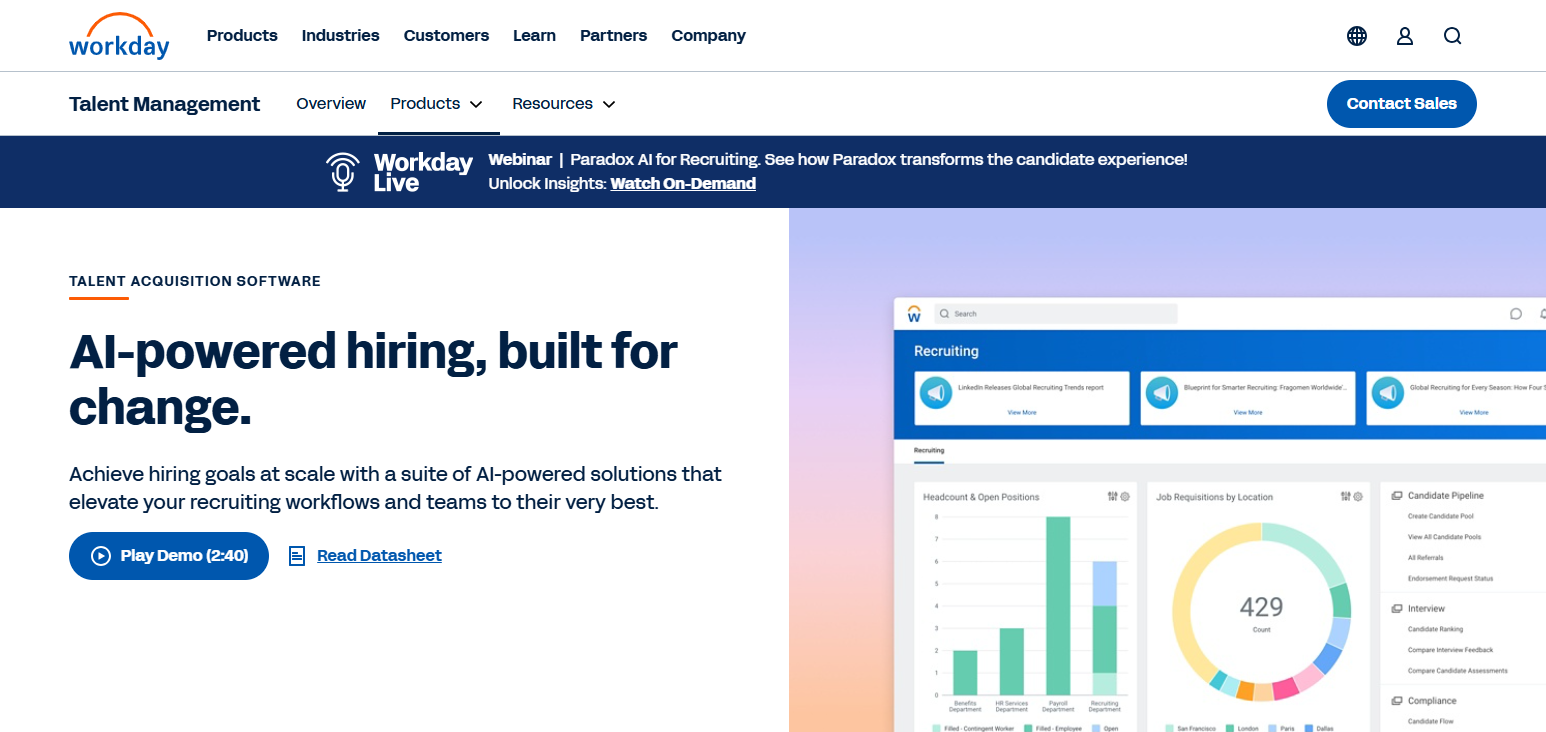
Workday’s AI automates a portion of the recruiting work, while minimizing bias from ad hoc decision making. Companies with Workday Recruiting see an increase in the diversity of their workforce and the efficiency of their recruiting operations, as well as an improvement in the clarity of their hiring practices. Many companies that employ a rational framework for recruiting use Workday Recruiting.
Workday Recruiting Features
- AI Recruiting: Automates for optimal hiring.
- Candidate Analytics: Offers data at recruitment stages.
- Skills Evaluation: Centers on skills over personal factors.
- Workflow Automation: Eases recruitment management.
- Compliance Support: Assures equity in hiring.
| Pros | Cons |
|---|---|
| Provides enterprise-level recruitment management. | Implementation can require significant resources. |
| Uses analytics for fair hiring decisions. | Expensive compared with smaller HR tools. |
| Integrates recruitment with workforce management. | Requires technical expertise for customization. |
| Supports compliance and transparent hiring. | Complex features may overwhelm small teams. |
| Improves large-scale talent acquisition processes. | Migration from existing systems can be challenging. |
Conclusion
In conclusion, AI Recruitment Platforms Eliminating Bias In Enterprise Hiring have completely changed the way companies identify, assess, and hire employees.
Using AI technologies, these platforms implement structured evaluations and techniques that identify and align an applicant’s skills with an organization’s recruitment needs.
These innovative systems build recruitment networks that are more fair and open to all. Employing this technology enables an organization to facilitate a more equitable and more diverse workforce, artificial intelligence recruitment systems and services will dominate this technology sector in service to modern more flexible and fair workplaces.
FAQ
How do AI recruitment platforms reduce hiring bias?
These platforms reduce bias by using structured interviews, skills-based matching, automated assessments, and objective candidate evaluations instead of relying only on human judgment.
Can AI recruitment platforms improve diversity hiring?
Yes, AI recruitment tools help companies identify candidates from wider talent pools and reduce barriers that may prevent underrepresented groups from receiving opportunities.
Are AI recruitment platforms replacing human recruiters?
No, AI platforms support recruiters by automating repetitive tasks and providing insights, while final hiring decisions still require human evaluation and expertise.
How do AI platforms evaluate candidates fairly?
AI systems analyze job-related skills, experience, assessments, and performance data while minimizing the influence of personal factors unrelated to job requirements.