
This article covers the most effective AI Observability Platforms, which enable corporate clients to track, measure, and refine the output of their AI systems. These platforms offer an understanding of ML models, Generative AI apps, and LLM-flows.
AI observability tools are designed to help companies build innovative, efficient, and reliable AI systems. These tools are designed to traverse the entire AI lifecycle, from identifying problems to enhancing reliability.
Key Points
| AI Observability Platform | Explanation |
|---|---|
| Arize AI | Monitors machine learning models, detects issues, and improves AI performance continuously. |
| Datadog AI Monitoring | Tracks AI systems, infrastructure, logs, and performance metrics efficiently. |
| Fiddler AI | Delivers explainability, monitoring, and risk management for AI models. |
| Weights & Biases | Tracks experiments, models, datasets, and machine learning development workflows. |
| Evidently AI | Detects model drift, data changes, and machine learning quality issues. |
| LangSmith | Debugs, evaluates, and monitors LangChain-powered AI applications effectively. |
| OpenLLMetry | Provides LLM telemetry, tracing, and performance monitoring capabilities. |
| Galileo AI | Evaluates AI outputs, identifies errors, and improves application reliability. |
| Humanloop | Optimizes prompts, evaluates models, and monitors language model performance. |
| Phoenix AI | Provides open-source LLM tracing, evaluation, and debugging tools. |
10 Best AI Observability Platforms
1. Arize AI
Identified as one of the leading Best AI Observability Platforms, Arize AI is a tool for businesses that enables the understanding and enhancement of reliability for ML and Generative AI applications. Arize AI provides insight into AI model performance post-deployment by behavior, accuracy, and operations over time.
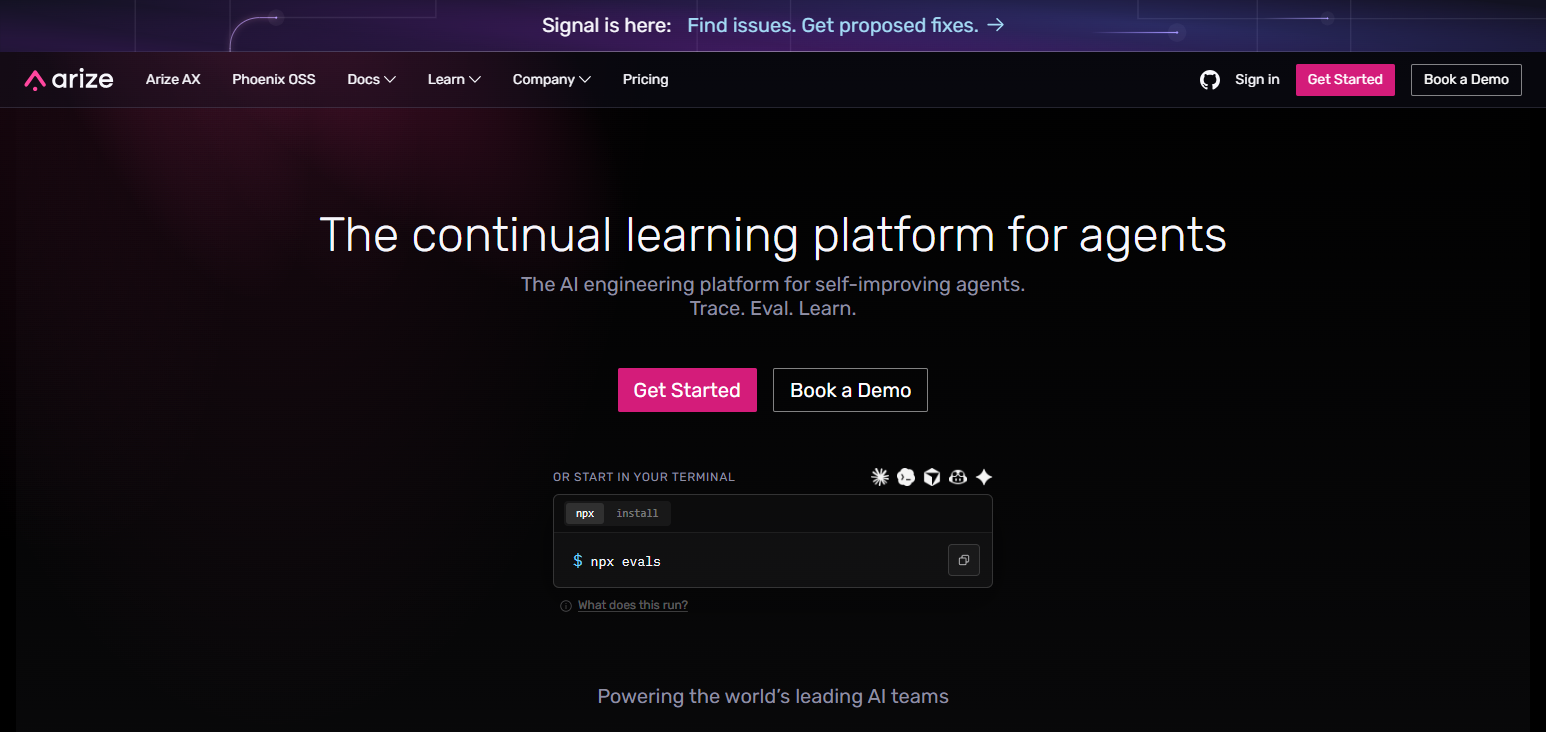
Arize AI is heavily adopted by data science teams in order to analyze AI system failures and model inexplicable results in order to achieve behavior consistency in production. Arize AI’s components allow companies of varying business domains to build more responsible and effective AI solutions.
Arize AI Features
- One of the best AI observability platforms to monitor ML models and track changes in production performance over time.
- Offers visibility to AI model behavior, accuracy, and operational reliability.
- Detects model issues and rapidly identifies the causes of unexpected behavior of AI systems.
- Provides the functionality to monitor ML and generative AI systems.
- Offers teams the ability to harness advanced performance insights to enhance the reliability of their AI systems.
| Pros | Cons |
|---|---|
| Provides deep visibility into machine learning and LLM performance. | May require technical expertise for complete implementation. |
| Helps detect model issues before affecting production systems. | Advanced enterprise features can become expensive for smaller teams. |
| Supports both traditional ML and generative AI monitoring. | Initial setup and integration may take additional time. |
| Improves AI reliability with detailed performance analysis. | Beginners may find the platform complex initially. |
| Offers strong observability capabilities for production AI workflows. | Limited customization compared with fully self-built solutions. |
2. Datadog AI Monitoring
For modern AI applications, Datadog’s monitoring solutions are some of the best available. With the ability to integrate application monitoring, infrastructure monitoring, and observability into a single solution, Datadog helps companies understand how their AI systems are working.
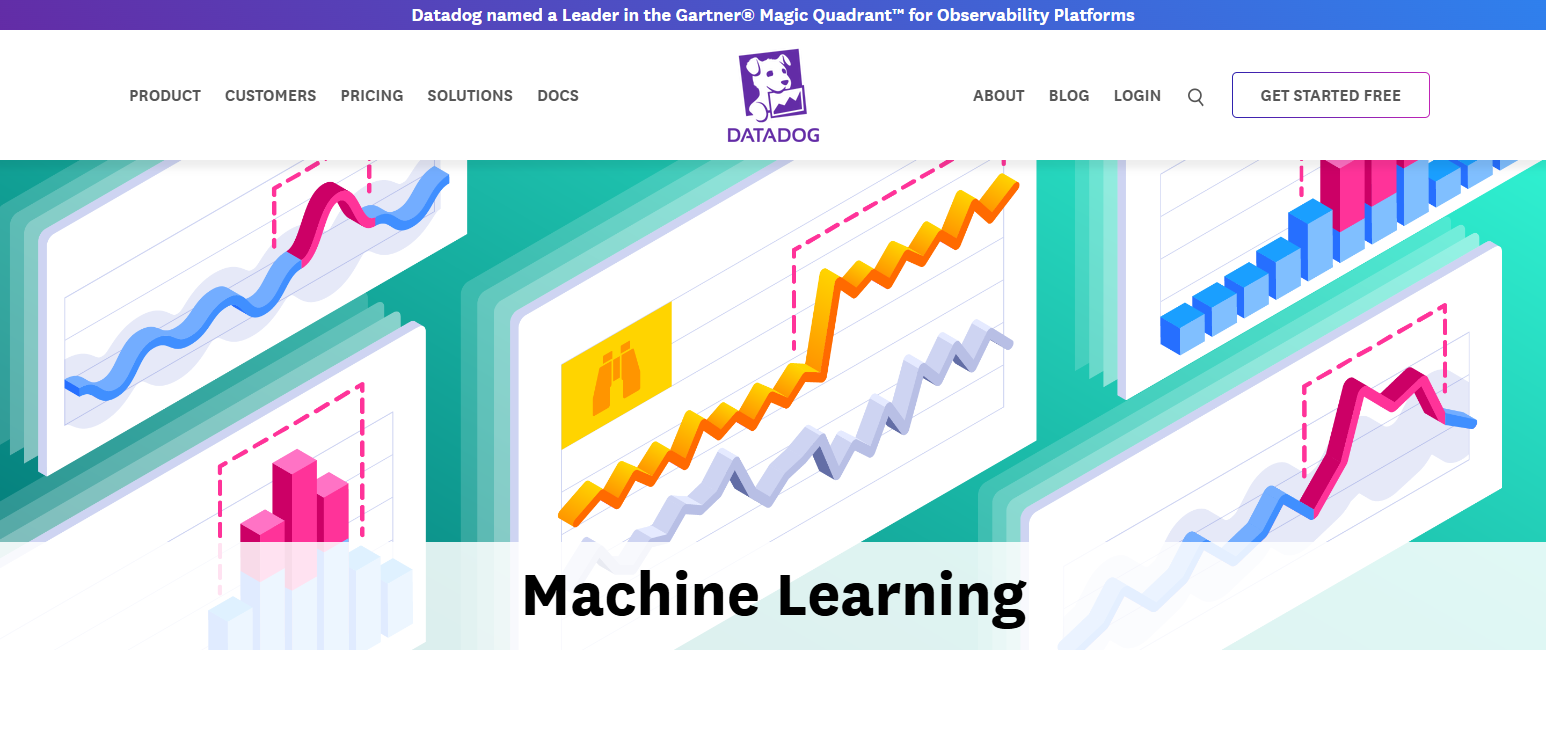
Datadog AI Monitoring helps engineering teams tackle performance, reliability, and consistency challenges when building AI applications. Datadog is a popular choice for companies working in distributed, complex AI cloud environments where Datadog provides monitoring and operational management for AI services.
Datadog AI Monitoring Features
- Integrates the monitoring of AI applications, alongside infrastructure and operational visibility.
- Monitors the performance of AI systems across complex cloud environments.
- Helps diagnose concerns regarding the reliability of AI applications.
- Centralized monitoring of distributed AI services and workflows.
- Enables engineering teams to create reliable AI operations.
| Pros | Cons |
|---|---|
| Provides unified monitoring across AI applications and infrastructure. | Pricing can increase significantly with large data volumes. |
| Works well with complex cloud-based AI environments. | Requires configuration knowledge for advanced monitoring. |
| Helps engineering teams identify operational issues quickly. | AI-specific monitoring features may need additional setup. |
| Supports scalable monitoring for enterprise applications. | Can feel overwhelming due to many available features. |
| Integrates with multiple technology ecosystems easily. | Smaller organizations may find it costly. |
3. Fiddler AI
Fiddler AI is one of the best AI observability platforms as it enhances the understanding, security, and trust of AI systems. Its focus is on helping enterprises assess the AI systems’ decision-making processes and find the cracks in the AI systems that might affect the AI business and model outcomes.
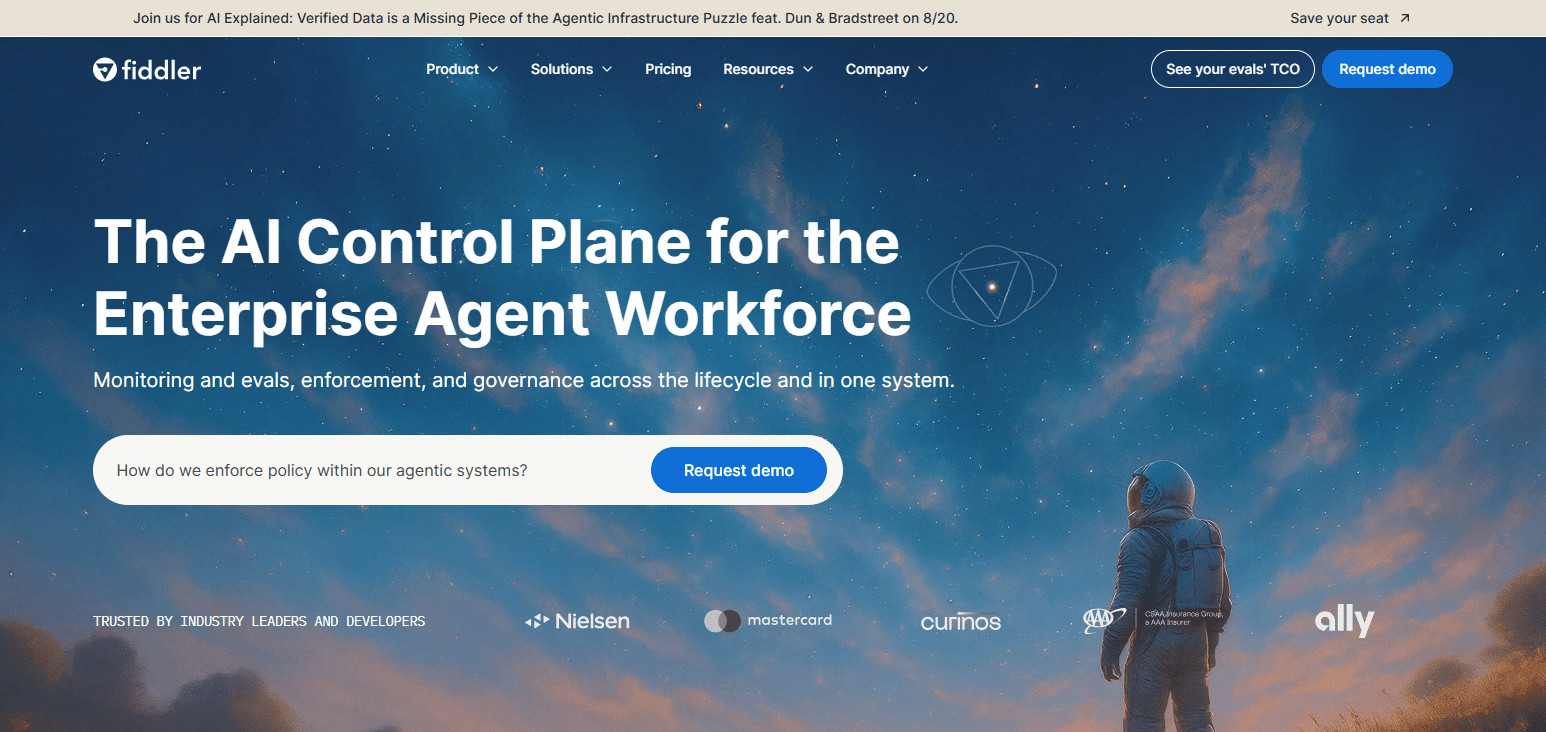
Organizations that value security and trust of their AI deployments are the main users of Fiddler AI. It helps complex AI, ML, and generative AI environments of enterprises in operational AI and in understanding AI model behaviors.
Fiddler AI Features
- Provides transparency to AI models and the ability to analyze AI model decisions.
- Provides visibility to AI performance and outcome concerns.
- Supports the deployment of Explainable AI (XAI) and Trustworthy AI.
- Monitors the behavior of ML and Generative AI Applications.
- Increase enterprise confidence in safe and secure AI.
| Pros | Cons |
|---|---|
| Provides strong AI explainability and model transparency. | Requires understanding of AI governance concepts. |
| Helps enterprises build trustworthy AI systems. | Pricing may not suit small businesses. |
| Supports risk analysis for machine learning models. | Implementation can require technical resources. |
| Improves understanding of complex AI decisions. | Less focused on general infrastructure monitoring. |
| Useful for regulated industries requiring AI accountability. | Advanced capabilities may need expert management. |
4. Weights & Biases
Weights & Biases is another one of the listed solutions among the Best AI Observability Platforms that many machine learning teams actively use to customize AI Development workflow. The platform assists researchers and engineers to track the advancement of the model, comparison of approaches, and evaluation of results during the development cycle.

Weights & Biases bolsters teamwork among AI teams by systematically storing and consolidating data on experiments, models, and datasets. Owing to its capability to enhance development activity visibility and assist teams in building the most precise and optimal machine learning solution, it is adopted by a multitude of organizations that develop state-of-the-art AI solutions.
Weights & Biases Features
- Tracks the development of ML experiments and models.
- Supports the collaboration of AI researchers and ML engineers.
- Aids the development of accurate and efficient ML models.
| Pros | Cons |
|---|---|
| Excellent for tracking machine learning experiments and models. | Mainly focused on ML development workflows. |
| Improves collaboration between AI research teams. | Requires learning time for new users. |
| Helps compare different model development approaches. | Enterprise plans can become expensive. |
| Organizes AI development information effectively. | Not designed primarily for infrastructure monitoring. |
| Popular among researchers and machine learning engineers. | Large projects may require careful management. |
5. Evidently AI
Evidently AI is an open-source platform and a member of the selected systems in the Best AI Observability Platforms since it allows organizations to recognize the drift of AI models and data.
The platform makes it possible for teams to analyze if the deployed models will still answer the business needs and provide the correct answers after being placed in the production environment.
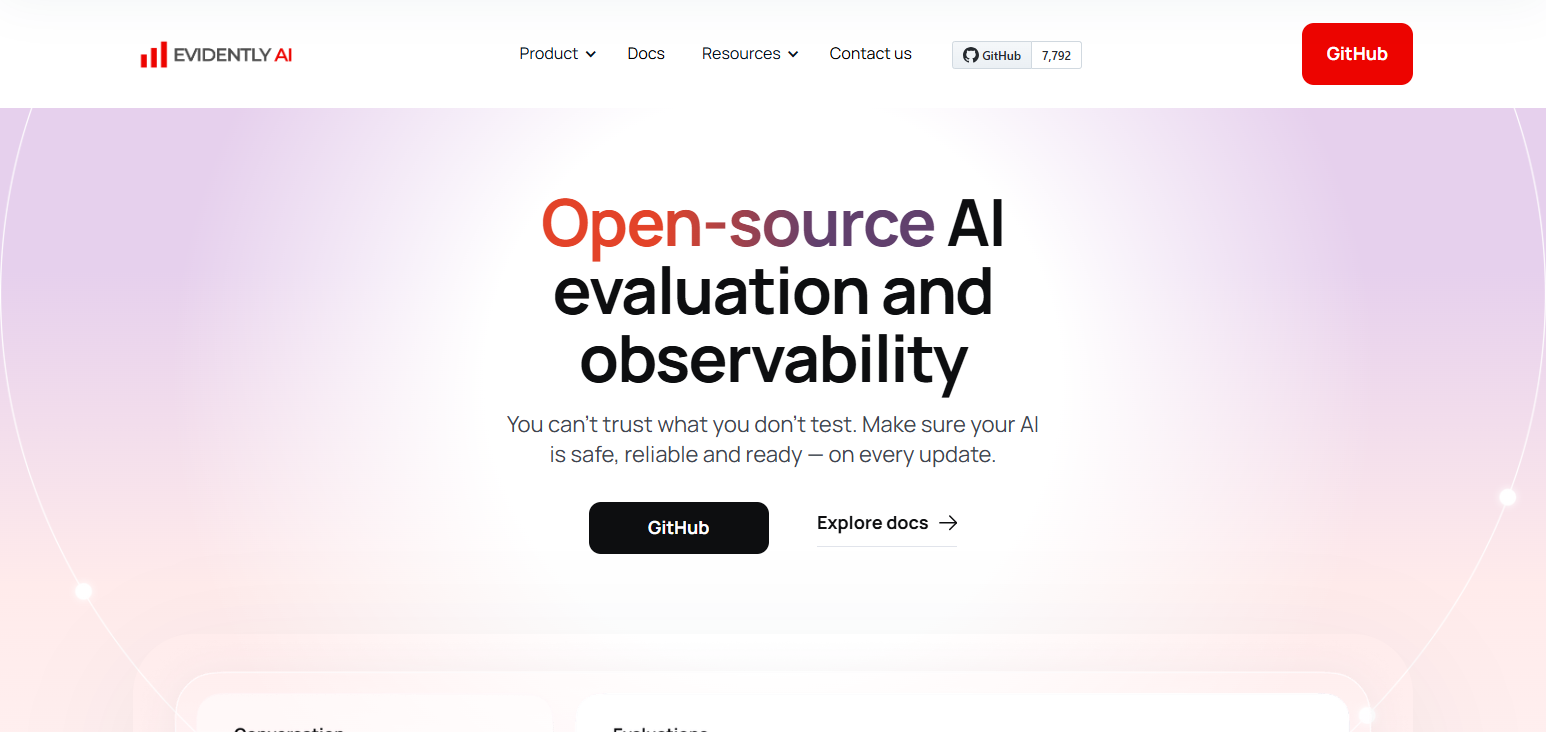
Evidently AI caters to organizations that want to have a continuous performance overview of their AI systems and to identify potential degradation of AI quality.
Its flexible systems approach enables developers and organizations to adopt and sustain iterative improvements on AI and machine learning systems with a focus on enhancement of AI reliability.
Evidently AI Features
- Monitors production ML models and detects changes in the data.
- Analyzes if deployed models still meet the desired expectations in business.
- Gives constant feedback on quality of ML systems.
- Detects slow, subtle decreases in AI performance before they cause big problems.
- Customer-driven monitoring to improve AI models.
| Pros | Cons |
|---|---|
| Provides open-source AI monitoring capabilities. | Requires technical knowledge for customization. |
| Helps detect model drift and data quality issues. | Limited enterprise features compared with premium platforms. |
| Flexible solution for machine learning monitoring. | May require additional tools for complete observability. |
| Useful for developers building reliable AI systems. | Advanced reporting may need extra configuration. |
| Supports continuous evaluation of AI performance. | Less suitable for non-technical users. |
6. LangSmith
LangSmith has been named one of the Best AI Observability Platforms for developers with large language model based applications. The platform aids teams in the analysis of the way AI applications comprehend data, formulate responses, and how the models behave during actual usage.
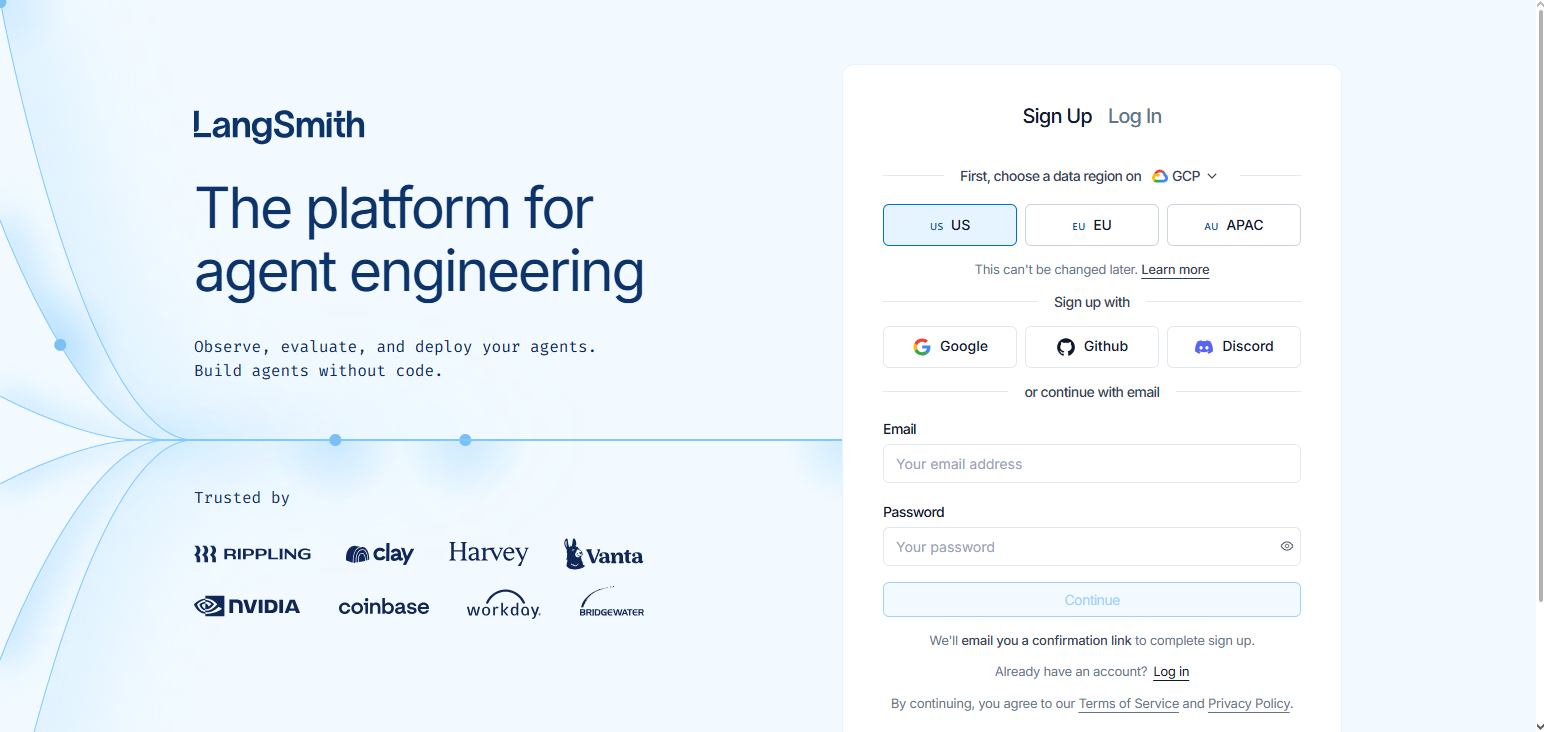
LangSmith is specialized in the surveillance and optimization of applications built using LangChain workflows. This platform gives the developer the ability to evaluate the interactions that AI has with users, recognize the limitations and amend the operation of the application.
The companies that have integrated AI Assistants, Chatbots, and Agent Systems rely on LangSmith to provide a more reliable and functional generative AI System.
LangSmith Features
- Monitors workflow and interaction with LLMs.
- Provides tools for developers to analyze AI responses in production.
- Optimizes AI applications based on LangChain.
- Analyzes AI assistants and chatbots to find their shortcomings.
- Provides analysis to improve reliability of generative AI.
| Pros | Cons |
|---|---|
| Provides detailed monitoring for LangChain applications. | Best suited for LangChain-based AI projects. |
| Helps debug and improve LLM workflows. | Limited usefulness outside LLM applications. |
| Supports evaluation of AI-generated responses. | Can require developer knowledge for setup. |
| Improves reliability of AI assistants and agents. | Costs may increase with higher usage. |
| Useful for generative AI application development. | Beginners may need time to understand workflows. |
7. OpenLLMetry
OpenLLMetry is a specialist Best AI Observability Platforms category and gives an appeal to visibility in the applications of large language models. The platform is able to enhance the understanding of workflows of AI by mapping the interactions of models, the behavior of applications and the performance of systems.

OpenLLMetry is targeted at teams that appreciate the need for bespoke monitoring in generative AI and its open-source design offers a completely flexible observability approach to Control AI efficiently across various development domains.
OpenLLMetry Features
- Views workflows for applications using large language models.
- Evaluates interactions with AI models and system performance.
- Custom monitoring for predictive AI models.
- Open-source framework for flexible observability.
- Helps developers govern AI systems in various contexts.
| Pros | Cons |
|---|---|
| Open-source framework provides customization flexibility. | Requires technical expertise for deployment. |
| Helps monitor large language model applications effectively. | Needs additional infrastructure management. |
| Supports integration with existing observability systems. | Limited out-of-the-box enterprise support. |
| Provides transparency into AI workflows. | Configuration can be complex for beginners. |
| Suitable for developers building custom AI solutions. | May require manual setup compared with paid tools. |
8. Galileo AI
Galileo AI is one of the Best AI Observability Platforms because it provides businesses with the tools to enhance the reliability and quality of generative AI applications. The platform strives to care more for AI responses and recognizes where applications may be generating inconsistent or even inaccurate results.

Galileo AI lends a hand to teams that are building complex AI systems and are in dire need of aids to analyze the way applications behave and the quality of their outputs.
Organizations use Galileo AI to improve the quality of AI systems that are deployed into production and improve user experience. It also helps in the optimization of AI performance.
Galileo AI Features
- Analyzes generative AI responses for quality and consistency.
- Finds wrong outputs and troubleshoots AI application issues.
- Builds more reliable AI-based applications.
- Analyzes AI outputs to improve the user experience.
| Pros | Cons |
|---|---|
| Helps evaluate generative AI output quality. | Primarily focused on generative AI applications. |
| Identifies inaccurate and inconsistent AI responses. | Pricing details may vary based on usage. |
| Improves AI application reliability and user experience. | Requires understanding of AI evaluation methods. |
| Supports teams developing advanced AI systems. | Smaller teams may find it resource-intensive. |
| Provides valuable insights into AI performance. | May need integration with other monitoring tools. |
9. Humanloop
Humanloop is a budding Best AI Observability Platforms solution aimed at larger language models and AI-centric applications. The platform assists in the evaluation of AI responses, the quality of applications, and the management of the evolving process of AI systems.
Humanloop acts as a bridge between the development team and the users, providing feedback to enhance the applications of AI.

Humanloop is extensively used AI solutions especially AI assistants and customer support systems. Additionally, applications that are meant for enterprises and require constant assessment for perfection to foster quality user experiences are built using Humanloop.
Humanloop Features
- Analyzes AI responses and boosts application performance.
- Helps teams govern the progressive enhancement of AI systems.
- Uses feedback loops for better AI applications.
- Assists in developing AI-based assistants and enterprise apps.
- Monitors performance and quality of AI-based language models.
| Pros | Cons |
|---|---|
| Helps improve AI applications through feedback analysis. | Mainly designed for LLM-based applications. |
| Supports prompt and model improvement workflows. | May require developer involvement for optimization. |
| Useful for enterprise AI assistants and applications. | Not focused on traditional ML monitoring. |
| Helps maintain consistent AI response quality. | Advanced capabilities may increase costs. |
| Connects user feedback with AI improvement processes. | Limited use cases outside AI language applications. |
10. Phoenix AI
Phoenix AI is an open-source option among the Best AI Observability Platforms that helps developers understand and refine the use of language models. This platform allows AI flow observability and helps teams review and analyze the behavior of applications in order to hone in on improvements.

Complex AI systems are difficult to develop, and Phoenix AI helps by showing developers how the different system components interact. The open-source nature allows flexibility and helps organizations build generative AI systems with greater control, transparency, and reliability.
Phoenix AI Features
- Open-source monitoring for large language model applications.
- Helps developers analyze behavioral patterns of AI applications.
- Helps clear up the complexities of generative AI systems
- Provides better transparency in AI and improves development flexibility
- Helps companies build reliable systems for AI quickly and easily
| Pros | Cons |
|---|---|
| Open-source platform provides strong flexibility. | Requires technical knowledge for installation and management. |
| Helps analyze LLM workflows and AI behavior. | Enterprise support options may be limited. |
| Improves transparency in generative AI systems. | Requires additional tools for complete monitoring. |
| Supports developers building reliable AI applications. | Not ideal for non-technical users. |
| Offers customizable observability for AI projects. | Community-based support may vary. |
Conclusion
To summarize, the Best AI Observability Platforms provide organizations with the tools needed to keep track of and analyze the performance of AI systems and suggest means of improvement. These platforms furnish organizations with clear visibility of ML models as well as LLMs and generative AI.
When issues are performatively identified and addressed, business customizable AI solutions will be reliably and optimally effective. AI observability tools improve performance, reliability, and transparency. These observability tools help businesses build scalable and digital optimizations.
FAQ
Why are AI Observability Platforms important?
They help detect AI issues, improve reliability, and maintain model performance.
Which are the Best AI Observability Platforms?
Arize AI, Datadog, Fiddler AI, and LangSmith are popular choices.
How do AI Observability Platforms work?
They track AI behavior, performance data, and operational changes continuously.
Can AI observability monitor large language models?
Yes, many platforms monitor LLM applications, responses, and workflows.