In this article, I will discuss the Best AI Agent Infrastructure Platforms to help developers and companies create and manage AI agents that are capable of performing various tasks.
These platforms help you integrate different data sources to design automate tasks and build complex AI workflows. We will examine the platforms with the most advanced options to build AI in an enterprise or developer context.
Key Points & Best AI Agent Infrastructure Platforms
| AI Agent Infrastructure Platform | Short Explanation (12 Words) |
|---|---|
| OpenAI Agent Platform | Builds intelligent AI agents with tools, reasoning, automation, and scalable deployment capabilities. |
| Microsoft Azure AI Agent Service | Provides enterprise AI agent development with secure cloud integration and management features. |
| Amazon Bedrock Agents | Enables developers creating generative AI agents using foundation models and automation. |
| Google Vertex AI Agent Builder | Helps businesses build AI agents with search, data, and conversational intelligence. |
| LangChain | Offers frameworks for developing AI agents with workflows, tools, and integrations. |
| LlamaIndex | Connects AI agents with enterprise data sources for advanced knowledge retrieval. |
| CrewAI | Creates collaborative multi-agent systems where specialized agents complete complex tasks together. |
| AutoGen | Microsoft framework enabling conversational multi-agent collaboration for automated problem-solving workflows. |
| Semantic Kernel | Provides AI orchestration tools connecting agents, plugins, memory, and business applications. |
| Haystack | Open-source framework building AI agents with retrieval, pipelines, and search capabilities. |
10 Best AI Agent Infrastructure Platforms
1. OpenAI Agent Platform
At the foundation of system building is OpenAI Agent Platform. It is an infrastructure solution that offers developers and businesses the tools they need to create AI assistants that understand and help their customers, gather, analyze and assist in the everyday operations and decisions of a business.
It has strong language technology with a deployment option that grows with the need of your application. It has good integrations.

Among the Best AI Agent Infrastructure Platforms, OpenAI Agent Platform has sophisticated models and a developer focused platform that helps create autonomous AI applications.
OpenAI Agent Platform – Pros & Cons
| Pros | Cons |
|---|---|
| Advanced AI reasoning and natural language understanding capabilities. | Higher usage costs for large-scale enterprise applications. |
| Supports tools, APIs, and automated workflow integrations. | Requires technical knowledge for advanced customization. |
| Easy development of intelligent AI assistants and agents. | Dependency on OpenAI ecosystem and service availability. |
| Scalable infrastructure for business applications and deployments. | Some complex workflows may require additional development. |
| Strong developer ecosystem with continuous AI improvements. | Data privacy concerns for sensitive business information. |
2. Microsoft Azure AI Agent Service
Microsoft Azure AI Agent Service offers customizable, enterprise grade solutions for organizations to create, deploy and manage AI agents. It keeps organizations’ data and AI agents secure while giving them the ability to connect their AI agents to their business data, apps, APIs, and workflows.
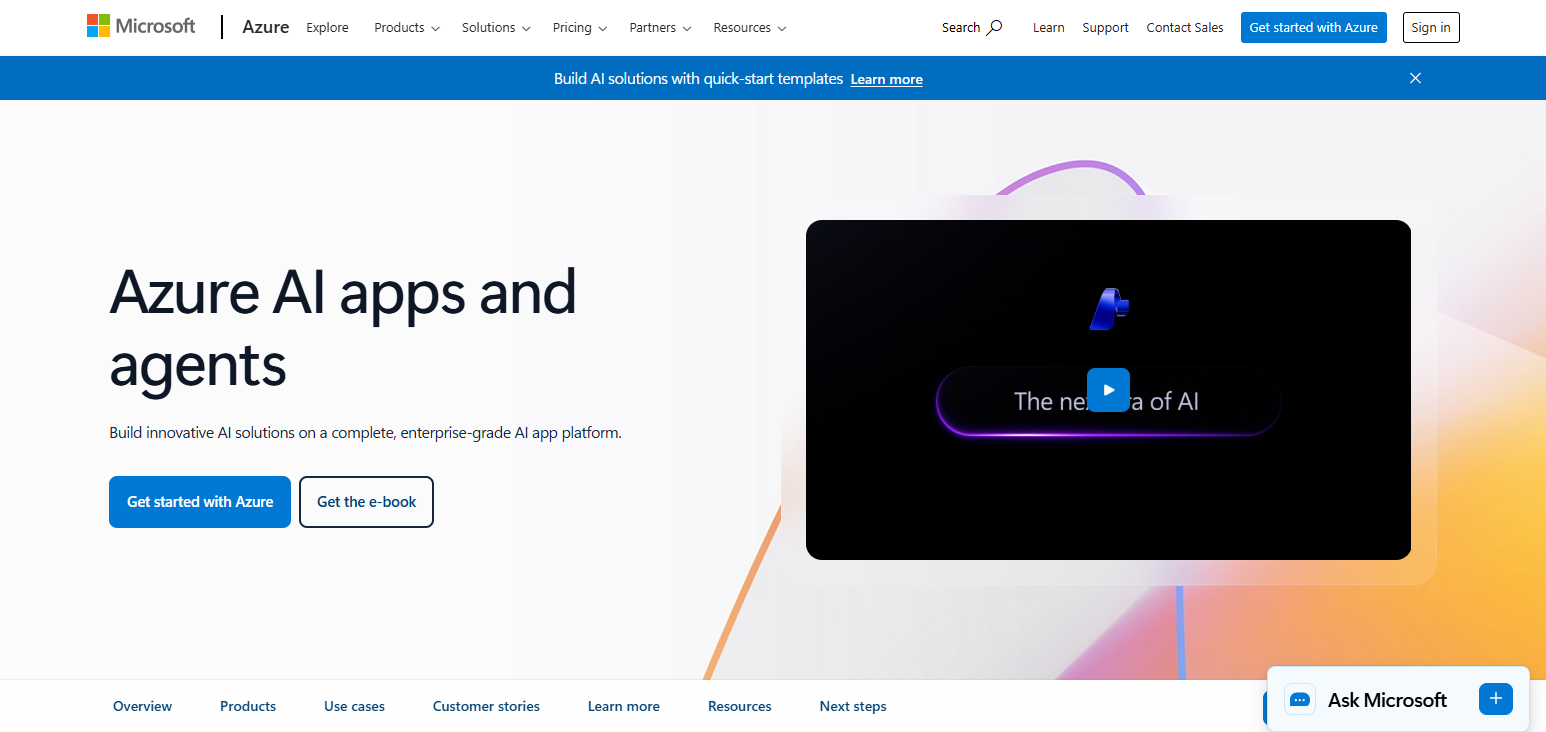
It helps with automation and integrated knowledge-base customer service across various markets. For organizations in need of a scalable AI solution with integrated cloud services, monitoring, and predictable performance, Microsoft Azure AI Agent Service is one of the Best AI Agent Infrastructure Platforms.
Microsoft Azure AI Agent Service – Pros & Cons
| Pros | Cons |
|---|---|
| Enterprise-grade security and compliance features. | Can be complex for beginners to configure. |
| Seamless integration with Microsoft Azure services. | Cloud expenses may increase with heavy usage. |
| Supports business data connections and automation workflows. | Requires Azure knowledge for efficient management. |
| Provides reliable scalability for large organizations. | Advanced features may need additional technical skills. |
| Strong monitoring and management capabilities. | Vendor dependency on Microsoft cloud infrastructure. |
3. Amazon Web Services Bedrock Agents
The Amazon Web Services Bedrock Agents solution helps developers construct generative AI agents using foundation models, enterprise data, and automated processes.
With this solution, organizations can develop sophisticated AI assistants that understand user requests, perform actions, and respond in a data-driven and personalized manner.
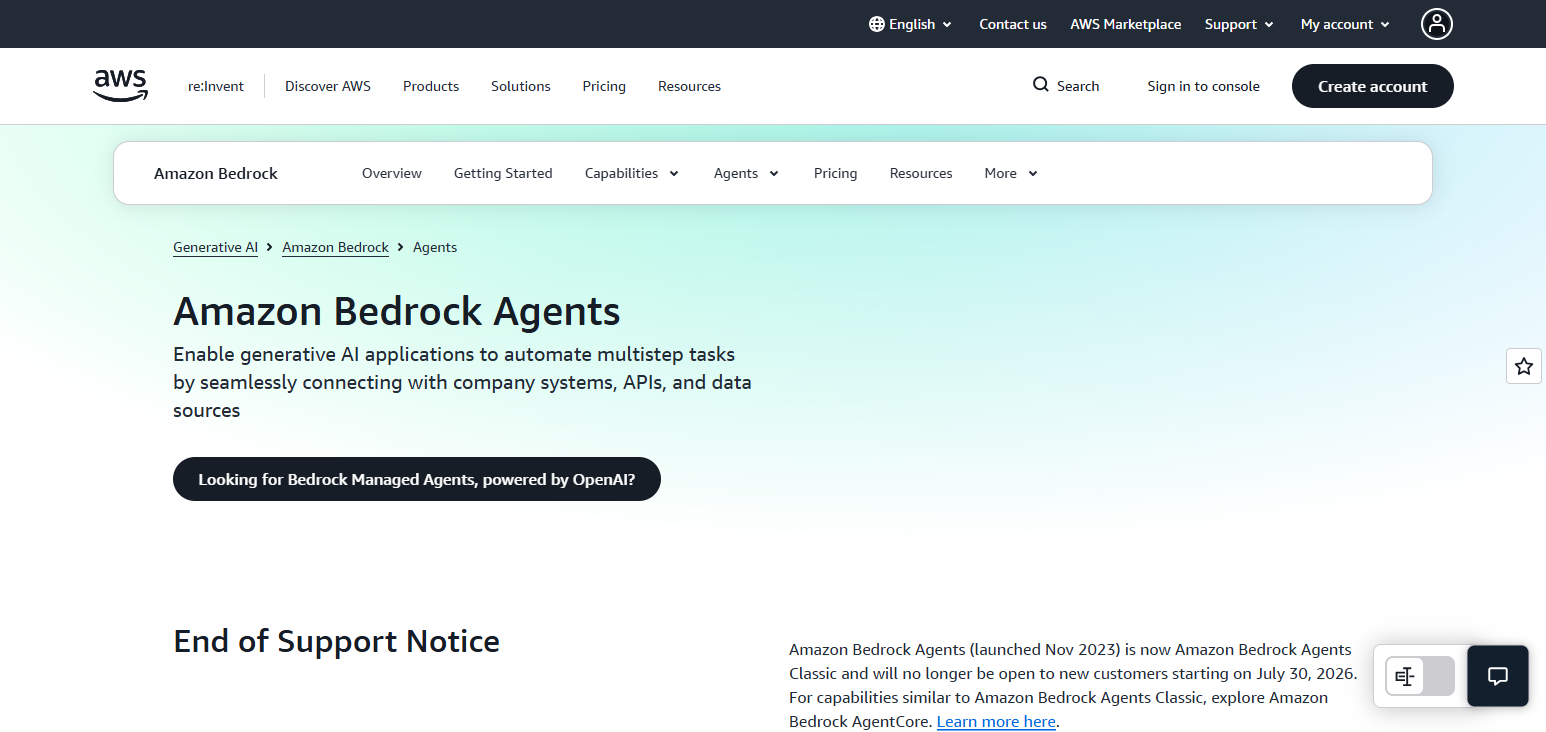
This solution supports a range of AI models and data connections, and integrates with numerous AWS services. As one of the Best AI Agent Infrastructure Platforms, Amazon Bedrock Agents offers clients automation, strong scalability, and data privacy controls alongside flexible AI agent infrastructure.
Amazon Bedrock Agents – Pros & Cons
| Pros | Cons |
|---|---|
| Supports multiple foundation AI models through AWS. | Pricing structure can be difficult to understand. |
| Provides secure integration with AWS cloud services. | Requires AWS expertise for implementation. |
| Helps create production-ready generative AI agents. | Limited outside AWS ecosystem flexibility. |
| Offers scalable infrastructure for enterprise applications. | Advanced customization requires developer resources. |
| Strong privacy and security management features. | Beginners may face a steep learning curve. |
4. Google Vertex AI Agent Builder
Google Vertex AI Agent Builder is a solution that allows companies to build sophisticated AI assistants using advanced search and conversational AI as well as data processing technologies.
This solution assists developers in building applications that help users formulate requests, understand user intent, and provide the most appropriate responses in a variety of modalities.

It links with Google Cloud and enterprise data sources to optimize AI. Google Vertex AI Agent Builder is one of the Best AI Agent Infrastructure Platforms as it offers core technologies for ML automation.
Google Vertex AI Agent Builder – Pros & Cons
| Pros | Cons |
|---|---|
| Powerful machine learning and conversational AI capabilities. | Requires Google Cloud technical knowledge. |
| Excellent integration with Google data services. | Costs can increase with high-volume usage. |
| Supports enterprise search and knowledge retrieval. | Complex configurations for advanced AI projects. |
| Provides scalable AI development infrastructure. | Limited customization compared with open-source frameworks. |
| Strong analytics and AI optimization features. | Dependency on Google Cloud platform services. |
5. LangChain
LangChain incorporates workflows, tools and memory systems as well as integrations. This makes it easier to connect AI to a database or API, a document or other computer programs. LangChain supports workflows
for complex agents and retrival augmented generation (RAG) and automation of tasks. As one of the Best AI Agent Infrastructure Platforms, LangChain attracts developers due to its flexibility, large community support and its ability to make developing custom AI agents easier.
LangChain – Pros & Cons
| Pros | Cons |
|---|---|
| Open-source framework with flexible AI agent development. | Requires programming skills for implementation. |
| Supports multiple AI models and integrations. | Documentation can be challenging for beginners. |
| Enables complex workflows with tools and memory. | Rapid updates may affect application stability. |
| Large developer community and ecosystem support. | Requires additional services for production deployment. |
| Ideal for customized AI agent applications. | Debugging complex workflows can be difficult. |
6. LlamaIndex
LlamaIndex works to connect AI agents to an organizations data, documents, databases and knowledge graphs. Its primary focus is on improving the quality of information retrieval and allowing AI applications to access data that is accurate and relevant.
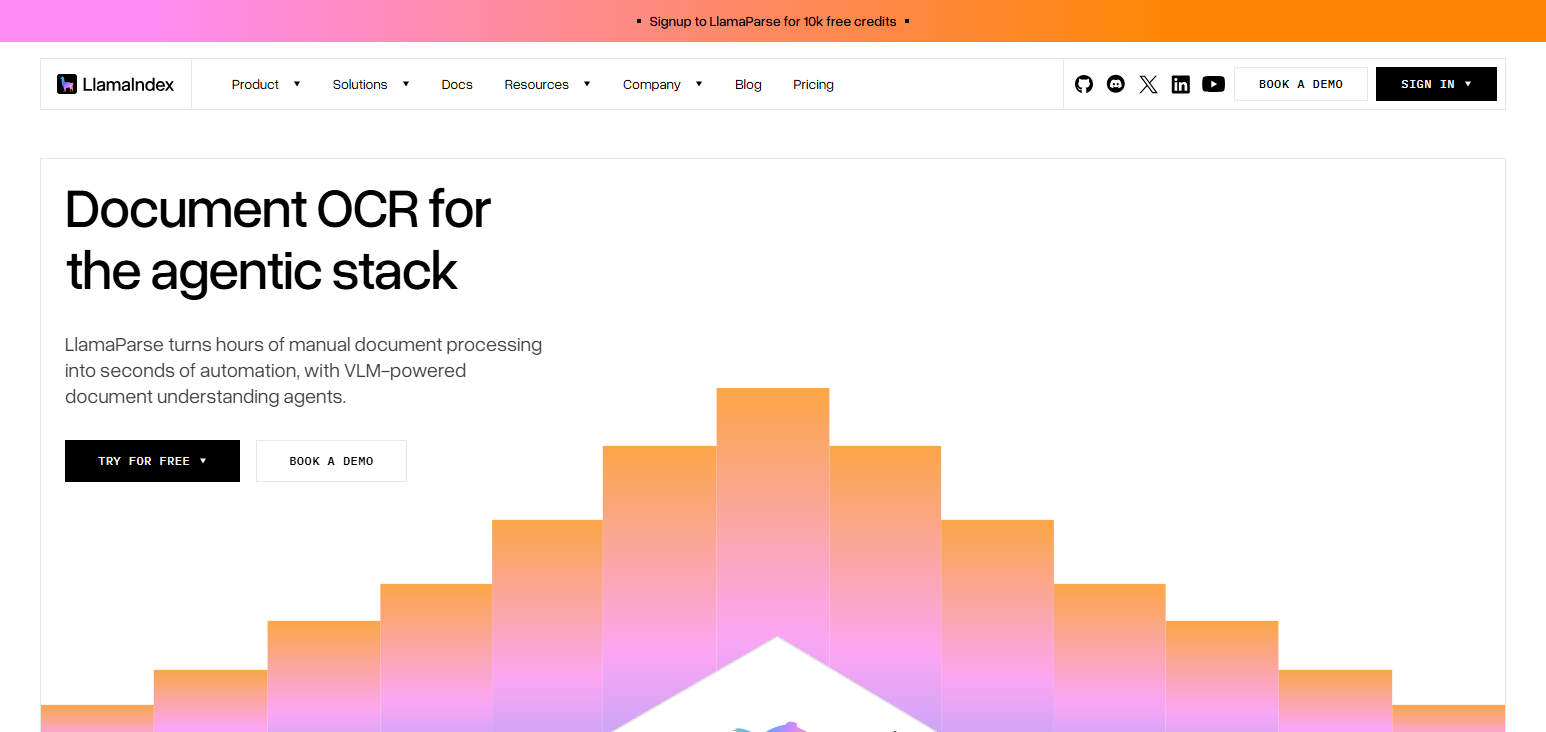
LlamaIndex can enable organizations to build intelligent assistants, research tools or AI agents based on knowledge. Among the best AI Agent Infrastructure Platforms, LlamaIndex is ideal for organizations in need of AI agents that can handle private data, perform complex searches and do contextual reasoning and responding, all within an efficient framework.
LlamaIndex – Pros & Cons
| Pros | Cons |
|---|---|
| Excellent data connection and retrieval capabilities. | Requires technical expertise for customization. |
| Helps AI agents access private business knowledge. | Large datasets may require optimization efforts. |
| Supports retrieval-augmented generation applications. | Advanced features may increase development complexity. |
| Works with multiple databases and AI models. | Performance depends on data quality. |
| Useful for enterprise knowledge management systems. | Some features require additional configuration. |
7. CrewAI
CrewAI is a multi-agent AI framework built on a plug-and-play approach. Building on a framework of specialized agents, CrewAI allows agents to work collaboratively to achieve a goal and automate complex flows. CrewAI is often used within research or other business automation frameworks.
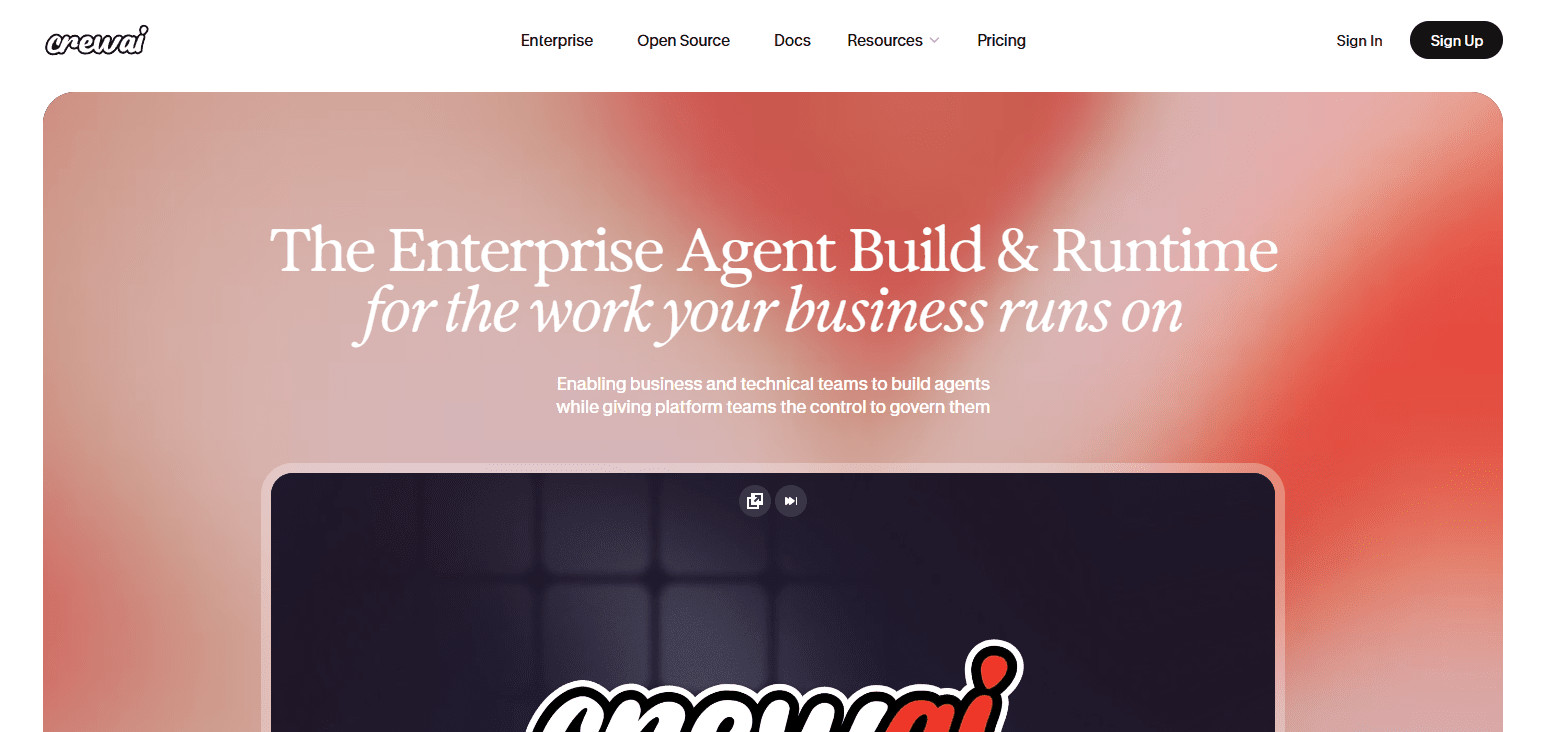
Among the best AI Agent Infrastructure Platforms, CrewAI allows a relatively simpler approach for building a framework of AI systems that collaborate and communicate in order to optimize their efforts.
CrewAI – Pros & Cons
| Pros | Cons |
|---|---|
| Enables collaboration between multiple AI agents. | Still developing compared with mature frameworks. |
| Simple approach for building AI agent teams. | Requires testing for complex workflows. |
| Supports role-based agent task management. | Limited enterprise-level management features. |
| Useful for automation and research tasks. | Performance depends on agent design quality. |
| Open-source and developer-friendly framework. | May require custom coding for advanced needs. |
8. AutoGen
AutoGen technology allows developers to employ collaborative intelligence across conversational AI apps for designing systems that automate business processes and solve complex problems.
Agents designed using AutoGen technology are able to converse with one another, exchange information, and perform their tasks as defined by their assigned roles. AutoGen supports advanced AI experimentation and automation systems as well as enterprise-grade AI applications.

As one of the Best AI Agent Infrastructure Platforms, AutoGen gives organizations the flexibility to develop multi-agent solutions tailored for productivity, better decision-making, and automating operations within their businesses.
AutoGen – Pros & Cons
| Pros | Cons |
|---|---|
| Supports advanced multi-agent communication systems. | Requires programming knowledge for effective usage. |
| Enables automated problem-solving workflows. | Complex agent conversations need careful management. |
| Developed with strong Microsoft research support. | Can consume significant computing resources. |
| Flexible framework for AI experimentation. | Production deployment may require extra infrastructure. |
| Supports customized agent collaboration models. | Learning curve for beginners is moderate. |
9. Semantic Kernel
Semantic Kernel is an AI orchestration framework that links AI models with plugins, memories, APIs, and business apps to build intelligent agents capable of following instructions, undertaking tasks, and even engaging with other software.

In the area of enterprise AI development, Semantic Kernel provides ample programming and integration options, making it one of the Best AI Agent Infrastructure Platforms. It is used extensively for the creation of secure, scalable AI applications integrating automation, business logic reasoning, and intelligent systems.
Semantic Kernel – Pros & Cons
| Pros | Cons |
|---|---|
| Connects AI models with business applications easily. | Requires understanding of AI orchestration concepts. |
| Supports plugins, memory, and workflow automation. | Less beginner-friendly than simple AI tools. |
| Strong integration with Microsoft technologies. | Smaller community compared with LangChain. |
| Helps build scalable enterprise AI solutions. | Advanced features require technical development. |
| Supports multiple programming languages. | Setup can be complex for new users. |
10. Haystack
Haystack is an open-source AI agent infrastructure framework for retrieval systems and search pipelines with embedded knowledge applications. It helps developers create AI solutions that integrate language models with enterprise information and high-end search features.
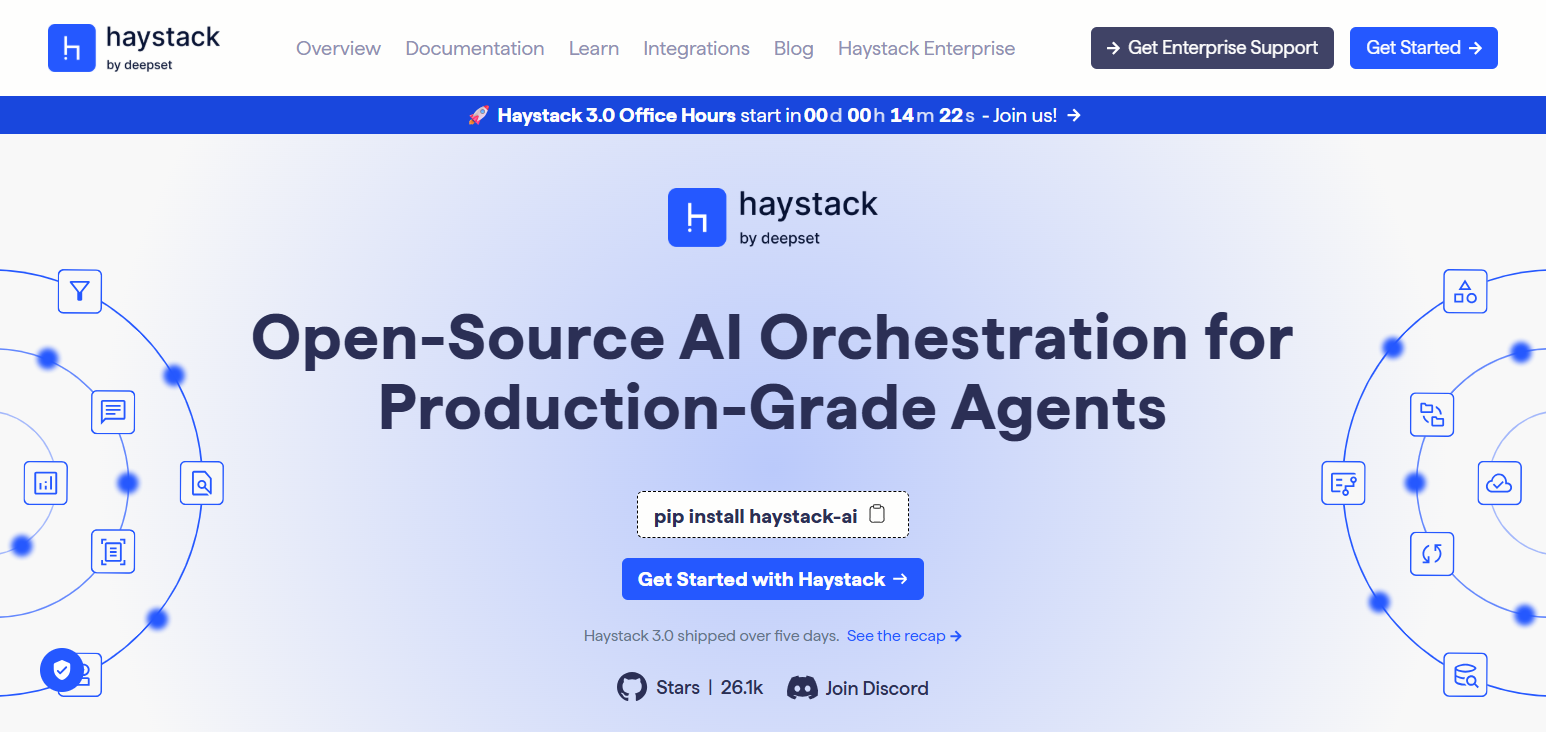
Haystack supports retrieval-augmented generation and question-answering systems and intelligent chatbots. As one of the Best AI Agent Infrastructure Platforms, Haystack is what organizations look for in AI infrastructure that integrates choice data retrieval and advanced application development.
Haystack – Pros & Cons
| Pros | Cons |
|---|---|
| Powerful open-source framework for AI search applications. | Requires technical skills for implementation. |
| Excellent retrieval-augmented generation support. | Initial setup can be time-consuming. |
| Supports document processing and knowledge systems. | Needs optimization for large-scale deployments. |
| Flexible integration with databases and AI models. | Less suitable for simple AI projects. |
| Strong customization options for developers. | Requires maintenance of infrastructure components. |
Conclusion
Conclusion Top AI Agent Infrastructure PlatformsThe best AI agent infrastructure platforms allow companies to build automated, intelligent, and scalable AI solutions.
With OpenAI Agent Platform, Azure AI Agent Service, Amazon Bedrock Agents, LangChain, and LlamaIndex, companies can enhance their workflow and productivity while making better business decisions.
When building an AI solution, security, and flexibility will dictate the platform choice as well as automation goals and the extent the platform will need to be integrated into the business.
FAQ
Why use AI Agent Infrastructure Platforms?
These platforms simplify AI agent development by providing tools for automation, data integration, workflow management, model connectivity, and scalable deployment.
Which are the Best AI Agent Infrastructure Platforms in 2026?
Some of the Best AI Agent Infrastructure Platforms include OpenAI Agent Platform, Microsoft Azure AI Agent Service, Amazon Bedrock Agents, Google Vertex AI Agent Builder, LangChain, LlamaIndex, CrewAI, AutoGen, Semantic Kernel, and Haystack.
Is OpenAI Agent Platform suitable for businesses?
Yes, OpenAI Agent Platform is suitable for businesses because it supports intelligent automation, customer assistants, API integrations, and scalable AI application development.
Can AI Agent Infrastructure Platforms integrate with business data?
Yes, AI agents can automate customer support, research tasks, data analysis, workflow management, reporting, and many other business operations.