
This article will cover the Top White Label CFD Platforms that assist brokers and firms in finance with the rapid deployment of professional trading solutions.
Having access to advanced trading instruments, liquidity, and customizable, scalable frameworks. We will analyze the key features, the white label CFD solutions, and how the platforms aid the trade practices and business expansion.
What Is a White Label CFD Platform?
A White Label CFD Platform is an existing CFD solution. It helps brokers and various investing companies aid their clients with CFD trading without needing to build all of the tech themselves. These platforms have everything from tools and systems to interfaces and even provided liquidity.
Clients get to customize the system how they want, with their own logo and design. All the while, they are getting to use the existing and provided infrastructure. This helps cut development costs and time so they can be ready to go in a quicker time frame.
Why Businesses Choose White Label CFD Platforms?
- Speed to Industry: Brokers can quickly initiate trading services by using CFD infrastructure already built.
- Reduced Operating Costs: Brokers don’t have to spend time and money to build, test, and deploy their own CFD trading platforms.
- Trader’s Edge: White label liquidity plus CFDs and other trading services gives an advantage to retail traders.
- Experience Enhancement: Unique branding done on platforms gives better customer experience.
- Accommodating Expansion: Good technology that is evolving fosters brokerage and trading growth.
Key Points & Best White Label CFD Platforms
| Best White Label CFD Platform | Explanation |
|---|---|
| MetaTrader 5 | Advanced multi-asset CFD platform offering powerful trading tools and customization options. |
| MetaTrader 4 | Popular CFD solution with automated trading, indicators, and broker branding flexibility. |
| cTrader | Provides transparent CFD trading, advanced charts, and customizable broker solutions. |
| Match-Trader | Modern white label platform supporting brokers with flexible trading infrastructure. |
| DXtrade | Professional CFD platform delivering intuitive interfaces and risk management features. |
| B2Broker | Complete white label CFD package with liquidity and brokerage technology. |
| Leverate | Offers brokerage solutions including CRM, trading platforms, and CFD tools. |
| Finalto | Delivers institutional CFD technology with liquidity, pricing, and risk solutions. |
| X Open Hub | Cloud-based CFD platform enabling brokers with scalable trading infrastructure. |
| Saxo Bank | White label CFD services providing global markets and trading capabilities. |
10 Best White Label CFD Platforms
1. MetaTrader 5
MetaTrader 5 is a highly capable platform for brokers. It provides Forex, commodities, indices, stocks, and crypto trading to brokers using a highly customizable platform.
CFD brokers can strengthen customer experience and easily manage trading operations using MetaTrader 5. The platform provides advanced order types and offers customizable interfaces.
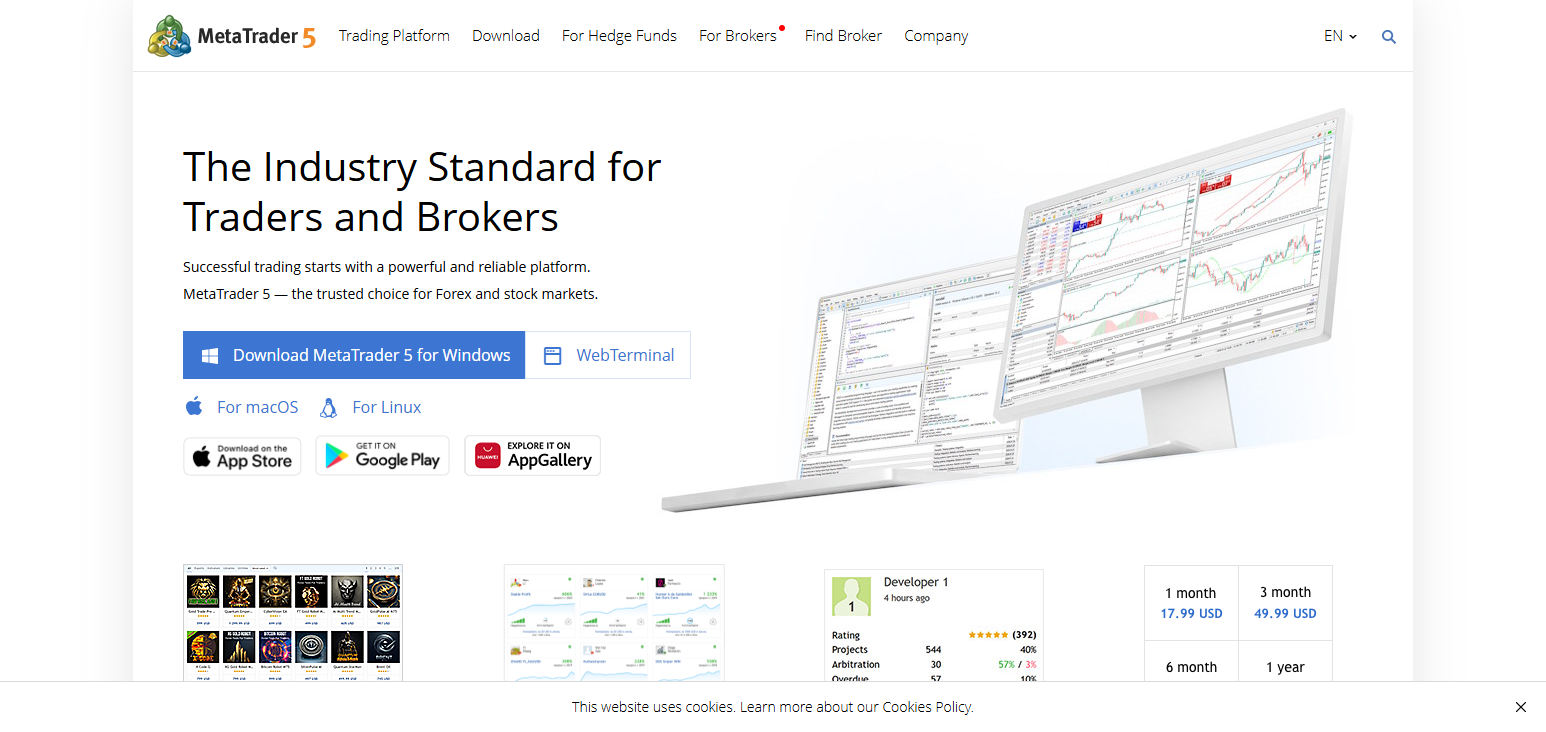
Traders are given the option to create automated trading using charting tools. The platform has branding options to allow brokers to launch a new trading platform.
The platform has flexible order types and is capable of advanced analysis. It even supports algorithmic trading through the use of Expert Advisors.
MetaTrader 5 Features
- Multi-Asset Trading Support: Empowers brokers to deal with CFDs for forex, stocks, commodities, indices, and cryptocurrency.
- Advanced Charting Tools: Offers various charts, indicators, and tools for market analysis.
- Algorithmic Trading: Accepts Expert Advisors for fully automated trade execution.
- Custom Branding Options: Brokers can modify the platform to reflect their brand.
- Risk Management Tools: Features advanced order types and management tools for brokers.
| Pros | Cons |
|---|---|
| Supports multiple asset classes including forex, stocks, and crypto CFDs. | Requires technical knowledge for advanced customization and setup. |
| Provides powerful charting tools and professional market analysis features. | Higher resource requirements compared to simpler platforms. |
| Offers automated trading through Expert Advisors and algorithms. | Some beginners may find features overwhelming initially. |
| Allows brokers to customize branding and platform appearance. | Licensing and maintenance costs can be expensive. |
| Includes advanced risk management and order management tools. | Requires regular updates for optimal performance. |
2. MetaTrader 4
MetaTrader 4 is a highly favored platform among brokers due to its reliability and simplicity. The platform has good support for brokers and provides a trading interface with rapid execution, customizable charts, automated trading, and technical indicators.
A major plus for brokers is the trade community that exists for the platform. It also offers a familiar interface to brokers.

MetaTrader 4 allows brokers to create fully branded trading platforms integrated with brokerage tools and risk management. The platform has also placed a focus on supporting the Forex and CFD trade markets. For both newly established and existing brokers, the platform also provides cost efficient trading solutions.
MetaTrader 4 Features
- User-Friendly Interface: Provides easy navigation whether users are novice or expert CFD traders.
- Automated Trading: Algorithmic trading via Expert Advisors and automated strategies is supported.
- Technical Indicators: Tools for market analysis and for facilitating trading decisions are available.
- Broker Customization: Simplifies the process for brokers to provide a fully branded CFD trading platform.
- Fast Execution System: Guarantees order processing and trading with little to no delays.
| Pros | Cons |
|---|---|
| Easy-to-use interface suitable for beginners and professionals. | Limited support for newer financial instruments. |
| Strong automated trading ecosystem with Expert Advisors. | Older technology compared with modern platforms. |
| Provides extensive technical indicators and trading tools. | Less advanced charting features than MT5. |
| Offers reliable execution and broker customization options. | Limited multi-asset trading capabilities. |
| Has a large global trading community and support network. | Platform development has slowed significantly. |
3. cTrader
cTrader is a highly successful platform for brokers. The platform is favored for its reliance on professional transparency and trading.
cTrader is a highly customizable platform and offers rapid execution, advanced charting, and depth of market trading. Brokers are given the option to launch a completely branded trading platform.
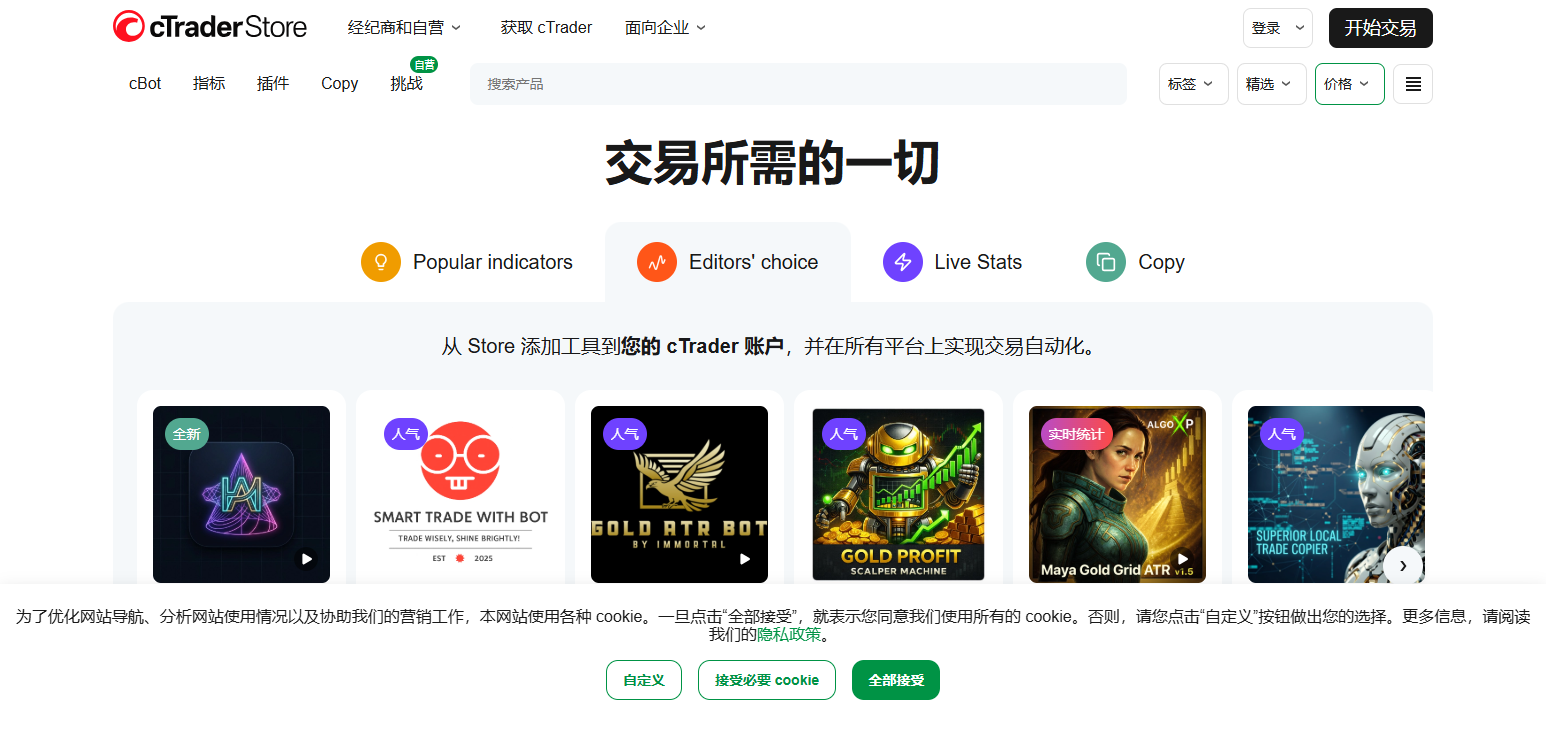
The platform allows for automated trading through cBots, provides in-depth analysis for more informed trading, and offers brokers a great way to improve the trading experience for their clients.
cTrader allows CFD brokers to improve the trading experience for their clients by providing a clear view on the process, quick order filling, and a wide range of customizable options for different types of trading setups.
cTrader Features
- Transparent Trading Environment: Market access and order execution are fully visible.
- Advanced Charting System: Trading tools and charts with indicators are available.
- Customizable Platform Design: Brokers can modify the platform per business needs.
- Automated Trading Solutions: cBots are used for trading algorithms.
- Depth of Market: Provides market data and information to assist with trading.
| Pros | Cons |
|---|---|
| Provides transparent execution with advanced market access features. | Smaller user community compared to MetaTrader platforms. |
| Offers professional charting and analytical trading tools. | Fewer third-party indicators and plugins available. |
| Supports automated trading through cBots technology. | May require additional learning for new users. |
| Provides customizable interfaces for broker branding. | Higher implementation costs for some brokers. |
| Displays market depth for improved trading decisions. | Limited broker adoption compared with MT4 and MT5. |
4. Match-Trader
Match-Trader is a CFD platform that provides brokers a flexible trading infrastructure and the capability to quickly launch their trading services. It provides a full trading solution that brokers can brand, and that integrates their brokerage, through trade tech that is web, mobile, and desktop based. Match-Trader also has a variety of trading tools that makes managing a brokerage simple and efficient.

For the more advanced broker, it also provides a variety of trade tech and liquidity options, Automated Trade capability, and supports the trading of multiple asset classes.
Match-Trader also has a user friendly platform that has very low development costs, while providing traders a platform that has a great trade execution and scalable tech.
Match-Trader Features
- Flexible White Label Solution: Fast and effective branded CFD platforms are offered.
- Multi-Platform Access: Trading can be done via web, desktop and mobile.
- Liquidity Integration: Brokers attain better trade execution by connecting to many liquidity providers.
- Advanced Trading Tools: Offers professional trade tools and trading charts.
- Cost-Effective Infrastructure: Reduces costs and time needed to develop a brokerage using existing technology.
| Pros | Cons |
|---|---|
| Enables quick launch of branded CFD trading platforms. | Less recognized compared with established platforms. |
| Supports web, desktop, and mobile trading access. | Smaller ecosystem of third-party integrations. |
| Provides liquidity connections for better execution. | Limited historical market presence. |
| Offers professional trading tools and features. | Advanced customization may require technical support. |
| Reduces development costs with ready-made solutions. | Some features may depend on provider availability. |
5. DXtrade
Brokers that want to develop a customizable trading technology solution with value added services and improved user experience can do so with DXtrade.
With its highly customizable interface, advanced charting, and risk management and control functionalities, DXtrade covers the full range of trading technology for multiple market and trade environments.
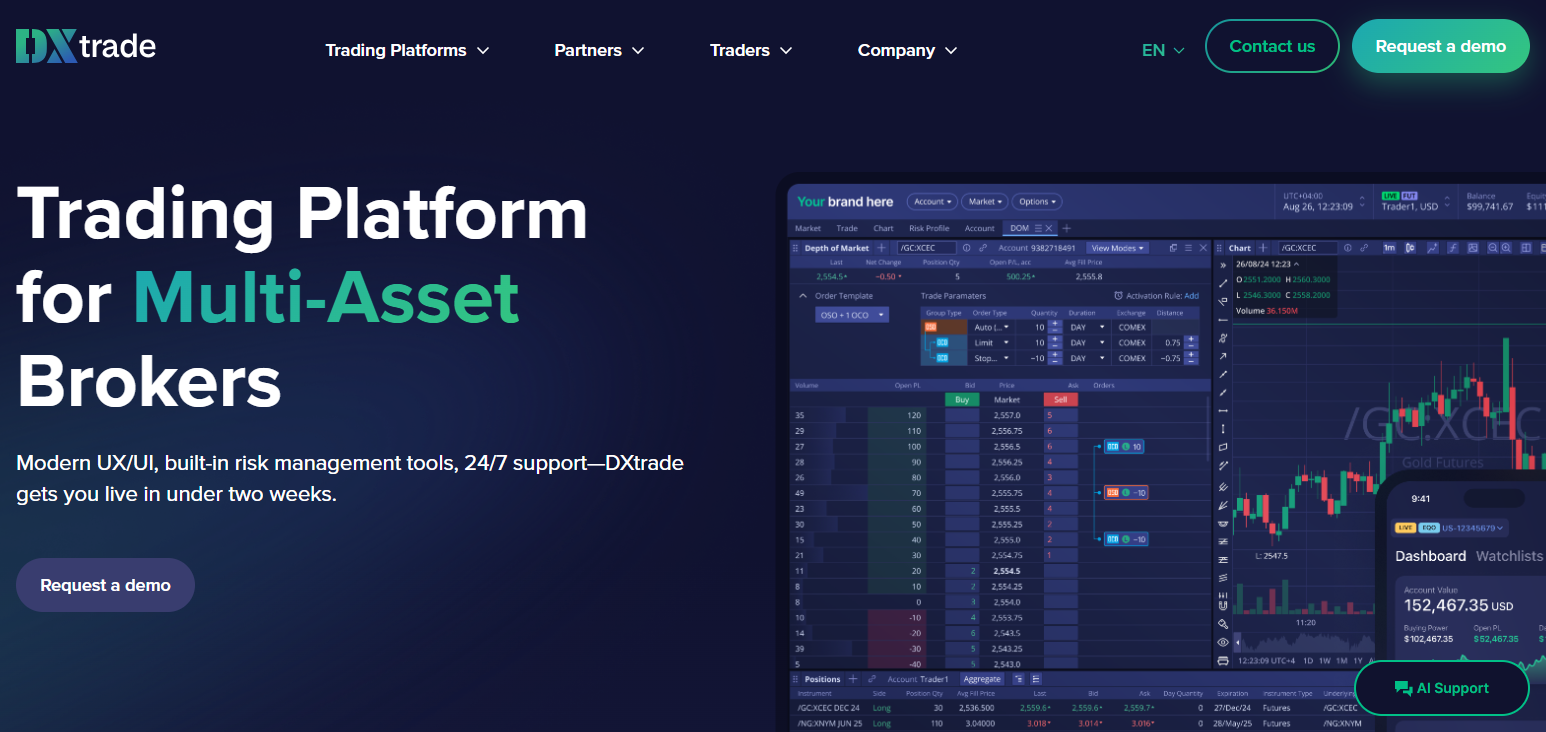
Brokers also have the option of a fully integrated, customizable trading solution with efficient design and a flexible back-office with DXtrade’s innovative technology. DXtrade further provides the control and management of client accounts along the secure CFD trading services for retail and professional traders.
DXtrade Features
- Professional Trading Interface: Tailored modern layout for CFD traders.
- Advanced Risk Management: Tools to manage trading risk and exposure.
- Customizable Workspaces: Personalizable charts and platform settings.
- Multi-Market Support: Trades may be placed on multiple asset classes.
- Back-Office Integration: Integrates with brokerage management services.
| Pros | Cons |
|---|---|
| Provides professional trading interfaces for experienced traders. | May be complex for beginner-level traders. |
| Includes advanced risk management capabilities. | Less popular among retail traders globally. |
| Supports customizable workspaces and layouts. | Limited community resources compared with MT platforms. |
| Offers multi-market trading capabilities. | Integration may require technical expertise. |
| Connects efficiently with brokerage back-office systems. | Costs can be higher for smaller brokers. |
6. B2Broker
With its trading technology, liquidity, and brokerage infrastructure, B2Broker offers a fully imagined white label CFD solution.
With the technology of B2Broker, businesses are able to launch CFD trading infrastructure with all the components needed to run their business and fully integrated trading, payment, liquidity, and even regulatory brokerage services and support.

The platform gives brokers the ability to use advanced professional tools without the need to develop tech from the ground up. B2Broker’s solutions are market agnostic.
They are designed for flexibility and enable firms to develop successful CFD businesses, backed by sound liquidity with highly sophisticated management and operational systems.
B2Broker Features
- Complete Brokerage Package: Comprehensive trading tech solutions, liquidity, CRM, and T-series (Trading & Technology services).
- Liquidity Access: Institutional liquidity with competitive quotes.
- CRM Integration: Automates and simplifies client and account management.
- Payment Solutions: Offers a variety of payment options.
- Scalable Infrastructure: Flexible tech for further brokerage growth.
| Pros | Cons |
|---|---|
| Provides complete brokerage infrastructure and technology solutions. | Full-service packages can involve higher costs. |
| Offers institutional liquidity connections and trading tools. | Requires professional management knowledge. |
| Includes CRM and payment integration features. | Smaller businesses may need additional support. |
| Supports scalable brokerage operations and growth. | Setup process can be complex initially. |
| Reduces need for building technology from scratch. | Dependency on external service provider increases. |
7. Leverate
Leverate provides fully comprehensive, customized white label CFDs to brokers who require fully outsourced brokerage tech. Their offering includes trading solutions as well as back office CRM, as well as risk management and marketing tech. Leverate fast tracks the ability to achieve fully operational and bespoke professional grade CFD broking practice.
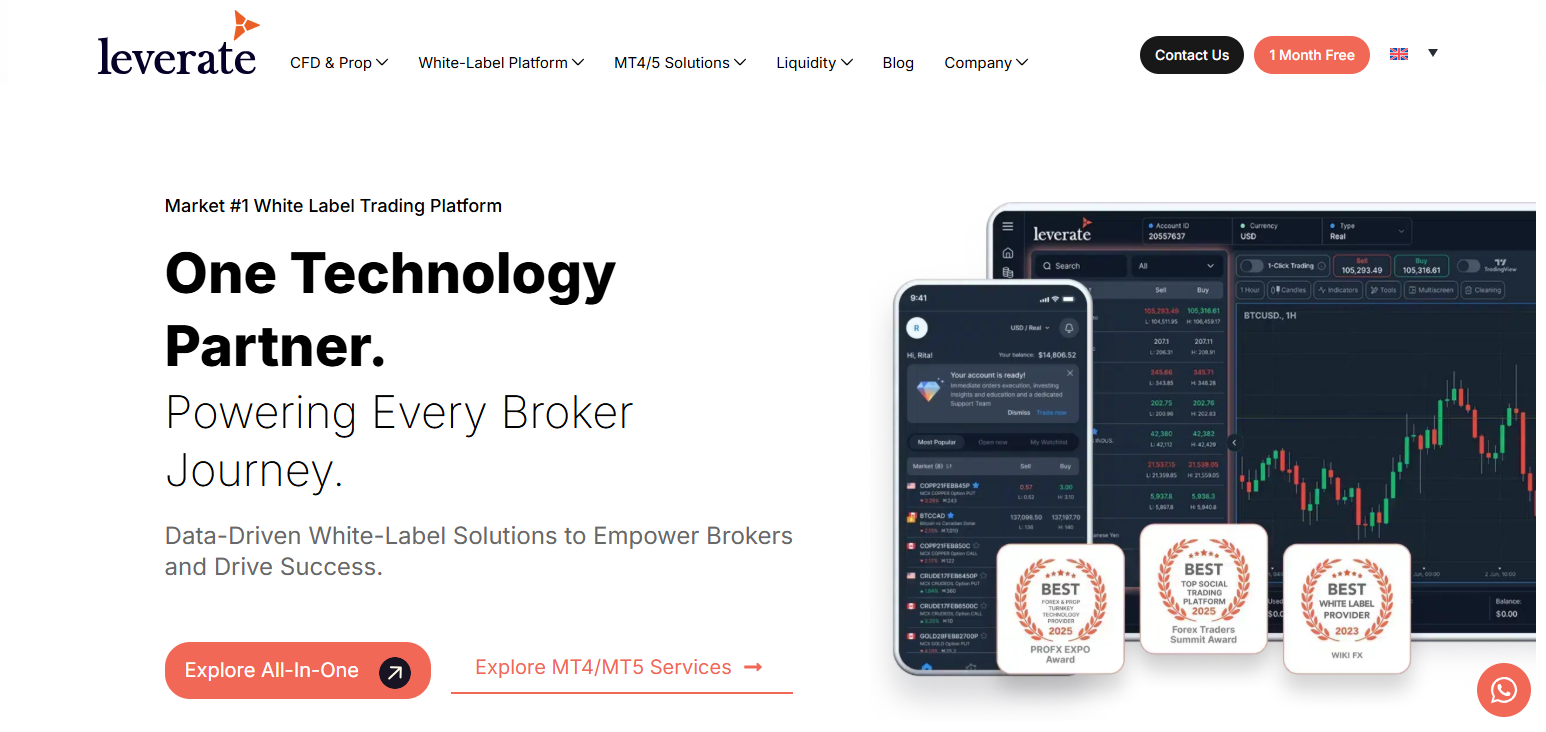
Leverate builds branded trading environments. They support brokers in managing their traders, promoting engagement, and facilitating seamless trading across all financial markets.
Leverate Features
- Brokerage Technology Suite: Comprehensive tech to start and run a CFD brokerage.
- Integrated CRM: Enhances client management and communication for brokers.
- Trading Platform: Customizable trading solutions with advanced frameworks.
- Risk Management: Tools to better control trading exposure.
- Marketing Solutions: Tools to attract and keep CFD traders.
| Pros | Cons |
|---|---|
| Provides complete brokerage technology and operational solutions. | Pricing may not suit small startups. |
| Includes CRM tools for effective client management. | Requires training for using advanced features. |
| Offers customizable trading platforms and services. | Limited flexibility compared with fully custom systems. |
| Supports risk management and marketing operations. | Integration complexity may affect implementation speed. |
| Helps brokers launch businesses quickly. | Depends on provider infrastructure reliability. |
8. Finalto
Finalto gives professionally institutional grade, white label CFDs, with sophisticated liquidity, pricing, and risk management as well as CFD broking tech, infrastructure, and tools. Finalto is focused on companies who need scalable, sophisticated, and reliable broking services.

Finalto’s flexible tech and liquidity along with trading solutions is sophisticated enough to support brokers who need to offer complex and professional grade CFD trading while managing their clients and improving the quality of their trading experience.
Finalto Features
- Institutional Trading Technologies: Professional frameworks for CFD brokers.
- Global Liquidity: Access to markets and multiple liquidity sources.
- Advanced Pricing Tools: Creates accurate pricing via beneficial trading conditions.
- Risk Management Systems: Ideal for brokers handling complex trading systems.
- Market Data Services: Assists in optimal trade decisions based on accurate market data.
| Pros | Cons |
|---|---|
| Provides institutional-grade trading technology and liquidity solutions. | Mainly focused on professional brokers and institutions. |
| Offers global market access with competitive pricing. | May involve higher operational expenses. |
| Includes advanced risk management systems. | Requires technical expertise for full utilization. |
| Provides reliable market data services. | Less suitable for small beginner brokers. |
| Supports scalable brokerage infrastructure. | Custom solutions may require longer deployment times. |
9. X Open Hub
X Open Hub is a fully cloud based white label CFD solutions platform. It provides advanced, customizable trading tools and plug and play APIs, as well as bi-trading infrastructure and tech for global brokers. X Open Hub is designed to support the autonomous building of brokerage services while significantly lowering the tech load.

Integration with liquidity providers, payment systems, and third-party applications enhances operational flexibility. X Open Hub allows brokers to offer modern trading solutions while preserving scalability and security and maintaining a competitive edge in the CFD market.
X Open Hub Features
- Cloud-Based Infrastructure: Flexible technology can be easily integrated with little up-front labor.
- API Connectivity: Integration with liquidity and third-party vendors is possible.
- Multi-Asset Trading: Trading of Forex, CFDs, cryptos, and other financial instruments is supported.
- Customizable Brokerage Solutions: Custom trading environments can be built.
- Secure Trading Technology: Reliable brokers can operate efficiently.
| Pros | Cons |
|---|---|
| Provides flexible cloud-based brokerage infrastructure. | Requires technical knowledge for integrations. |
| Supports API connectivity with external services. | Smaller brand recognition among traders. |
| Offers multi-asset trading capabilities. | Advanced features may require additional configuration. |
| Enables customized brokerage solutions. | Costs can increase with additional services. |
| Provides secure and scalable technology. | Dependence on cloud infrastructure availability. |
10. Saxo Bank
Saxo Bank’s white label CFD services enable financial firms to market their own brand with access to all global markets. Saxo Bank’s infrastructure and services provide brokers with professional grade trading technology, research tool, and assets; as well as coverage for various financial instruments.

Saxo Bank’s solutions help partners gain a superior trading experience by combining innovation and technology with their knowledge of the regulations and liquidity on a global scale for corporate and retail clients.
Saxo Bank Features
- Global Market Access: Trading worldwide of CFDs, stocks, Forex, and commodities is available.
- Professional Trading Platform: Advanced tools and features are built for professionals.
- Institutional Infrastructure: Trustworthy finance technology for brokers is offered.
- Research and Analytics: Market data and professional trade insights are available.
- White Label Services: Fast and easy branded trading solutions can be built.
| Pros | Cons |
|---|---|
| Provides access to global financial markets and instruments. | Higher costs compared with basic white label solutions. |
| Offers professional trading technology and research tools. | Mainly targets experienced traders and institutions. |
| Provides strong regulatory reputation and infrastructure. | Setup requirements may be strict for partners. |
| Supports multiple asset classes through one platform. | Less customization flexibility than dedicated providers. |
| Delivers premium trading experiences for clients. | May not fit small brokerage business models. |
Conclusion
In Conclusion, the Best White Label CFD Platforms offer Brokers, Sophisticated, Flexible, Customization, Trading Technology, and Infrastructure.
They help firms lower their developmental and operational costs, assist them in penetrating wider geographic markets, and help them introduce competitive CFD service offerings in a shorter time frame.
Upon selecting the right platforms for their businesses, based on their features, scalability, security, and support, brokers will be able to render trading services with reliability, and establish successful brokerage businesses.
FAQ
Why do brokers use White Label CFD Platforms?
Brokers use these platforms to reduce development costs, enter markets faster, access liquidity, and provide professional trading experiences.
Which is the best White Label CFD Platform?
MetaTrader 5, MetaTrader 4, cTrader, DXtrade, and B2Broker are among the most popular white label CFD solutions.
Is MetaTrader 5 suitable for CFD brokers?
Yes, MetaTrader 5 is suitable for CFD brokers because it offers advanced trading tools, automation, multi-asset support, and strong customization options.
What is the difference between MT4 and MT5 for CFD trading?
MT5 provides more advanced features, multiple asset support, and improved trading tools, while MT4 is simpler and widely preferred for forex trading.