This article explores the securing tokenized real-world assets with Institutional Custody Solutions. Specifically, how several custody platforms assist financial organizations in safeguarding blockchain assets. This article will analyze the platforms’ security technologies and compliance frameworks.
We will consider key attributes, pros and cons, and contextualize their technologies. With the rise in the acceptance of the tokenized, digital, and real-world assets in the blockchain ecosystem, these technologies are relevant and necessary in the industry.
Key Points & Institutional Custody Solutions Securing Tokenized Real-World Assets
| Institutional Custody Solution | Explanation |
|---|---|
| Fireblocks | Provides MPC custody technology securing institutional tokenized assets with advanced protection. |
| Coinbase Prime | Offers institutional custody infrastructure for managing digital assets and tokenized securities. |
| BitGo | Delivers regulated custody services supporting secure tokenized real-world asset management. |
| Anchorage Digital | Provides federally regulated custody solutions for institutions handling blockchain assets securely. |
| Copper | Enables secure digital asset custody with institutional-grade settlement infrastructure. |
| Komainu | Combines regulated custody and compliance services for tokenized asset protection. |
| Hex Trust | Provides licensed custody solutions supporting institutional tokenized asset ecosystems globally. |
| Cobo | Offers enterprise custody platforms with MPC security for digital assets. |
| Zodia Custody | Provides institutional crypto custody with strong compliance and security controls. |
| Ledger Enterprise | Delivers hardware-based custody solutions securing institutional tokenized real-world assets. |
10 Institutional Custody Solutions Securing Tokenized Real-World Assets
1. Fireblocks
Fireblocks uses Multi-Party Computation (MPC) technology for custody of tokenized real-world assets and has been recognized as a leading custom solution provider. With this infrastructure, banks, asset managers, and Web3 institutions can store, transfer, and manage digital securities seamlessly, while private keys remain secure.
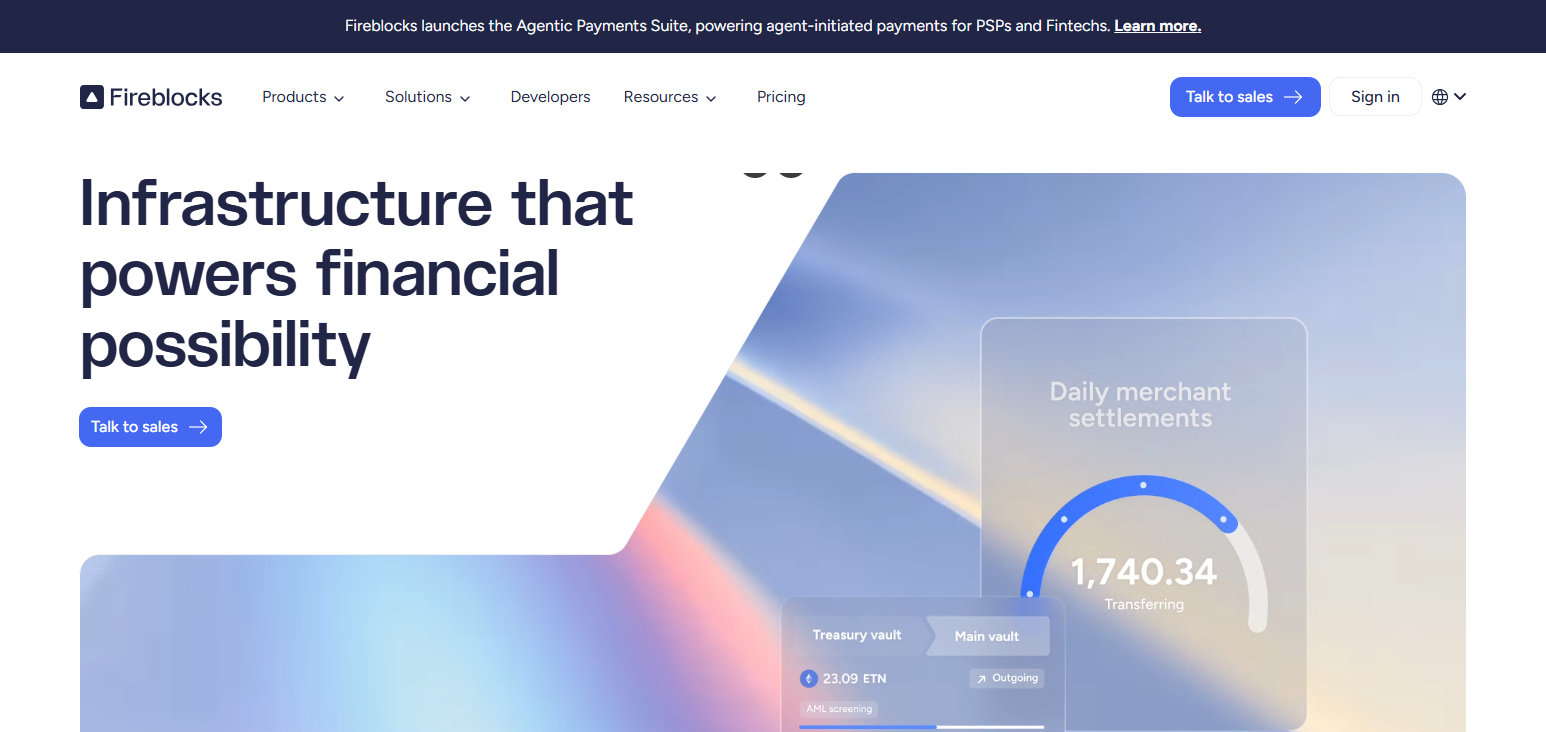
The platform offers tokenized funds and bonds, among other assets, and also provides policy controls, transaction approval, and compliance frameworks. Fireblocks aims to further expand the infrastructure as enterprises choose to adopt asset ownership through the blockchain and utilize regulated digital finance.
Fireblocks Features
- MPC Security Technology: Provides protection of shared keys with distributed cryptographic security.
- Policy-Based Controls: Allows custom approvals and governance workflows.
- Multi-Asset Support: Can secure a variety of assets.
- Enterprise Integration: Can connect to multiple financial systems, exchanges, and Web3.
- Compliance Management: Provides monitoring tools to support compliance when working with digital assets.
| Pros | Cons |
|---|---|
| Advanced MPC security reduces private key risks. | Pricing may be expensive for small organizations. |
| Supports multiple blockchain networks and assets. | Requires technical knowledge for implementation. |
| Strong institutional compliance and governance features. | Mainly designed for enterprise-level users. |
| Enables secure asset transfers and approvals. | Complex features may require training. |
| Trusted by financial institutions globally. | Limited suitability for retail investors. |
2. Coinbase Prime
Coinbase Prime aims to provide custody infrastructure that meets the institutional standards for the management of tokenized assets, cryptocurrencies, and digital securities. The infrastructure pairs secure custody with trading, compliance, and reporting capabilities for large financial institutions all in one platform.
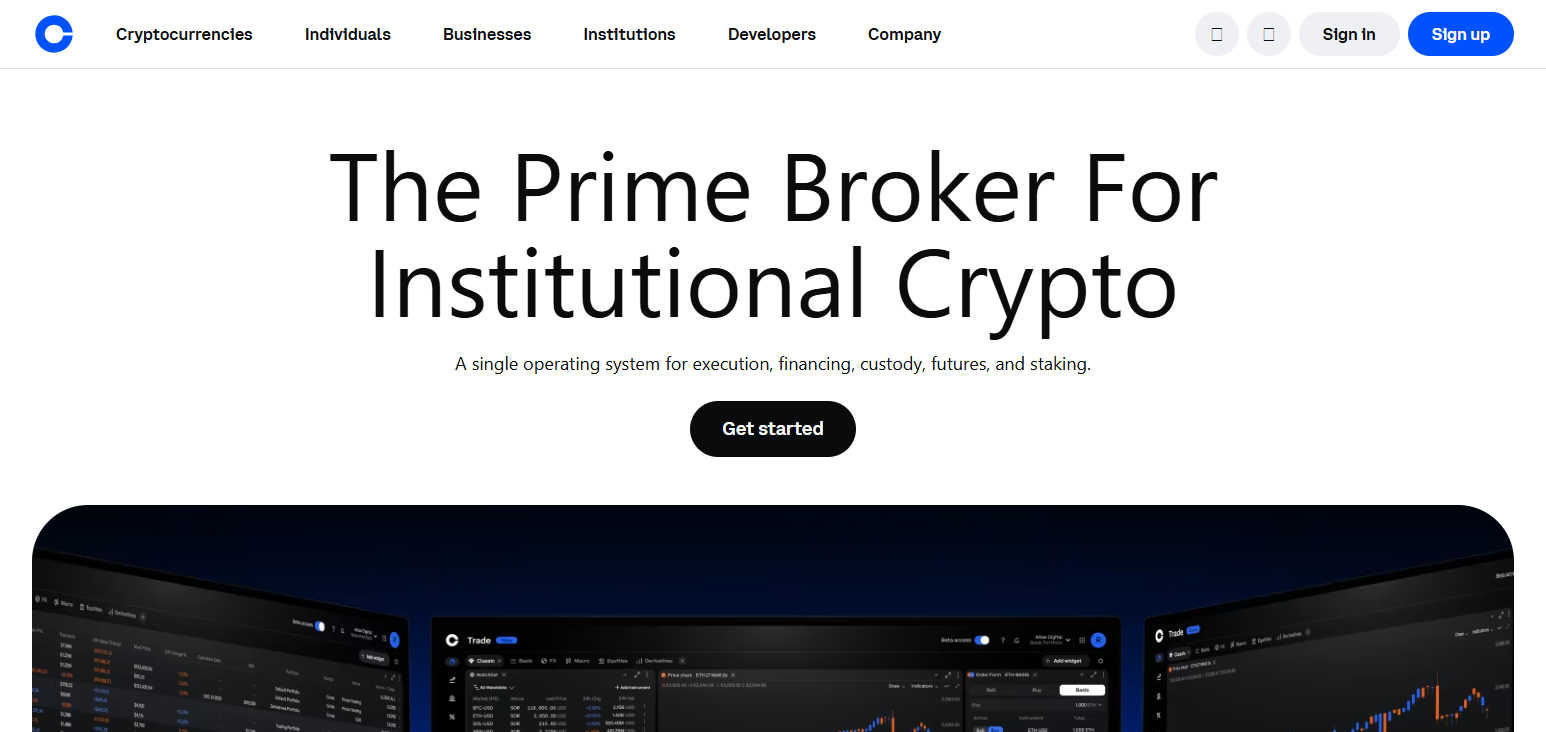
Coinbase Prime allows institutions to maintain secure custody of their ownership as well as operational efficiencies, especially as tokenization proliferates in real estate, bonds, and other alternative investments.
The infrastructure aims to meet custody needs while incorporating the latest security technologies, compliance safeguards, and seamless integration into the institutional investment ecosystem.
Coinbase Prime Features
- Institutional Custody: Secure infrastructure for large scale custody of digital assets.
- Integrated Trading Tools: Custody with included trading and asset management services.
- Regulatory Compliance: Meets security compliance needs of agencies for institutional custody.
- Reporting Solutions: Provides transaction and portfolio reports.
- Tokenized Asset Support: Supports digital securities and blockchain asset investments.
| Pros | Cons |
|---|---|
| Provides regulated institutional custody infrastructure. | Higher fees compared with basic custody services. |
| Combines custody, trading, and reporting tools. | Availability depends on regional regulations. |
| Strong security reputation and compliance standards. | Mostly focused on institutional clients. |
| Supports tokenized securities and digital assets. | Platform complexity may challenge beginners. |
| Easy integration with financial workflows. | Dependence on centralized infrastructure. |
3. BitGo
BitGo has created a regulated custody solution that allows institutions to manage tokenized assets across multiple blockchains in a secure environment. The infrastructure employs an advanced security architecture, cold storage, and a compliance matrix to safeguard digital holdings.
BitGo’s clients include financial institutions and asset managers, especially those in the Web3 space, who require custody solutions for tokenized securities, funds, and digital commodities. As more institutions adopt blockchain
BitGo seeks to provide further innovations to their custody environment while supporting their clients’ needs for secure settlement and asset protection and management.
BitGo Features
- Cold Storage Protection: Offline storage of assets.
- Multi-Signature Wallets: Requires multiple signatures to complete institutional transactions.
- Blockchain Compatibility: Supports various networks and digital assets.
- Insurance Coverage: Protection for custodial assets.
- Compliance Infrastructure: Provides institutions support for compliance of operations.
| Pros | Cons |
|---|---|
| Offers secure cold storage protection. | Advanced services can be costly. |
| Supports multiple cryptocurrencies and blockchains. | Setup process may require technical assistance. |
| Provides institutional-grade compliance solutions. | Less suitable for small asset holders. |
| Multi-signature security improves asset protection. | Limited decentralized custody options. |
| Strong experience in digital asset custody. | Requires account approval for institutions. |
4. Anchorage Digital
Anchorage Digital offers federally regulated digital asset custody services tailored for institutions engaged with tokenized finance. Anchorage Digital has custody, blockchain, and compliance integrated into its services for organizations that want to manage tokenized digital assets.
Anchorage Digital is security-centric and focuses on custody. As more and more digital assets are on blockchain, Anchorage Digital enables banks, funds, and businesses to enter the digital asset economy while upholding regulatory standards and ensuring operational transparency.
Anchorage Digital Features
- Federally Regulated Custody: Fully regulated custody of digital assets.
- Secure Digital Vaults: Protects tokenized assets in vaults.
- Governance Controls: Custom approval and risk controls.
- Blockchain Banking Infrastructure: Linked traditional banking to digital asset banking.
- Institutional Compliance Facilitates regulated participation in tokenized asset ecosystems.
| Pros | Cons |
|---|---|
| Federally regulated custody platform increases trust. | Access is mainly limited to institutions. |
| Provides strong security and governance controls. | Requires compliance verification processes. |
| Combines blockchain technology with banking infrastructure. | Higher operational costs for users. |
| Supports institutional tokenized asset management. | Not available in every global market. |
| Strong regulatory approach for digital assets. | Complex onboarding requirements. |
5. Copper
Copper offers custody and settlement infrastructure for the secure custody of tokenized digital assets. ClearLoop technology separates custody environments so institutions can trade. Copper is used by hedge funds and asset management and financial services companies that require secure operations for blockchain assets.
Within the Copper platform, users can find risk management and governance, along with support for multiple blockchain networks and tokenized securities and other assets. Copper is used by institutions to integrate legacy finance with blockchain investments.
Copper Features
- ClearLoop Settlement Network Enables trading with asset custody remaining intact.
- Separated Custody Model Cuts counterparty risk during trading.
- Multi-Chain Support Assists with managing assets on varying blockchain networks.
- Risk Management Tools Offers tools to assist with trade security.
- Secure Asset Transfers Blockchain-compliant custody settles on the blockchain.
| Pros | Cons |
|---|---|
| ClearLoop technology improves settlement security. | Primarily targets professional investors. |
| Reduces counterparty risks through separated custody. | Pricing structure may be complex. |
| Supports multiple blockchain ecosystems. | Requires technical integration resources. |
| Provides institutional trading infrastructure. | Smaller ecosystem compared with competitors. |
| Strong risk management capabilities. | Limited retail accessibility. |
6. Komainu
Komainu offers custody and tokenized real world asset custody solutions that are regulated and compliance-focused. Komainu’s custody services are the result of the collaboration of financial services and digital asset infrastructure experts and provide secure custody and governance and reporting of the digital assets.

Institutional investors of Komainu can rely on the custody services of Komainu for digital assets of cryptocurrency and tokenized funds.
Komainu’s custody services are designed for institutions to provide security and compliance during the digital asset tokenization services.
Komainu Features
- Regulated Custody Services Offers safe storage of digital assets.
- Compliance Frameworks Offers ways to align with regulatory requests and reports.
- Institutional Governance Provides approval and access controls for transactions.
- Tokenized Asset Support Services both digital securities and funds on the blockchain.
- Secure Infrastructure Blends finance and custody on the blockchain.
| Pros | Cons |
|---|---|
| Combines traditional finance expertise with blockchain. | Limited availability across some regions. |
| Provides regulated custody solutions. | Mainly focused on institutional customers. |
| Strong compliance and reporting features. | Higher costs for smaller companies. |
| Supports tokenized funds and digital assets. | Requires detailed verification procedures. |
| Designed for secure enterprise operations. | Fewer consumer-focused features. |
7. Hex Trust
Vaulted digital asset custody is the centerpiece of Hex Trust’s offering. Hex Trust’s platform is designed to be the custody partner for institutions wanting to tokenize real world assets and offers secure custody, staking, and management of digital assets on the blockchain.
Hex Trust provides the custody infrastructure for compliant digital assets to banks, Web3 firms, and corporations. Security for the custody of digital assets, compliance, and the ability to scale are the main focus of the Hex Trust custody solution.
As the tokenization of assets in finance, real estate, and other sectors continues to grow, Hex Trust provides safer models of blockchain ownership and investment.
Hex Trust Features
- Licensed Custody Platform Offers compliant digital asset protection.
- Multi-Blockchain Support Helps manage assets on different blockchains.
- Token Management Tools Assists institutions in controlling and issuing digital assets.
- Staking Services Provides the ability to securely engage with blockchain for yield.
- Enterprise Security Safeguards institution assets with control.
| Pros | Cons |
|---|---|
| Licensed custody solution for institutions. | May require complex onboarding procedures. |
| Supports multiple blockchain networks. | Enterprise pricing can be expensive. |
| Provides staking and token management services. | Limited awareness compared with larger providers. |
| Strong compliance-focused infrastructure. | Mostly suitable for professional users. |
| Helps manage tokenized asset ecosystems. | Advanced features require expertise. |
8. Cobo
Cobo custody platforms leverage the security of MPC technology to safeguard institutional digital assets. Cobo structures the custody of digital assets for institutions with secure wallets and controlled transactions.
Cobo provides custody solutions to exchanges, banks, and Web3 firms. Cobo aims to relieve the operational burden of custody while allowing institutions the ability to move digital assets across multiple blockchains.
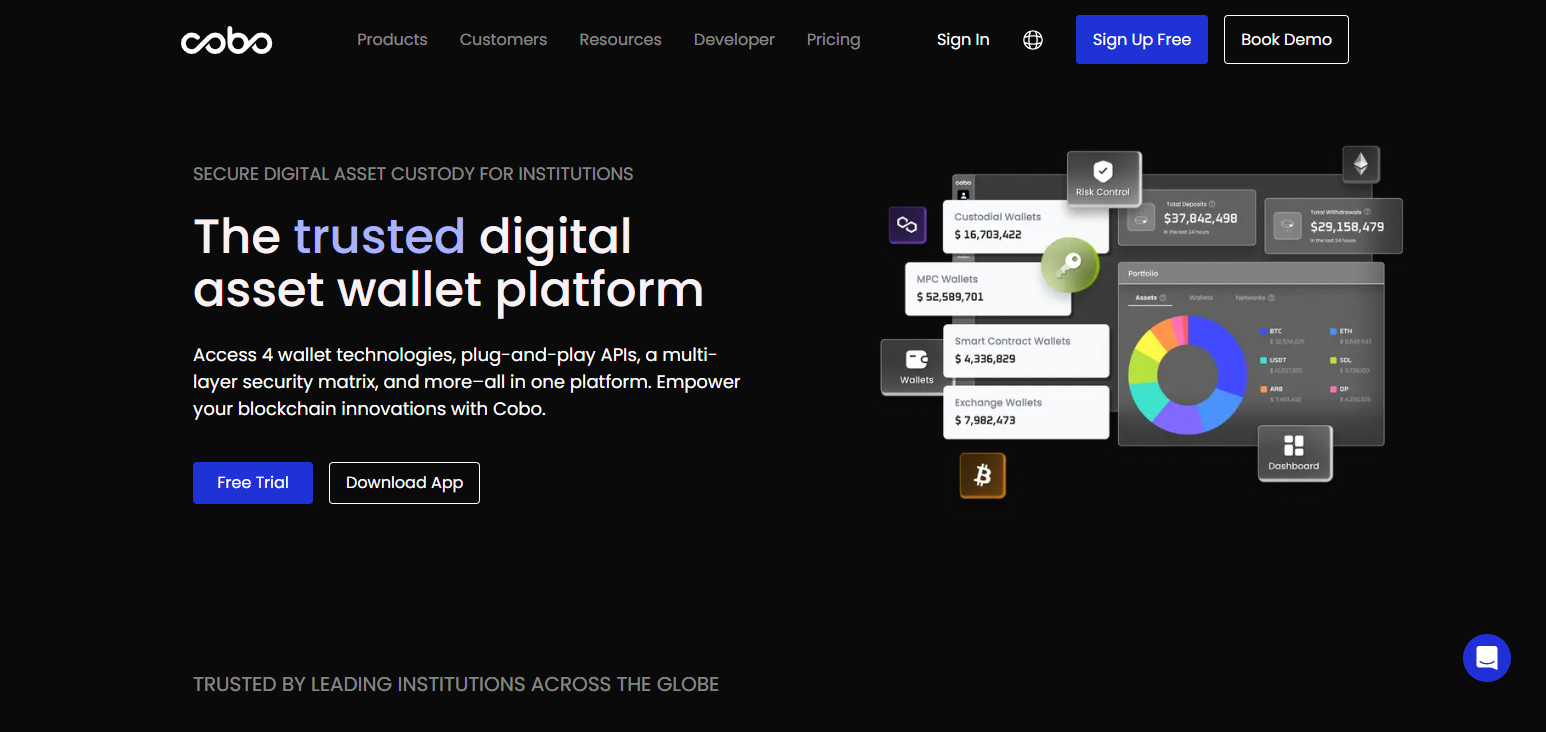
As more institutions seek the ability to custody tokenized real world assets, Cobo custody solutions provides the secure infrastructure to support the adoption of digital assets on a wide scale.
Cobo Features
- MPC Wallet Technology Secure key management for enterprises.
- Enterprise Wallet Solutions Supports large-scale operations of digital assets.
- Transaction Controls Supports the approval of transactions.
- Multi-Chain Infrastructure Supports multiple blockchains.
- Risk Reduction Tools Provides aid for institutions with digital asset security.
| Pros | Cons |
|---|---|
| Uses MPC technology for secure asset management. | Primarily designed for enterprises. |
| Supports large-scale blockchain operations. | Requires technical understanding. |
| Provides flexible wallet infrastructure. | Less regulated presence in some regions. |
| Enables multi-chain asset management. | Complex solutions for beginners. |
| Reduces operational risks through automation. | Limited retail-oriented services. |
9. Zodia Custody
Zodia Custody is a service that enables institutions to hold cryptocurrencies while providing assurance around compliance and security of digital asset holdings.
With the backing of the traditional banking system, Zodia Custody focuses on providing a secure environment for institutions to hold and manage their digital assets and blockchain tokenized assets.
Zodia Custody’s secure storage incorporates governance and operational processes for custody of digital assets at an institutional level.
As the exploration of various tokenized assets in finance and real estate by banks and asset managers grows, Zodia Custody provides a solution for secure digital asset ownership that is compliant with the existing legal and regulatory environment.
Zodia Custody Features
- Secure Custody Complies with the institutional security standard for custody.
- Compliance Operations Aligns with regulatory needs.
- Cold Storage Solutions: Safeguards assets from cyber threats.
- Governance Management: Facilitates access control for institutions.
- Digital Asset Infrastructure: Accompanies blockchain and tokenized investment solutions.
| Pros | Cons |
|---|---|
| Strong institutional security framework. | Newer compared with established competitors. |
| Backed by financial industry expertise. | Limited availability in some markets. |
| Focuses on regulatory compliance. | Mainly targets large organizations. |
| Provides secure digital asset storage. | May have higher institutional costs. |
| Supports future tokenization adoption. | Smaller product ecosystem currently. |
10. Ledger Enterprise
Ledger Enterprise provides infrastructure for hardware custody designed to help secure institutional tokenized real-world assets. Ledger’s technology integrates secure hardware, governance controls, and enterprise wallet management for the protection of blockchain assets.
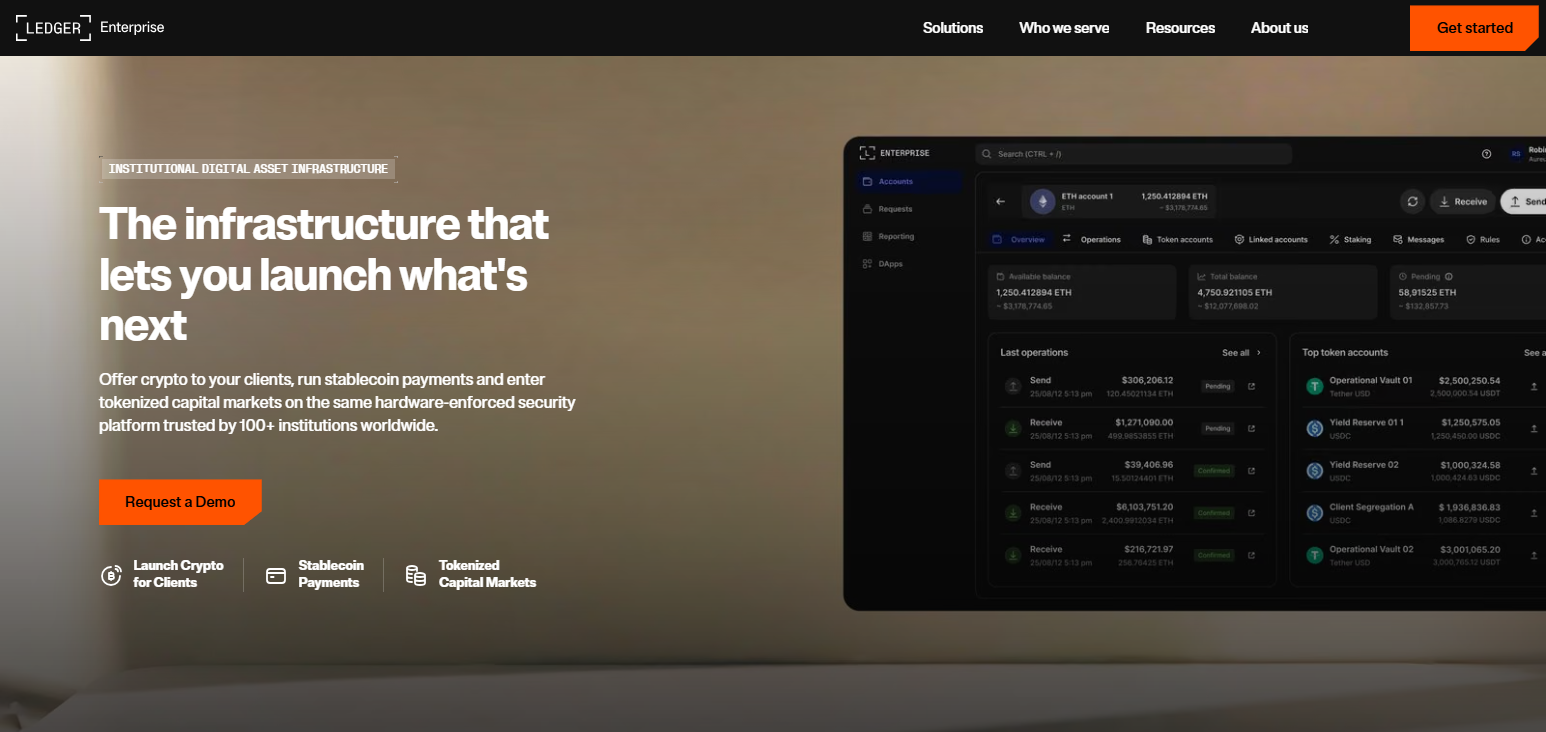
Ledger Enterprise serves businesses, financial institutions, and digital asset platforms needing high-security custody. Following the tokenization of traditional assets such as securities, commodities, and funds, the platform aids organizations in maintaining robust cyber protection while conducting blockchain asset operations.
Ledger Enterprise Features
- Hardware-Based Security: Safeguards digital asset keys with secure hardware.
- Enterprise Wallet Management: Custody solutions which grow with your organization.
- Cyber Risk Protection: Protects against hacking and unauthorized access.
- Governance Controls: Enables permissions and approvals for transactions.
- Tokenized Asset Security: Security for blockchain funds and securities.
| Pros | Cons |
|---|---|
| Hardware-based security provides strong protection. | Hardware management requires operational planning. |
| Reduces cyberattack risks through offline protection. | Enterprise solutions can be expensive. |
| Supports institutional wallet management. | Less flexible than fully cloud-based systems. |
| Trusted security technology for digital assets. | Requires device management processes. |
| Protects tokenized securities and assets. | Not ideal for small-scale users. |
Conclusion
In conclusion Institutional Custody Solutions As blockchain technology continues to proliferate throughout global financial markets, the need for Securing Tokenized Real-World Assets will increase.
These services offer secure storage and regulatory compliance, and leverage technology such as hardware security modules and multi-party computation to safeguard digital ownership.
With the growing tokenization of securities, real estate, and funds, the custodial services industry will be integral to establishing confidence, clarity, and safe digital asset environments.
FAQ
How do institutional custody platforms secure tokenized assets?
These platforms use technologies like Multi-Party Computation (MPC), hardware security modules, cold storage, encryption, and approval workflows to prevent unauthorized access.
Which companies provide institutional custody solutions?
Leading providers include Fireblocks, Coinbase Prime, BitGo, Anchorage Digital, Copper, Komainu, Hex Trust, Cobo, Zodia Custody, and Ledger Enterprise.
Can custody solutions support tokenized real estate and securities?
Yes, institutional custody platforms support tokenized real estate, bonds, funds, commodities, and other real-world assets represented on blockchain networks.
What is MPC technology in institutional custody?
MPC (Multi-Party Computation) divides private key control among multiple parties, reducing security risks and eliminating dependence on a single key holder.