

This article analyzes the best invoicing and accounting software for growing agencies, considering financial management, invoicing, expense tracking, measuring project profitability, and reporting.
I will analyze the features of leading software and discuss the advantages and drawbacks of each to help growing agencies select the proper software to manage their finances for the long term while simplifying financial management.
Key Points
| Software | Explanation |
|---|---|
| QuickBooks Online | Widely regarded as standard; robust profitability tracking, accountant networks, seamless tax readiness. |
| Xero | Favorite for creative and global agencies because unlimited users support multi-currency transactions. |
| FreshBooks | Highly intuitive for client-facing service agencies, featuring portals and built-in time tracking. |
| Zoho Books | Part of comprehensive business ecosystem integrating accounting, CRM, and project management affordably. |
| Odoo | Open-source modular ERP platform integrating sales, projects, accounting natively for growing agencies. |
| Harvest | Excellent for teams where time equals money, converting billable hours into invoices. |
| Sage Intacct | Built for mid-market agencies needing advanced ledgers, multi-entity support, project costing capabilities. |
| Scoro | Complete work-management and financial platform providing visibility into quoting, projects, profitability. |
| Plutio | Streamlined, cost-effective project management and invoicing tool automatically converting tracked hours into bills. |
| Invoice Ninja | Versatile open-source invoicing and quoting platform supporting multiple payment gateways for faster collection. |
1. QuickBooks Online
QuickBooks Online has many features that growing agencies need for accounting, including invoicing, expense management, payroll integrations, and financial reporting, as well as project tracking for profitability.
The software is highly valued by agencies because of the support from bookkeepers, accountants and financial advisors.
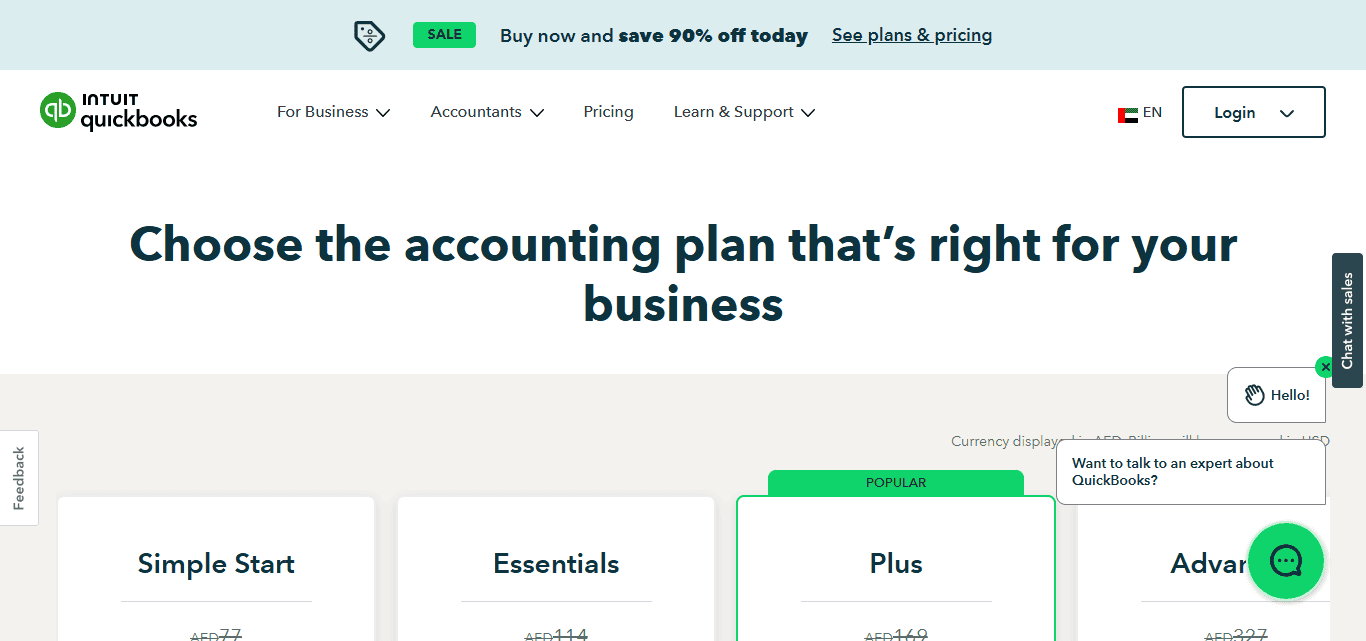
QuickBooks Online was first released in 2001, which makes Intuit the early pioneer of cloud accounting. Over the years, agencies have used QuickBooks Online to help manage their clients, projects, contracts, expenses, and profitability.
The extensive integrations and the collaborative accountant ecosystem make QuickBooks Online a strong solution for growing agencies.
QuickBooks Online Features
- Invoicing & Expense Management: Helps with daily financial transaction organization and expense recording for agencies.
- Profitability & Project Tracking: Tracks project finances and profitability for agencies, helping them identify which clients and projects generate revenue.
- Financial Reporting: Provides financial reports for agencies to manage and track overall performance, business expenses, business income, and financial status.
- Accountant Collaboration & Integrations: Helps agencies connect with accountants, bookkeepers, and financial advisors and supports multiple third-party business integrations.
2. Xero
Xero is a cloud-based software ideal for agencies in the creative, consulting and marketing industries, and for those that operate internationally. Software features catering to these types of agencies include invoicing, bank reconciliation, expense management, financial reporting, and the ability to collect payments.
Xero was released in 2006, and was designed to provide online accounting to small businesses with less complex accounting needs. As agencies began operating internationally, Xero became an advantageous software choice, because their collaborative design allows for multiple users and accountants.
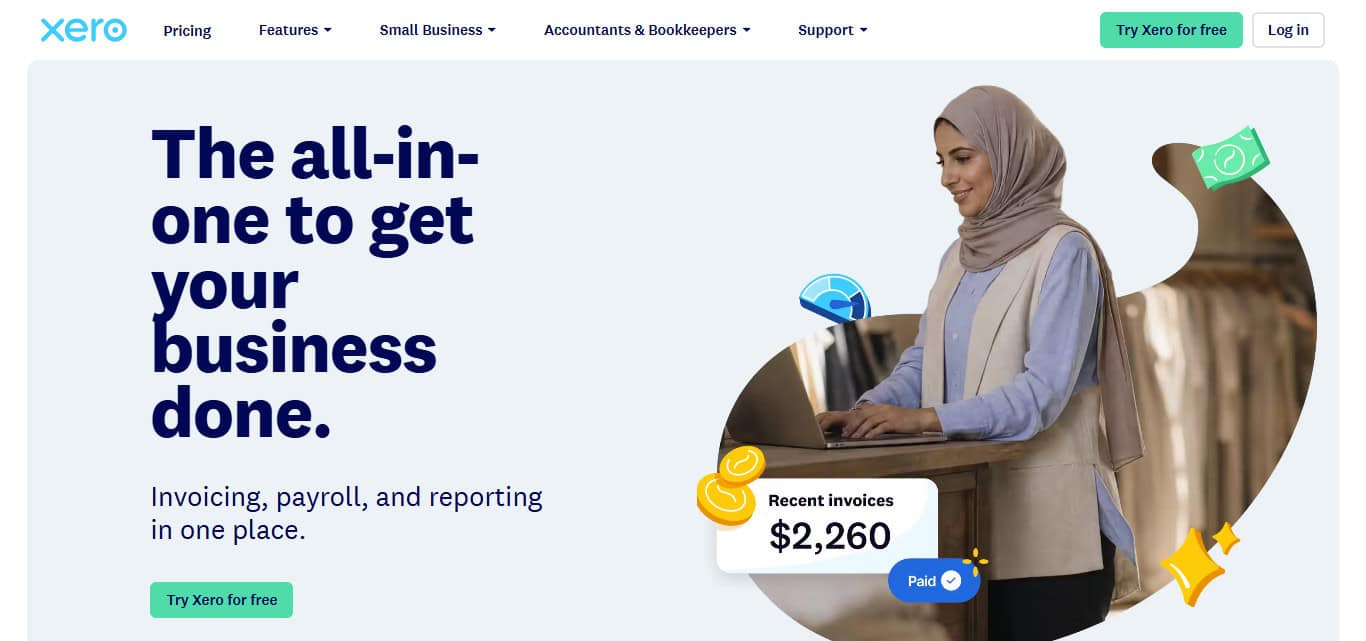
Financial data can be accessed by agency team members as they link their banking, payments, and expenses to integrate other software, and also connect to Xero. Xero is ideal for collaborative accounting and automation for growing agencies looking for a simple solution, without the complexity of traditional systems.
Xero Features
- Online Invoicing: Enables agencies to create, send, and manage online professional invoices and track payments made by customers.
- Bank Reconciliation: Automates transaction matching and banking record reconciliation.
- Multi-User Collaboration: Enables accounting with all team members and accounting personnel.
- Multi-Currency & Integrations: Works with various banking, payment, and other business applications and transactions in different currencies.
3. FreshBooks
FreshBooks was built to serve the custom needs of service-based businesses, which makes it a great choice for agencies that manage clients, retainers, projects, and billable hours.
FreshBooks amalgamates invoicing, time registration, expense tracking, payment integration, and reporting with collaboration features for clients in a single platform.

Mike McDerment started FreshBooks in the year 2003 as a means to address a gap in the market. FreshBooks’ association with the service agency community is deep.
This is because FreshBooks stresses the importance of client relationships, the administration of billable hours, and simple finances. Growing agencies can use FreshBooks to automate recurring invoices, improve client communication, track project hours, and manage payment collections.
FreshBooks Features
- Client Invoicing: Used for creating professional client invoices and making client invoice and retainer billing easier.
- Time Tracking: Used to track employee hours worked on a project that can be billed to a client.
- Expense & Payment Tracking: Tracks expenses and has payment processing integrated to collect payments.
- Client Collaboration: Offers client focused tools and functionalities that enhance communication, transparency, and project management.
4. Zoho Books
Zoho Books provides accounting and invoicing, which is part of a complete financial management system that Zoho offers to connect CRM, projects, inventory, expenses, automation, etc. Zoho Books started in 2011 when Zoho expanded its range of business software to include accounting.
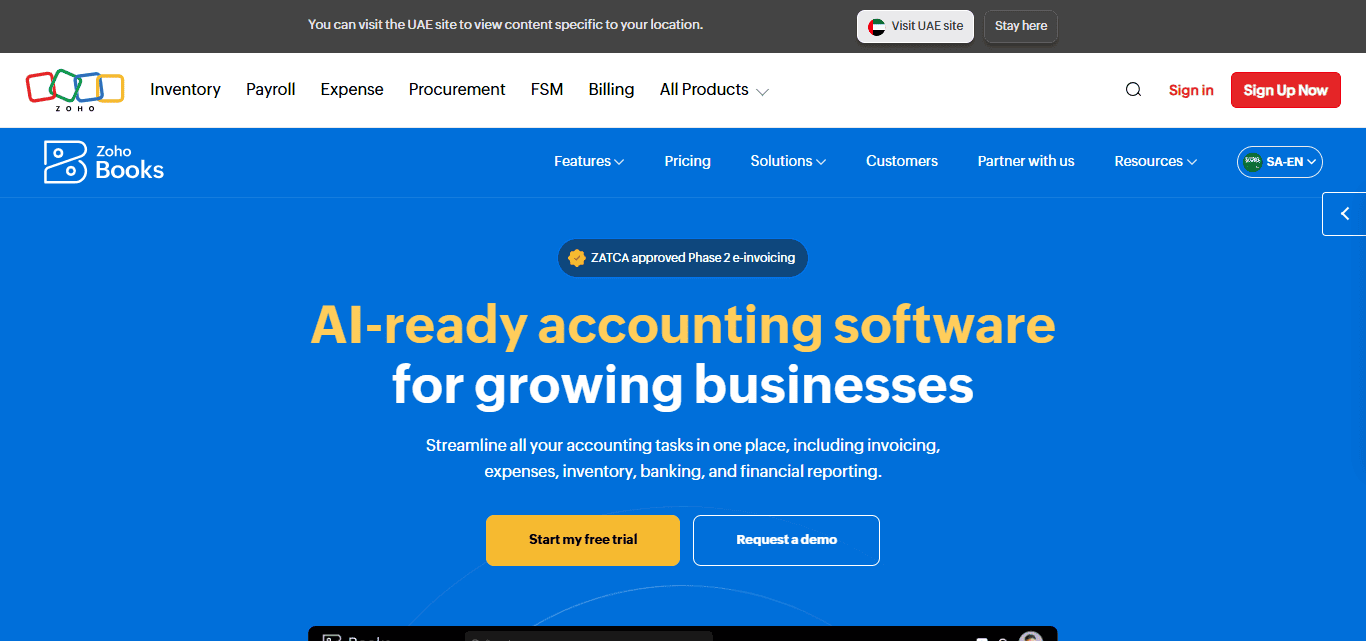
It was built to serve the needs of small and medium-sized businesses. Agencies can use Zoho Books to manage the accounting aspects of their business and add invoices, expenses, reconciliation, recurring transactions, project billing, and financial reporting.
The integration with other Zoho applications helps to reduce the software gap that agencies face.
Zoho Books Features
- Accounting & Invoicing: Core accounting functions, and a dedicate Invoice maker for the agency’s financial functions.
- Expense & Reconciliation Management: Helps businesses capture expenses, reconciles transactions, and maintains healthy financial records.
- Project Billing: Connects the agency’s project activities with expenses and customer invoices.
- Business Ecosystem Integration: Works with Zoho CRM, projects, inventory, expenses, and automation within a single ecosystem.
5. Odoo
Odoo is an advanced business management application built on an open- source platform. Integrated accounting, CRM, sales, projects, invoicing, and other operational applications are offered in a unified space. Odoo has deep roots, starting as TinyERP in 2002 and evolving through various iterations and versions to become Odoo.
This deep history is ideal for the needs of growing agencies. Odoo was built for agencies that do not want to use a variety of applications for different functions, but would rather have customizable workflows.
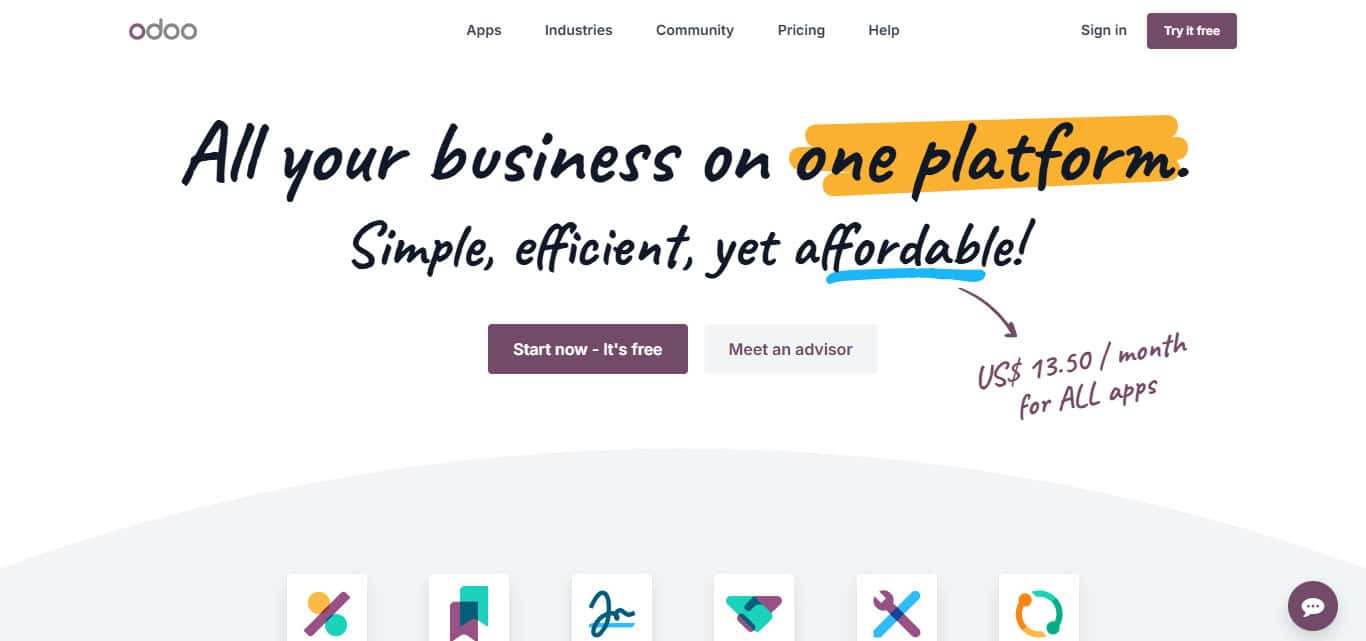
Agencies can integrate sales opportunities with projects, employee activities, expenses, invoices, and entries in their company’s accounting records. Because customers can add features as their company grows, Odoo offers agencies a great deal of flexibility for platform options.
Odoo Features
- Integrated Accounting: Accounting, and invoicing, along with other core functions of the business, are brought together into a single and centralized system.
- CRM & Sales Management: Connects sales possibilities and customer interaction with projects and financial actions.
- Project Management: Manages agency project activities, employee participation, expenses, and workflow in a single system.
- Customizable Modular Platform: Growing agencies can develop and customize the application and workflow based on changing operational needs.
6. Harvest
When employee time and client billing relate directly to profitability, Harvest has a strong advantage. Harvest was started in 2006 when its co-founders, who had a web design agency in New York City, created a time management tool to solve a problem for their own agency.
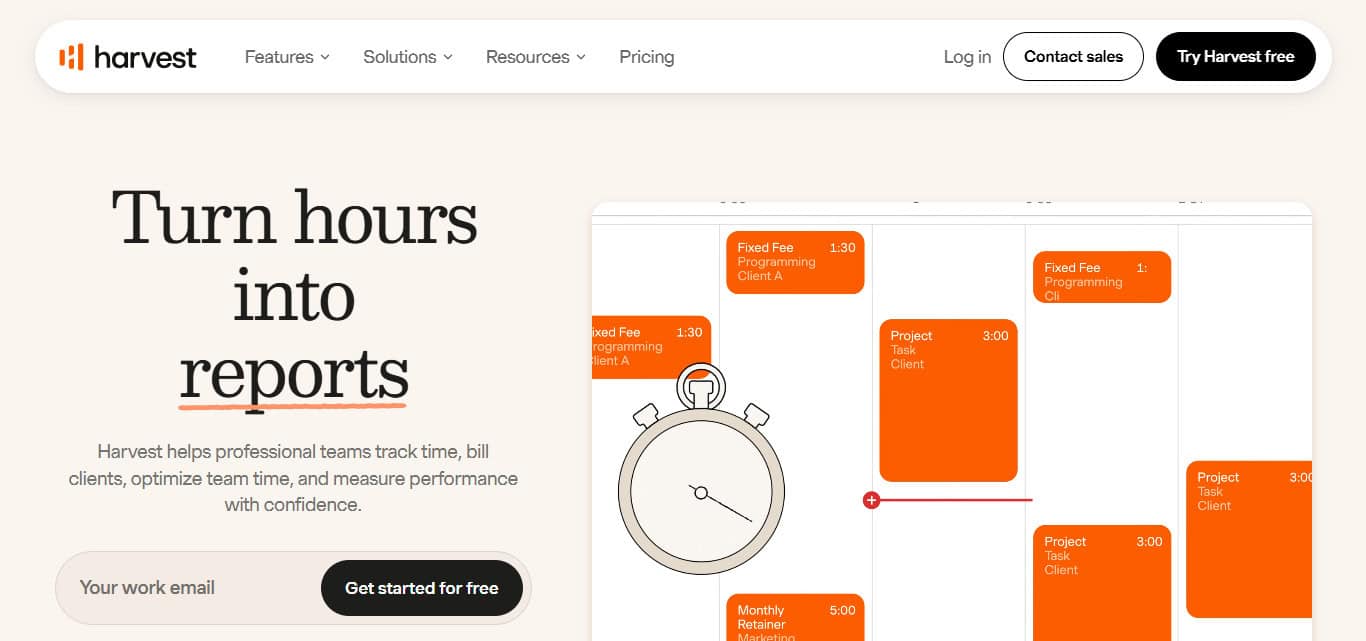
Harvest’s product focuses greatly on professional services and project workflows. Growing agencies can use Harvest to manage employee and contractor time, track project budgets, project profitability, and work utilization. Every record can be converted to a billing invoice. Harvest allows businesses to connect day to day work to business revenue.
Harvest Features
- Employee Time Tracking: Tracks employee and contractor time to help the agency estimate time spent on work for clients.
- Project Budget Management: Tracks project budgets, and spending to identify and address possible overspending.
- Profitability Tracking: Joins tracked time and project expenses with revenue to analyze the profitability of the project.
- Time-Based Invoicing: Operates directly from employee activities to recorded work and invoicing.
7. Sage Intacct
Sage Intacct is a sophisticated cloud based financial management system built for companies requiring an accounting system with more control and power over reporting.
Sage Intacct can support multi-entity accounting, dimension financial reporting, project costing, flexible financial workflows, budgeting, project revenue management, and collaboration. Intacct was launched in 1999, and after becoming part of Sage, is now known as Sage Intacct, as a result of Sage’s acquisition in 2017.
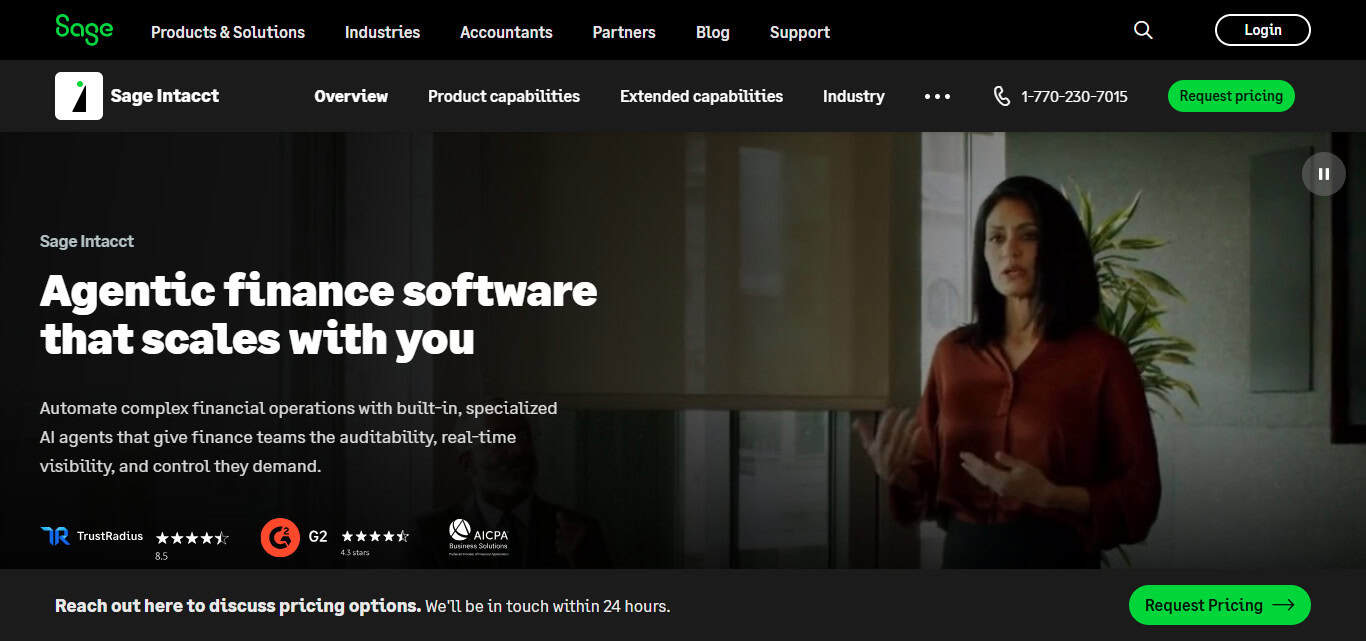
Sage Intacct helps larger professional-services firms allocate costs, manage multiple entities, assess profitability, improve financial controls, and enhance the financial management processes, considering the complexity of their operations.
Sage Intacct Features
- Multi-Entity Accounting: Accounting for multiple entities within one system that supports centralized and controlled financial data.
- Advanced Financial Reporting: Dimensional reporting for the analysis of financial data in several business divisions and perspectives.
- Project Costing & Revenue: Assists professional services firms in cost allocation for projects and management of project revenue.
- Financial Controls & Workflows: Strengthens accounting processes and budget control at organizational level by providing structured accounting processes and approval workflows.
8. Scoro
Scoro offers financial management and work management to connect sales, quotations, projects, time capturing, invoicing, expense control, and profitability analysis to businesses.
Scoro’s focus has always been on building a better way to handle workflows and related services. While the company was founded in 2013, its solutions and experience offer a wealth of professional and financial information for service businesses.
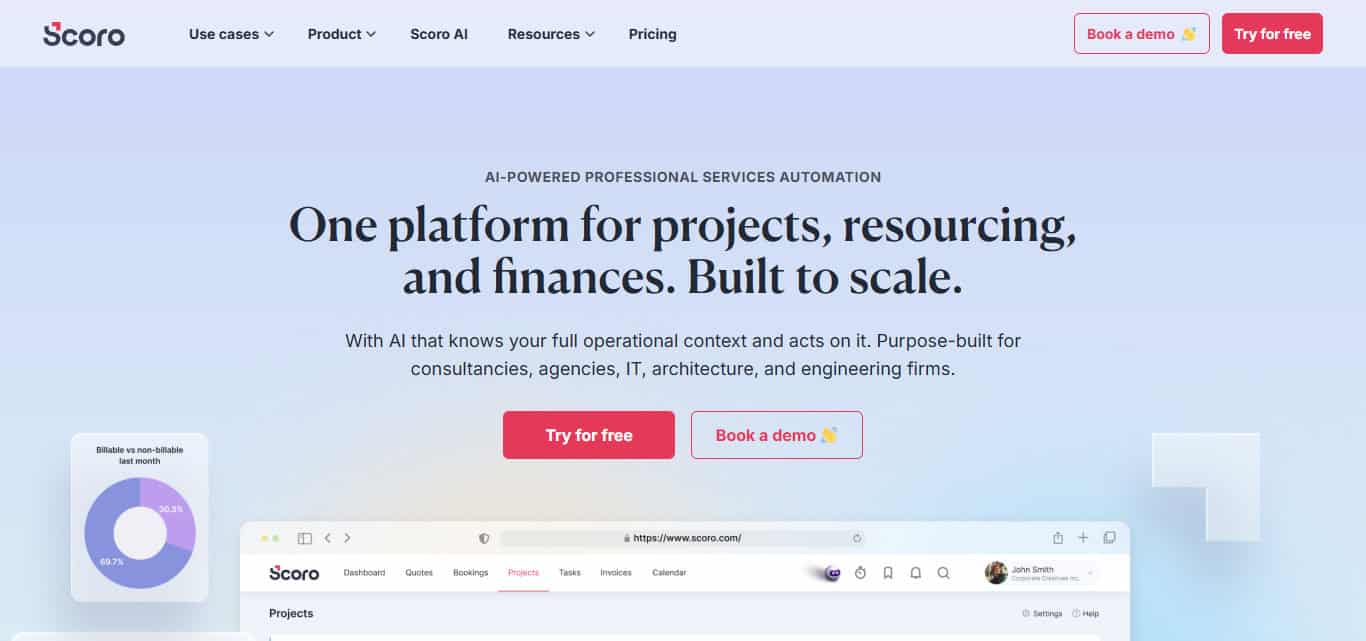
Scoro combines quoting and project execution and follows each stage of the workflow all the way through to invoicing. It also provides real time analysis of planned vs. actual resources for agencies that want more control over workflow completion, resource management, and financial outcomes for their projects.
Scoro Features
- Quoting & Sales Management: Integrates sales management processes and activities with booking and execution of projects and related financial processes.
- Project Management: Manages projects from planning to execution and connects financial information to activities.
- Time & Resource Tracking: Tracks working time and, at the same time, enables control of project resources.
- Profitability Analysis: Integrates financial processes with projects and performance and provides insight into profitability.
9. Plutio
Plutio’s founder, Leo, started developing the software as his team’s design studio project management tool. By the time he launched Plutio in 2017 (after soft launching it in 2015), he had built a tool for freelancers, studios, consultants, and service businesses that worked with clients.
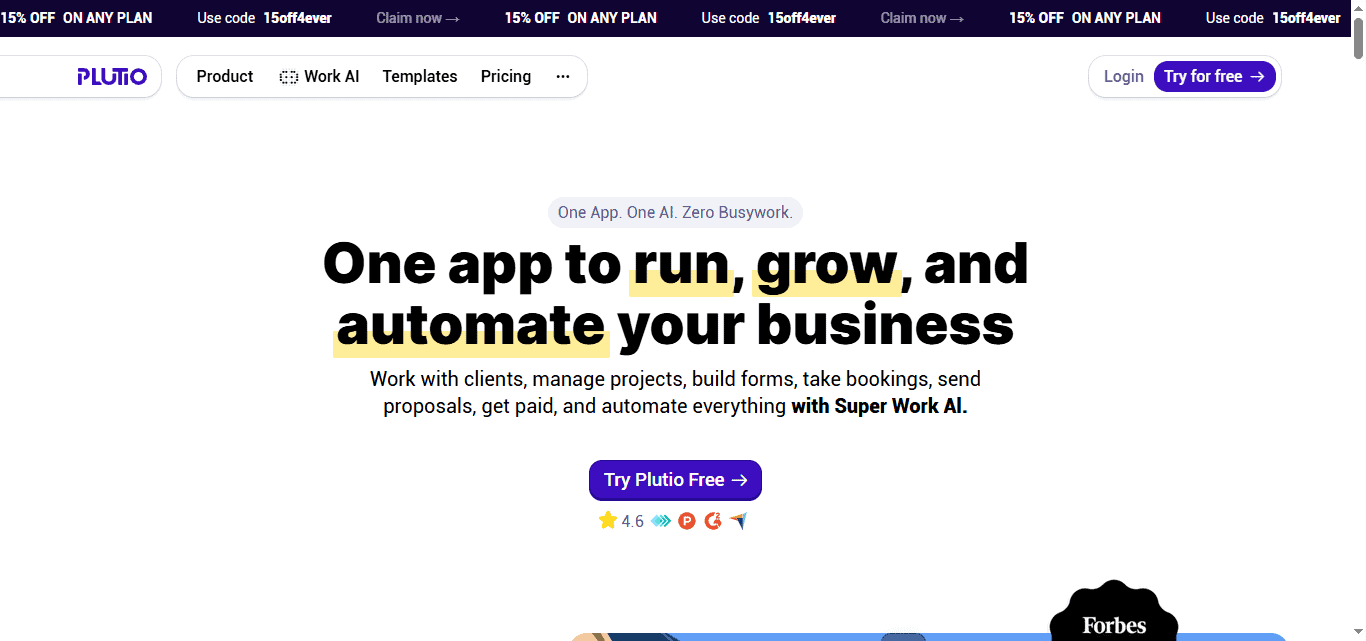
Smaller agencies will appreciate the simplicity and cost effectiveness of Plutio’s complete solution for managing workflow activities, recording time, sending automatic invoicing, communicating through client portals, and signing contracts.
Plutio Features
- Project & Workflow Management: Helps an agency organize and manage day-to-day client activities in the same platform as projects and their workflows.
- Time Tracking: Helps an agency keep track of the time their employees spend on work and the agency’s productivity.
- Automated Invoicing: Makes it easier and faster for an agency to send invoices by automating the process based on the tracked time.
- Client Portals & Contracts: Helps an agency manage its clients by providing portals and contracts for signing.
10. Invoice Ninja
Invoice Ninja is a service that builds flexible payment and invoicing platforms for freelancers and teams. These solutions provide features for managing project schedules, tracking time, professional invoicing, and quoting.
Invoice Ninja’s first beta release was in 2014, while its founders Hillel and Shalom envisioned using the tool to meet the needs of small businesses and freelancers. Their approach has been to prioritize simple business tools over enterprise tools.
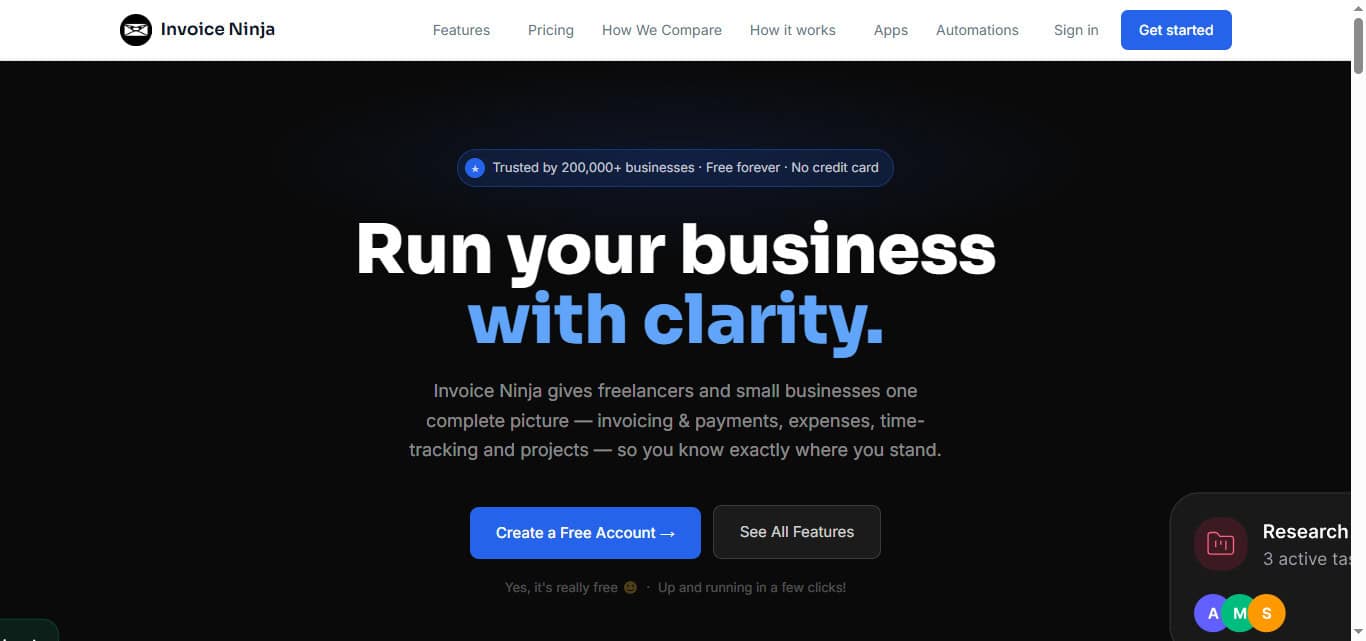
Building an invoicing system is costly for many organizations. Luckily, agencies use Invoice Ninja to create their own branded invoices, accept online payments, track billable work, and manage projects.
Invoice Ninja can also help with collections. In this software, users can find features that are customizable through the open-source code. This flexibility adds to the software’s value while addressing common agency needs.
Invoice Ninja Features
- Professional Invoicing: Helps an agency create invoices of their standard and style.
- Online Payments: Helps a business provide convenience to its customers by adding online payment options.
- Time & Project Tracking: Helps track time spent on each project and each project activity.
- Open-Source Customization: Allows an agency to customize some features based on what the agency needs.
Conclusion
Conclusion The right software can support small to mid-sized businesses expand into new invoicing, organizational expense, and profit tracking systems. QuickBooks Online, Xero, FreshBooks, Zoho Books, Odoo, Harvest, Sage Intacct
Scoro, Plutio and Invoice Ninja, and many more, have streamlined features. When selecting the software most appropriate for your business, analyze your business’s size, your workflow, your accounting needs, your budget, your integrations, and your growth planning.
FAQ
What is invoicing and accounting software?
It helps agencies manage invoices, expenses, payments, financial records, and business reporting.
Why do growing agencies need accounting software?
It reduces manual work, improves financial accuracy, and provides better visibility into profitability.
Which software is best for agency accounting?
QuickBooks Online is a popular choice for comprehensive accounting and financial management.
Which software is best for international agencies?
Xero is well-suited for international agencies requiring multi-currency and collaborative accounting features.