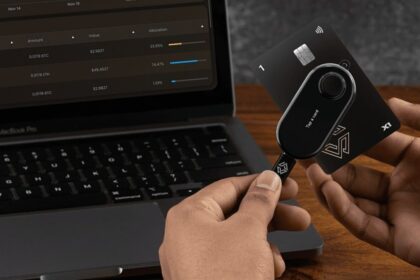
In this article, I will discuss the Must-Have Hardware Wallets to Keep Your Crypto Assets Fully Secure. Hardware wallets provide an extra layer of protection by keeping private keys offline and away from online threats.
We will explore their key features, security benefits, usability, and important factors to consider when choosing the right hardware wallet for safely storing your cryptocurrency.
Key Points
| Wallet | explanation |
|---|---|
| Ledger Flex | Full-color touchscreen clearly verifies destination addresses before signing transactions. |
| Trezor Safe 5 | Color touchscreen, haptic feedback, open-source design, and secure element. |
| Ledger Nano X | Bluetooth smartphone connectivity keeps private keys protected inside secure hardware. |
| Tangem Wallet | NFC card enables quick tap-to-sign verification without batteries or cables. |
| BitBox02 Multi Edition | Swiss-made wallet offers open-source firmware, privacy, and secure storage. |
| Keystone 3 Pro | Air-gapped touchscreen wallet uses QR connectivity and three secure chips. |
| NGRAVE ZERO | EAL7-certified wallet provides completely offline, air-gapped cryptocurrency security protection. |
| SafePal S1 | Affordable air-gapped wallet includes anti-tamper protection and wireless-free operation. |
| Coldcard Q | Bitcoin-focused wallet features QWERTY keyboard, dual chips, microSD transfers. |
| Cypherock X1 | Splits seed phrase across smart cards using Shamir Secret Sharing. |
10 Must-Have Hardware Wallets to Keep Your Crypto Assets Fully Secure
1. Ledger Flex
Ledger Flex combines top-notch security and a convenient way to verify transactions. This hardware wallet has a touchscreen that allows users to double check important details, including cryptocurrency destination addresses, before confirming a transaction.
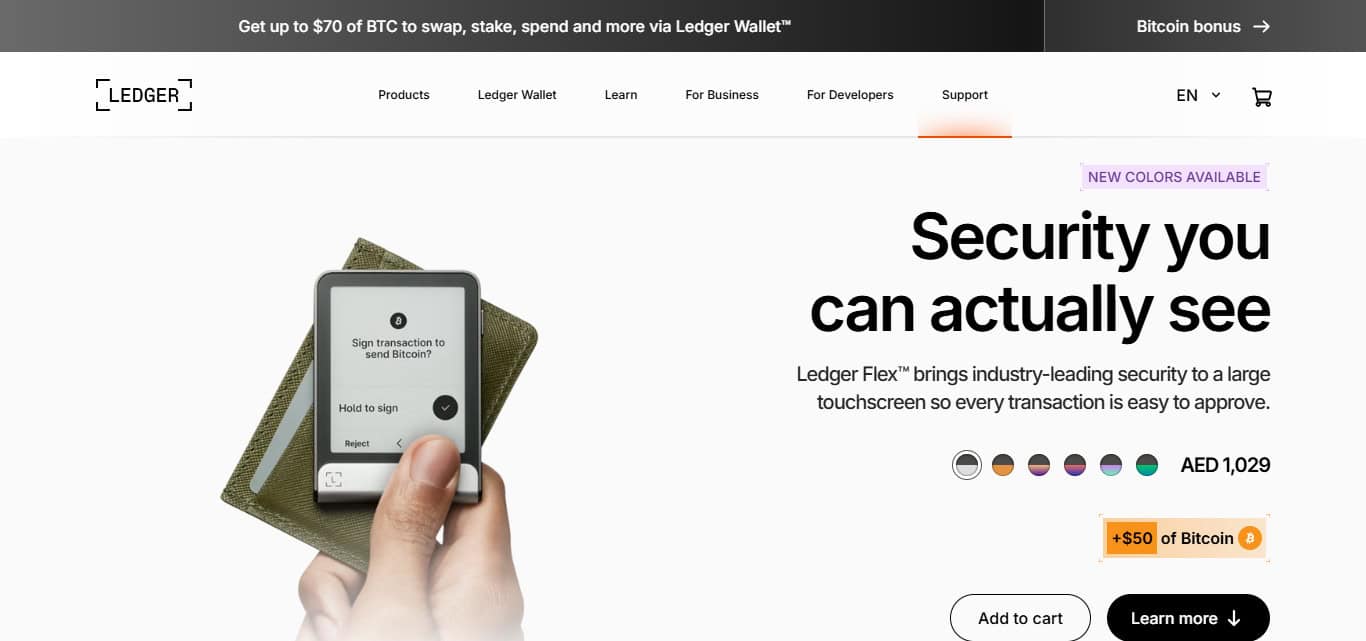
Compared to traditional button-based wallets in the Must-Have Hardware Wallets to Keep Your Crypto Assets Fully Secure category, Ledger Flex’s larger screen allows users to provide greater visual confirmation and therefore
A greater level of assurance, and helps users avoid common mistakes, when signing transactions. Ledger Flex is priced at around $249, offering an advanced security feature in the premium side of the hardware wallet market.
Features
- Color Touchscreen: Standing out among the competition with a large, high resolution touchscreen.
- Transaction Verification: Users have the ability to cross check transaction information, including the destination address, before approving the transaction.
- Hardware-based Security: Keeps private keys stored in the wallet instead of exposing them to the connected device.
- Premium Usability: A touchscreen interface is more intuitive and easier to use than traditional button interfaces for transaction review and confirm.
Pros
- Large and easy-to-read touchscreen.
- Convenient transaction verification.
- Strong hardware-based private-key protection.
- Premium user experience.
Cons
- Higher price than many competing wallets.
- Larger touchscreen design may not suit users wanting an extremely compact device.
- Premium features may be unnecessary for basic cold-storage users.
2. Trezor Safe 5
Trezor Safe 5 offers high security and modern features for high usability. Trezor Safe 5 adds a color touchscreen and a haptic feedback mechanism which provide greater control and assurance during the transaction signing process.
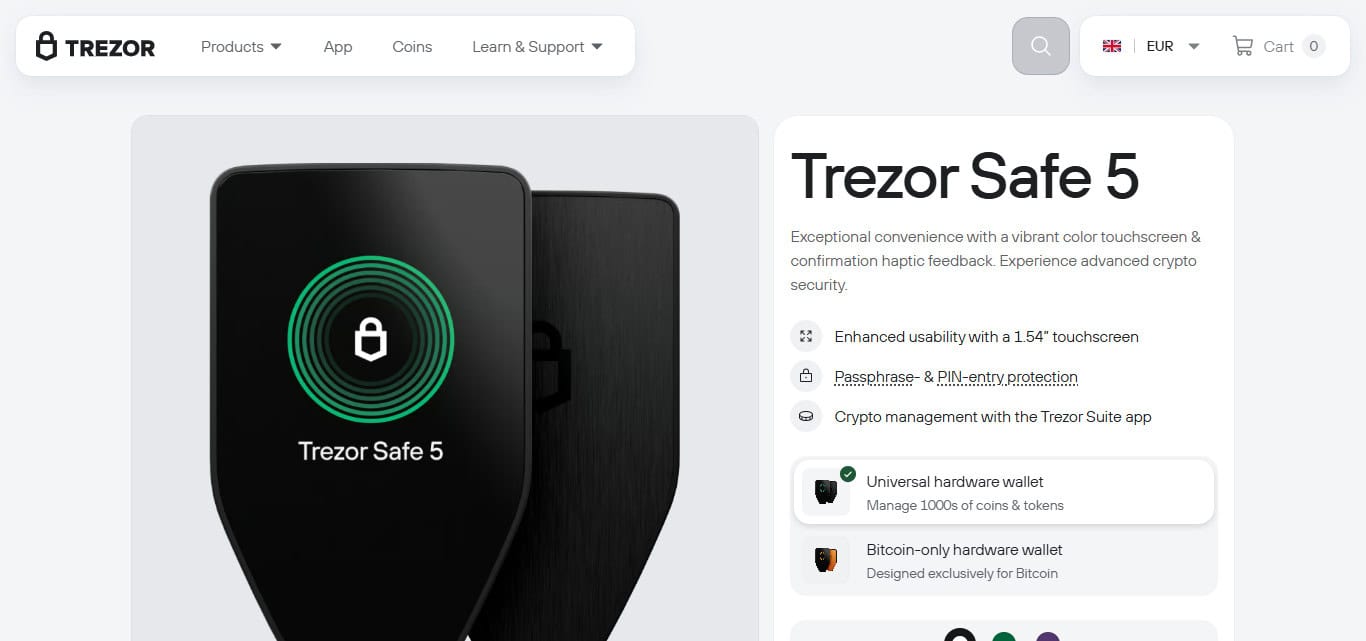
Trezor Safe 5 has an open-source design, allowing users to see and review the security and usability features for themselves and providing cost-effective assurance.
Of all the Must-Have Hardware Wallets to Keep Your Crypto Assets Fully Secure, Trezor Safe 5 offers affordable advanced protection and a convenient level of security, priced at around $129.
Features
- Color Touchscreen: Provides a clear interface for reviewing transactions and managing crypto assets directly on the device.
- Haptic Feedback: Offers physical confirmation during transaction signing, adding an extra layer of confidence.
- Open-Source Security: Its open-source design allows the technology and security features to be independently reviewed.
- Advanced Protection: Combines modern security features with convenient usability at a relatively accessible price.
Pros
- Strong security features
- Easy-to-use touchscreen interface
- Open-source design
- Good balance of security and usability
Cons
- Higher price than basic hardware wallets
- Larger than some compact alternatives
- Advanced features may not be necessary for beginners
- Touchscreen requires careful handling
3. Ledger Nano X
Ledger Nano X is meant for cryptocurrency users who want hardware-based private-key storage and a wallet with high portability and Bluetooth connectivity. It is able to keep its private key hardware safe by using Bluetooth connectivity to let a compatible phone communicate with the wallet.
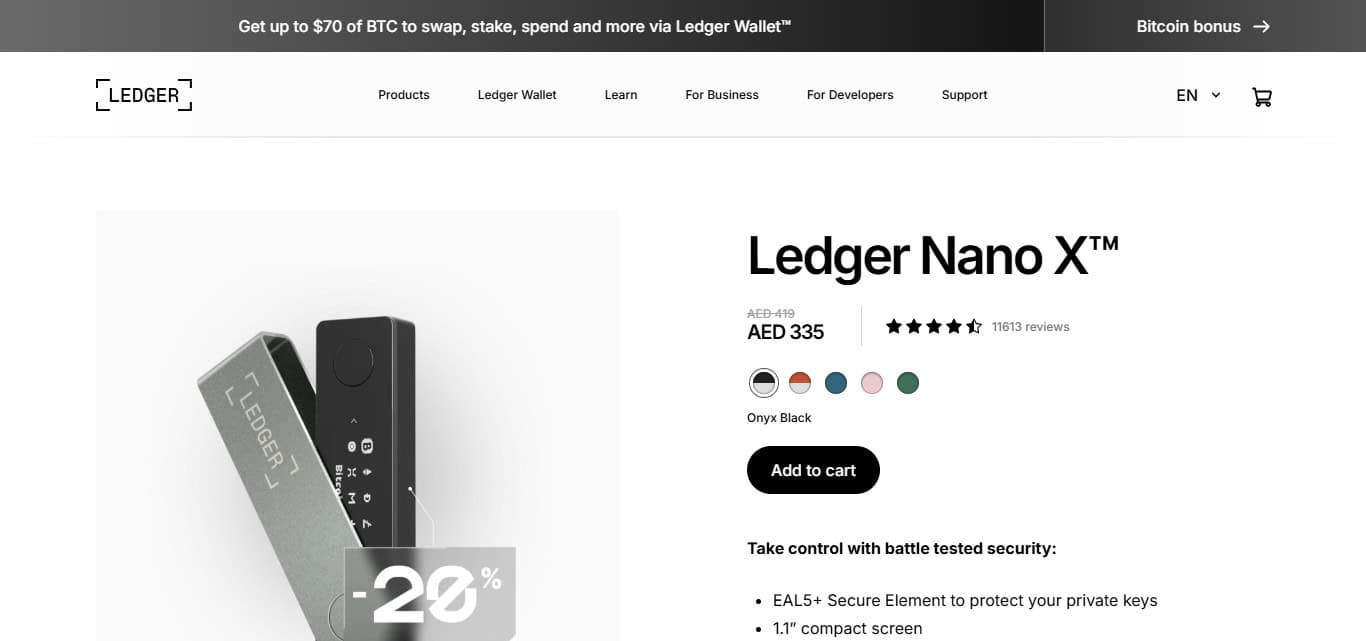
This wallet is a great choice for users who need to manage assets away from a computer because of its combination of Bluetooth connectivity, portability, and protected key storage. Also, at $149, it is securely priced in the middle range compared to other wallets.
Features
- Color touchscreen: Makes wallet navigation and transaction review more intuitive.
- Haptic feedback: Provides physical feedback when interacting with the device.
- Open-source design: Software can be independently reviewed by the community.
- Secure element: Adds an additional hardware-security layer for protecting sensitive information.
Pros
- Excellent touchscreen interface.
- Open-source approach.
- Haptic feedback improves interaction.
- More affordable than premium models.
Cons
- Touchscreen may increase power requirements compared with simpler devices.
- Some advanced features may be unnecessary for beginners.
- Physical device must still be protected from loss or theft.
4. Tangem Wallet
Tangem employs a unique strategy for hardware-based cryptocurrency storage by using NFC technology for an NFC enabled card instead of a wallet with a traditional display. With this design, users can easily confirm and sign transactions through a tap-based communication protocol.
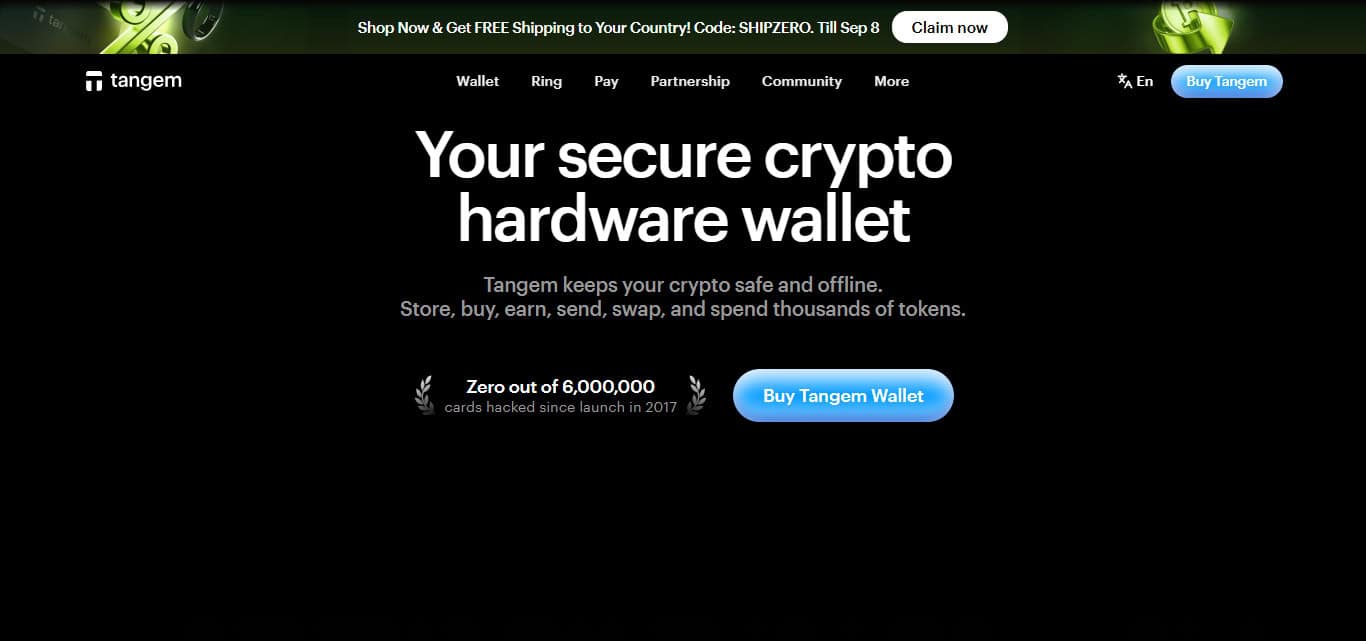
For our Must-Have Hardware Wallets to Keep Your Crypto Assets Fully Secure, this wallet is a good option for beginner users or users looking for wallet designs with a low footprint.
This wallet design lacks a battery and cables, and is easily transportable thanks to its card format. It is a very affordable option at $55.
Features
- Bluetooth connectivity: Allows compatible mobile devices to communicate with the wallet.
- Protected private keys: Sensitive keys remain within the hardware wallet rather than being directly exposed to the smartphone.
- Portable design: Its compact form makes it convenient for users who manage crypto while traveling.
- Mobile-friendly management: Provides a practical option for people who prefer managing their assets from a smartphone.
Pros
- Convenient Bluetooth connectivity.
- Highly portable.
- Hardware-based private-key protection.
- Suitable for mobile users.
Cons
- Wireless connectivity may not appeal to users who prefer completely air-gapped wallets.
- Smaller screen than touchscreen-focused premium devices.
- Requires careful protection of the physical device.
5. BitBox02 Multi Edition
BitBox02 Multi Edition is a product to keep your crypto and privacy safe with Swiss engineering. The firmware for BitBox is available to the community so it can be reviewed for verification.
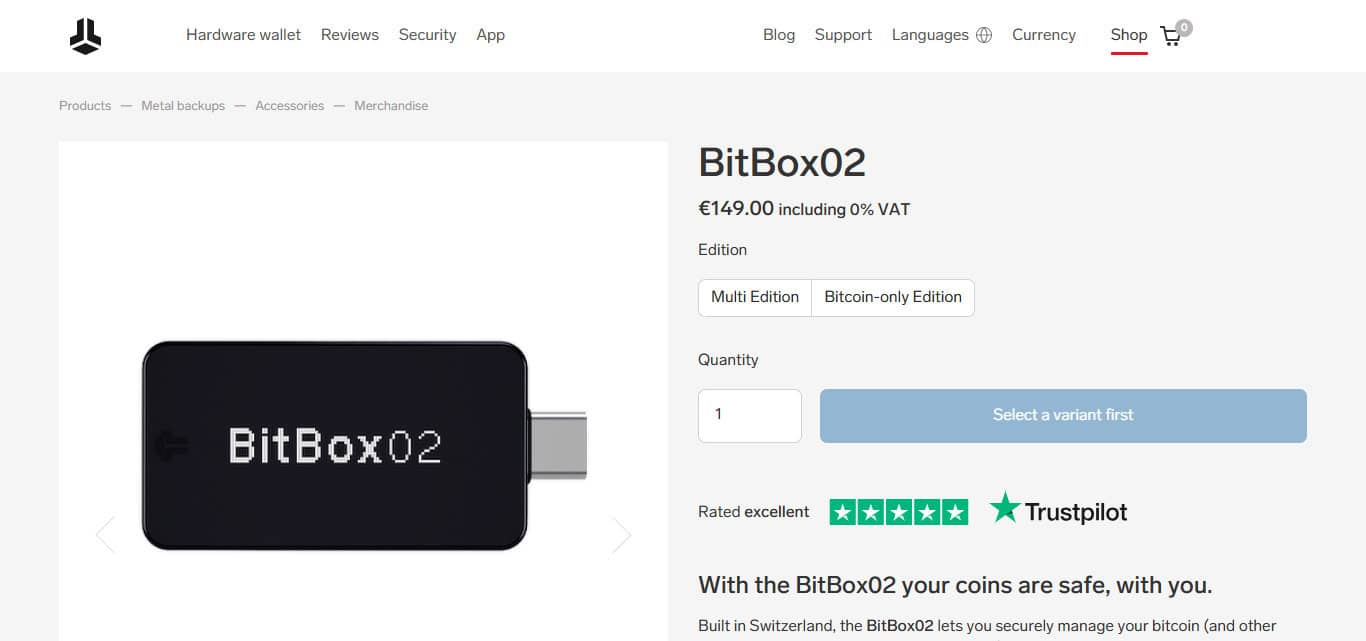
BitBox Multi Edition is practical if you’re dealing with multiple crypto currencies as it provides you with needed hardware as opposed to having private keys stored on devices connected to the internet. Ranking in the mid range for the price around $149, the BitBox02 Multi Edition is a well priced privacy solution.
Features
- NFC technology: Enables communication through short-range wireless contact.
- Card-based design: Resembles a conventional bank card and is easy to carry.
- No battery requirement: The card design eliminates the need for conventional battery charging.
- Tap-based interaction: Users can interact with compatible devices through NFC communication.
Pros
- Very compact.
- Affordable price.
- No traditional charging requirement.
- Simple for beginners.
Cons
- Card format provides less traditional on-device transaction information.
- NFC-based operation may not appeal to users seeking an air-gapped workflow.
- Users need to understand the wallet’s recovery and backup approach carefully.
6. Keystone 3 Pro
Keystone 3 Pro has an air gap design that minimizes contact with a network while a user manages crypto. Keystone 3 Pro features a touch screen and QR code communication, making transactions safe and creating an air gap.
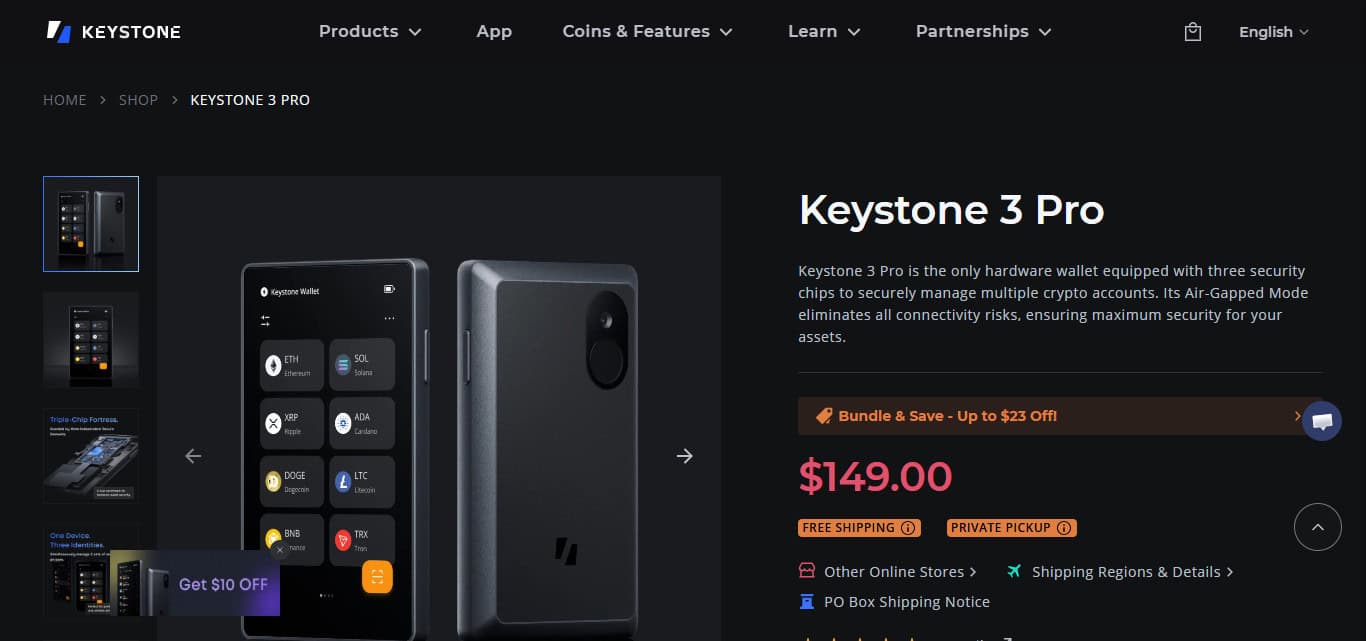
Keystone stands out in our rating for Must-Have Hardware Wallets To Keep Crypto Assets Secure. Keystone 3 Pro is priced around $149 and is an attractive option for privacy focused users.
Features
- Air-gapped architecture: Designed to reduce direct network exposure.
- QR-code communication: Transactions can be transferred using QR codes.
- Touchscreen: Provides a convenient interface for reviewing wallet activity.
- Multiple secure chips: Uses three security-focused chips as part of its hardware architecture.
Pros
- Air-gapped transaction workflow.
- QR-based communication.
- Large touchscreen interface.
- Multiple hardware-security components.
Cons
- QR workflows can require additional steps.
- Larger physical design than some compact wallets.
- May be more sophisticated than necessary for casual users.
7. NGRAVE ZERO
NGRAVE ZERO is the first wallet designed to address the need for a hardware wallet for completely offline cryptocurrency security. With an innovative design, the wallet isolates itself from the outside world by maintaining an offline state.

Users interested in Must-Have Hardware Wallets to Keep Your Crypto Assets Fully Secure will appreciate that NGRAVE ZERO has an EAL7 certification, which evaluates the hardware design of the security module.
With a price tag of ~$399, it is notably more expensive than the majority of the competition. Naturally users looking for the added protection of offline security and the extra costs associated with it will be the primary buyers.
Features
- Offline operation: Designed to keep the wallet isolated from conventional network connections.
- Air-gapped approach: Minimizes direct exposure to online threats.
- EAL7 certification: Its security architecture has undergone a high-level Common Criteria evaluation.
- Premium security design: Focuses heavily on protecting sensitive cryptocurrency information.
Pros
- Strong offline-security approach.
- High-level security certification.
- Designed for security-focused users.
- Premium hardware architecture.
Cons
- Approximately $399 makes it one of the most expensive options.
- Premium security may be excessive for smaller portfolios.
- Offline workflows can be less convenient.
8. SafePal S1
At a cost of ~$50, SafePal S1 has set the benchmark for affordable hardware wallets. SafePal S1’s air-gapped design and wireless-free interface for cryptocurrency management keeps it fully isolated with threats posed by wireless technology and offers anti-tamper design to protect against physical attacks.
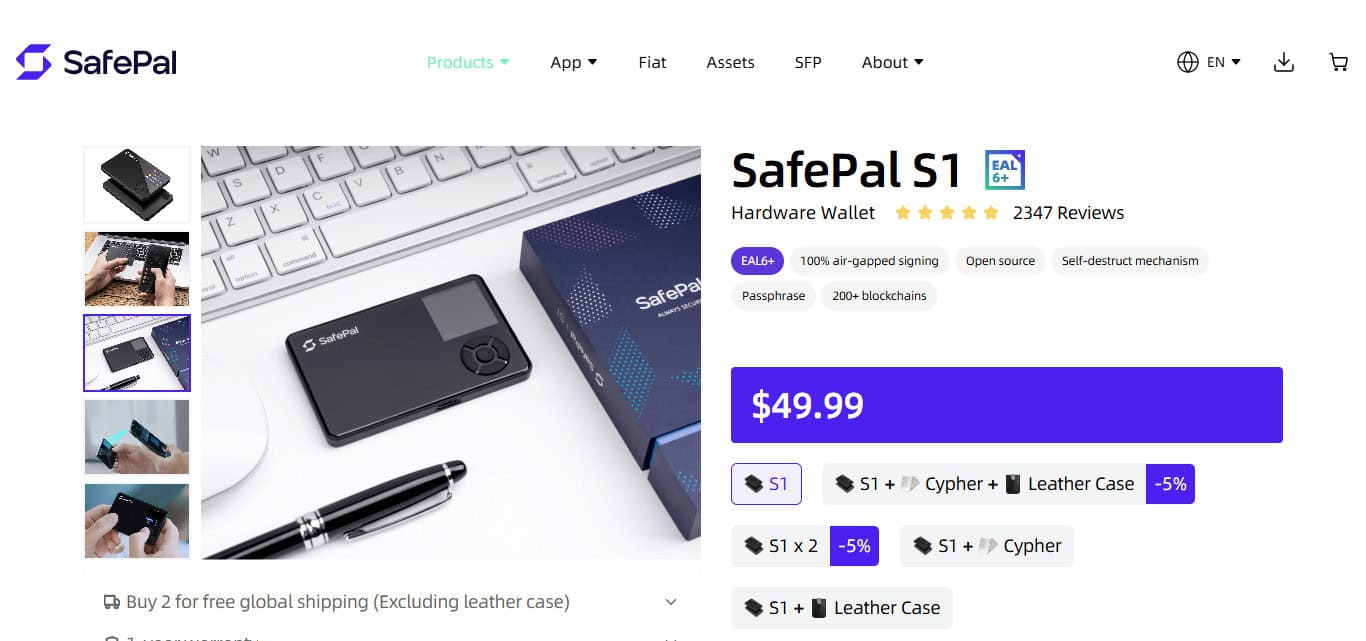
Users looking for budget-friendly hardware protection for Must-Have Hardware Wallets to Keep Your Crypto Assets Fully Secure will appreciate SafePal S1. With a price point of ~$50, SafePal S1 makes hardware cold-storage solutions available for all users.
Features
- Air-gapped operation: Designed to operate without conventional network connectivity.
- Wireless-free design: Reduces reliance on Bluetooth or Wi-Fi communication.
- Anti-tamper protection: Adds physical-security considerations to the device.
- Budget-friendly pricing: At approximately $50, it provides an inexpensive entry into hardware-based storage.
Pros
- Very affordable.
- Air-gapped design.
- Wireless-free operation.
- Anti-tamper features.
Cons
- Interface may be less premium than touchscreen competitors.
- Air-gapped transactions can require additional steps.
- Lower price means fewer premium conveniences.
9. Coldcard Q
Coldcard Q is a hardware wallet uniquely designed to make Bitcoin transactions safe and simple. Coldcard Q has a unique QWERTY keyboard for input, and has multiple hardware security layers via dual security chips.
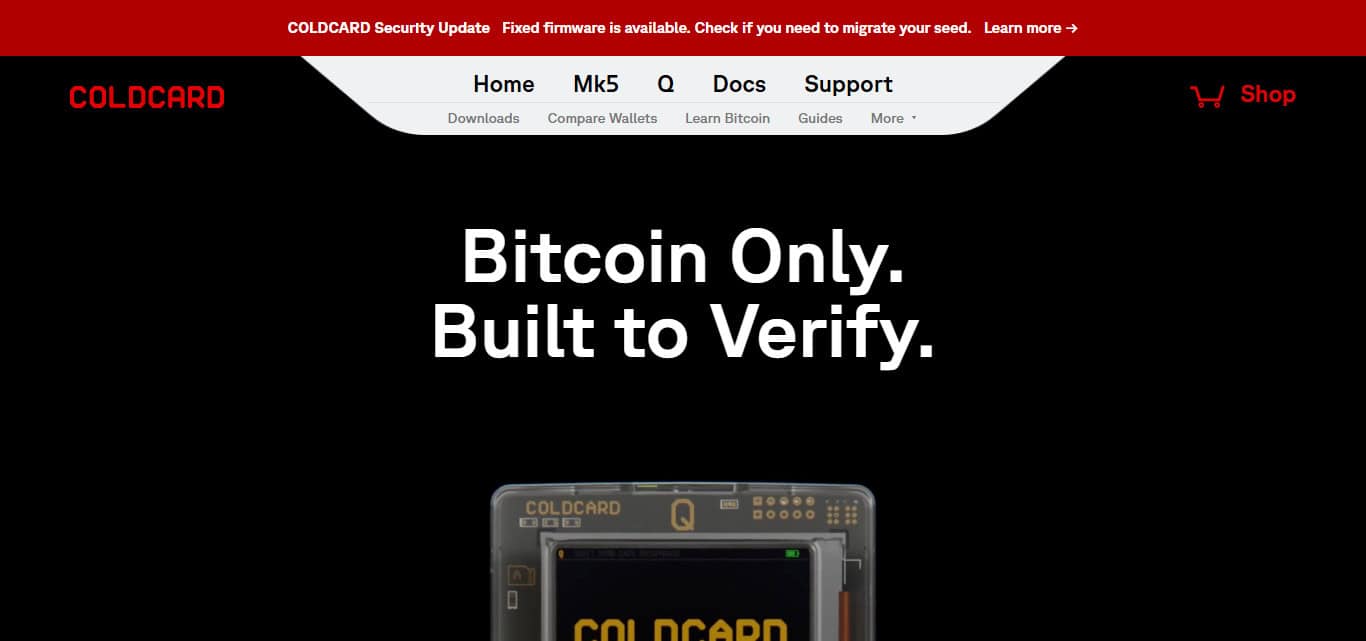
Coldcard Q also has a microSD card that can be used to transfer files for offline usage. Coldcard Q is a great option for users who wish to keep their Bitcoin assets safe and secure from the offline standpoint. Further, Coldcard Q is a front-runner among Must-Have Hardware Wallets to Keep Your Crypto Assets Fully Secure.
Features
- QWERTY keyboard: Provides physical input for wallet operations.
- Dual security chips: Adds multiple hardware-security components.
- MicroSD support: Enables file-based transaction transfers and offline workflows.
- Bitcoin-focused design: Primarily targets users who want dedicated Bitcoin security.
Pros
- Excellent for Bitcoin-focused users.
- Physical QWERTY keyboard.
- Dual-chip security architecture.
- Supports microSD-based workflows.
Cons
- Not designed as a general-purpose multi-asset wallet.
- Approximately $239 is relatively expensive.
- Physical keyboard makes the device larger than minimalist alternatives.
10. Cypherock X1
Cypherock X1 differentiates itself from other hardware wallets by utilizing Shamir Secret Sharing to break the seed phrase across several smart cards for recovering cryptocurrency. Instead of having the complete secret recover key that is stored in one physical location, this design breaks the secret into several independent components.
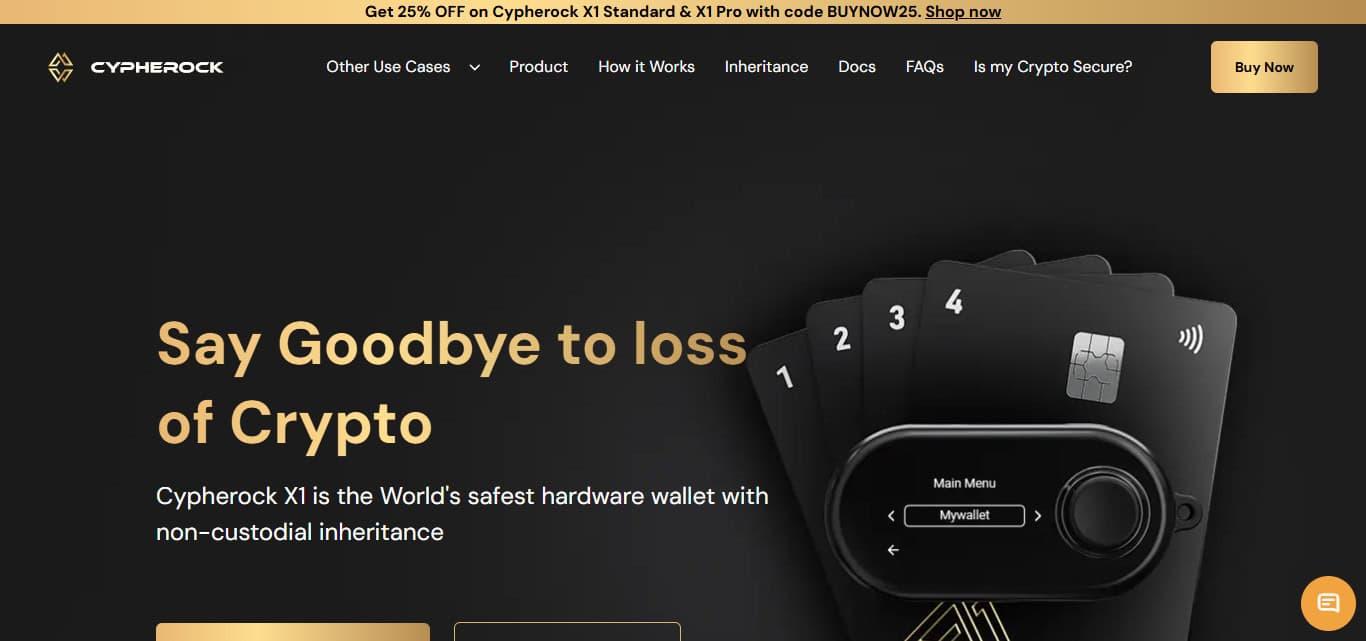
Among Must-Have Hardware Wallets to Keep Your Crypto Assets Fully Secure, Cypherock X1 is a great option for users who are concerned about having their seed phrase in one single location. It is designed to provide higher security in the event one or more of the component is lost or accessed by an unauthorized party.
Features
- Shamir Secret Sharing: Divides recovery information into multiple shares.
- Multiple smart cards: Recovery information is distributed across separate physical components.
- Reduced single-point dependency: Losing one component does not necessarily expose or destroy the entire recovery secret.
- Distributed recovery architecture: Designed to reduce the risks associated with keeping one complete recovery backup in one location.
Pros
- Innovative distributed recovery design.
- Reduces dependence on one physical backup.
- Multiple components provide redundancy.
- Useful for users concerned about seed-phrase storage.
Cons
- More complex than conventional hardware wallets.
- Multiple components require careful organization.
- Users must understand the recovery process before relying on it.
- May be unnecessary for users comfortable with traditional backup methods.
Conclusion
Conclusion Selecting the right hardware wallet is an important decision which can make a great impact on the security of your crypto holdings, and in this article we showed you some Popular Hardware Wallets to Keep Your Crypto Safe Assets.
Along with this we showed some important features those secure hardware wallets. You can adopt safe practices such as selecting a trusted wallet, securing the recovery phrase, and pair or wallets with additional digital security to mitigate risks and manage your digital assets in a secure way with peace of mind.
FAQ
Why should I use a hardware wallet?
Hardware wallets provide stronger security than keeping crypto on exchanges or software wallets. Since private keys remain offline, they reduce the risk of unauthorized access and online attacks.
Are hardware wallets completely secure?
No wallet is completely risk-free, but hardware wallets offer excellent protection when used correctly. Users should keep recovery phrases private and purchase devices from trusted sources.
What cryptocurrencies can hardware wallets store?
Most popular hardware wallets support multiple cryptocurrencies, including Bitcoin, Ethereum, and various tokens. However, supported assets differ by device, so always check compatibility before purchasing.
What happens if I lose my hardware wallet?
Losing the physical device does not necessarily mean losing your crypto. Your assets can generally be recovered using the wallet’s backup or recovery phrase on a compatible device.