In this post , I will cover Best Crypto Exchanges with the Lowest Trading Fees in 2026. I will be analyzing the top crypto exchanges regarding trading fees, the number of crypto coins traded, liquidity, security, trading features and ultimately, the overall value.
If you are a cryptocurrency trader of any experience level, this report should help you uncover exchanges with trading costs that work with your needs, at a value.
Key Points
| Exchange | Detailed Explanation |
|---|---|
| Binance | Deep liquidity supports efficient trading, with approximately 0.1% base fees. |
| Bybit | Competitive spot and derivatives trading begins with fees near 0.1%. |
| OKX | Professional trading tools combine advanced features with relatively low baseline fees. |
| KuCoin | Baseline fees start around 0.1%, with further discounts for KCS holders. |
| MEXC | Promotional offers include zero maker fees and approximately 0.05% taker fees. |
| Kraken Pro | Advanced traders face starting maker fees of 0.25% and taker fees 0.40%. |
| Coinbase Advanced | Tiered fees decrease as monthly trading volume increases, benefiting active traders significantly. |
| Gemini Active Trader | Designed for active users seeking lower fees than standard Gemini interfaces. |
| Revolut X | Dedicated crypto platform offers trading fees starting around 0.1% regionally. |
| Phemex | Offers approximately 0.1% baseline fees and zero-fee fiat deposit options |
10 Best Crypto Exchanges with the Lowest Trading Fees In 2026
1. Binance
Changpeng Zhao and Yi He founded Binance in 2017 and quickly established one of the largest crypto exchanges worldwide. Binance has built a strong background associated with providing access to digital-asset markets with a strong focus on liquidity and a large variety of cryptocurrencies.

Binance’s fees are set at approximately 0.10% as maker and taker fees for spot trading transactions. For VIP users and certain volume-based discounts, Binance’s fees can be reduced. Binance’s liquidity, combined with a large number of trading variants, makes it very appealing to traders.
Binance Features
- High Liquidity: Because of its high liquidity, Binance is able to execute larger orders quickly and with better price.
- Low Fees: Trading fees are assigned at 0.10% maker/ taker for the most common spot transactions.
- Robust Asset Selection: Binance includes a large selection of cryptocurrency types and pairs.
- Advanced Functionality: Binance includes spot trading, futures, margin trading, APIs, and advanced orders.
- Premium Features: Binance has advanced features, including order management, trading tools, charts, and market data.
| Pros | Cons |
|---|---|
| Low Fees: Standard spot fees are commonly around 0.10% maker/taker. | Regulatory Restrictions: Availability and products vary significantly by country. |
| Deep Liquidity: High liquidity can support efficient order execution. | Complex Platform: Beginners may find the large number of features overwhelming. |
| Wide Selection: Supports numerous cryptocurrencies and trading pairs. | Product Availability: Futures and other products may be unavailable in some regions. |
| Advanced Trading: Offers futures, margin, APIs, and professional order types. | Fee Complexity: VIP levels and |
2. Bybit
Bybit launched in 2018 with a focus on crypto derivatives and has since expanded to include spot trading as well as other digital-asset markets. Bybit has built a comprehensive trading environment that includes advanced charts and trading tools, as well as numerous order types.
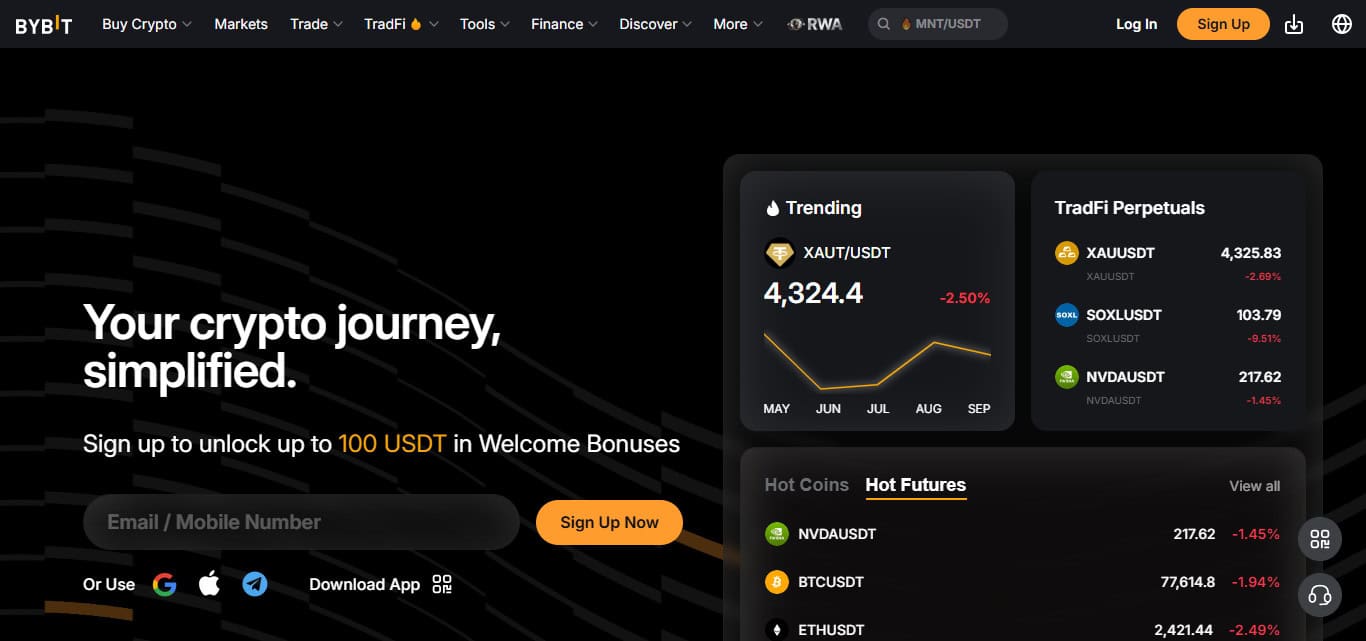
Bybit lists 0.10% maker and 0.10% taker fees for spot trading; and starts at 0.02% as maker and 0.055% taker for its perpetual and futures trading fees. Bybit lists many spot, futures, option and other crypto derivatives products; thereby matching the needs of active traders.
Bybit Features
- Low Spot Fees: Standard spot trading fees generally start around 0.10%.
- Advanced Offerings: Bybit’s advanced trading interface includes professional charts, order types, and indicators.
- Advanced Trading: Bybit offers trading across spot and derivative markets.
| Pros | Cons |
|---|---|
| Competitive Fees: Spot trading commonly starts around 0.10% maker/taker. | Derivatives Risk: Extensive leverage products can expose traders to significant losses. |
| Strong Derivatives: Offers futures, perpetuals, and options markets. | Regional Restrictions: Certain services may not be available everywhere. |
| Professional Tools: Provides advanced charts and multiple order types. | Beginner Complexity: Professional features may require experience to use effectively. |
| Active Trading: Suitable for frequent and derivatives-focused traders. | Changing Promotions: Promotional |
3.OKX
OKX was initially OKCoin. It was founded in 2013 and became OKEx in 2017, to then become OKX. They have a background in providing advanced cryptocurrency trading services and infrastructure. Fees: OKX has a maker/taker system to determine their fees.
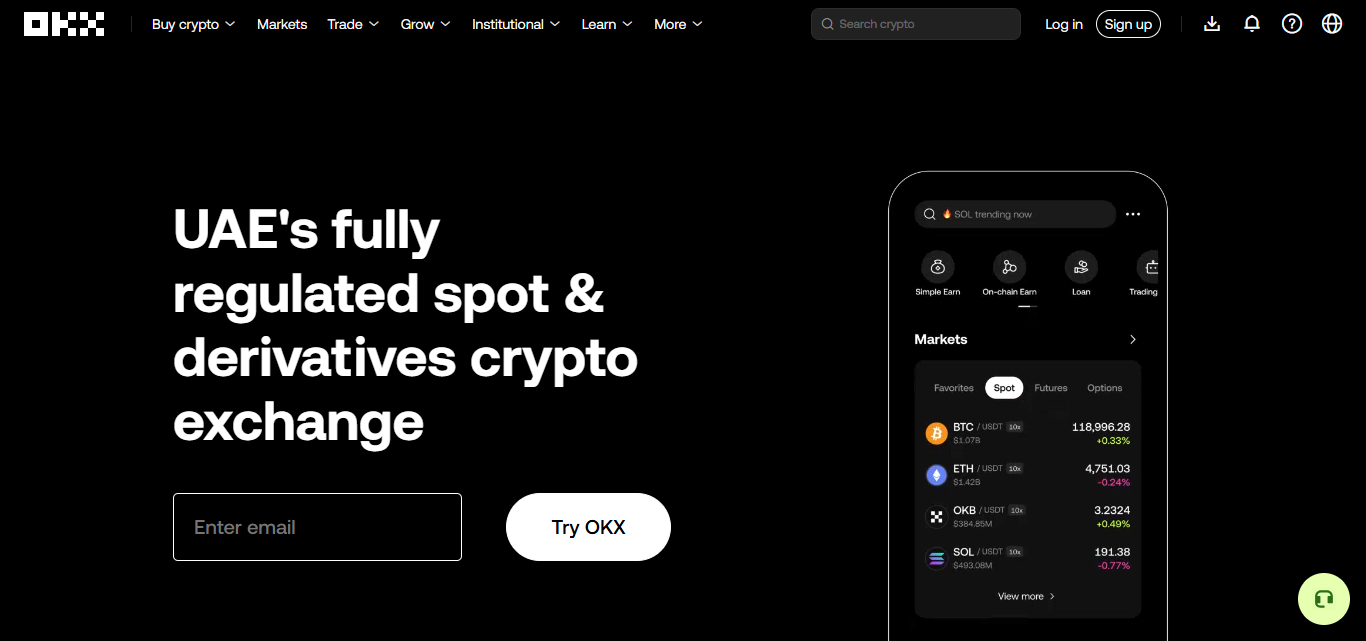
The fees system means that as a user trades more and moves up in the system, fees are reduced. The fees are also based on the region a user is in, and the products a user is trading. Their low fees, combined with their advanced trading tools, attractexperienced traders.
OKX Features
- Advanced Platform: OKX includes advanced trading tools to support the needs of an active cryptocurrency trader.
- Trading Discounts: OKX grants discounted trading fees depending on trading volume and account level.
- Advanced Offerings: OKX has trading services for spot, futures, options, and other derivatives.
| Pros | Cons |
|---|---|
| Professional Platform: Offers sophisticated tools for experienced traders. | Learning Curve: Its extensive features can be difficult for beginners. |
| Tiered Fees: Higher trading volumes can qualify for lower fees. | Regional Differences: Products and fees vary between jurisdictions. |
| Multiple Products: Supports spot, futures, perpetuals, and options. | Complex Pricing: Different products can have different fee structures. |
4. KuCoin
KuCoin got started in 2017 as a crypto exchange to make digital asset trading available to the world. KuCoin is known to support a large variety of cryptocurrencies and trading pairs. Fees: KuCoin’s trading fee is usually 0.10%, although some users are able to save more with the KCS token and the KCoin fee-discount program.
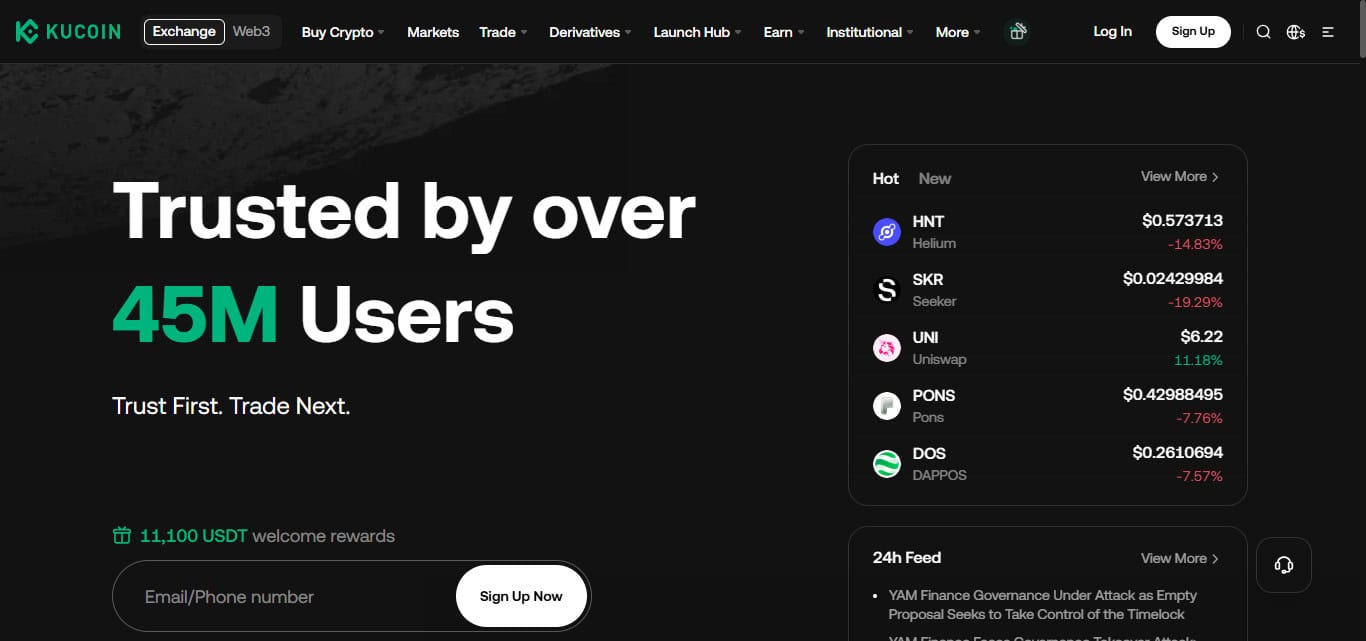
Support: KuCoin supports spot trading, futures trading, and margin trading. They also allow trading with trading bots. KuCoin has a large variety of digital assets for trading. Can be used for established as well as for new and emerging crypto and digital tokens. However, users need to find out what the current available options are for each region.
KuCoin Features
- Low Fees: KuCoin also has standard trading fees of 0.10%
- Discounted Trading: KCS holders are eligible for trading fee discounts.
- Assets: KuCoin offers trading for multiple cryptocurrencies.
| Pros | Cons |
|---|---|
| Competitive Fees: Standard trading fees are commonly around 0.10%. | Regional Availability: Services can differ depending on location. |
| KCS Discounts: Eligible KCS users can receive trading-fee reductions. | Token Variety: Large asset selection can increase exposure to higher-risk tokens. |
| Large Selection: Supports many cryptocurrencies and trading pairs. | Platform Complexity: Multiple products may be confusing for newcomers. |
5. MEXC
MEXC is a relatively young exchange set up in 2018, but has built an impressive reputation for providing a wide variety of cryptocurrencies and delivering good trading conditions. It has attracted users dealing with newer and more alternative digital assets. Fees: MEXC offers 0% maker fees on certain markets with promotional rates for takers at around 0.05%; both of these fees are subject to change depending on the trading pair and the promotion.
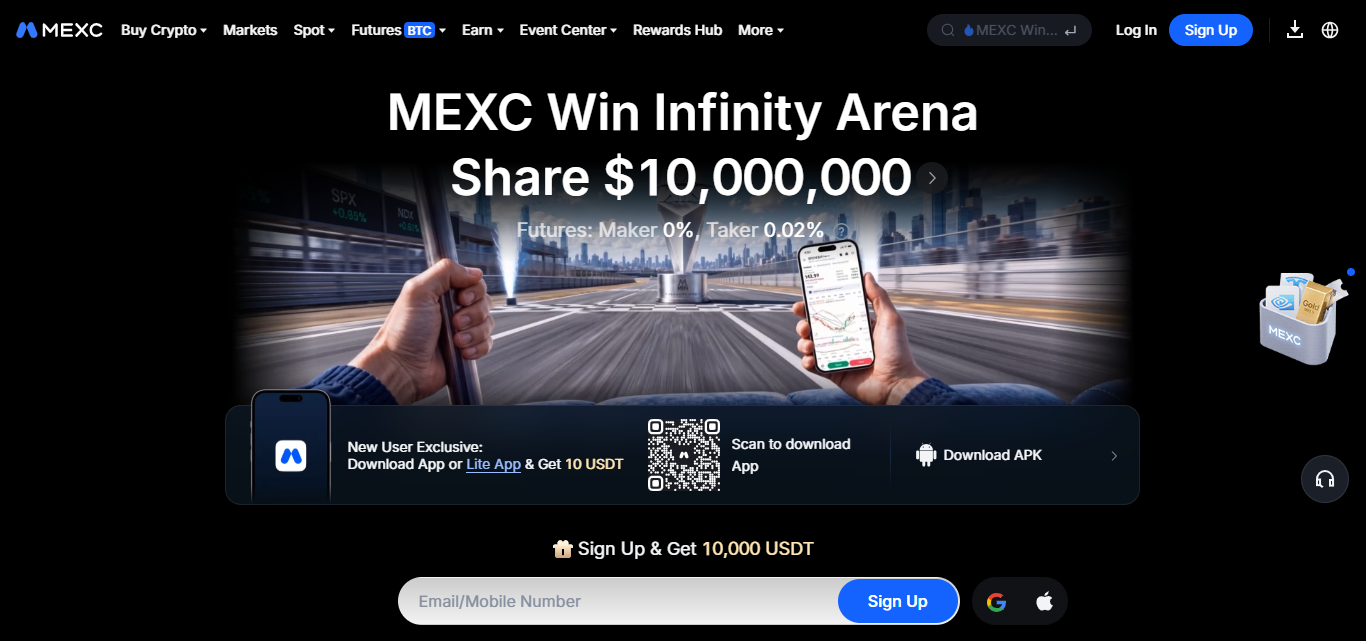
Support: MEXC offers spot trading, futures trading, and is one of the first to offer a wide range of advanced trading options with cryptocurrency. Their promotional pricing is attractive to high volume traders, but users should check if any current 0% or discounted offerings are applicable.
MEWCEX Features
- 0% Maker Fees: Certain markets may have promotional maker fees of 0%.
- Low Taker Fees: Taker fees may be as low as 0.05%
- MEXC offers advanced order types, multiple trading pairs, several market products and services, and a low trading fee structure.
| Pros | Cons |
|---|---|
| Low Promotional Fees: Selected markets may offer 0% maker fees. | Promotional Conditions: Zero-fee offers can change or have eligibility requirements. |
| Low Taker Costs: Promotional taker rates can be around 0.05%. | Regional Restrictions: Availability varies according to jurisdiction. |
| Broad Asset Selection: Offers numerous cryptocurrencies and emerging tokens. | Higher-Risk Assets: Smaller tokens can experience substantial volatility. |
6. Kraken Pro
Kraken was formed in 2011, making it one of the oldest major cryptocurrency exchanges. Kraken Pro is the arm of Kraken dedicated to providing a professional trading environment for users looking to leverage advanced market functionality.
Fees: The takers’ fee of 0.25% and 0.40% for makers are no longer valid and have been replaced with 0.40% and 0.80% for takers and makers respectively from 9 July 2026 onwards. The Kraken Pro entry spot level has been updated.
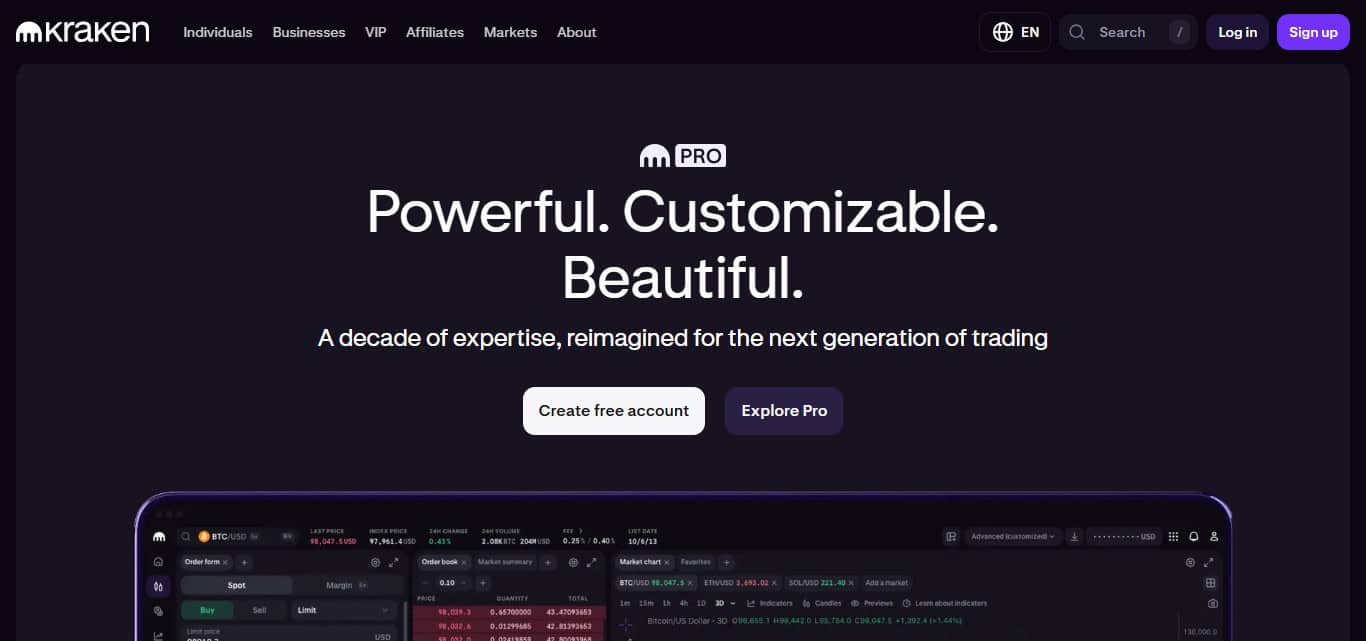
With effect from 9 July 2026, new fees are set at 0.40% for makers and 0.80% for takers. Kraken Pro offers spot markets, margin markets and futures markets with Advanced Trade Tools and professional charts ideal for market makers.
Kraken Pro Features
- Complex UI: Designed for high-volume crypto trading.
- Variable Fees: Users can earn lower trading fees through volume activity.
- Advanced Orders: Offers trading orders to help traders reduce risk.
- Multiple Markets: Offers spot and derivative related crypto products.
- Long Running Platform: Offers a dedicated Crypto trading platform due to its extended period in operation
| Pros | Cons |
|---|---|
| Established Exchange: Kraken has operated since 2011. | Higher Entry Fees: Current entry-level spot fees are higher than several competitors. |
| Professional Interface: Designed for experienced cryptocurrency traders. | Complex Fee Tiers: Lower rates generally require higher trading activity. |
| Advanced Orders: Provides professional trading and order-management functionality. | Regional Limitations: Some products are unavailable in particular countries. |
7. Coinbase Advanced
Coinbase first launched in 2012 as a service helping families deal with Bitcoin transactions. Since then, Coinbase has grown to be a mainstream cryptocurrency service. Coinbase Advanced was launched providing professionals with a service built specifically for high-volume transactions.

Coinbase Advanced is targeted at professionals who wish to trade on Coinbase’s platform, as it offers professional trading tools and provides better prices based on trading volume. Fees: Coinbase Advanced employs a tiered maker/taker model, and as trading volume goes up, so do the prices.
Support: Coinbase Advanced has advanced charts, real-time order books, market orders, stop-limit orders, order functionality, and access to supported markets.
Coinbase Advanced Features
- Tiered Crypto Fees: Users can earn reduced trading fees by increased volume activity.
- Advanced Charts: Offers charting tools to assist traders in making informed decisions.
- Market Information: Provides order books for enhanced market information.
- Advanced Orders: Has a variety of trading orders available.
- Integrated Coinbase: Offers trading features integrated into the Coinbase ecosystem.
| Pros | Cons |
|---|---|
| Volume-Based Pricing: Higher trading volumes can reduce applicable fees. | Entry Fees: Lower-volume users may pay more than competitors. |
| Advanced Charts: Provides professional charting and market-analysis tools. | Complexity: Advanced functionality may be unnecessary for casual investors. |
| Order Books: Real-time market information helps traders assess liquidity. | Regional Differences: Available assets and services depend on location. |
8. Gemini ActiveTrader
In 2015, Gemini was founded by Cameron and Tyler Winklevoss, rapidly gaining trust for their security, compliance, and regulated cryptocurrency service. Gemini ActiveTrader was built specifically for users who wish to actively trade cryptocurrency.
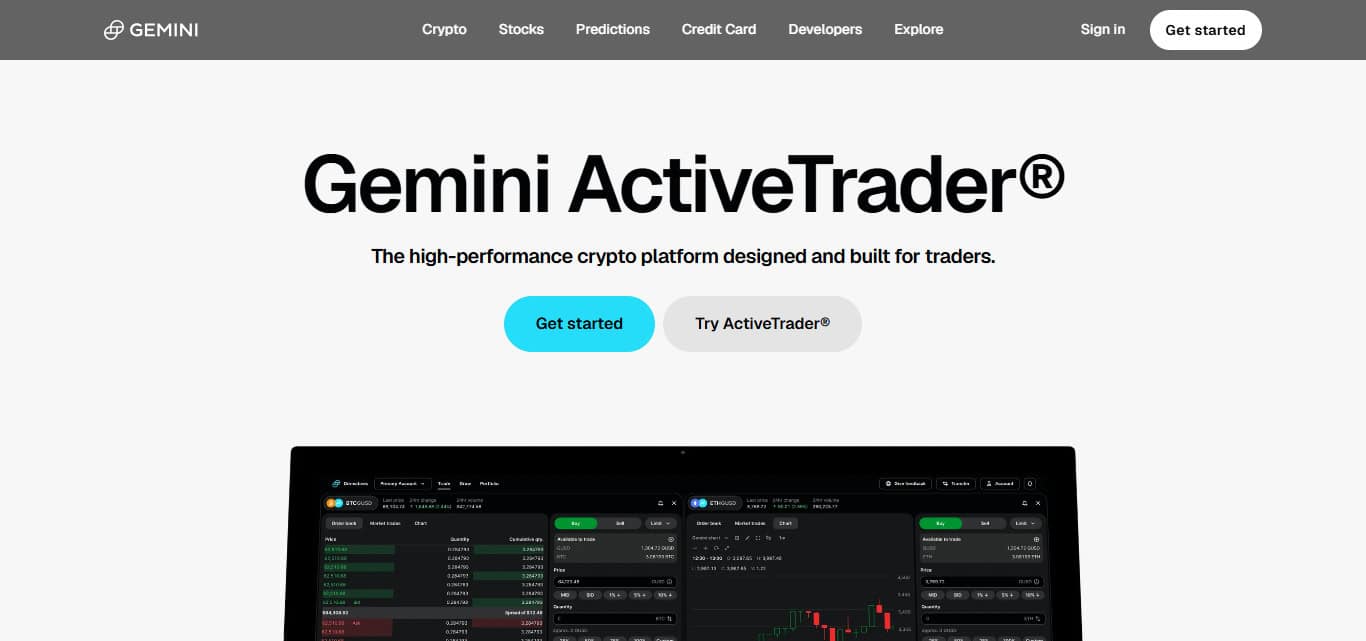
Fees: For Gemini ActiveTrader, your trading volume will determine your maker/taker fee, where taker fees can reach as low as 0.02% with high trading volume, while maker fees are always 0%. Gemini ActiveTrader provides access to trading and professional trading tools with supported spot markets.
Gemini ActiveTrader Features
- Security Focus: Gemini emphasizes security, compliance, and regulated cryptocurrency infrastructure.
- Professional Interface: Designed specifically for frequent and experienced cryptocurrency traders.
- Tiered Pricing: Higher trading activity can provide access to lower applicable fees.
- Advanced Orders: Offers professional order-management functionality for precise trade execution.
- API Support: Provides exchange and API functionality for eligible trading applications.
| Pros | Cons |
|---|---|
| Professional Interface: Designed specifically for active cryptocurrency traders. | Higher Entry Fees: Starting fees can be higher than several competing platforms. |
| Tiered Pricing: High-volume users may qualify for substantially lower fees. | Volume Requirement: Best pricing generally benefits frequent or high-volume traders. |
| Advanced Orders: Provides professional order functionality. | Limited Asset Selection: Supported cryptocurrencies may be fewer than some competitors. |
9. Revolut X
Revolut’s crypto unit, Revolut X, launched in May 2024. It is designed as a more professional version of Revolut’s crypto exchange for users experienced in crypto trading.
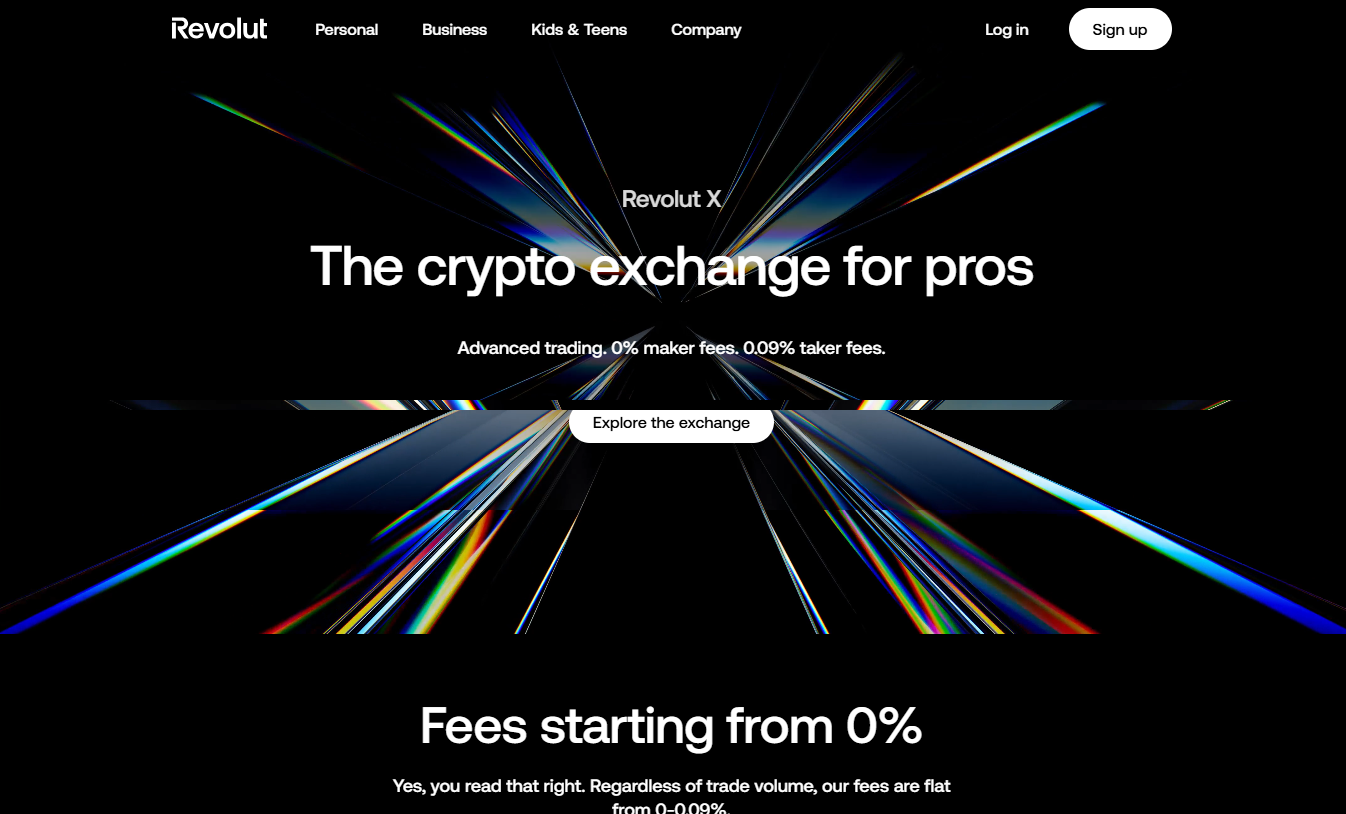
Ultimately, Revolut X is intended to integrate with Revolut’s existing financial ecosystem. Launch Offer: Revolut X’s launch offer included a 0% maker fee and a 0.09% taker fee, as well as free transfers between Revolut and Revolut X for users who qualified.
Revolut X launch included over 100 different cryptocurrencies available for trading, market and limit orders, and TradingView charts with additional trading indicators. An indication of the availability of the offering in different regions suggests users may need to confirm price and eligibility.
Revolut X Features
- Low Fees: Initially offered 0% maker and taker fees.
- Trading Focus: Has a dedicated trading platform.
- Extended Digital Asset Access: Initially access 100+ digital assets.
- Advanced Trading Platform: Offers TradingView for advanced chart analysis.
- Variable Services: Services and pricing vary by user’s supported jurisdiction.
| Pros | Cons |
|---|---|
| Low Launch Fees: Initially advertised 0% maker and 0.09% taker fees. | Regional Availability: Revolut X is not available in every market. |
| Dedicated Platform: Designed specifically for more advanced crypto trading. | Changing Fees: Launch pricing should not be assumed to remain unchanged. |
| TradingView Charts: Provides professional charting and technical-analysis features. | Product Coverage: Available assets can vary by country. |
10. Phemex
Phemex launched in 2019, built by former Morgan Stanley executives as a firm focused on developing professional cryptocurrency trading infrastructures. Over time, it expanded beyond just offering crypto derivatives to a platform for spot trading and comprehensive digital asset services.
Fees: Phemex’s 0.10% maker and taker fees for spot trading can be reduced through a variety of tiers based on trading volume or asset holding. Phemex Support: Phemex offers spot trading, contracts for crypto trading, and a copy trading feature. There are no fees for crypto spot trading on Phemex, but there could be fees from external service providers for buying cryptocurrency with fiat.
Phemex Features
- Competitive Spot Fees: Standard spot fees begin at about 0.10%.
- VIP Discounts: Traders with high trading volumes may be eligible for lower trading fees.
- Spot and Contracts: Offers crypto spot markets and contract trading.
- Copy Trading: Users can make trades with strategies by following copy trading.
- Crypto Deposits: There is typically no platform charge for crypto deposits.
| Pros | Cons |
|---|---|
| Competitive Spot Fees: Standard spot fees are commonly around 0.10% maker/taker. | Regional Restrictions: Products and services can vary by jurisdiction. |
| VIP Discounts: Higher-volume traders can potentially access reduced fees. | Derivatives Risk: Contract trading can involve significant leverage-related losses. |
| Copy Trading: Provides functionality for following selected trading strategies. | Fee Variations: Different products have different maker/taker structures. |
How We Chose The Top Crypto Exchanges of 2026
- Affordability: We analyze crypto trading fee structures to provide the best overall value to our customers.
- Costs: We evaluate trading services under the lenses of spreads, withdrawals, deposits, currency conversion, and funding costs.
- Liquidity: We prioritize liquidity and the ability to execute trades efficiently.
- Fee Discounts: Other rewards and incentives like discounted fees, promotions, earned through VIP status or trading volume, tokens, and more.
- Crypto Asset Selection: Coins and tokens supported, trading pairs.
- Trading Offerings: Spot trading, futures trading, options trading, margin trading, and perpetual trading.
- Security: The biz security measures, custody, and overall customer account safety and the trust
Conclusion
In conclusion, the best way to compare crypto exchanges with lower fees is to look beyond maker and taker rates. Binance, Bybit, OKX, KuCoin, MEXC, Kraken Pro, Coinbase Advanced, Gemini ActiveTrader, Revolut X, and Phemex have distinctive fee structures and products and features.
Before selecting an exchange, compare total exchange cost, liquidity, security, available assets, withdrawal fees, and regional coverage and then choose the exchange with the best balance.
FAQ
Which crypto exchange has the lowest trading fees in 2026?
MEXC is among the lowest-fee options, with listed spot fees around 0% maker and 0.05% taker in current comparisons.
Is Binance a low-fee crypto exchange?
Yes. Binance commonly lists approximately 0.10% maker and 0.10% taker spot fees at the standard level.
Which exchange is best for low-cost spot trading?
MEXC, Binance, OKX, Bybit, and KuCoin are notable low-fee choices. Current comparison data lists MEXC at 0%/0.05%, while Binance, Bybit, and KuCoin are around 0.10%/0.10% and OKX around 0.08%/0.10%.
Are 0% crypto trading fees really free?
Not necessarily. A zero maker fee can still be accompanied by spreads, slippage, withdrawal fees, conversion costs, or other charges. Therefore, traders should compare the total cost of completing a transaction rather than looking only at the advertised trading fee.