Blockchain privacy and transaction security are becoming essential for businesses handling sensitive digital assets and financial data. Choosing the right infrastructure provider helps protect confidential information, secure transactions, and improve operational efficiency.
In this article, I will discuss the Best Private Transaction Infrastructure Providers for Blockchain, highlighting their key features, supported blockchains, compliance capabilities, and major use cases.
What Is Private Transaction Infrastructure in Blockchain?
In blockchain, private transaction infrastructure refers to platforms and solutions that shield private transaction data from unwanted access. To ensure confidentiality, it makes use of encryption, Multi-Party Computation (MPC), Zero-Knowledge Proofs (ZKPs), and permissioned networks.
Without sacrificing operational transparency and trust, these solutions enable companies, financial institutions, and enterprises to carry out safe blockchain transactions while managing data visibility, safeguarding identities, and assisting with regulatory compliance.
How Can I Pick the Best Infrastructure Provider for Private Transactions?
- Assess Privacy Technology: Select suppliers who provide MPC, encryption, Zero-Knowledge Proofs, and secret transaction capabilities.
- Verify Blockchain Compatibility: Make sure your necessary blockchain networks, protocols, and applications are supported by the infrastructure.
- Examine Security Certifications: Look for independently validated security standards, ISO 27001, and SOC 2.
- Examine Compliance Capabilities: Examine identity management, KYC, AML, audit trails, and regulatory compliance tools.
- Evaluate Performance and Scalability: Examine latency, transaction throughput, network dependability, and infrastructure scalability under demand.
- Take into Account Integration and Deployment Options: Examine compatibility options for cloud, smart contract, SDK, API, and deployment.
- Examine Pricing and Support: Examine the costs of infrastructure, transaction fees, technical support, documentation, and customer service.
Key Points & Best Private Transaction Infrastructure Providers for Blockchain
| Provider | Description |
|---|---|
| Hyperledger | Enables confidential enterprise transactions through permissioned networks, private channels, and access controls. |
| Chainstack | Provides managed blockchain infrastructure, secure nodes, APIs, and reliable multi-chain connectivity. |
| Kaleido | Supports private enterprise blockchain networks, confidential transactions, and secure business integrations. |
| Fireblocks | Protects institutional digital asset transactions using MPC wallets and approval policies. |
| R3 (Corda) | Enables confidential business transactions through permissioned distributed ledgers and identity management. |
| Zeeve | Simplifies enterprise blockchain deployment with managed infrastructure, monitoring, and governance tools. |
| QuickNode | Delivers reliable blockchain connectivity through managed nodes, APIs, and dedicated infrastructure. |
| Alchemy | Provides blockchain APIs, developer tools, transaction services, and secure application connectivity. |
| Infura | Connects decentralized applications with blockchain networks through reliable APIs and managed nodes. |
| IBM Blockchain Platform | Supports enterprise blockchain networks with permissioned access, identity controls, and governance. |
10 Best Private Transaction Infrastructure Providers for Blockchain In 2026
1. Hyperledger
An corporate blockchain platform called Hyperledger Fabric was created to facilitate private, secure business transactions between approved entities. While other members can only view its hash on the ledger, certain network participants can access sensitive transaction information thanks to its private data gathering. Additionally, it offers smart contract features, identity management, access controls, and permissioned channels.
Supported Blockchains: Rather than being a multi-chain RPC provider, Hyperledger Fabric is its own permissioned blockchain infrastructure. Compliance Support Organizations can establish governance and regulatory controls with the use of Membership Service Providers (MSPs), identity verification, access policies, and auditable transaction records.
Hyperledger Major Use Case
| Major Use Case | Explanation |
|---|---|
| Supply Chain Management | Tracks products and verifies transactions across business partners. |
| Financial Services | Enables secure data sharing between financial institutions. |
| Healthcare Data Sharing | Protects sensitive patient information across authorized organizations. |
| Digital Identity Management | Manages verified identities and permissioned network access. |
2. Chainstack
Through dependable nodes, APIs, and specialized infrastructure, Chainstack offers managed blockchain infrastructure that facilitates developers’ and businesses’ access to blockchain networks. Its technology facilitates multi-chain connectivity, transaction processing, historical data access, and blockchain application creation.

Although it is not primarily a confidential transaction protocol, organizations can use its architecture to control secure network access and create private blockchain environments. Ethereum, Solana, Polygon, Base, Arbitrum, BNB Smart Chain, Hyperliquid, and more than 70 blockchain protocols are all supported. Compliance Support Enterprise security requirements are supported by ISO 27001 and SOC 2 Type II security certifications.
Chainstack Major Use Case
| Major Use Case | Explanation |
|---|---|
| DeFi Applications | Provides blockchain infrastructure for decentralized finance platforms. |
| Web3 Development | Supports developers building blockchain-powered applications. |
| Enterprise Blockchain | Offers managed infrastructure for business blockchain operations. |
| Multi-Chain Applications | Connects applications with multiple blockchain networks. |
3. Kaleido
For companies creating private networks, digital asset platforms, and sensitive business applications, Kaleido provides enterprise blockchain infrastructure. Permissioned blockchain deployment, sophisticated access controls, safe data interchange, and private transaction capabilities are some of its services.
Consortium networks, enterprise tokenization, and connectivity with current business systems are all supported by the platform. Hyperledger Besu, Hyperledger Fabric, Corda, Ethereum, Polygon, Avalanche, Arbitrum, Base, Bitcoin, and Stellar are among the supported blockchains. Compliance assistance: Security and governance assistance for enterprise deployments is offered by SOC 2 Type II and ISO 27001, 27017, and 27018 certifications.
Kaleido Major Use Case
| Major Use Case | Explanation |
|---|---|
| Digital Asset Tokenization | Supports tokenization of financial and real-world assets. |
| Supply Chain Networks | Enables secure information exchange between business participants. |
| Private Enterprise Networks | Helps organizations deploy permissioned blockchain environments. |
| Financial Services | Supports digital asset management and institutional blockchain applications. |
4. Fireblocks
Fireblocks offers wallet administration, policy-based transaction approvals, secure transaction execution, and custody connectors for institutional digital asset infrastructure. By dividing up important processes among several parties, our Multi-Party Computation (MPC) technology lowers the danger of a single point of failure. Its workflow controls and transaction policies are useful for managing digital asset activities and transfers.

Ethereum, Bitcoin, Solana, Polygon, Avalanche, and many other blockchain networks and tokens are supported. Support for Compliance Institutions can fulfilll internal risk management and regulatory needs with the aid of transaction screening integrations, governance controls, approval workflows, and audit trails. Fireblocks is not a stand-alone privacy blockchain, but rather a platform for digital asset security.
Fireblocks Major Use Case
| Major Use Case | Explanation |
|---|---|
| Institutional Custody | Protects digital assets through secure wallet infrastructure. |
| Secure Crypto Transfers | Enables controlled transfers with transaction approval policies. |
| DeFi Connectivity | Connects institutions with decentralized finance applications. |
| Treasury Management | Helps businesses manage digital asset operations securely. |
5. R3 (Corda)
An enterprise distributed ledger technology called R3 Corda was created for private transactions between companies and financial institutions. Corda exclusively shares transaction data with the parties required to take part in a specific business deal, in contrast to standard public blockchains. Identity management, digital agreements, smart contract execution, and safe information transmission are all supported by its design.
Supported Blockchains: Rather than having native support for several public chains, Corda’s distributed ledger technology offers interoperability alternatives through integrations. Compliance Support: Financial institutions may handle operational and regulatory obligations with the aid of transaction records, participant identity verification, permissioned membership, and adjustable governance.
R3 (Corda) Major Use Case
| Major Use Case | Explanation |
|---|---|
| Banking Transactions | Enables confidential financial transactions between institutions. |
| Trade Finance | Streamlines secure information exchange between trading partners. |
| Insurance Management | Supports private data sharing for insurance agreements. |
| Capital Markets | Facilitates confidential securities and financial agreements. |
6. Zeeve
For businesses who need to set up, run, and administer blockchain networks, Zeeve offers managed blockchain infrastructure. Role-based permissions, network upgrades, infrastructure monitoring, node deployment, and permissioned network administration are all supported by its platform.
Zeeve allows businesses to build enterprise-grade infrastructure and customized blockchain environments with operational controls. Hyperledger Besu, OP Stack, OP Succinct, Arbitrum Orbit, Linea zkStack, Cosmos SDK chains, and Avalanche L1 are among the supported blockchains.
Compliance Support Zeeve reports GDPR compliance, ISO 27001, and SOC 2 Type II certifications. Enterprise blockchain operations are supported by its governance, access control, and security monitoring features.
Zeeve Major Use Case
| Major Use Case | Explanation |
|---|---|
| Enterprise Blockchain | Deploys and manages business-focused blockchain networks. |
| Blockchain-as-a-Service | Simplifies blockchain infrastructure deployment and maintenance. |
| Layer 2 Networks | Supports customized blockchain scaling infrastructure. |
| Decentralized Applications | Provides infrastructure for developing and operating Web3 applications. |
7. QuickNode
Through RPC endpoints, APIs, archive nodes, and real-time data services, QuickNode’s blockchain infrastructure enables developers and companies to link apps with public blockchain networks. Transaction submission, blockchain data retrieval, application development, and network monitoring are all supported by its infrastructure.
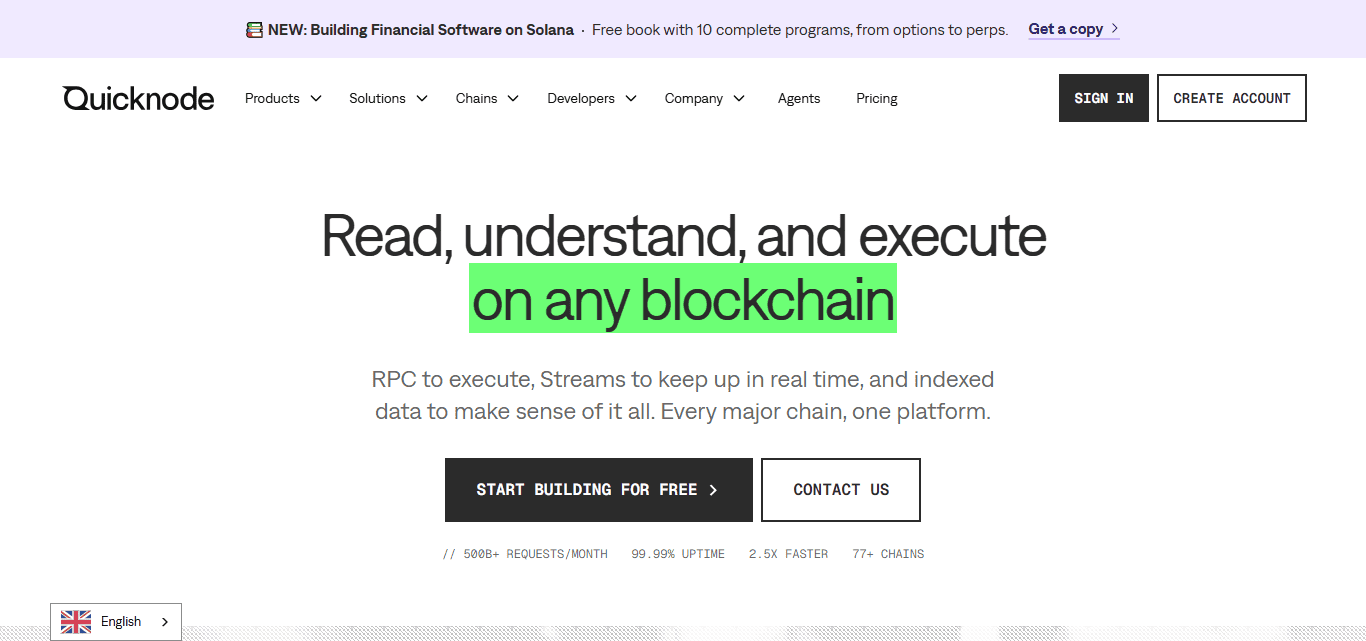
Although QuickNode is not a private transaction protocol in and of itself, developers can enhance operational isolation and dependability by utilizing dedicated infrastructure choices.
Ethereum, Solana, Bitcoin, Polygon, Arbitrum, Base, Avalanche, BNB Smart Chain, and numerous other networks are among the supported blockchains. Compliance Support: Enterprise security requirements are supported by ISO 27001 and SOC 2 Type II certifications.
QuickNode Major Use Case
| Major Use Case | Explanation |
|---|---|
| Web3 Application Development | Provides blockchain connectivity for decentralized applications. |
| DeFi Infrastructure | Supports blockchain data access and transaction submission. |
| NFT Platforms | Enables blockchain connectivity for NFT applications and marketplaces. |
| Blockchain Data Access | Provides APIs for retrieving on-chain information. |
8. Alchemy
Through APIs, node services, smart contract tools, transaction infrastructure, and blockchain data access, Alchemy offers blockchain development infrastructure. Developers can create decentralized apps utilizing its platform without having to manage their own blockchain nodes. Its infrastructure can be used by businesses for wallet development, blockchain monitoring, transaction execution, and application connectivity.

Depending on the product and API, supported networks include Ethereum, Polygon, Arbitrum, Optimism, Base, Solana, Avalanche, Starknet, Bitcoin, and others. Compliance Support: Enterprise security and operational requirements are supported by ISO 27001 and SOC 2 Type II certifications. Although its architecture is helpful for safe blockchain communication, transactions are not always kept private.
Alchemy Major Use Case
| Major Use Case | Explanation |
|---|---|
| Decentralized Applications | Provides infrastructure for building and operating dApps. |
| Smart Contract Development | Supports smart contract deployment and interaction. |
| NFT Development | Offers blockchain tools for NFT applications and marketplaces. |
| Wallet Infrastructure | Supports wallet development and blockchain transaction management. |
9. Infura
For decentralized apps, Infura is a Web3 infrastructure provider that provides managed node access and blockchain APIs. Without independently maintaining complete nodes, it enables developers to communicate with blockchain networks, retrieve transaction data, submit transactions, and link smart contracts.
Its multi-chain connection and application development are made easier by its API-based framework. Ethereum, Arbitrum, Avalanche, Base, Polygon, Optimism, Starknet, Solana, Bitcoin, and more networks are among the supported blockchains.

Compliance Support Although Infura offers access management and project-level security settings, its infrastructure shouldn’t be viewed as a specialized KYC, AML, or confidential transaction solution.
Infura Major Use Case
| Major Use Case | Explanation |
|---|---|
| Web3 Application Connectivity | Connects decentralized applications with blockchain networks. |
| Smart Contract Interaction | Enables applications to communicate with deployed smart contracts. |
| DeFi Development | Provides blockchain APIs for decentralized finance applications. |
| Blockchain Data Retrieval | Helps developers access transaction and network information. |
10. IBM Blockchain Platform
Using Hyperledger Fabric, IBM Blockchain Platform offers enterprise tools and assistance for creating and running permissioned blockchain networks. It makes it possible for companies to create safe business networks with secret channels, identity management, restricted participation, and sharing of private information.
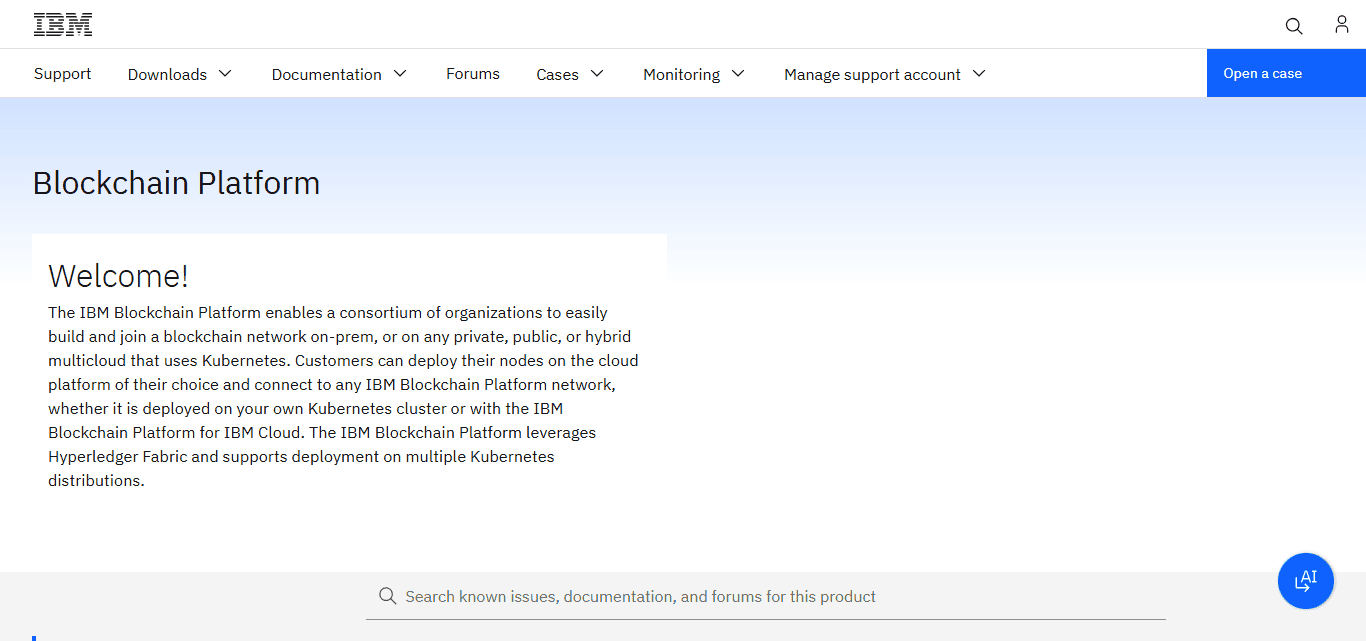
Its architecture helps businesses manage distributed ledger applications by supporting multi-cloud and Kubernetes-based deployments. Supported Blockchains: The main framework that is supported is Hyperledger Fabric, which allows compatible Fabric network components to communicate with one another.
Compliance Support Organizations can adopt governance and compliance procedures with the use of identity management, access restrictions, auditable transactions, and enterprise security capabilities. Important: Before deploying, confirm that the product is currently available. IBM Blockchain Platform Software Edition was superseded by IBM Support for Hyperledger Fabric in 2023.
IBM Blockchain Platform Major Use Case
| Major Use Case | Explanation |
|---|---|
| Supply Chain Management | Tracks products and transactions across enterprise networks. |
| Financial Services | Supports secure data sharing between financial institutions. |
| Healthcare Networks | Enables permissioned sharing of sensitive healthcare information. |
| Enterprise Data Management | Supports controlled data exchange between business organizations. |
Conclusion
In conclusion, privacy technology, security, scalability, and compliance needs all play a role in selecting the top private transaction infrastructure providers for blockchain. Platforms that provide solutions for secure transactions and enterprise confidentiality include Hyperledger, Kaleido, Fireblocks, and R3 Corda.
In the meantime, companies can create dependable and secure blockchain applications with the cooperation of Chainstack, Zeeve, QuickNode, Alchemy, Infura, and IBM.
FAQ
What are private transaction infrastructure providers?
They offer blockchain technologies that protect sensitive transaction data through encryption, access controls, and privacy protocols.
Which providers support private blockchain transactions?
Hyperledger, Kaleido, and R3 Corda provide enterprise-focused solutions for confidential blockchain transactions and permissioned networks.
How do private blockchain transactions work?
They use encryption, permissioned access, and cryptographic technologies to restrict sensitive transaction information to authorized participants.
What technologies protect private blockchain transactions?
Common technologies include Zero-Knowledge Proofs, Multi-Party Computation, encryption, confidential computing, and private data collections.