The right infrastructure can make or break a decentralized application. In this article, I will cover the Best Cloud Hosting Platforms for Web3 Projects and compare Google Cloud, AWS, OVHcloud, Hetzner, Chainstack and QuickNode.
You’ll also learn how each platform handles security, performance, and pricing, so you can confidently choose the right hosting solution for your blockchain project.
How We Picked the Top Cloud Hosting Platforms for Web3 Projects
- Security: We review DDoS protection, encryption, key management, private networking, and compliance certifications to secure wallets, nodes, and user data.
- Performance: We assess server hardware, network bandwidth, latency, uptime guaranties, and worldwide data center coverage to guaranty reliable node and RPC operation.
- Pricing: We look at monthly and hourly rates, free tiers, startup credits, and hidden costs like data egress fees.
- Support for blockchain: We need node hosting tools, pre-installed software, managed RPC access, and compatibility with major networks.
- Scalability: We look at how well a platform can handle traffic spikes, growing storage demands and scaling of multi-chain apps.
- Payment Flexibility: We prefer providers that accept cryptocurrency payments, which is ideal for decentralized teams and privacy-oriented projects.
- Help and Stability: We assess uptime SLAs, customer support, documentation and user reputation to ensure reliable long-term service.
Key Points & Best Cloud Hosting Platforms for Web3 Projects
| Platform | Explanation |
|---|---|
| Google Cloud | Dedicated Web3 infrastructure, managed Kubernetes, key management, up to $200,000 startup credits. |
| OVHcloud | Bare-metal and GPU servers with anti-DDoS protection and private networking for nodes. |
| Melbicom | Single-tenant servers, up to 200 Gbps bandwidth, and crypto billing for validators. |
| Vultr | Global cloud compute, bare metal, VPS instances with hourly billing, Bitcoin payments. |
| Hetzner | Affordable European dedicated and cloud servers ideal for validators, staking, node hosting. |
| BaCloud | NVMe AMD EPYC, Intel Xeon servers with crypto payments, strong uptime SLAs. |
| Chainstack | Managed blockchain infrastructure offering multi-cloud deployments and global node coverage for Web3. |
| QuickNode | Low-latency RPC endpoints and multi-chain developer infrastructure for building and scaling dApps. |
| Amazon Web Services (AWS) | Scalable EC2 instances, containers and storage for frontends, indexers, backend Web3 services. |
| HOSTKEY | International servers with pre-installed tools for running and managing self-operated blockchain nodes. |
10 Best Cloud Hosting Platforms for Web3 Projects
1. Google Cloud
If you’re a Web3 team looking for enterprise-grade infrastructure with dedicated tooling for your blockchain, Google Cloud is a good match. Its Web3 capabilities feature Google Kubernetes Engine for container orchestration, managed node services and Cloud KMS for safeguarding cryptographic keys.
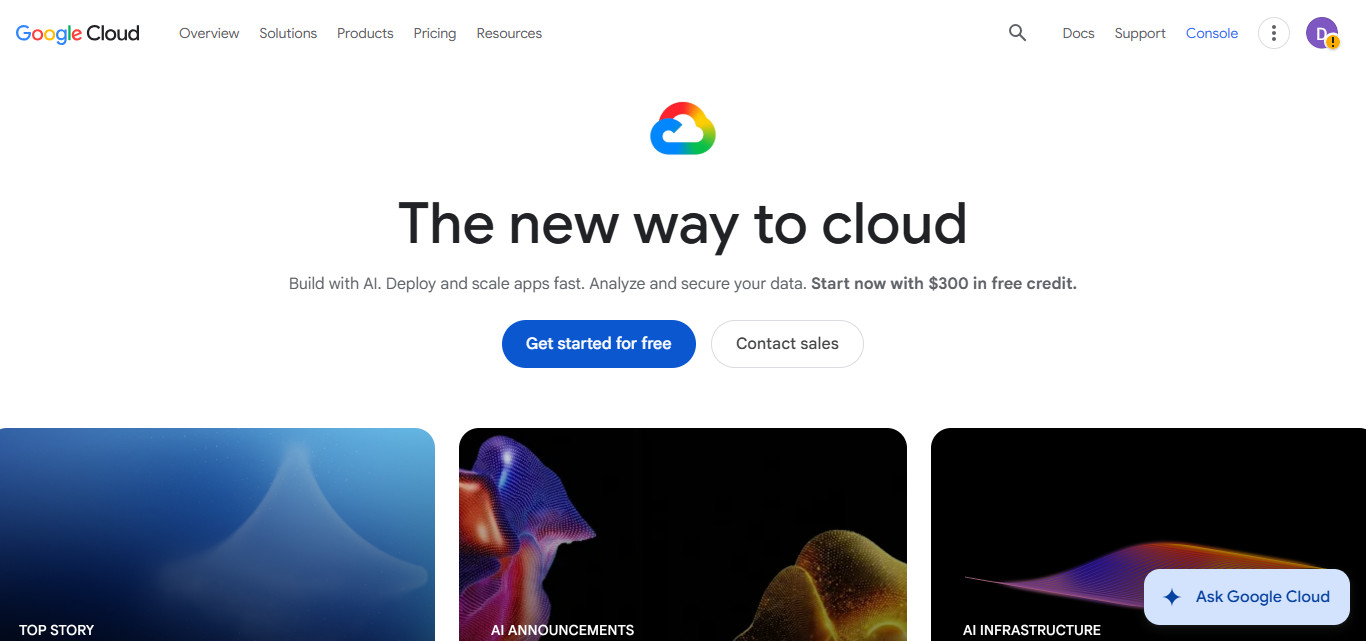
Security It offers encryption, identity and access management, and confidential computing options out of the box. Performance is powered by Google’s global private fiber network, with low latency and reliable scaling for RPC nodes, indexers, and dApp backends.
Pricing is pay-as-you-go, with sustained-use and committed-use discounts. Eligible startups can get up to $200,000 in credits over two years through the Web3 Startup Program, making early development significantly less expensive.
Google Cloud Best Use Cases
- Web3 startups that have funding: leverage the Web3 Startup Program credits (up to $200,000) to build and launch without heavy early costs.
- Key management: secure wallet keys and signing operations with Cloud KMS and confidential computing.
- Scalable dApp backends: Deploy containerized APIs, indexers and services on GKE, scaling with user demand.
- Managed node access: Access supported blockchains via managed node services instead of running nodes yourself.
2. OVHcloud
OVHcloud is a good fit for Web3 projects that require powerful dedicated hardware to run blockchain nodes, dApps and AI workloads. Bare metal and GPU servers allow teams to have full control without noisy neighbors, ensuring consistent performance for their validators and RPC endpoints.
Security includes anti-DDoS protection built-in to each server, and private networking through its vRack feature to isolate sensitive infrastructure from public traffic. Pricing is usually predictable, with flat monthly or hourly rates and unmetered inbound bandwidth
Helping teams avoid the surprise egress costs typical of hyperscalers. Data centers across Europe, North America and the Asia-Pacific enable globally distributed, latency sensitive deployments. All in all, it’s a good balance between cost and control.
OVHcloud Best Use Cases
- Blockchain validators and full nodes: Run resource-intensive nodes on bare-metal servers free from noisy neighbors.
- DDoS-sensitive projects: Exchanges, RPC endpoints or public dApps that require built-in anti-DDoS protection.
- AI and Web3 hybrids: Use GPU dedicated servers to run AI-powered analytics or on-chain data processing.
- Isolated infrastructure: Keep sensitive node clusters off the public internet with vRack private networking
3. Melbicom
Melbicom specializes in single-tenant dedicated servers designed for validators, RPC nodes, and IPFS gateways. Because hardware is never shared, workloads stay isolated, which strengthens security and reduces exposure to neighboring tenants.
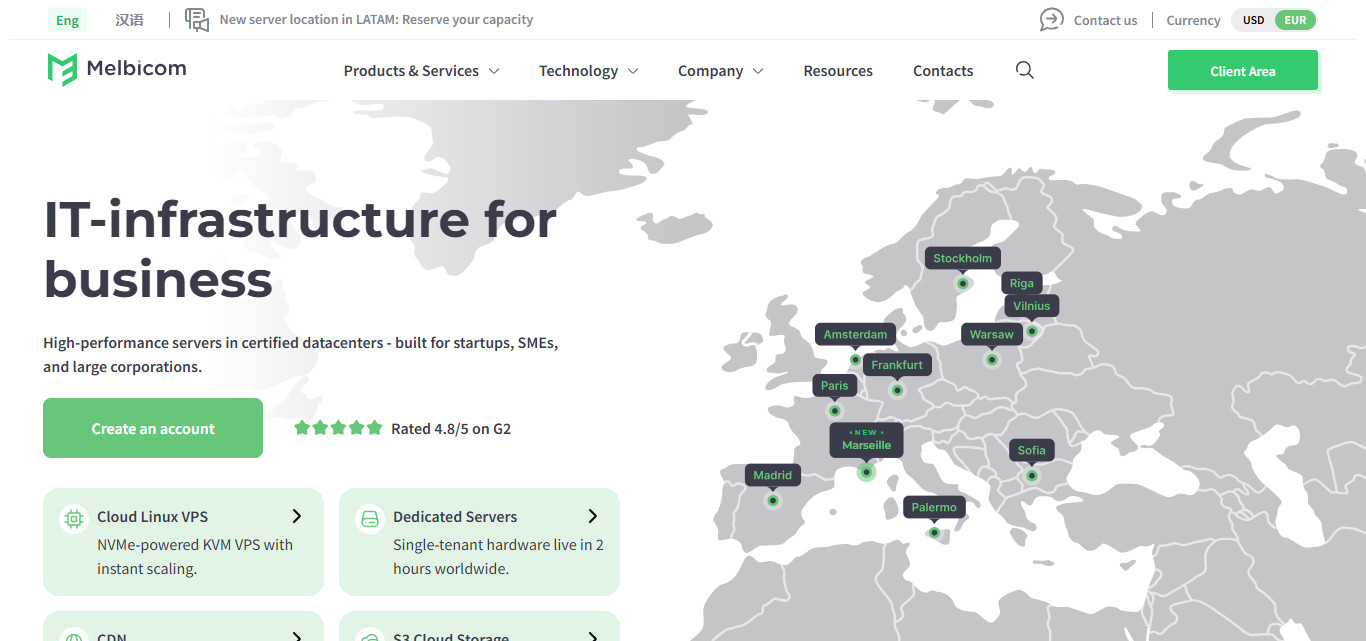
Performance is a major strength, with high-bandwidth networking reaching up to 200 Gbps, fast NVMe storage options, and data centers positioned for low latency worldwide. Its crypto-native billing lets teams pay with major cryptocurrencie
Which suits decentralized projects that prefer avoiding traditional banking. Pricing is typically monthly per server, with transparent rates and no hidden bandwidth surprises, though exact costs depend on configuration and location. It is a solid option for teams wanting dedicated power without hyperscaler complexity.
Melbicom Best Use Cases
- High-throughput RPC nodes: Serve heavy request loads with bandwidth up to 200 Gbps.
IPFS gateways: These are decentralized file delivery gateways that rely on fast and consistent network capacity.
Crypto-native teams: Pay with crypto, perfect for DAOs and privacy-first projects who want to avoid banks.
Dedicated validators: Staking validators run on single-tenant servers for isolation and consistent performance.
4. Vultr
Developers building and testing Web3 applications have a flexible combination of cloud compute, bare metal and VPS instances from Vultr. It has a global footprint with dozens of data center locations, allowing projects to place nodes and frontends close to users for low latency and reliable performance.
Capabilities like DDoS protection, configurable firewalls, private networking and optional automated backups provide teams with practical tools to protect their workloads. Highlight Pricing. You pay only for what you use through hourly billing, with entry-level instances going for a few dollars monthly. Bitcoin support is a boon for crypto-centric teams. All in all, Vultr strikes a good balance with an affordable price.
Vultr Best Use Cases
- Testing and prototyping: Spin instances on hourly billing to cheaply test intelligent contracts and dApps.
Global frontends: Host Web3 websites in many data center locations around the world to bring them closer to users.
Light and mid-size nodes: Run smaller blockchain nodes on VPS or cloud compute for a low monthly fee.
Teams who accept Bitcoin: Pay for infrastructure with Bitcoin instead of using traditional payment methods.
5. Hetzner
Hetzner is famous for offering powerful dedicated and cloud servers at some of the cheapest prices in Europe. It is popular for blockchain validators, staking operations and full node hosting where the cost of the hardware matters.
Performance is good with modern AMD and Intel processors, NVMe storage and good bandwidth allowances which are especially useful for storage-heavy chains. Security features include DDoS mitigation, firewalls, private networks and certified data centers in Germany and Finland.
However, teams will need to manage their own server hardening. Pricing is simple and transparent with low monthly rates and included traffic, but advanced managed services are limited compared to larger providers. Perfect for teams on a budget.
Hetzner Best Use Cases
- Affordable staking: Operate validators and staking nodes at some of the lowest dedicated server prices in Europe.
- Storage-heavy chains: Host archive nodes that require a lot of NVMe storage and bandwidth included.
- Startups on a budget: Save on monthly infrastructure costs while still having full control over the hardware.
- European deployments: Serve users in Europe from certified data centers located in Germany and Finland.
6. BaCloud
BaCloud offers dedicated servers with AMD EPYC and Intel Xeon processors, NVMe storage, and global and European locations. It is meant for crypto-friendly projects and accepts native cryptocurrency payments, which is suitable for decentralized teams and privacy-conscious operators.
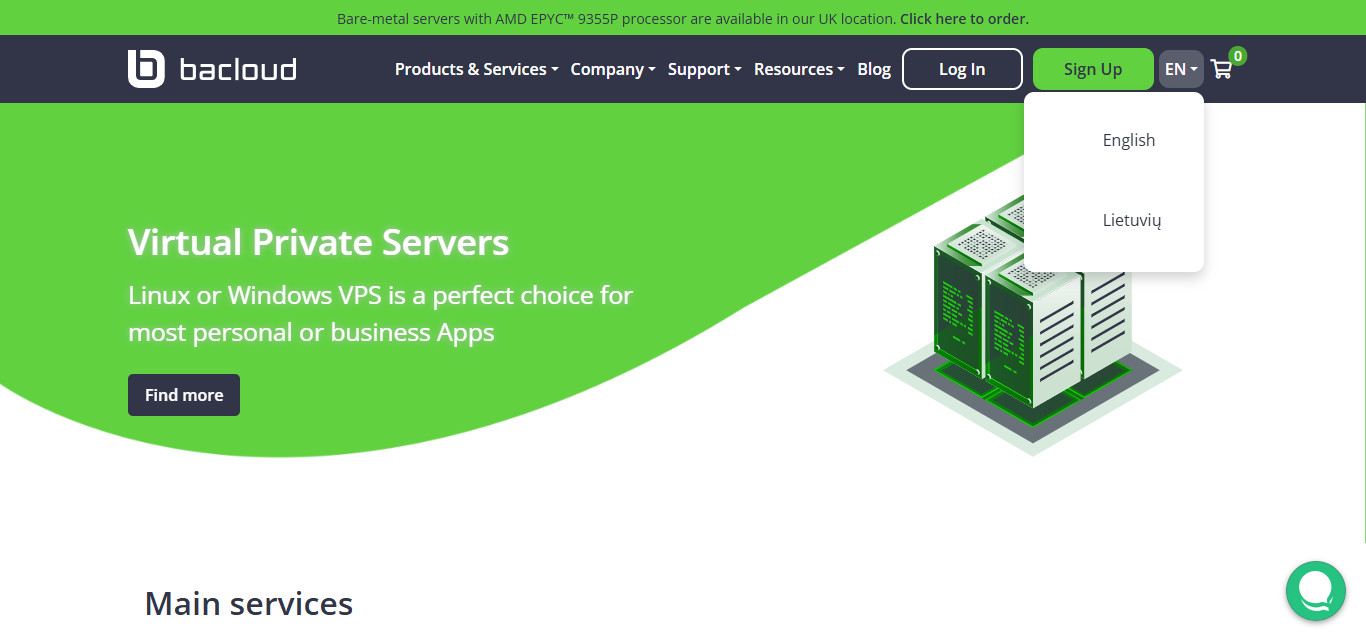
On the performance side, high clock CPUs, fast disks, and good uptime SLAs help validators and RPC nodes stay online and in sync. Security-wise, dedicated hardware means no resource sharing and DDoS protection and network isolation options help protect critical blockchain workloads.
Dedicated hardware is competitively priced and comes with fixed monthly plans that make budgeting easy, though the exact rates depend on the configuration and data center. A good mid-range option.
BaCloud Best Use Cases
- Reliable validator hosting: Ensure your nodes are online and synced with high uptime SLAs and dedicated hardware.
- Crypto-paid infrastructure: For decentralized, privacy-conscious operators, use native cryptocurrency payments.
- High performance nodes: Run demanding workloads on AMD EPYC or Intel Xeon CPUs with NVMe storage.
- Budgeting predictability: Opt for fixed monthly plans and confidently budget your infrastructure costs
7. Chainstack
Chainstack is a managed blockchain infrastructure platform that takes the hassle out of running and maintaining nodes yourself. It supports many networks, shared and dedicated nodes, multi-cloud deployments across providers like AWS, Google Cloud and Azure.
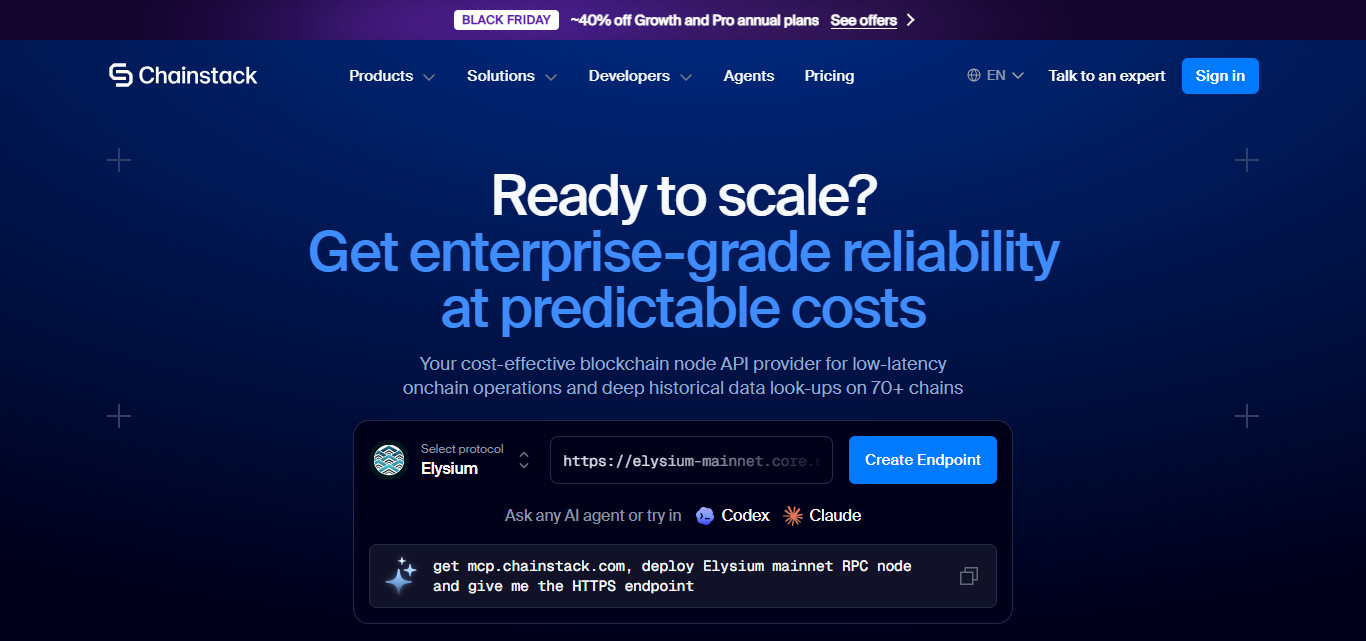
Performance is driven by global node coverage, load balancing and high availability, delivering fast and consistent responses to dApps without manual scaling. Security includes control of access, encrypted connections, and SOC 2 compliance — which makes teams dealing with sensitive production workloads sleep better at nite.
Pricing begins with a free developer tier, moving up to subscription plans based on request volume, and dedicated nodes at a significantly higher price point. It’s great for teams who want to move fast without managing infrastructure.
Chainstack Best Use Cases
- Launch without Node Operations: No server maintenance required. Start building on supported blockchains immediately.
- Multi-chain dApps: Connect one application to multiple networks via one managed platform.
- Multi-cloud resilience: Deploy nodes on AWS, Google Cloud and Azure to avoid reliance on a single provider.
- Compliance-driven production: Use SOC 2 compliance and control of access to satisfy enterprise requirements
8. QuickNode
QuickNode is a popular choice for dApp building, offering fast, reliable RPC endpoints and developer tools across dozens of blockchains. Performance is its core strength, with low-latency global routing, automatic scaling, and strong uptime, to ensure applications remain responsive during traffic spikes.
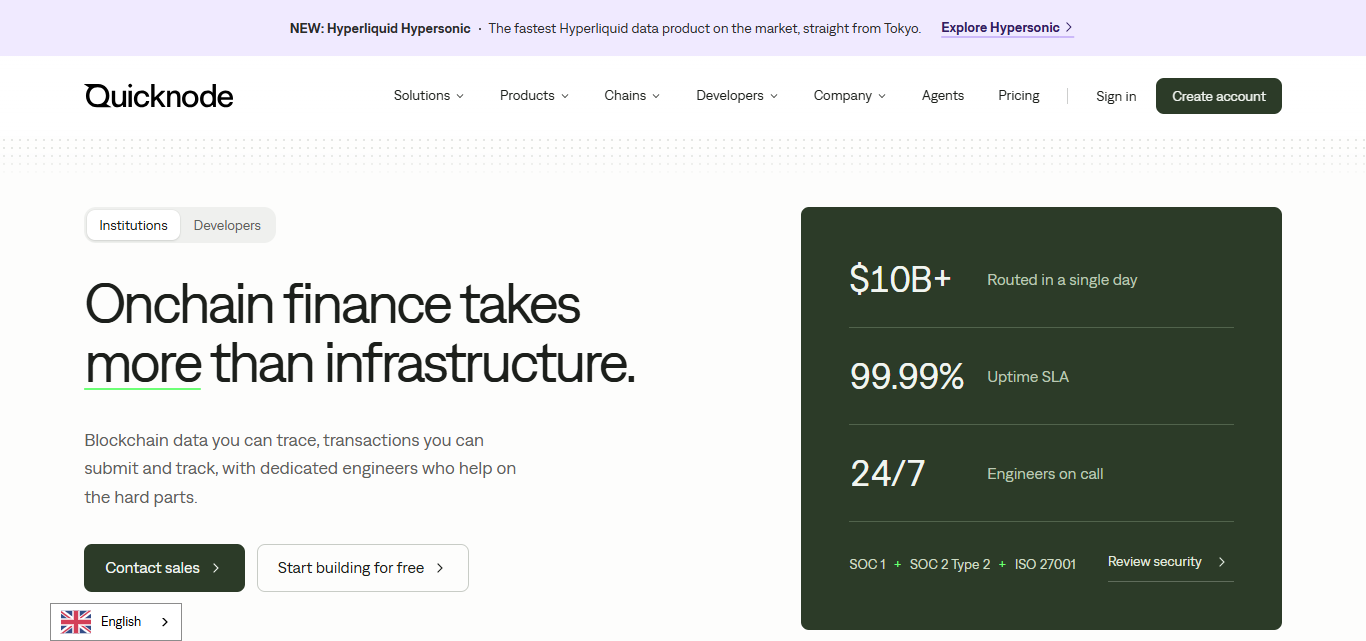
It also provides APIs for NFTs, tokens, and streaming data on top of basic RPC access, so you don’t have to build custom indexers. Security features include authentication tokens, endpoint allow-lists, rate limits and enterprise-grade compliance to help protect against abuse and unauthorized access.
Pricing is tiered subscriptions starting with a free plan and scaling up with monthly request credits so the costs scale with usage. Heavy traffic costs you money.
QuickNode Best Use Cases
- Low-latency dApp access: Deliver quick RPC responses to keep wallets and apps snappy.
- NFT and token apps: Don’t build your own indexers; use existing APIs for NFT and token data.
- Handling traffic spikes: Automatic scaling during mints, launches, and high-activity events.
- Fast prototyping: Start with the free plan and upgrade subscriptions as your user base grows
9. Amazon Web Services (AWS)
Amazon Web Services is the most mature cloud platform with scalable EC2 instances, containers and storage that is widely used for Web3 frontends, indexers and backends. It also provides blockchain node templates for Amazon Managed Blockchain for faster deployment.
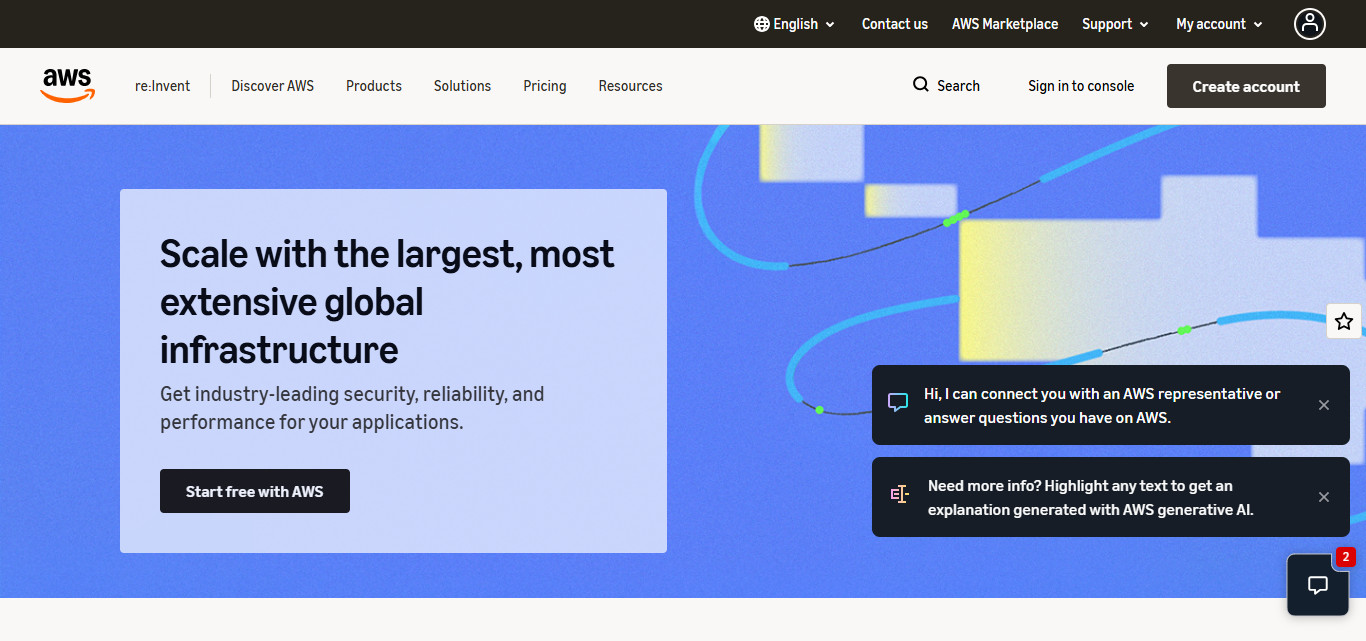
Performance is great, with a massive global network of regions and edge locations to deliver low latency and near-limitless scaling. Best in class security with IAM, KMS key management, Shield DDoS protection, and extensive compliance certifications.
Pay-as-you-go pricing is available with reserved and savings-plan discounts and startup credits, but data egress fees and complicated billing can result in unexpected cost increases. We strongly recommend closely monitoring the costs of long running workloads.
Amazon Web Services (AWS) Best Use Cases
- Enterprise Web3 platforms: Run major exchanges and wallets on the most mature, globally distributed cloud.
- Backend and indexer hosting: EC2, containers, storage for APIs, databases, and blockchain indexers.
- Deploy blockchain: Rapidly deploy nodes with Amazon Managed Blockchain and node templates.
- Compliance-heavy projects: Meet stringent regulatory requirements with broad certifications, IAM, KMS and Shield protection
10. HOSTKEY
HOSTKEY provides dedicated and GPU servers in international locations with pre-installed tools to easily run self-operated blockchain nodes. It allows teams to deploy popular node software quickly, reducing the setup time and technical complexity for validators and staking projects.
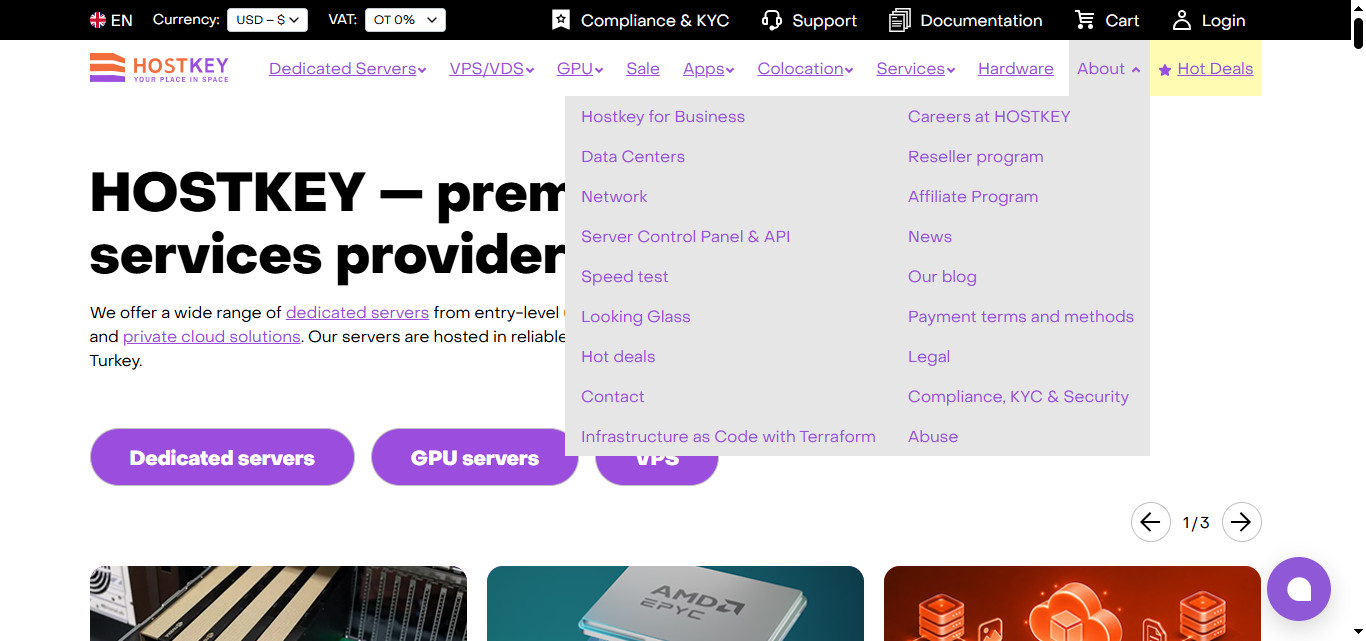
Solid performance: Modern processors, NVMe drives, and high-speed connectivity make quick work of demanding workloads like mining, rendering, and AI. Security is based on single-tenant hardware, DDoS protection, and optional private networking.
That gives teams isolation, but they are responsible for hardening. Attractive to budget-conscious blockchain operators with flexible pricing (monthly and hourly options), affordable entry configurations and cryptocurrency payment support. Always check current rates before committing.
HOSTKEY Best Use Cases
- Rapid node deployment: Easily and quickly deploy self-hosted blockchain nodes with pre-installed tools.
- Mining and compute tasks: Run GPU servers for mining, rendering or AI workloads as well as blockchain operations.
- Flexible billing needs: Choose hourly or monthly plans for short-term or long-term projects.
- Cheap self-hosting: Pay with cryptocurrency and keep costs low for small teams getting started.
Conclusion
Conclusion Choosing the right hosting platform depends on your project’s size, budget and technical requirements. Google Cloud and AWS are good for enterprise scale builds, Hetzner, OVHcloud and BaCloud are good options for affordable dedicated power for validators.
Chainstack and QuickNode make node management easy. Vultr, Melbicom and HOSTKEY add a flexible touch. Assess security, performance, and pricing thoroughly, and choose the provider that best supports the long-term growth of your Web3 project.
FAQ
What is the best cloud hosting platform for Web3 projects?
It depends on your needs. Google Cloud and AWS suit enterprise projects, Hetzner and OVHcloud fit budget-conscious validators, and QuickNode or Chainstack work best for managed node access.
Which platform is cheapest for running blockchain nodes?
Hetzner is widely known for low-cost dedicated servers in Europe. OVHcloud, BaCloud, and Vultr also offer competitive pricing, especially with fixed monthly rates or hourly billing.
Can I pay for Web3 hosting with cryptocurrency?
Yes. Melbicom, Vultr, BaCloud, and HOSTKEY support cryptocurrency payments, making them suitable for decentralized teams and privacy-focused projects that prefer avoiding traditional banking.
Do I need a dedicated server to run a blockchain node?
Not always. Small nodes can run on cloud or VPS instances, but validators and archive nodes perform better on dedicated servers with fast NVMe storage and strong bandwidth.