
Modern legal practice hardly exists without discussing the AI-Powered Case Management Tools Lawyers Love.
This goes from case handling to document review, legal research, and finally finding ways to boost productivity.
AI is streamlining law firms from drafting contracts to case predictions significantly, with precision and efficiency at every step of the legal work.
Key Points & AI-Powered Case Management Tools Lawyers Love
Clio Duo AI assistant inside Clio is helping lawyers automate tasks and draft documents faster
Everlaw Cloud litigation platform, enabling discovery review, collaboration, and trial preparation efficiency, improved
Harvey AI Generative AI platform assisting lawyers with research, drafting, and legal analysis tasks
Thomson Reuters CoCounsel AI legal assistant providing document review, research, and contract analysis support features
Lexis+ AI Generative legal research tool offering case insights, drafting, and citation assistance support
Filevine Case management software streamlines legal workflows, communication, and document organization process efficiency
Spellbook is an AI contract drafting tool helping lawyers write, review, and negotiate clauses faster
Darrow AI Legal intelligence platform detecting lawsuits and compliance risks using data analysis insights
Lex Machina Legal analytics platform providing litigation trends, judge behavior, and outcome predictions data
Kira Systems Contract analysis, AI extracting clauses and insights from legal documents, automated review
10 AI-Powered Case Management Tools Lawyers Love
1. Clio Duo (Clio)
Clio Duo is a highly sophisticated AI layer embedded deep within the functionality of Clio Manage, one of the most popular legal practice management tools on the market.
It automates daily workflows for lawyers such as drafting emails, summarising case files, tracking tasks, and managing billing insights.
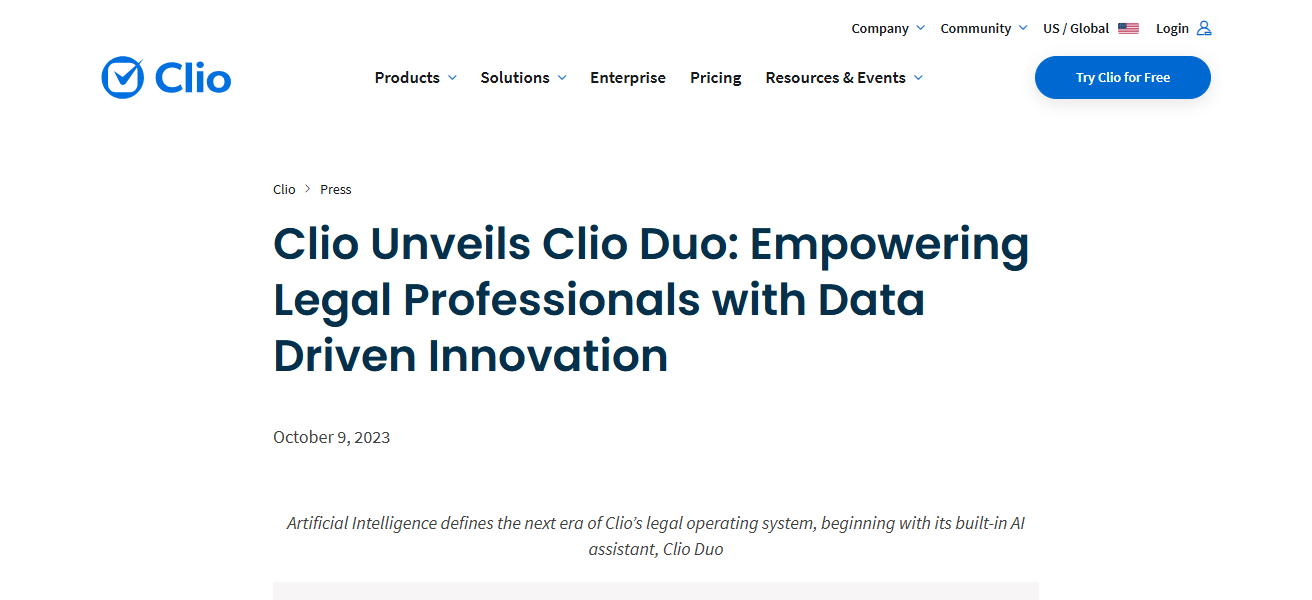
It slips in directly on top of real firm data already captured in Clio, unlike stand-alone tools. An update this week focused on identifying context-level
AI responses that understand matter history, deadlines, and communications. This is a favorite among small to mid-size firms for increasing efficiency & significantly reducing time spent on repetitive admin tasks.
| Pros | Cons |
|---|---|
| Built directly into Clio workflow system | Works only within Clio ecosystem |
| Automates emails, summaries, billing insights | Limited customization for advanced AI tasks |
| Understands case context and deadlines | Requires subscription to Clio Manage |
| Ideal for small and mid-size law firms | Not suitable for standalone AI use |
2. Everlaw
Everlaw is a cloud-based, full-featured litigation and eDiscovery platform for both complex investigations and trial preparation.
Its artificial intelligence capabilities assist lawyers in going through millions of documents and finding necessary citation clusters with extreme accuracy.

Recent improvements involve predictive coding, automated organization of documents into clusters, and writing tools that help tell the story in a trial with a narrative.
Teams can work together in real time across cases, which is a focal point for Everlaw. Government agencies, law firms, and businesses involved with high-stakes litigation and sensitive discovery rely on it heavily.
| Pros | Cons |
|---|---|
| Strong eDiscovery and litigation support | Expensive for small firms |
| Advanced AI document clustering | Requires training for full use |
| Real-time team collaboration features | Focused mainly on litigation use cases |
| Excellent for large data review | Not ideal for simple case management |
3. Harvey AI
Harvey AI: A revolutionary generative AI platform for lawyers. It leverages large language models to assist with contract review, legal research, drafting, and compliance analysis.
Last month, Harvey launched workflow automation tools for complex legal tasks such as due diligence and M&A analysis.

It offers integrations with enterprise legal management systems and is fully secured and private. Harvey is the first application training with data up to October 2023, leveraging
OpenAI’s GPT-4 technology delivers a plug-and-play solution with seamless integrations for large global law firms looking to automate research-heavy work, reduce manual drafting time, and enhance decision-making accuracy throughout complex legal worlds.
| Pros | Cons |
|---|---|
| Powerful generative AI for legal tasks | Still evolving, some feature limitations |
| Supports drafting, research, compliance | High-end enterprise focus |
| Strong security for legal data | Not widely accessible to small firms |
| Speeds up complex legal workflows | Requires onboarding and integration |
4. Thomson Reuters CoCounsel
CoCounsel by Thomson Reuters is an AI paralegal tool that assists with research, document review, and litigation workflows.
Utilizing advanced generative AI and Westlaw integration to assist lawyers with analyzing legal case law, drafting document summaries, and generating deposition outlines.

The latest includes citation validation with deeper matching and automated carve-out workflows for quicker legal drafting.
Corporate legal teams and litigation firms rely on CoCounsel because it is reliable, compliant, and delivers outputs that speak to the need for accuracy and verifiability by being integrated with trusted legal databases.
| Pros | Cons |
|---|---|
| Trusted legal data integration (Westlaw) | Premium pricing model |
| Strong citation-backed answers | Limited flexibility outside ecosystem |
| Reliable for legal research & review | Requires internet-based workflow |
| Good for enterprise legal teams | Learning curve for new users |
5. Lexis+ AI
Lexis+ AI is a LexisNexis-built generative legal research tool. It enables lawyers to pose questions in natural language and delivers accurate legal results with citations.
Enhanced drafting assisted with AI, case summary, and Shepard’s to review the validity of legal authority were among its new features.
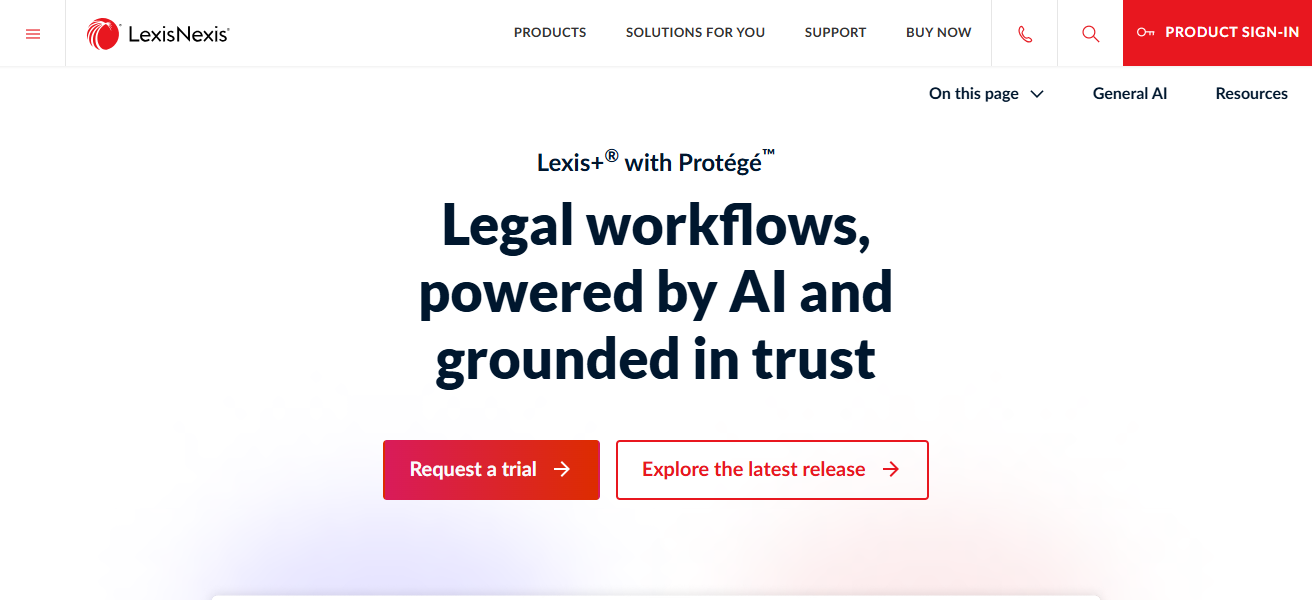
It also provides research insights as well as practical legal guidance contextualized for specific jurisdictions.
Lexis+ AI is distinguished for its affordability, together with an exceptional level of legal intelligence and a full depth of access to global databases on case law, which makes it particularly useful for solo attorneys and smaller firms.
| Pros | Cons |
|---|---|
| Natural language legal research queries | Subscription can be costly |
| Strong case law database integration | Heavy dependence on Lexis ecosystem |
| Citation-verified legal answers | Interface may feel complex initially |
| Useful for solo lawyers | Limited non-legal use cases |
6. Filevine
Filevine is a smart legal case management solution that provides workflow automation, document organization, and AI-based insights all in one platform.
It allows firms to handle intake, communication, billing, and litigation tracking in a single system.
And now, some new capabilities: automatic document extraction, Risk identification, and, in case the files are uploaded, real-time analysis of a case.

Filevine is a standard among personal injury and litigation firms, given its heavy focus on structured workflows.
The AI assistant ensures that lawyers can quickly access case data and helps in making quicker and well-informed legal decisions.
| Pros | Cons |
|---|---|
| Complete case management platform | Can feel complex for beginners |
| Strong workflow automation tools | Requires setup time |
| AI-driven document analysis | Pricing not ideal for very small firms |
| Great for litigation firms | Limited standalone AI features |
7. Spellbook
Spellbook is an AI contract drafting tool, featured directly within Microsoft Word. It assists lawyers in drafting, editing, and reviewing legal contracts with real-time AI suggestions.
Among recent updates are clause benchmarking, negotiation insights, and legal standardized risk detection.

Spellbook is trained exclusively on legal language, and although not perfect, it definitely provides a more accurate draft than the general AI tools.
This is popular in companies with corporate lawyers wanting to create contracts faster, increase accuracy, and reduce manual redlining during negotiation.
| Pros | Cons |
|---|---|
| Works directly in Microsoft Word | Limited outside contract drafting |
| Real-time AI contract suggestions | Requires legal review for accuracy |
| Speeds up drafting and redlining | Subscription-based tool |
| Legal-focused AI model | Not full case management system |
8. Darrow AI
Darrow AI is a platform that leverages artificial intelligence to find undiscovered legal violations as well as discover potential class-action lawsuits.
An algorithm that detects actionable legal patterns through analyses of data such as public records, consumer complaints, and regulatory filings.
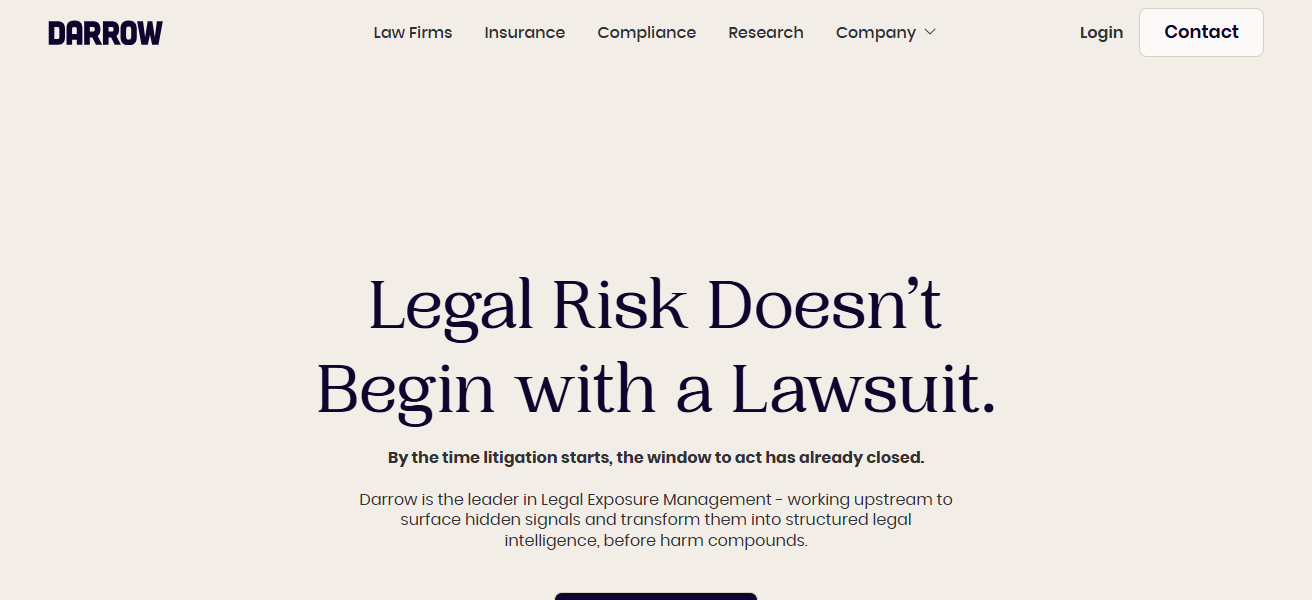
Recent updates provide predictive litigation scoring and automated case discovery notifications. Darrow is particularly meant for plaintiff law firms looking to lock in the high-value cases ahead of their competition.
It totals raw data into legal opportunities, allowing attorneys to discover violations that would be hidden in standard legal research methods.
| Pros | Cons |
|---|---|
| Detects hidden legal violations | Focused mainly on plaintiff-side law |
| Finds high-value class-action cases | Not a general legal management tool |
| Uses large-scale data analysis | Limited use for routine legal work |
| Early case discovery advantage | Requires data-rich environments |
9. Lex Machina
Lex Machina offers a legal analytics platform that provides attorneys and law firms with data-driven insights into litigation trends, judges, courts, and opposing counsel behavior. LexMachina.com.
This can predict the outcomes of cases based on past court data using statistical models. New developments include the motion analysis and settlement prediction tools that are enhanced by AI.
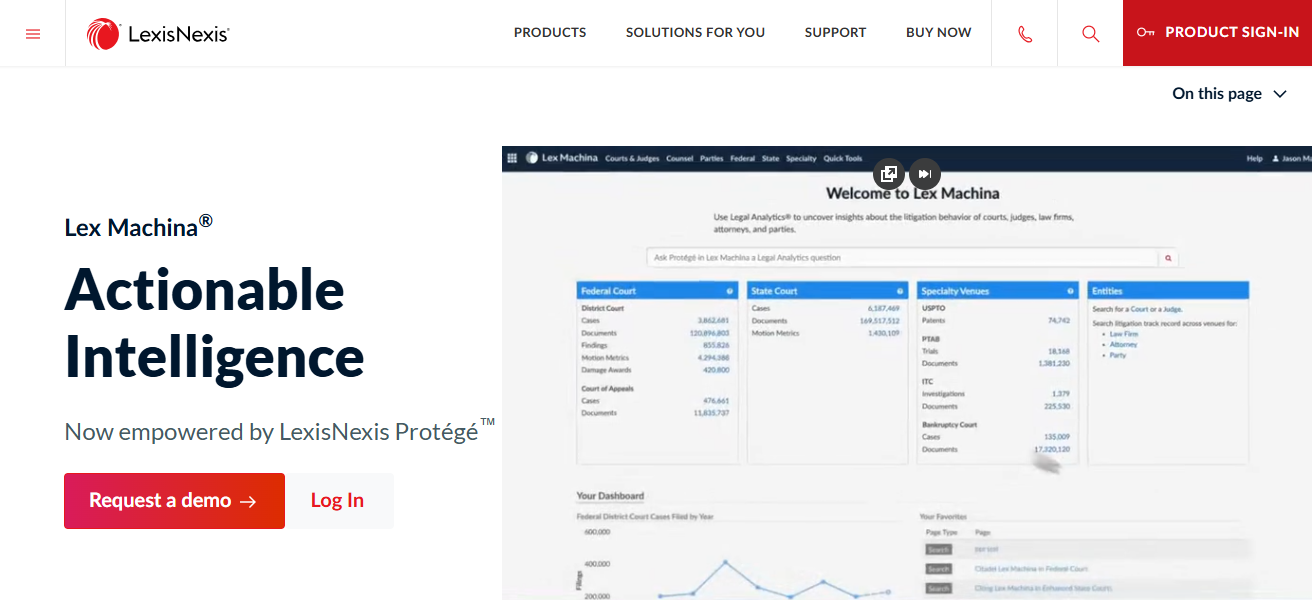
Lex Machina is the go-to solution in corporate litigation and IP law since it assists lawyers in enhancing their strategies by having real patterns of judicial behavior.
It turns old-fashioned legal research into predictive intelligence for intelligent decisions in the courtroom.
| Pros | Cons |
|---|---|
| Strong litigation analytics insights | Complex for non-litigation users |
| Predicts case outcomes using data | Subscription is expensive |
| Judge and court behavior analysis | Limited drafting or workflow tools |
| Useful for strategic legal planning | Requires historical case data |
10. Kira Systems
Kira Systems is an AI-based contract-analysis tool for due diligence and legal document review. It extracts clauses, identifies risks, and organizes contract data from the scale of documents automatically.
More recent developments include more accurate extraction with machine learning models and deliverables that utilize customizable clause libraries for firms.
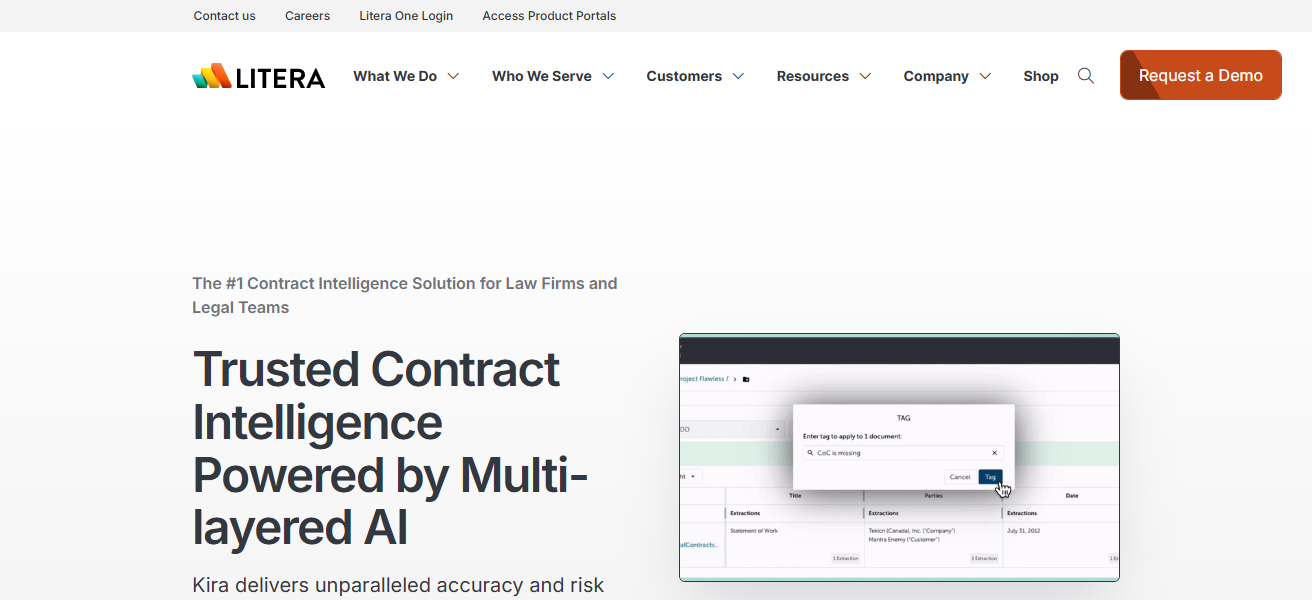
Kira is commonly used in a swift and accurate manner for mergers, acquisitions, and compliance audits.
This minimizes the manual review time so that lawyers can spend their time on value-added, strategic analysis instead of reading through repetitive documents.
| Pros | Cons |
|---|---|
| Excellent contract analysis accuracy | High enterprise pricing |
| Speeds up due diligence process | Requires training datasets |
| Extracts key clauses automatically | Limited general legal AI features |
| Ideal for M&A and compliance audits | Not suited for small firms |
Conclusion
Final thoughts Ai-Powered Case Management Tools Lawyers Want to HaveSend personalized emails through humor, curiosity, or emotion read more.
Whether through research, contract drafting or litigation analysis, these tools can help to minimize manual work and provide time back to attorneys.
With the future of AI being constantly emerging, we will continue to outpace technology as law firms utilize these technologies to remain competitive and productive for the challenges they will face in the midst to an increasingly complex legal landscape going forward.
FAQ
What are AI-powered legal case management tools?
AI-powered legal case management tools are software platforms that help lawyers manage cases, automate documentation, analyze legal data, and improve workflow efficiency using artificial intelligence.
Which is the best AI tool for legal case management?
There is no single best tool, but Clio Duo is great for small firms, while Harvey AI and Thomson Reuters CoCounsel are preferred for enterprise-level legal work.
Is AI replacing lawyers in case management?
No, AI is not replacing lawyers. Tools like Lexis+ AI and Spellbook assist with research, drafting, and review, but human legal expertise is still essential.
What is the use of Everlaw in legal work?
Everlaw is mainly used for eDiscovery, document review, and litigation preparation. It helps legal teams manage large volumes of case data efficiently.