
Today, I want to share the AI Legal Brands Every Law Firm Is Watching in 2026 These new legal AI platforms are revolutionizing research, contract management, litigation, compliance and law firm operations around the globe.
Covering the modern legal industries, Harvey AI to Lexis+ AI help legal professionals save time, and work efficiently to provide faster services to their clients using modern artificial intelligence technologies.
Key Poinst & AI Legal Brands Every Law Firm Is Watching
| AI Legal Brand | Word Explanation |
|---|---|
| Harvey AI | Harvey AI automates legal research, drafting, compliance, improving productivity for modern law firms. |
| CoCounsel | CoCounsel delivers trusted legal assistance, accelerating document review, research, and case preparation efficiently. |
| Clio Duo | Clio Duo simplifies practice management, automates workflows, improving communication and operational efficiency significantly. |
| Lexis+ AI | Lexis+ AI enhances legal research accuracy using conversational intelligence and advanced analytics tools. |
| Ironclad | Ironclad AI streamlines contract management, reducing risks while accelerating enterprise legal approvals processes. |
| Everlaw | Everlaw improves litigation workflows through cloud-based discovery, collaboration, and evidence analysis capabilities effectively. |
| Spellbook | Spellbook assists lawyers drafting contracts faster using intelligent suggestions and automated legal language. |
| Kira Systems | Kira Systems extracts contract insights quickly, helping firms manage due diligence projects accurately. |
| Luminance | Luminance uses machine learning technology for rapid document review and compliance monitoring tasks. |
| Darrow | Darrow AI identifies legal violations, helping firms uncover valuable litigation opportunities faster globally. |
10 AI Legal Brands Every Law Firm Is Watching
1. Harvey AI
It is now Harvey AI, and this startup has quickly become one of the leading legal technology platforms in the world, widely adopted by top-tier corporate law firms.
Now built with new state-of-the-art, OpenAI-powered models, Harvey comes equipped to manage the multi-agent workflows required for due diligence, compliance reviews, litigation drafting, and contract analysis simultaneously.
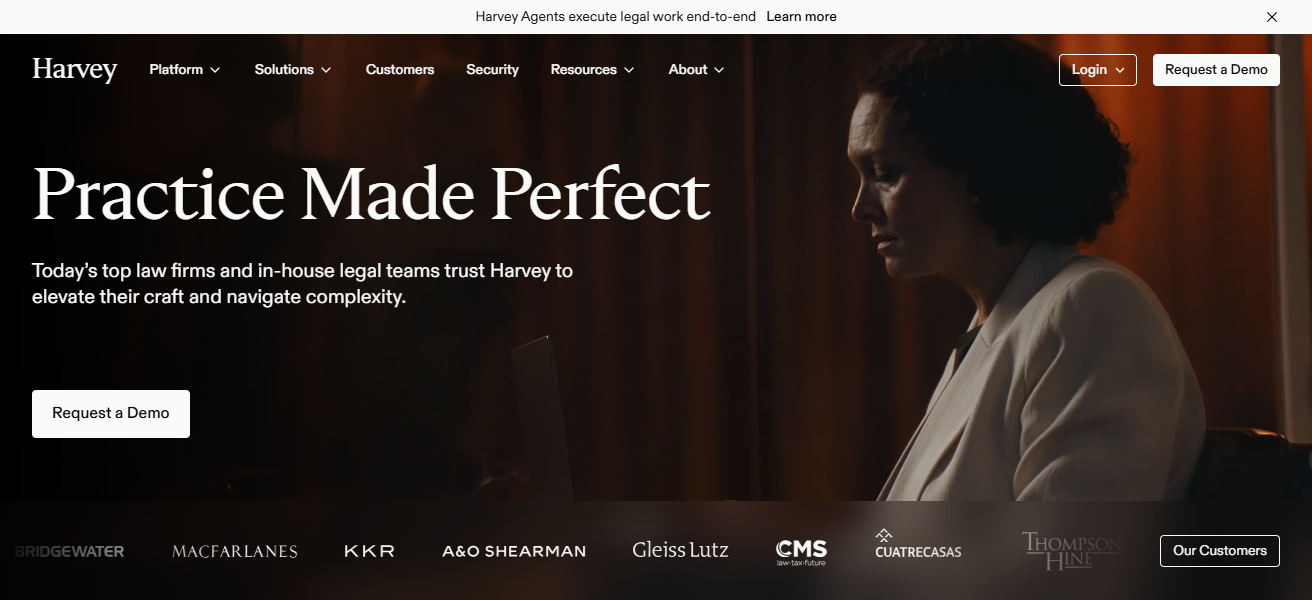
The company surpassed a valuation of $11 billion in 2026 while expanding enterprise adoption among leading global law corporations.
Zooming out across Harvey, this is a legal AI enterprise platform and one of the fastest growing today because it allows many firms to dramatically reduce research time while improving drafting consistency.
| Pros | Cons |
|---|---|
| Advanced multi-agent workflows improve legal drafting and research productivity. | Premium enterprise pricing limits accessibility for smaller independent law firms. |
| Strong OpenAI-powered models support complex litigation and compliance tasks efficiently. | Requires careful human review for sensitive legal interpretations and conclusions. |
| Widely adopted by global corporate firms, increasing industry trust rapidly. | Integration setup may require technical onboarding and workflow customization efforts. |
| Reduces document review time significantly during due diligence projects. | Heavy AI dependency may reduce traditional manual legal research practices. |
2. CoCounsel (Thomson Reuters)
Thomson Reuters previously announced CoCounsel domination at the top of AI-powered legal research by tightly integrating with Westlaw and Practical Law databases.
CoCounsel is the clear choice for law firms that are seeking “fiduciary-grade AI,” prioritizing trusted citations, verified legal sources, and lower hallucination risk.

Thomson Reuters announced global professional adoption of CoCounsel from +1 million users in 2026. Its most recent enhancements support lawyers with deposition summaries, document reviews, and preparation for litigation in mere minutes
speeding workflows while allowing firms to maintain the ideals of professional legal practice across challenging matters.
| Pros | Cons |
|---|---|
| Trusted Thomson Reuters database integration improves citation reliability dramatically. | Subscription costs may become expensive for growing boutique law firms. |
| Lower hallucination risks compared with many general-purpose AI assistants available. | Best features often depend on additional Thomson Reuters ecosystem products. |
| Excellent for deposition summaries and litigation preparation workflows efficiently. | Limited flexibility compared with highly customizable enterprise legal AI platforms. |
| Strong professional adoption increases confidence among legal practitioners worldwide. | Excellent for deposition summaries and litigation preparation workflows. |
3. Clio Duo
Clio Duo embeds conversation AI to change how law firms operate directly on the practice management software for legal.
For example, unlike a research-only tool, Clio Duo helps firms automate scheduling, billing, client intake, and communication tracking through intelligent assistance with administrative workflows.
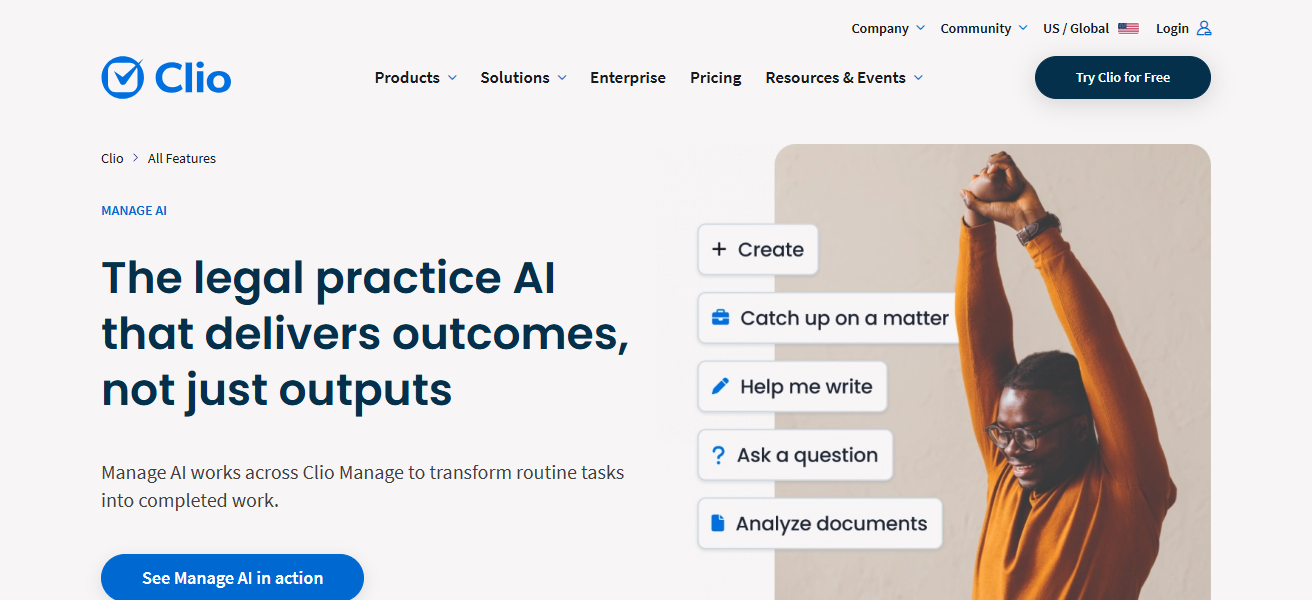
Clio is particularly favored by small and mid-sized firms for its strong ecosystem of integrations connecting hundreds of productivity applications.
The recent discussions around the legal industry confirm what we already knew: Clio – the most widely used operational backbone for modern firms that want all of the efficiency of an AI-
Enhanced practice without having to struggle with enterprise-level complexity or massively expensive infrastructure investments often required by larger platforms.
| Pros | Cons |
|---|---|
| Simplifies scheduling, billing, communication, and administrative legal workflows efficiently. | Less focused on advanced litigation research compared with specialist platforms. |
| Strong integrations ecosystem connects hundreds of business productivity applications seamlessly. | Customization options may feel limited for enterprise-level corporate firms. |
| User-friendly design benefits small and medium-sized law firms significantly today. | Certain automation features may require premium subscription plans for access. |
| Reduces operational workload through conversational AI-powered assistance tools effectively. | A strong integration ecosystem connects hundreds of business productivity applications seamlessly. |
4. Lexis+ AI
Lexis+ AI, a hybrid of conversational legal research, predictive analytics, and verified legal citations, has become a hot topic.
It allows lawyers to create arguments, summarize rulings, and analyze regulatory variations using natural language prompts versus keyword searching.
Independent benchmarking studies conducted in recent months demonstrated that Lexis+ AI was able to outperform the accuracy of multiple competing legal research solutions.
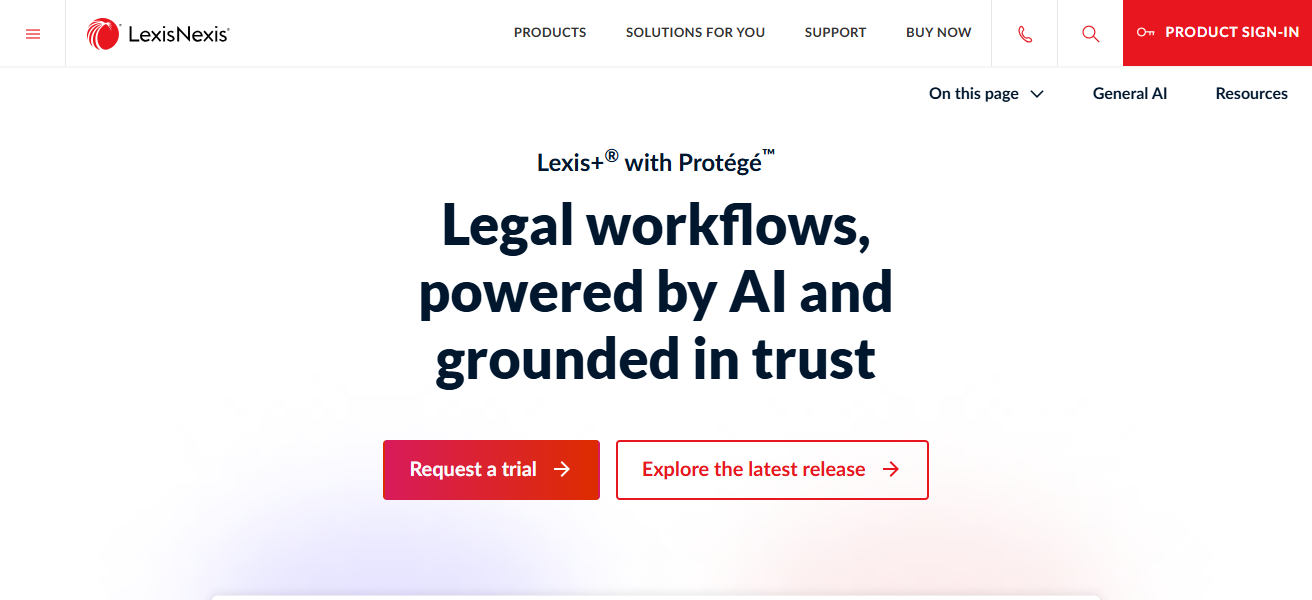
LexisNexis staged its AI assistant rollout in 2026 with drafts and intelligent analysis aware of specific jurisdictions
Making the platform more relevant to larger firms where cross-border legal issues and other advanced litigation projects are commonplace.
| Pros | Cons |
|---|---|
| Conversational research improves legal information retrieval speed and accuracy significantly. | Premium pricing structure may challenge smaller legal practices financially today. |
| Verified legal citations reduce misinformation and drafting inconsistencies effectively. | Some jurisdictions may have limited localized legal database coverage available. |
| Predictive analytics support complex litigation and regulatory strategy development efficiently. | Advanced AI tools may require experienced researchers for optimal results. |
| Excellent cross-border legal research capabilities for international law firms globally. | Overreliance on automation could reduce manual legal analytical skills gradually. |
5. Ironclad AI
Ironclad AI is revolutionizing contract lifecycle management for global corporate legal departments and enterprise firms.
Its AI-enabled platform automates the contract creation, it can even track negotiation activity, manage obligations and detect risks across large commercial agreements.
With Ironclad, businesses are more frequently using software to make their process from negotiation to execution faster, eliminating operational roadblocks in the way of contracts’ approval and review cycles.
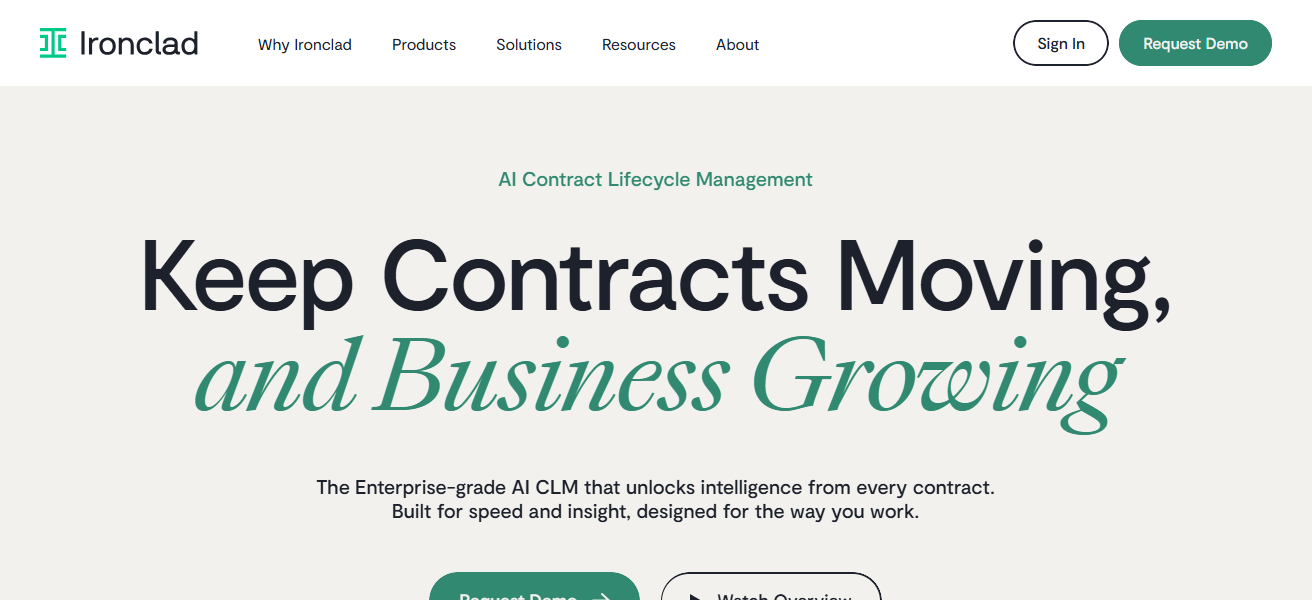
Legal tech reviewers keep putting Ironclad in the top tier of AI-based contract management systems, thanks to predictive negotiation intelligence and collaboration features well into 2026.
This platform continues to be popular with many organizations dealing with high volume vendor and procurement contracts on a daily basis.
| Pros | Cons |
|---|---|
| Streamlines contract lifecycle management for enterprise legal departments efficiently. | Primarily designed for contracts rather than full legal practice management needs. |
| Predictive negotiation intelligence improves agreement approval processes dramatically today. | Complex enterprise implementation may require dedicated onboarding and technical support. |
| Strong collaboration tools enhance communication across corporate teams successfully. | Smaller firms may not utilize all advanced enterprise-focused platform capabilities. |
| Reduces contract bottlenecks during procurement and vendor negotiations effectively. | Integration costs may increase total operational expenses over time significantly. |
6. Everlaw
Everlaw is the market leading AI-centric eDiscovery tool that allows litigation teams to finish their review of massive document sets more quickly and more accurately.
The AMP system employs machine-learning to detect evidence, rank file relevance, and automate workflows for complex disputes.

Everlaw is being embraced by legal teams across the country because its rapidly expedited document analysis capabilities keep up with remote collaboration and large-scale digital investigations.
By 2026, industry conversations consistently place the litigation-focused legal AI platform on the shortlist of top choices — especially for firms with scales and complexities inherent to investigations, class actions, compliance reviews, and other massive regulatory cases involving large data sets.
| Pros | Cons |
|---|---|
| Powerful cloud-based eDiscovery platform handles massive litigation datasets effectively. | High-volume data processing may increase operational subscription expenses considerably. |
| Machine learning prioritizes relevant evidence faster during investigations efficiently. | Advanced tools may feel overwhelming for first-time legal technology users. |
| Excellent collaboration features support remote litigation teams successfully worldwide. | Smaller firms may require training for efficient platform utilization initially. |
| Strong performance for class actions and regulatory compliance investigations globally. | Internet-based workflows may create security concerns for certain organizations occasionally. |
7. Spellbook
Spellbook is an AI drafting assistant integrated in Microsoft Word and is being rapidly adopted by transactional lawyers.
It assists attorneys in drafting clauses, reviewing contracts, recommending changes and automating redlining — all directly within traditional legal drafting settings.
Spellbook differs from general legal research tools in offering a unique focus on real-world contract workflows and negotiation effectiveness.
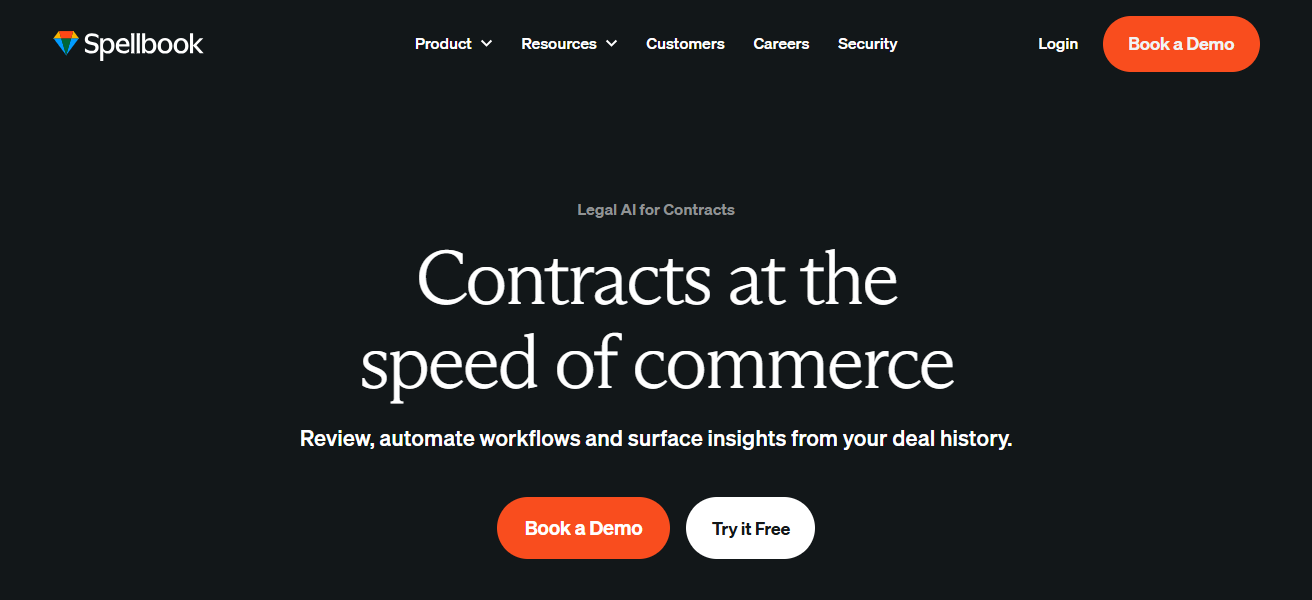
Efficient drafting with the ability to retain accuracy is what legal professionals are quickly recognizing and appreciating.
Spellbook continues to thrive among boutique firms and in-house legal teams who want easy and affordable AI-powered drafting support without the expense of a large enterprise platform or complex implementations.
| Pros | Cons |
|---|---|
| Microsoft Word integration simplifies contract drafting within familiar environments seamlessly. | Mainly focused on contracts instead of broader legal research requirements. |
| AI clause suggestions accelerate transactional legal workflows significantly for lawyers. | Accuracy still requires lawyer supervision before final agreement approvals always. |
| Affordable option for boutique firms and in-house legal teams today. | Limited enterprise-level features compared with larger legal AI competitors currently. |
| Improves redlining efficiency and contract negotiation productivity dramatically overall. | Accuracy still requires lawyer supervision before final agreement approvals, always. |
8. Kira Systems
Kira Systems is one of the most trusted AI-powered contract review tools when it comes to mergers, acquisitions, and going through a lot of due diligence or compliance-heavy legal work.
Using machine learning, it parses thousands of agreements for clauses, obligations, and risks at a pace many times faster than human reviewers.
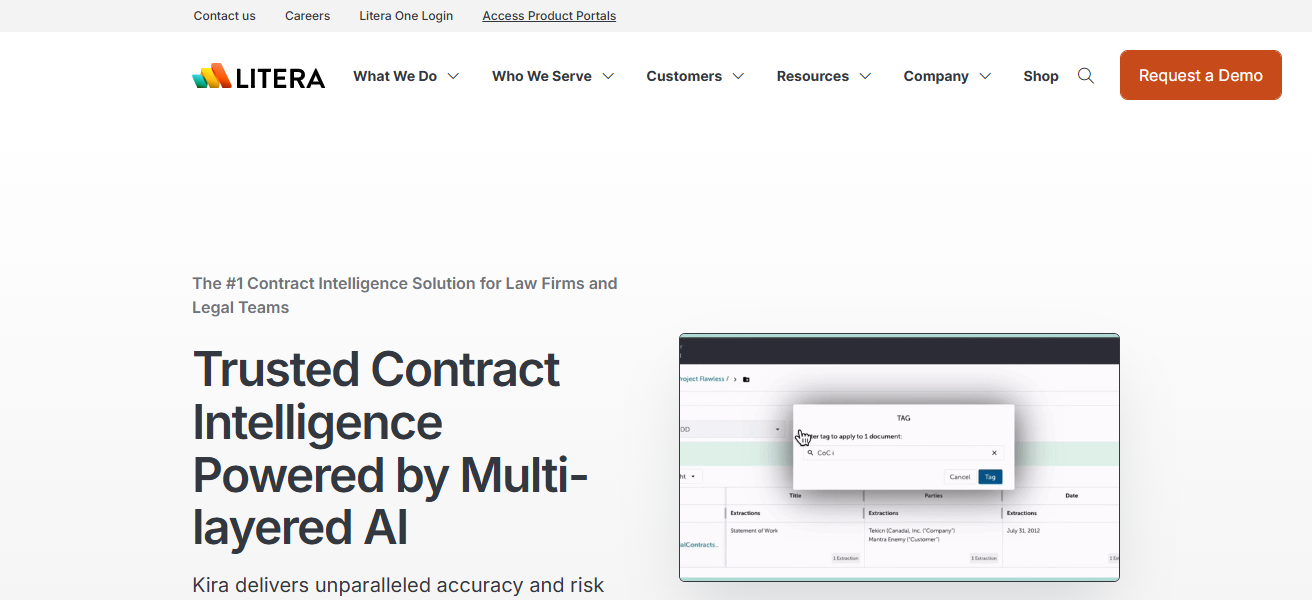
Kira remains the default for many global firms due to its tried and tested accuracy and strong customisation capabilities at law grade quality for niche legal-driven projects.
Kira remains a good fit for enterprise use cases requiring scalable document intelligence capabilities—large deal volumes with multilingual contracts and thousands of pages needing granular transactional reviews across industries—as it continues to be well-positioned in 2026.
| Pros | Cons |
|---|---|
| Excellent due diligence automation for mergers and acquisitions projects globally. | Initial setup and training processes may consume significant organizational resources. |
| Accurately extracts clauses, obligations, and risks from contracts quickly efficiently. | Enterprise-oriented pricing may discourage smaller firms from adopting platform solutions. |
| The user interface may appear less modern than newer AI competitors available. | User interface may appear less modern than newer AI competitors available. |
| Proven machine learning accuracy trusted by global law firms consistently worldwide. | Accurately extracts clauses, obligations, and risks from contracts quickly and efficiently. |
9. Luminance
Among legal AI tools, Luminance is known for machine learning models optimized specifically to automate document review tasks, compliance monitoring and anomaly detection.
The platform automatically scans for anomalies, high-risk language and secret inconsistencies in multifacted legal contracts.

Luminance and other AI tools are being increasingly used by law firms and multinational companies during investigations, audits, and regulatory reviews that require speed and accuracy.
The buzz around Luminance was emphasized by the recent legal tech discussions that drew attention to its real-time collaborative analysis abilities across the international legal world and regulatory environments, while also experiencing much less trouble with multilingual documents
| Pros | Cons |
|---|---|
| Detects unusual clauses and hidden contractual inconsistencies rapidly using AI. | Advanced analytics features may require extensive staff onboarding and practice. |
| Real-time collaboration improves large-scale compliance investigations significantly for organizations. | Pricing structures may challenge smaller firms with limited technology budgets. |
| Strong multilingual document analysis supports global legal environments effectively today. | Some AI-generated findings still require manual legal validation for accuracy. |
| Excellent anomaly detection capabilities strengthen regulatory review processes dramatically overall. | Integration with legacy systems may create technical compatibility challenges occasionally. |
10. Darrow AI
Darrow AI is one of the boldest and freshest ideas for legal tech, allocating firms to find possible litigation opportunities using artificial intelligence.
Rather than limiting its work to drafting or research, Darrow discerns one-off data points such as public information requests
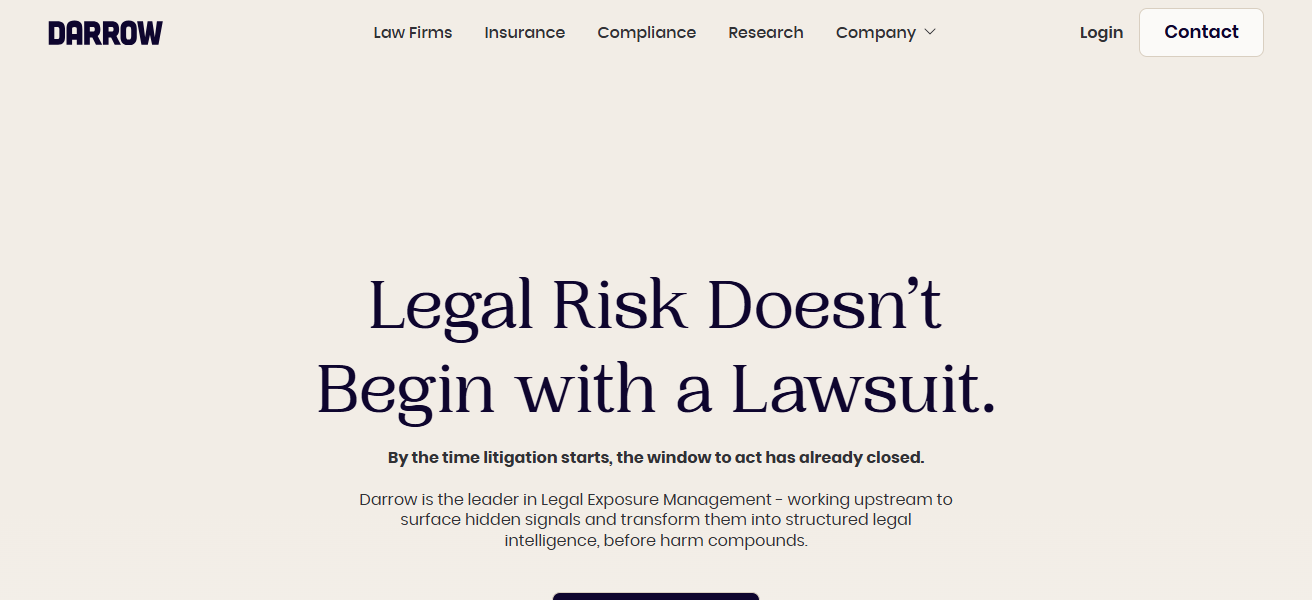
Which reveal what information agencies have requested), regulations, shielding orders, and complaints from consumers in order to unearth widespread patterns of behavior that violate the law.
Darrow is being deployed by litigation firms for emerging class-action opportunities and environmental claims, as well as consumer protection matters, often before their competitors have even recognized them.
That attract, which in 2026 was a platform for legal business development through — predictive intelligence and data-driven legal discovery strategies that allowed firms to expose high-value cases!
| Pros | Cons |
|---|---|
| Identifies hidden litigation opportunities using predictive legal intelligence technologies effectively. | Focused primarily on litigation discovery rather than complete legal workflows. |
| Analyzes public data and complaints for potential claims rapidly efficiently. | Success depends heavily on data quality and regulatory information availability. |
| Helps firms discover class-action opportunities before competitors recognize violations early. | Smaller firms may lack resources for large-scale litigation pursuit strategies. |
| Unique business development capabilities differentiate Darrow from traditional legal AI platforms. | Analyzes public data and complaints for potential claims rapidly and efficiently. |
Conclusion
To sum up AI legal brands are disrupting modern law firms quite simply through automation, more intelligent research, quicker drafting and next-generation compliance.
The Skim Products such as Harvey AI, CoCounsel, Clio Duo and Lexis+ AI continue to charge innovation across litigation, contracts and legal operations worldwide.
Firms rushing to adopt the most powerful legal AI technologies they can control very early on will maximize their efficiency and accuracy for clients
Improve client services for maximum service delivery, and round out many years of extensive competitive advantages when competition increases in 2026.
FAQ
What is Harvey AI?
Harvey AI is an advanced legal AI platform for research, drafting, and compliance tasks.
Why is CoCounsel popular among lawyers?
CoCounsel offers trusted legal research using Thomson Reuters verified legal databases globally.
What does Clio Duo mainly help with?
Clio Duo automates scheduling, billing, communication, and law firm administrative workflows efficiently.
How does Lexis+ AI improve legal research?
Lexis+ AI uses conversational prompts and predictive analytics for faster legal research accuracy.