This article will analyze the Best AI Blogging Tools For Faster Content Creation and Better Rankings and the impact they have on contemporary content writing.
You will discover how AI tools assist bloggers and startups in creating quality articles in a timely manner, effectively performing SEO, and improving productivity.
We will look at principal features and benefits, as well as real-world use cases that will help readers achieve blogging success and improve SEO.
What are AI Blogging tools used for?
AI tools for blogging allow creators to write better content faster. They even help with keyword optimization. Blogging tools even offer grammar and spell check suggestions.
They can even adjust tone and content structure. AI tools for blogging help with repetitive tasks such as writing.
Bloggers and startups use these tools to keep better engagement and achieve greater Google rankings.
These tools help automate writing tasks to improve productivity. These tools even allow creators to write blogs more frequently. These tools are great for SEO as well.
Key Poinst & Best AI Blogging Tools For Faster Content Creation and Better Rankings
| Tool | Explanation |
|---|---|
| ChatGPT | ChatGPT generates high quality blog drafts quickly with contextual understanding |
| Jasper AI | Jasper AI helps marketers create SEO optimized blog content rapidly |
| Copy.ai | Copy.ai produces engaging copy ideas and full blog sections instantly |
| Writesonic | Writesonic generates long form articles with built in SEO features |
| Surfer SEO | Surfer SEO optimizes blog content using data driven keyword analysis |
| Frase | Frase improves rankings by analyzing SERPs and structuring content efficiently |
| Grammarly | Grammarly enhances grammar clarity readability and tone for better engagement |
| Notion AI | Notion AI assists in organizing research and drafting blog outlines |
| Rytr | Rytr generates affordable AI content for blogs marketing and emails |
| Wordtune | Wordtune rewrites sentences, improving clarity, tone, and overall readability significantly |
10 Best AI Blogging Tools For Faster Content Creation and Better Rankings
1. ChatGPT
For speedy and scalable content creation and ideation, startups employ ChatGPT. It drafts blogs and articles and copies marketing content using its advanced understanding of contextual meaning.
Recent model upgrades have fine-tuned its ability to reason, control tone, and provide better structure to its outputs.
Startups save significant amounts of time using ChatGPT to produce writing of the same high quality.

In addition, it assists with topic generation, content rewriting, and readability. ChatGPT is a priceless tool in the modern digital team’s engine.
ChatGPT Key Features
- Quickly drafts initial blog posts and marketing content.
- Offers brainstorming, idea formulation, and topic expansion services.
- Enhances natural writing flow with advanced contextual understanding.
- Provides support for rewriting, summarizing, and optimizing content for SEO.
- Flexible regarding tone, style, and content structure.
| Pros | Cons |
|---|---|
| Fast, scalable content generation | May produce generic or repetitive text |
| Strong contextual understanding | Requires human editing for accuracy |
| Supports brainstorming & rewriting | Limited customization for niche industries |
| Structured outputs for SEO blogs | Subscription costs for advanced features |
2. Jasper AI
Despite the lack of a content-writing team, Jasper AI enables startups to produce more content by providing templates for blogs, marketing copy, and ads that incorporate the correct tone and voice.

Because the tools are integrated and Jasper provides a structured flow for longer content, marketing teams are able to work more efficiently and scale content production across the organization.
Jasper also provides the correct tone and voice for copy team members and helps with the content generation process.
Jasper AI Key Features
- Offers pre-made marketing templates for blogs, advertisements, and landing pages.
- Consistently represents brand voice for marketing materials.
- Capable of writing structured, long-form essays.
- Collaborates with various SEO tools for optimal output and performance.
- Content creation becomes a single, collaborative effort for the whole team.
| Pros | Cons |
|---|---|
| SEO-focused templates for blogs & ads | Higher pricing compared to competitors |
| Maintains brand voice consistency | Learning curve for new users |
| Collaboration features for teams | Limited flexibility outside marketing |
| Integration with SEO tools | Can feel rigid for creative writing |
3. Copy.ai
To help teams produce blogs, Copy.ai is a tool for fast blog sections and marketing copy generation. It is helpful in the fight against writer’s block by providing a plethora of ideas.
The automation of work and the improvement of the generation of longer-form blog copy are its greatest recent advancements.

Content pipelines are accelerated, and time to publish is reduced. Startups are able to achieve online visibility earlier in their life spans with Copy.ai. Content teams and tools are optional.
Copy.ai Key Features
- Multiple content variations foster creativity.
- Generates marketing copy and blog posts instantly.
- Alleviates writer’s block with suggestions of ideas.
- Speeds up the writing process with automation of the content workflow.
- Content marketing improves due to frequent postings.
| Pros | Cons |
|---|---|
| Quick idea generation & variations | Long-form content less polished |
| Reduces writer’s block | Limited advanced SEO features |
| Workflow automation | May require editing for tone consistency |
| Affordable for early-stage startups | Less effective for technical blogs |
4. Writesonic
Writesonic generates long-form articles with in-built SEO targeting. It developed features to analyze competing content and score its real-time SEO. It also developed an AI Article Rewriter.
Writesonic is used by many startups to enable them to continue publishing blogs and keep their content discoverable.

It allows content to be generated without the need for research, and it provides content that is high quality, structured, and conforms to the latest SEO best practices.
Writesonic Key Features
- Generates high-quality, SEO-friendly blog posts in an efficient long-form.
- Includes tools for keyword targeting and content provided by competitors.
- AI content generation is complemented by improvement and rewriting capabilities.
- Content optimization for SEO is done in real time.
- Blog posts are constructed to maintain a high level of engagement and readability.
| Pros | Cons |
|---|---|
| SEO-optimized long-form articles | Can feel formulaic |
| Keyword targeting & competitor analysis | Premium features locked behind paywall |
| Real-time SEO scoring | Requires manual fine-tuning |
| Fast publishing pipeline | Limited creative flexibility |
5. Surfer SEO
Surfer SEO is an SEO content optimization tool that helps bloggers analyze competing content and determine keyword structure. It examines the most successful pages for a topic and provides suggestions.

Surfer’s newest features include AI content writing and content scoring. Like Writesonic, Surfer SEO is used by many startups to provide the information necessary for blogs, ensuring they’re as visible as possible to search engines.
Surfer SEO also guarantees that the content generated is written properly and structured according to SEO ranking best practices and competitive keyword strategies.
Surfer SEO Key Features
- Offers keyword suggestions by analyzing the best-ranking SEO pages.
- Includes comprehensive instructions regarding content layout and optimization.
- Offers live content scoring to improve SEO performance.
- Recommends improvements for keyword density and placement.
- Utilizes data analysis to optimize blog rankings.
| Pros | Cons |
|---|---|
| Data-driven keyword analysis | Not a full content generator |
| AI writing assistance | Requires integration with other tools |
| Live content scoring | Can overwhelm beginners with data |
| Improves ranking visibility | Subscription cost may be high |
6. Frase
Frase is an AI content writing and research platform that helps the user to generate articles that are highly optimized and provide structure. Frase analyzes SERPs to determine the content gaps and user intents.
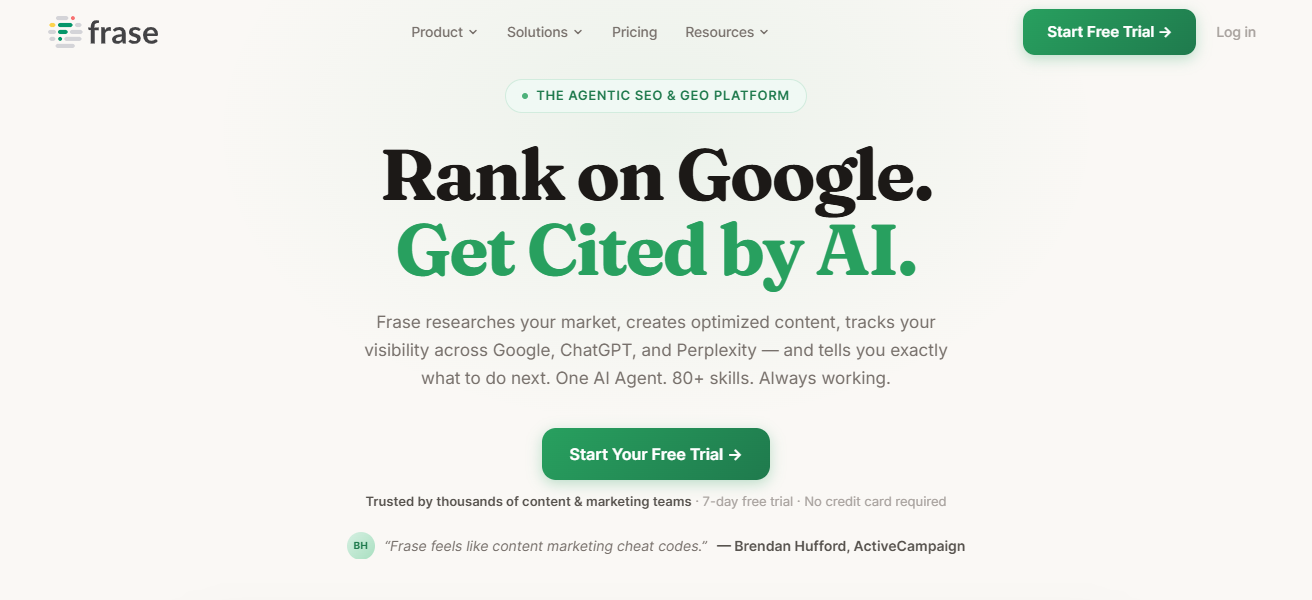
Some of the most notable recent improvements are AI-generated briefs and question clustering features. Frase is used by many startups to help with content strategies and performance.
It helps to reduce the fatigue of research and helps to optimize the articles so that they align with user intent and actively searched queries.
Frase – Key Features
- Creates short content briefs for AI to understand search intent
- Uses SERP analysis to determine content gaps
- Groups user inquiries for structuring articles
- Helps write content faster with outlines that serve SEO
- Increases the efficiency of research with automatic data collection
| Pros | Cons |
|---|---|
| Grammar & tone correction | Not a full content generator |
| Improves clarity & readability | Premium plan needed for advanced features |
| AI rewriting & tone suggestions | May over-correct creative writing |
| Great for non-native writers | Limited SEO optimization |
7. Grammarly
Grammarly is a tool that helps professional employees correct their grammar and contextual errors while improving their writing and enhancing the tone of their writing.
Grammarly now offers AI services that help it generate text and edit it for tone and writing quality. Startups now have the ability to have each of their employees produce published content that is consistent and credible.

Grammarly is ideal for employees who are not native English speakers. Grammarly is also used for writing that requires a significantly large amount of text to be produced quickly.
While Grammarly focuses on correct spelling and grammar, it also helps the user produce text in a way that is more natural and more engaging.
Grammarly – Key Features
- Spells and punctuates everything correctly and quickly
- Offers prompts to improve expression through clarity, tone, and readability
- Makes blogs and business content more professional and written in a consistent tone
8. Notion AI
Notion AI helps employees of a startup that relies on Notion to help them organize their ideas by helping the user develop outlines for the content and structures for the content that they can use while developing engaging blog content.
Notion is also a project management tool that helps employees use their time more efficiently while developing their content.
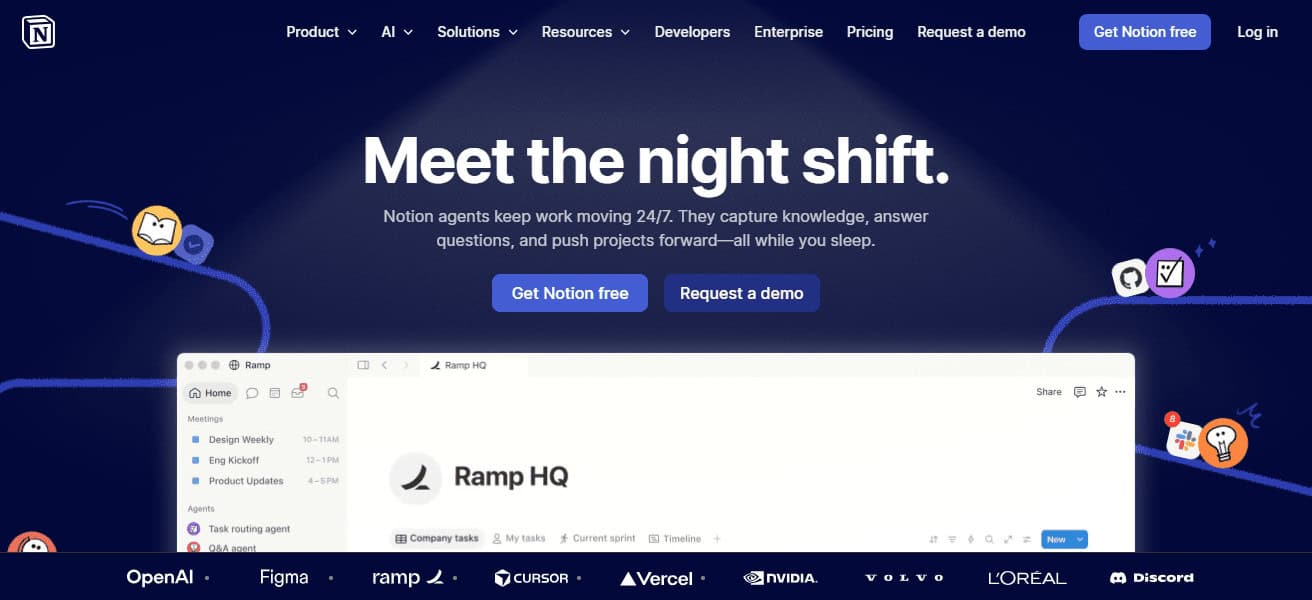
Notion AI has improved and now provides context for the text that needs to be written while also providing the user with a summarized version of the text they are referring to.
Startups now have the ability to engage their employees by helping them organize their ideas in a way that helps the team develop blog content and marketing materials more efficiently by engaging in a more organized way.
Notion AI – Key Features
- Quickly makes blog outlines and content planning
- Makes summaries of research and lengthy documents
- Provides a space for a team to work
- Gives you the ability to access the page and plan the document
| Pros | Cons |
|---|---|
| Organizes ideas & outlines | Not specialized for SEO |
| Collaborative workspace integration | Requires team adoption |
| Fast summarization & contextual writing | Limited advanced editing features |
| Streamlines workflows | Can be distracting if overused |
9. Rytr
Rytr is an AI content generation tool that is cost-effective and ideal for writing content for a startup. Rytr writes multiple types of content, from blog posts to professional emails to advertising emails and posts.

Rytr recently introduced even more flexibility and now offers more styles of writing and even supports long-form content. Startups now have the ability to produce content quickly, easily, and without considerable expense.
Rytr is focused on providing the user with the ability to engage readers with easily readable content, and it does offer basic SEO services that help them rank the content that they publish on their website.
Rytr – Key Features
- Provides cheap AI content for your startup or freelance business
- Makes content for blogs, emails, advertisements, and social platforms
- Changes tone and style in a range of ways
- Helps to foster businesses through low content costs
| Pros | Cons |
|---|---|
| Affordable pricing | Less powerful than premium tools |
| Multiple tone options | Limited SEO depth |
| Supports blogs, emails, ads | Long-form content weaker |
| Easy for small teams | May lack advanced integrations |
10. Wordtune
Wordtune uses AI technology to help users write more clearly and effectively. Wordtune is also useful when drafting or editing less polished documents.
Newer versions of Wordtune have more advanced AI that is better at understanding context and can offer more stylistic variety.

For startups in particular, Wordtune can be a helpful way to improve the overall quality of your posting while also using a natural and persuasive tone. This software is particularly helpful for editing email and marketing drafts.
Wordtune – Key Features
- Simplifies sentence creation with improvements for engagement
- Changes tone to fit professional communications
- Uses formats to make documents with complex drafts easy to review
- Makes suggestions to strengthen the overall composition of the writing
- Helps polish emails, blogs, and marketing content efficiently
| Pros | Cons |
|---|---|
| Enhances sentence clarity & tone | Not a full content generator |
| Contextual rewrites & style variations | Limited SEO features |
| Improves readability & engagement | Requires pairing with other tools |
| Great for editing drafts | Subscription needed for advanced features |
How We Selected The Best AI Blogging Tools
- Concentrated on tools that streamline blog writing and content production.
- Choose tools that offer superior SEO optimization and ranking assistance.
- Compared the user-friendliness for novice and expert writers.
- Assessed output for quality, accuracy, and content clarity.
- Analyzed long-form writing and blog content structuring features.
- Reviewed affordability and overall value for small businesses and startups.
- Evaluated rewriting, summarization, and brainstorming functions.
- Examined SEO and marketing tool integration.
- Explored effectiveness for large teams and bulk content generation.
- Selected tools that bloggers, marketers, and content creators rely upon.
Conclusion
In Conclusion, the evolution of blogging has changed dramatically and at a rapid pace. AI has become a fundamental part of SEO for various blogs and sites.
The integration of AI enables better optimization of content through higher quality and quicker generation of textual mass.
Different features like editing capabilities, keyword optimization, and content inspiration are included along the lines of content development.
Using AI blogging tools allows users to become better at blogging while providing better content for improved Google rankings.
FAQ
Which is the best AI tool for blog writing?
ChatGPT, Jasper AI, and Writesonic are among the most popular for blog creation.
Can AI tools improve Google rankings?
Yes, SEO-focused tools like Surfer SEO and Frase help improve rankings.
Are AI blogging tools beginner-friendly?
Most tools like Copy.ai and Rytr are easy for beginners to use.
Do AI tools replace human writers?
No, they assist writers but still require human editing and creativity.
Which AI tool is best for SEO optimization?
Surfer SEO and Frase are best for data-driven SEO improvements.