

In this article, I will discuss the Best AI Systems for Operational Bottleneck Detection. These advanced platforms use AI and process mining to identify slow or inefficient points in workflows, helping organizations optimize operations.
By providing real-time insights, predictive analytics, and actionable recommendations, these systems enable businesses to improve productivity, reduce delays, and enhance overall operational efficiency across industries and departments.
What is operational bottleneck detection?
Operational bottleneck detection refers to detecting activities in business workflows that are characterized by inefficiencies, delays, or performance sluggishness.
Such bottlenecks can hinder productivity and raise costs while affecting the overall operational efficiency. Through process analysis, an organization can determine where tasks are delayed, resources are wasted or some redundant steps are present.
Identifying these bottlenecks enables companies to make adjustments, allocate resources better, automate menial tasks and minimize workflows which leads to improved productivity, shorter cycle times and consequently enhance enterprise growth.
Key Poinst & 10 Best AI Systems for Operational Bottleneck Detection
Celonis – Uses process mining to identify inefficiencies, visualize workflows, and optimize operational bottlenecks effectively.
Skan AI – Analyzes user interactions and workflows to detect slow processes and reduce operational delays.
UiPath Process Mining – Combines robotic process automation with mining to pinpoint bottlenecks and streamline operations.
Fabrico – Monitors manufacturing processes in real time, identifying bottlenecks and improving production efficiency.
ServiceNow – Detects operational workflow bottlenecks across IT and business processes to enhance service delivery.
ABBYY Timeline – Visualizes end-to-end processes, identifying deviations and bottlenecks for performance improvement.
MachineMetrics – Uses IoT data to track machine performance, detecting slowdowns and production bottlenecks instantly.
Domo – Integrates business data to reveal operational inefficiencies and bottlenecks for timely decision-making.
Epicflow – Manages project workflows, detects resource bottlenecks, and optimizes task scheduling across teams.
SAP Signavio – Provides process intelligence and mining to identify inefficiencies and operational bottlenecks systematically.
10 Best AI Systems for Operational Bottleneck Detection
1. Celonis
Celonis is a process mining solution for discovering unseen inefficiencies within a business. It maps workflows and highlights bottlenecks that slow processes by analyzing transactional data from a range of enterprise systems.
The AI-driven insights enable organizations to optimize resource allocation, shorten cycle time, and enhance overall operational performance.
Celonis enables organizations to continuously improve by enabling real-time monitoring, predictive analytics, and automating recommendations for organizations proactively taking action.
From finance and supply chain to customer service, it gives organizations the ability to replace complex flows with streamlined processes that enable them to operate at higher levels of efficiency, profitability and operational transparency.
| Feature | Description |
|---|---|
| Process Mining | Identifies inefficiencies by mapping financial workflows end-to-end. |
| Automation | Suggests AI-driven improvements for repetitive financial processes. |
| Real-Time Insights | Provides continuous monitoring of financial operations. |
| Compliance Support | Ensures adherence to financial regulations with transparent |
2. Skan AI
Focuses on process discovery and operational insight, analyzing user interactions with software systems. It outlines workflows, highlights repetitive or inefficient steps, and recognizes operational bottlenecks that hinder productivity.
It uses AI to identify patterns, focus on process enhancements, and optimize resource usage. Skan AI enables organizations to continuously monitor operations and identify slow or redundant processes by providing a low-code interface as well as visual process analytics.
Its comprehensive dashboards provide actionable advice for both IT and business teams to keep workflows running smoothly. It helps organizations to fast-track the processes, save money and improve operational efficiency.
| Feature | Description |
|---|---|
| AI-Powered Discovery | Captures workflows without manual intervention. |
| Data Lineage | Tracks financial data movement across systems. |
| Compliance Monitoring | Ensures regulatory compliance in financial processes. |
| Scalability | Adapts to enterprise-level financial operations. |
3. UiPath Process Mining
UiPath Process Mining is a mix of robotic process automation (RPA) and smart business process оverview to identify operational bottlenecks.
It gathers and analyzes system logs to build visual process maps, which show delays, redundancies or inefficient handoffs.
AI-driven insights enable organizations to easily prioritize automation opportunities, cut down manual workloads and streamline workflows.
UiPath — Integrates with enterprise applications to continuously monitor processes and provide real-time recommendations.
Providing root-cause analysis of what is causing the delays while recommending what corrective measures may be taken it allows for proactive optimization.
The platform boosts operational agility, speeds up task execution, and makes certain that mission-critical business processes run effectively across teams.
| Feature | Description |
|---|---|
| Automation Integration | Connects with UiPath RPA for seamless automation. |
| Data Lineage Mapping | Visualizes financial data flow across systems. |
| Performance Analytics | Identifies bottlenecks in financial workflows. |
| Compliance Tools | Provides audit-ready lineage documentation. |
4. Fabrico
Fabrico is an AI platform designed specifically for manufacturing, allowing for monitoring of production processes and real time detection of operational bottlenecks.
It gathers data from machines, sensors and production lines to find slowdowns, inefficiencies or maintenance problems that impede throughput.
With AI-driven analytics, Fabrico’s enhanced insights enable optimization of scheduling, resource allocation and sequencing production.

It helps manufacturers lower downtime, boost production and improve operations efficiency by recognising possible delays early. Its dashboards show intuitive visualizations of workflows, enabling managers to make data-driven decisions.
Fabrico enables continuous process improvement so that production systems can be streamlined and economically viable, yet responsive to demand.
| Feature | Description |
|---|---|
| Workflow Intelligence | Maps financial processes for optimization. |
| AI Insights | Suggests improvements based on lineage data. |
| Compliance Tracking | Monitors adherence to financial standards. |
| Integration | Connects with enterprise financial systems. |
5. ServiceNow
ServiceNow provides AI-powered operational intelligence that enables users to spot workflow bottlenecks across IT, HR, customer service as well as other business processes.
Through examination of task flows, ticket resolution, and service interactions, it points out inefficiencies or delays impacting operational performance.
Its process optimization capabilities offer automated recommendations, predictive insights, and real-time monitoring to improve service delivery.
So organizations can leverage ServiceNow to prioritize mission-critical bottlenecks, optimize the allocation of resources in real-time and streamline repetitive tasks.
It allows decision-makers to proactively manage operations, reduce cycle times and elevate the experience of both employees and customers with AI analytics and visualization tools.
With the ability to empower collaborative workflows, ServiceNow allows continuous improvement across enterprise-scale processes.
| Feature | Description |
|---|---|
| Workflow Automation | Streamlines financial operations with AI-driven automation. |
| Data Governance | Tracks lineage for compliance and transparency. |
| Integration | Connects with ERP and financial systems. |
| Monitoring | Provides real-time visibility into financial workflows. |
6. ABBYY Timeline
Process intelligence platform ABBYY Timeline gives end-to-end visibility into business operations.
It uses data captured from multiple systems to create detailed visual maps of the process, highlighting bottlenecks, deviations and inefficiencies.
Analysis powered by AIs can pinpoint the root causes for delays, so that companies are able to take measures accordingly.
ABBYY Timeline enables predictive analytics to help predict potential operational problems before they affect performance.
Its easy-to-use dashboards can facilitate real time monitoring and data-driven decision making. ABBYY Timeline exposes these along with unstructured processes, enabling companies
To streamline on all levels: reduce operational costs and increase throughput. Its use is ubiquitous throughout finance, logistics and service operations.
| Feature | Description |
|---|---|
| Process Intelligence | Maps financial workflows with AI. |
| Lineage Tracking | Provides detailed lineage visualization. |
| Compliance Support | Ensures audit readiness for financial institutions. |
| Predictive Analytics | Forecasts workflow outcomes using historical data. |
7. MachineMetrics
MachineMetrics uses AI and IoT data to assess manufacturing equipment status and identify operational bottlenecks. It identifies slowdowns or inefficiencies that are impacting production by tracking machine performance, utilization and downtime.
Alerts for predictive maintenance, real-time dashboards and actionable insights are offered through the platform to ensure workflow is optimized and delays avoided.
MachineMetrics allows manufacturers to increase throughput, reduce unplanned production downtimes and distribute resources optimally.

Its AI-based analytics enable process monitoring in real-time, facilitating data-supported operating decisions. Bottlenecks are an inevitable drawback for organizations following a production cycle,
training on historical data until October explains with how well prospective bottlenecks can be dealt and performance of the equipment can be improved while ensuring quality to maximize profitability.
| Feature | Description |
|---|---|
| Real-Time Monitoring | Tracks machine and financial process data. |
| AI Insights | Provides predictive analytics for financial operations. |
| Lineage Tracking | Maps data flow across manufacturing-financial systems. |
| Compliance | Ensures financial reporting accuracy. |
8. Domo
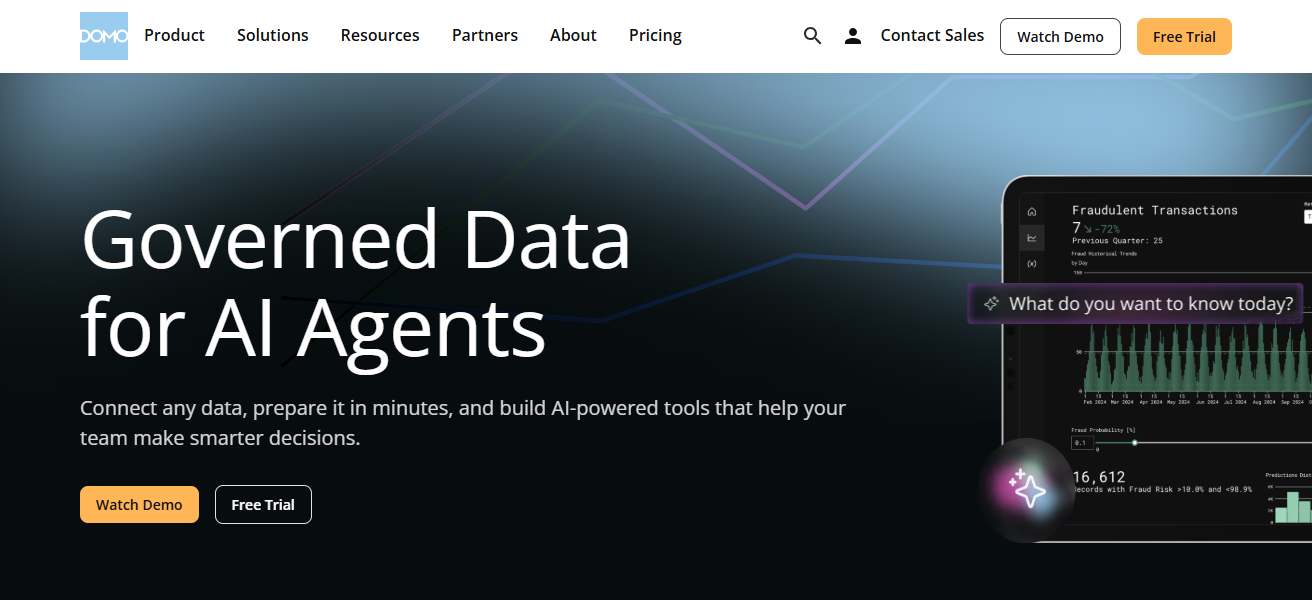
Domo is a cloud-native business intelligence and analytics platform which collates data from various sources to identify operational roadblocks.
It centralizes performance metrics, associated workflows and KPIs to provide actionable insights on inefficient processes
Its AI-driven analytics pinpoint slow or redundant operations and recommend adjustments to maximize efficiency.
Domo’s dashboards are capable of real-time tracking of business operations, facilitating proactive decision-making and the ability to act quickly to identify any delays.
Organizations can monitor inter-department workflows, identify resource bottlenecks and prioritize optimization programs.
Domo enables businesses to streamline operations, minimize operational risks, and improve performance by offering better visibility and predictive insights
| Feature | Description |
|---|---|
| Data Integration | Connects multiple financial data sources. |
| Lineage Visualization | Provides clear lineage mapping for compliance. |
| AI Analytics | Offers predictive insights into financial performance. |
| Collaboration | Enables financial teams to share insights easily. |
9. Epicflow
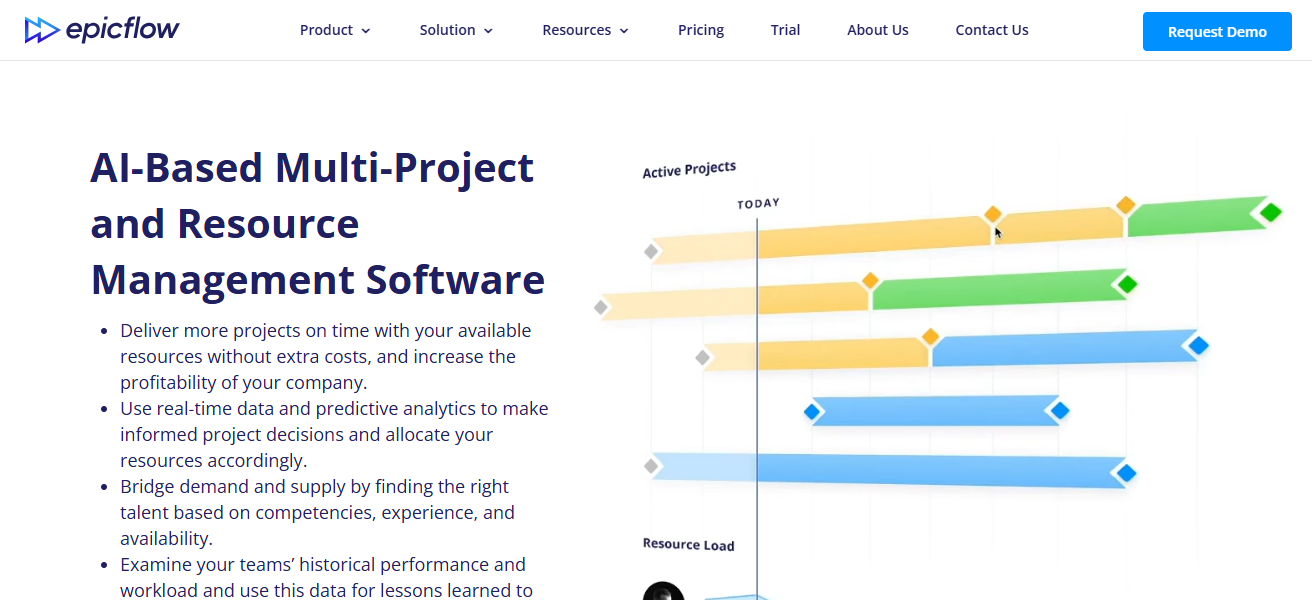
Epicflow is a project and resource management platform that identifies bottlenecks in workflows and improves task scheduling.
By analyzing workload distribution, project dependencies and resource availability, it uses AI to identify where delays are likely to happen before they actually do.
Epicflow’s visual dashboards offer insights on team performance and project progress to give managers a hand in resource allocation.
It minimizes operational bottlenecks and increases productivity by balancing workloads and predicting critical path concerns.
Epicflow helps you execute your project in an agile manner and finish when you need to. On the other hand, organizations get to enjoy better collaboration
less resource conflicts, and faster delivery of projects leading them towards great efficiency in complex operational environments.
| Feature | Description |
|---|---|
| Workflow Optimization | Improves financial project management efficiency. |
| Lineage Tracking | Maps dependencies across financial workflows. |
| AI Forecasting | Predicts project and financial outcomes. |
| Compliance Tools | Supports regulatory adherence with transparent lineage. |
10. SAP Signavio
SAP Signavio is a process intelligence and management platform that uncovers operational bottlenecks using predictive AI, analytics, and more.
Delivering end-to-end visibility over business processes, it helps identify inefficiencies, delays and deviations.
It enables organizations to optimize processes ranging from process modeling and mining to optimization. Predictive analytics within SAP Signavio help predict possible bottlenecks and take preventive actions.
Dashboards give real-time insights for ongoing tracking and performance enhancement. Integrating with SAP and other enterprise systems, it enables data-driven decisions, automates processes in finance, supply chain and service operations to improve operational efficiency.
| Feature | Description |
|---|---|
| Process Mining | Identifies inefficiencies in financial workflows. |
| Lineage Mapping | Tracks financial data across SAP systems. |
| Compliance Support | Provides audit-ready lineage documentation. |
| Integration | Works seamlessly with SAP ERP and financial modules. |
What is the main purpose of operational bottleneck detection AI systems?
- Identify Inefficiencies – Detect slow or redundant steps in workflows that reduce productivity.
- Optimize Resource Allocation – Highlight underutilized resources or overloaded processes for better management.
- Improve Process Flow – Streamline operations by removing delays and redundant tasks.
- Provide Real-Time Insights – Monitor operations continuously to catch bottlenecks as they occur.
- Predict Future Issues – Use AI to forecast potential delays or workflow disruptions.
- Support Decision-Making – Offer actionable recommendations for process improvements and operational efficiency.
- Enhance Productivity – Reduce cycle times, increase throughput, and improve overall performance.
How To Choose Best AI Systems for Operational Bottleneck Detection
Process Coverage — Assess if the AI can address end-to-end workflows across relevant departments
Real-Time Monitoring – Choose systems that give you instant tracking of performance and delays.
AI Analytics & Insights – Focus on platforms that include predictive analytics, root-cause identification and actionable recommendations
Integration Capability – Verify Integration with Existing ERP, CRM, IoT or Any Other Enterprise Systems
Ease of Use – Business Users can adopt the technology owing to low code interfaces and visual dashboards
Scalability – The system must deal with increasing volumes of data and complex operations.
Automation Potential – Systems that recommend or conduct a workflow automation eliminates manual bottlenecks.
Industry Fit – Select platforms catered to your respective industry such as manufacturing, IT or services.
Reporting & Alerts – Provide clear visualization, KPI tracking and automated delay alerts.
ROI & Cost Efficiency – Compare the cost against benefits for efficiency improvements and under-utilization of systems.
Conclsuion
In conclusion, the Best AI Systems for Operational Bottleneck Detection empower organizations to identify inefficiencies, optimize workflows, and enhance productivity.
By leveraging AI-driven insights, real-time monitoring, and predictive analytics, these platforms help reduce delays, improve resource allocation, and streamline operations.
Implementing the right system ensures smarter decision-making, increased efficiency, and sustainable business growth across industries.
FAQ
What makes Skan AI effective for process optimization?
Skan AI maps user interactions, identifies redundant steps, and provides actionable improvement insights.
Can UiPath Process Mining integrate with other systems?
Yes, it integrates with ERP, CRM, and RPA systems for seamless workflow monitoring.
Is Fabrico suitable for manufacturing operations?
Absolutely. Fabrico focuses on real-time machine and production line monitoring for bottleneck detection.
How does ServiceNow improve workflow efficiency?
How does ServiceNow improve workflow efficiency?