
In this article, we present AI Tools for Students That Actually Help You Learn Not Cheat. You will learn how AI helps improve understanding, increase productivity and make studying easier.
We will discuss the available tools that students can use to acquire in-depth knowledge of concepts, practice skills, and prepare for examinations.
Key Points & AI Tools for Students That Actually Help You Learn Not Cheat
| AI Tool | How It Actually Helps You Learn (Not Cheat) |
|---|---|
| ChatGPT | Helps you understand concepts step-by-step, explain difficult topics in simple language, and practice writing or problem-solving instead of just giving final answers. |
| Grammarly | Improves your writing by correcting grammar, tone, and clarity so you learn from mistakes instead of copying perfect text. |
| Quizlet | Uses flashcards and AI-generated quizzes to help you memorize and revise subjects actively rather than just reading answers. |
| Khan Academy (AI Tutor) | Guides you through lessons with explanations and practice problems so you learn concepts properly instead of skipping steps. |
| Wolfram Alpha | Shows step-by-step solutions in math and science, helping you understand the process behind answers instead of only copying results. |
| Notion AI | Helps organize notes, summarize lectures, and create study plans so you can study smarter and understand your material better. |
| Perplexity AI | Acts like a research assistant that explains topics with sources, helping you learn from verified information instead of random copying. |
| Socratic by Google | Lets you scan questions and get guided explanations so you learn how to solve problems step-by-step. |
| Duolingo Max | Uses AI to teach languages through conversation practice and explanations instead of just giving translations. |
| Otter.ai | Transcribes lectures and meetings so you can review and understand lessons later instead of missing key points. |
10 AI Tools for Students That Actually Help You Learn Not Cheat
1. ChatGPT
ChatGPT is an AI-powdered learning tool, making it easier for students to comprehend complicated technologies.
It provides explainers with step-by-step calculations rather than plain final methods, offers examples and provides help with ideas brainstorming.

It is good for writing practice and also can help in coding, exam preparation and revision. It breaks down complicated concepts into simple explanations and encourages learning.
ChatGPT, when correctly employed, becomes a tutor-like instrument with every intention of building comprehension instead of shortcuts or cheating.
| Pros | Cons |
|---|---|
| Explains complex topics in simple language | Can sometimes give incorrect or outdated information |
| Helps with brainstorming, writing, and coding | Over-reliance may reduce critical thinking |
| Supports step-by-step learning | May tempt students to skip actual studying |
| Available anytime for quick help | Needs careful prompt usage for best results |
2. Grammarly
Did you know that Grammarly is an amazing tool that helps students write better in terms of grammar, spellings, punctuation and even sentence structure?
It does not just figure out what is wrong, but rather explains why something is wrong so that the user can learn from mistakes.

Suggesting better word choice: It also suggests you carefully choose what words to use and tone improvements, making your write-ups more professional.
It can be used for essays, emails and assignments by students. Through reviewing suggestions, learners gradually gain a better understanding of English and build confidence in writing which means they can avoid copy-pasting from or relying on an automated text.
| Pros | Cons |
|---|---|
| Improves grammar, spelling, and clarity | Premium features are limited in free version |
| Explains writing mistakes for learning | May not always understand creative writing style |
| Helps build professional writing skills | Can over-correct natural writing tone |
| Useful for essays and emails | Requires internet connection |
3. Quizlet
Quizlet A flashcard, game, and practice test study platform that is powered by AI. By using active recall and spaced repetition methods, it helps you remember data better.
Quizzes and interactive learning tools replace reading from notes. Videos that AI also generates personalized study set by topic.

This makes revision more engaging and effective. As the students can not memorize solution blindly for exams, quizlet becomes helpful in learning and remembering stuff better.
| Pros | Cons |
|---|---|
| Enhances memory through flashcards and tests | Some features require paid version |
| Makes revision interactive and fun | Can encourage memorization over deep understanding |
| AI generates study sets quickly | Quality depends on user-created content |
| Good for exam preparation | Limited deep explanation of concepts |
4. Khan Academy (AI Tutor)
For example, Khan Academy incorporates the use of AI to help student progress through set lessons in math, science and economics.
This dissects complicated problems into smaller steps and includes practise exercises for clarity. It teaches concepts plainly and instead of straightforward answering questions, it lets the user discover on their own.
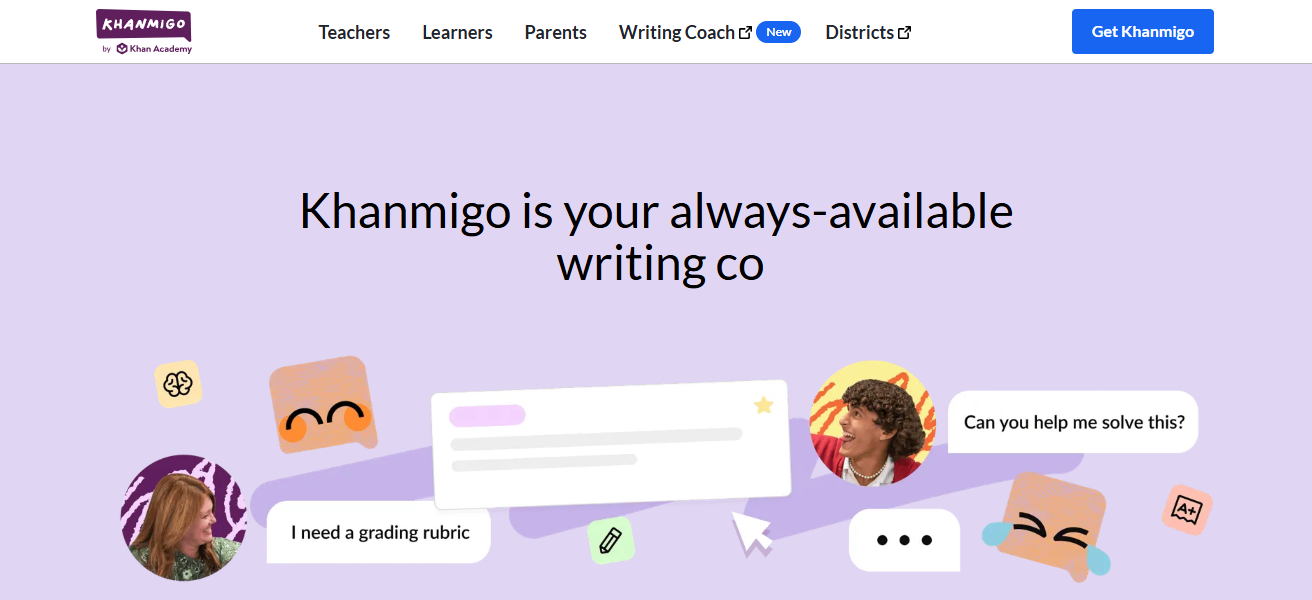
The AI tutor is a one that meets the student, where the student learns as per his / her learning pace. As such, it is a powerful educational resource and cultivator of genuine knowledge—allowing for the layering of problem-solving skills as time goes on.
| Pros | Cons |
|---|---|
| Provides structured learning paths | Limited coverage for advanced niche topics |
| Breaks down complex problems clearly | Requires consistent self-discipline |
| Free high-quality educational content | Less interactive compared to newer AI tools |
| Supports self-paced learning | Internet required for full access |
5. Wolfram Alpha
The computational AI tool, Wolfram Alpha, assists students in finding solutions to math, science and engineering related problems via step-by-step explanations.
It shows the insight of reaching a solution rather than providing the final answer only. Good for algebra, calculus, physics and statistics, in particular.

Students can also work with Data, Formula and Graphs. This not only allows you to better understand the process by which each solution comes to be
Allowing for much greater analytical and logical thinking skills over relying on memorized shortcuts or simply finding an answer.
| Pros | Cons |
|---|---|
| Solves math/science problems step-by-step | Can feel complex for beginners |
| Provides accurate computational results | Limited explanations for theory concepts |
| Useful for graphs and formulas | Premium features for advanced tools |
| Great for STEM subjects | Not suitable for creative subjects |
6. Notion AI
Notion AI allows students to organize study materials, gives them a summary of notes, and creates disciplined study plans.
It helps to transform lengthy lectures or documents into concise and easily digestible summaries. Allows students to generate an idea for projects and manage tasks efficiently as well.
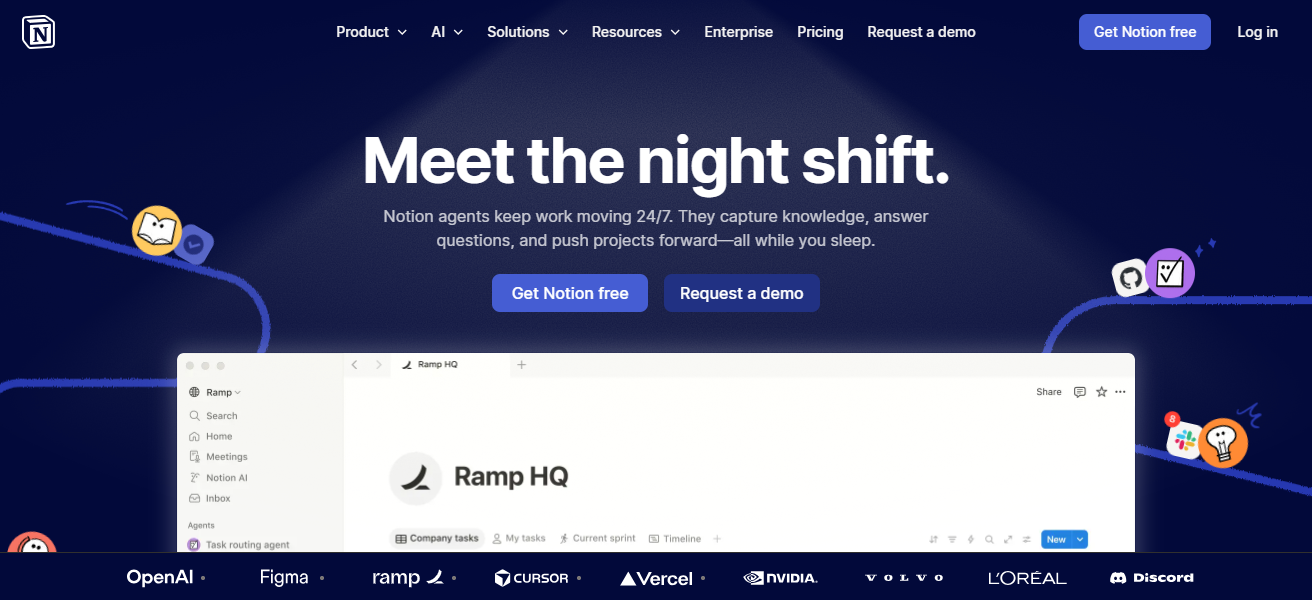
It enhances productivity and organization, rather than supplementing learning. With the study materials clean and structured, students can focus on subjects better
Which leads to higher clarity regarding those concepts hence giving them a relatively smooth learning curve in their respective subjects.
| Pros | Cons |
|---|---|
| Organizes notes and study materials | Can be overwhelming for new users |
| Summarizes long content quickly | AI features may require subscription |
| Helps plan studies efficiently | Requires manual setup |
| Improves productivity and focus | Depends heavily on user input |
7. Perplexity AI
Perplexity AI a handy research assistant that gives straightforward answers with citations. Instead of having to copy out random things, students can learn from well-explained topics with references.
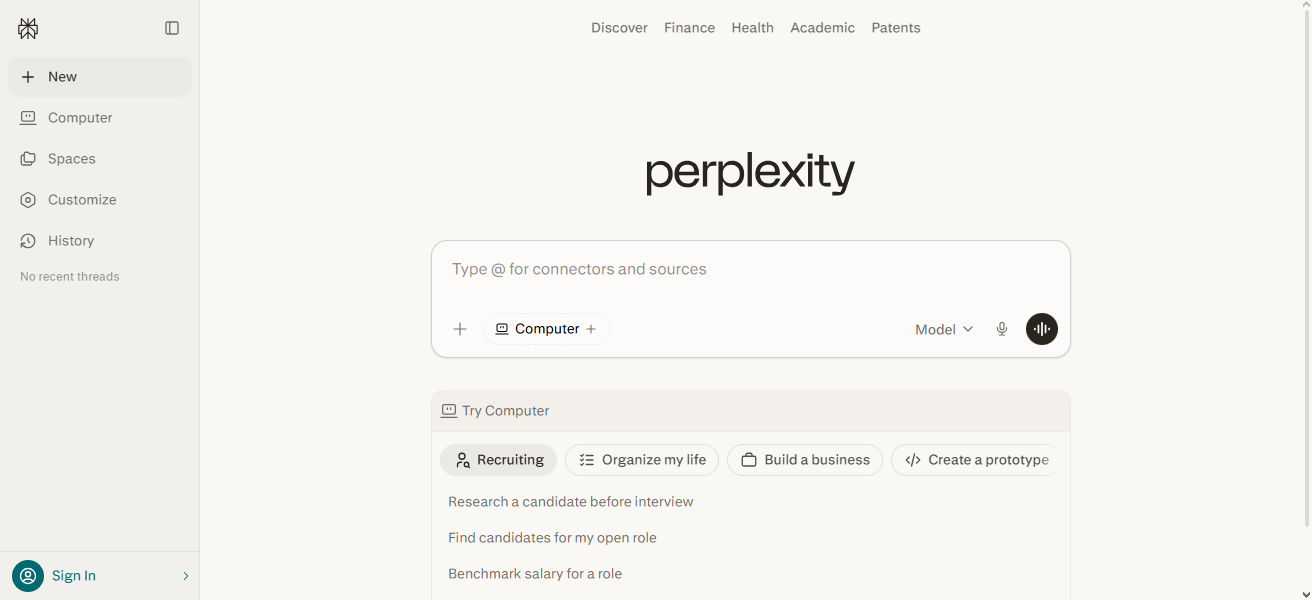
By simplifying complex subjects, so it’s useful to assist in research projects and assignments as well. It prompts inquisitiveness and learning, not shortcuts.
It helps students develop academic skills such as critical thinking and assists with research skills because it shows them where the information came from.
| Pros | Cons |
|---|---|
| Provides answers with reliable sources | Sometimes limited depth in answers |
| Great for research and assignments | Internet required for full functionality |
| Encourages critical thinking | May still include incorrect sources |
| Easy-to-understand explanations | Not ideal for offline study |
8. Socratic by Google
Socratic is by Google and it teaches you how to do your homework step by step. Users can snap a photo of a question, and the app walks through how to figure out an answer.
Subjects such as math, science, history, and English are covered. This means, it simply focuses on teaching how to solve the problem.
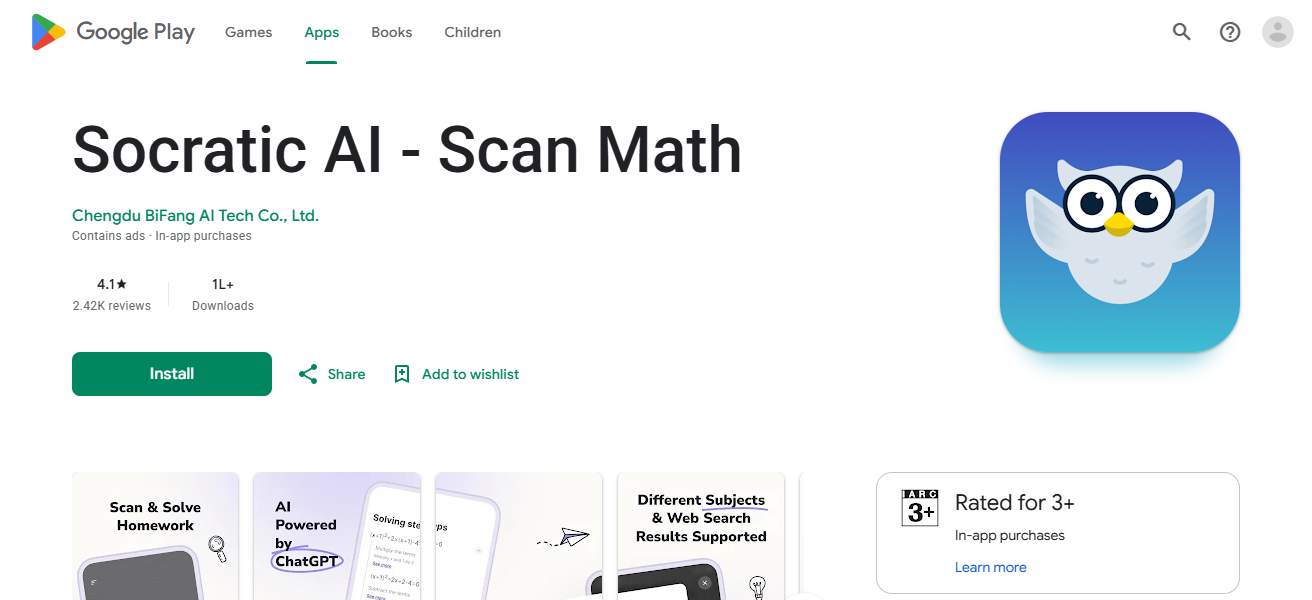
Helps in approaching students towards the correct concepts and make them learn how to solve problems. It is intended as a study support that promotes autonomous reasoning and comprehension.
| Pros | Cons |
|---|---|
| Step-by-step homework help | Limited advanced subject coverage |
| Works via image scanning of questions | Depends on question clarity |
| Covers multiple subjects | Not always detailed explanations |
| Encourages independent learning | Internet required |
9. Duolingo Max
In order to enable users of the app to learn a language more interactively and intensively, Duolingo Max relies on AI.
It gives students language practice using real-world conversations with speaking, writing and comprehension exercises in various languages.

Instead of memorisation translations, users receive explanations, feedback on mistakes. The AI is also trained to simulate dialogue, which will further refine its fluency. It makes learning about it more hands-on and interesting.
Through consistent practice, it helps students become more confident in communicating and gradually improve their grammar, vocabulary after repeat practices
| Pros | Cons |
|---|---|
| Interactive language learning | Premium features are paid |
| Improves speaking and writing skills | Limited deep grammar explanations |
| AI conversation practice | Can feel repetitive over time |
| Builds confidence in communication | Not suitable for advanced fluency |
10. Otter.ai
Otter. ai: An AI transcription tool that translates verbal lectures, meetings and other audio content into written notes. It enables students to revise lessons without losing out on key points.
It gives you the main ideas and organizes them. It aids better note-making and revision rather than replacing learning – escpecially with subjects that require deep understanding, áit like history.
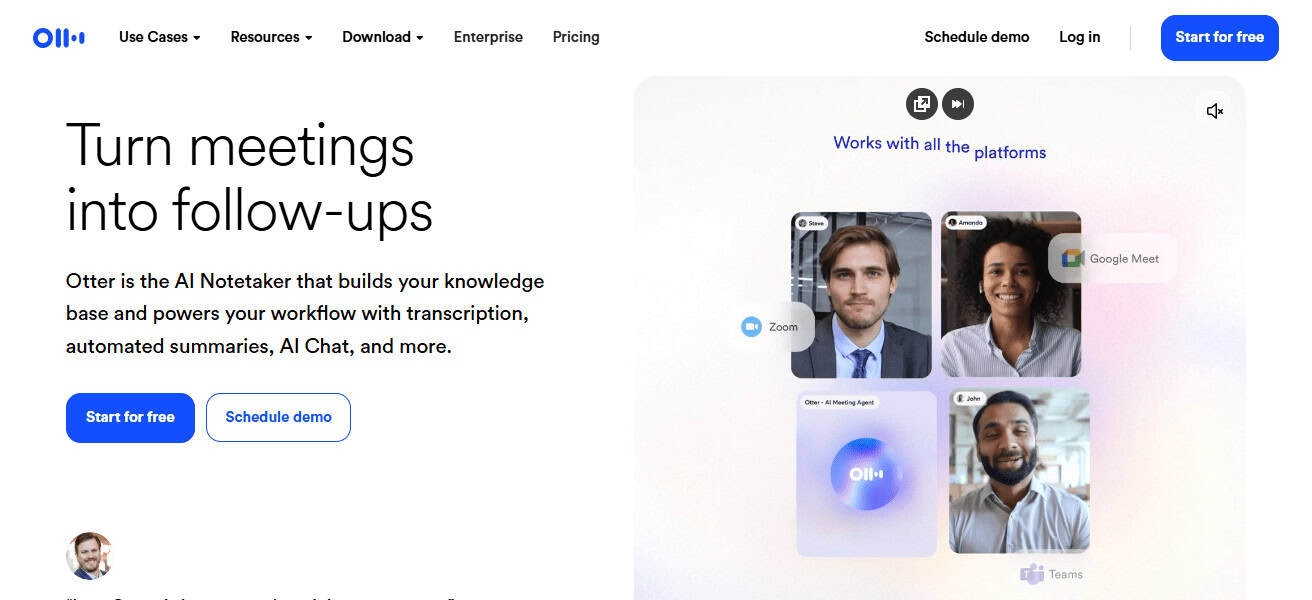
Facilitate more focus in lectures, students can go back the transcript later. This aids in better understanding and saves time, making it easier to study for the exam by revising.
| Pros | Cons |
|---|---|
| Converts speech into accurate notes | Accuracy depends on audio quality |
| Saves time in lectures and meetings | Limited free usage |
| Helps in revision and study | Requires internet for best performance |
| Organizes key points automatically | May miss technical terms sometimes |
Conclusion
Lastly, AI tools for students that help you learn not cheat are effective if used in the right way. Rather than substituting real learning, they contribute to a better comprehension of the notions, assistance to practice and improved productivity.
It helps students to study smarter, from writing and research to problem-solving and revision. The trick is leveraging AI Learning Assistant and not a shortcut.
FAQ
Can AI tools like ChatGPT be used for studying?
Yes, ChatGPT can explain topics, give examples, and help with practice. It should be used to understand concepts better, not to copy answers directly.
How does Quizlet help in learning?
Quizlet uses flashcards and quizzes to improve memory and revision. It helps students learn through practice instead of just reading notes
Is Khan Academy still relevant with AI tools available?
Yes, Khan Academy provides structured lessons and practice exercises. It helps students build strong fundamentals in subjects like math and science.
What is Wolfram Alpha used for?
Wolfram Alpha solves math and science problems step-by-step. It helps students understand the process behind answers instead of just giving final results.