In this article, I am going to talk about the Best Blockchain Travel Insurance Platforms that are revolutionizing the travel insurance industry through blockchain technology.
We will go over their main features, insurance services, coverage plans, supported networks, claim processing and automated payments. This guide will teach you how these platforms boost transparency, simplify insurance operations and offer innovative solutions to protect travelers.
How We Choose The Best Blockchain Travel Insurance Platforms
Travel Insurance Coverage: We look at the travel protection available, including flight delays, cancelations, baggage loss and travel disruptions.
Blockchain Technology: We look at smart contract technology, decentralized infrastructure and insurance management on the blockchain.
Claims Processing We assess procedures for claim submission, verification methods, processing
Key Points & Best Blockchain Travel Insurance Platforms
| Platform | Description |
|---|---|
| Etherisc | Provides parametric travel protection, including automated flight-delay payouts triggered by verified data. |
| Nexus Mutual | Offers decentralized cover for DeFi risks, not traveler emergencies or trip cancellations. |
| InsurAce | Provides multi-chain protection against smart-contract exploits, stablecoin depegs, and cryptocurrency-related risks. |
| Bridge Mutual | Offers community-backed coverage for crypto platforms, stablecoins, smart-contract vulnerabilities, and exchanges. |
| Neptune Mutual | Used parametric DeFi pools, paying claims after predefined on-chain incidents were verified. |
| Otonomi | Develops blockchain-based parametric cargo insurance, helping businesses manage shipping delays and disruptions. |
| Tidal Finance | Enabled customizable decentralized coverage markets for smart-contract failures and cryptocurrency depegging risks. |
| Ensuro | Provides on-chain insurance capital supporting parametric products, including travel-related flight-delay protection for insurers. |
| Amulet | Offers decentralized protection for DeFi users against smart-contract exploits and protocol-related losses. |
| OpenCover | Aggregates on-chain cover providers, helping users compare protection options for crypto-related risks. |
10 Best Blockchain Travel Insurance Platforms
1. Etherisc
Etherisc is a blockchain platform for insurance that offers parametric insurance products for real-world risks. It offers services including coverage for flight delays, travel weather, crop protection and other automated insurance products.
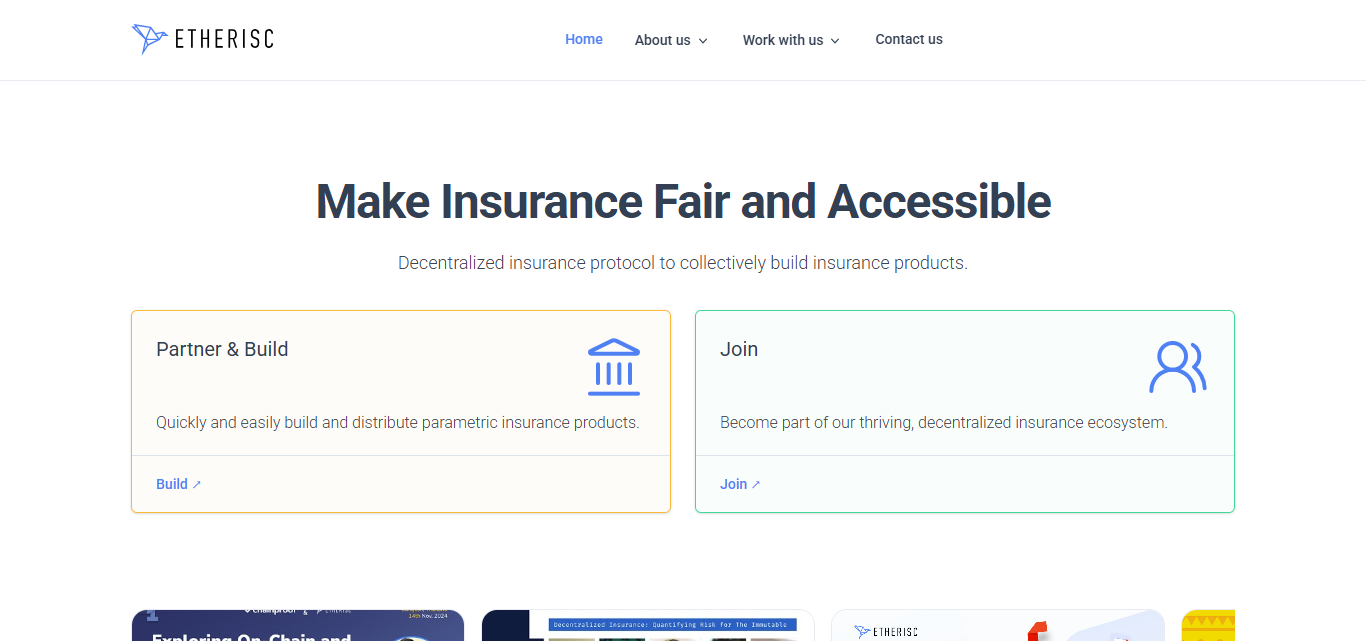
Insurance Services Etherisc offers insurance protections for travel, such as compensation for flight delays and disruptions caused by inclement weather. Coverage Options: Selected flight-delay, travel-weather and other parametric protection products are available, subject to availability.
Blockchain Technology: Smart contract technology and external data sources are used to verify insured events and automate eligible payouts. Supported Networks Its insurance ecosystem has been built on Ethereum and Gnosis Chain infrastructure. Etherisc is especially relevant for travel insurance built on blockchain.
Etherisc Features
- Parametric Travel Protection: Provides flight-delay and weather-related insurance products using predefined coverage conditions.
- Automated Claim Processing: Uses smart contracts to verify eligible events and trigger automatic payouts.
- Real-World Insurance Applications: Supports flight-delay, agricultural, weather-related, and other parametric insurance solutions.
- Transparent Insurance Operations: Uses blockchain technology to improve policy transparency and automate insurance-related transactions.
2. Nexus Mutual
Nexus Mutual is a decentralized risk-sharing platform designed to protect physical assets from blockchain financial risks. It offers an alternative to traditional insurance with community based underwriting and discretionary claims assessment.
Insurance Services They offer smart contract protection, custody coverage, stablecoin depeg protection, and coverage related to staking. Coverage Options Users can select coverage for eligible protocols, digital asset types, custodians and blockchain-related risks.
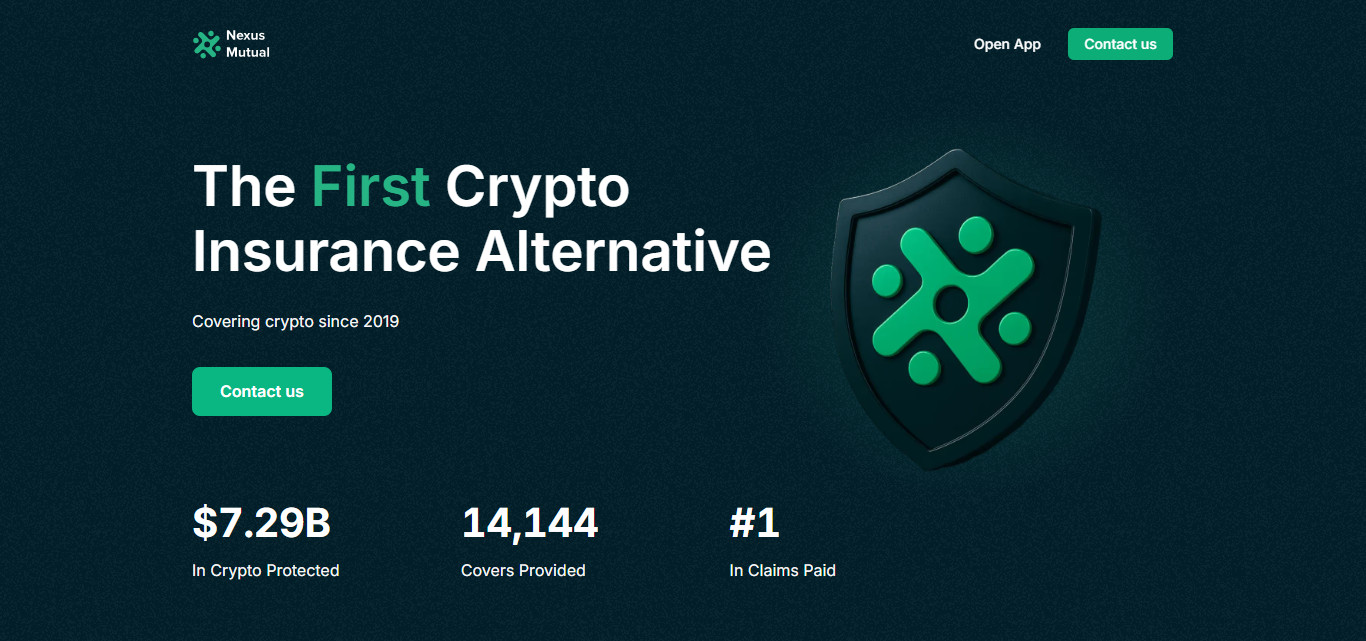
Blockchain Technology: The platform utilizes Ethereum-based smart contract technology, tokenized cover, and member-governed risk pools. Supported Networks Purchases made using Ethereum and eligible protection available for EVM-compatible networks and select networks like Solana. This is not your standard travel insurance.
Nexus Mutual Features
- Smart Contract Protection: Provides coverage against eligible smart-contract vulnerabilities and protocol failures.
- Decentralized Risk Sharing: Allows members to participate in underwriting and supporting insurance coverage through pooled capital.
- Community-Based Governance: Uses NXM tokens and member participation for governance and risk management.
- Transparent Coverage System: Records coverage details, capital pools, and claims history on Ethereum.
3. InsurAce
InsurAce is a decentralized insurance protocol designed to shield cryptocurrency investors from financial losses related to blockchain applications. It focuses on multi-chain coverage and portfolio-based protection for DeFi users. Insurance Services Past offerings have included smart-contract vulnerability protection, stablecoin depeg coverage and custodial risk protection.

Coverage Options Users can browse for individual protocol protection and bundled portfolio coverage when available. InsurAce’s blockchain technology uses intelligent contracts, underwriting pools and decentralized claims assessment mechanisms.
Supported Networks The ecosystem includes Ethereum, BNB Smart Chain, Polygon, Avalanche, Solana and many more networks. Coverage should be purchased only after verifying the current service availability.
InsurAce Features
- Multi-Chain Coverage: Designed to provide protection across multiple blockchain ecosystems and decentralized finance applications.
- Smart Contract Protection: Offers coverage against eligible smart-contract vulnerabilities and security-related incidents.
- Portfolio-Based Protection: Supports bundled coverage options for users managing risks across multiple DeFi protocols.
- Stablecoin Risk Coverage: Includes protection products designed to address eligible stablecoin depegging events.
4. Bridge Mutual
Bridge Mutual is a decentralized coverage platform to help cryptocurrency users manage financial risks associated with digital currencies and blockchain applications. It leverages community participation to support coverage underwriting and claims decisions.
Insurance Services Documented offerings are for smart contract services, cryptocurrency exchanges, stablecoins and decentralized finance protocols. Coverage Options: Depending on the available capacity, users can choose eligible contracts, exchanges or stablecoins for discretionary coverage.
Blockchain Technology Bridge Mutual utilizes smart contract technology, liquidity pools, BMI governance tokens, and community based claims voting. Supported Networks Deployments are made on Ethereum, BNB Smart Chain, Polygon, etc. Before you decide to use this platform check if it is still up and running.
Bridge Mutual Features
- Decentralized Coverage Pools: Uses community-funded pools to support protection against selected cryptocurrency-related risks.
- Smart Contract Protection: Historically offered coverage against vulnerabilities and failures affecting supported blockchain applications.
- Stablecoin Protection: Provided coverage options addressing eligible stablecoin depegging risks.
- Community-Based Claims: Uses community participation and voting mechanisms to assess eligible insurance claims.
5. Neptune Mutual
Neptune Mutual was a decentralized parametric insurance platform aiming to offer financial protection against particular cryptocurrency and blockchain events. It introduced a community-based approach to coverage management and claims handling. Insurance Services: historically protected against smart-contract exploits, stablecoin depegging, and centralized exchange related incidents.
Coverage Options: Customers can choose from predefined pools of coverage related to specific insured events and policy conditions. Blockchain Technology: The platform employed smart contract technology, oracle-based event verification, and parametric claims mechanisms to enable transparent insurance operations.
Supported Networks: Its historical ecosystem had integrations with Ethereum and other blockchains. But Neptune Mutual reportedly shut down in late 2024, so it’s not a good choice for insurance that’s still active to recommend.
Neptune Mutual Features
- Parametric Insurance Model: Historically provided coverage through predefined events and objective insurance conditions.
- Automated Claims Assessment: Used event-verification mechanisms to determine whether predefined coverage conditions were satisfied.
- Decentralized Coverage Pools: Allowed users to participate in insurance pools supporting selected blockchain-related risks.
- Transparent Risk Management: Used blockchain-based mechanisms to improve visibility into coverage and claims processes.
6. Otonomi
Otonomi is an insurance technology platform focused on parametric cargo protection and global shipping-related disruptions. It allows businesses to cope with financial losses from transport delays and supply-chain disruptions. Insurance Services: Products offered are cargo-delay protection, shipment coverage and temperature related cargo insurance.

Coverage Options Coverage can include port congestion, weather disruptions, transit delays, equipment failures, cargo damage and certain temperature variations. Blockchain Technology: Otonomi utilizes data-driven parametric insurance, logistics tracking, automated claims and technology-supported policy management.
Supported Networks Its public product information does not offer a definitive supported blockchain network list. Otonomi is especially interesting for companies that want to use blockchain for logistics and cargo insurance.
Otonomi Features
- Cargo Delay Protection: Focuses on insurance solutions addressing shipping delays and transportation disruptions.
- Parametric Insurance Solutions: Uses predefined conditions and logistics-related information to support insurance claims.
- Supply Chain Protection: Helps businesses manage financial risks associated with international shipping and cargo transportation.
- Automated Insurance Processing: Uses technology-driven processes to simplify policy management and eligible claims handling.
7. Tidal Finance
Tidal Finance is a decentralized marketplace for insurance connecting insurance buyers and underwriters and liquidity providers. Its model also enables various participants to create customized pools of coverage for blockchain-related financial risks.
Insurance Services It records services that protect decentralized finance, including smart-contract failures and protocol-related financial losses. Coverage Options Users can choose customized insurance plans with different coverage, pricing options, and timeframes.
Blockchain Technology Tidal Finance utilizes smart contract technology, decentralized insurance pools, collateral management, and community-based claims assessment. Supported Networks The ecosystem data available mentions Polygon as a supported network. It’s framework has ambitions to go into real world insurance but it is not an established direct travel insurance provider.
Tidal Finance Features
- Customizable Coverage Pools: Historically supported customized insurance pools for different decentralized finance risks.
- Decentralized Insurance Marketplace: Connected coverage buyers with liquidity providers and potential underwriting participants.
- Smart Contract Integration: Used blockchain-based smart contracts to support insurance pool operations.
- Flexible Coverage Structure: Designed coverage options around different risks, policy requirements, and available capital.
8. Ensuro
Ensuro is a blockchain based insurance and reinsurance protocol, connecting digital investment capital with real-world insurance risks. It allows insurance partners to tap into underwriting capacity through decentralized financial infrastructure. Insurance Services: Its primary role is to provide capital and infrastructure for insurance products developed with insurance partners.
Coverage Options: Coverage options depend on partner arrangements and could include parametric and other real-world insurance risks. Blockchain Technology Ensuro handles insurance funding via intelligent contracts, segregated capital pools, stablecoins and tokenized investment positions.
Supported Networks Documentation mentions Ethereum and early ecosystem development including Polygon. Ensuro is an insurance infrastructure provider, not a direct-to-consumer travel-insurance marketplace.
Ensuro Features
- On-Chain Insurance Capital: Connects digital capital with insurance products through blockchain-based infrastructure.
- Parametric Insurance Support: Provides infrastructure for insurance partners developing predefined-event-based insurance products.
- Smart Contract Automation: Uses smart contracts to manage insurance capital, funding, and related financial transactions.
- Stablecoin-Based Operations: Supports blockchain-based capital management using digital assets and stablecoins.
9. Amulet
Amulet is a decentralized finance platform built to provide multiple financial services and risk protection solutions within the blockchain ecosystem. Its services are designed to help cryptocurrency users manage risks associated with decentralized financial applications.
Insurance Services Its platform includes risk-cover functionality alongside staking, swapping, lending, borrowing, and liquidity management. Coverage Options Its documented product plans include smart-contract vulnerability, stablecoin depeg, and custodial risk protection.
Blockchain Technology Amulet uses decentralized applications and blockchain-based mechanisms to support risk coverage and financial services. Supported Networks It primarily operates on Solana, with documentation discussing potential expansion to other Rust-based blockchains. It should not be confused with conventional travel insurance providers.
Amulet Features
- DeFi Risk Protection: Designed to help users manage risks associated with decentralized financial applications.
- Smart Contract Coverage: Its historical coverage products addressed eligible smart-contract vulnerabilities and protocol-related risks.
- Decentralized Financial Ecosystem: Combines risk protection with other decentralized finance services and applications.
- Solana Blockchain Integration: Built primarily around the Solana ecosystem for decentralized financial operations.
10. OpenCover
OpenCover is an insurance marketplace and information platform on a blockchain helping users to find protection against risks of decentralized finance. It connects customers with specialized on-chain coverage providers and makes it easier to compare protection.
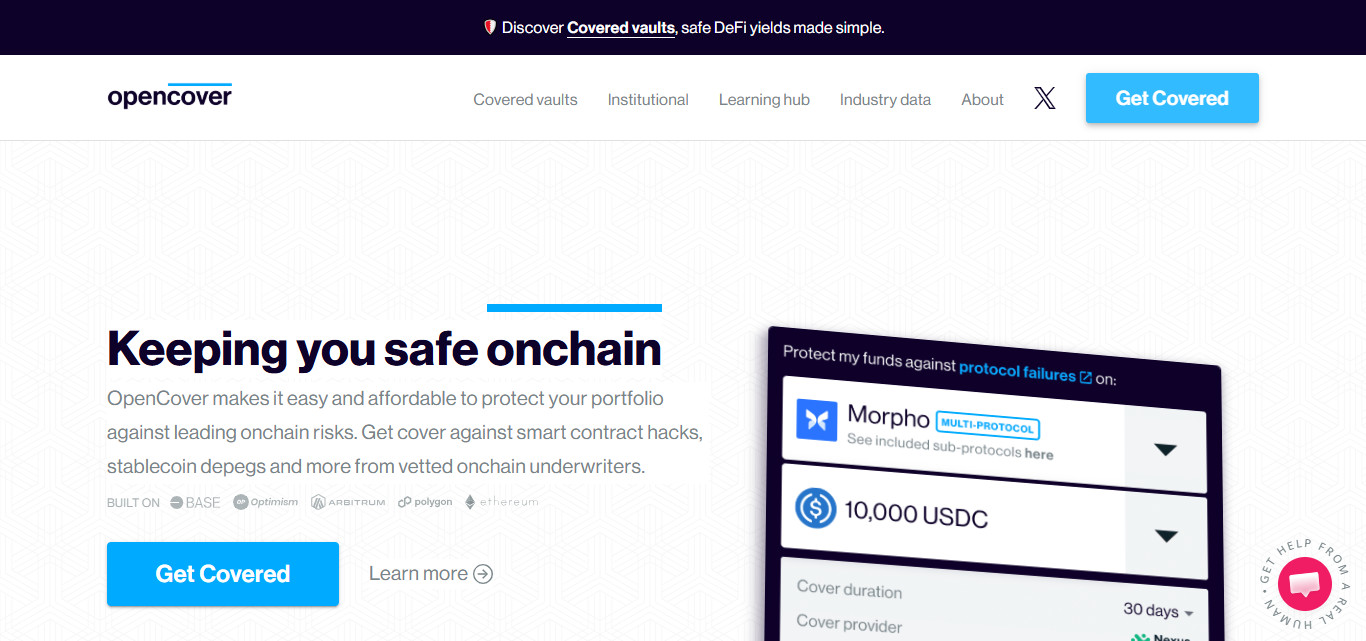
Insurance Services Get protocol protection, stablecoin depeg coverage, custody protection, and yield-token coverage. Types of Coverage Users can browse different policies by supported protocols, assets, and available underwriting capacity.
Blockchain Technology OpenCover uses blockchain-based insurance infrastructure and coverage mechanisms that are run by smart contract technology. Supported Networks: Its ecosystem includes Ethereum, Polygon, Arbitrum, Optimism, BNB Smart Chain and Base. OpenCover focuses on the risks of cryptocurrency, not traditional travel insurance.
OpenCover Features
- Insurance Marketplace: Helps users discover and compare decentralized coverage products from different providers.
- Multi-Protocol Protection: Provides access to coverage options addressing risks across supported blockchain protocols.
- Stablecoin Depeg Coverage: Offers access to protection products designed for eligible stablecoin depegging events.
- Simplified Coverage Discovery: Helps users explore available policies, coverage limits, and protection options through one platform.
Conclusion
To summarize, Blockchain Travel Insurance Platforms are revolutionizing insurance with intelligent contracts, automatic claims and transparent transactions. Others focus on risks related to cryptocurrency, with platforms
like Etherisc and Otonomi showing applications in the areas of travel and cargo protection. Compare coverage options, networks, claim processing and reliability of your chosen platform to make sure it meets your specific insurance needs.
FAQ
How Does Blockchain Travel Insurance Work?
Blockchain travel insurance uses smart contracts and verified external data to manage policies, confirm eligible incidents, and automate insurance payouts.
What Types of Coverage Do Blockchain Travel Insurance Platforms Offer?
Coverage depends on the provider and may include flight delays, weather disruptions, cargo delays, smart-contract failures, and digital asset risks.
Which Blockchain Platform Offers Flight Delay Insurance?
Etherisc is a notable example of blockchain-based flight-delay insurance, using parametric technology to trigger payouts when predefined delay conditions are met.
What Is Parametric Travel Insurance?
Parametric travel insurance provides payouts when predefined conditions, such as qualifying flight delays or weather events, are verified through reliable data sources.