This article identifies the leading Digital Therapeutics (DTx) Platforms, which are revolutionizing the delivery of mental healthcare.
Best DTx Platforms combine the principles of proven, evidence-based therapy with artificial intelligence and innovative digital solutions to address the therapeutic needs of anxiety, depression, sleep, ADHD, and more.
Discover the best DTx Platforms for your organization to improve overall patient health, well-being, and care service.
Key Points & Best Digital Therapeutics (DTx) Platforms for Behavioral Health Organizations
| Platform | Explanation |
|---|---|
| Pear Therapeutics (reSET) | Prescription digital therapeutic delivering CBT for substance use disorders treatment |
| Sleepio | Digital CBT-I program improving insomnia through behavioral sleep interventions platform |
| Daylight (Big Health) | App-based CBT program reducing generalized anxiety symptoms using techniques daily |
| SilverCloud Health | Online CBT platform offering guided mental health support programs widely |
| Woebot Health | AI chatbot delivering CBT based emotional support and guidance therapy |
| Limbix Spark | Teen focused digital therapy platform addressing adolescent mental health issues |
| Akili EndeavorRx | FDA approved game based therapy improving pediatric ADHD attention control |
| Kaia Health | Digital musculoskeletal and mental therapy using AI coaching exercises program |
| Twill (Happify Health) | Behavioral health platform combining science based apps and coaching tools |
| Cognoa | Pediatric digital therapeutics for diagnosing and treating developmental behavioral disorders early |
10 Best Digital Therapeutics (DTx) Platforms for Behavioral Health Organizations
1. Pear Therapeutics (reSET)
ReSET was one of the first prescription digital therapeutics that the FDA approved, specifically designed for patients struggling with substance use disorder.
The mobile application provided users with structured programs combining cognitive behavioral therapy (CBT) with behavioral management and reinforcement strategies.

Pear Therapeutics restructured following bankruptcy and remains a cornerstone of Digital Therapeutics (DTx) legacy.
reSET paved the way for other software as a medical device (SaMD) programs to be used in conjunction with substance use disorder treatment.
When paired with traditional behavioral health care, reSET helped clinicians and therapists see improved patient engagement and a decrease in relapse rates for their patients.
Pear Therapeutics (reSET) Pros & Cons
| Pros | Cons |
|---|---|
| First FDA-authorized prescription DTx for addiction care | The company faced bankruptcy and restructuring issues |
| Strong CBT-based structured addiction recovery program | Limited availability after business shutdown |
| Evidence-backed reduction in substance relapse risk | Reduced market presence in the current DTx ecosystem |
| Easy integration into clinician-led treatment plans | Not actively evolving like newer competitors |
2. Sleepio
Sleepio is a digital therapeutic in the treatment of insomnia, employing Cognitive Behavioral Therapy for Insomnia (CBT-I).
Sleepio utilizes an automated behavioral coach that formulates personalized sleep interventions, and leads participants through weekly sessions.

Sleepio eschews pharmacological interventions. Given its clinically validated approach, Sleepio has seen widespread adoption among employers, making it a popular workplace sleep intervention.
Continuous feedback-driven recommendations mean that Sleepio is a fit for its target audience of insomniacs, sleep anxious individuals, and those pursuing ongoing behavioral improvement.
Sleepio Pros & Cons
| Pros | Cons |
|---|---|
| Clinically validated CBT-I insomnia treatment program | Requires consistent user engagement for best results |
| Drug-free sleep improvement alternative | Not suitable for severe psychiatric sleep disorders alone |
| Adaptive AI-driven sleep recommendations | Subscription cost may limit individual access |
| Widely adopted by employers and health systems | Limited personalization beyond sleep focus |
3. Daylight (Big Health)
Daylight is Big Health’s digital CBT program focusing on anxiety and implementing self-help techniques.
The app is built around psychological methods such as exposure therapy and cognitive restructuring. Daylight also trains users on relaxation techniques.
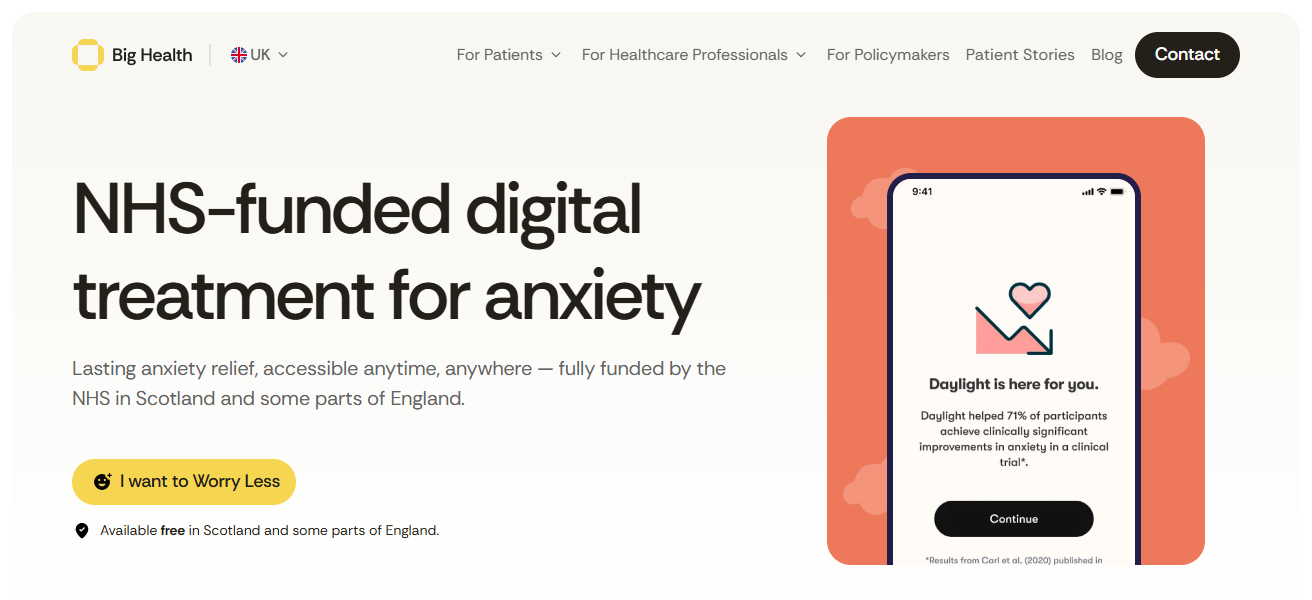
Daylight offers users support that is, in a sense, real-time and based on the levels of anxiety that the user presents at any given moment.
Daylight is built to be self-sufficient, allowing it to be used on a mass scale. Because of this, Daylight is common in workplace mental health programs. Daylight offers anxiety management in integrated behavioral health services.
Daylight (Big Health) Pros & Cons
| Pros | Cons |
|---|---|
| Evidence-based CBT program for anxiety reduction | Requires regular app usage for effectiveness |
| No therapist required for basic use | Not a replacement for severe clinical anxiety cases |
| Adaptive behavioral coaching system | Limited scope beyond anxiety treatment |
| Scalable for large populations and workplaces | Premium access may be required in some regions |
4. SilverCloud Health
SilverCloud Health is a digital mental health platform that offers CBT programs built around anxiety, depression, and stress.
They also offer programs for long-term behavioral conditions. SilverCloud combines digital modules with therapist support.

The support is optional, making the program very flexible. SilverCloud is a common service in health care systems and mental health programs built at a population level.
SilverCloud focuses on clinically verified programs and flexible pathways that present engagement and measurable outcomes in a therapeutic sense.
SilverCloud Health Pros & Cons
| Pros | Cons |
|---|---|
| Hybrid model combining digital + therapist support | Some programs require clinician onboarding |
| Strong clinical validation across mental health conditions | User experience may feel structured or rigid |
| Used widely by healthcare systems globally | Engagement depends on therapist involvement |
| Highly customizable treatment pathways | Not fully self-guided for all modules |
5. Woebot Health
Woebot Health is a platform that combines AI with conversational therapy. They offer a chatbot that focuses on providing therapeutic support through the lens of CBT.
Users are prompted to engage with daily mental health check-ins, as well as track their mood and cognitive reframing.
The platform is designed to be very low barrier, providing support and therapy that is very accessible and stigma-free. 24/7, users are free to engage in therapeutic support and behavioral guidance.
Woebot Health Pros & Cons
| Pros | Cons |
|---|---|
| 24/7 AI chatbot delivering CBT-based support | Limited depth compared to human therapy |
| Highly accessible and stigma-free mental health tool | Not suitable for severe mental illness |
| Strong engagement through conversational AI | AI responses may feel repetitive over time |
| Great for early-stage emotional support | Requires internet and regular interaction |
6. Limbix Spark
Digital therapeutics companies such as Limbix have focused their efforts on creating solutions to fill the gap for adolescents.
Limbix Spark offers a suite of interactive, game-based CBT techniques to help clinicians engage adolescents struggling with depression and emotional distress.

Limbix Spark is designed for use in school and pediatric care settings. Limbix promotes the use of Spark for early intervention for mental health challenges, as adolescent mental health issues are most pressing during crises.
The design of Spark makes it easy for clinicians to track the progress of their patients and modify care plans. Spark is designed in a way to promote adherence to care, so it is especially useful for pediatric patients.
Limbix Spark Pros & Cons
| Pros | Cons |
|---|---|
| Designed specifically for teen mental health needs | Limited adoption outside adolescent care settings |
| Gamified CBT improves engagement | Requires school or clinician implementation |
| Supports early intervention in depression | Not widely available in all regions |
| Clinician monitoring tools included | May not suit adult mental health needs |
7. Akili EndeavorRx
EndeavorRx is a video game designed to function as a therapeutic intervention for children diagnosed with Attention Deficit Hyperactivity Disorder (ADHD).
EndeavorRx harnesses adaptive game-play techniques grounded in principles of neuroscience to create a therapeutic game children can play while they complete their treatment for ADHD.
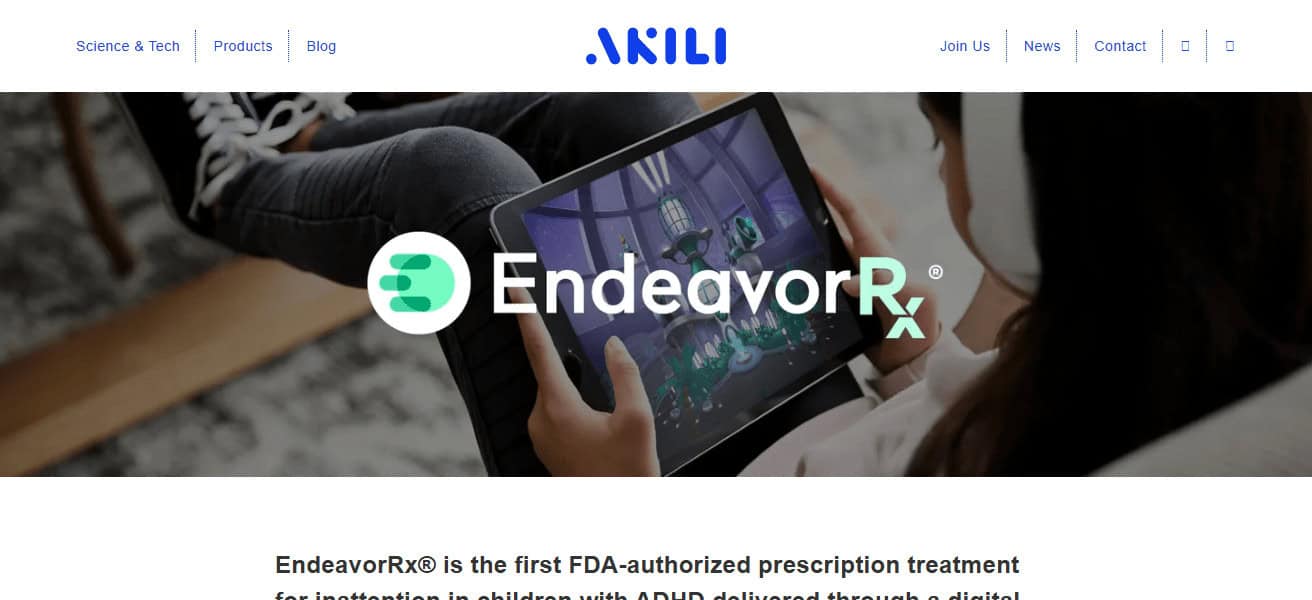
The game is designed to make completing treatment fun and keep children engaged with therapeutic play activities through the use of game play.
EndeavorRx has been clinically shown to improve children’s sustained attention and executive functioning.
EndeavorRx is a great adjunctive therapeutic intervention for ADHD, and is especially useful in children when combined with a therapy and medication regimen.
Akili EndeavorRx Pros & Cons
| Pros | Cons |
|---|---|
| First FDA-approved game-based therapy for ADHD | Limited to pediatric ADHD use cases |
| Improves attention and executive functioning | Requires consistent gameplay adherence |
| Highly engaging for children | Not a standalone replacement for medication |
| Clinically validated neuroscience-based design | Limited expansion beyond ADHD treatment |
8. Kaia Health
Kaia Health has developed therapeutic solutions that address both physical pain and the mental health issues that are often precipitated by pain.
Kaia Health uses artificial intelligence (AI) to offer pain management solutions in the form of therapeutic coaching.

The use of therapeutic coaching in conjunction with pain management techniques grounded in Physical CBT offers users the ability to manage pain and improve their mental state by decreasing the level of stress they are experiencing.
Kaia Health’s technology even uses a smartphone to assist users in maintaining proper posture and performing movements to assist them in doing Physical CBT.
Kaia Health has been adopted by employers and insurance companies looking to untap the cost-saving potential of improved patient mobility and mental resilience, coupled with improved long-term rehabilitation outcomes.
Kaia Health Pros & Cons
| Pros | Cons |
|---|---|
| Treats both physical pain and mental health | Requires smartphone motion tracking accuracy |
| AI-based posture and movement correction | Not suitable for severe orthopedic conditions |
| Reduces reliance on physical therapy visits | User compliance is essential for results |
| Cost-effective for employers and insurers | Limited personalization for complex cases |
9. Twill (Happify Health)
Twill, previously Happify Health, is a platform that provides tools for therapeutic digital coaching and mental health support.
This platform uses gamified systems and customizable therapeutic content to support emotional well-being.

Twill engages with healthcare firms and businesses to provide mental health services that can be fully supported at scale.
Twill is successful due to its incorporation of clinical sciences and its understanding and cooperation of psychological engagement with users to effect long-term change in users’ behaviors.
Twill (Happify Health) Pros & Cons
| Pros | Cons |
|---|---|
| Combines digital therapy, coaching, and behavioral science | Some programs may feel generalized |
| Strong enterprise and healthcare partnerships | Subscription-based access model |
| Gamified mental wellness experience | Not deeply clinical for severe disorders |
| Supports chronic condition mental health needs | Requires consistent engagement |
10. Cognoa
Cognoa is a platform for therapeutics and digital health that focuses on pediatric behavior and developmental disorders.
It combines artificial intelligence to improve the accuracy, speed, and efficacy of diagnosis and treatment of pediatric patients who may be on the autism spectrum.
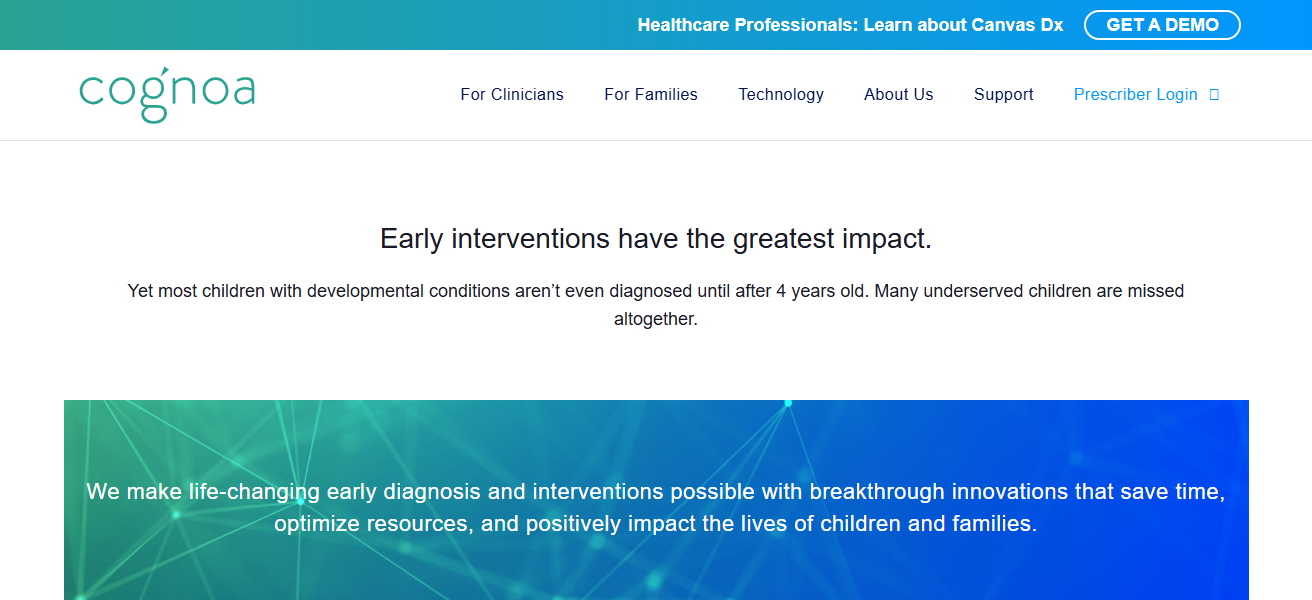
Using AI, Cognoa attempts to solve the lengthy diagnosis and treatment cycle for pediatric patients by making interventions timely and effective. Its technology has also paved the way for other innovations in this field.
Cognoa Pros & Cons
| Pros | Cons |
|---|---|
| AI-driven early diagnosis of developmental disorders | Commercial availability has fluctuated |
| Helps reduce autism diagnosis delays | Limited direct therapeutic intervention tools |
| Supports clinicians in decision-making | Dependent on clinical data input quality |
| Advances in pediatric behavioral health innovation | Regulatory and market adoption challenges |
Cocnsluion
In summary, Digital Therapeutics (DTx) is revolutionizing behavioral health through CBT-based applications, AI chatbots, and therapies based on gaming.
They are known for their flexibility and improvement of patient and clinical outcomes. Additionally, these platforms decrease costs while maximizing the productivity of the treatment.
The future of DTx is full of innovations that will continue to personalize mental health treatment and facilitate the connection of conventional therapy with digital interventions.
FAQ
How do DTx platforms help behavioral health organizations?
They improve patient access, reduce therapy gaps, support clinicians, enhance engagement, and deliver scalable mental health care through mobile and web-based tools.
Are DTx platforms clinically approved?
Many DTx solutions are clinically validated, and some like Akili EndeavorRx, have FDA authorization. However, approval status varies by platform and region.
What conditions do DTx platforms commonly treat?
They are widely used for anxiety, depression, insomnia, ADHD, substance use disorders, stress, and behavioral development conditions in children and adults.
Is Sleepio effective for insomnia treatment?
Yes, Sleepio uses CBT-I techniques and personalized digital coaching to improve sleep quality without medication, making it effective for chronic insomnia.
Can AI chatbots like Woebot replace therapists?
No, Woebot provides supportive CBT-based guidance but does not replace licensed therapists, especially for severe mental health conditions.