In this article we will go over the Best Hard Money Lenders for Real Estate Flips. These are the lenders who provide the financing to buy properties, fix them up and sell them.
You will review their loan features, financing limits, interest rates, terms, funding speed, borrower requirements and other important factors to get a clear picture of the hard money financing options available for real estate investment projects.
Key Points & Best Hard Money Lenders for Real Estate Flips
- Kiavi — Provides flexible financing for investors flipping residential properties with fast funding options.
- Easy Street Capital — Offers short-term financing designed for real estate investors pursuing fix-and-flip projects.
- RCN Capital — Provides asset-based loans for residential investors needing funding for renovation and resale.
- New Silver — Delivers technology-driven financing with streamlined applications for fix-and-flip real estate investors.
- Groundfloor — Offers real estate financing solutions supporting property investors with renovation and flipping projects.
- Residential Capital Partners — Provides private lending options for investors financing residential property acquisitions and renovations.
- Lima One Capital — Specializes in investment property financing for fix-and-flip and other real estate strategies.
- CoreVest — Provides financing solutions for residential investment properties, including portfolios and rental-focused investors.
- HouseMax Funding — Offers hard money financing designed to help investors acquire and renovate properties efficiently.
- Constitution Lending — Provides private real estate loans for investors seeking funding for property acquisition and renovations.
10 Best Hard Money Lenders for Real Estate Flips
1. Kiavi
Kiavi offers fix-and-flip loans from $100,000 to $5 million, with rates as low as 7.75% advertised. The eligible financing may be up to 100% of the purchase price and up to 100% of the rehabilitation costs, based on the applicable ARV/LTC limits.
Current terms are available in 12-, 18- and 24-month options with interest-only structures available. Kiavi relies heavily on property and project data to underwrite and does not require income verification for its advertized fix-and-flip program.
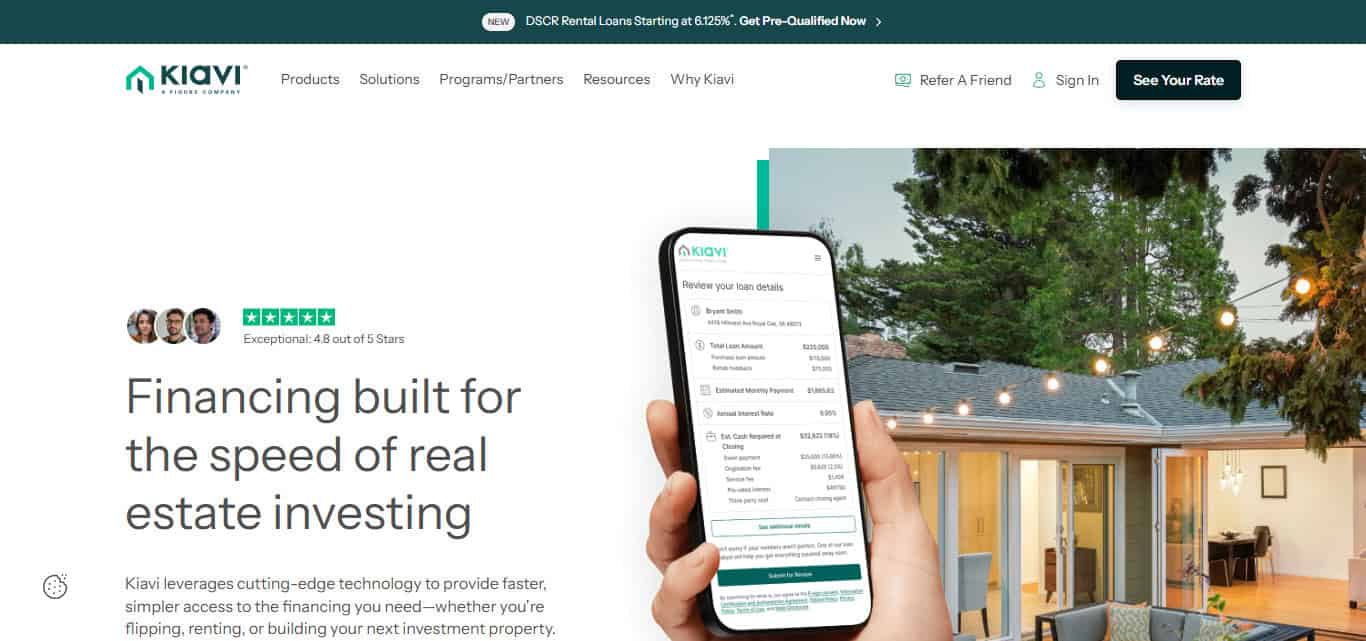
Depending on documentation, funding can close in as little as a few days. Business entities in 49 states plus Washington, D.C., offer loans. Kiavi says it charges no application fee, and origination fees will vary based on the final loan amount.
Kiavi Features
- Flexible Renovation Financing: Financing may include both the purchase of a property and eligible renovation costs.
- Fast Funding: Our efficient underwriting process allows investors to quickly act on time-sensitive opportunities.
- Good for Investors: Short-term structures available linked to real estate investment projects
| Pros | Cons |
|---|---|
| High financing limits can support larger fix-and-flip projects. | Larger loans may involve stricter property and borrower underwriting. |
| Renovation funding can help cover eligible improvement costs. | Renovation funds may be subject to draw and inspection requirements. |
| Fast funding can help investors act on competitive properties. | Faster closing still depends on complete documentation and approval. |
| Short-term terms are designed around flipping strategies. | Short repayment periods can increase pressure to sell or refinance quickly. |
2. Easy Street Capital
Easy Street Capital’s EasyFix program provides fix-and-flip loans from $75,000 to $5 million or more, with rates beginning at 8.90%. Financing can be up to 90% of purchase price and 100% of rehab costs. Leverage can be up to approximately 93% LTC and up to 75% ARV. Terms 6-18 months.

Interest only, extension options available. Published minimum credit requirement is 600 FICO though another lender page lists 600 as minimum while program materials list 600.
Final approval is deal specific. Term sheets can be issued same day, closings can happen in 24 hours and draws can process in 48 hours. The lender does business in all 50 states, with a few geographic exceptions.
Open Road Capital Features
- High Leverage: Offers financing with high leverage options based on LTC and ARV.
- Rehab Financing: Financing for the cost of renovation on top of the purchase price.
Fast Closings: For investors who need to get capital quickly once they find a deal. - Flexible Loan Terms: Short-term funding fits a range of fix-and-flip time horizons.
| Pros | Cons |
|---|---|
| High leverage can reduce the investor’s initial capital requirement. | Higher leverage can increase borrowing costs and project risk. |
| Rehab financing combines acquisition and renovation funding. | Renovation draws may require documentation and progress verification. |
| Quick closings can help investors pursue time-sensitive deals. | Speed depends on underwriting, property evaluation, and paperwork. |
| Flexible terms can accommodate different project timelines. | Short-term financing may require a timely property exit. |
3. RCN Capital
RCN Capital fix and flip loans are based on ARV, with loan amounts typically between $75,000 and $2 million for 1-4 unit properties, with larger multifamily and mixed-use programs up to $3 million. Its ARV program can fund up to 100% of purchase price and 100% of renovation costs, capped at 75% of ARV. Rates begin at 9.49% with 12-18 month terms based on program.

Minimum FICO is 650. RCN offers different leverage options and prices depending on the investor experience, with more leverage available to experienced flippers. Eligible properties include non-owner occupied residential properties, condos, townhomes, apartments and some mixed-use properties.
RCN Capital Features
- ARV-Based Lending: Financing is based on the estimated value of the property post-repairs.
- Renovation Coverage: May cover eligible renovation costs as part of the project.
Benefits for Experienced Investors: Loan terms & leverage can be customized based on Borrower experience. - Various Property Types: Finances for several types of residential investment property
| Pros | Cons |
|---|---|
| ARV-based lending can increase financing potential for renovation projects. | ARV estimates must meet lender underwriting standards. |
| Renovation coverage helps fund qualifying property improvements. | Construction draws may be released according to project progress. |
| Experienced investors may receive different leverage or terms. | New investors may have more limited financing options. |
| Multiple property types provide greater investment flexibility. | Not every property type or location necessarily qualifies. |
4. New Silver
New Silver provides fix-and-flip funding ranging from $100k to $5M, and its published rates are now approximately 8.5%-11%, with origination fees of around 1%-1.75%. Its program can fund eligible renovation projects up to 90% LTC, up to 75% ARV and 100% construction financing. Standard terms can be up to 18 months with interest only payments an option.
Newer investors can have access to new purchases with certain credit and loan-size requirements, but refinance deals must have prior flipping experience.

Eligible Properties Condos, Townhomes, 1-4 Unit Residential Properties. The online application can produce a term sheet and proof of funds immediately, versus typical closings taking around five days.
Silver New Features
- Tech-Enabled Offerings: Facilitates an online process for obtaining financing and initial terms.
- High Rehab Coverage: Financing available to cover extensive rehabilitation costs.
** Fast Financing: ** Underwriting is streamlined to help investors get capital fast. - Investor Access: Programs are available for both new and seasoned real estate investors.
| Pros | Cons |
|---|---|
| Online applications can make the initial process more convenient. | Digital processing does not eliminate the need for underwriting. |
| High rehab coverage can reduce the upfront renovation burden. | Maximum renovation financing depends on project eligibility. |
| Streamlined financing can help investors move quickly. | Actual closing speed depends on documentation and property review. |
| Programs can accommodate different investor experience levels. | Financing terms can vary according to borrower and project characteristics. |
5. Groundfloor
Groundfloor Lending offers fix and flip loans to cover the cost of property acquisition and renovation. Current loan sizes run up to around $3.5 million and terms are typically 6-18 months. Fix-and-flip rates start at approximately 9.25%, depending on the borrower and project.

Financing can cover up to 100% of renovation costs, with leverage based on the property’s after-repair value. Its fix-and-flip page boasts up to 70% LTARV. Groundfloor requires a credit score of 640+ a clear exit strategy and a defined renovation plan.
1-4 unit residential property financing, 35 state coverage on most products. Closing usually takes about 7-14 business days. Published fees include underwriting charges, $495 application fee and $1,250 closing costs.
Groundfloor Features
- Fix-and-Flip Financing: Provides loans specifically designed for buying and fixing up properties.
- Renovation Funding: Enables investors to write off qualified construction and improvement expenses.
- Short-term Structures: Loan terms are based on typical flipping time frames.
- Online Lending Process: Digital applications make the first part of financing easier for investors
| Pros | Cons |
|---|---|
| Dedicated fix-and-flip financing aligns with renovation projects. | Loan availability depends on property and borrower qualifications. |
| Renovation funding can support eligible construction expenses. | Renovation draws may require inspections or progress verification. |
| Short-term structures fit many property-flipping timelines. | Investors face repayment pressure if renovations take longer than expected. |
| Online applications simplify the initial lending process. | Digital applications still require financial and property documentation. |
6. Residential Capital Partners
Residential Capital Partners offers fix and flip loans from $100,000 to $3.5 million for single-family homes, 1-4 unit properties, townhomes and condominiums. It publishes a program up to 65%, 70% or 75% of ARV depending on the investor experience with a 9 month loan duration.
The lender finances purchase and rehab projects, with both new and experienced investors. Loans are to be made to business entities only and not to an individual borrower. The company offers rates as low as 8% and interest only payment structures.

The current fix-and-flip page does not show a pre-payment penalty. The current program page does not fully publish exact LTC, credit requirements, detailed fee schedules and funding timelines; borrowers should obtain deal-specific terms directly.
Residential Capital Partners Features
- Large Loan Amounts: Provides a substantial amount of financing for eligible residential investment projects.
- ARV Leverage: Financing can be based on the projected value repaired of the deal.
- Rehab Financing: Assists with the cost of buying and rehabbing eligible projects.
- Business Borrower Structure: Loans to investors doing business through qualifying business entities.
| Pros | Cons |
|---|---|
| Large loan capacity can accommodate higher-value investment projects. | Larger projects can involve more extensive underwriting. |
| ARV-based leverage can increase available project financing. | Final leverage depends on the lender’s property valuation. |
| Rehab financing supports qualifying acquisition and renovation projects. | Construction funding may be released in stages. |
| Business-entity lending suits investors using investment companies. | Investors without an eligible business structure may need additional setup. |
7. Lima One Capital
Lima One Capital’s FixNFlip program provides loans ranging from $100,000 to $5 million at rates starting at 7.25%. Eligible projects may be eligible for up to 95 percent LTC, 75 percent LTV and up to 100 percent of the rehabilitation budget with 24-hour draws.
Terms are 13, 19 and 24 months. Fees for origination may be added to the property exit.” Minimum credit score of 660 and at least one investment property exit in last 36 months.

Experienced investors may receive higher leverage and different pricing. Eligible properties include single-family homes, multifamily properties of up to four units and qualifying condominiums. Repeat borrowers can get quicker processing, with some deals funded in as little as three weeks.
Lima One Capital Features
- Funding for Rehabilitation: Finances construction and improvement budgets for eligible projects.
- Loan Terms Flexibility: Investors can choose structures that fit projects of different lengths.
- Experienced-Investor Programs: Underwriting evaluates borrower experience when setting available financing terms
| Pros | Cons |
|---|---|
| High project leverage can reduce the investor’s required upfront capital. | Greater leverage also increases total debt exposure. |
| Rehab financing helps cover qualifying construction budgets. | Renovation funds may depend on approved budgets and inspections. |
| Multiple loan terms provide flexibility for different projects. | Shorter terms require investors to manage project timelines carefully. |
| Experience-based programs can benefit established investors. | Newer investors may not qualify for the same financing terms. |
8. CoreVest
CoreVest provides fix-and-flip financing from approximately $75,000 to $3 million or more, covering single-family homes, condos, townhomes, and small multifamily properties. Current leverage reaches up to 93.5% LTC for 1–4 units and up to 80% LTC for 5–19-unit light-rehab properties. Loan terms run 6–24 months, with extension options, and both purchases and refinances are supported.

Eligible rehabilitation expenses can be funded through staged draws following completed work and inspections. CoreVest reports typical closings within 10–14 business days, with approved draws generally wired within 2–5 business days.
Standard servicing, inspection, and wire fees can be deducted from draws. Specific interest rates, borrower credit requirements, and closing fees are determined during underwriting rather than publicly fixed.
CoreVest Features
- Flexible Leverage: The financing amount depends on the type of property and the details of the project.
Short-Term Loans: Offers terms for investors to complete renovations and exit properties.
Draw-Based Rehab Funding: You can fund eligible renovation costs through staged construction draws.
| Pros | Cons |
|---|---|
| Investment-property financing supports a range of residential projects. | Specific financing depends on property type and project qualifications. |
| Flexible leverage can accommodate different investment scenarios. | Higher leverage may result in greater financing costs. |
| Short-term loans can match renovation and resale strategies. | Delayed property sales can create additional holding costs. |
| Draw-based rehab funding helps manage renovation expenses. | Draws generally depend on completed work and lender inspections. |
9. HouseMax Fundings
HouseMax Funding provides short-term fix-and-flip loans with flexible 6-24 month terms, same-day approval and up to 90% of project cost financing. Interest-only structures are on offer and the lender describes its process as suitable for different deal sizes. HouseMax says it serves more than 40 states and offers fast pre-qualification on hard-money deals.
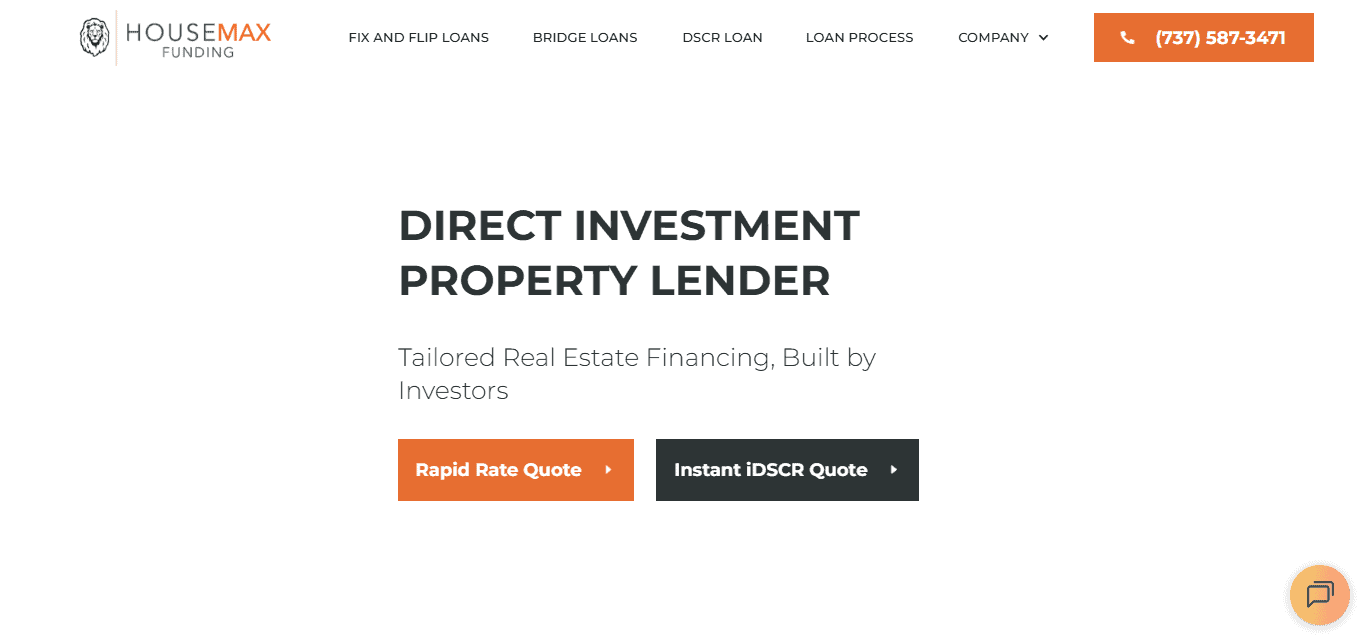
But its existing public fix-and-flip page does not have a maximum loan amount, fixed interest-rate range, specific LTC/ARV limits, minimum credit score or standard origination-fee schedule.
Those terms are therefore best assumed to be deal specific.” HouseMax also offers bridge and DSCR programs, so borrowers should make sure that any rates they are quoted are for the fix-and-flip product when comparing financing costs.
HouseMax Funding Features
- Flexible Financing: Offers short-term capital for qualifying fix-and-flip investment projects.
- High Project Coverage: The financing can cover a large proportion of eligible project costs.
- Quick Prequalification: Investors can fast-track their financing opportunities with simplified prequalification processes.
Varied loan structures: In addition to fix-and-flip loans, we have a variety of investment property financing options
| Pros | Cons |
|---|---|
| Flexible financing can accommodate qualifying fix-and-flip projects. | Available terms can vary significantly by individual transaction. |
| High project coverage can reduce upfront capital requirements. | Higher financing levels can increase overall borrowing exposure. |
| Quick prequalification helps investors assess potential funding. | Prequalification does not guarantee final loan approval. |
| Multiple loan structures provide additional investment financing choices. | Investors must compare each product’s rates, fees, and requirements carefully. |
10. Constitution Lending
Constitution Lending offers fix-and-flip loans ranging from $150,000 to $3.5 million. Advertized rates start at 10.49%. Its program provides up to 85% of the purchase price, up to 75% of ARV and 100% of the eligible rehab costs.

The lender is saying it is a direct lender and it has an online process to get a pre-approval letter and term sheet. Constitution is only available in select states but there are a lot of states eligible for it in the current application. Please check availability for a property before applying.
There’s no advertized application fee, and quick closing timelines are stressed, but there’s no full standard fee schedule or fixed loan duration published on the current fix-and-flip page.
Constitution loans Features
- High Financing Potential: Provides large loans for eligible fix and flip investment properties.
- Rehabilitation Funding: Eligible renovation costs may be included in the financing structure.
- ARV Lending: Relies on the expected value of the property post repairs to determine the leverage available.
- Quick Pre-Approval Process: Investors can ask for preliminary loan terms before they purchase a property.
| Pros | Cons |
|---|---|
| High financing potential can support larger qualifying flip projects. | Larger financing amounts may require stronger project documentation. |
| Rehab funding can help finance eligible property improvements. | Construction financing may depend on approved renovation budgets. |
| ARV-based lending can support projects with substantial renovation potential. | Final ARV and leverage are subject to lender evaluation. |
| Fast pre-approval can help investors evaluate deals earlier. | Pre-approval does not guarantee funding until full underwriting is completed. |
Conclusion
To summarize, The Best Hard Money Lenders For Real Estate Flips require comparison of loan amounts, interest rates, LTC or LTV limits, renovation financing, repayment terms, fees and speed of funding. Different lenders have different qualifications and property requirements.
Before putting in money, investors should read the complete loan agreement, determine the total costs of the project and make sure the financing structure fits with their renovation timeline and planned exit strategy.
FAQ
What are hard money lenders for real estate flips?
Hard money lenders provide short-term financing for purchasing and renovating properties.
Why use hard money loans for house flipping?
They can provide faster funding than traditional real estate financing.
How much can hard money lenders finance for flips?
Loan amounts vary based on property value, borrower, and project.
What interest rates do hard money lenders charge?
Rates are typically higher than conventional mortgages because loans close faster.
How quickly can a hard money flip loan close?
Qualified borrowers may receive funding within several days after approval.