This article reviews the best hybrid crypto exchanges for self-custody. Hybrid crypto exchanges offer a combination of user trading experience and more control over digital assets.
I will review and cover the features, advantages, and disadvantages of hybrid crypto exchanges and evaluate their security, supported cryptocurrencies, and overall ease of use so you can choose the right hybrid crypto exchange for your self custody and crypto trading.
Key Points
| Hybrid Crypto Exchange | Explanation |
|---|---|
| Cube Exchange | Combines centralized-style trading speed with MPC-based custody, reducing traditional exchange custody risks. |
| GRVT | Offers orderbook trading while keeping assets under user-controlled smart-contract custody throughout transactions. |
| Paradex | Provides institutional-style perpetual trading with wallet-based self-custody and onchain settlement for users. |
| ApeX Protocol | Delivers decentralized perpetual markets, combining orderbooks with non-custodial wallet control for traders. |
| Aevo | Combines centralized-style interface with decentralized settlement, supporting options and perpetual derivatives trading. |
| dYdX | Offers decentralized perpetual trading onchain infrastructure, letting users retain wallet control throughout. |
| Hyperliquid | Provides high-performance onchain trading while users maintain control of their connected cryptocurrency wallets. |
| Drift Protocol | Combines advanced trading features with decentralized settlement and wallet-based custody for Solana users. |
| Jupiter | Provides Solana-native trading aggregation while keeping assets within users’ self-custodied wallets. |
| Uniswap | Enables decentralized token trading directly from wallets, eliminating traditional centralized custody requirements entirely. |
| 1inch | Aggregates decentralized liquidity while allowing users to swap directly through self-custodied wallets securely. |
| THORChain | Enables native cross-chain swaps without requiring users to deposit assets into centralized exchange custody. |
1. Cube Exchange
Cube Exchange is a hybrid centralized-decentralized CEX offering a custodial service utilizing MPC and supports cross-chain settlement. Developing and Operating: Cube Exchange started developing and operating its exchange in 2023-2024.

Amongst the first EXs to support trading ofLayer 1 and Layer 2 assets. Fees: 0.14% maker, 0.24% taker. Supports trading of BTC, ETH, SOL, USDC, USDT, DOGE, LTC and SUI and other assets. With the help of MPC, Cube Exchange’s users can control custody better and can also benefit from the order book execution.
Cube Exchange Features & Pros Cons
- Self-Custody: Relies on MPC to reduce centralized asset custody.
- Fast Trading: Offers a centralized trading UI and order-book execution alongside professional trading tools.
- Multi-Chain: Supports cross-border trading across blockchains.
- Security: Soft separation between trading and custody infrastructure in order to improve user asset protection.
| Pros | Cons |
|---|---|
| MPC-based architecture provides stronger control over user assets. | MPC custody can be more complex for beginners to understand. |
| Centralized-style order books provide familiar trading functionality. | Advanced features may feel overwhelming to new traders. |
| Supports multiple blockchain ecosystems and digital assets. | Asset and network availability can change over time. |
| Separates trading and custody infrastructure for added security. | Hybrid architecture still requires users to trust platform infrastructure. |
2. GRVT
GRVT offers traders a flexible order book-based trading experience. Developing and Operating: GRVT was available to the public in 2024, following its testnet development. GRVT charges its users a maker fee of 0.0600% and taker fee of 0.0850% for spot trading,
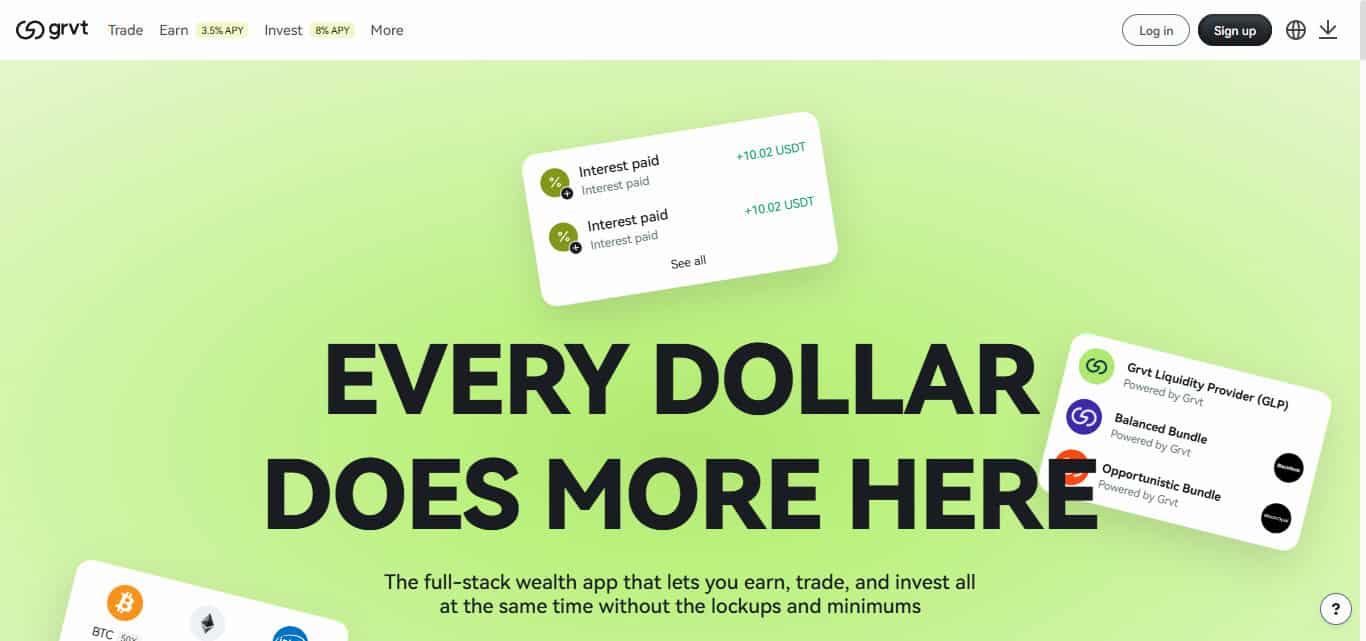
While perpetual trading attracts a maker fee of 0.0450% and taker fee of 0.0001%. GRVT focuses on self-custody, capital efficiency, balance transparency and trading experience similar to centralized exchanges.
GRVT Features & Pros Cons
- Smart-Contract Custody: Places user assets in blockchain-based custody instead of exchange wallets.
- Order-Book Trading: Offers familiar centralized exchange order-book.
- Self-Custody: Users have greater control over their funds during trading.
- Professional Tools: Designed for advanced traders seeking efficient execution and liquid markets.
| Pros | Cons |
|---|---|
| Smart-contract custody reduces dependence on traditional centralized custody. | Smart-contract systems can introduce technical and protocol risks. |
| Order-book trading provides a familiar exchange experience. | Its advanced trading interface may suit experienced users better. |
| Users retain greater control over their funds. | Wallet-based trading requires understanding blockchain transactions. |
| Designed for professional and sophisticated cryptocurrency traders. | Market and asset availability may be more limited than major CEXs. |
3. Paradex
Paradex is a spot and perpetual trading service, available to users through supported wallet integration. Developing and Operating: Paradex launched its service in 2023, in StarkNet. Fees: users can trade for free (0% fees) on spot, perp and options.
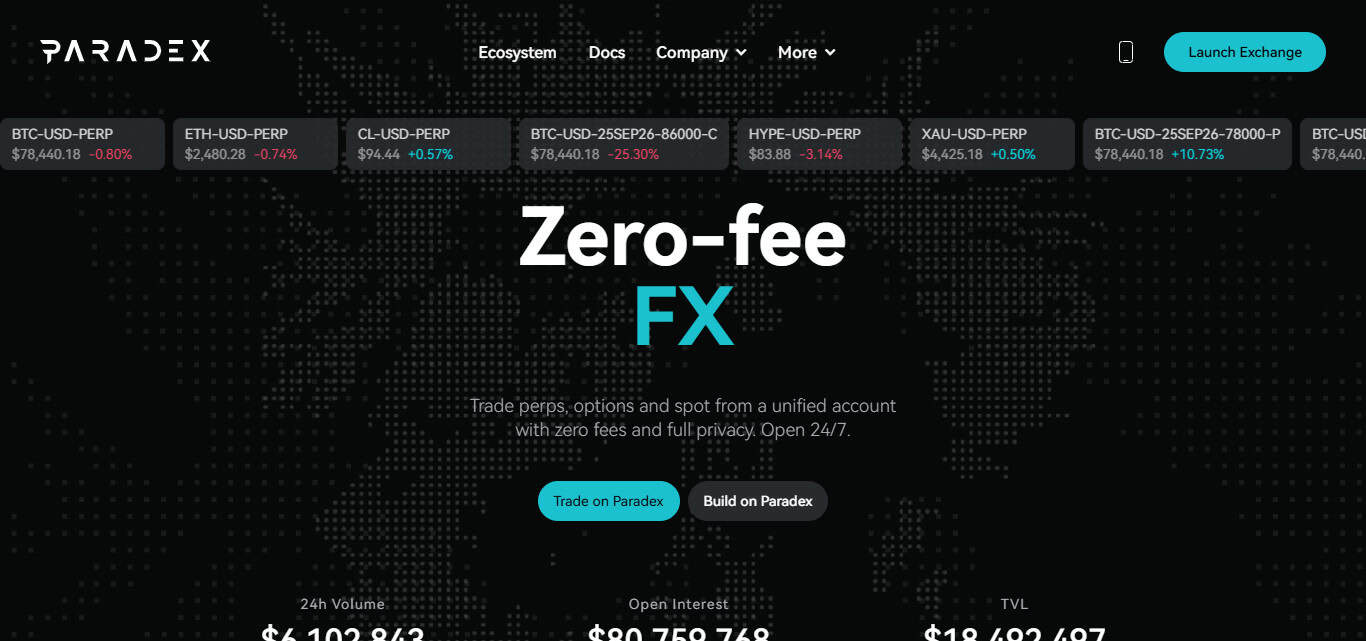
Crypto Support: options and perps trading for BTC, ETH and other crypto assets is available. Paradex supports self-custody and is preferred by users interested in trading derivatives but avoiding traditional custody.
Paradex Features & Pros Cons
- Wallet-Based Trading: Users trade from within their wallets
- Perpetual Markets: Provides perpetual futures markets for digital assets.
- On-Chain Settlement: Transactions and settlement occur over the blockchain.
- Professional Trading: Offers institutional trading combined with trading within a decentralized custody environment.
| Pros | Cons |
|---|---|
| Wallet-based trading gives users greater control over assets. | Perpetual products involve significant leverage-related risks. |
| Offers multiple perpetual cryptocurrency markets. | Beginners may find derivatives trading complicated. |
| Onchain settlement improves transparency and verifiability. | Blockchain transactions can experience network-related delays. |
| Professional trading tools support advanced strategies. | Primarily focused on active traders rather than casual investors. |
4. ApeX Protocol
ApeX is a self-custodial derivative trading protocol. Developing and Operating: ApeX was launched in 2022, with initial focus on perpetual contracts.

Fees: trading fees depend on your hierarchical ranking. Some exchanges charge different maker and taker fees. ApeX offers users more control over their funds and keys, as users connect crypto wallets instead of depositing the funds in a centralized system.
ApeX Protocol Features & Pros Cons
- Non-Custodial: Users do not deposit funds to a centralized exchange to retain custody of their funds.
- Perpetual Trading: Emphasizes decentralized perpetual futures markets.
- Order-Book Model: Offers an order-book model for advanced trading.
- Wallet Trading: Users trade via a connected wallet.
| Pros | Cons |
|---|---|
| Non-custodial design reduces traditional exchange custody exposure. | Users are responsible for managing their connected wallets securely. |
| Provides decentralized perpetual futures markets. | Leveraged derivatives can produce substantial losses quickly. |
| Order-book trading offers more advanced execution functionality. | Decentralized infrastructure can be technically complex for beginners. |
| Direct wallet integration simplifies access to self-custodial trading. | Supported markets may not match the breadth of large CEX platforms. |
5. Aevo
Aevo offers centralized trading opportunities and supports decentralized options and futures markets. Launched: Ribbon Finance commenced trading in 2021, and the Aevo exchange trading platform was launched in 2023. Aevo has a cost structure that varies by product and user status.
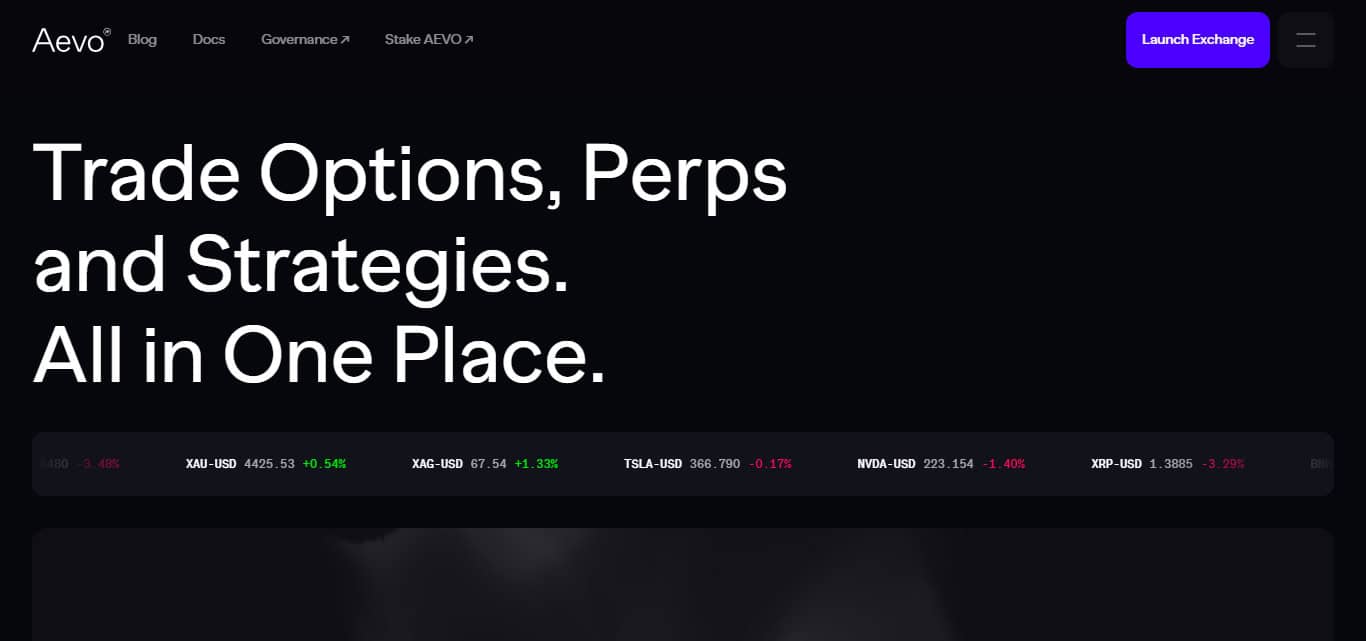
Aevo has integrated a number of deposit options from a variety of blockchains that support USDC, USDT, ETH, BTC and weETH. Aevo caters to customers looking for complex trading derivatives and settlement on a blockchain.
Aevo Features & Pros Cons
- Derivatives Trading: Offers perpetual futures and options markets.
- Self-Custody: Platform usage requires blockchain wallets.
- Trading UI: Offers a trading UI similar to centralized exchanges to aid in order placement and management.
- Decentralized Settlement: Manages assets and settlement via blockchain.
| Pros | Cons |
|---|---|
| Supports both perpetuals and cryptocurrency options trading. | Derivatives and options can be difficult for inexperienced traders. |
| Self-custody provides greater control over connected assets. | Users must understand wallet security and blockchain transactions. |
| Familiar trading interface makes order management easier. | Product availability can vary according to market conditions. |
| Decentralized settlement provides blockchain-based transparency. | Advanced features may create a steeper learning curve. |
6. dYdX
dYdX has active trading in derivative contracts that offer settlement in crypto and are wallet based. Launched: 2018 saw the launch of the first dYdX exchange, and in 2023 the dYdX Cosmos based Chain was released. dYdX charges maker/taker fees that depend on trading volume.

The platform boasts many perpetual BTC, ETH and SOL markets. Its focus on non-custodial trading means traders control their keys.
dYdX Features & Pros Cons
- Decentralized Trading: access to mature, frictionless trading with decentralized markets outside of the custody constraints of centralized exchanges
- Perpetual Futures: a variety of perpetual contracts in liquid cryptocurrency markets
- Wallet Control: users control their assets by virtually connecting their wallets
- Onchain Infrastructure: trading, settlement and security of trading networks all done on the blockchain
| Pros | Cons |
|---|---|
| Decentralized architecture reduces reliance on traditional custodians. | Wallet management remains the user’s responsibility. |
| Provides perpetual futures across multiple cryptocurrency markets. | Perpetual trading involves considerable leverage and liquidation risks. |
| Users maintain control through compatible wallets. | Beginners may find decentralized derivatives difficult initially. |
| Onchain infrastructure offers greater transaction transparency. | Network-related costs and performance can affect trading experience. |
7. Hyperliquid
Hyperliquid is a high-speed on-chain exchange for spot and perpetual transactions. Hyperliquid Mainnet was launched in 2023. Fees: trading fees are charged based on trading volume in the last 14-days.
Spot and perpetual markets have their own trading volume schedules, with trading volume for the spot market contributing towards the trading volume schedule for fees. Crypto support: markets include SOL, BTC, ETH, and others.

There are also many perpetual contracts included. Hyperliquid has an interface for an exchange and also utilizes blockchain technology, meaning transactions are not done with the custodial negligence of centralized entities.
Hyperliquid Features & Pros Cons
- High-Speed Trading: meant to reduce order processing and execution times by using blockchain technology
- Perpetual Markets: offers a variety of cryptocurrency perpetual contracts
- Self-Custody: user control of connected wallets and assets
- Onchain Trading: exchange-like trading with blockchain based market infrastructure
| Pros | Cons |
|---|---|
| High-performance infrastructure supports fast trading execution. | Complex derivatives products may not suit beginners. |
| Offers extensive perpetual cryptocurrency markets. | Leverage can magnify both profits and losses. |
| Wallet-based architecture supports self-custody principles. | Users remain responsible for wallet security and transaction approvals. |
| Combines exchange-style usability with onchain infrastructure. | Onchain platforms can face smart-contract and protocol-related risks. |
8. Drift Protocol
Drift is another decentralized trading protocol that runs on Solana for perpetuals, spot transactions, borrowing and lending, launched in 2021. Drift then expanded to a larger trading ecosystem. Fees: A market maker and taker’s costs differ and are based on volume.

Crypto support: traders can access major assets in the Solana ecosystem, along with BTC, ETH, SOL, stablecoins, and more. Self-custody trading is possible within Drift’s wallet-based architecture that provides the same level of advanced trading as centralized derivatives services.
Drift Protocol Features & Pros Cons
- Solana-Based: building for low cost and fast transactions on Solana
- Perpetual Trading: supports leveraged perpetual markets for cryptocurrencies
- Self-Custody: user control over connected wallets instead of centralized custody of assets
- DeFi Features: trading integrated with borrowing and lending and other DeFi features
9. Jupiter
Jupiter empowers users to transact with multiple liquidity pools while allowing custody of private keys. Launched: Jupiter launched in 2021. Fees: basic routing costs include network costs and liquidity costs, while fees specific to certain Jupiter offerings may be applicable.
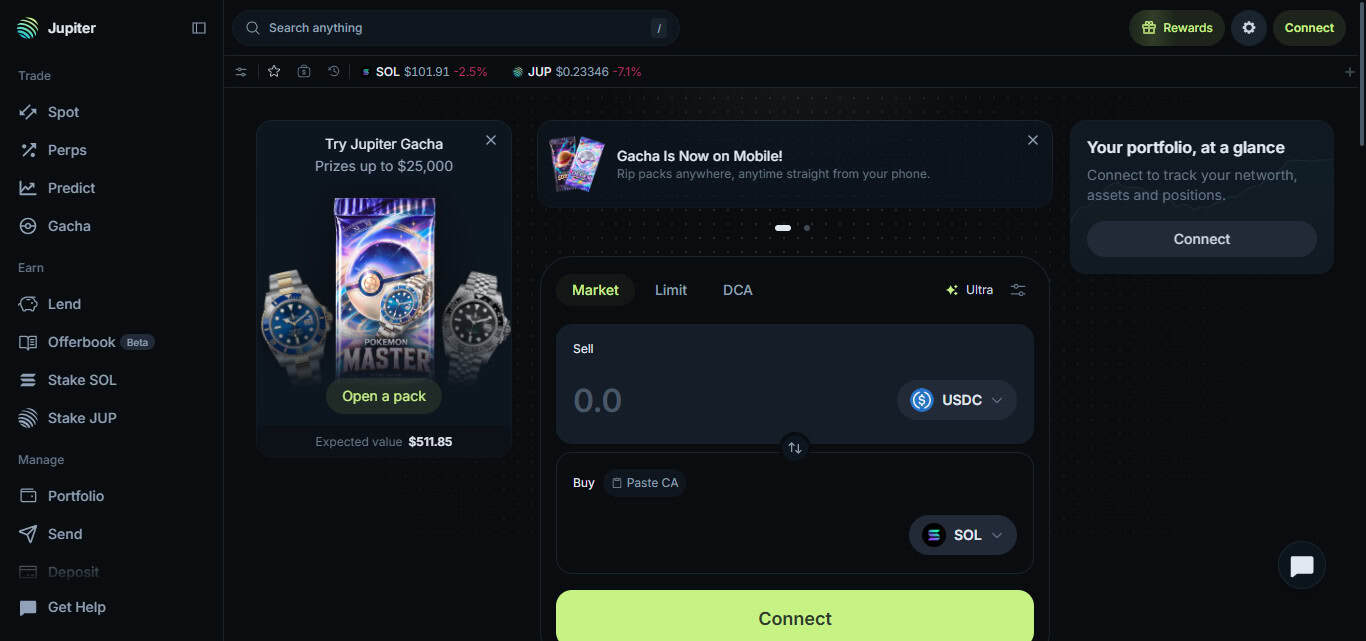
Crypto support: Jupiter supports a broad array of Solana based tools and assets, including SOL, USDC, USDT, JUP, and many other ecosystem assets. Jupiter is ideal for users looking for optimal self-custodial swaps with effective token routing without the need to interact with centralized platforms.
Jupiter Features & Pros Cons
- DEX Aggregation: aggregates liquidity spanning multiple Solana swapping sources
- Self-Custody: no centralized custody of assets, users control their wallets
- Wide Token Access: thousands of tokens across the Solana ecosystem
- Trading Efficiency: technology to give users the best routes and prices for their swaps
| Pros | Cons |
|---|---|
| Aggregates liquidity across the Solana ecosystem for swaps. | Primarily focused on Solana rather than broad multi-chain coverage. |
| Users maintain self-custody throughout transactions. | Users must protect their own wallets and signing permissions. |
| Provides access to a very broad selection of Solana tokens. | Smaller tokens can carry significant liquidity and volatility risks. |
| Routing can help users find competitive swap execution. | Final transaction costs depend on network and liquidity conditions. |
10. Uniswap
As a top decentralized platform, Uniswap facilitates peer-to-peer token swaps that let users transact directly from wallets that they self-custody. Launched: Uniswap first went live in 2018 with the introduction of its first protocol iteration.
Fees: The cost associated with a single swap depends on a liquidity pool, and vary with each version of the protocol, generally incurring the cost levied by the blockchain for the swap to be processed.

Crypto support: Uniswap supports a variety of tokens in the Ethereum ecosystem and many others such as Base, Arbitrum, Polygon, Avalanche, BNB Chain, and Solana. Its open source architecture removes the need for centralized custody.
Uniswap Features & Pros Cons
- Direct Wallet Trading: users make trades directly from their self-custodial wallets
- Decentralized Liquidity: liquidity pools power trading
- Multi-Chain Support: platform spans multiple major blockchain networks
- Non-Custodial: users do not need to deposit funds to a centralized exchange
| Pros | Cons |
|---|---|
| Enables direct cryptocurrency swaps from self-custodied wallets. | Users are responsible for securing their private keys. |
| Decentralized liquidity pools remove traditional exchange custody. | Slippage can become significant for less-liquid trading pairs. |
| Available across several major blockchain networks. | Blockchain gas fees can increase transaction costs. |
| Supports a very broad range of tokens. | Anyone can create tokens, increasing exposure to potentially risky assets. |
11. 1inch
1inch is a decentralized exchange aggregator that finds the best price when swapping by sourcing from many liquidity pools, inviting customers to keep self-custody of their assets. Launched: 1inch was launched in 2019.
Fees: Costs are associated with the transactions mode selected, blockchain gas costs, and any applicable infrastructure or resolver fees.
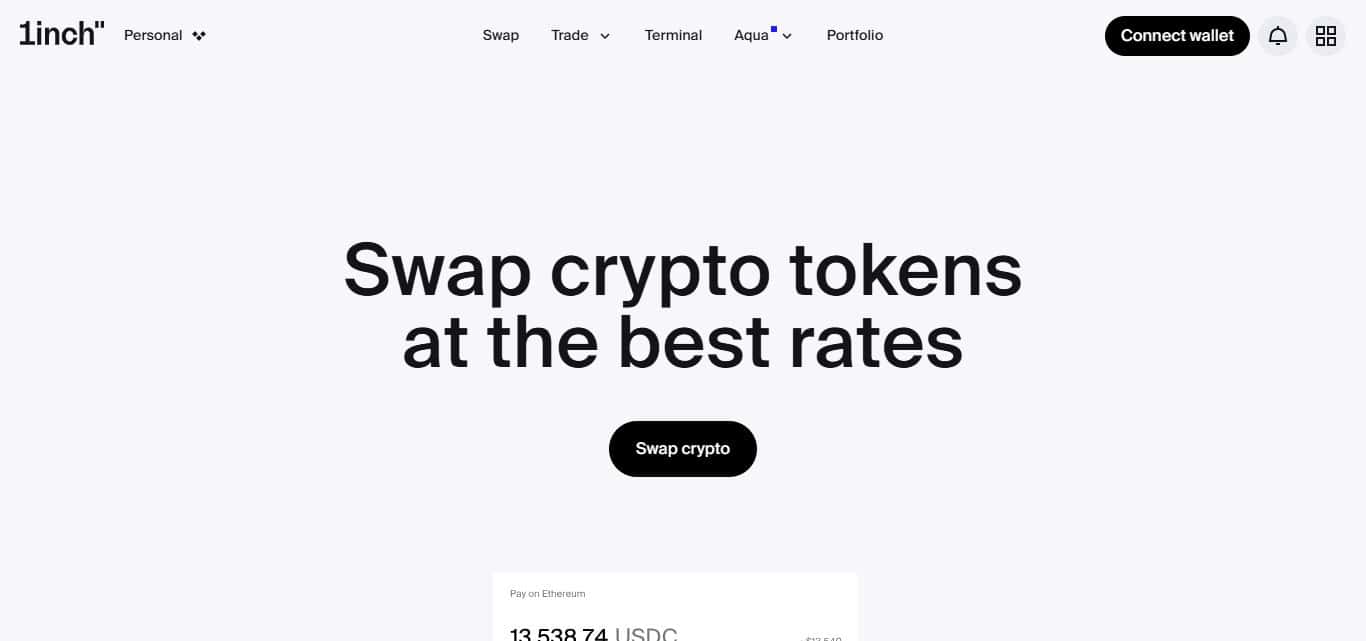
For some Swap-interface transactions, resolvers may cover some or all of the gas costs. Crypto support: 1inch operates across many networks and includes Ethereum, BNB Chain, Polygon, Arbitrum, Optimism, Base and Solana.
1inch Features & Pros Cons
- Liquidity Aggregation: Aggregates the best paths through Decentralized Exchanges.
- Self-Custody: Users keep control of their private keys and decide on the movement of funds.
- Multi-Chain: Has access to various blockchain networks and Decentralized Liquidity Structures.
| Pros | Cons |
|---|---|
| Aggregates multiple DEXs to seek efficient swap routes. | Actual execution depends on available decentralized liquidity. |
| Users retain control of their wallets and private keys. | Self-custody means lost credentials generally cannot be recovered. |
| Supports multiple blockchain ecosystems. | Different networks can have different transaction costs and requirements. |
| Routing technology can improve swap-price discovery. | Complex routing can be difficult for inexperienced DeFi users to understand. |
12. THORChain
THORChain facilitates the first decentralized cross-chain trustless native cryptocurrency swaps. Launched: In 2021 THORChain mainstream launched, following significant previous work on the network development.
Fees: Swaps incur source chain gas, liquidity fees, and the cost of exiting the destination chain, and thus the total cost will vary with the current condition of the network, the size of the trade, and the state of the available liquidity.

Crypto support: Other networks include Bitcoin, Ethereum, Solana, BNB Chain, XRP Ledger, Litecoin, Dogecoin, Avalanche, Cosmos, and Others.
THORChain Features & Pros Cons
- Native Swaps: Offers the swap of native assets between the supported blockchains.
- Non-Custodial: Users never need to transfer their assets to a centralized exchange.
- Cross-Chain Trading: Liquidity is linked between multiple independent blockchains.
- Decentralized Liquidity: Decentralized liquidity allows for cross-chain swaps of cryptocurrencies.
| Pros | Cons |
|---|---|
| Enables native cryptocurrency swaps across supported blockchains. | Cross-chain infrastructure introduces additional technical risks. |
| Users can swap without depositing assets into centralized exchanges. | Swap costs can vary according to network and liquidity conditions. |
| Provides decentralized liquidity for cross-chain transactions. | Supported assets and networks are more limited than the entire crypto market. |
| Self-custodial design gives users greater control over their assets. | Users must carefully manage wallets and blockchain transaction details. |
How We Select the Best Hybrid Crypto Exchanges Suited for Self-Custody
- Self-Custody: For the self-custody feature, we give preference to platforms that allow users to have control over their assets.
- Security: We check how safe user assets are (wallet protection), analyze the custody architecture, and check how secure the platform is.
- Trading Fees: We check maker fees, taker fees, withdrawal fees, and fees related to transaction.
- Crypto Support: We check which cryptocurrencies, tokens, networks, and trading pairs the platform supports.
- Liquidity: We check the quality of the orders (market depth), trading volume, and trading execution.
- Trading Features: We check trading tools, swaps, derivatives, and trading instruments.
- User Experience: We check the platform simplicity, and how good the trading wallet integration is.
- Transparency: We check how well the platform explains custody, fees, and the risks involved with using the platform.
- Blockchain Support: We check if the platform supports multiple networks and blockchain ecosystems.
- Reputation: We check the platform’s history and how users perceive it, as well as its position in the industry.
Conclusion
In Conclusion The best hybrid crypto exchanges for self-custody depend on your trading parameters, preferences, supported assets, fees, and control of your wallets. Cube Exchange, GRVT, Paradex, Hyperliquid, and more, give different trade conveniences with self custody.
Once you compare their features and risks, liquidity and fees of different networks and supported cryptocurrencies, you can decide which platform will best fit your cryptocurrency strategy.
FAQ
Which hybrid exchange is best for self-custody?
Cube Exchange is a strong option for MPC-based self-custody trading.
Are hybrid crypto exchanges safer than centralized exchanges?
They can reduce custody risks but still involve platform-specific risks.
Can I keep cryptocurrency in my own wallet?
Yes, many platforms allow users to maintain wallet-based asset control.
Do hybrid exchanges support cryptocurrency derivatives?
Yes, several support perpetual futures, options, and leveraged trading markets.