In this article, I will discuss the best low-correlation assets for stability worldwide and how investors can mitigate risk and safeguard their portfolios from damages during the crisis.
- Key Points & Best Low-Correlation Assets for Worldwide Portfolio Stability
- 10 Best Low-Correlation Assets for Worldwide Portfolio Stability
- 1. Gold
- 2. US Treasury Bonds
- 3. Swiss Franc (CHF)
- 4. Real Estate (REITs)
- 5. Emerging Market Bonds
- 6. Cryptocurrencies (Bitcoin, Ethereum)
- 7. Commodities (Oil, Copper)
- 8. Japanese Yen (JPY)
- 9. Infrastructure Assets
- 10. Private Equity / Venture Capital
- Conlcsuion
- FAQ
Including gold, bonds, currency, real estate, and other alternative assets, global portfolios can gain enduring stability and achieve a positive balance for loss minimizing and growth opportunities. This is particularly needed in the unbalanced economy.
Key Points & Best Low-Correlation Assets for Worldwide Portfolio Stability
| Asset | Key Points |
|---|---|
| Gold | Acts as a hedge against inflation and market volatility; historically low correlation with equities. |
| US Treasury Bonds | High liquidity, safe-haven asset; negatively correlated with stocks during downturns. |
| Swiss Franc (CHF) | Considered a stable currency; often rises when global markets fall. |
| Real Estate (REITs) | Provides income through rent; low correlation with stocks and bonds depending on location. |
| Emerging Market Bonds | Diversification outside developed markets; moderate returns with low correlation to US equities. |
| Cryptocurrencies (Bitcoin, Ethereum) | Digital assets with unique risk-return profile; partially uncorrelated with traditional markets. |
| Commodities (Oil, Copper) | Driven by global demand and supply; low correlation with stocks and bonds in some cycles. |
| Japanese Yen (JPY) | Strong safe-haven currency; rises in times of global financial stress. |
| Infrastructure Assets | Stable long-term cash flows; low correlation with equities, especially in developed markets. |
| Private Equity / Venture Capital | Illiquid assets with long-term returns; generally low correlation with public markets. |
10 Best Low-Correlation Assets for Worldwide Portfolio Stability
1. Gold
Gold is an asset class that is a safe haven because it protects wealth during inflation, currency devaluation, and during turbulent times.
It is negatively correlated to a diversified portfolio containing stocks and bonds, so in global portfolio diversification, this asset is a must.
Investors in financial crises, or during turmoil and uncertainty because it is one of the precious metals that retains wealth when other assets decline.
Gold can be stored physically, in gold ETFs or in stocks of gold mining, each serving, with different risk and return. It is a inelastic asset, and because of that, it adds stability to a portfolio over an extended period of time.
| Feature | Details |
|---|---|
| Asset Type | Precious metal / Safe-haven |
| Correlation | Low correlation with stocks and bonds |
| Key Benefit | Hedge against inflation and market volatility |
| Investment Options | Physical gold, ETFs, mining stocks |
| Role in Portfolio | Diversification, preserve purchasing power, stability during crises |
2. US Treasury Bonds
As backed US government securities, US Treasury bonds are hailed the safest fixed-income security investments. They guarantee interest income and loss of capital, even in bad times.
Treasuries are negatively correlated to equities, and so, in times when the stock market undergoes a downturn, they gain value, particularly making them a key stabilizer.

In addition to being recognized globally, being of high liquidity, and being the defacto benchmark of a risk-free return, people lose value to deflation within longer time.
In a global portfolio, Treasuries gain the volatility and predictability of the returns in a portfolio, especially when times are uncertain.
| Feature | Details |
|---|---|
| Asset Type | Government-backed fixed-income |
| Correlation | Low or negative correlation with equities |
| Key Benefit | Capital preservation, predictable interest income |
| Investment Options | Short-term and long-term Treasuries, Treasury ETFs |
| Role in Portfolio | Reduce volatility, safe-haven during market downturns |
3. Swiss Franc (CHF)
Due to the Swiss Franc being a traditional safe-haven currency, it is appreciated in times of global economic or political uncertainty.
It strong economy and stable political system allows the Franc to remain stable. There is little correlation with other major currencies and equities which makes it useful for diversifying.

In times of crisis, when other assets lose value, investors typically use the Franc to store value and mitigate risk.
In a global portfolio, CHF exposure enhances stability by mitigating risk of a financial system collapse and preserving capital.
| Feature | Details |
|---|---|
| Asset Type | Currency / Safe-haven |
| Correlation | Low correlation with major currencies and equities |
| Key Benefit | Hedge against market shocks and currency risk |
| Investment Options | CHF-denominated deposits, bonds, ETFs |
| Role in Portfolio | Stability, capital preservation during global uncertainty |
4. Real Estate (REITs)
Investors can access income-producing real estate like commercial, residential, and industrial real estate through Real Estate Investment Trusts.
They pay consistent dividends and can appreciate in value over time. They tend to show little relationship to stocks and bonds, especially when spread out over different regions and types of properties.
The local fundamentals of real estate, demand for rentals, and interest rates impact real estate returns. This provides portfolio protection from shocks to equities worldwide.

Investment in REITs improves portfolio diversification, provides inflation protection through rental growth, and offers exposure to real assets.
REITs provide greater systemic diversification and liquidity than investing in individual properties.
| Feature | Details |
|---|---|
| Asset Type | Income-generating real estate |
| Correlation | Low correlation with stocks and bonds |
| Key Benefit | Steady dividends, inflation protection, long-term growth |
| Investment Options | REITs (commercial, residential, industrial), real estate funds |
| Role in Portfolio | Diversification, tangible asset exposure, stable returns |
5. Emerging Market Bonds
Bonds from emerging markets provide exposure to the corporate and sovereign debt of developing countries.
They tend to pay more than bonds in developed markets and the yields exhibit little relationship to the equities of the United States and Europe.
The bonds are affected by the growth of the local economy, interest rates, and the value of the currency. Also, these bonds provide diversification in the portfolio.
They have greater credit and currency risks than developed bonds. With proper choice and diversification, volatility can be minimized.
They are good for income and bond investors looking for moderate growth. Emerging market bonds enhance diversification in equities in developed markets and provide greater down market protection.
| Feature | Details |
|---|---|
| Asset Type | Sovereign or corporate debt from developing countries |
| Correlation | Low correlation with US and European equities |
| Key Benefit | Higher yields, income diversification |
| Investment Options | Sovereign bonds, corporate bonds, emerging market ETFs |
| Role in Portfolio | Moderate growth, income generation, reduce developed market risk |
6. Cryptocurrencies (Bitcoin, Ethereum)
Bitcoin and Ethereum are classified as cryptocurrencies and digital assets because they are cryptocurrencies and digital assets are borderless, decentralized, partially independent of traditional finance, and they have a different risk-return profile.
In the short-term, they provide a low correlation to equities and bonds, are highly volatile, and because of those reasons, they can increase portfolio diversification.
Cryptocurrencies are also a hedge to a portfolio against inflation, a devaluing currency, and systemic risk. Bitcoin is digital gold, and Ethereum is the backbone of decentralized finance.
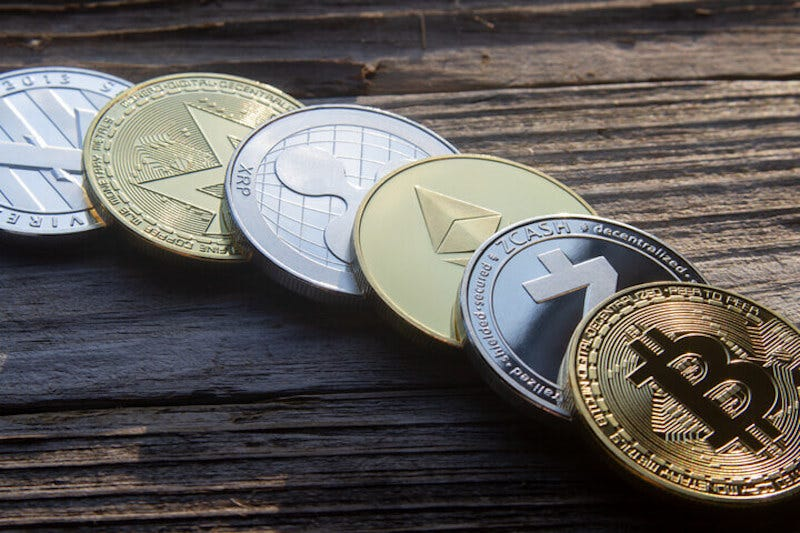
Other coins, stable or otherwise, are also worth consideration, as overall, these will increase a portfolio’s return and diversification, particularly on a global scale.
On the flip side, there’s a lot more risk tethered to cryptocurrencies than to traditional assets, worth consideration based on the environment of the bottom of the cycle.
| Feature | Details |
|---|---|
| Asset Type | Digital / Decentralized asset |
| Correlation | Partially uncorrelated with traditional markets |
| Key Benefit | Hedge against currency devaluation, portfolio diversification |
| Investment Options | Bitcoin, Ethereum, crypto ETFs, staking platforms |
| Role in Portfolio | High potential returns, unique low-correlation exposure |
7. Commodities (Oil, Copper)
Oil and copper are both considered fundamental structures of the global economy and are classified as commodities. Like all commodities, the price is driven by the global supply demand, overall economic cycle, and geopolitical conditions.
Commodities can also be a good hedge to a portfolio during periods of inflation and are a good diversifier. For example, oil and copper prices increase, likely because of geopolitical tension.

Furthermore, copper is a good indicator of industrial demand. Commodity prices can be obtained through futures, ETFs, or physical assets. In summary, they increase diversification by lowering the portfolio’s overall beta.
This serves as a excellent hedge to equity market downturns. Especially if there’s a lot of volatility in the economic environment on the higher side of the cycle, commodities will be vital to maintaining portfolio volatility and helping gain return.
| Feature | Details |
|---|---|
| Asset Type | Physical resources / Industrial commodities |
| Correlation | Often low correlation with equities and bonds |
| Key Benefit | Inflation hedge, diversification, exposure to global demand |
| Investment Options | Futures, ETFs, physical holdings |
| Role in Portfolio | Reduce correlation, stabilize returns, growth in industrial cycles |
8. Japanese Yen (JPY)
Due to the current global political environment, the Japanese Yen is a safe option to consider for investments, especially using it to hedge currency exposure.
It is highly appreciated because, during global financial downturns, the Yen tends to appreciate. Japan has a strong current account surplus, low inflation, and stable economy
All of which contribute to the Yen’s reliability. It’s negatively correlated with risky assets like equities, thus providing a hedge during volatile markets.
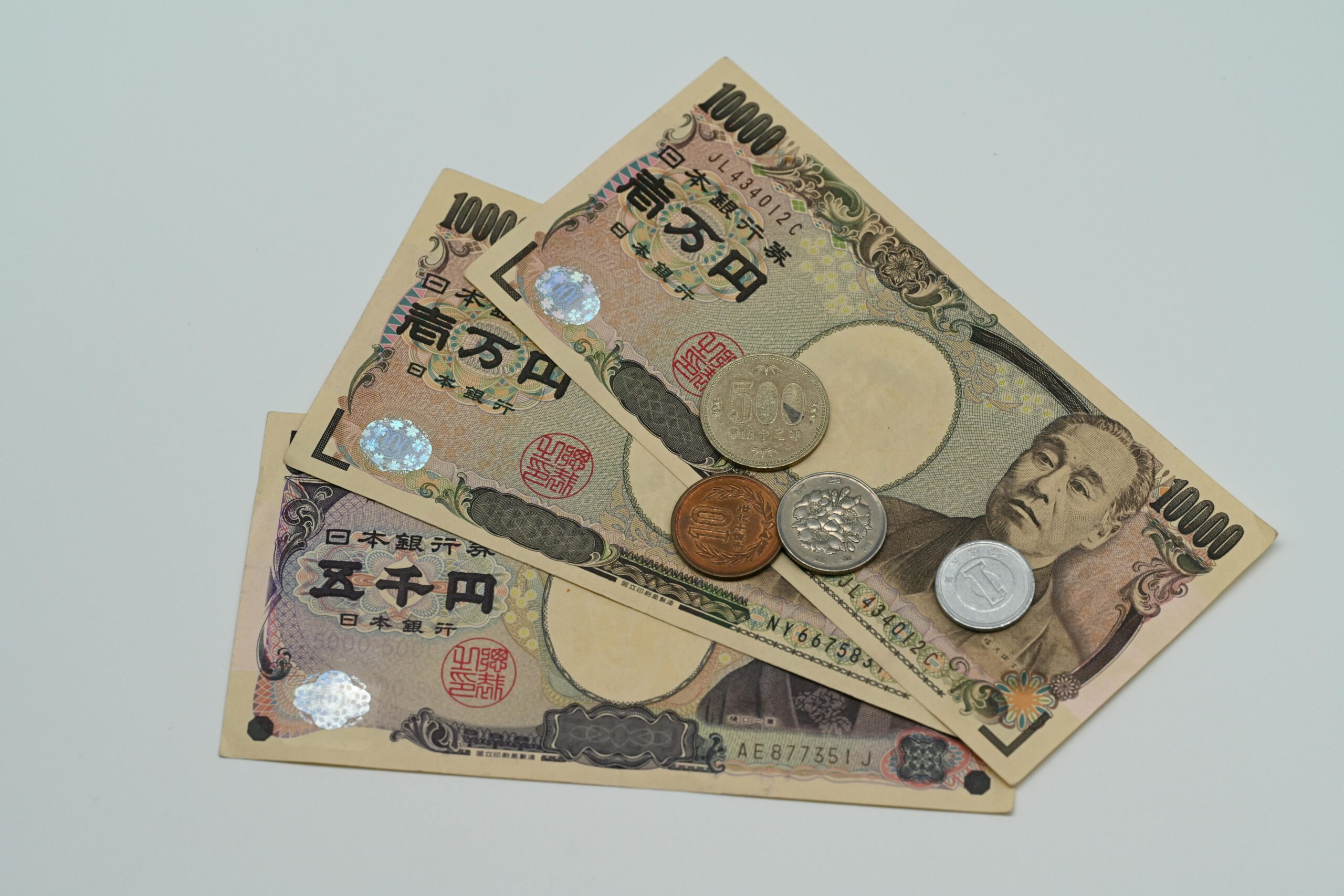
The currency is often used to JPY-denominated assets to mitigate portfolio risk and currency exposure. The Yen often offsets losses, making it a useful currency for stabilizing investments.
Suffice to say, including Yen assets increases diversification to preserve investments in a portfolio. It can also provide liquidity in times of uncertainty, especially political and economic downturns.
| Feature | Details |
|---|---|
| Asset Type | Currency / Safe-haven |
| Correlation | Negative correlation with risky assets |
| Key Benefit | Hedge during financial crises, preserve capital |
| Investment Options | JPY-denominated assets, currency ETFs, forex positions |
| Role in Portfolio | Diversification, liquidity, stability in market turmoil |
9. Infrastructure Assets
Investments in Infrastructure consist of cash flow generating assets like toll roads, airports, utilities, and energy pipelines.
They are ideal for global diversification because they are relatively less depressed since they are inflation-linked and provide low correlations with public equity and bonds.
They contribute to providing stable funds for economic recessions because they are less volatile. The assets can be accessed using listed infrastructure funds, private funds, or direct ownership.

Having more of these assets in a portfolio will provide cash flow stability and economic recessions.
They complement other portfolio assets during low economic times, thus balancing the necessary economic growth with low risky assets.
| Feature | Details |
|---|---|
| Asset Type | Physical infrastructure (toll roads, airports, utilities) |
| Correlation | Low correlation with equities and bonds |
| Key Benefit | Stable long-term cash flows, inflation-linked returns |
| Investment Options | Listed infrastructure funds, private funds, direct investment |
| Role in Portfolio | Defensive exposure, steady income, reduce volatility |
10. Private Equity / Venture Capital
These are private investments in companies (or start-ups) with potential for long-term growth. It means that these are long-term illiquid investments that are less affected by daily market changes.
Funds are required to invest for longer due to the risk. However, this risk can be mitigated by diversifying across sectors, geographies, and stages.
These investments correlate with neither public equities nor bonds and can be high-yielding. With strategic oversight, there are operational efficiencies that can be harvested from a company as well as the potential for some novel business architecture.

Private equity or venture capitalism improves the returns, volatility and overall performance of a global portfolio.
These investments are not available in the public markets and hence constitute an essential means of diversification for more sophisticated investors looking for low-correlated.
| Feature | Details |
|---|---|
| Asset Type | Private company investments / startups |
| Correlation | Low correlation with public markets |
| Key Benefit | High long-term returns, access to unique growth opportunities |
| Investment Options | PE funds, VC funds, direct startup investments |
| Role in Portfolio | Enhance returns, diversify risk, long-term growth potential |
Conlcsuion
In cocnlsuion The global portfolio risk is also balanced and diversified when investments are made in low-correlation assets.
Gold, US Treasuries, currencies, real estate, and other assets such as commodities, cryptocurrencies, infrastructure and private equity provide different market hedges.
These assets, when combined, provide constant crisis protection, long-term growth, and consistent positive returns. As a result, the overall portfolio is balanced and more resilient in times of economic uncertainty.
FAQ
Low-correlation assets are investments whose returns do not move in tandem with major markets, helping reduce overall portfolio volatility.
They provide diversification, protect against market downturns, and enhance long-term stability by balancing risk and returns.
Yes, gold is a traditional safe-haven with low correlation to stocks and bonds, often preserving value during crises.
Yes, currencies like the Swiss Franc (CHF) and Japanese Yen (JPY) often act as safe-havens and hedge against global market risks.
Yes, Treasuries are government-backed, providing predictable income and often moving inversely to equities during downturns.