
This article will cover the top multi-asset liquidity providers, which include access to worldwide financial markets such as FX, cryptocurrency, equities, commodities and derivatives.
Multi-asset liquidity providers assist brokers, institutions, and trading platforms with the speed and depth of liquidity and connectivity within the markets. We will evaluate these companies that facilitate modern multi-asset trading and their offerings, features and benefits.
What Are Multi-Asset Liquidity Providers?
Companies in the Multi-Asset Liquidity Provision sector connect multiple brokerages and trading venues with pools of capital.
These companies connect foreign exchange markets to cryptocurrency markets, to equity and commodity markets, and to derivatives, and everything in between. Multi-Asset Liquidity Providers help ensure rapid trading and low spreads.
These companies aggregate liquidity around the globe and use advanced technology to treat the risk of trading in multiple markets in a consolidated fashion. They facilitate the ability of their clients to do business in multiple markets via a single platform.
Why Are Multi-Asset Liquidity Providers Important?
- Access to global markets: Offer clients access to various financial markets and asset classes globally.
- Transact Faster: Enhance the speed and efficiency of trading and execution.
- Spread Risk: Market exposure decreases by distributing liquidity to multiple assets.
- Adaptable Solutions: Offer adaptable trading systems to brokers and institutions.
- Streamlined Tactics: Allow for the management of varied trading strategies with ease.
Key Points & Best Multi-Asset Liquidity Providers
| Multi-Asset Liquidity Provider | Description |
|---|---|
| B2Broker | Provides deep liquidity solutions across forex, crypto, CFDs, and multiple asset classes globally. |
| Finalto | Delivers institutional liquidity for forex, equities, commodities, and digital assets worldwide. |
| oneZero | Connects brokers with multi-asset liquidity through advanced trading infrastructure solutions. |
| LMAX Group | Offers transparent institutional liquidity across forex, crypto, and global financial markets. |
| Integral | Provides cloud-based liquidity networks supporting multiple asset trading environments efficiently. |
| Gold-i | Enables multi-asset liquidity management with advanced connectivity and integration tools. |
| CFH Clearing | Supplies institutional liquidity across forex, metals, and derivative markets globally. |
| FXCM Pro | Provides multi-asset execution solutions for brokers, funds, and institutions worldwide. |
| Saxo Bank | Offers broad market access covering currencies, stocks, bonds, and commodities. |
| Cboe Global Markets | Provides diversified liquidity across equities, derivatives, options, and global markets. |
10 Best Multi-Asset Liquidity Providers
1. B2Broker
B2Broker is an industry leading provider, delivering institutional liquidity solutions for the forex, cryptocurrency, CFD, and other financial markets. Its multi-asset liquidity infrastructure provides brokers, fintech, and exchanges access to sophisticated technology and deep pools of market liquidity.
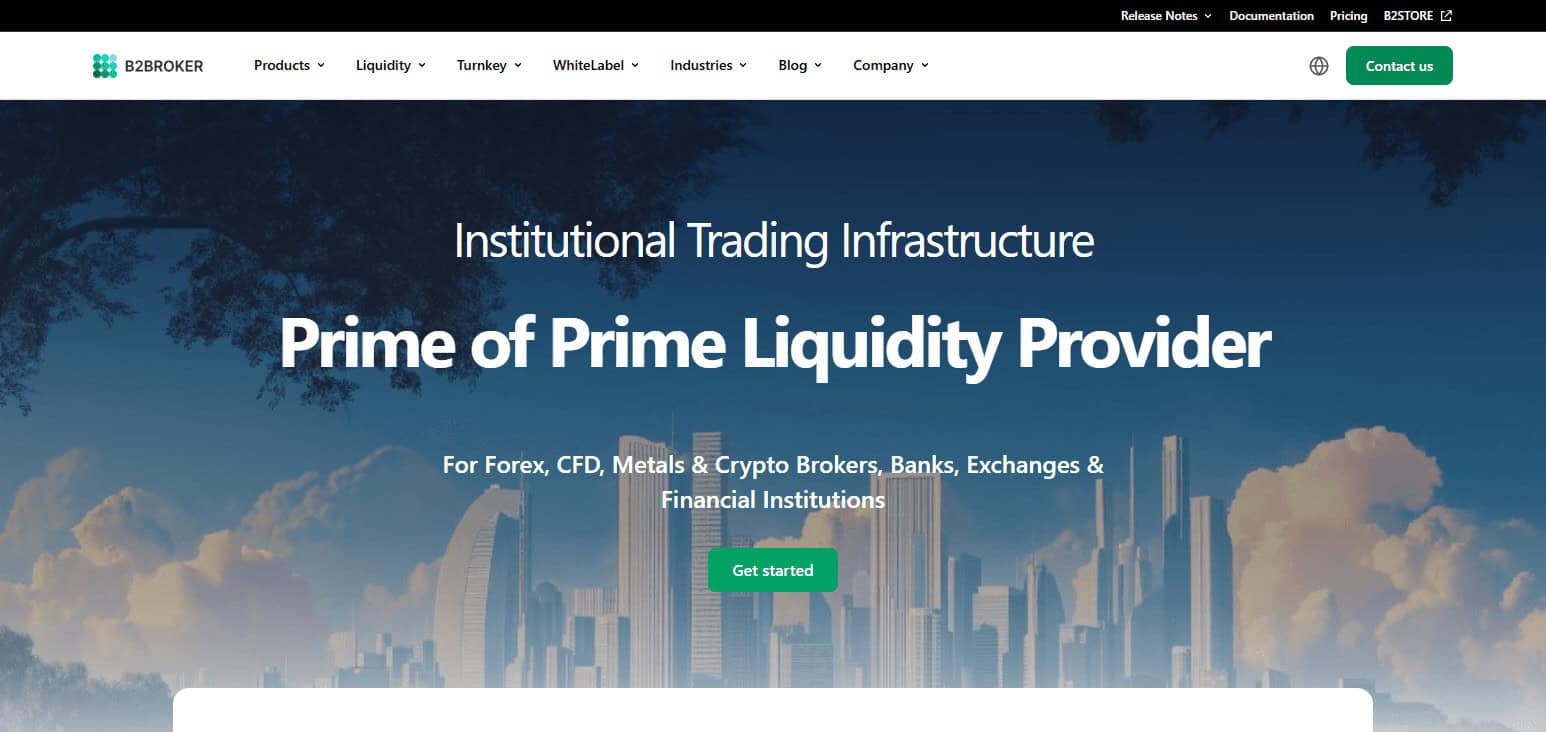
The infrastructure is compatible with multiple trading platforms and risk management white label solutions. Given the increasing popularity of digital assets and cross market trading, B2Broker is continuously updating the ecosystem of liquidity across all dimensions of financial markets.
B2Broker Features
- Access to institutional-grade liquidity for Forex, Crypto, CFDs, and Digital Assets.
- White-label offerings supported with bespoke brokerage tech solutions.
- Comprehensive liquidity provision for participants in the cash flows of global financial markets.
- Offers various integrations for popular trading systems and tools.
- Risk management features for trading activities are included.
| Pros | Cons |
|---|---|
| Provides deep liquidity across multiple financial asset classes. | Pricing can be higher for smaller businesses. |
| Supports crypto, forex, CFDs, and brokerage solutions. | Advanced features may require technical expertise. |
| Offers powerful trading platform integrations. | Not ideal for basic retail traders. |
| Provides white-label solutions for businesses. | Setup process may require additional configuration. |
| Delivers institutional-grade technology infrastructure. | Service availability depends on regional regulations. |
2. Finalto
Finalto designs its multi-asset liquidity solutions for brokers, banks, and institutional traders. Its infrastructure provides the markets for forex, equities, commodities, CFDs, and digital assets, and is supported by advanced trading technology. Finalto’s main focus is high execution standards, competitive prices, and reliable market access.
Its technology enables the management of a broad range of financial instruments and deepens liquidity whilst improving the scalability and operational efficiency of financial markets.
Finalto Features
- Provides liquidity across Forex, equities, commodities, indices, and crypto.
- Provides institutional execution with good pricing and connectivity.
- Scalable solutions for brokers and financial institutions are supported globally.
- Multi-asset portfolio management is supported through advanced trading tech.
- High connectivity to global financial networks is provided.
| Pros | Cons |
|---|---|
| Offers broad multi-asset liquidity coverage globally. | Primarily designed for institutional clients. |
| Provides reliable execution and market connectivity. | Costs may be higher than smaller providers. |
| Supports forex, equities, commodities, and digital assets. | Complex solutions require professional management. |
| Delivers scalable infrastructure for growing brokers. | Limited suitability for individual traders. |
| Provides advanced trading technology solutions. | Integration may require technical resources. |
3. oneZero
oneZero’s technology focuses on the management of liquidity and the connection of brokers, liquidity providers, and financial institutions across the globe.
Its technology supports the combination of liquidity and the management of trade execution and offers advanced analytics and tools in the area. oneZero’s infrastructure provides support for trade in forex and cryptocurrencies and other asset classes.
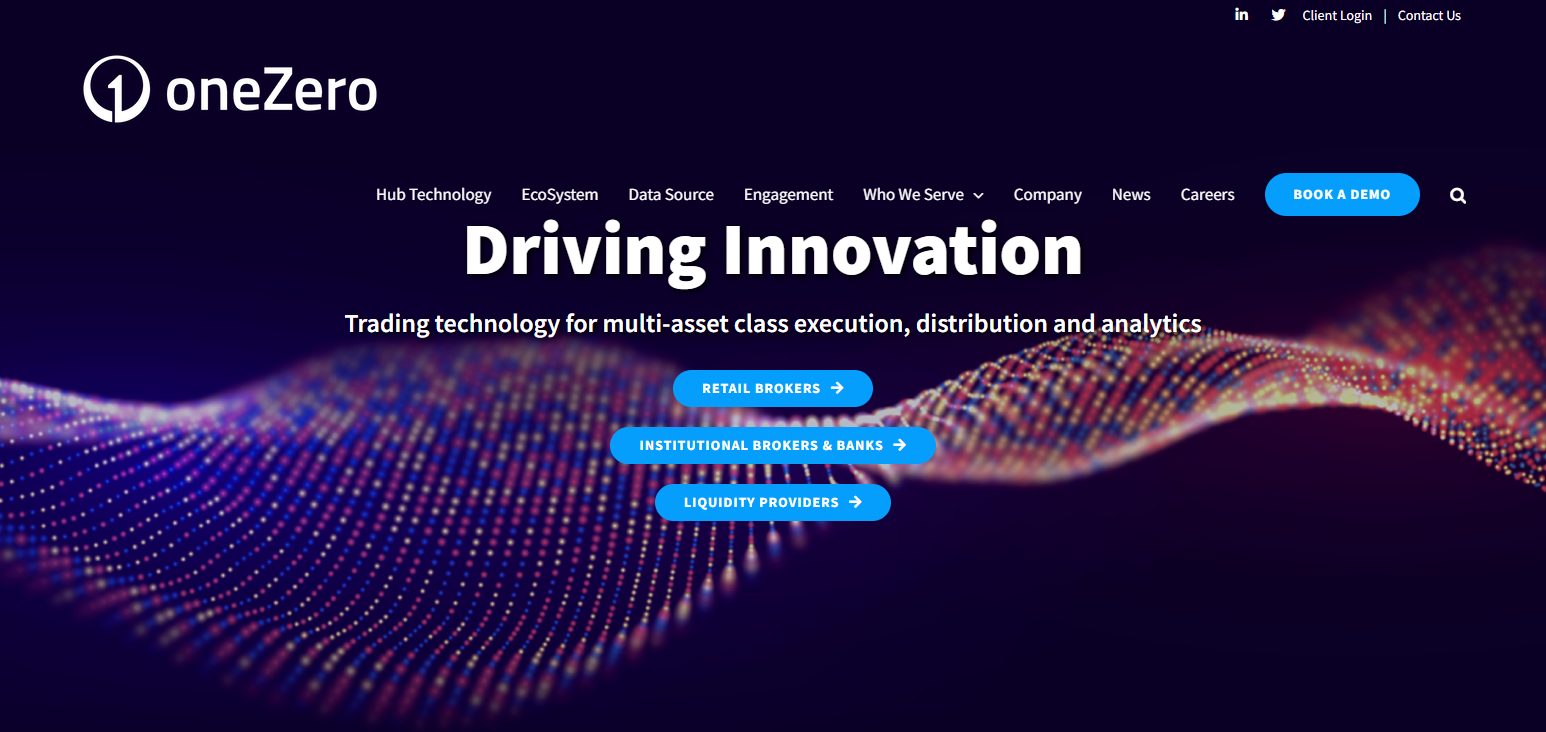
The oneZero platform enables businesses to improve and optimize latency and execution in trade and is the technology of choice for modern brokerage firms.
oneZero Features
- Provides liquidity through cutting-edge tech to connect brokers to multiple liquidity providers.
- Liquidity aggregation helps improve both pricing and execution.
- Offers connectivity with zero latency to improve trading activities.
- Provides real-time analytics to improve trading activities.
- Flexible trading systems are supported through customizable tech.
| Pros | Cons |
|---|---|
| Provides advanced liquidity aggregation technology. | Requires technical knowledge for implementation. |
| Reduces latency through high-performance infrastructure. | Mainly targeted toward professional firms. |
| Supports multiple liquidity source connections. | Pricing structure may be complex. |
| Offers powerful analytics and execution tools. | Smaller companies may find it expensive. |
| Improves trading efficiency through automation. | Requires ongoing system management. |
4. LMAX Group
LMAX Group provides liquidity solutions. They own regulated trading venues that allow regional networks and the global markets access to clear liquidity solutions. Being a liquidity solutions firm, LMAX Group services the forex, crypto, and trading markets.
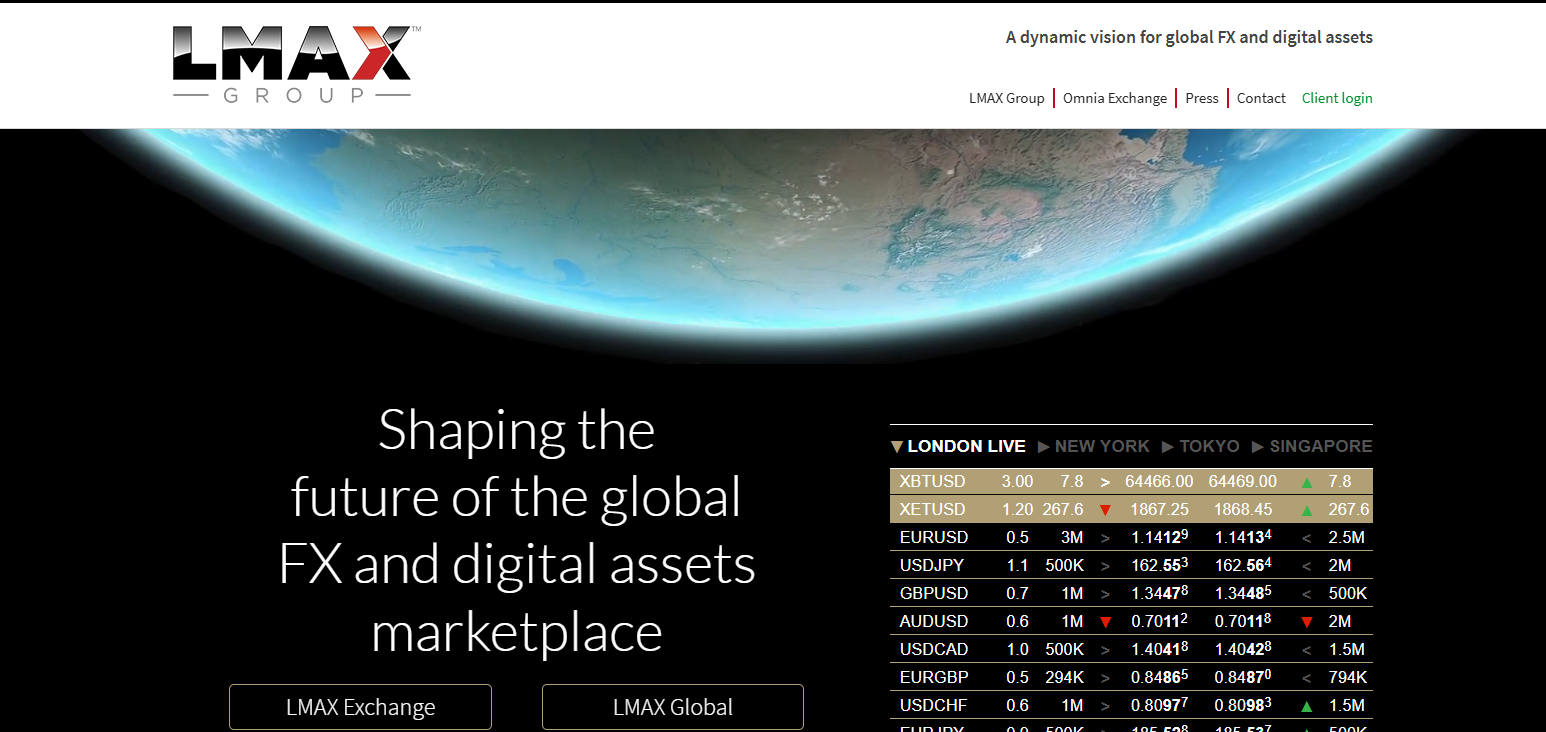
LMAX Group brings an exchange-based model to institutional clients and aids banks, brokers, and hedge funds by providing liquidity.
With their model, LMAX Group can trade openly and reduce conflicts of interest, all while providing transparency to the clients they service. LMAX Group provides an effective environment for the execution of multi-asset trading.
LMAX Group Features
- Fair pricing and reliable liquidity are supported through advanced market infrastructures.
- Supports banks, brokers, and institutional trading firms.
- Provides liquidity and trading support in a regulated environment.
- Offers high-speed execution in both forex and crypto markets.
| Pros | Cons |
|---|---|
| Provides transparent exchange-based liquidity solutions. | Focuses mainly on institutional customers. |
| Offers fast execution with low latency. | May have higher entry requirements. |
| Supports forex and cryptocurrency markets. | Limited asset variety compared with larger providers. |
| Operates regulated trading venues globally. | Not suitable for small trading operations. |
| Reduces conflicts through transparent pricing. | Requires professional trading infrastructure. |
5. Integral
Integral provides brokers and other financial institutions with cloud-based liquidity solutions. Their model aids institutions in advancing the technology they use for trade, connectivity, and integration.

The services they provided help improve the infrastructure for banks and brokers and allow them to operate with real-time, easily accessible execution.
The model provided by Integral offers a flexible, technology-driven solution that enables sophisticated trade management and automated control of liquidity.
Integral Features
- Offers cloud liquidity tech for financial institutions on a global scale.
- Supports automated execution across multiple asset classes.
- Provides real-time connectivity and pricing tech.
- Supports trading optimization with tech infrastructure.
- Advanced liquidity management through tech is supported.
| Pros | Cons |
|---|---|
| Provides cloud-based liquidity management solutions. | Advanced systems may require training. |
| Supports automated execution across assets. | Pricing may not suit startups. |
| Offers real-time market connectivity. | Mainly designed for financial institutions. |
| Improves operational efficiency through technology. | Integration can take significant time. |
| Provides scalable trading infrastructure. | Requires technical support for customization. |
6. Gold-i
Gold-i constructs routing and liquidity solutions for banks and trading brokers. Gold-i constructs technologies and enables brokers to control their routing and risk using data solutions.
Gold-i caters to the need for a clearing liquidity solutions infrastructure due to the growing use of multi-asset trading. Their technologies are also shown to facilitate integration with varying liquidity across the crypto and forex trading markets.
Gold-i Features
- Gold-i makes liquidity connection smarter for brokers and trading firms.
- They integrate with a range of global liquidity sources.
- They also provide sophisticated routing and risk management systems.
- Crypto and forex operations can be streamlined.
- Gold-i has the infrastructure flexibility to cater to demands of sophisticated trading.
| Pros | Cons |
|---|---|
| Offers flexible liquidity connectivity solutions. | Primarily focused on brokers and institutions. |
| Supports multiple liquidity source integrations. | Implementation can be technically complex. |
| Provides smart routing and risk tools. | Costs may increase with advanced features. |
| Supports forex and crypto trading environments. | Requires experienced technical teams. |
| Improves liquidity management efficiency. | Limited direct trading services for users. |
7. CFH Clearing
CFH Clearing is a provider of institutional client liquidity for forex, metals, and derivative markets. By focusing on dependable execution, beneficial spread tailoring, and trading solutions, CFH Clearing is able to provide proprietary and institutional clients the ability to access trading liquidity.

At CFH Clearing, you can find a myriad of trading solutions to assist your firm in the management of trading risks and the utilization of the global financial markets within an institutional client framework.
CFH Clearing Features
- CFH Clearing provides institutional liquidity for forex, metals and derivatives.
- They also have competitive spreads and execution services.
- They support brokers via quality trading tech solutions.
- Their advanced systems assist in managing market risks.
- They connect to the liquidity of the world’s financial networks.
| Pros | Cons |
|---|---|
| Provides institutional forex and derivatives liquidity. | Limited asset coverage compared with competitors. |
| Offers competitive spreads and execution quality. | Mainly serves professional market participants. |
| Supports broker liquidity requirements. | Not designed for individual investors. |
| Provides reliable global market access. | Availability varies by jurisdiction. |
| Combines technology with liquidity services. | May require significant account requirements. |
8. FXCM Pro
FXCM Pro caters to brokers, hedge funds, and professional traders by offering liquidity and institutional trading solutions. This platform provides access to multiple asset classes, including forex, commodities, indices, and cryptocurrencies.
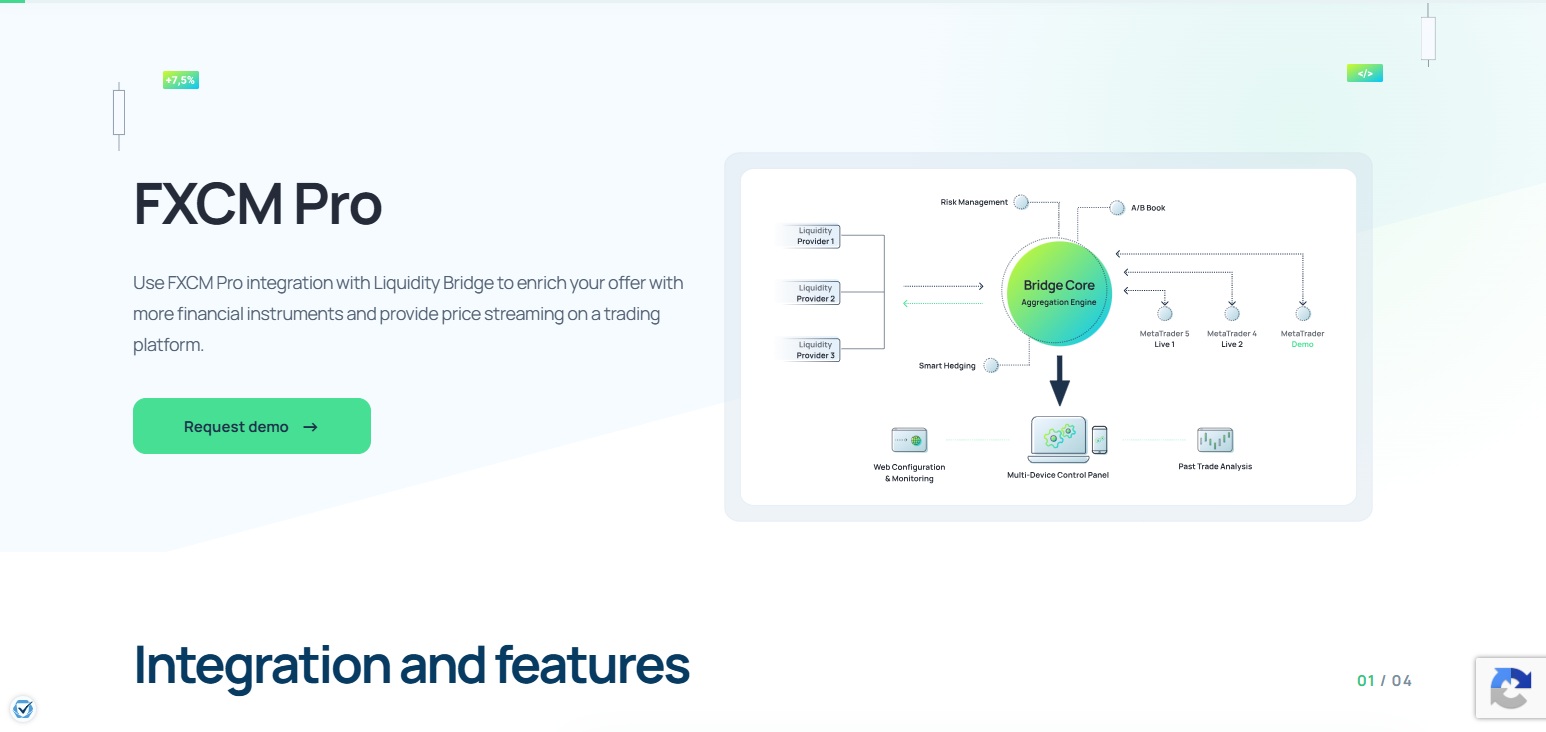
FXCM Pro emphasizes clear pricing and high-caliber technology. Companies can trade and connect with global liquidity resources through FXCM Pro’s institutional-grade infrastructure while experiencing an ease of philosophy and operations.
FXCM Pro Features
- FXCM Pro provides execution for institutional trading clients.
- They have multiple supportive solutions and liquidity for forex, commodities and indices.
- Their pricing and connection are flexible and improve trading profitability.
- Their infrastructure also supports the trading of other asset classes.
| Pros | Cons |
|---|---|
| Provides institutional-grade trading liquidity solutions. | Mainly focused on professional clients. |
| Supports multiple asset classes globally. | Limited accessibility for small businesses. |
| Offers transparent pricing models. | Advanced tools may require expertise. |
| Provides flexible connectivity options. | Service availability depends on location. |
| Helps improve execution performance. | Not suitable for casual traders. |
9. Saxo Bank
Saxo Bank has global trading infrastructure that affords clients deep liquidity across many asset classes. With Saxo Bank, brokers and investors can tailor their trading in professional tools that combine institutional level technology and liquidity.
With a strong focus on regulation, Saxo’s platforms and covering of all asset classes make them an excellent provider of multi-asset liquidity solutions.
Saxo Bank Features
- Saxo Bank has most of the world’s financial instruments.
- They have nearly all asset classes including currencies, stocks, bonds, ETFs, and derivatives.
- Their platforms for trading are of a professional level and are tech advanced.
- Their market services also have advanced technology and liquidity of an institutional level.
- They have robust financial infrastructure and compliance with regulations.
| Pros | Cons |
|---|---|
| Provides access to thousands of financial instruments. | Higher costs compared with some competitors. |
| Offers strong regulatory compliance worldwide. | Platform complexity may challenge beginners. |
| Supports stocks, forex, bonds, and derivatives. | Minimum requirements may apply. |
| Provides professional trading platforms. | Mainly focused on serious investors. |
| Delivers strong market research tools. | Some regions have limited services. |
10. Cboe Global Markets
Cboe Global Markets brings a range of liquidity solutions across multiple asset classes including equities, options, and derivatives. Cboe operates several major venues that provide institutions with efficient means to discover and transact at accurate prices.

Through Cboe’s technology driven environment, financial institutions attempting to access very large pools of liquidity will see meaningful improvements to execution quality.
Continuous innovations to their exchange infrastructure and market technology ensure Cboe’s central role in the global multi-asset liquidity space.
Cboe Global Markets Features
- Cboe Global Markets has diverse liquidity solutions across their global trading venues.
- Cboe provides liquidity across equities, options and derivatives.
- They have advanced market technology for their participating institutional clients.
- Regulated exchanges facilitate efficient price discovery.
- Their solutions for multi-asset trading are novel and global.
| Pros | Cons |
|---|---|
| Provides diversified exchange-based liquidity solutions. | Mostly focused on institutional markets. |
| Offers strong global market infrastructure. | Not suitable for small brokers. |
| Supports equities, options, and derivatives. | Complex exchange systems require expertise. |
| Provides reliable price discovery mechanisms. | Access depends on market regulations. |
| Continuously innovates financial trading technology. | Limited direct services for retail users. |
Conclusion
To sum up Leading Multi-Asset Liquidity Providers Top Multi-Asset Liquidity Providers considerably influence brokers’ and institutions’ market accessibility, execution, and trading efficacies.
Possessing sophisticated technologies and deep liquidity across multiple asset classes, these providers assist businesses in dealing with the complexities of contemporary financial markets.
As the need for differential trading solutions intensifies, these dependable liquidity providers will continue to dominate the global trading systems.
FAQ
Why do businesses use Multi-Asset Liquidity Providers?
They help improve execution speed, reduce trading costs, and provide access to global financial markets.
Which assets are supported by Multi-Asset Liquidity Providers?
They typically support forex, cryptocurrencies, stocks, commodities, indices, ETFs, and derivative products.
How do Multi-Asset Liquidity Providers work?
They connect brokers and institutions with liquidity pools to enable efficient trading and pricing.
What features should a liquidity provider offer?
Important features include deep liquidity, fast execution, API connectivity, risk management, and multi-market access.