In this article, I will discuss the Best Tools For Portfolio Convexity Analysis. Portfolio convexity is crucial for understanding interest rate risk and optimizing fixed-income and multi-asset investments.
- Key Poinst & 10 Best Tools For Portfolio Convexity Analysis
- 10 Best Tools For Portfolio Convexity Analysis
- 1. Bloomberg Terminal (PORT)
- 2. Aladdin by BlackRock
- 3. FactSet
- 4. Yield Book (An LSEG Business)
- 5. Morningstar Direct
- 6. FinCad
- 7. BondEdge (Morningstar)
- 8. MSCI RiskMetrics
- 9. Portfolio Visualizer
- 10. MATLAB (Financial Toolbox)
- Why Tools For Portfolio Convexity Analysis Matter
- Conclsuion
- FAQ
Using the right tools, investors can accurately measure convexity, perform scenario analysis, stress testing, and make informed portfolio decisions.
These tools help enhance risk management, improve returns, and provide clear insights for professional and individual investors alike.
Key Poinst & 10 Best Tools For Portfolio Convexity Analysis
Bloomberg Terminal (PORT) – Provides real-time portfolio analytics, calculating convexity, duration, and risk metrics efficiently.
Aladdin by BlackRock – Offers comprehensive portfolio management, risk analysis, and convexity evaluation for institutional investors.
FactSet – Delivers multi-asset portfolio analytics with accurate convexity, scenario analysis, and performance attribution capabilities.
Yield Book (An LSEG Business) – Specializes in fixed-income analytics, providing precise convexity calculations and risk forecasting tools.
Morningstar Direct – Offers portfolio insights, including convexity, risk exposure, and performance analysis for diversified investments.
FinCad – Provides advanced fixed-income analytics and convexity measurement tools for derivatives and structured portfolios.
BondEdge (Morningstar) – Enables detailed fixed-income portfolio analytics with convexity, duration, and risk-adjusted performance metrics.
MSCI RiskMetrics – Focuses on risk modeling, stress testing, and convexity analysis for global investment portfolios.
Portfolio Visualizer – An intuitive platform for portfolio backtesting, optimization, and convexity analysis across asset classes.
MATLAB (Financial Toolbox) – Offers customizable financial models to compute convexity, duration, and complex portfolio risk metrics.
10 Best Tools For Portfolio Convexity Analysis
1. Bloomberg Terminal (PORT)
The PORT module of the Bloomberg Terminal is industry standard for portfolio managers requiring accurate convexity analysis.
Its real-time analytics for fixed-income and multi-asset portfolios includes calculations of metrics such as convexity, duration and yield curves.
Its advanced risk management tools empower investors to analyze portfolio sensitivity across various interest rate factors and market scenarios.
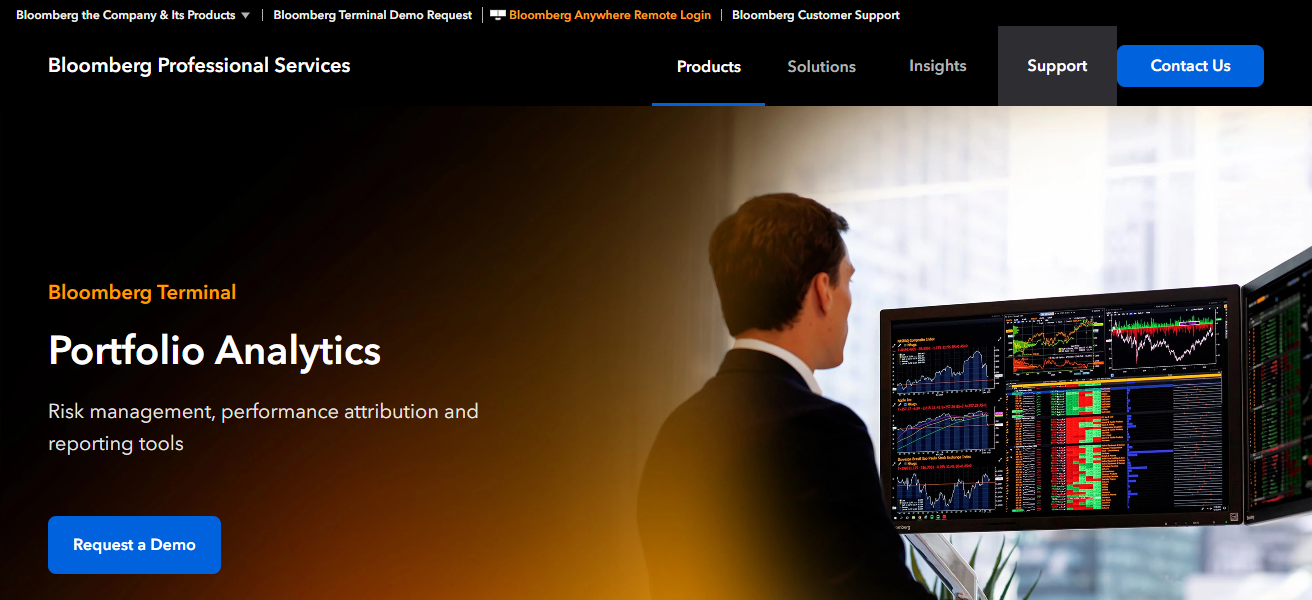
In addition, the platform integrates performance attribution, scenario analysis and stress testing where applicable, making it a holistic solution for both institutional and retail investors alike.
Ensure high quality and timely analytics to optimise your portfolio strategies efficiently using its intuitive interface and data from multiple resources.
| Pros | Cons |
|---|---|
| Real-time portfolio analytics with precise convexity and duration metrics | High subscription cost, may be expensive for smaller firms |
| Integrates performance attribution, scenario analysis, and stress testing | Can be complex for beginners to navigate efficiently |
| Extensive fixed-income and multi-asset data coverage | Heavy reliance on terminal setup, less flexible for custom models |
| User-friendly interface for professional portfolio managers | Requires training to fully utilize advanced features |
| Comprehensive risk management tools | Limited offline functionality; needs continuous internet access |
2. Aladdin by BlackRock
Aladdin — a platform for institutional portfolio management and risk analysis. It provides sophisticated tools that assess convexity, which helps investors consider their portfolio sensitivity to interest rate movements.
Its unique system combines risk modeling, scenario analysis and regulatory compliance to help provide a 360-degree view of portfolio performance.

With advanced analytics capable of supporting fixed income and multi-asset strategies, Aladdin allows managers to model different scenarios across market conditions and optimize for risk-adjusted returns.
These qualities make it able to handle excellent convexity measures, at the same time being transparent and efficient in both portfolio decision-making processes
As well as long-run risk management plans, which is important for larger institutions due to their size of data integration.
| Pros | Cons |
|---|---|
| Sophisticated convexity evaluation and risk modeling | Primarily designed for large institutions, not for individual investors |
| Supports multi-asset and fixed-income portfolio management | Expensive and requires enterprise-level implementation |
| Scenario analysis and stress testing capabilities | Can have steep learning curve for new users |
| Integrates regulatory compliance and reporting | May be overkill for smaller portfolios |
| Scalable with robust data integration | Customization may require technical expertise |
3. FactSet
FactSet offers comprehensive multi-asset portfolio analysis with detailed convexity and duration measures. Its scenario analysis capabilities enable investors to simulate interest rate movements and stress-test portfolios under different market conditions.
We also used FactSet for performance attribution, which helps managers break down risk contributions from individual securities and sectors.
Its intuitive interface and data-rich environment allow portfolio managers to effectively track convexity in fixed-income and diversified investment portfolios.

Analytics to support compliance reporting and strategic decision making, ensuring that portfolios are aligned with risk / return objectives.
In summary, its a multipurpose podium for professionals needing accurate convexity appraisal and in-depth multi-asset portfolio maintenance.
| Pros | Cons |
|---|---|
| Multi-asset analytics including convexity, duration, and stress testing | High subscription cost for smaller firms or individual investors |
| Scenario analysis and performance attribution capabilities | Some advanced tools may require additional modules |
| Data-rich platform with historical and real-time information | Can be complex for beginners |
| Supports compliance and strategic decision-making | Interface may feel overwhelming for new users |
| Versatile for fixed-income and diversified portfolios | Custom modeling less flexible than specialized tools |
4. Yield Book (An LSEG Business)
Yield Book provides precision convexity calculations and interest rate risk modules, specializing in fixed-income analytics.
It allows portfolio managers to track sensitivity to yield curve shifts and evaluate exposure/deep losses under different market interpretations.
The platform supports structured products, mortgage-backed securities and derivatives, making it well suited to complex fixed-income portfolios.

With its stress-testing capabilities, along with scenario-analysis tools that enable investors to optimize portfolios for risk-adjusted returns.
The integration of Yield Book with market data delivers real-time accuracy and facilitates well-informed decision-making.
This enriches investors with convexity perspectives and risk prediction, enabling them to dynamically realign interest rate risks.
| Pros | Cons |
|---|---|
| Highly accurate convexity calculations for fixed-income portfolios | Expensive, tailored primarily for institutional clients |
| Excellent for structured products and derivatives analytics | Requires training to use advanced features effectively |
| Real-time market data integration | May be too specialized for general multi-asset portfolios |
| Scenario analysis and stress-testing capabilities | Limited user-friendliness for beginners |
| Optimizes risk-adjusted portfolio strategies | Less intuitive compared to general portfolio platforms |
5. Morningstar Direct
Morningstar Direct Morningstar Direct is designed for portfolio insights, obtaining data of convexity, risk exposure and performance metrics across diversified investments.
Its analytics enable managers to analyze interest rate sensitivity and fine-tune portfolio construction.
Morningstar Direct goes beyond historical performance data with scenario modeling to see how convexity influences portfolio outcomes in various market environments.
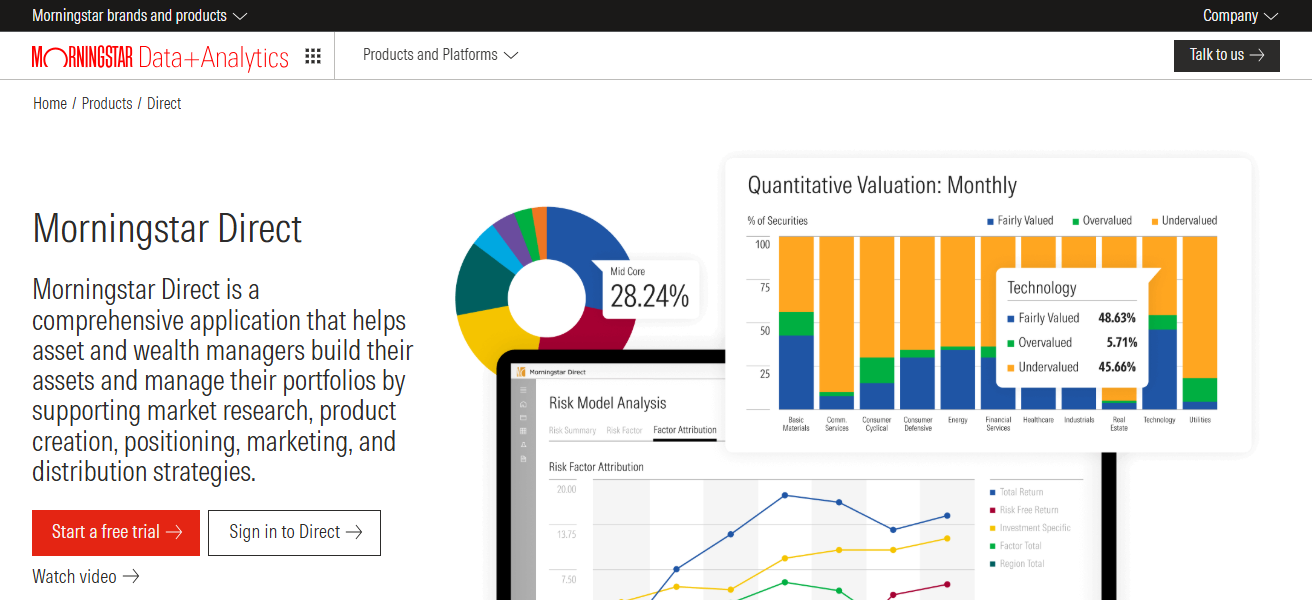
The platform caters to both institutional and advisory clients and is flexible enough to accommodate fixed-income, equity, and multi-asset strategies.
It also includes customizable reporting and benchmarking tools that facilitate effective communication with stakeholders on its risk-adjusted performance.
Morningstar Direct’s intuitive interface aids investors in tracking and improving portfolio convexity.
| Pros | Cons |
|---|---|
| Provides convexity, risk exposure, and performance insights | Limited advanced modeling for derivatives or structured products |
| Supports fixed-income, equity, and multi-asset strategies | May not cover very complex institutional portfolios |
| Customizable reporting and benchmarking tools | Some advanced analytics require additional modules |
| User-friendly interface and accessible for advisors | Historical data may be delayed for real-time needs |
| Scenario modeling for portfolio optimization | Less flexible for highly customized convexity models |
6. FinCad
FinCad is an advanced fixed-income analytics tool that has home-built capability to perform derivative and structured products.
Its convexity measurement features enable portfolio managers to gauge risk with precision, reporting interest rate sensitivity across portfolios.
It provides scenario analysis, risk modeling and performance attribution to help investors calibrate strategies for different market conditions.
FinCad’s approach spans exotic derivatives, mortgage-backed securities and complex instruments to provide precision in valuation cross-section and risk assessment.
Market Data Integration Real-time Updates for Informed Decision-Making The FinCad is also an essential tools for a professional who manages structured or derivative-heavy portfolios and would like to walk into details of convexity calculation & calculate advance risk analytics.
| Pros | Cons |
|---|---|
| Advanced fixed-income and derivatives analytics | Steeper learning curve for beginners |
| Precise convexity measurements for structured products | Expensive for small-scale users |
| Scenario analysis, risk modeling, and stress testing | Interface less intuitive than general-purpose platforms |
| Real-time market data integration for accurate insights | Limited multi-asset portfolio support |
| Essential for derivative-heavy portfolio management | Customization may require programming knowledge |
7. BondEdge (Morningstar)
Key Features: Designed for deep convexity and duration analysis, BondEdge is a fixed-income portfolio management platform.
It enables managers to assess interest rate risk, optimize asset allocation in real time and track portfolio performance.
It features risk-adjusted performance metrics and scenario analysis which help investors comprehend how their portfolio value could change under different economic conditions.
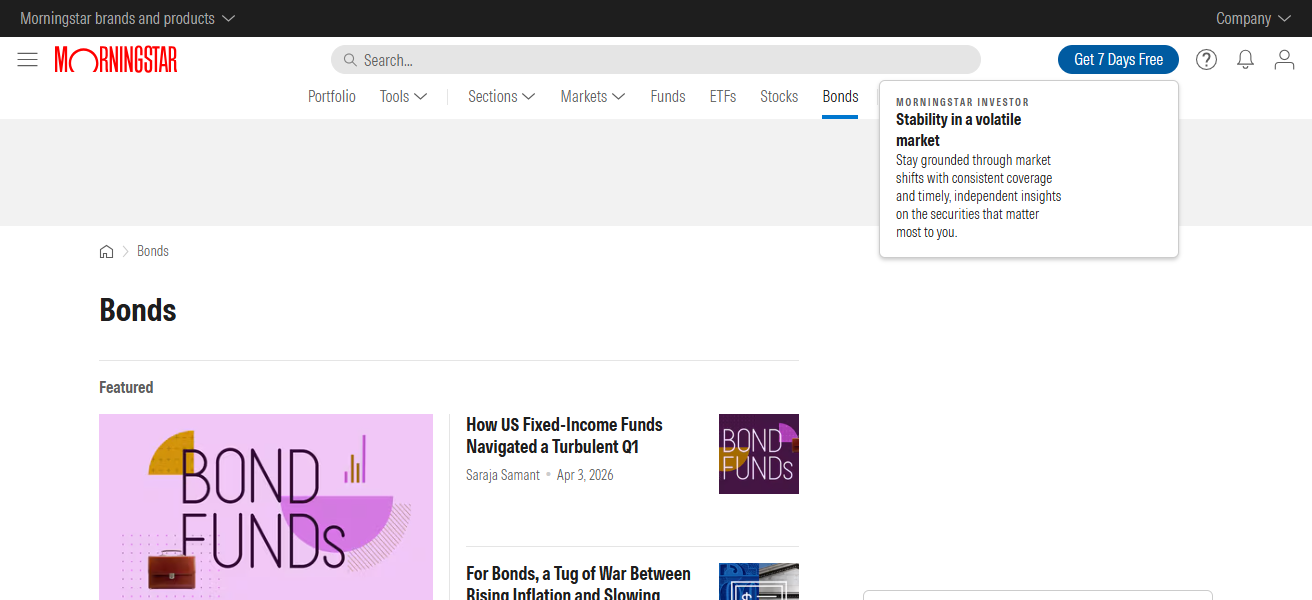
BondEdge has significant reporting and benchmarking capabilities for advisory firms or institutional investors.
Its integration with data from Morningstar improves accuracy and reliability. With accurate convexity calculations and portfolio metrics, BondEdge guides investors in planning interest rate exposure while generating efficient yield.
| Pros | Cons |
|---|---|
| Detailed convexity, duration, and risk-adjusted performance metrics | Primarily designed for fixed-income, limited multi-asset features |
| Real-time portfolio monitoring and reporting | Less suitable for derivatives-heavy portfolios |
| Scenario analysis for interest rate sensitivity | Interface may feel dated compared to competitors |
| Integration with Morningstar data for accuracy | Custom modeling flexibility is limited |
| Supports advisory firms and institutional investors | Licensing cost may be high for smaller firms |
8. MSCI RiskMetrics
MSCI RiskMetrics focuses on risk modeling and stress testing across global portfolios. Its convexity analysis tools allow investors to measure portfolio sensitivity to interest rate fluctuations and assess exposure under various scenarios.
The platform provides detailed analytics on fixed-income and multi-asset holdings, supporting both regulatory compliance and internal risk management.

With advanced risk modeling, scenario simulation, and portfolio optimization, RiskMetrics enables institutions to make informed decisions on portfolio construction and hedging strategies. Its robust data integration ensures accurate and timely insights.
Overall, MSCI RiskMetrics is essential for investors seeking a sophisticated approach to convexity and interest rate risk management.
| Pros | Cons |
|---|---|
| Sophisticated risk modeling and stress-testing tools | Expensive for small firms or individual investors |
| Convexity and interest rate sensitivity analysis | Complexity requires specialized training |
| Supports regulatory compliance and internal risk management | Interface less intuitive than general platforms |
| Advanced scenario simulation and portfolio optimization | Not ideal for smaller, simpler portfolios |
| Global portfolio coverage | Limited visualization options compared to some tools |
9. Portfolio Visualizer
Portfolio Visualizer — An easy to use web-based portfolio backtesting, optimization and convexity analysis platform.
This enables investors to model interest rate shifts and understand the repercussions on fixed income and multi-asset portfolios.
The system provides performance attribution, Monte Carlo simulations and scenario analysis; aiding managers in accounting for portfolios to optimize for risk-adjusted returns.
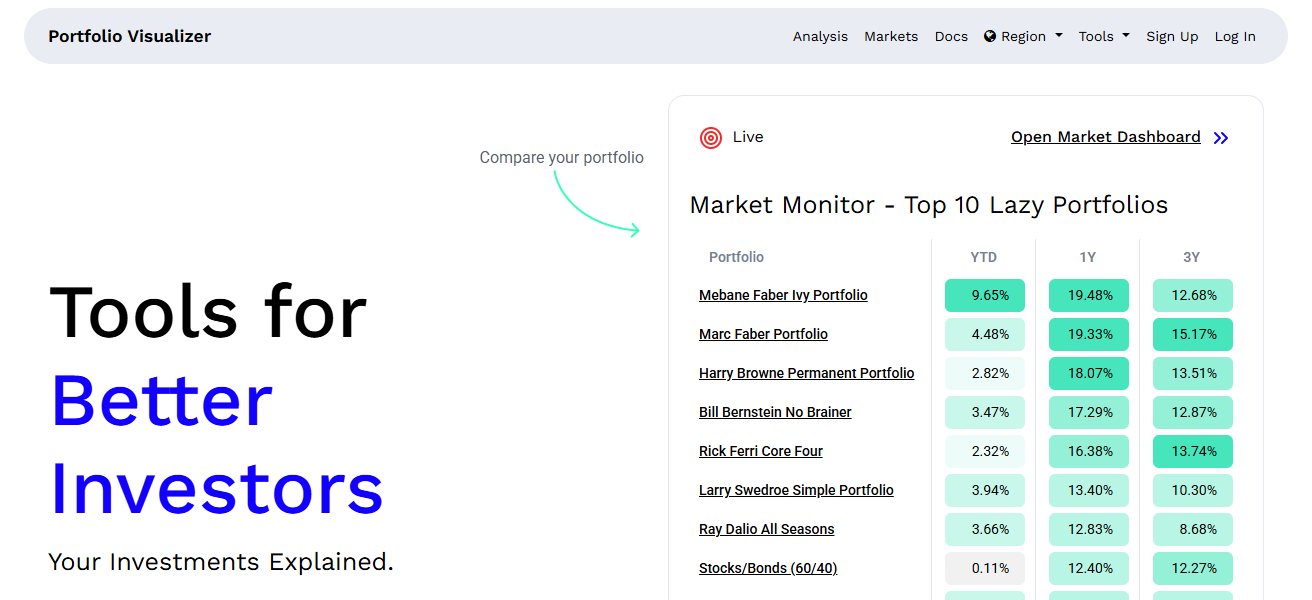
It provides an intuitive interface to enable complex convexity metrics for professional and individual investors.
Portfolio Visualize also includes historic data and can be used to simulate how portfolios reacted to the market conditions of the past.
Simple yet able to provide analytical accuracy, it is the best tool out there to monitor and manage portfolio convexity effectively.
| Pros | Cons |
|---|---|
| User-friendly platform for convexity and portfolio analysis | Less advanced than institutional platforms like Bloomberg or Aladdin |
| Supports backtesting, optimization, and scenario simulations | Limited real-time data integration |
| Makes complex metrics accessible for individual investors | Convexity analysis may not handle very complex instruments |
| Historical data analysis for multi-asset portfolios | Fewer regulatory or compliance features |
| Free or low-cost options available | Advanced professional features may require paid subscription |
10. MATLAB (Financial Toolbox)
MATLAB with the Financial Toolbox offers highly customizable financial modeling for convexity and duration calculations.
Users can design models for fixed-income, derivative, and multi-asset portfolios. It supports scenario analysis, risk simulation, and portfolio optimization, allowing managers to evaluate convexity under diverse market conditions.
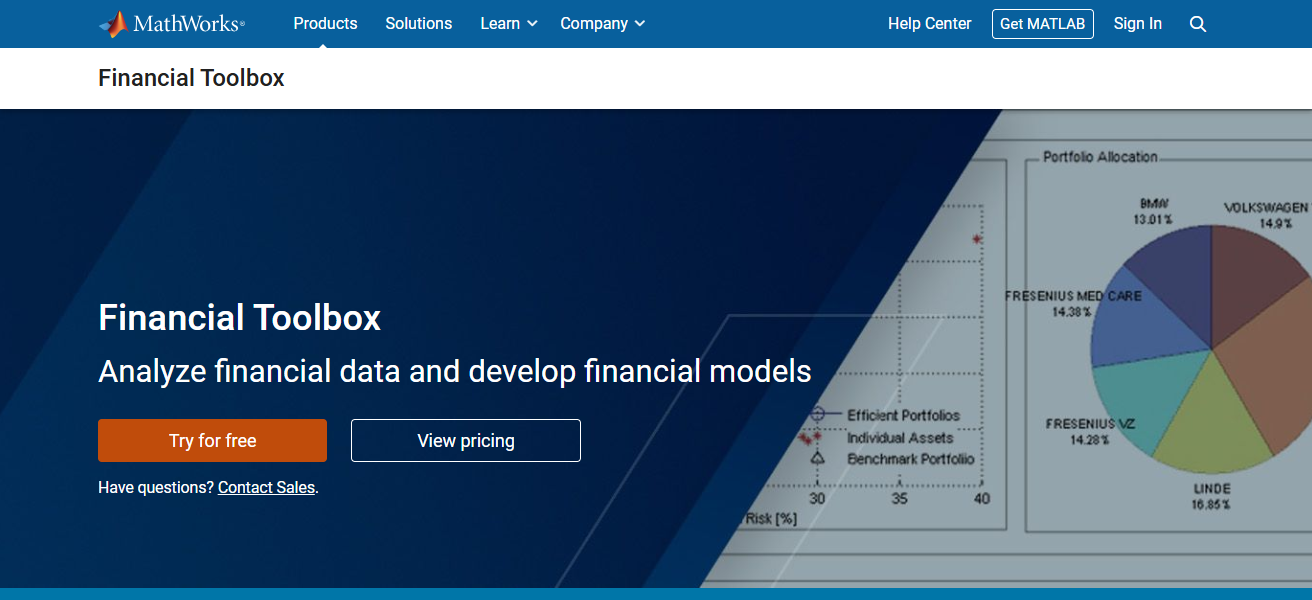
The toolbox provides functions for interest rate modeling, yield curve construction, and performance attribution. Its flexibility makes it ideal for institutions requiring tailored analytics or academic research applications.
By leveraging MATLAB, investors can integrate proprietary algorithms, visualize portfolio sensitivity, and perform advanced risk analysis, ensuring comprehensive convexity evaluation and informed strategic decision-making.
| Pros | Cons |
|---|---|
| Highly customizable convexity and risk modeling | Requires programming knowledge, not beginner-friendly |
| Supports scenario analysis, portfolio optimization, and simulation | No built-in data feed; integration required |
| Flexible for fixed-income, derivatives, and multi-asset portfolios | User interface is less intuitive compared to dedicated software |
| Ideal for academic or proprietary model development | Time-consuming to build models from scratch |
| Advanced visualization and analytics | Not a ready-to-use turnkey solution for portfolio management |
Why Tools For Portfolio Convexity Analysis Matter
Quantify Interest Rate Risk – Quantify the way portfolio value is impacted by interest rate movements.
Optimize Fixed-Income Strategies – And designs portfolios toward superior risk adjusted returns.
Scenario Analysis – Leverage, to assess potential loss or profit by simulating the market conditions.
Stress Testing – Pinpoint weaknesses in portfolios with extreme interest rate fluctuations.
Performance Attribution – Identify the securities that contribute most to risk and return.
Regulatory Compliance – Provides risk management and reporting compliance for portfolios.
Decision Support – Information guidance for portfolio changes and hedging.
Multi Asset Integration – Enables convexity analysis across bonds, derivatives, and diversified portfolios.
Time Saving – Complex calculations are automated, eliminating the manual effort required for analysis.
Conclsuion
In cocnlsuion The best tools for portfolio convexity analysis can help investors to better manage interest rate risk and maximize portfolio performance.
These may include from Bloomberg Terminal’s real-time analytics to MATLAB’s customizable modeling, which offers precise convexity computations and scenario analysis, along with risk observations.
These tools empower informed decision-making, better risk-adjusted returns and greater confidence in building and managing fixed-income and multi-asset portfolios.
FAQ
Bloomberg Terminal (PORT) is ideal for real-time convexity, duration, and risk metrics with scenario analysis and stress-testing capabilities.
Yes, Aladdin supports both fixed-income and multi-asset portfolios, providing convexity evaluation, risk modeling, and scenario analysis.
FactSet offers detailed multi-asset analytics, stress testing, performance attribution, and scenario modeling for precise convexity evaluation.
Yield Book (LSEG) and FinCad are highly specialized for fixed-income, derivatives, and structured products, offering accurate convexity and risk forecasting.