This article reviews the most effective Wallet Screening APIs that aid companies in identifying dubious cryptocurrency wallets and monitoring blockchain transactions. It improves APIs for protecting digital assets.
These APIs offer enhanced risk analysis with support for AML and fraud prevention for crypto exchanges, financial institutions, and Web3 services. We will examine the features and benefits with respect to selection.
What Are Wallet Screening APIs?
Wallet Screening APIs help businesses identify possible risks by scanning suspicious activities and compliance concerns related to cryptocurrency wallets. These APIs look at the history and behavior of transactions and wallets at different points along the blockchain to identify fraud, scams, and money laundering, as well as sanctioned wallet and address screening.
Crypto exchanges and banks, as well as Web3 and blockchain-based financial services businesses, use Wallet Screening APIs to automate and enhance the security of compliance and regulatory controls. This technology aims to create regulatory-safe digital asset environments.
Why Use Wallet Screening APIs?
- Spot High-Risk Wallets: Efficiently flag harmful cryptocurrency addresses and the associated risks.
- Encourage Compliance: Alleviate the strain of AML and KYC verification for cryptocurrency organizations.
- Combat Fraud: Stop scams and illicit/unsafe blockchain transactions.
- Improve Security: Safeguard digital asset platforms and users to increase confidence.
- Screen Automatically: Evaluate blockchain risks with automated assessment features.
Key Points & Best Wallet Screening APIs
| Wallet Screening API | Short Explanation |
|---|---|
| Chainalysis API | Provides blockchain risk analysis, compliance monitoring, and suspicious wallet detection solutions. |
| TRM Labs API | Helps identify illicit wallets, transaction risks, and crypto compliance threats. |
| Elliptic API | Offers blockchain intelligence tools for wallet screening and fraud prevention. |
| Scorechain API | Delivers crypto risk scoring, AML checks, and wallet monitoring capabilities. |
| Merkle Science API | Detects suspicious wallet activities using advanced blockchain investigation technologies. |
| Crystal Blockchain API | Provides transaction tracking, wallet analytics, and compliance screening features. |
| CipherTrace API | Supports cryptocurrency investigations, wallet screening, and regulatory compliance operations. |
| Blockseer API | Analyzes blockchain addresses for risk assessment and transaction monitoring. |
| Coinfirm API | Offers AML screening, wallet verification, and blockchain compliance intelligence. |
| BitRank API | Provides crypto wallet risk ratings and automated screening solutions. |
10 Best Wallet Screening APIs
1. Chainalysis API
Chainalysis API is a well-established blockchain wallet screening and cryptocurrency compliance solution. This API helps businesses pinpoint risky wallet addresses and helps monitor malicious transactions. This API is designed to prevent financial crime.

Using advanced blockchain analytics and threat intelligence, Chainalysis provides real-time risk assessments. With new compliance features, Chainalysis gives organizations the tools to meet regulatory requirements while operating with increased confidence, safety, and transparency in the digital asset spaces.
Chainalysis API
- Risk Detection: Uses sophisticated intelligence analysis of risk to detect suspicious wallets.
- Transaction Monitoring: Monitors cryptocurrency transactions for compliance and security.
- AML Support: Evaluates risk to assist with anti-money laundering compliance.
- Real-Time Notifications: Notifies when an activity occurs for a high-risk wallet.
- Network Coverage: Supports several blockchain networks to conduct comprehensive investigations.
| Pros | Cons |
|---|---|
| Advanced blockchain intelligence for accurate wallet risk detection | Pricing can be expensive for small businesses |
| Strong AML compliance and regulatory support | Requires technical expertise for integration |
| Real-time transaction monitoring capabilities | May have complex enterprise-level features |
| Supports multiple blockchain networks | Limited accessibility for individual users |
2. TRM Labs API
TRM Labs API is a wallet screening and blockchain risk monitoring API geared toward crypto businesses. This API helps identify wallet activity deemed illicit, scam activity, sanctions breaches, and suspicious transactions over all API risk assessment networks.

TRM Labs uses machine learning to assess risk and blockchain intelligence to improve the accuracy of those risk assessments. Automation of compliance checks, enhancement of fraud prevention, and a regulatory framework for the digital asset space are all achievable by integrating TRM Labs into your business.
TRM Labs API
- Wallet Intelligence: Uses advanced analytics of blockchain transactions to identify risky transaction addresses.
- Fraud Detection: Identifies scams and hacks.
- Sanctions Screening: Evaluates wallets against international sanctions and watchlists.
- Risk Assessment: Employs machine learning models to analyze the risk of crypto transactions.
- Compliance Simplification: Eases AML compliance for crypto businesses.
| Pros | Cons |
|---|---|
| Powerful AI-based crypto risk detection technology | Premium pricing for advanced features |
| Excellent fraud and sanctions screening capabilities | Setup process may require professional support |
| Supports multiple blockchain ecosystems | Better suited for businesses than beginners |
| Automates compliance workflows efficiently | API customization may need technical knowledge |
3. Elliptic API
Elliptic API provides cryptocurrency wallet screening and risk management with transaction monitoring and advanced blockchain intelligence. Elliptic analyzes malicious activity and attempts on the blockchain to capture risk anomalous activity.

Elliptic’s compliance monitoring covers financial institutions, crypto exchanges, and Web3 apps. Elliptic’s risk assessment and detection for the automated clearance of financial crime and illicit transactions of digital assets is a value added enhancement to institutions’ compliance with AML
Elliptic API
- Blockchain Examination: Analyzes transactions conducted by a wallet and provides insights.
- Risk Assessment: Evaluates blockchain transactions to determine the risk of using a wallet.
- Fraud Detection: Monitors suspicious crypto movements.
- Regulatory Compliance: Provides assistance to organizations that need to comply with cryptocurrency regulations.
- AI Analysis: Analyzes transactions using intelligent systems.
| Pros | Cons |
|---|---|
| Provides accurate blockchain analytics and risk scoring | Higher costs compared with basic screening tools |
| Strong reputation among financial institutions | Learning curve for new users |
| Effective fraud and compliance monitoring | Some features require enterprise plans |
| Uses advanced AI-powered transaction analysis | Limited focus on small-scale applications |
4. Scorechain API
With a major focus on wallet screening, transaction analysis, and risk scoring, Scorechain API has constructed an all-inclusive crypto compliance solution. Businesses can analyze blockchain addresses, spot questionable behavior, and build robust AML programs using Scorechain.

The API surveys wallet histories and the relationships between transactions to assist firms with compliance concerns. Scorechain’s multi-crypto support allows the regulatory compliance needs of exchanges and financial institutions as well as many Web3 applications.
Scorechain API
- Wallet Risk Assessment: Analyzes the transactions conducted by a wallet to evaluate risk.
- AML Screening: Automatically discovers risky crypto addresses.
- Blockchain Evaluation: Effectively evaluates multiple blockchains.
- Transaction Monitoring: Monitors transfers on the blockchain.
- Regulatory Compliance: Provides reports that meet regulatory requirements.
| Pros | Cons |
|---|---|
| Offers detailed crypto risk assessment capabilities | Interface may feel complex for beginners |
| Supports multiple blockchain networks | Advanced tools require paid subscriptions |
| Provides useful compliance reporting features | Integration can take technical resources |
| Helps automate AML screening processes | Less brand recognition than larger providers |
5. Merkle Science API
The bedrock of Merkle Science API’s technology is blockchain investigations and wallet screening. It helps organizations understand the risky behavior of wallets and the patterns of fraudulent transactions.
Merkle Science combines blockchain investigations with other compliance and intelligence tools to support investigations and compliance.
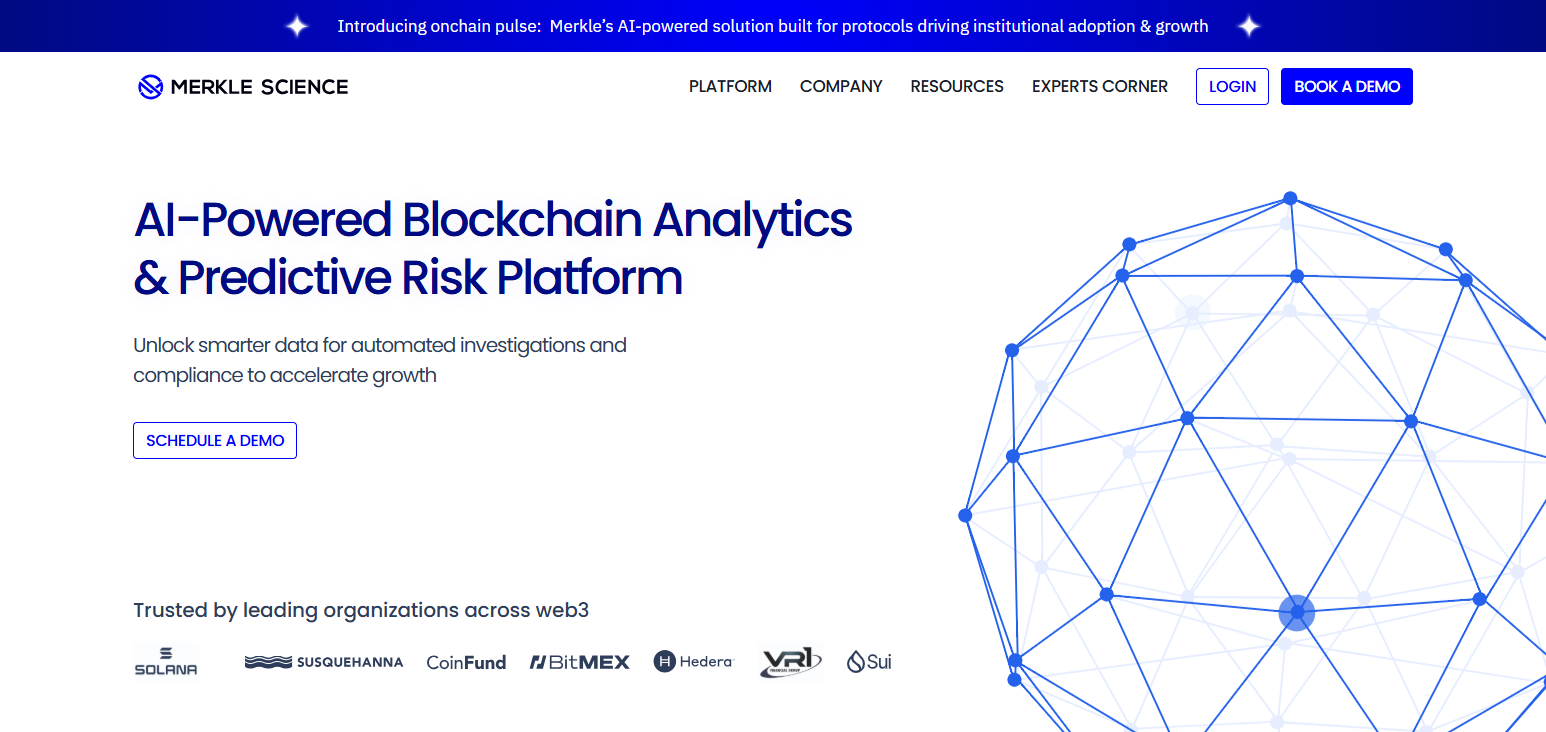
Because of its advanced capabilities, Merkle Science is effective for crypto firms as well as government organizations, allowing monitoring of transactions, avoiding compliance risk, and enforcing a security framework for digital assets.
Merkle Science API
- Investigation Tools: Advanced analysis on complex transactions.
- Threat Detection: Spotting fraud patterns and criminal activity for crypto.
- Blockchain Intelligence: Provides compliance teams with useful insights.
- Security Enhancement: Develops more strategies to secure digital assets.
| Pros | Cons |
|---|---|
| Strong blockchain investigation and monitoring tools | Mainly designed for professional organizations |
| Detects complex fraud patterns effectively | Pricing information is not publicly transparent |
| Provides actionable compliance intelligence | Requires blockchain knowledge for full usage |
| Supports security teams and investigators | Setup may involve longer implementation time |
6. Crystal Blockchain API
For many tools to build and monitor compliance for blockchain and crypto markets, Crystal Blockchain API offers analytics for wallets and transactions. It permits organizations to trace the movement of funds and connections between wallets and see the risk that these may represent.

Crystal provides many tools for investigations that help simplify the analysis of transactions on the blockchain. Regulatory compliance departments and crypto firms can trust Crystal to help ensure compliance and support their operations.
Crystal Blockchain API
- Transaction Visualization: Tracks activities on the blockchain with analytics dashboards.
- Wallet Tracking: Follows the journey of funds across a network of associated addresses.
- Risk Identification: Quickly identifies harmful crypto transactions.
- Compliance Management: Aids in the AML processes of a cryptocurrency company.
- Blockchain Mapping: Designs a network of transaction relationships.
| Pros | Cons |
|---|---|
| Excellent transaction visualization features | Advanced analytics can be costly |
| Provides clear blockchain mapping capabilities | May require training for new users |
| Helps track complex crypto movements | Limited beginner-focused resources |
| Strong AML and compliance functionality | Enterprise features may be overwhelming |
7. CipherTrace API
The CipherTrace API enables the integration of a sophisticated cryptocurrency intelligence solution capable of conducting wallet screening and fraud assessment, providing compliance regulatory frameworks, and so on.
It enables the analysis of blockchain networks to facilitate the identification of risky addresses and the tracking of suspicious activities involving digital assets. The API has advanced tracking tools designed to assist financial and governmental institutions.

CipherTrace has highly effective blockchain analytic tools to assist agencies in bolstering security and reducing compliance concerns and enables greater confidence to cryptocurrency transactions.
CipherTrace API
- Crypto Investigation: Provides the ability to trace transactions in great detail.
- Risk Monitoring: Spots potentially harmful wallets and threats on digital assets.
- Compliance Solutions: Aids in fulfilling compliance requests of crypto companies.
- Fraud Analysis: Analyzes blockchain to find fraudulent activities.
- Government Support: Offers financial investigation aids to government agencies.
| Pros | Cons |
|---|---|
| Powerful cryptocurrency investigation capabilities | Availability may vary after platform changes |
| Supports regulatory and government investigations | Advanced features require professional knowledge |
| Provides detailed transaction tracing tools | Can be expensive for startups |
| Helps identify suspicious wallet activity | Integration may require technical expertise |
8. Blockseer API
The Blockseer API addresses the need of cryptocurrency applications to analyze blockchain addresses, screen wallets, and monitor transactions. The API helps in the analysis of wallet activities and the identification of risk as well as the relationship of blockchain transactions.
The API provides analysis that is critical to the prevention of fraud and the management of compliance both of which have an element of investigation.
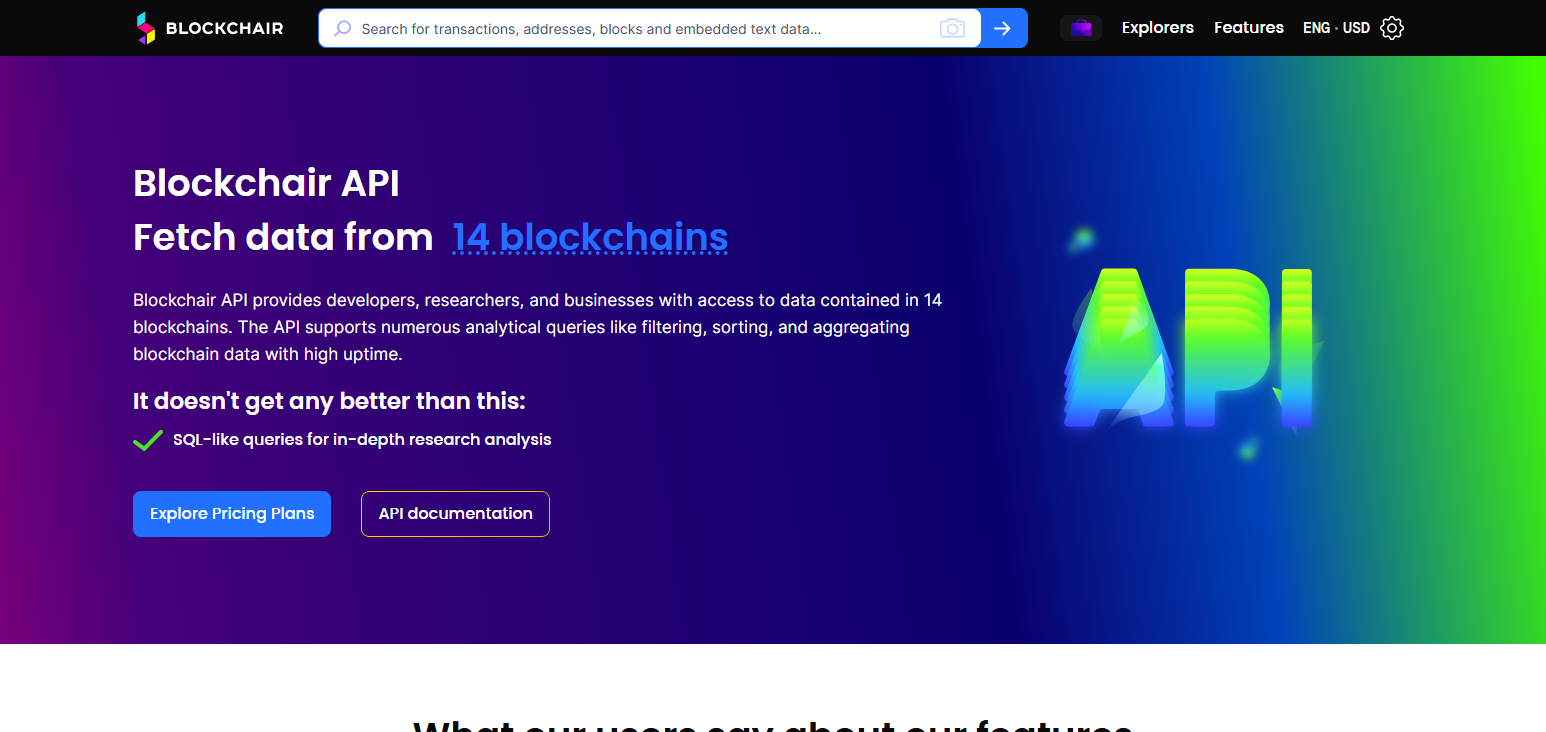
Blockseer offers the cryptocurrency security industry the detailed intelligence and monitoring of blockchain networks that is necessary to operate digital assets safely.
Blockseer API
- Address Analysis: Evaluates the security of blockchain addresses.
- Transaction Monitoring: Analyzes the movement of cryptocurrency across the networks.
- Risk Evaluation: Produces assessment of the reputation and activity of wallets.
- Fraud Prevention: Analyzes blockchain activity and helps identify fraud patterns.
- Security Intelligence: Enhances the protective capabilities of a crypto platform.
| Pros | Cons |
|---|---|
| Provides effective blockchain address analysis | Smaller ecosystem compared with major providers |
| Helps monitor crypto transaction activities | Limited publicly available documentation |
| Useful for security and investigation purposes | May require developer assistance |
| Supports risk evaluation processes | Fewer enterprise features available |
9. Coinfirm API
The Coinfirm API enables advanced anti-money laundering screening and regulatory compliance of the verification of wallets and the assessment of their risk.
The API helps in the analysis of blockchain addresses, the assessment of their compliance, and the filtration of the addresses to eliminate those that have suspicious behaviors.
This tool is particularly important in the environmental design of financial applications to filter the addresses of users and reduce the organizational level of fraud, money laundering, and financial risk.
Coinfirm API
- AML Verification: Tests wallets for potential money laundering and offers a pass/fail result.
- Wallet Screening: Reviews an address for suspicious behavior.
- Compliance Automation: Automatically performs crypto compliance checks.
- Blockchain Analysis: Analyzes and offers insight into digital assets.
- Risk Management: Reduces exposure to financial crime.
| Pros | Cons |
|---|---|
| Strong AML verification and compliance solutions | Some advanced features require premium plans |
| Supports multiple blockchain networks | Interface may need improvement for beginners |
| Automates wallet screening processes | Technical setup can be challenging |
| Helps reduce financial crime risks | Less suitable for casual crypto users |
10. BitRank API
Businesses in digital assets can utilize screening and risk rating tools for cryptocurrency wallets from the BitRank API. They can rate wallets and analyze the transaction history and blockchain for nefarious activities.
Their automated analysis tools help businesses, like exchanges or payment providers, enhance compliance, manage wallet security, and disallow risky transactions in the crypto environment.
BitRank API
- Wallet Ratings: Scores the risk level of a cryptocurrency address.
- Automated Screening: Instant checks of wallet security.
- Risk Detection: Automatically identifies dangerous activities in the blockchain.
- Wallet Transaction Analysis: Inspects transaction histories to find the abnormal behaviors.
- Digital Asset Compliance: Makes virtual asset transactions safer.
| Pros | Cons |
|---|---|
| Provides quick wallet risk scoring solutions | Limited advanced analytics compared with competitors |
| Easy automated wallet screening capabilities | Smaller market presence |
| Helps businesses improve crypto security | May lack extensive enterprise tools |
| Supports efficient transaction analysis | Fewer integrations available than leading APIs |
How To Choose the Right Wallet Screening API?
- Set Compliance Standards: Set your business goals with security and regulatory requirements.
- Look at Blockchain Compatibility: Can it accommodate the networks and assets you work with?
- Assess Risk Scoring: The better the wallet scoring, the better the APIs threat-detection.
- Look at Cost and Value: Real time of wallet screening should be the priority.
- Look at Integration: APIs that are easy to integrate should be selected.
- Look at the Price: Consider the cost, the growth of your business, and how it scales.
Future Trends in Wallet Screening APIs
- AI Detection of Evolving Risks: AI will help detect sophisticated and evolving risks related to blockchain faster.
- Machine Learning in Compliance: Predictive analysis and machine learning will enhance anti-money laundering (AML) monitoring.
- Instant Global Crypto Monitoring: Crypto activity will be monitored globally in real time.
- Cross-Chain Risk Exposure Screening: Security will be extended across various blockchain networks.
- Threat Intelligence Automation: Continually updated security data will support enhanced fraud detection.
- User Privacy Screening: More privacy protective screening solutions will be developed.
Conclusion
In Conclusion: Top Wallet Screening APIs The Best Wallet Screening APIs are important tools for making cryptocurrency environments safer. They identify risky wallets, curb fraudulent activities, and aid in meeting regulatory standards.
Best Wallet Screening APIs assist firms in making blockchain oversight more mainstream, enhancing the clarity of their transactions, and curbing payment-related concerns. \
The ongoing expansion of digital assets means that sophisticated wallet screening will be needed in the future to provide safer methods of engaging in cryptocurrency, employing real-time analysis, AI, and full cross-chain capabilities.
FAQ
Why are Wallet Screening APIs important?
They help businesses identify suspicious wallets, prevent scams, and maintain blockchain security.
How do Wallet Screening APIs work?
They analyze wallet history, transaction patterns, and blockchain data to generate risk scores.
Who uses Wallet Screening APIs?
Crypto exchanges, banks, Web3 platforms, fintech companies, and digital asset businesses use them.
Do Wallet Screening APIs support AML compliance?
Yes, they help organizations perform AML checks and meet regulatory requirements.