
This article will describe the leading solutions for Warehouse Management Software designed to help companies implement better inventory controls, warehouse management automation, and order fulfillment, which ultimately leads to greater productivity improvements.
Advanced warehouse management software includes capabilities around tracking in real-time, automation of workflows, reporting and other supply chain management functions. The right warehouse management system reduces business and operational errors.
Key Points & Best Warehouse Management Software
| Best Warehouse Management Software | Explanation |
|---|---|
| NetSuite WMS | Cloud-based warehouse solution improving inventory control, automation, and operational efficiency. |
| SAP Extended Warehouse Management | Advanced warehouse management system optimizing complex logistics and supply chain processes. |
| Oracle Warehouse Management Cloud | Scalable platform enhancing warehouse visibility, tracking, and fulfillment accuracy globally. |
| Microsoft Dynamics 365 Supply Chain Management | Integrated solution streamlining warehouse operations with intelligent automation features. |
| Infor CloudSuite WMS | Flexible warehouse software providing real-time inventory and workflow management. |
| Manhattan Active Warehouse Management | Modern WMS delivering optimized distribution, labor management, and productivity. |
| Blue Yonder Warehouse Management | AI-powered software improving warehouse planning, execution, and inventory accuracy. |
| Fishbowl Inventory | Affordable inventory solution supporting small businesses with warehouse automation. |
| Odoo Inventory | Open-source warehouse management offering customization and efficient stock handling. |
| Cin7 Core | Inventory platform simplifying warehouse workflows, orders, and stock tracking. |
10 Best Warehouse Management Software
1. NetSuite WMS
NetSuite WMS is a cloud-based warehouse management solution designed to improve inventory accuracy, order processing, and warehouse productivity. It helps businesses automate receiving, picking, packing, shipping, and stock movement processes through real-time data visibility.

The Best Warehouse Management Software category includes NetSuite WMS because it provides strong integration with ERP systems, enabling companies to manage finance, inventory, and supply chain operations from a single platform. Its automation features reduce manual errors, improve warehouse efficiency, and support business growth with scalable tools.
Key Features of NetSuite WMS
- Live Inventory Insights: Know what you have in stock across your different locations with inventory that updates in real time.
- WMS Automation: Reduces the amount of time your team spends manually handling the different warehouse activities (receiving, picking, packing, shipping, and transferring inventory).
- WMS and ERP Sync: Ensures your warehouse operations integrate with the finance, sales, and supply chain management segments of your ERP.
- Inventory by Barcode: Identifying products, counting inventory, and executing warehouse operations is quicker and easier with barcodes.
- Enhanced Reporting: Analytics on inventory and productivity, and suggestions on how you could streamline warehouse ops.
| Pros | Cons |
|---|---|
| Provides real-time inventory visibility across multiple warehouse locations. | Implementation can be complex for businesses without technical expertise. |
| Automates warehouse operations, reducing manual errors and processing time. | Higher pricing may not suit small businesses with limited budgets. |
| Strong ERP integration improves overall business management efficiency. | Requires employee training for effective system usage. |
| Advanced reporting helps improve warehouse decision-making. | Customization options may require additional development costs. |
| Scalable cloud platform supports business growth and expansion. | System updates may require adaptation from users. |
2. SAP Extended Warehouse Management
SAP Extended Warehouse Management is an advanced warehouse management platform built for large enterprises handling complex logistics operations. It provides real-time inventory monitoring, warehouse automation, labor management, and optimized distribution workflows.
The Best Warehouse Management Software solutions often include SAP EWM because it supports global supply chains, high-volume operations, and multi-location warehouse networks.
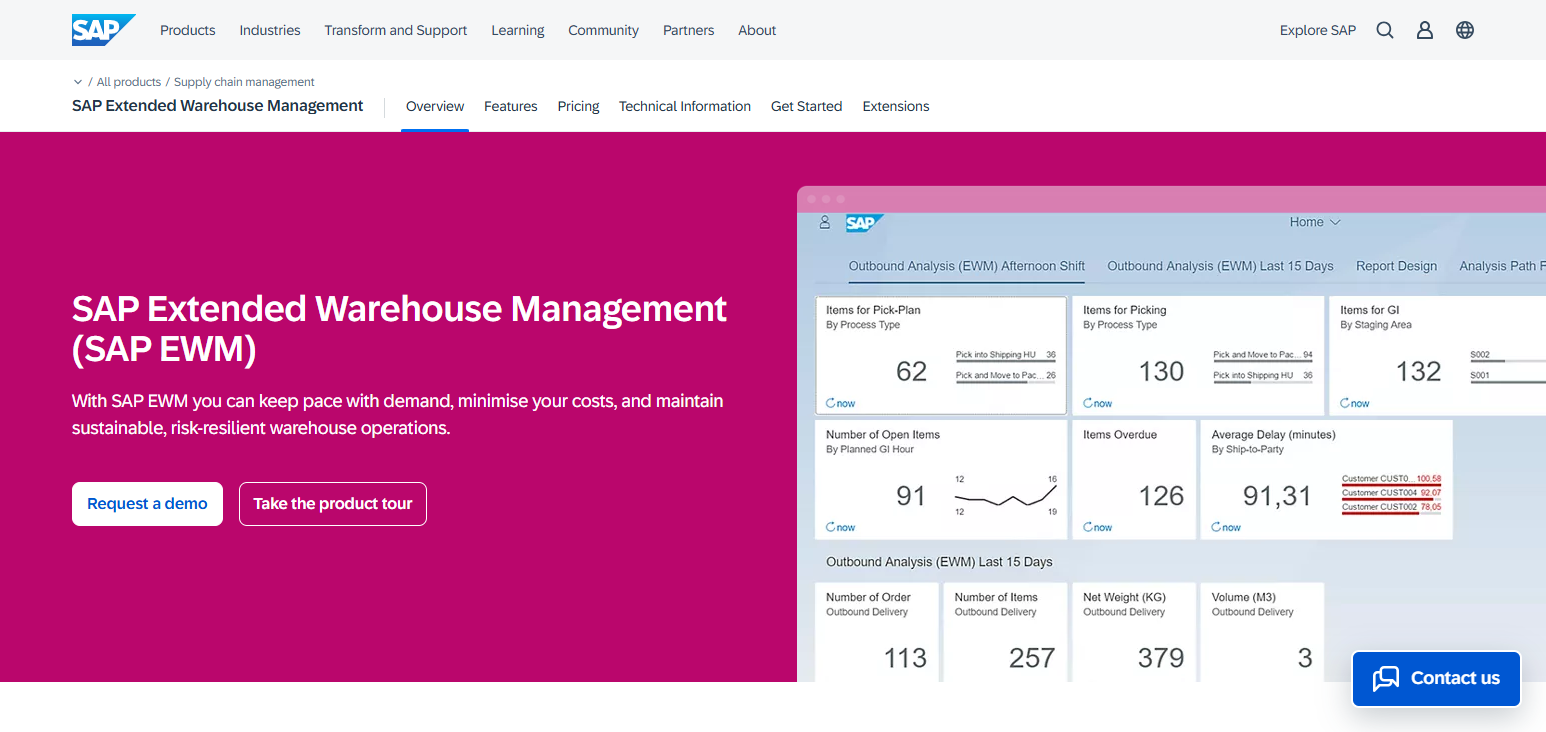
Businesses use this software to improve operational visibility, reduce processing delays, and enhance overall supply chain performance through intelligent warehouse controls.
Key Features of SAP Extended Warehouse Management
- Advanced Control of Warehouse Operations: Deals with the complexities of warehouse activities through process design and automation.
- Inventory Insight Segmentation: Know inventory levels, locations, and product movements.
- Labor Management: Deals with productivity and planning workforce activities.
- End-to-End Supply Chain Management: Connects warehouse functions to the logistics and enterprise segments.
- Maximized Automation: Deals with warehouse tech like robotics and conveyors.
| Pros | Cons |
|---|---|
| Handles complex warehouse operations for large enterprises effectively. | Requires significant investment for implementation and maintenance. |
| Provides powerful inventory tracking and supply chain visibility. | Setup process can be time-consuming and complicated. |
| Supports automation technologies like robotics and conveyor systems. | Requires skilled professionals for configuration and management. |
| Improves workforce planning and warehouse productivity. | May be expensive for small and medium businesses. |
| Integrates well with global enterprise systems. | Training requirements can increase operational costs. |
3. Oracle Warehouse Management Cloud
Oracle Warehouse Management Cloud is a scalable warehouse management system that helps organizations improve inventory tracking, fulfillment accuracy, and warehouse operations. It offers cloud-based tools for order management, labor optimization, barcode scanning, and real-time warehouse visibility.

The Best Warehouse Management Software options feature Oracle WMS Cloud because it supports businesses of different sizes with flexible and reliable solutions.
Its advanced analytics and automation capabilities help companies reduce operational costs while improving customer satisfaction through faster and more accurate deliveries.
Key Features of Oracle Warehouse Management Cloud
- Flexible Warehouse Management in the Cloud: Scalable warehouse management in their cloud.
- Better Order Fulfillment: Brings speed and accuracy to the process of warehouse operations.
- Mobile Warehouse Management: Warehouse activities can be executed via a mobile device.
- Real-Time Inventory and Warehouse Insights: Gives you the information you need on stock.
- Operational Analytics: Analytics to help with better operational decisions.
| Pros | Cons |
|---|---|
| Cloud-based platform provides flexible and scalable warehouse management. | Subscription costs can be high for smaller companies. |
| Improves order fulfillment speed and accuracy. | Initial setup requires proper planning and expertise. |
| Provides mobile access for warehouse employees. | Advanced features may require additional training. |
| Offers strong analytics and reporting capabilities. | Custom integrations may increase overall expenses. |
| Supports businesses with multiple warehouse locations. | Dependency on internet connectivity for cloud operations. |
4. Microsoft Dynamics 365 Supply Chain Management
Microsoft Dynamics 365 Supply Chain Management provides integrated warehouse management features that streamline inventory, logistics, and supply chain activities. It enables businesses to automate warehouse workflows, manage stock levels, and improve demand forecasting with intelligent technologies.
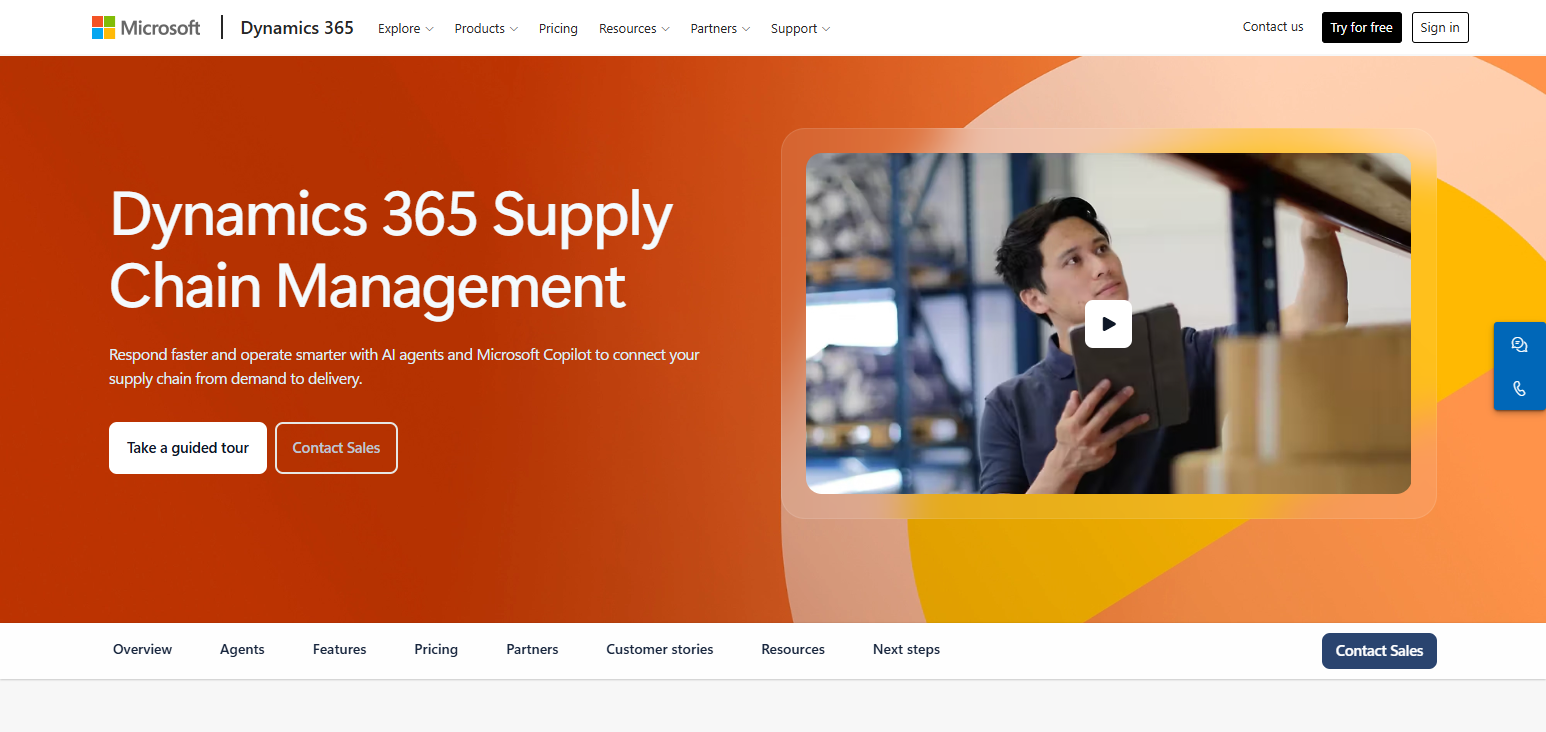
The Best Warehouse Management Software list includes Microsoft Dynamics 365 because it connects warehouse operations with broader business processes like finance, sales, and procurement. Its flexible architecture allows companies to increase efficiency, improve decision-making, and maintain better control over warehouse performance.
Microsoft Dynamics 365 Supply Chain Management
- Intelligent Warehouse Automation: Enhances productivity by automating workflows for inventory.
- Demand Forecasting: Shortages are minimized by predicting demands through analytics.
- Integrated Business Management: Warehouse operations are merged with business finance, sales, and procurement.
- Inventory Optimization: Balances the inventory and streamlines the supply chain.
- Flexible Warehouse Configuration: Adapts to business demands workflows in the warehouse.
| Pros | Cons |
|---|---|
| Integrates warehouse operations with complete business processes. | Licensing costs can be expensive for small organizations. |
| Provides intelligent automation and demand forecasting tools. | Implementation requires technical knowledge and planning. |
| Improves inventory optimization and supply chain visibility. | Customization may require Microsoft specialists. |
| Supports flexible warehouse configurations. | Regular updates may require system adjustments. |
| Works well with Microsoft ecosystem applications. | Learning curve can be challenging for new users. |
5. Infor CloudSuite WMS
Infor CloudSuite WMS is a flexible warehouse management solution that delivers real-time inventory visibility and operational control. It helps businesses optimize warehouse layouts, automate workflows, and improve employee productivity through advanced management tools.
The Best Warehouse Management Software solutions recognize Infor CloudSuite WMS for its industry-specific features and cloud-based capabilities.
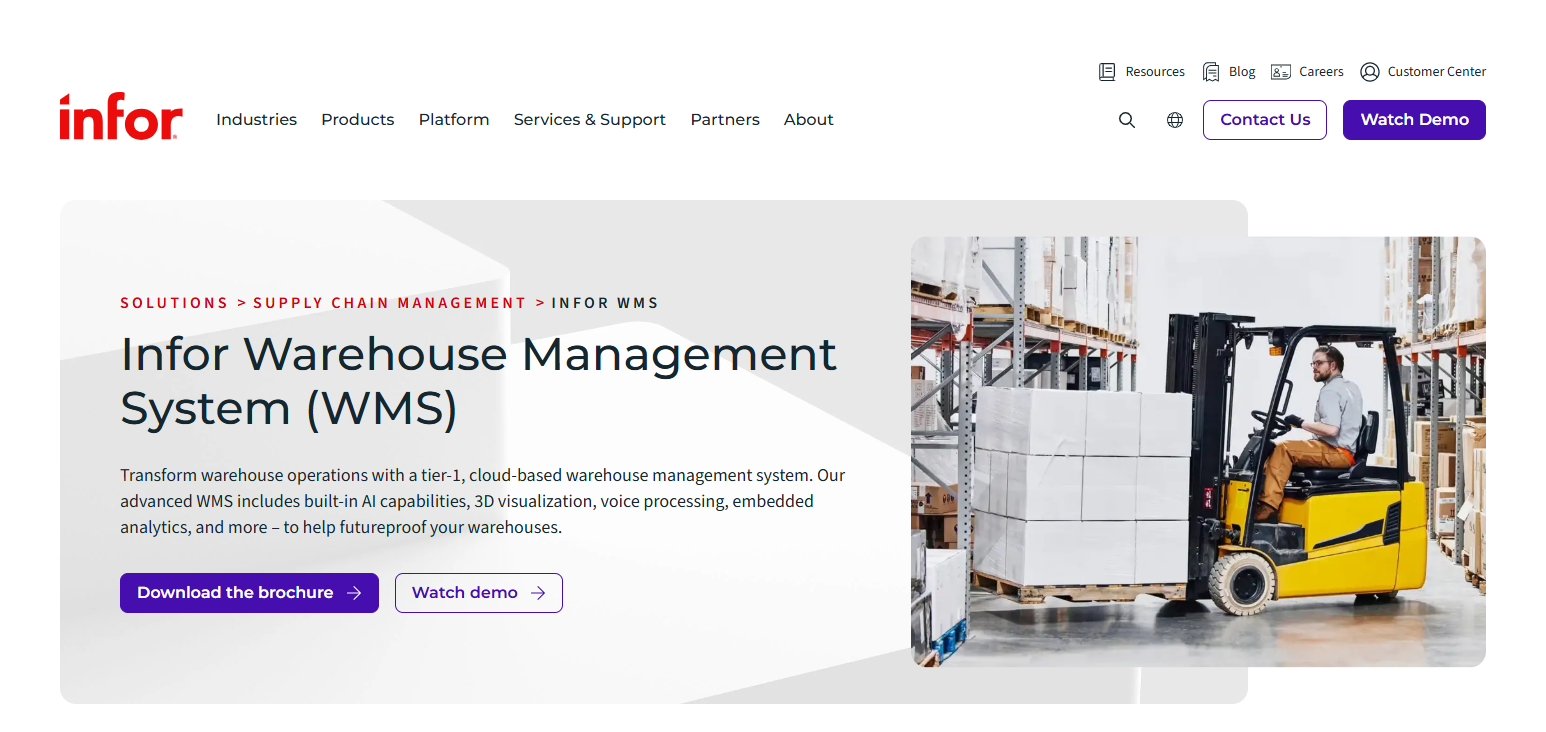
It supports retailers, manufacturers, and distributors by improving order accuracy, reducing warehouse complexity, and enabling faster supply chain operations with modern technology.\
Infor CloudSuite WMS
- Real-Time Inventory Visibility: Tracks stock and inventory in the warehouse completely.
- Workflow Automation: Speed and accuracy of operations are enhanced by task automation.
- Industry-Specific Solutions: Features for retail, manufacturing, and distribution are tailored.
- Warehouse Layout Optimization: Improves efficiency in the operations and storage in the warehouse.
- Cloud-Based Management: Safely and easily allows warehouse operations from any location.
| Pros | Cons |
|---|---|
| Provides real-time inventory control and warehouse visibility. | Implementation process may require professional assistance. |
| Offers industry-specific solutions for different business sectors. | Pricing may be higher compared to basic WMS solutions. |
| Automates workflows to improve operational efficiency. | Some advanced features require additional configuration. |
| Cloud-based system supports remote warehouse management. | Requires employee training for maximum utilization. |
| Improves warehouse organization and productivity. | Integration with existing systems may take time. |
6. Manhattan Active Warehouse Management
Manhattan Active Warehouse Management is a modern warehouse management platform focused on improving distribution efficiency, workforce management, and inventory accuracy. It provides advanced automation tools for picking, packing, shipping, and warehouse execution processes.
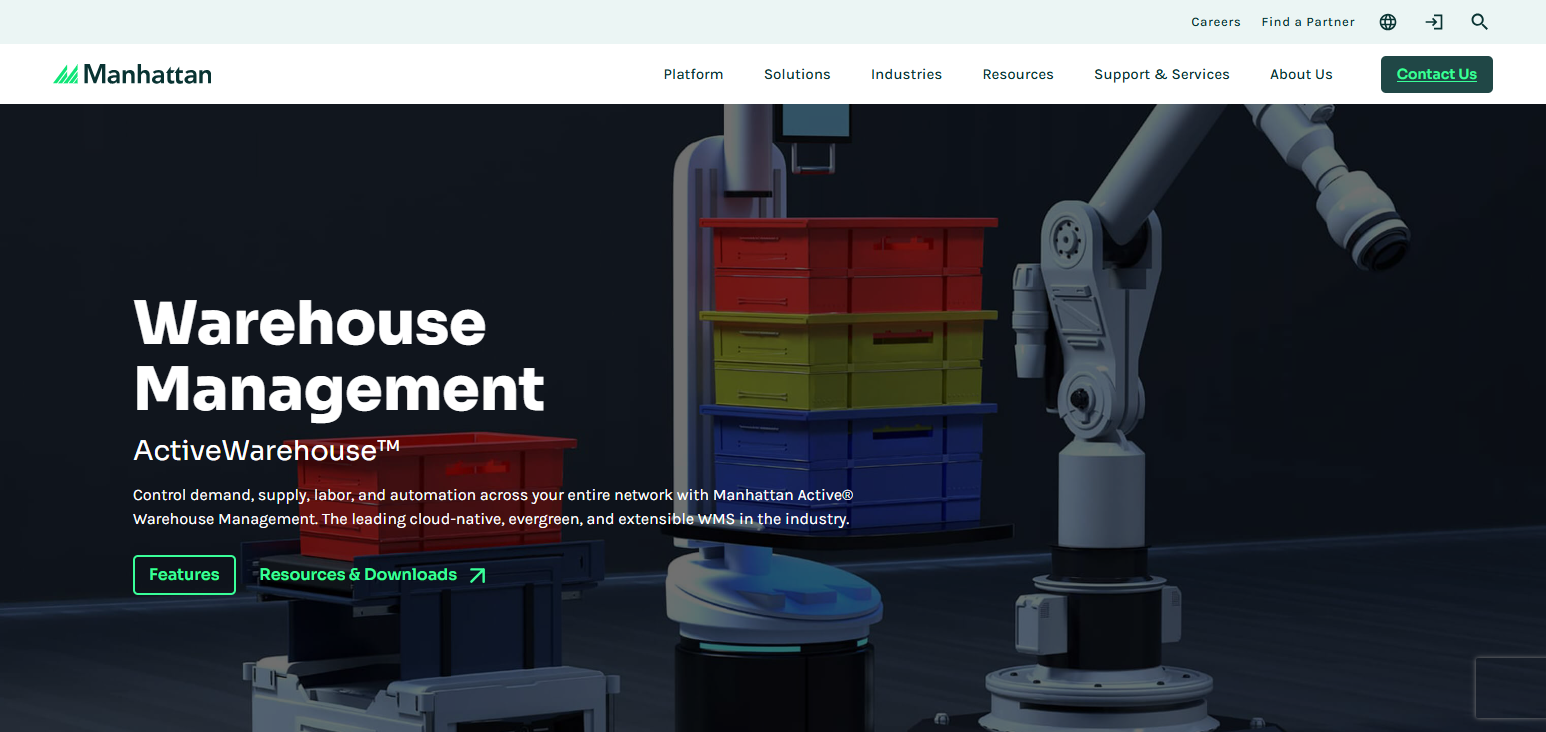
The Best Warehouse Management Software category highlights Manhattan Active WMS because it supports high-performance warehouses with real-time insights and intelligent optimization.
Companies use this platform to increase productivity, manage complex fulfillment requirements, and create faster, more responsive supply chain networks.
Manhattan Active Warehouse Management
- Advanced Distribution Management: Warehouse operations for large distribution are streamlined.
- Labor Productivity Tools: Workforce productivity is achieved through smart tasking.
- Real-Time Warehouse Insights: Enables accurate decisions in operations through data.
- Automated Fulfillment Processes: Enhances the performance of fulfillment tasks.
- Scalable Architecture: Large operations are easily accommodated in a smaller warehouse.
| Pros | Cons |
|---|---|
| Optimizes large-scale warehouse and distribution operations. | Expensive solution mainly suitable for large enterprises. |
| Provides advanced labor management capabilities. | Implementation can be complex and lengthy. |
| Improves fulfillment speed through automation. | Requires skilled experts for system management. |
| Offers real-time warehouse performance insights. | Training employees may require additional resources. |
| Scalable architecture supports growing warehouse demands. | May involve higher maintenance costs. |
7. Blue Yonder Warehouse Management
Blue Yonder Warehouse Management is an AI-powered warehouse management system that improves planning, inventory control, and warehouse execution. It uses artificial intelligence and automation to optimize labor usage, demand planning, and distribution activities.
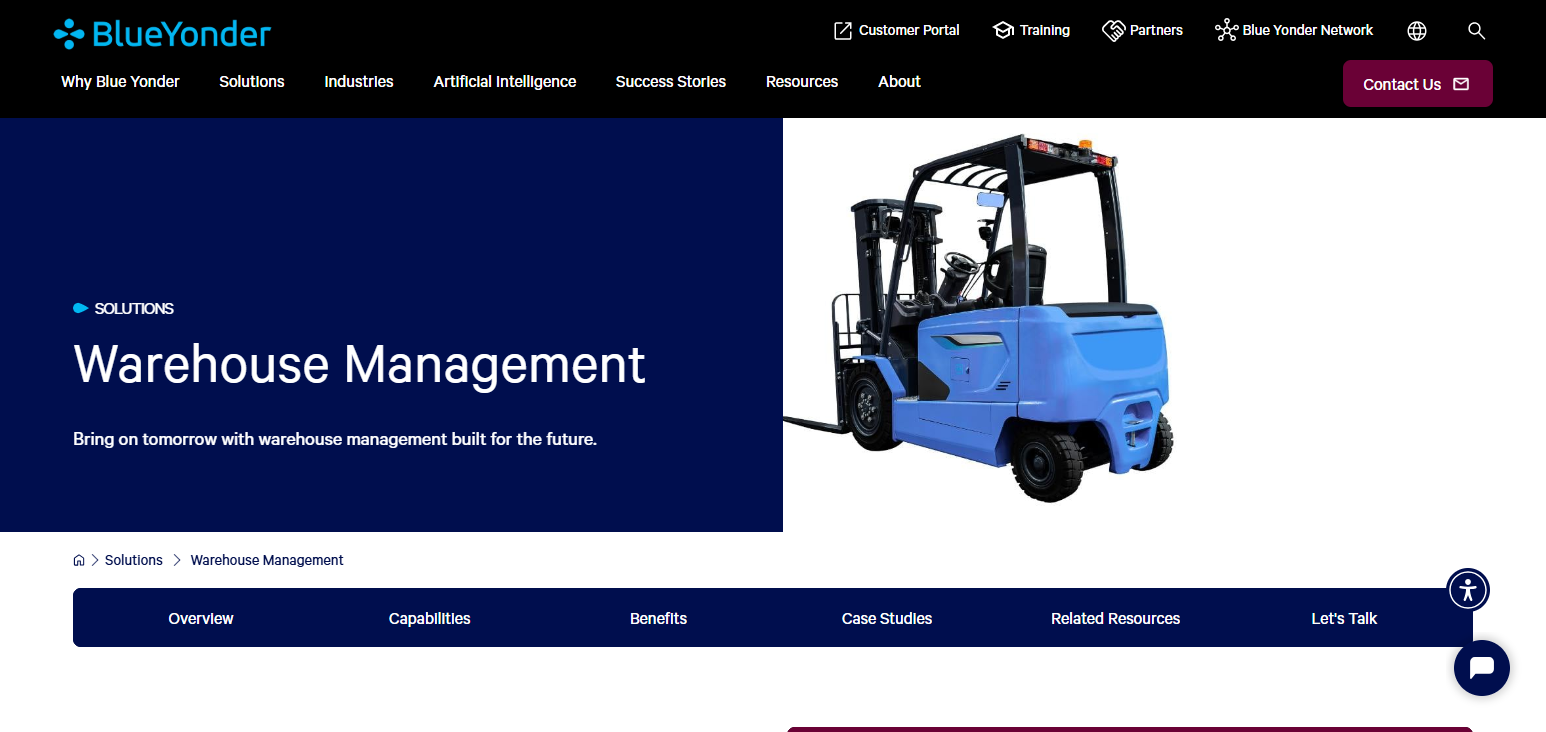
The Best Warehouse Management Software solutions include Blue Yonder because it helps businesses create smarter and more efficient warehouse environments.
Its predictive capabilities allow organizations to reduce operational challenges, improve order fulfillment speed, and achieve better supply chain visibility.
Blue Yonder Warehouse Management
- AI-Powered Optimization: Warehouse operations are improved with planning and execution by AI.
- Predictive Analytics: Inventory decisions are improved by the demand forecast.
- Automated Task Management: Rapidly assigns tasks of the warehouse to elevate productivity.
- Inventory Accuracy Control: Provides enhanced tracking features to minimize stock discrepancies.
- Supply Chain Intelligence: Analyzes data for improved logistics and better utilization of warehouse operations.
| Pros | Cons |
|---|---|
| Uses AI technology for smarter warehouse optimization. | Advanced AI features may increase implementation complexity. |
| Provides predictive analytics for better inventory planning. | Higher cost compared with basic warehouse software. |
| Improves supply chain visibility and decision-making. | Requires technical expertise for configuration. |
| Automates warehouse tasks and improves productivity. | Training is necessary for effective adoption. |
| Supports advanced logistics and enterprise operations. | Small businesses may find features excessive. |
8. Fishbowl Inventory
Fishbowl Inventory is an affordable warehouse and inventory management solution designed mainly for small and medium-sized businesses. It provides tools for inventory tracking, order management, manufacturing support, and warehouse automation.
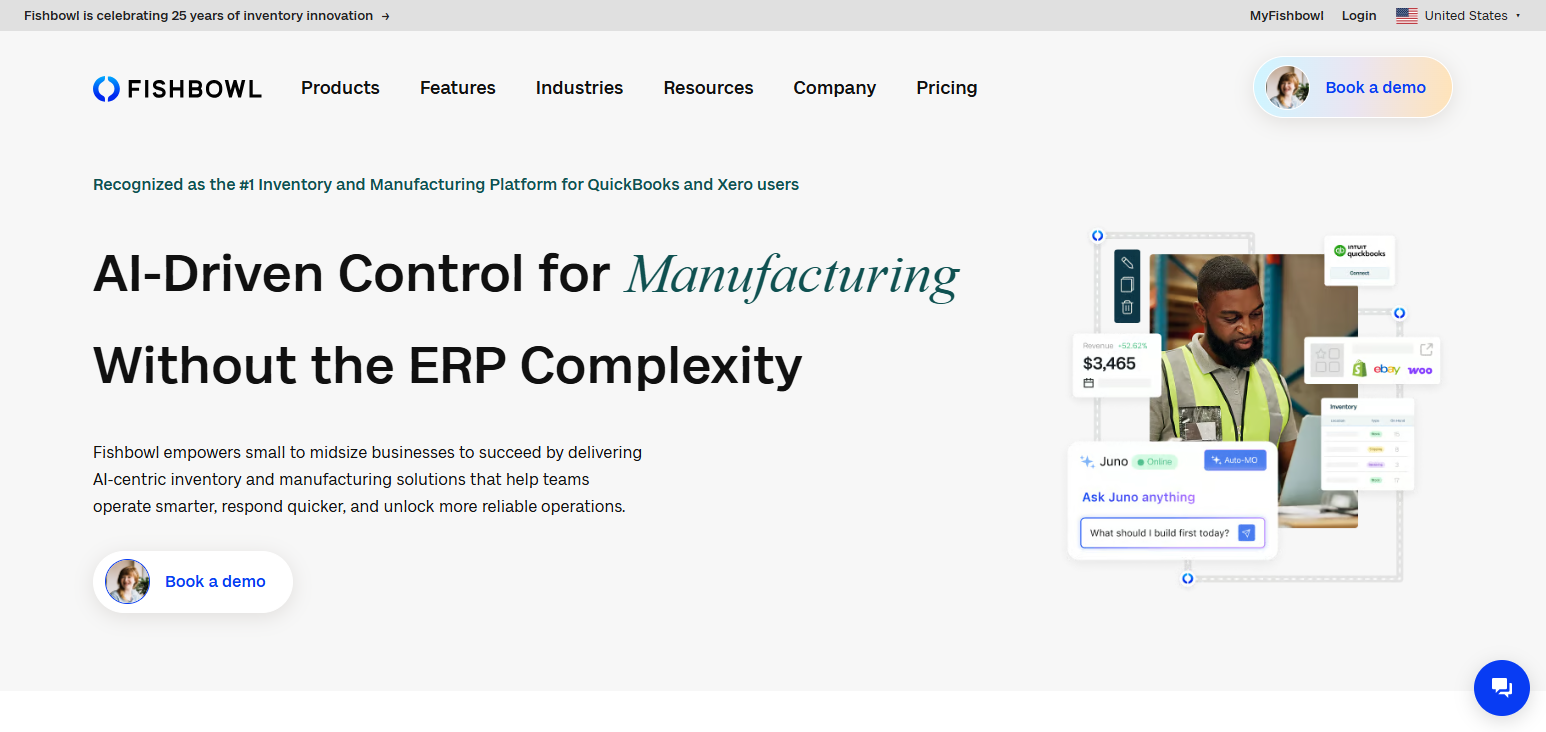
The Best Warehouse Management Software options include Fishbowl because it offers cost-effective features without requiring complex implementation.
Businesses can use it to improve stock accuracy, manage warehouse processes efficiently, and integrate inventory operations with accounting and business management systems.
Fishbowl Inventory
- Affordable Inventory Management: Provides low-cost inventory and warehouse options for small and mid-sized businesses.
- Stock Tracking System: Accurately keeps tabs on stock levels, locations, and movements.
- Order Management: Makes order processing, fulfillment, and shipping easier.
- Manufacturing Integration: Assists with planning and coordination of production and related inventory.
- Accounting Integration: Merges warehouse operations with accounting.
| Pros | Cons |
|---|---|
| Affordable warehouse management solution for small businesses. | Limited scalability compared to enterprise-level WMS platforms. |
| Easy inventory tracking and stock management features. | Advanced automation features may be limited. |
| Integrates with accounting systems for better management. | User interface may require improvement for some users. |
| Supports manufacturing and warehouse operations. | Reporting capabilities are less advanced than premium solutions. |
| Simple implementation with lower learning requirements. | May not support highly complex warehouse needs. |
9. Odoo Inventory
Odoo Inventory is an open-source warehouse management solution offering customization, automation, and efficient stock handling features. It helps businesses manage inventory movements, product tracking, barcode operations, and warehouse workflows.

The Best Warehouse Management Software solutions often include Odoo because its modular design allows companies to customize warehouse operations according to their requirements.
It provides flexibility for growing businesses looking for affordable software with powerful inventory management capabilities and seamless business application integration.
Odoo Inventory
- Open-Source Customization: Empowers businesses to tailor warehouse functions in line with their operating procedures.
- Barcode Management: Enhances tracking and completeness of inventory through barcoding.
- Automated Stock Operations: Automates the processes for stock replenishment, transfers, and other stock operation workflows.
- Multi-Warehouse Support: Administers inventory across different warehouse locations.
- Business Application Integration: Merges inventory with the sales, purchasing, and accounting applications.
| Pros | Cons |
|---|---|
| Open-source platform allows extensive customization options. | Requires technical knowledge for advanced modifications. |
| Affordable solution suitable for growing businesses. | Some features may need additional modules. |
| Integrates with sales, accounting, and business applications. | Implementation can become complex with customization. |
| Supports multiple warehouses and inventory operations. | Customer support depends on service plans. |
| Flexible system adapts to different business requirements. | Updates may affect customized workflows. |
10. Cin7 Core
Cin7 Core is an inventory management platform designed to simplify warehouse workflows, order processing, and stock tracking. It provides features such as inventory synchronization, purchase management, reporting, and warehouse automation tools.
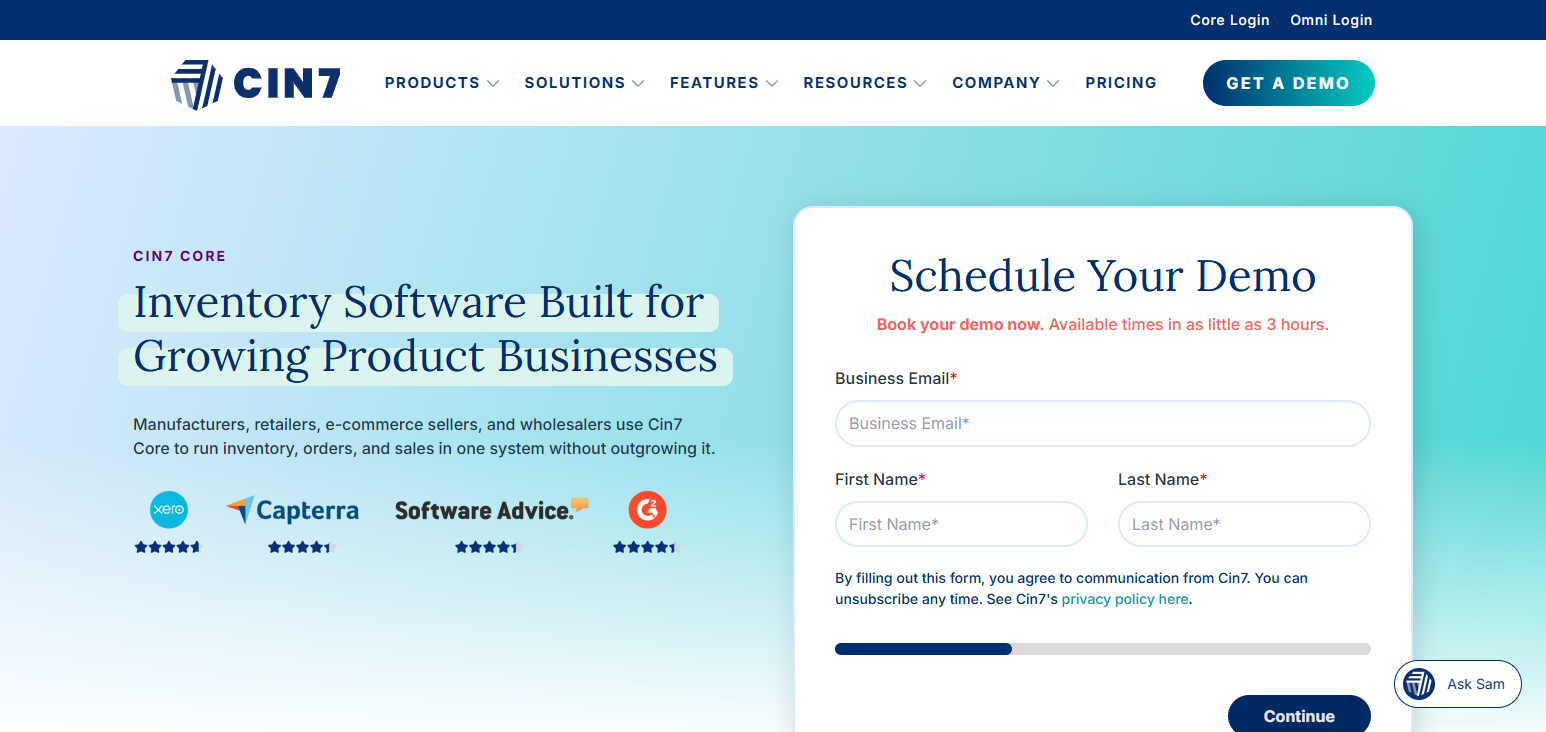
The Best Warehouse Management Software list includes Cin7 Core because it helps businesses manage inventory across multiple sales channels and locations.
Its user-friendly interface and automation capabilities improve operational efficiency, reduce inventory errors, and support better supply chain management for growing companies.
Cin7 Core
- Multi-Channel Inventory Management: Ensures inventory is consistent across all sales channels and locations.
- Order Processing Automation: Simplifies the purchase and delivery processes of orders.
- Inventory Reporting: Analyzes data and provides insight on inventory and operations.
- Warehouse Workflow Management: Enhances the efficiency of warehouse operations.
- Stock Accuracy Improvement: Employs tracking and monitoring to reduce stock discrepancies.
| Pros | Cons |
|---|---|
| Simplifies inventory management across multiple sales channels. | Pricing may increase with additional features and users. |
| Automates order processing and warehouse workflows. | Advanced warehouse requirements may need extra tools. |
| Provides useful inventory reports and analytics. | Setup may require professional guidance. |
| Improves stock accuracy and reduces inventory errors. | Limited customization compared with enterprise solutions. |
| User-friendly interface helps businesses manage operations easily. | May not be ideal for very large warehouses. |
Conclsuion
In conclusion, the best warehouse management software strengthens inventory accuracy, warehouse process automation, and operational efficiency. Options such as NetSuite WMS, SAP EWM, and Oracle WMS Cloud, among others, provide features and functions focusing on tracking, reporting, and supply chain management.
The right solution is based on the requirements of the business, the size of the warehouse, the layout of the warehouse, and the plans for expected growth to improve productivity and satisfaction of customers.
FAQ
Why do businesses need Warehouse Management Software?
Businesses use warehouse management software to reduce manual errors, track inventory in real time, improve productivity, and manage warehouse operations efficiently.
What features should the Best Warehouse Management Software include?
The best solutions should include inventory tracking, automation, barcode scanning, reporting, order management, warehouse optimization, and integration capabilities.
Is Warehouse Management Software suitable for small businesses?
Yes, many warehouse management solutions offer affordable plans and simple features designed specifically for small and medium-sized businesses.
How does Warehouse Management Software improve inventory accuracy?
It improves accuracy by providing real-time stock tracking, automated updates, barcode scanning, and reducing manual inventory management errors.