In this article, we cover some of the best ZK-Rollup Order Book DEXs for traders. We review key features, and look at trading capabilities and pros/cons.
Perpetual markets and spot trading, and trading of emerging digital assets, are areas that will benefit from the zk-Rollup DEXs reviewed in this article.
This guide is mostly intended for traders who want to understand the best trade execution platforms among the growing list of zk-Rollup DEXs.
Key Points & Best ZK-Rollup Order Book DEXs for Traders
| ZK-Rollup Order Book DEX | explanation |
|---|---|
| Lighter | ZK-verified order book offers fast, zero-fee retail perpetual trading. |
| GRVT | zkSync-based layer-two combines self-custody with advanced professional order-book trading. |
| Paradex | Starknet ZK appchain delivers fast, self-custodial perpetual order-book trading. |
| Extended | Starknet-based exchange provides professional order-book trading with rapid execution. |
| edgeX | StarkEx-powered platform provides low-latency perpetual and spot order-book trading. |
| ApeX Omni | zkLink-powered exchange enables omnichain perpetual trading through centralized-style order books. |
| Loopring | Ethereum zkRollup DEX combines order-book trading with non-custodial settlement. |
| ZigZag | zkRollup exchange pioneered decentralized order-book trading without traditional centralized intermediaries. |
| DeversiFi | StarkEx-powered DEX offered scalable, non-custodial order-book cryptocurrency trading. |
| Immutable X Orderbook | ZK-powered infrastructure supports fast NFT trading through scalable order-book markets. |
| dYdX v3 | StarkEx-based version provided high-performance decentralized perpetual order-book trading infrastructure. |
| Satori | Decentralized derivatives platform combines order-book execution with scalable blockchain infrastructure. |
| zkMarkets | ZK-focused trading infrastructure explores scalable decentralized markets with order-book functionality. |
| StarkEx Orderbook Venues | StarkEx enables scalable trading while cryptographically verifying batches through proofs. |
| zkSync Orderbook Projects | zkSync infrastructure supports emerging decentralized exchanges seeking scalable order-book execution. |
15 Best ZK-Rollup Order Book DEXs for Traders
1. Lighter
Lighter is a ZK-centric perpetual futures DEX designed to prioritize smart contract-based order books and trade execution speed. With Lighter’s architecture, users will have real time trade verification with allows for certain execution.
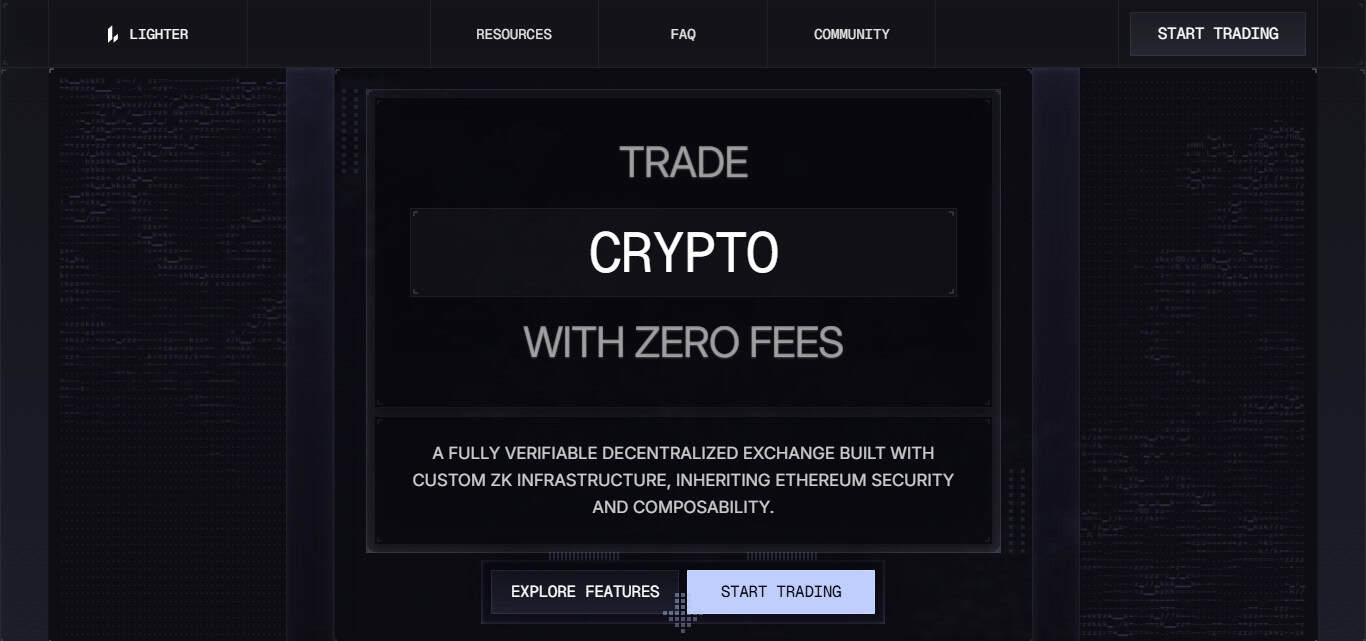
Lighter aims to provide centralized exchange features with blockchain-based verification. Low trading fees and deep order books are an added bonus. Lighter is optimized for high frequency trading and is best suited for those perpetually trading futures contracts.
Features of Lighter
| Feature | Details |
|---|---|
| ZK Verification | Cryptographically verifies trading activity using zero-knowledge technology. |
| Order Book | Uses an order-book model for matching buy and sell orders. |
| Perpetual Trading | Focuses heavily on perpetual futures markets for active traders. |
| Trading Costs | Designed around very low-cost trading, including zero-fee offerings where applicable. |
| Execution | Built for fast order matching and responsive trading. |
| Self-Custody | Supports a decentralized trading model rather than traditional exchange custody. |
2. GRVT
GRVT is an order-book trading platform based on zkSync that allows users to self-custody their funds, with the aim of delivering the experience and functionality of a centralized exchange.
GRVT also uses zero-knowledge to increase scalability and transaction throughput while sustaining a great deal of control over the decentralized systems.
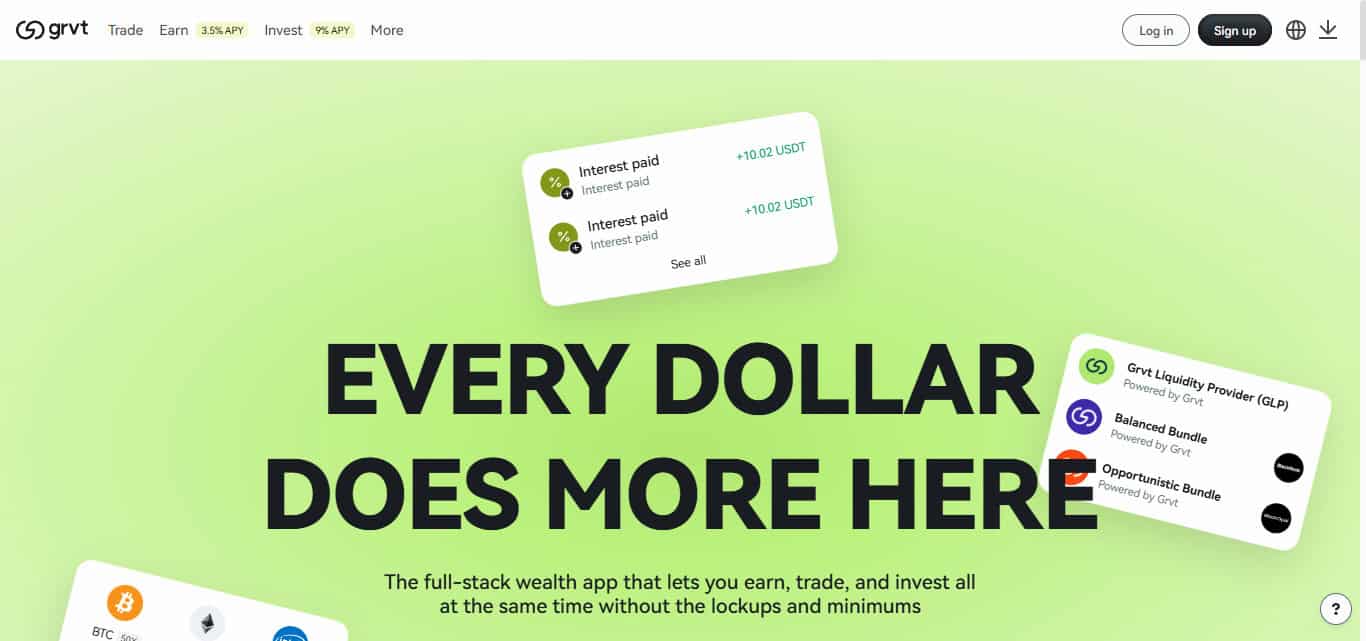
GRVT is especially well suited for traders who prefer having access to an order book trading system with advanced trading features and derivatives.
Features of GRVT
| Feature | Details |
|---|---|
| zkSync Technology | Uses zkSync-based Layer-2 infrastructure for scalable blockchain transactions. |
| Order Book | Provides professional-style order-book trading rather than a basic AMM interface. |
| Self-Custody | Designed to combine exchange functionality with greater user asset control. |
| Derivatives | Supports advanced cryptocurrency derivatives and trading products. |
| Scalability | Layer-2 architecture helps reduce Ethereum transaction overhead. |
| Professional Interface | Designed to provide an experience familiar to experienced centralized-exchange traders. |
3. Paradex
Paradex is a perpetual futures market that prioritizes speed and efficiency in high-frequency trading. Paradex leverages Starknet’s zero-knowledge technology for scalable, non-custodial trading. With Paradex’s architecture, users interact with a smart contract in a fully self-custodial way.
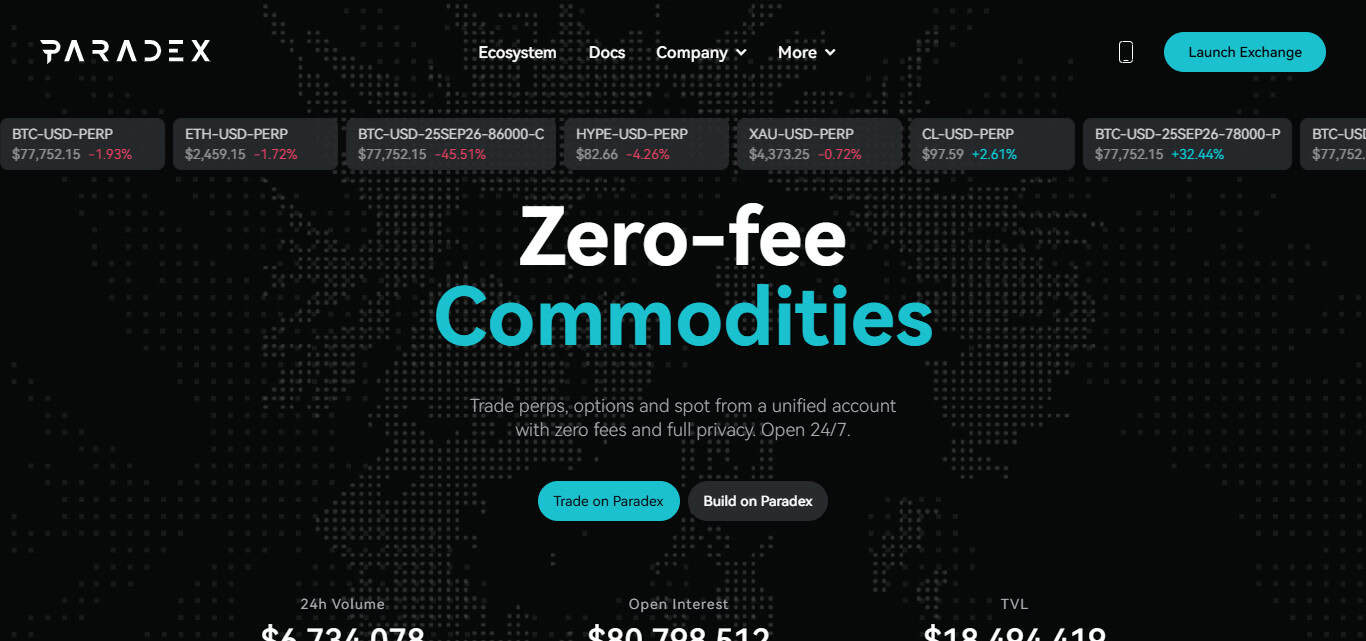
This allows users to maintain full control of their assets while still having access to advanced perpetual markets. This serves active traders who value sophisticated derivatives.
Features of Paradex
| Feature | Details |
|---|---|
| Starknet | Built using Starknet’s ZK-powered blockchain infrastructure. |
| Perpetuals | Provides perpetual futures markets for cryptocurrency traders. |
| Order Book | Uses order-book-based execution for matching trades. |
| Self-Custody | Users can retain control over their assets while trading. |
| Fast Execution | Infrastructure is designed for responsive derivatives execution. |
| ZK Scaling | Zero-knowledge technology improves scalability and transaction processing. |
4. Extended
Extended is a Starknet-based derivatives exchange focused on designing a familiar trading interface for a centralized exchange to fulfill orders through an order book with high speed execution.
As a ZK-Rollup Order Book DEX, Extended uses Starknet’s scalable technology to overcome several challenges of limited execution that plague traditional decentralized exchanges.
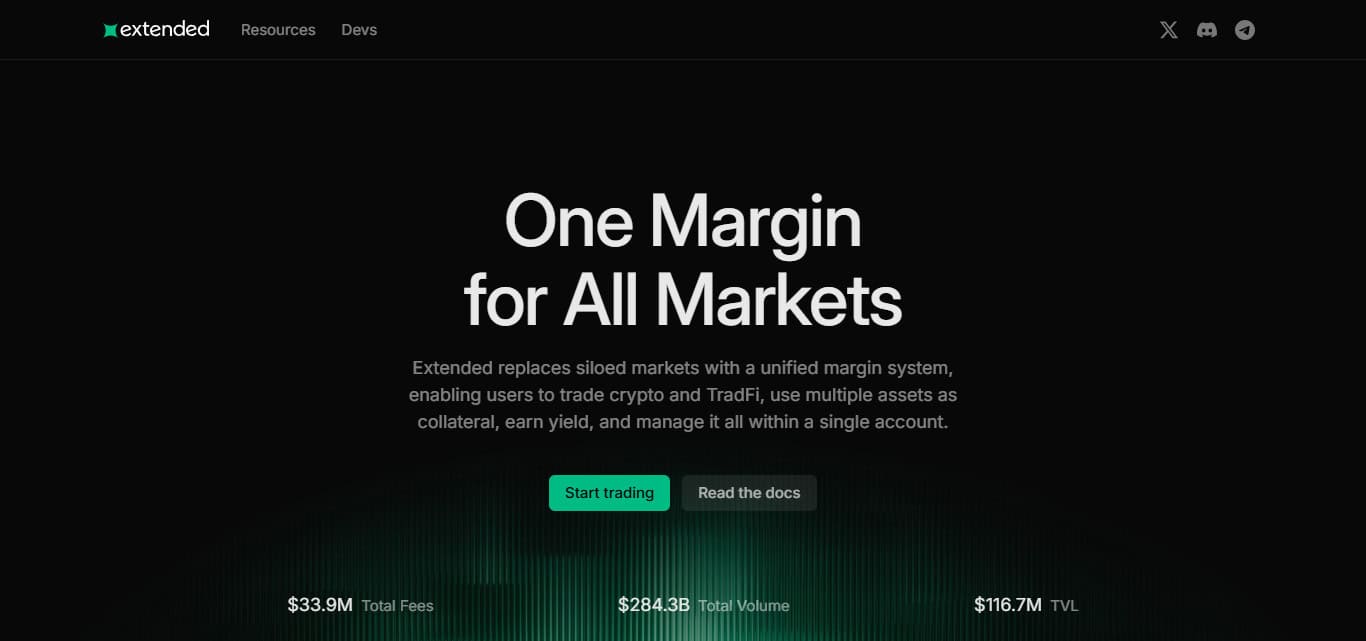
With Extended, traders have access to order book trading, advanced trading functionalities, and tools for trading with leverage. This makes Extended an exciting choice for active traders interested in the decentralized derivatives market.
Features of Extended
| Feature | Details |
|---|---|
| Starknet Infrastructure | Uses Starknet technology to support scalable decentralized trading. |
| Order Book | Provides centralized-exchange-style order-book functionality. |
| Derivatives | Focuses on perpetual and other derivatives trading products. |
| Fast Matching | Designed to provide rapid order execution for active traders. |
| Trading Tools | Offers functionality intended for professional and sophisticated traders. |
| ZK Technology | Benefits from zero-knowledge-based scaling infrastructure. |
5. edgeX
Using StarkEx technology, edgeX enables ultra-low cost, efficient, fast, and secure trading of perpetual and spot crypto markets. Its design combines a low latency order book execution platform with the blockchain for settlement and verification.
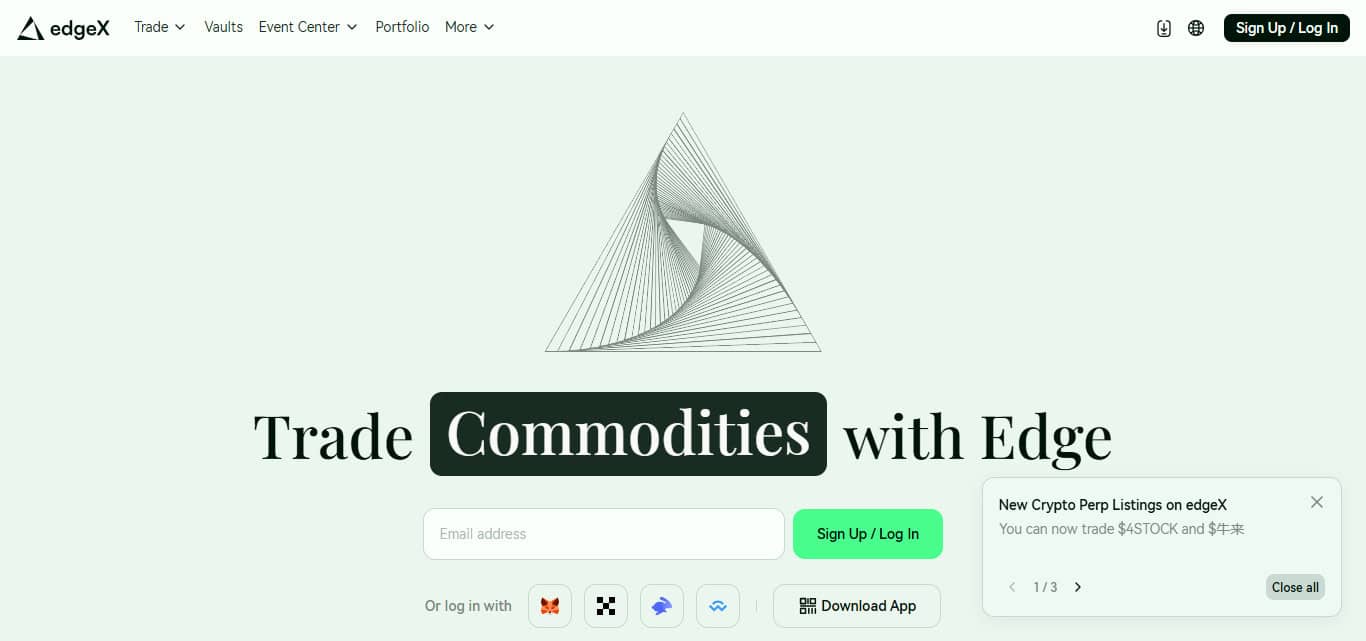
edgeX, as a ZK-Rollup Order Book DEX, uses zero-knowledge based scaling technology to improve the efficiency of trading and to reduce the constraints of on-chain order matching.
EdgeX should be convenient for traders that need quick order executions and sophisticated order types as well as derivative exposure, but in a fully decentralized trading environment.
Features of edgeX
| Feature | Details |
|---|---|
| StarkEx | Uses StarkEx technology for scalable trading infrastructure. |
| Order Book | Supports order-book-based trading and matching. |
| Perpetual Markets | Provides cryptocurrency perpetual contracts for leveraged trading. |
| Spot Trading | Supports spot cryptocurrency trading alongside derivatives. |
| Low Latency | Infrastructure targets fast and responsive order execution. |
| ZK Scaling | Uses cryptographic proof technology to improve transaction scalability. |
6. ApeX Omni
ApeX Omni is a cross blockchain decentralized derivatives platform for perpetual trading. Based on zkLink, ApeX Omni’s infrastructure provides trading liquidity and connectivity across several blockchain networks.
As a ZK-Rollup Order Book DEX, ApeX Omni presents a centralized-exchange-style order book experience within zero-knowledge blockchain technology. Traders do not need to fully rely on traditional centralized intermediaries for perpetual contracts and cross-chain transactions.
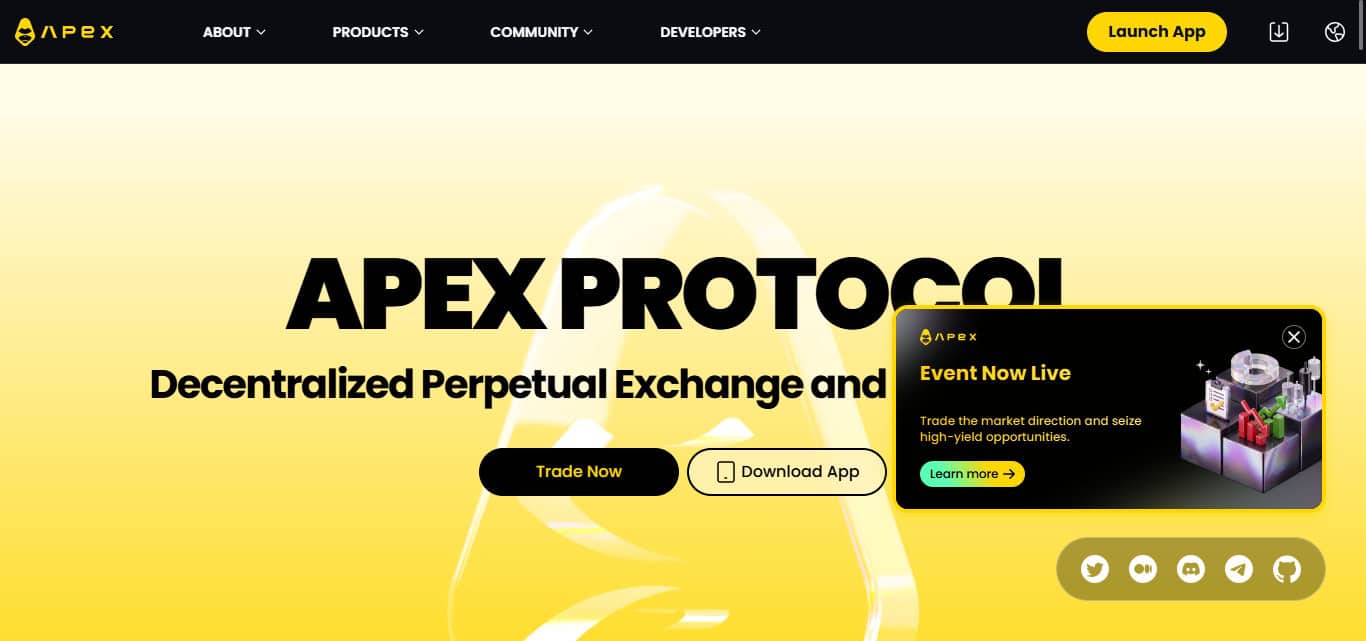
ApeX Omni’s omnichain approach is appropriate for traders seeking to participate in multiple blockchains and flexible cross-market participation.
Features of ApeX Omni
| Feature | Details |
|---|---|
| zkLink | Uses zkLink technology for scalable blockchain connectivity. |
| Omnichain Trading | Designed to support trading across multiple blockchain ecosystems. |
| Perpetuals | Provides perpetual contracts for cryptocurrency traders. |
| Order Book | Offers a centralized-exchange-style order-book trading experience. |
| Self-Custody | Maintains a decentralized approach to user asset management. |
| Cross-Chain Access | Helps traders access markets across different blockchain environments. |
7. Loopring
Loopring was one of the first Ethereum projects to demonstrate how zero-knowledge rollups support decentralized exchange. Their protocol previously implemented zero-knowledge proofs to provide non-custodial settlement for order-book trading, where participants did not need to deposit trading assets to the order book.
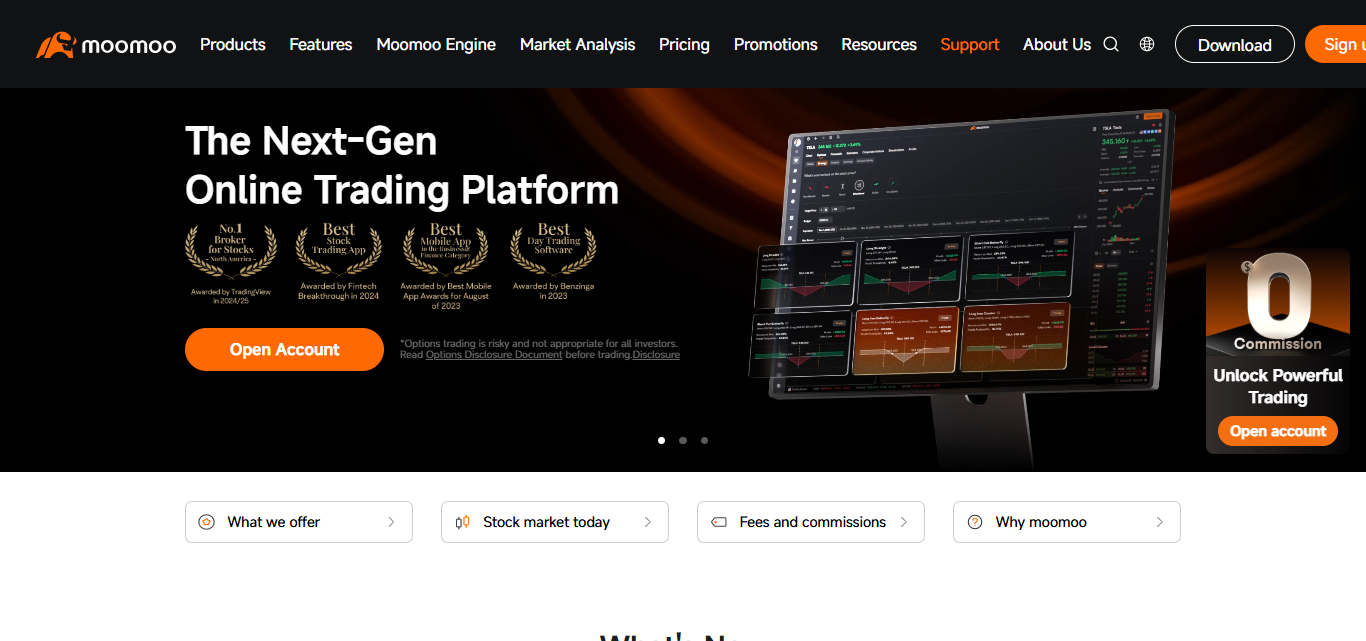
Therefore, Loopring was able to process higher trading order volumes, all while providing security assumptions of Ethereum. While the rest of the DEX space has been rapidly developing,
Loopring has good standing in how zero-knowledge proofs can be used to implement decentralized order-books for trading, and how they can be used to enhance decentralized and non-custodial trading.
Features of Loopring
| Feature | Details |
|---|---|
| Ethereum zkRollup | Uses zero-knowledge rollup technology connected to Ethereum. |
| Order Book | Historically supported decentralized order-book trading. |
| Non-Custodial | Designed so users retain control of their cryptocurrency. |
| Scalable Trading | Rollup architecture reduces the transaction burden on Ethereum mainnet. |
| Lower Costs | Batch processing can reduce individual transaction costs. |
| Ethereum Settlement | Uses Ethereum as the underlying settlement and security layer. |
8. ZigZag
ZigZag was one of the first DEXs to offer order-book trading powered by zkRollups. Their architecture showed participants could interact with an order book and benefit from Ethereum settlement and zero-knowledge scaling.
As a ZK-Rollup Order Book DEX, ZigZag pioneered the concept of decentralized order matching and non-custodial trading. Traders should exercise caution before using it, as they should investigate
if trading is available, what markets and trading pairs are offered, what order book and trading depth is available, etc. ZigZag holds good standing in the history of ZK-order-book based trading DEXs.
Features of ZigZag
| Feature | Details |
|---|---|
| zkRollup | Uses zero-knowledge rollup technology for decentralized exchange activity. |
| Order Book | Historically focused on decentralized order-book trading. |
| Non-Custodial | Designed to reduce dependence on centralized asset custody. |
| Ethereum | Connected decentralized trading activity with Ethereum infrastructure. |
| Peer Trading | Enabled users to interact through a decentralized exchange environment. |
| Early ZK Adoption | Became notable as an early ZK-based order-book project. |
9. DeversiFi
DeversiFi was a fast and scalable non-custodial exchange for cryptocurrency trading built on StarkEx. Its architecture relied on batch-oriented zero-knowledge proofs on Ethereum that drastically lower the cost of executing individual trades.
There was a lot of historical significance for DeversiFi when it was released. Although it was the first of its kind, it paved the way for StarkEx to illuminate high-throughput decentralized cryptocurrency markets and order-book exchanges.
Features of DeversiFi
| Feature | Details |
|---|---|
| StarkEx | Used StarkEx technology for scalable exchange operations. |
| Order Book | Provided order-book-based cryptocurrency trading functionality. |
| Non-Custodial | Designed around user-controlled asset custody. |
| Ethereum | Leveraged Ethereum for underlying blockchain settlement. |
| Transaction Batching | StarkEx technology enabled multiple operations to be processed efficiently. |
| Professional Trading | Sought to deliver a faster experience than conventional on-chain exchanges. |
10. Immutable X Orderbook
Immutable X was the first to build ZK infrastructure within the confines of scalable NFT markets instead of the usual cryptocurrency markets and perpetual trading. Its infrastructure facilitates order book-style marketplace interactions, and users can transact upon zero-knowledge scales.
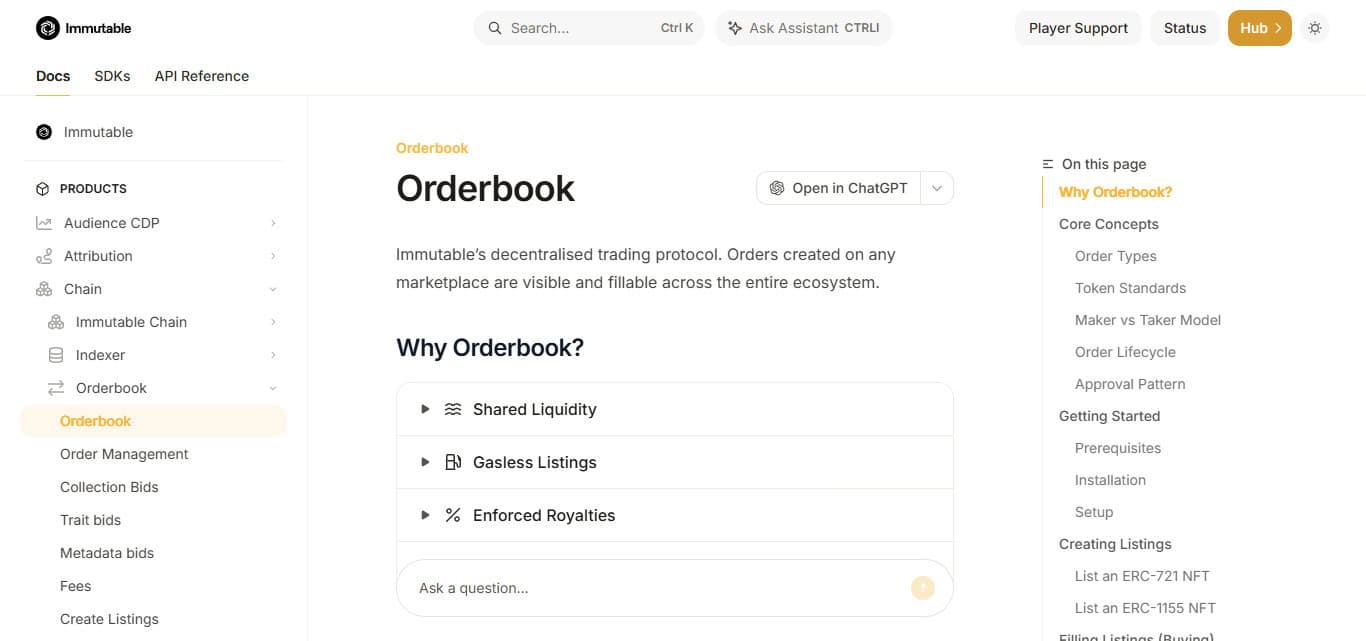
Of all the services, Immutable X Order book is most useful for NFT trading. Unfortunately, users commonly confuse Immutable’s NFT platform with the dedicated perpetual futures exchanges purposed for professional financial trading.
Features of Immutable X Orderbook
| Feature | Details |
|---|---|
| ZK Technology | Uses zero-knowledge scaling technology for blockchain applications. |
| NFT Trading | Primarily supports scalable NFT marketplace and trading activity. |
| Order Books | Supports marketplace functionality involving buy and sell orders. |
| Fast Transactions | Designed to process NFT transactions efficiently. |
| Lower Costs | ZK scaling can reduce Ethereum-related transaction overhead. |
| Ethereum Ecosystem | Provides infrastructure connected to Ethereum-based digital assets. |
11. dYdX v3
dYdX v3 was arguably the most high-profile decentralized derivatives platform built on StarkEx. This platform allowed users the option to trade crypto perpetual swaps akin to offerings on centralized exchanges.
dYdX v3 implemented an off-chain order book and used cryptographically verifiable settlement to facilitate high throughput and low-cost derivatives trading without traditional custodial services.
As a ZK-Rollup Order Book DEX, dYdX v3 demonstrated how derivatives could support perpetual markets. dYdX v3 is historically significant to the project as they have since moved away from StarkEx to build their own Cosmos chain. This means that traders should not confuse the current version with the older StarkEx iteration.
Features of dYdX v3
| Feature | Details |
|---|---|
| StarkEx | The v3 architecture used StarkEx scaling technology. |
| Perpetuals | Supported decentralized perpetual futures trading. |
| Order Book | Used an off-chain order book with blockchain settlement. |
| High Throughput | StarkEx enabled significant trading activity without every operation occurring directly on Ethereum. |
| Professional Trading | Provided advanced functionality similar to centralized derivatives exchanges. |
| Non-Custodial Model | Designed to reduce reliance on centralized custody. |
12. Satori
Satori aims to bring a layer of professionalism to trading in the crypto derivatives markets using order-book systems and settlements that are handled by blockchain. The project wants to enable trading of derivatives on decentralized platforms.
As a ZK-Rollup Order Book DEX, Satori is reflective of the trend in order-book DEX design with zero knowledge scalability. Before trading on Satori, users should determine the current state of the platform regarding liquidity, markets,
fees, available levels of trading leverage, the risks posed by smart contracts, and whether the platform is operational. These factors have the most volatility in the rapidly evolving derivatives trading ecosystem.
Features of Satori
| Feature | Details |
|---|---|
| Derivatives | Focuses on decentralized derivatives markets. |
| Order Book | Uses order-book execution rather than relying exclusively on AMMs. |
| Scalable Infrastructure | Designed to handle trading activity efficiently. |
| Professional Trading | Targets users seeking sophisticated financial-market functionality. |
| Blockchain Settlement | Trades ultimately interact with blockchain-based infrastructure. |
| Decentralized Architecture | Seeks to combine professional trading with decentralized market infrastructure. |
13. zkMarkets
zkMarkets is a component of an emerging category of decentralized trading projects that leverage the scalable foundations of the marketplace built on top of zero-knowledge technology.
These technologies build trustless trading infrastructure within the constraints of blockchain systems by processing trades and using cryptographic proofs to verify transactions.
zkMarkets (or similar) technology can support verification of trading operations at a lower cost than traditional on-chain exchanges, while also offering traders limit orders and fast order matches.
Trading supported by zkMarkets technology should conduct due diligence to determine market activity, audit status, liquidity, and other official support before funds are transferred or trades are executed.
Features of zkMarkets
| Feature | Details |
|---|---|
| ZK Infrastructure | Explores zero-knowledge technology for scalable decentralized markets. |
| Order Books | Can support order-book-style decentralized market structures. |
| Scalable Execution | ZK technology can reduce the burden of processing transactions directly on Layer-1. |
| Cryptographic Proofs | Transactions can be verified using zero-knowledge proofs. |
| Lower Overhead | Rollup-based processing can reduce blockchain transaction requirements. |
| Emerging Ecosystem | Represents developing approaches to ZK-powered decentralized trading. |
14. StarkEx Orderbook Venues
StarkEx is an order book and batch transaction scalability layer built on top of StarkWare’s other infrastructure. While StarkEx is not a centralized exchange, StarkEx offers order book and scalability infrastructure via batch and cryptographic proof layers.
As a ZK-Rollup Order Book DEX layer, StarkEx provides the layers necessary to trade order books in an effective and efficient manner. Increased system efficiency means lower transaction fees for trading. However, trading venue features and cost models are specific to the trading venue that uses StarkEx technology.
Features of StarkEx Orderbook Venues
| Feature | Details |
|---|---|
| StarkEx Technology | Provides ZK-powered scalability infrastructure for applications. |
| Order Books | Can support high-performance order-book trading systems. |
| Validity Proofs | Uses cryptographic proofs to verify batches of transactions. |
| Ethereum Settlement | Supports settlement and security through Ethereum infrastructure. |
| High Throughput | Designed to process large numbers of transactions efficiently. |
| Custom Infrastructure | Exchange developers can build specialized trading applications on StarkEx. |
15. zkSync Orderbook Projects
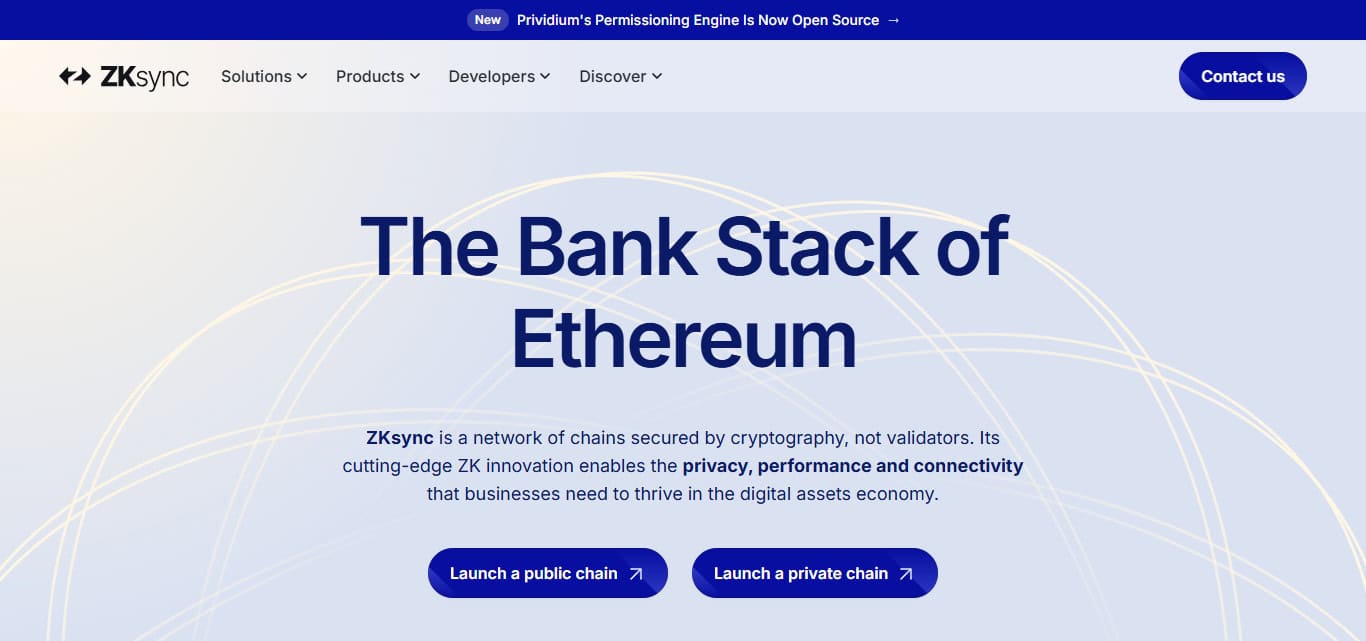
zkSync, an Ethereum Layer 2 rollup that processes Ethereum transactions via zero-knowledge proofs, offers quicker and cheaper Ethereum transactions compared to the mainnet. Within the zkSync environment, some DeFi projects can build order-book trading systems.
zkSync aims to build a quick, low-cost decentralized exchange platform based on zero-knowledge technology.
While trading on an order-book platform, traders should assess the liquidity of a project, the smart contract audits, the supported assets, the trading fees, and the trading history instead of assuming zkSync-based order-book projects provide the same trading experience.
Features of zkSync Orderbook Projects
| Feature | Details |
|---|---|
| zkSync Layer-2 | Provides Ethereum-compatible infrastructure using zero-knowledge scaling technology. |
| Order-Book Development | Supports developers building decentralized order-book trading applications. |
| Lower Fees | Layer-2 processing can reduce transaction costs compared with Ethereum mainnet. |
| Faster Transactions | Designed to provide faster transaction processing. |
| Ethereum Compatibility | Benefits from compatibility with the broader Ethereum ecosystem. |
| Emerging Markets | Provides infrastructure for new decentralized trading and financial applications. |
Conclusion
Conclusion The Best ZK-Rollup Order Book DEXs for Traders combine decentralized custody, scalable infrastructure, speed, and transparency. With active, straightforward trading in mind, there are a variety of options such as Lighter, GRVT, Paradex, Extended, and edgeX.
There are, of course, different fees, trading liquidities, markets offered, and risks with each. Traders need to weigh all of these factors to find an exchange that matches their trading style and tactics.
FAQ
Why do traders use ZK-Rollup DEXs?
They provide faster execution, lower costs, transparency, and decentralized trading.
Which ZK-Rollup DEX is best for perpetuals?
Lighter, Paradex, Extended, and edgeX focus strongly on perpetual trading.
Do ZK-Rollup DEXs offer self-custody?
Yes, many platforms allow traders to maintain control over their assets.
Are ZK-Rollup DEXs cheaper than Ethereum exchanges?
Layer-two processing generally reduces transaction costs compared with Ethereum mainnet.