
This is an article on the Contract Automation Brands Changing Legal Work, that illustrates how AI-powered platforms are reforming current-day legal work across the globe.
This new breed of companies (legal tech) allows law firms and enterprises to automate contract drafting, compliance monitoring, document review, approvals and negotiations as effectively as they do with other organizational documents.
From Enterprise Contract Intelligence to AI-powered Legal Drafting, the legal work processes of these brands are faster, smarter, cheaper and highly scalable by 2026.
Key Points & Contract Automation Brands Changing Legal Work
| Brand | Word Explanation |
|---|---|
| Ironclad | Automates contract workflows, approvals, compliance tracking, accelerating enterprise legal operations globally efficiently. |
| Spellbook | Uses AI contract drafting suggestions, helping lawyers review agreements significantly faster daily. |
| Lexion | Organizes contracts automatically, extracting important clauses, deadlines, obligations using advanced artificial intelligence. |
| DocuSign CLM | Simplifies contract lifecycle management with digital approvals, automated workflows, secure cloud storage. |
| Icertis | Delivers enterprise contract intelligence, improving compliance, visibility, negotiation efficiency across departments worldwide. |
| Agiloft | Provides customizable contract automation tools supporting legal teams with workflow flexibility requirements. |
| LawGeex | Reviews legal contracts automatically, identifying risks, inconsistencies, compliance issues using artificial intelligence. |
| Kira Systems | Extracts contract data using machine learning, reducing manual legal review workload significantly. |
| Gavel | Automates legal documents and workflows, enabling faster client-friendly law firm operations digitally. |
| Luminance | Uses AI pattern recognition to detect anomalies, accelerating due diligence and contract analysis tasks. |
10 Contract Automation Brands Changing Legal Work
1. Ironclad
Ironclad is reimaging legal operations with AI-enabled contract lifecycle management designed specifically for enterprise teams.
By 2026, the platform incorporated advanced AI agents that automatically handled renewals/intake workflows/redlining and metadata extraction.
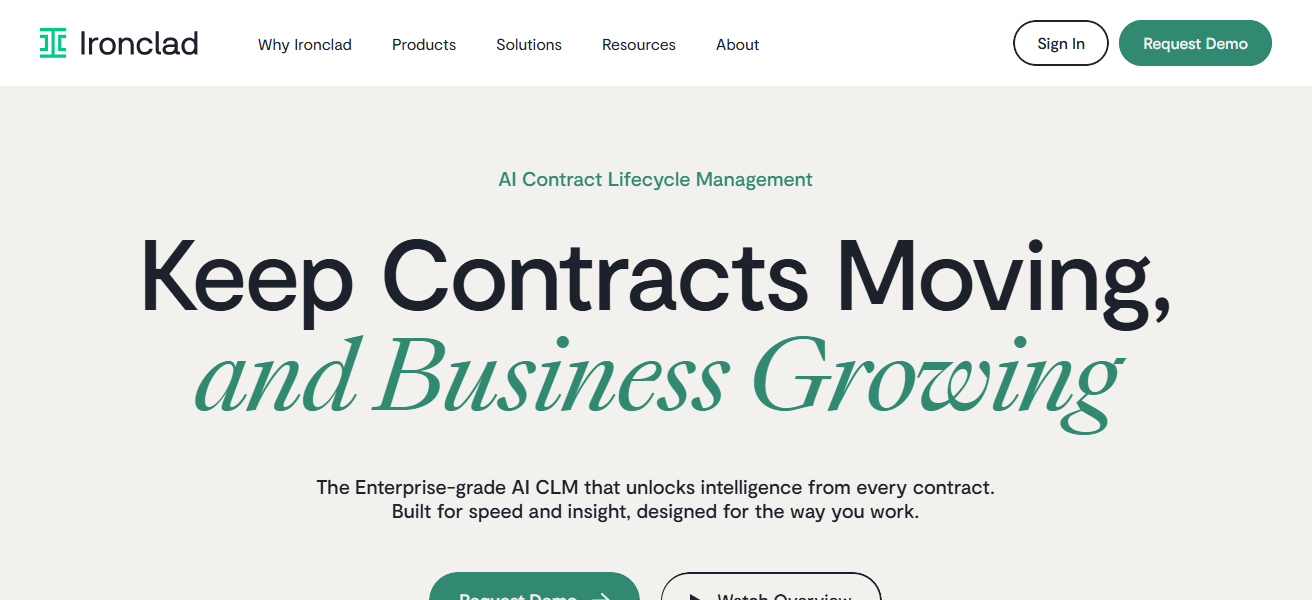
Other larger name brands, such as OpenAI, apparently use Ironclad on a big scale for enterprise contract management.
Its contextual AI analyzes billions of contracts in flight, enabling legal departments to minimize the number of manual reviews conducted while increasing compliance visibility.
Recent contract intelligence expansion enables enterprise legal work to scale and collapses time, making it much faster, smarter, and global.
| Pros | Cons |
|---|---|
| Advanced AI agents automate renewals, approvals, and legal intake workflows efficiently. | Premium enterprise pricing may challenge smaller businesses and independent legal firms. |
| Strong integrations with enterprise software improve collaboration across multiple departments globally. | Initial implementation and customization process can require significant onboarding time investments. |
| AI-powered contract intelligence improves compliance tracking and contract visibility dramatically. | Advanced features may require technical training for non-technical legal professionals initially. |
| Trusted by major enterprises managing massive contract volumes securely and efficiently. | The initial implementation and customization process can require significant onboarding time investments. |
2. Spellbook
In the world of modern law firms, Spellbook has become one of the most talked-about AI drafting assistants in short order.
The platform is built directly into Microsoft Word, offering generative AI that recommends clauses, flags risks, and accelerates the negotiation process.
Spellbook was increasingly used by legal professionals in 2026 to reduce the hours spent drafting similar documents and increase document correctness.
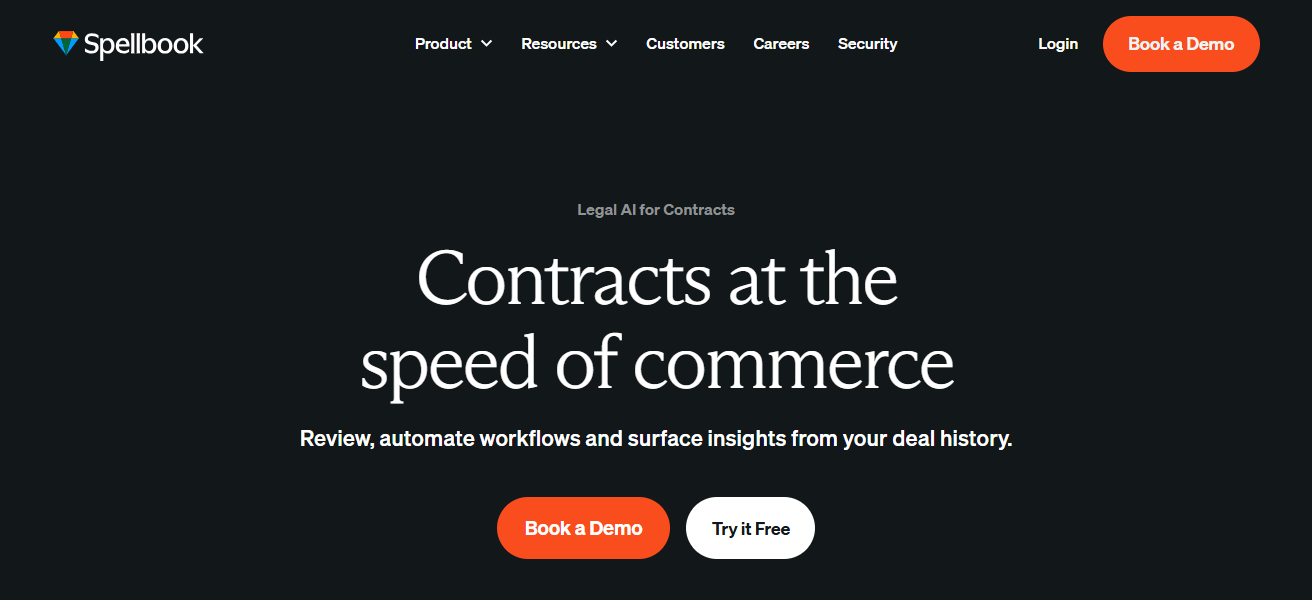
Its power for automating complex legal writing without the need for expensive infrastructure is highly sought after, particularly by smaller firms.
Its burgeoning reputation in AI-native legal drafting places it among the world’s fastest-rising contract automation innovators.
| Pros | Cons |
|---|---|
| Direct Microsoft Word integration simplifies AI-powered legal drafting workflows significantly. | Performance depends heavily on Microsoft Word environment and compatibility updates regularly. |
| Generates smart clause suggestions accelerating negotiations and contract review processes efficiently. | AI-generated suggestions occasionally require manual verification for sensitive legal agreements carefully. |
| Affordable solution attractive for smaller law firms adopting legal AI technologies rapidly. | Reduces repetitive drafting tasks, saving lawyers substantial administrative working hours weekly. |
| Generates smart clause suggestions, accelerating negotiations and contract review processes efficiently. | AI-generated suggestions occasionally require manual verification for sensitive legal agreements. |
3. Lexion
Lexion reduces the complexity of contract management with innovative machine learning engineered specifically for in-house legal teams on the go.
Automatically categorizing agreements, extracting clauses, following deadlines, and surfacing renewal obligations from the perspective of manual handling – this is what re-cement technology enables.
Lexion is preferred more and more by businesses thanks to its user-friendly interface that packs a punch with AI extraction capabilities.

Over the last few years, the company has also considered higher-end integrations, bridging gaps quickly between departments such as legal and procurement, as well as finance.
This focused approach enables organizations to handle increasing contract volumes with speed and efficiency while substantially mitigating operational risks and missed obligations across departments.
| Pros | Cons |
|---|---|
| User-friendly dashboard simplifies contract organization and obligation tracking tasks effectively. | Fewer advanced enterprise customization options compared with larger contract automation platforms available. |
| AI automatically extracts clauses, deadlines, and renewal obligations accurately from agreements. | Limited international brand recognition compared with dominant legal technology competitors globally today. |
| Strong integrations improve collaboration between legal, procurement, and finance departments seamlessly. | Advanced reporting features may feel basic for highly complex enterprise environments currently. |
| Helps businesses reduce missed renewals and operational compliance risks significantly companywide. | Some large organizations may require broader ecosystem integrations for scalability requirements. |
4. DocuSign CLM
DocuSign CLM expanded from electronic signature into a complete intelligent agreement management ecosystem that leverages AI.
The latest release in 2026 included AI contract summaries, automated workflows, and direct integration with Harvey and Anthropic to provide enhanced legal reasoning.

Enterprises use DocuSign CLM to allow the company to get contracts approved faster, reduce drafting errors, and even automate negotiations across the globe.
It is reported that the platform reduces processing time for contracts while enhancing compliance oversight. It also uses its AI engine (called “Iris”) to simplify contracts and better explain legal documents.
| Pros | Cons |
|---|---|
| AI-powered Iris engine simplifies understanding complex legal agreements quickly for users. | Full-featured platform may appear overwhelming for small legal teams initially adopting technology. |
| Combines electronic signatures with complete contract lifecycle automation capabilities seamlessly worldwide. | Subscription pricing can increase significantly with advanced enterprise feature requirements added. |
| Integrations with Harvey and Anthropic strengthen AI-driven legal reasoning capabilities considerably. | Certain advanced customizations may require dedicated technical implementation support teams internally. |
| Accelerates approvals, negotiations, and compliance management across enterprise legal operations globally. | A full-featured platform may appear overwhelming for small legal teams initially adopting technology. |
5. Icertis
Icertis continues to lead the global enterprise contract intelligence market, enabling corporations to automate and manage their legal obligations through automation technology.
The platform helps enterprise businesses increase visibility of contract documents with AI analytics, compliance monitoring, and workflow automation.
Icertis is bringing procurement optimization, supplier risk management, and revenue protection to enterprises today.

AI insights accelerate executives in identifying contract bottlenecks and streamlining the negotiation process.
In 2020, as businesses expand globally, Icertis further solidified its multilingual and cross-border Contract Lifecycle Management (CLM) capabilities that benefit highly regulated industries and global enterprises.
| Pros | Cons |
|---|---|
| Powerful contract intelligence tools improve visibility across multinational enterprise agreements efficiently. | Platform complexity may require experienced administrators managing workflows and configurations consistently. |
| AI analytics support procurement optimization and supplier risk management operations effectively globally. | Higher implementation costs may discourage smaller organizations with limited technology budgets available. |
| Strong multilingual support benefits companies operating across international legal environments successfully. | Extensive enterprise capabilities may exceed requirements for smaller legal departments unnecessarily. |
| Advanced compliance monitoring strengthens governance in highly regulated industries significantly worldwide. | Deployment timelines can become lengthy during large-scale enterprise integration projects sometimes. |
6. Agiloft
Bundles Agiloft for enterprise-grade contract lifecycle automation customized for complex legal workflows.
With no elaborate coding requirements, Laghu enables organizations to establish custom approval systems, automatic alerts, and customizable compliance frameworks.
Agiloft, for example, recently broadened its AI-driven contract-review functionalities by automating the extraction of important obligations and flagging risky clauses.
It is a low-code architecture that can adapt to industry needs and is highly valued by legal departments.
This flexibility makes Agiloft an attractive proposition for government agencies as well as most of the healthcare organizations and the enterprises that require customized, compliance-driven contract management software.
| Pros | Cons |
|---|---|
| Highly customizable workflows adapt easily to industry-specific legal requirements efficiently. | Extensive customization options may feel complicated for first-time users without technical expertise. |
| Low-code architecture reduces dependence on large software development teams significantly overall. | Interface design may appear less modern compared with newer AI-native competitors currently. |
| Strong compliance automation benefits healthcare, government, and regulated industries greatly worldwide. | Advanced configurations may require longer setup and deployment periods for organizations initially. |
| AI-powered clause extraction improves legal review speed and operational accuracy consistently companywide. | Smaller firms may find enterprise-focused capabilities more complex than necessary for operations. |
7. LawGeex
LawGeex focuses on AI-powered contract review automation, which helps legal teams review agreements in a fraction of the time of traditional manual reviews.
As you upload contracts to the platform, it automatically checks them against your pre-determined company policies, marking non-compliance for you on an entire portfolio of contracts in a matter of minutes.
LawGeex is being used by businesses to expedite the turnaround times of high-volume agreements, while still maintaining legal accuracy.
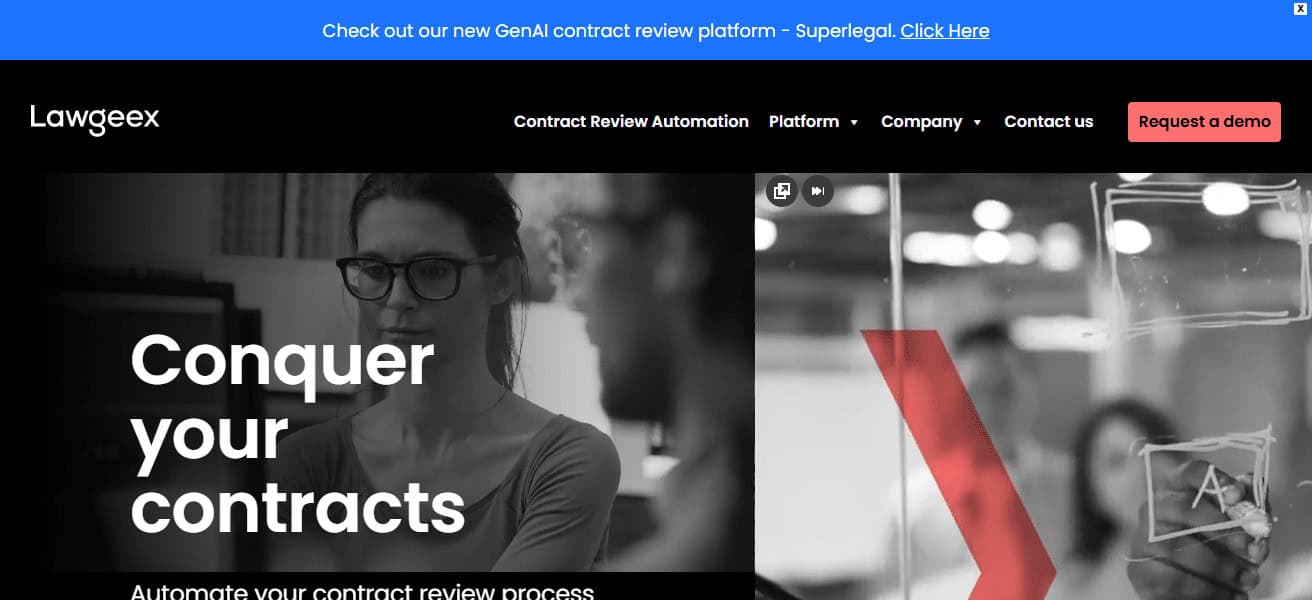
Its machine-learning engine learns and enhances contract analysis capabilities based on patterns with which it is fed repeatedly.
LawGeex allows businesses operating in highly-competitive sectors that value speed to reduce legal bottlenecks and operational inefficiencies in both procurement and sales departments, speeding up deal approvals.
| Pros | Cons |
|---|---|
| AI instantly compares contracts against predefined company legal policies accurately and efficiently. | Primarily focused on contract review rather than complete lifecycle management functionalities available. |
| Reduces turnaround times for high-volume agreements across procurement and sales departments significantly. | Requires properly configured policies for optimal contract analysis performance and accuracy outcomes. |
| Machine-learning technology continuously improves contract analysis capabilities through repeated usage automatically. | May not fully replace manual review for highly specialized legal agreements requiring expertise. |
| Helps organizations minimize legal bottlenecks while accelerating business deal approvals substantially globally. | Integration flexibility may vary depending on existing enterprise legal technology infrastructure setups. |
8. Kira Systems
Kira Systems brought a machine learning-based technology to on-document review that can quickly pinpoint and pull out important contract information.
Kira is used by law firms and corporate legal departments on transactional work including mergers, acquisitions, compliance audits, and due diligence projects.
The platform consists of big document repositories automation, which reduces the manual workload to identify clauses, obligations, and legal risks.
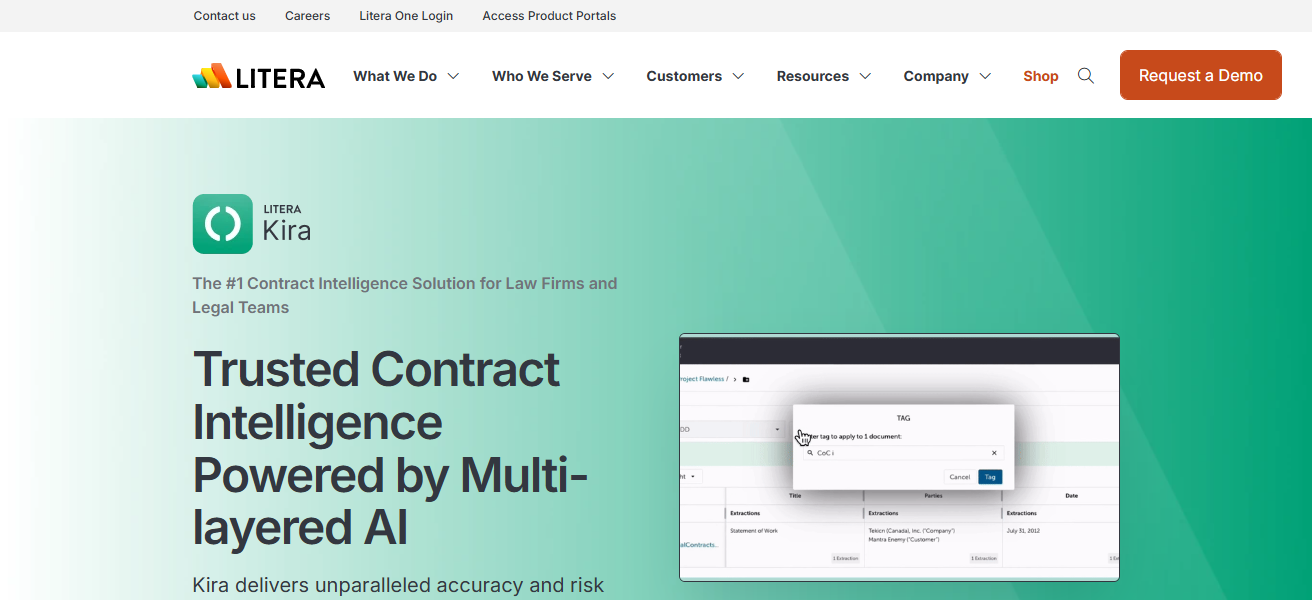
Kira recently improved additional multidocument support for examiners and strengthened its AI training models to enable higher extraction accuracy.
The advanced analytics capabilities help organizations reveal valuable contract insights more quickly and also enhance the consistency of legal review by a considerable margin.
| Pros | Cons |
|---|---|
| Machine learning extracts critical legal data rapidly from massive document repositories efficiently. | Specialized focus on document analysis limits broader contract lifecycle management capabilities currently. |
| Widely trusted during mergers, acquisitions, compliance audits, and due diligence projects globally. | Enterprise pricing may challenge smaller law firms with limited operational budgets available. |
| Multilingual support improves international document review accuracy across global organizations significantly. | Requires quality training datasets for achieving maximum extraction accuracy consistently over time. |
| Reduces manual review workloads while improving legal consistency and operational productivity substantially. | User onboarding may require additional training for maximizing AI-powered analytical functionalities effectively. |
9. Gavel
Gavel offers the first Next Generation Legal Document Automation; law firms can now create interactive workflows and client-facing legal applications, with no complex programming required.
It assists attorneys in automating mundane legal drafting processes, thereby lessening administrative workload and enhancing operational efficiency.
A few weeks back, Gavel introduced more automation that supports dynamic questionnaires, flexible workflow, and collaborative legal engagement systems.

To reduce expense while being able to provide scalable legal work, smaller firms are adopting Gavel more and more.
The emphasis on accessibility and no-code legal automation helps combine a professional legal solution in business for your clients who access the digital aspect of legal services.
| Pros | Cons |
|---|---|
| No-code automation simplifies legal document creation for smaller law firms efficiently today. | Limited enterprise-level contract intelligence compared with larger legal automation competitors available. |
| Interactive workflows improve client engagement and digital legal service accessibility greatly overall. | Affordable automation tools help firms scale operations without the large technology investments required. |
| Dynamic questionnaires streamline legal intake and repetitive drafting tasks successfully for teams. | Advanced enterprise integrations may not match the capabilities offered by bigger platforms currently. |
| Affordable automation tools help firms scale operations without large technology investments required. | Complex corporate legal departments may require deeper compliance and analytics functionalities unavailable. |
10. Luminance
Luminance has revolutionised legal document review processes, harnessing the latest in artificial intelligence and pattern-recognition technology.
The platform has fast anomaly detection ability to identify hidden risks and unusual clauses across thousands of agreements during due diligence investigations.

Luminance kept investing in autonomous AI that helps legal teams with negotiations, contract analysis, and compliance monitoring throughout 2026.
More companies and leading law firms are adopting the platform to conduct detail-oriented transaction reviews quickly and enhance their legal precision.
Using proprietary AI technology, it reduces the highly expensive manual review workloads for organizations to keep pace with contractual complexity.
| Pros | Cons |
|---|---|
| Some users may find interface complexity challenging during early adoption stages. | Premium enterprise-focused pricing may limit accessibility for smaller law firms significantly overall. |
| Strong due diligence capabilities support mergers, acquisitions, and compliance investigations globally successfully. | AI-powered analysis still requires human oversight for sensitive legal interpretations and decisions. |
| Autonomous AI features improve negotiation workflows and legal review productivity substantially worldwide. | Advanced AI identifies hidden risks and unusual clauses across contracts rapidly and efficiently. |
| Trusted by global enterprises handling complex legal document analysis requirements securely today. | Some users may find interface complexity challenging during early adoption stages initially. |
Conclusion
In Conclusion Contract automation brands are rapidly transforming the legal industry with powerful AI-driven technologies and intelligent workflows.
Platforms like Ironclad, DocuSign CLM, and Luminance help businesses improve efficiency, reduce manual legal tasks, and strengthen compliance management.
As AI adoption grows in 2026, these innovative legal technology companies will continue reshaping contract management, legal drafting, and enterprise legal operations worldwide.
FAQ
What is contract automation software?
Contract automation software simplifies drafting, reviewing, approving, and managing legal agreements using AI technologies.
Why are law firms adopting contract automation platforms?
Law firms use automation tools to reduce manual workload, improving accuracy and accelerating legal operations significantly.
Which contract automation brand is popular among enterprises?
Ironclad and Icertis remain highly popular among global enterprise organizations.
Which platform works directly inside Microsoft Word?
Spellbook integrates directly into Microsoft Word for AI-powered legal drafting assistance.