
This article will discuss the Ways AI Is Protecting Businesses From Cyberattacks and how today advanced technologies are transforming modern cybersecurity.
AI helps organizations stay a step ahead of the ever-evolving digital threat landscape, from real-time threat detection to predictive analysis.
In the fast-paced digital landscape of today, intelligent systems have become indispensable for businesses looking to protect sensitive data and mitigate risks, ensuring a more robust defense against potential cyberattacks.
Key Points & Ways AI Is Protecting Businesses From Cyberattacks In 2026
| AI Method | How It Protects Businesses |
|---|---|
| Real-Time Threat Detection | AI monitors networks 24/7 and instantly detects unusual activity before damage occurs |
| Predictive Risk Analysis | Uses historical data to predict and prevent potential cyber threats in advance |
| Automated Incident Response | Quickly isolates infected systems and stops attacks without human delay |
| Phishing Detection | Identifies and blocks suspicious emails using NLP and behavioral patterns |
| Behavioral Analytics | Detects insider threats by analyzing user behavior anomalies |
| Malware Detection | AI identifies new and unknown malware using pattern recognition |
| Zero-Day Attack Prevention | Recognizes unknown vulnerabilities before hackers exploit them |
| Fraud Detection Systems | Flags unusual financial or transactional activities in real-time |
| Identity & Access Management | Uses biometrics and AI verification to prevent unauthorized access |
| Continuous Learning Systems | AI evolves with new threats, improving cybersecurity defenses over time |
10 Ways AI Is Protecting Businesses From Cyberattacks In 2026
1. Real-Time Threat Detection
AI-driven real-time threat detection operates nonstop, surveying systems and user activity. By employing machine learning algorithms, one can instantly detect any atypical patterns and anomalies or suspicious behaviors.
Great AI systems summarize thousands of spreadsheets into a single output; moreover, unlike traditional tools, they detect threats in the middle of an incident—potentially reducing response time and preventing harm.

It does so by detecting even slight attack signals by analyzing a large volume of data in seconds. This method allows businesses to prevent cyberattacks before they can result in significant security threats or financial damages.
Real-Time Threat Detection – Features
- Monitors networks and systems 24/7 without interruption
- Detects anomalies and suspicious activity instantly
- Uses AI models to analyze large data in seconds
- Reduces response time to prevent damage early
2. Predictive Risk Analysis
AI powered predictive risk analysis technology examines previous occurrences of cyber attacks based on historical data, and changing patterns of these threats.
AI, to identify trends, can predict weaknesses and risks before it gets exploited. It empowers businesses to fortify themselves in advance rather than play the waiting game for an attack.
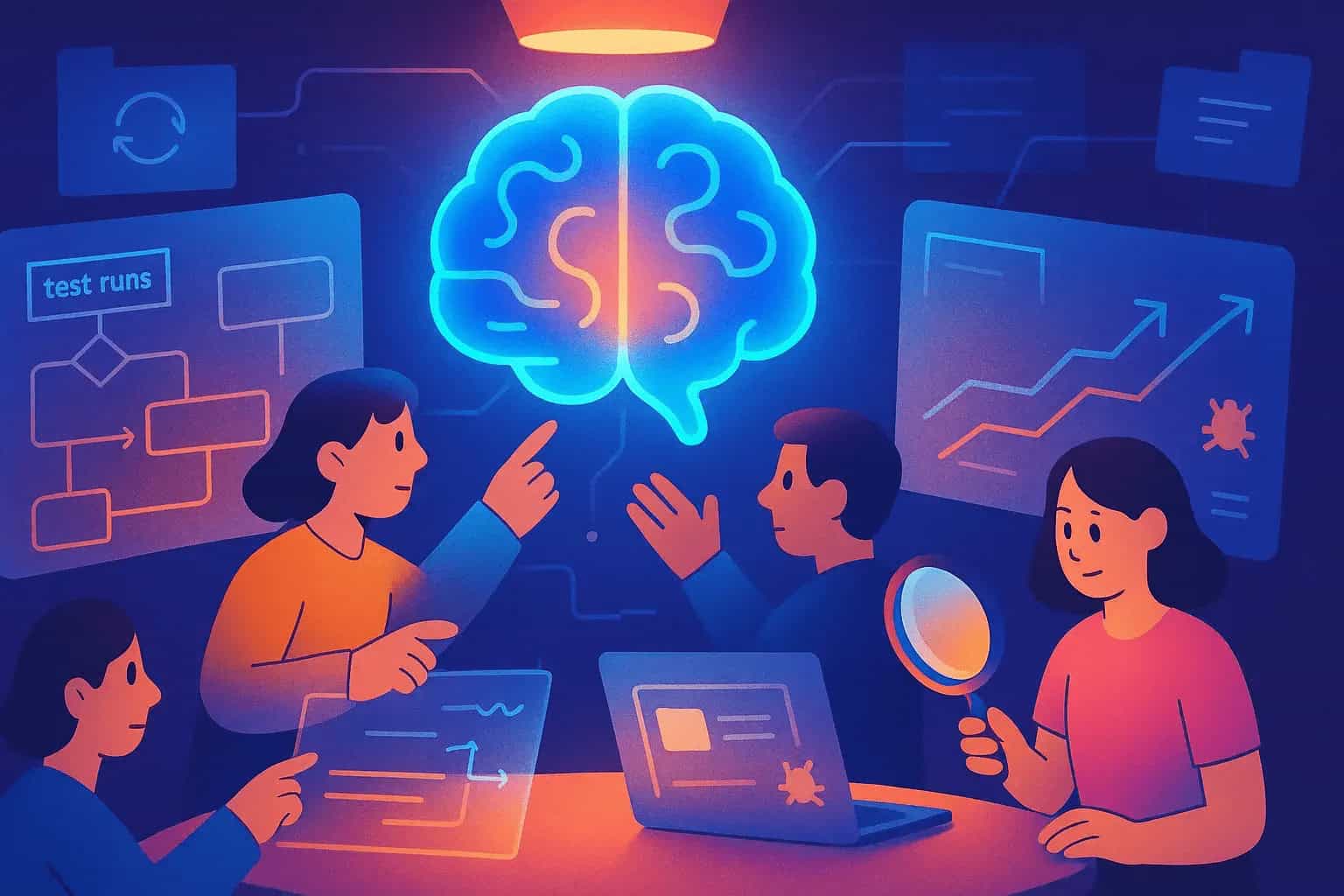
As AI models learn fetal activity from mountains of data over time, their predictions become more reliable.
Consequently, organizations can focus on the highest risk areas, deploy resources intelligently and avert costly cyberattacks before they ever take place.
Predictive Risk Analysis – Features
- Analyzes historical cyberattack data for trends
- Predicts vulnerabilities before exploitation
- Continuously improves accuracy with new data
- Helps prioritize high-risk security areas
3. Automated Incident Response
When a threat is detected, AI driven automated incident response systems do just that — respond! AI can quarantine infected devices, stop bad traffic and remove threats in real time rather than waiting for human reaction.

The fact that response is so fast decreases the time frame available to attackers drastically. Automation reduces the risk of human error and provides consistent action on all incidents.
Trilogy refers to businesses being on the positive side, faster containment, less downtime with an enhanced overall security posture without IT teams needing continuous manual intervention.
Automated Incident Response – Features
- Automatically reacts to threats without human input
- Isolates infected systems and blocks attacks instantly
- Reduces downtime and operational disruption
- Ensures consistent and error-free responses
4. Phishing Detection
Phishing detection — by evaluating email content, sender behavior, and communication patterns by AI to notify forms of phishing activity.
By leveraging natural language processing, it identifies fake wording, red flags in links and fraudulent domains that pass themselves off as real sources.

AI systems learn from past phishing attempts, making them more effective in detecting new forms. This lowers the risk of employees becoming victims of fraud.
AI prevents malicious emails from reaching inboxes in the first place which helps keep sensitive data safe or keeps business systems out of reach.
Phishing Detection – Features
- Scans emails for suspicious links and fake domains
- Uses NLP to detect deceptive language patterns
- Learns from past phishing attacks for improvement
- Blocks harmful emails before reaching users
5. Behavioral Analytics
With the help of AI, behavioral analytics works by learning how users typically act in an organization.
Keeps a track of log in timings, device usage data, interaction patterns and activity levels. But AI has a clear advantage here: it detects when unusual behavior happens — for instance, accessing sensitive data at strange times of the day — and raises a flag.

This is particularly good for identifying insider threats or hacked accounts. AI means traditional cybersecurity can tailor its services to be identity-based as opposed to rule-based, allowing for hidden risks that are rarely observable by any given organization, digital or otherwise, with just hash and poll encryption.
Behavioral Analytics – Features
- Tracks user behavior and access patterns
- Detects unusual or abnormal activities quickly
- Identifies insider threats and compromised accounts
- Provides deeper security beyond rule-based systems
6. Malware Detection
Machine learning malware detection uses AI-based solutions, going beyond signature methods where a computer learns patterns and behaviors that are associated with harmful software.
It is able to detect both known malware, and unknown malware including ever evolving advanced threats.

Machine learning learns the behavior of files, such as code structure and execution patterns to decide whether something is safe or malicious.
This helps businesses prevent attacks that conventional antivirus solutions might miss. As AI learns from new threats, your protection against malware continues to grow in strength and flexibility.
Malware Detection – Features
- Detects both known and unknown malware threats
- Analyzes file behavior and execution patterns
- Uses machine learning for advanced threat detection
- Continuously updates against evolving malware
7. Zero-Day Attack Prevention
Zero-day attacks take advantage of vulnerabilities that developers have yet to patch. Here, AI prevents such attacks by to detect unusual behavior in consuming the system of resources from fetching scenario to isolation.
AI identifies anomalies which indicate potential exploitation attempts rather than relying on known signatures.

This is an opportunity for businesses to react quickly—even if they were unaware of the vulnerability.
AI itself helps to build a crucial line of defense against zero-day threats, as it enables monitoring through behavior and patterns; this drastically mitigates the chances for severe data breaches or systems compromise.
Zero-Day Attack Prevention – Features
- Identifies unknown vulnerabilities using AI
- Detects unusual system behavior and anomalies
- Does not rely on traditional signature databases
- Provides early warning for unseen cyber threats
8. Fraud Detection Systems
AI-based fraud detection systems process the transaction data, user behavior and financial patterns in real-time.
They can recognize suspicious activities such as spending sprees, unauthorized transfers, or abnormal login locations.
That machine learning model improves itself by training on the old cases of fraud occurred in past. This allows for quick and accurate detection of fraudulent activities.

This helps you avoid financial losses and safeguard customer data, as well as protect your business reputation.
By applying AI, the incidence of false positives is also reduced, and blocked transactions are only denied when they are truly fraudulent.
Fraud Detection Systems – Features
- Monitors transactions in real time
- Detects unusual financial activities instantly
- Learns from past fraud cases to improve accuracy
- Reduces false positives for better user experience
9. Identity & Access Management
AI enhances identity and access management, making sure that only users granted access can enter sensitive systems.
Including biometric authentication, behavioral analysis and risk-based verification techniques. This means that AI can recognize when someone is trying to log in from a computer not known to it, and may put additional security measures in place.

Its dynamic nature helps it to adjust based on the user behavior and threats. Businesses mitigate the risk of a data breach by ensuring that only individuals authorized to access their information systems are able to do so.
AI-based IAM systems also reduce complexity of user management while keeping all digital assets secure.
Identity & Access Management – Features
- Uses biometric and AI-based authentication
- Monitors login behavior for suspicious access
- Applies risk-based verification dynamically
- Prevents unauthorized system access effectively
10. Continuous Learning Systems
AI systems continuously learn new data, cyber threats, and the techniques surrounding those attacks. It grants them the ability to develop with the dynamic cybersphere.

AI is not a static security tool; it develops its detection and response capabilities over time. It detects new threats quicker and fine-tunes its models to be more precise.
Adapting and learning on an ongoing basis ensures businesses are safeguarded against known and emerging cyber threats, helping provide a long-term scalable solution for sustained cybersecurity resilience.
Continuous Learning Systems – Features
- Continuously updates with new threat data
- Adapts to evolving cyberattack techniques
- Improves detection accuracy over time
- Provides long-term, scalable security solutions
How We Choose Ways AI Is Protecting Businesses From Cyberattacks In 2026
- Emphasise how well a product works in the real world against cyber-threats
- AI solution with a track record in accuracy and reliability should take precedence
- Ability to detect both known, and unknown attacks
- Check time of response & ability to automate
- Address scalability with small, medium and large businesses
- Monitor continuous learning and adaptation to new threats
- Evaluate how well the solution integrates with existing security systems
- Evaluate reduction in human effort and operations costs
- Assessing data privacy and requisite compliance standards
- Choose safeguards that are proactive rather than merely reactive
Cocnsluion
To sum up, AI is changing an ongoing approach to cyberattack protection by allowing businesses to detect them faster, analyze smarter and respond automatically.
Such solutions can detect threats at an early stage, prevent data breaches, and minimize the risk in the best way possible.
Artificial intelligence provides a proactive and scalable solution to this ever-evolving challenge of cyber threats.
By integrating AI into their cybersecurity, businesses can elevate security across the board while improving efficiency and increasing resilience against ever-evolving digital threats.
FAQ
How does AI help in cybersecurity
AI helps by detecting threats in real time, analyzing patterns, and preventing attacks before they cause damage.
Can AI stop cyberattacks completely?
AI significantly reduces risks, but it cannot guarantee 100% protection against all cyber threats.
What types of cyber threats can AI detect?
AI can detect malware, phishing, ransomware, insider threats, and unusual network activities.
Is AI better than traditional cybersecurity tools?
AI is more advanced because it learns and adapts, while traditional tools rely on fixed rules.